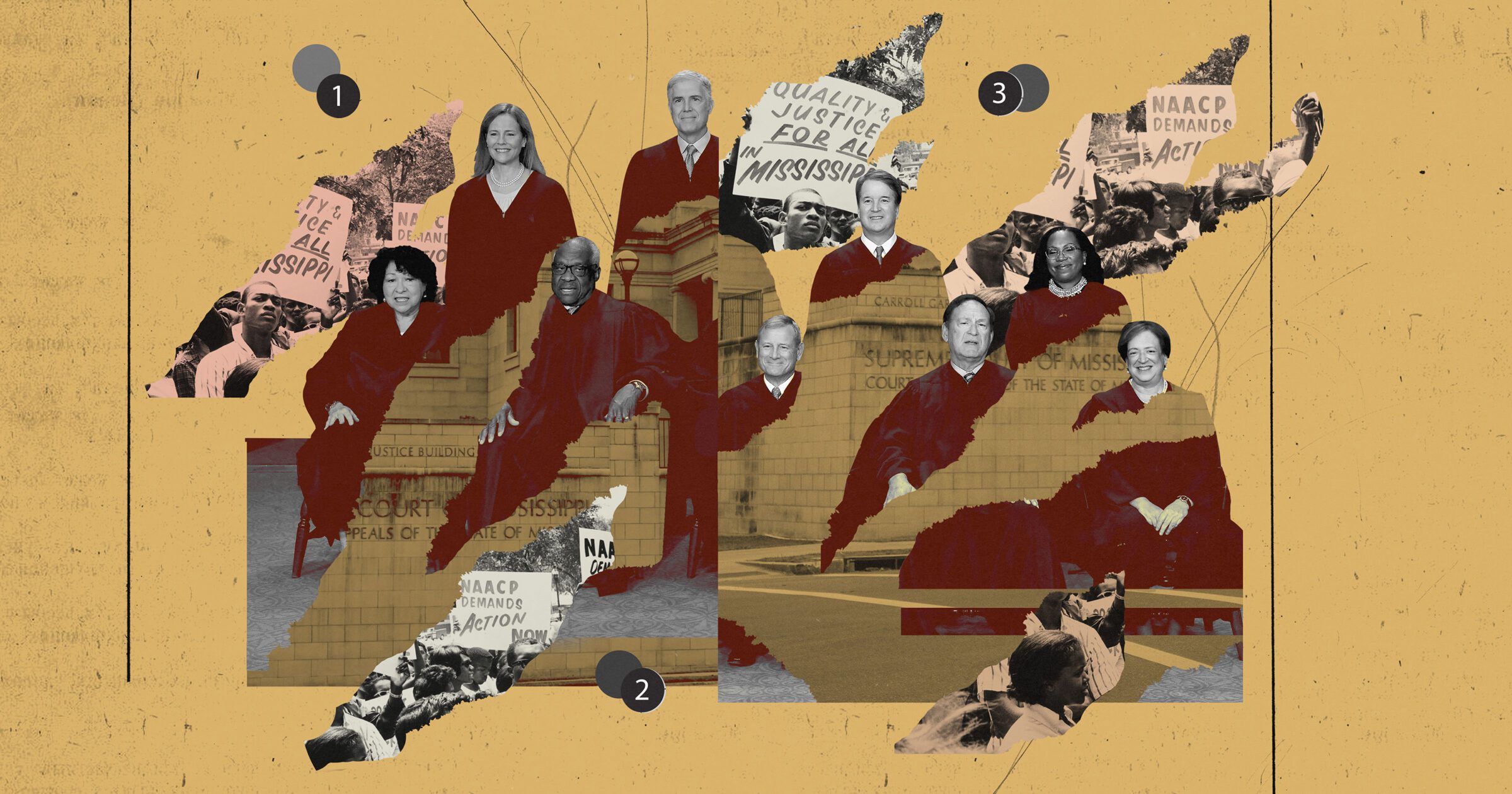

How the U.S. Supreme Court Erased a Key Voting Rights Win in Mississippi
A key victory for Black Mississippians was supposed to spark special elections for the state supreme court under fairer maps, but Callais wiped that away. Plaintiffs vow to forge ahead.
| June 2, 2026
This story was produced in a collaboration between Bolts and The Marshall Project – Jackson, a nonprofit news team covering Mississippi’s criminal justice systems. Sign up for Bolts‘ newsletter and The Marshall Project’s.
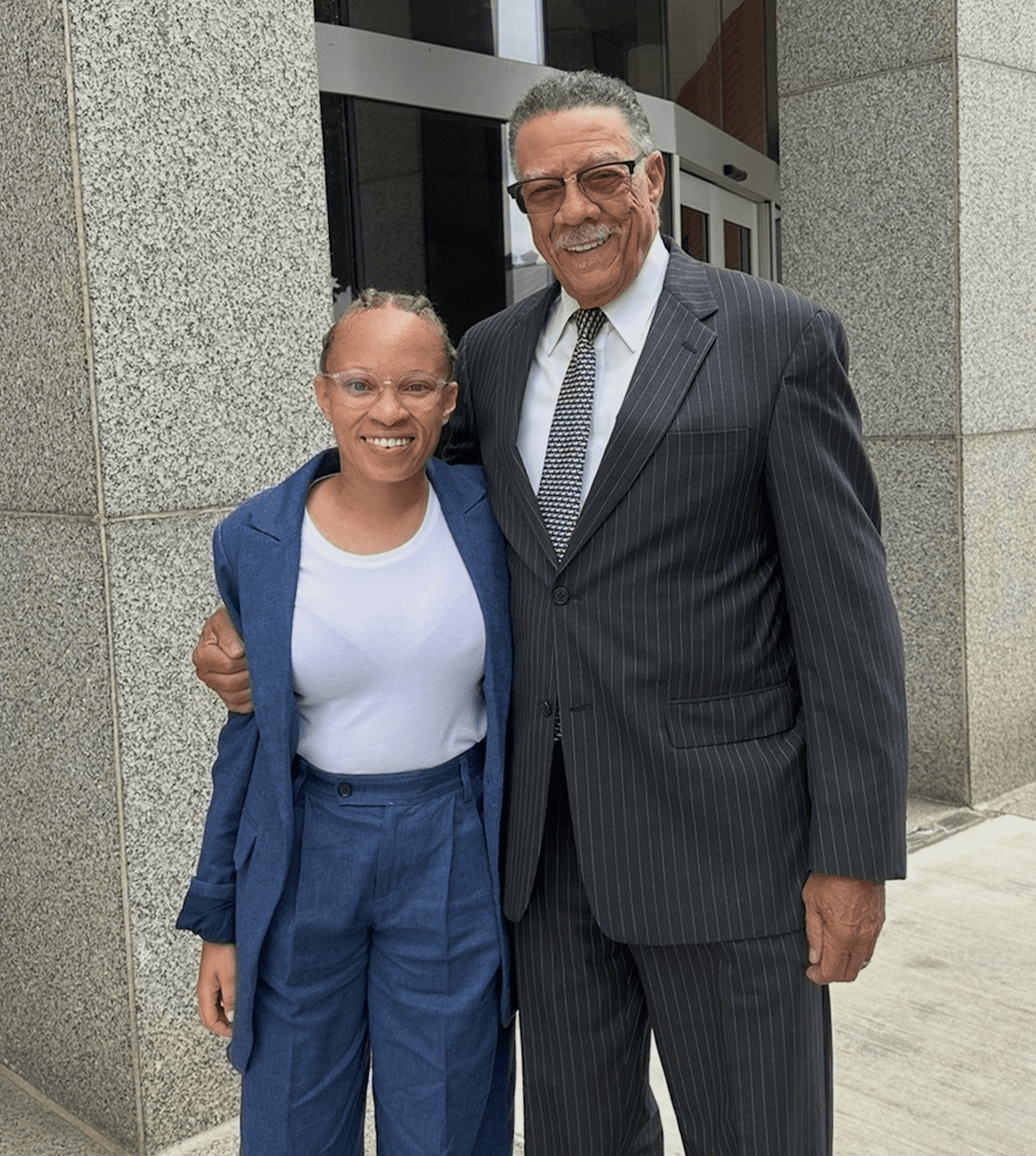
In 2022, Dyamone White, then in her late 20s, filed a lawsuit in federal court arguing that Black voters like her didn’t have a fair chance to elect justices to the Mississippi Supreme Court.
Three years later, she won a significant victory. A federal judge ruled that Mississippi Supreme Court election districts violated the Voting Rights Act and that Black candidates who wanted to run for the state’s highest court were unlikely to succeed. U.S. District Court Judge Sharion Aycock instructed lawmakers to draw a new map to give Black voters more power, with court-ordered special elections to follow, likely this fall.
“WE WON,” White wrote in a social media post that day in August 2025. “This isn’t just a personal victory—it’s a win for every Mississippian who has waited too long for fair representation. I became a plaintiff because I refused to accept that our state’s highest court could exclude the very people it serves. Today, that changes.”
But that change still hasn’t happened—and a recent seismic ruling from the U.S. Supreme Court means it may never happen.
In late April, the conservative majority of the U.S. Supreme Court issued a decision in Louisiana v. Callais that dramatically weakened the Voting Rights Act, making it much harder for racial minorities to win voting discrimination lawsuits.
The decision further intensified a mid-decade redistricting war that’s been spreading across the country ahead of the congressional elections in the fall. But the decision affects politics beyond the federal level. The now-upended court battle about Mississippi’s judicial elections will serve as an early test of whether voting rights plaintiffs can still mount a convincing case in some circumstances.
Earlier this month, a federal appeals court vacated Aycock’s ruling from last year after the plaintiffs and defendants agreed that the Callais decision had dramatically changed the legal landscape.
That removed the state’s obligation to draw a new court map. It also eliminated the possibility that the state would hold special elections for its supreme court seats this fall, ending Black voters’ hope that 2026 may yield fairer representation at the top of the state’s judiciary.
The case will now head back to Aycock’s court for new arguments under the higher standard created by the Callais decision.
The plaintiffs still see a path forward to win new maps. Attorneys with the American Civil Liberties Union and the Southern Poverty Law Center argue on behalf of White and her fellow plaintiffs that they can still prevail under that new standard.
Looking to the court battles ahead, White is also looking back. She is from the tiny town of Edwards, a rural community near the state’s capital city region, and she recites its history of Black resistance to oppression, from the Civil War to the Civil Rights movement and beyond.
“It’s an area that is resilient,” White said. “The people I grew up around, they were all fighters.”
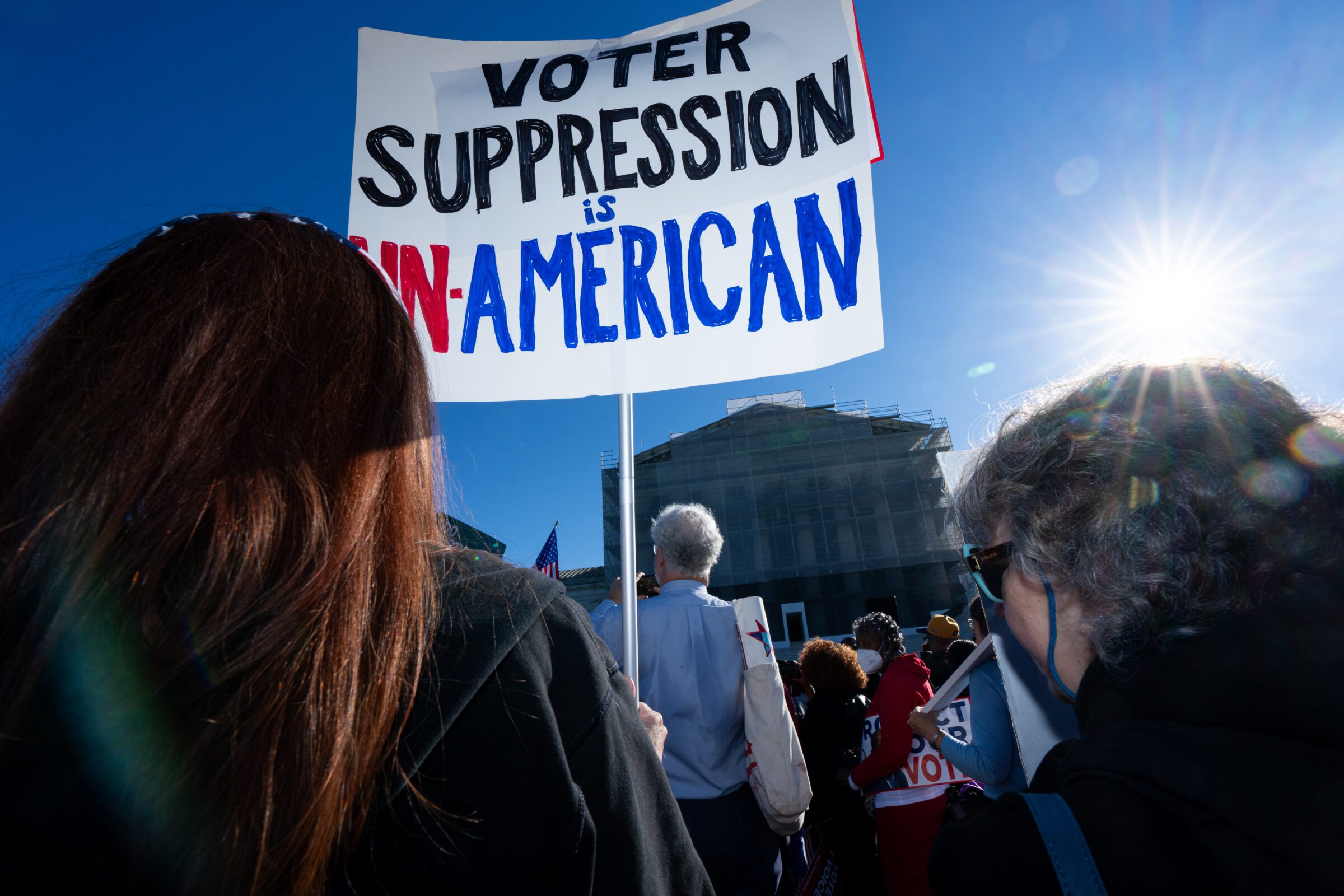
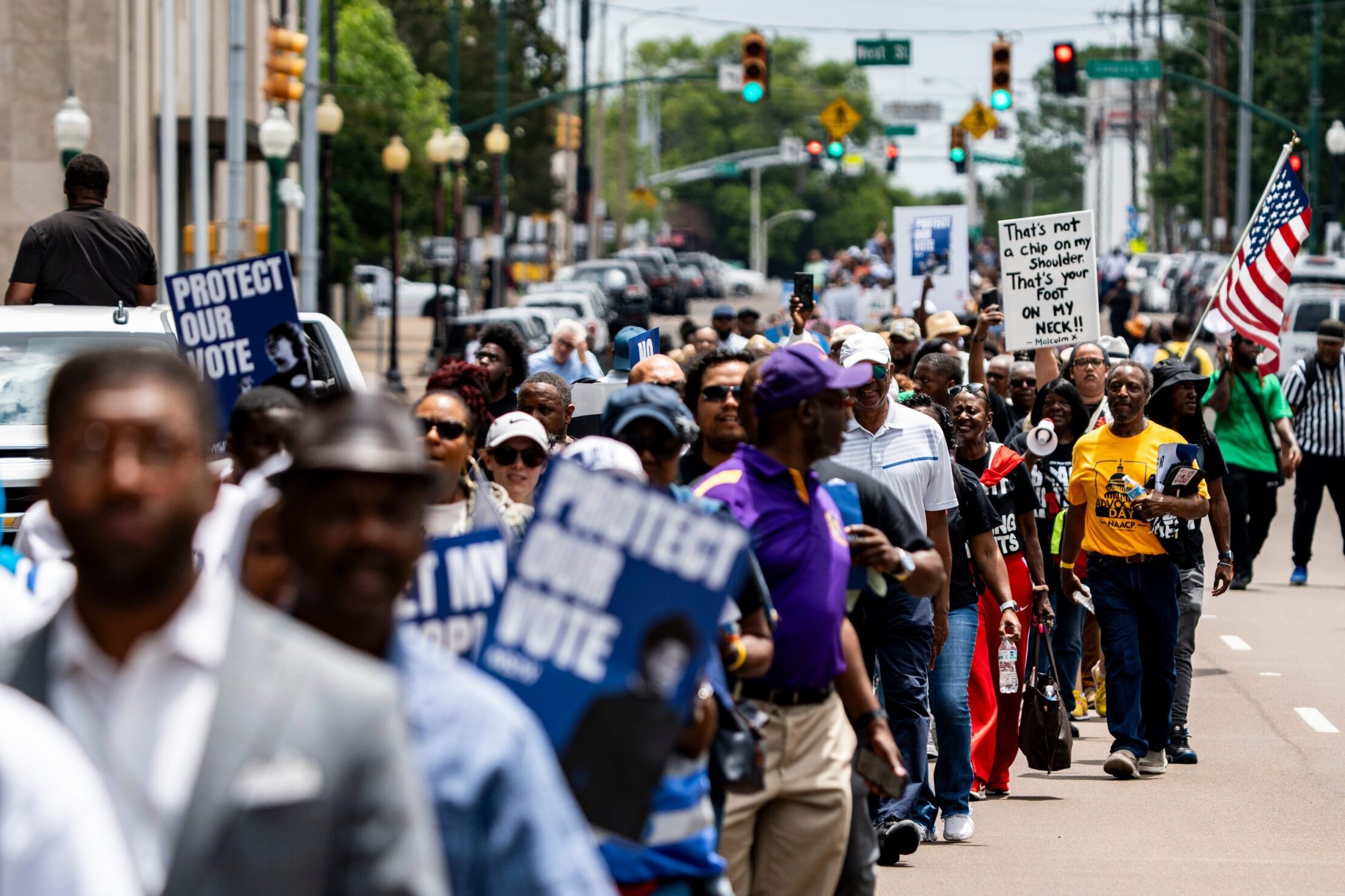
The Voting Rights Act, passed in 1965, was a key tool in dismantling the Jim Crow regime of white supremacy that blocked Black residents from ballot box access in Mississippi and across the South.
Among other provisions, the law prohibited states from diluting the voting power of racial minorities and required that those voters have an opportunity to elect candidates of their choosing.
So, with Callais decided, what’s changed?
When plaintiffs filed suit over the Mississippi Supreme Court voting districts in 2022, they had to show a violation of the law only by pointing to discriminatory effects of the voting districts in use, regardless of what the original architects of those districts may have intended.
Those effects? Black people make up about 38% of Mississippi’s population, but the state has just one Black justice currently sitting on its nine-member supreme court. Only four Black justices have ever been on the court, all serving since 1985 and never more than one at a time. All four first reached the court through a gubernatorial appointment to fill a vacancy.
That has meant very little Black representation on a body that interprets state laws and the state constitution, hears appeals in criminal and civil cases and has some control over the operations of lower courts.
With no need to delve into the intention of the legislators who created the current districts in the late 1980s, Aycock, a George W. Bush appointee, ruled that the Mississippi Supreme Court districts as drawn have the effect of diluting Black voting power, violating the Voting Rights Act.
U.S. Supreme Court Justice Samuel Alito’s majority opinion in the Callais case, however, sets a higher standard. A Voting Rights Act violation may now be found “only when circumstances give rise to a strong inference that intentional discrimination occurred.”
Legal experts have said that proving intentional discrimination is challenging—made even more difficult by the Alito opinion’s endorsement of partisan gerrymandering as a legitimate purpose of redistricting. The conservative justice wrote that states can now defend themselves against race dilution claims by arguing that Black districts are being eliminated not because of racist motivations but partisan ones since Black voters have typically supported Democratic candidates.
States like Louisiana and Tennessee have moved to quickly eliminate Black-majority Congressional districts. They will likely defend their new maps as partisan gerrymanders, not racially motivated ones.
“It’s going to be just lightning-strike rare for a Voting Rights Act claim to work where partisanship is permitted,” said Justin Levitt, a former Department of Justice official and election law expert who teaches at Loyola Marymount University Law School.
However, Mississippi Supreme Court elections are nonpartisan, and that may make a meaningful difference in the current litigation, said Amir Badat, a civil rights lawyer who has argued a number of voting rights claims in the state.
Badat said that even under Callais, lawmakers may not be able to hide behind partisan intent to shield themselves from judicial scrutiny.
“In this kind of narrow circumstance, you still have viable Section 2 claims,” said Badat, referencing the section of the Voting Rights Act that bans discriminatory election practices.
Levitt agrees that voting rights cases in nonpartisan elections may still be possible to win under Callais, though he added that the overall impact of the decision likely makes even those cases quite difficult.
While the legal standard may have changed, White, the lawsuit’s lead plaintiff, says one thing has not: The reality faced by Black voters who want to see a fair state supreme court map.
“We laid out the facts of representation in the state. You can’t deny that, “ White said. “We can go back to court again, and the facts remain the same. Representation is not equal.”
Sign up and stay up-to-date
Support us
Bolts is a non-profit newsroom that relies on donations, and it takes resources to produce this work. If you appreciate our value, become a monthly donor or make a contribution.