
“The Court Interred the Voting Rights Act Without the Dignity of a Funeral”
Two redistricting experts answer your questions on the latest Supreme Court ruling that guts the VRA—did it kill Section 2, what can states do, and how may Congress respond?
| May 5, 2026
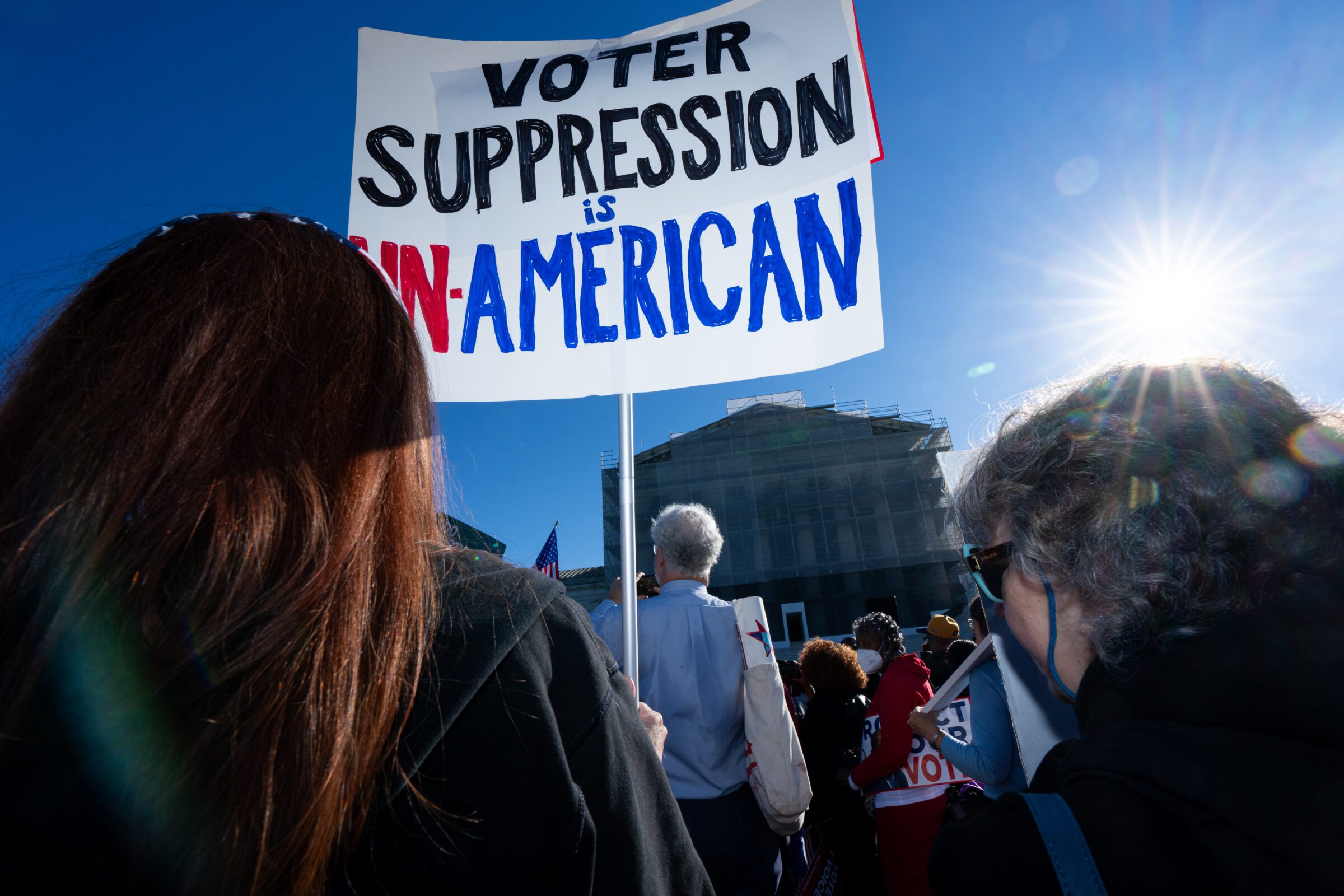
The nation’s voting rights landscape is in upheaval since the U.S. Supreme Court last week dramatically weakened the Voting Rights Act in its Louisiana v. Callais decision. Several GOP-run states (Alabama, Louisiana, and Tennessee at this time) are rushing into legislative special sessions to eliminate the majority-Black districts that were protected under Section 2 of the VRA, a key provision invoked in countless lawsuits challenging racially discriminatory maps.
Authored by Justice Sam Alito, the majority opinion did not outright strike down Section 2, but Justice Elena Kagan’s dissent called it the “latest chapter in the majority’s now-completed demolition of the Voting Rights Act” and stated that it “renders Section 2 all but a dead letter.”
Soon after the ruling, we asked our readers to send us any questions you have about Callais and its ramifications: You delivered with dozens of questions ranging from the logic of Alito’s opinion to remedies that Congress may still be able to implement to get around it.
We posed your queries to two redistricting experts: Kareem Crayton, vice-president of the Brennan Center, and Justin Levitt, a professor at Loyola Law School. In a wide-ranging conversation with Bolts editor Daniel Nichanian, Crayton and Levitt tackled what you wanted to know and offered sobering thoughts on the future of civil rights litigation.
“This structure that Justice Alito created allows politics and partisanship to outweigh attention to race discrimination,” said Crayton. “There’s a party for white people, the white man’s party, and there’s everybody else.” Moving forward, Levitt invited readers to think big. “It’s going to take a really strong push by the public to get a Congress that’s willing to reform voting rights,” he said. “And while we’re there, there’s an awful lot that could be done on court reform.”
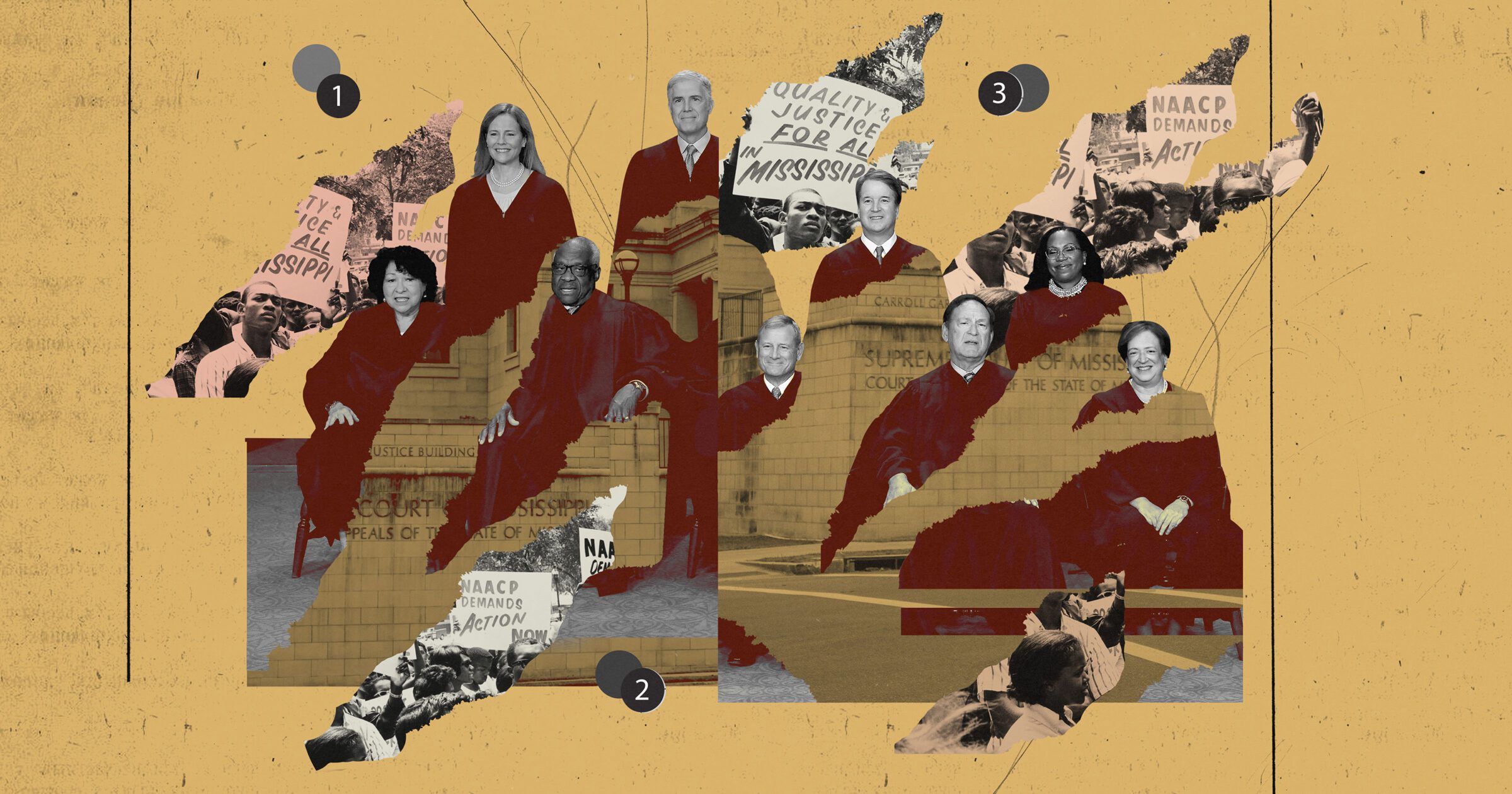
We’ve organized your questions under three themes: Explore at your leisure.
What has the court done to the VRA and its Section 2?
How should we expect states to respond?
Read on to learn about the redistricting landscape, and revisit older installments of our “Ask Bolts” series. You can also read our reporting in recent months on how local voting rights advocates were bracing for the Callais decision in Mississippi and Tennessee, where courts had recently ordered new maps for county commission and state courts that may now be in danger.
Subscribe to our newsletter
for more reporting on voting rights
I. What has the court done to the VRA and its Section 2?
You’ve both worked on voting rights litigation for a long time, so let me start by asking what were your reactions and emotions as you read this ruling?
Kareem Crayton: Given the project of this Supreme Court over decades to dismantle the Voting Rights Act at every turn, even when these people were in other jobs, this outcome is not unexpected. But I feel like the court interred the Voting Rights Act without having the dignity of showing up and having a funeral. Both the outcome and the tone of this decision is horribly disrespectful of the millions of American voters seeking the benefits of an equal vote and to the millions more who sacrificed their bodies and their lives to give life to the VRA.
Justin Levitt: I was not surprised by the outcome, as this was a 40-year political project. But I was surprised by the decision, at the fact that this project’s outcome was not wearing a legal mask. This was an assertion of power, not of law. We have a Court that is making itself the arbiter of how we govern ourselves, with no deference to Congress and very little deference to precedent.
As civil rights litigators, we’re used to the Supreme Court doing bad things; it has not been friendly to civil rights outside of like a 17-year stretch in American history. But the worst things come when the court thinks that it’s in charge of everything in society. Dred Scott was issued in Chief Justice Roger Taney’s 21st year on the bench; this is year 20 for Chief Justice Roberts. I think the court is believing itself to be the savior of American society and that gets really dangerous, and I think the court has put itself on the menu for 2028.
Crayton: I don’t have any disagreement with Justin’s comments: This decision was cynical. As a Southerner, I don’t know that there’s anybody who wouldn’t say things are better than they were in 1965—but one of the key reasons they are better is the 1965 Voting Rights Act.
Justice Alito wants us to believe that this has continued in recent years. In the last major case that whittled away at the Voting Rights Act, Shelby County (which struck down Section 5 of the VRA based on the argument that conditions have “dramatically improved”), the standard that the court used to show things had gotten better was that the gap between the participation of African Americans and other nonwhite groups and white voters had narrowed. But since Shelby County, this gap has widened. And there’s a lot of evidence that the absence of Section 5 is what made the gap widen; it accelerated the fastest in the jurisdictions that Section 5 used to cover.
A few readers asked us about Justice Alito’s majority opinion, in fact, and the irony of his invoking the Reconstruction Amendment to strike down Section 2. Ellen asked us on X: “The majority reframed the 14th and 15th Amendments as prohibiting the very remedies Congress designed to enforce them. What is the honest historical and legal answer to that framing?”
Crayton: The racial gerrymandering claim is a 14th Amendment claim discovered in the 1990s; and it’s what is axing Section Two in this case. With the racial gerrymandering theory, the court told us, ‘We know that race is involved but we don’t want too much of it, and we’ll tell you how much is too much each time.’ [Editor’s note: Crayton is referring to a series of cases where plaintiffs successfully sued against the creation of majority-minority districts on the grounds that the state drew racially gerrymandered districts that violated the 14th Amendment’s equal protection clause.]
That just seems the exact opposite of what the 14th and 15th Amendment mean to do. To me, the racial gerrymandering theory should have been faulted for turning civil rights enforcement on its head. Ruth Shaw, the person that gave rise to this, a white lady from Durham, North Carolina, somehow had a legal claim that supersedes attention to the longstanding exclusion of African Americans in North Carolina.
This entire line of cases, the racial gerrymandering cases, is a sort of analog to what happened during Reconstruction. Congress [in the 1860s] put into the Constitution what they think are guarantees against racial inequality, only to find a Supreme Court that says, ‘We don’t deal with individual discrimination, states can keep segregation in public accommodations,’ and all the things that follow from that. What follows is a 100-year era, until we get to the civil rights revolution.
Levitt: Congress has the enumerated power to enforce the 14th and 15th amendments—it’s right there in the constitution—and this court does not like that. This is effectively an effort to undo an enormous part of Reconstruction.
Many readers want to know how far-reaching the decision was and just how much it guts Section 2 of the Voting Rights Act. Ellen also asked us: “Are Section 2 intent claims still viable anywhere, or are they nearly impossible to prove in practice?” She goes on to refer to Justice Kagan’s warning that “states need only announce a partisan gerrymander to insulate any districting scheme from challenge,” and wonders if that is the correct.
Levitt: I think the court has made it so hard that it’s effectively impossible to prove a Section 2 case in the races that it was primarily thinking about, which are state legislative and congressional races, races where partisanship is permitted.
That’s because the court said that you can prove a Section 2 case now only if you artificially extract and set aside all partisan impact first, before looking for an impact on race. You’d have to prove that minority communities have different voting patterns wholly apart from any partisan considerations. And you’d have to prove that there are districts that could respond to minority communities after already baking in a maximal partisan gerrymander against those very communities. In our current political environment, that’s never going to happen. There may be a miracle moonshot, but I’m pretty skeptical.
In circumstances where partisanship isn’t permissible or isn’t a factor, like in some municipal elections, it’s much more difficult to make a Section 2 case but I don’t know that it’s impossible.
Crayton: I hope that’s right, Justin, about local jurisdictions. Sadly, I don’t feel as though this decision makes clear its scope, and I think the lack of clarity is going to be a perverse incentive for people to test that question.
What the court is saying in this case is: Race discrimination is rare—and to the extent that it exists, we’re going to force plaintiffs to prove to us that what they’re seeing isn’t partisanship, because we think partisanship is just fine. And even if you can prove this to us, you have to show us that the remedy that you’d prefer meets the state’s specifications for what it wants to achieve with the map. In my view, and I suspect Justin agrees, the court has essentially blessed partisan gerrymandering, even when the other side is people of color facing vote dilution and limits in their ability to be represented.
Levitt: And I think this is worse than blessing partisan gerrymandering: It incentivizes partisan gerrymandering in the worst possible way. The more racist you are as a party, the more insulated you are from Voting Rights Act liability under this decision. If you can make all of your partisan cues about race, then you will never be able to disentangle the two, and you will never face VRA liability. If there were a party called the Klan party, right now, it would trigger an awful lot of nonwhite opposition based on the party’s platform. But this opinion says, you have to set the party’s platform entirely aside to figure out if there’s been any damage based on race. So the more you can tie the two together, the more insulated you are. That means the most racist partisan gerrymandering is going to be the most immune from a VRA challenge.
Crayton: And let me introduce a new thing: We still don’t know whether a private plaintiff can even bring a claim under Section 2! We’re waiting on the court to tell us in the Turtle Mountain Band case whether Section 2 lawsuits are limited to the Justice Department. [Editor’s note: Bolts reported in 2025 on this case out of North Dakota; conservative circuit court judges have ruled that individuals and private organizations can never sue over a Section 2 violation.]
We’ve focused on redistricting in our conversation. Reader David, from Georgia, asks if there’s more: “Are there state laws on the books, particularly in the South, that were illegal under the VRA that states could again use to disenfranchise minority voters?”
Levitt: I think this is a redistricting decision. I don’t read any direct result out of Callais that has to do with non-redistricting laws. But the court’s hostility to equity generally is certainly on everybody’s mind going forward. If the court’s willing to do this in Callais, it is reasonable to think that this is not the only place in which the court is willing to enhance white supremacy.
If Section 2 has been gutted, what remains? This came up from several readers. Oliver asked, “With how much of the VRA the Roberts court has overturned since Roberts has been on the court, is there any part of the VRA that is still constitutional?” Jacqueline put it more plainly: “What’s left of the Voting Rights Act at this point?”
Crayton: There are technically elements of the Voting Rights Act that appear to stand for now, but Section 2 was always the workhorse. Chief Justice John Roberts assured us in Shelby that, notwithstanding the absence of Section 5, you still have Section 2. Well, that is no longer here.
And there are other decisions where the court has further narrowed the space for litigation. Brnovich is a good example; this is a case out of Arizona involving voter ID rules that narrowed the circumstances in which a plaintiff can prove [a Section 2 violation]. They need ridiculous amounts of evidence that makes it impossible even outside of the redistricting context.
Levitt: I agree entirely with Kareem on the workhorses of the Voting Rights Act, Section 5 and Section 2. Important parts of the VRA still remain, and I don’t want to discount them. Section 203 is still incredibly valuable for language access communities. Section 208 still allows people the opportunity to get assistance if they have disabilities or trouble reading the ballot.
But when people think about the Voting Rights Act being a revolutionary statute, or the crown jewel of the civil rights movement, the court has rendered those parts effectively null.
II. How should we expect states to respond?
Reader Evan asked us on BlueSky whether states previously told to create majority-minority districts under Section 2 could now be required to redraw those districts so that they don’t fit the court’s new definition of an unconstitutional racial gerrymander. So, to what extent is Callais allowing versus requiring changes?
Levitt: As far as what states are permitted to do, it will be very hard to find liability under the VRA going forward; near impossible where partisanship is permitted. As far as what they’re required to do, whether they’re going to have to unwind the districts they’ve already got, I think it’s going to be case by case.
I think what you’re looking at now is a ton of political opportunism: Jurisdictions saying we’re going to have to reexamine because they want to reexamine, not because they actually have to.
I do think there’s going to be some districts that jurisdictions are not going to be able to defend and may have to redraw. But I don’t think we know how much states will have to revisit their existing lines.
There’s a line of cases (Shaw v. Reno,Miller v. Johnson) in which the court has said you can consider race, you just can’t make it your “predominant purpose” without raising a flag. Justice Sandra Day O’Connor put that standard in place in the 90s, acknowledging that it’s impossible for legislators not to consider race at all. In Callais, Justice Alito says some things that seem to indicate he wants to undo Justice O’Connor’s insight—that he wants courts to look really closely not just at “predominant purpose,” but at any use of race to draw district lines. But he does not say that he’s overruling the prior cases. Indeed, he cites the prior cases. So we’re left very confused about when the court will look more closely. I suspect that’s going to be litigated down the road.
Most of the districts drawn today were not drawn predominantly based on race; but an awful lot of them, including districts that weren’t drawn specifically for Voting Rights Act compliance, were drawn at least partially based on race. As Justice O’Connor recognized, it’s really hard to draw lines to represent communities and not consider the racial background of those communities. And the lack of clarity in Callais will likely bring challenges— destabilizing even if they aren’t successful—to an awful lot of those districts.
Crayton: I don’t disagree with Justin’s analysis. I think the pity and all of this is the lack of clarity that it gives to anybody other than the rank partisans: We know the one thing that is permissible is the pursuit of partisan ends. And I am sad that one of the results of this is the people who are literally at the back of the bus—and I have no other way to put this—are people of color.
The question we received most frequently was some variation of, “can states act fast enough for this ruling to affect 2026 races?” We’ve already gotten an answer, of course: In the days since Callais, Alabama, Louisiana, and Tennessee have rushed to adopt new maps. So what do you think the decision means for mid-decade redistricting in 2026 and beyond?
Crayton: I wonder about the timing of the release of this decision. We wouldn’t have these questions if this decision had come out in June. In Louisiana, or Alabama, if the primaries had already occurred, it would have been obvious that we are moving forward. A Court that’s thinking about the system as a whole would have been more sensitive.
This is the pity of the Supreme Court’s decision. It has reignited what might otherwise be a cold war. It has given more incentives for people to throw the guardrails off. Everybody now sees this as an existential moment, and that is the worst for a democratic, small d, system that thrives on norms and values.
Levitt: You had started to see detente, interstate ceasefires—with Illinois and Indiana each saying, if you don’t go, we’re not going to go. You’ve got some Democrats that have been holding their fire on middecade gerrymandering, Maryland primarily among them. The reason that Maryland hasn’t redrawn its maps just yet is because it doesn’t want to. But as we’ve seen, political desire can change in a hurry.
But on that point, our readers also asked, isn’t it already too late? The Supreme Court last fall halted a federal court ruling that had struck down the Texas gerrymander, using the so-called Purcell principle, namely the notion that courts shouldn’t change voting rules too close to an election. Now states are rushing to remake maps, including by suspending primaries in Louisiana. What do we know from Purcell and other precedents on whether this is too late, whether it’s too close to an election to change the rules?
Levitt: Purcell is Calvinball, plain and simple. [Justice Jackson made the comic-strip reference in a dissenting opinion last year, writing, “Calvinball only has one rule: There is no fixed rule,” and calling the majority’s reasoning “Calvinball jurisprudence.”] The court gets to push pause when it wants to push pause, and it gets to unpress that when it wants to unpress, and never explains itself with any clarity. But thus far, the zone in which the court has made it impossible to tell what’s ‘too close’ is when it comes to a federal court stopping what a state is doing. Purcell says that courts should hold back if the courts would otherwise be creating a problem.
There are different considerations when a state decides to change its own rules super close to an election, or in Louisiana’s case during an election. I think that is itself a constitutional problem; I think that’s a violation of due process. The question is, do you get to change the rules of an election once people have started to cast ballots. And courts should be available to make sure the answer is no.
Crayton: We know that the court can live in a world where a potentially illegal map is permissible to exist for one term. They did that in Louisiana, in Alabama, in Georgia. Justin is right that those are different circumstances [than Louisiana canceling the primaries] since the court was being asked whether to let a federal district court change the state of play. But the impact on voters is the same.
III. What are possible remedies?
Our readers are wondering about possible solutions, and one question that came up a lot was, What might Congress be able to do? For instance, Irina asked on BlueSky: “How do we restore and maintain the VRA with a hostile SCOTUS that could strike it down again even if it’s passed by the next Democratic Congress?” Reader D.P. asked whether Congress can “SCOTUS-proof” legislation protecting voting rights.
Crayton: The 14th and 15th Amendments sit the authority to legislate in the hands of Congress. It is true we have a Congress that is stuck right now; it is a gerrymandered Congress, tightly divided and not prone to do a lot. But I think we can move to the top of the midterms’ agenda the question of the enforcement of voting rights—and, frankly, of getting at race discrimination in all of its forms.
We should look to ways in which Congress can exercise its authority. Let me offer two things:
One, we have not fully explored the second provision of the 14th Amendment, which authorizes Congress, under the right circumstances, where it sees a state’s failure to give full and fair respect to the right to vote, to diminish representation of jurisdictions that don’t comply. That’s not really been tested yet, and maybe it ought to be. [Editor’s note: This portion of the 14th Amendment, known as the Penalty Clause, provides for states that deny or curtail voting rights to be penalized with a reduction of their congressional representation.]
Two, we’re not going to get better from this court, I don’t think. I think they’ve shown us who they are. We can either choose to believe who they are, or not. Our view at the Brennan Center is that having one person with unchecked power for too long is bad for any system. Through legislation, we can shift our system such that courts are more accountable to the rule of law; our view is term limits are part of that.
Levitt: Callais narrows a lot of the congressional path forwards, but it does not preclude them.
There are ways to insulate congressional bills from judicial review. There are ways to insulate current bills from review by the Supreme Court. There are ways to craft remedies that rely on things like the 14th Amendment’s second section or on the Guarantee Clause (which guarantees “a republican form of government” for all states in the union). There are ways to craft remedies that do things other than what the court has forbidden in Callais, including relaxing the assumption that the remedy has to be single-member districts. By the way, other remedies are already available under the VRA: There was a Federal Voting Rights Act claim resolved using proportional representation in Eastpointe, Michigan.
But I’ll say it’s going to take a really strong push by the public to get a Congress that’s willing to reform voting rights in this way. And while we’re there, there’s an awful lot that could be done on court reform. If there is a strong enough prodemocracy movement to change Congress’s orientation, that means there is a strong enough prodemocracy movement to change the court’s orientation.
People who sent us questions are wondering how to engage. Rosario asked on BlueSky: “Today’s decision, although expected, was still a gut punch! My question is what can local communities do to bring representation in choosing our elected officials?”
Levitt: It was a gut punch, and to the extent that people are feeling like it’s a gut punch, follow your feelings; that’s real. The single best and most effective response to this is to vote like your vote has never mattered more. But individuals can do a tremendous amount by not just using their voices to vote, but by really participating civically in local institutions of governance.
Local districting often gets away with inequity because people aren’t watching—so watch more. Actually get involved in local redistricting. The best way to get a good plan is for people to get involved advocating on behalf of their communities for where local lines should be drawn. A lot of people feel like that’s not particularly accessible to them, until you mention that their school board districts might get redrawn, and then nothing is more important.
Crayton: Our mission is to do the “citizen work” (organizing, speaking up, and voting) without distractions. What are the distractions? They include the voices that say you must accept second class citizenship when the constitution guarantees you first-class. And it also means ignoring and sometimes pushing back on friendly voices stuck on dismay and disorder. Things are bad, but they don’t have to be if we use the power we each have to demand change.
Even with stakes as high and fear as rampant, we have to adopt the mentality and message of Southerners like fellow Alabamian Autherine Lucy, who faced a lot of angry mobs and doubters whose voices might have derailed her from integrating the University of Alabama. She always said about her quiet resolve: “You do it anyway.”
The conversation has been condensed and edited for clarity.
Sign up and stay up-to-date
Get timely updates about pressing stories and elections.
Support us
Bolts is a non-profit newsroom that relies on donations, and it takes resources to produce this work. If you appreciate our value, become a monthly donor or make a contribution.
Related coverage
Mississippi’s Black Voters Brace for SCOTUS to Gut Their Political Clout