
Chicago Police Promised to ‘Fix’ Secret Traffic Stops. A Year Later, the Problem Has Only Gotten Worse.
As Chicago’s top cop steps down, police are making fewer traffic stops. But our new investigation finds half of stops are still not being reported to oversight agencies, despite a state law mandating disclosure.
| July 16, 2026
This story was produced as a collaboration between Bolts and Injustice Watch, a nonprofit news organization in Chicago focused on issues of equity and justice in the court system.
In March 2024, a traffic stop for an alleged seat belt violation quickly spiraled into a hail of exchanged gunfire that resulted in 26-year-old Dexter Reed being killed by plainclothes police officers.
In response to the ensuing outcry, Chicago police leadership promised to finally confront the enormous number of traffic stops that have characterized life in the city’s Black and Latino neighborhoods—and the complaints of abuse, racial profiling, and excessive force that have trailed them.
In the two years since Reed’s death, the number of traffic stops by Chicago police each month has dropped by tens of thousands, and the department has proposed a traffic stop policy that imposes some restrictions on searching drivers but still allows officers to make stops for minor issues such as registration violations in search of evidence of unrelated crimes.
Amid these changes, however, Chicago police have continued to conduct hundreds of thousands of off-the-books traffic stops, failing to disclose them to a state oversight agency in violation of Illinois law, Bolts and Injustice Watch have found.
As Superintendent Larry Snelling steps down this week after three years at the helm of the department that were widely seen as mostly controversy-free, a new analysis by the newsrooms finds the problem of unreported stops has gotten worse on his watch.
An investigation by Bolts and Injustice Watch published in the summer of 2024 found the Chicago Police Department had failed to report more than one-third of traffic stops—a staggering 200,000 encounters—over the prior year.
The department finally acknowledged the problem at a June 2025 city council meeting, where a deputy director promised his office was working on a “fix.”
But in the year since, the percentage of unreported stops has risen to more than half, according to the analysis.
Subscribe to our newsletter
For more reporting on police practices
The unreported stops have kept watchdog agencies and advocates from seeing the full picture of who officers are pulling over, why they are stopped, and what unfolds during the encounter.
“It is really hard for the public to hold our authorities accountable when we are operating with flawed data,” said W. Robert Schultz III, an organizer for the Active Transportation Alliance, which works toward making Chicago’s roads safer. “These practices undergird a culture in law enforcement that sees the world outside their cruiser to be the enemy. It really produces harm. It destroys trust.”
Community advocates have long warned that traffic stops breed resentment and distrust among Black and Latino communities. Snelling broke with previous leaders by admitting that officers used supposed traffic violations as a pretense to stop and search vehicles to investigate unrelated crime, while pledging to cut down on that practice.
During his tenure, total traffic stops dropped from over 60,000 per month to under 40,000.
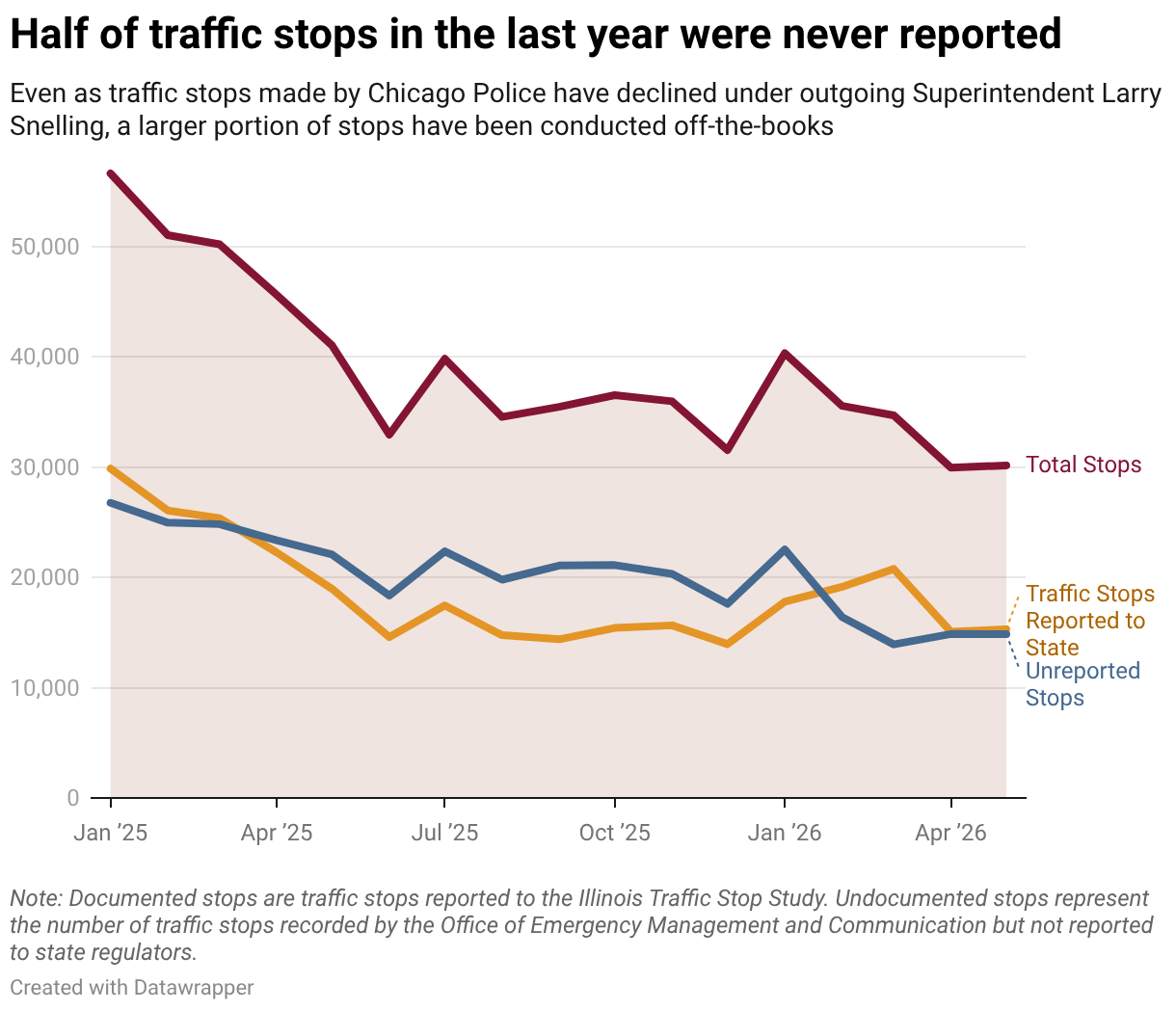
But with Snelling’s retirement July 15, Chicagoans are left with an even murkier view of how CPD patrols the streets than when he took office. The transparency issue “sheds doubt on the the weight” of the improvements that Snelling made, says Amy Thompson, an attorney for Impact for Equity, a non-profit public interest law and policy center that has been following the issue of traffic stops in Chicago. Thompson also previously served on the state’s Racial Profiling Prevention and Data Oversight board.
“Superintendent Snelling has said that he does not agree with the practice of widespread dragnet traffic stops, and that seems to have been true given what we’ve seen in terms of decreases in numbers,” Thompson said. “But when it is clear that there are stops that are going unreported, it begs the question: What is happening in the shadows? How much credence can we give this when there are things going on out there that we are not being informed about?”
CPD did not respond to multiple requests for an interview with Snelling or interim superintendent Fred Waller and ignored written questions about the findings.
Chicago has long violated state traffic-stops law
State law requires officers to fill out a form, known as a blue card, each time they pull someone over. The lengthy forms include detailed information about where the stop occurred, who was stopped, the reason for the stop, and the outcome—whether the driver or vehicle were searched and if a gun or drugs were found.
Bolts and Injustice Watch found the hidden stops using dispatch records maintained by the city’s Office of Emergency Management and Communications, which logs every time police radio to report that they are pulling a driver over.
Internal weekly activity reports circulated by Chicago police commanders obtained through public records requests show that department leadership uses the same dispatch logs, alongside the blue cards, to track how many traffic stops officers are making per month.
Those records show twice as many traffic stops as the city’s official count over the past year, but they typically reveal practically nothing about the circumstances of the encounter.
The data reported to state regulators, though incomplete, has consistently shown Chicago police are many times more likely to stop and search Black drivers, and that most stops are made for non-safety issues. Fewer than two percent of traffic stops reported by Chicago police to the state were for speeding, while expired registration accounts for over a third of documented stops.
“There are hit-and-runs and 911 calls that don’t get a quick response or go unsolved,” Schultz said. “It just seems like we’re spending a lot of law enforcement time on stuff that brings very little return.”
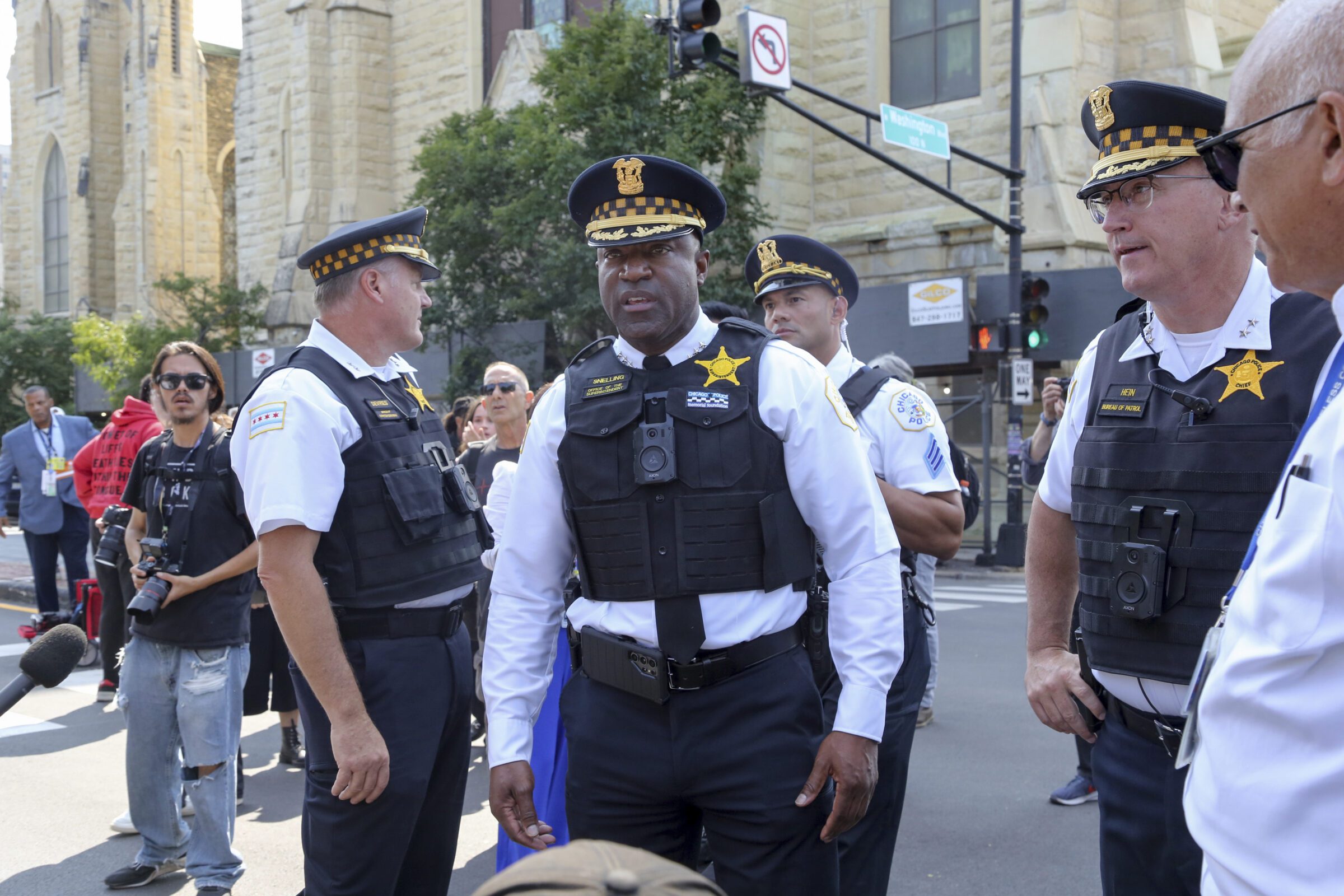
The Civilian Office of Police Accountability (COPA), the oversight agency that reviews misconduct complaints against the police, has routinely noted the problem of incomplete police data in its investigations. The agency warned police leadership in a letter after Reed’s killing that several investigations in the same West Side district had “been impeded by a consistent lack of documentation,” including traffic stop reports, body worn camera footage, and other written logs.
The investigation into the officers who pulled Reed over also surfaced a pattern of unreported stops. Though the officers were cleared of most allegations and COPA deemed the shooting justified, the agency questioned whether the initial stop was warranted and pointed to a string of other complaints involving the same officers conducting stops, pat-downs, and searches without any reasonable basis. Several of those prior stops were never documented, and officers were disciplined with suspensions of up to 25 days.
Efforts at traffic stop reform stalled under Snelling
Following Bolts and Injustice Watch’s initial investigation, 5th Ward Alderman Desmon Yancy pressed CPD Deputy Director Noe Flores on the vast discrepancy in traffic stop data during a June 2025 city council committee hearing. Flores said the department would create a consolidated electronic record-keeping system for all kinds of stops to “hopefully reduce some of those differences and fluctuations.” The department debuted a new electronic reporting system in February to replace the blue cards, but data shows the new system hasn’t led to a sustained reduction in undocumented stops.
After Reed’s killing, the Community Commission for Public Safety and Accountability (CCPSA), a civilian oversight body with the power to approve new CPD policies, made traffic stops a central reform priority, holding several months of listening sessions across the city to learn from residents’ experiences and gather input to shape new rules around traffic enforcement.
“It seems pretty clear, just from a numbers perspective, that traffic stops have in large respects replaced stop-and-frisk, which has a similar logic to sort of stopping people with the hopes of finding something else,” said Aaron Gottlieb, a University of Chicago professor who served on the CCPSA until June. “From my perspective, it’s pretty clear that if we want this practice to change, the rules need to change. What we have to reckon with is whether this a good practice … to use a pretext to search for something else that they don’t actually have evidence for.”
But no clear action has been taken to reform CPD traffic stop policy.
In June 2024, Snelling said he would bring traffic stops under the federal consent decree, the ongoing reform process focused on constitutional policing that, since 2019, has been overseen by a federal judge, the Illinois attorney general, and an independent monitoring team.
However, that process has dragged on for more than two years, longer than the negotiations that resulted in the initial consent decree settlement, and CPD has neither adopted a traffic stop policy nor come to an agreement on whether traffic stops will even come under federal oversight.
Snelling’s approach has drawn criticism from those who doubt the consent decree is the most effective path to reform. The Free2Move Coalition, a group of advocacy organizations dedicated to racial equity in traffic safety, worried it would weaken local control, since matters under federal supervision are exempt from the otherwise sweeping policymaking authority granted to the CCPSA. If traffic stops are ultimately folded into the consent decree, the CCPSA would help draft a policy and negotiate with CPD on its terms—but if the civilian board and the department can’t reach agreement, the final word would rest with the federal judge.
The Free2Move Coalition has said it prefers that the CCPSA maintain full control of traffic stop reforms, but the CCPSA has yet to act on its authority to set rules for the department on the issue.
In the spring of 2025, the police department and the civilian board each released draft policies on traffic stops. They were remarkably different in their goals for the reform. Snelling’s proposal conceded the department’s use of traffic enforcement as a pretext to investigate unrelated crime, but it still left officers discretion to “strike a balance” between the safety benefits of pretextual stops and the harm they cause communities. The CCPSA’s proposed rule, by contrast, embraced several of the restrictions backed by the Free2Move Coalition—among them a ban on stops for minor equipment and registration violations.
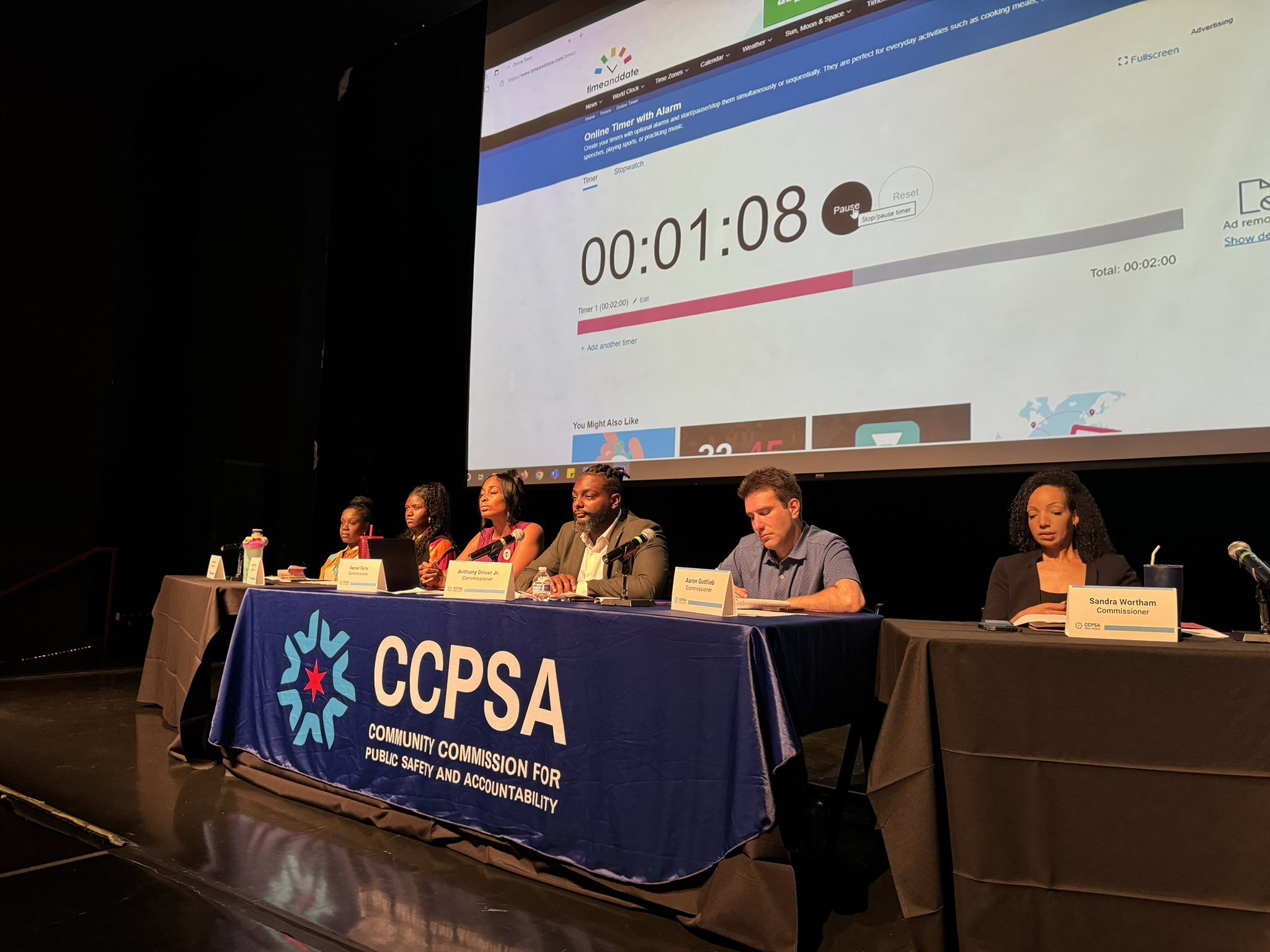
Negotiations around the policy are kept private under the rules of the consent decree, and the secrecy around those conversations and the prolonged timeline “reinforce our concerns of why this route has potential issues,” Thompson of Impact for Equity said.
But Gottlieb said there is no inherent reason why Chicago Police must pursue the policy through the consent decree, and the department can enact a meaningful reform without federal supervision.
Traffic stops are among the most volatile and dangerous interactions for officers as well as drivers, according to Gottlieb, and some cities that have restricted stops have reported fewer misconduct complaints and fewer incidents escalating. Police leaders in several cities voluntarily banned pretextual stops or limited stops for certain low-level violations, including Los Angeles, San Francisco, Minneapolis, and Fayetteville, North Carolina. “It could be a win-win and make everyone safer,” Gottlieb said.
But Snelling’s departure could further delay consent decree talks and calls into question whether the department will see through the reforms he initiated. The CCPSA has until November to assemble a short list of candidates to replace the police superintendent, but it is unclear whether Mayor Brandon Johnson’s selection will stay on the job past next year’s mayoral election. Without a policy on traffic stops in place, “it’s up to the whim of whatever the superintendent would like to do, because all of these decreases have happened on an informal basis,” Thompson said.
“We don’t know whether the next superintendent is going to have the same position and understand that these kinds of traffic stops not only are ineffective but also are harmful to communities of color,” Thompson said.
The drop in traffic stops over the past few years is a sign that Snelling has followed through on his commitment to ease up on traffic enforcement. But the purpose of a policy on pretextual stops isn’t only about how many drivers get pulled over, Gottlieb said. Rather, it is about having standards to ensure that when officers initiate a potentially risky encounter, it is done for the right reasons and not for a hidden motive.
“I don’t think there’s a number of stops that we should be targeting. It’s about the reasons for the stops, and how they are using their power,” Gottlieb said. “In my view, traffic safety should not be used as a way to try to fight crime. It’s more of an ethical question about, do you believe that this is how people should be treated when there’s no evidence of any benefit?”
Sign up and stay up-to-date
Get timely updates about pressing stories and elections.
Support us
Bolts is a non-profit newsroom that relies on donations, and it takes resources to produce this work. If you appreciate our value, become a monthly donor or make a contribution.
Related Posts