
New Jersey Cities Are Pressing Resistant State Officials for Civilian Police Oversight
Local officials in Newark, Jersey City, and Trenton want civilian agencies that can investigate police and issue subpoenas. But they keep running into the state’s Democratic leaders.
| December 12, 2025
When the U.S. Department of Justice uncovered a pattern of civil rights abuses and racial discrimination by Trenton’s police department in 2024, the findings came as no surprise to City Council Vice President Jasi Edwards. Like many other Trenton residents, she’d experienced excessive use of force by officers firsthand long before the federal investigation began. She saw police beat and detain her cousins at a neighborhood basketball game, and she had police dogs sicced on her in high school, but complaints about the incidents went nowhere.
“There are true concerns—hundreds, thousands of people in Trenton can share horror stories,” Edwards says. “Horror stories here in our community dating back decades.” But any hope that the DOJ probe could force change evaporated when Donald Trump became president and quickly terminated the investigation into the Trenton Police Department.
Now Edwards is championing a proposal for civilians to have more power to hold officers accountable. She is urging the city council to adopt her ordinance that would form a Civilian Complaint Review Board, or CCRB, to give residents a say in misconduct investigations.
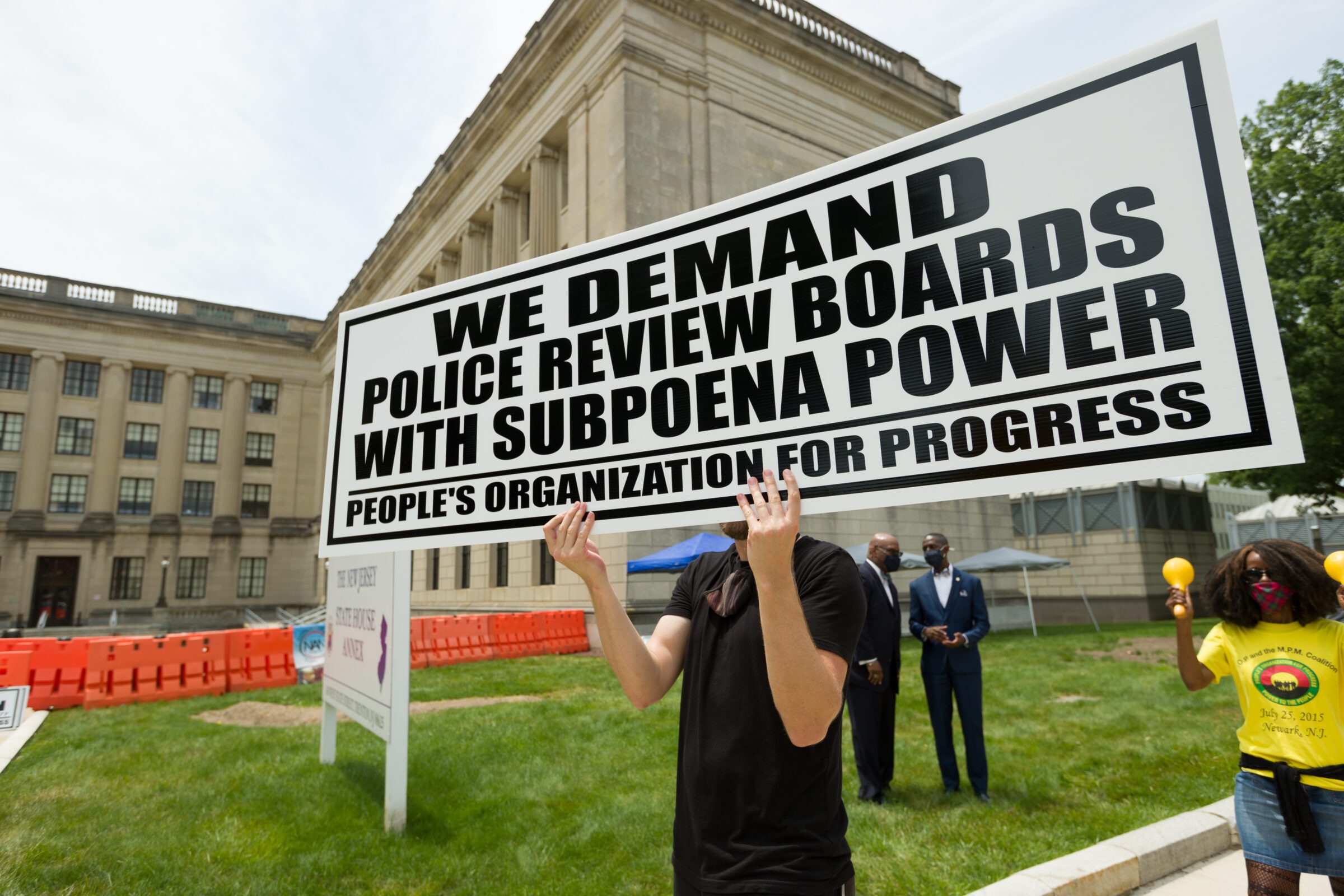
But Edwards faces a major obstacle to her ambitions. New Jersey law currently forbids civilian boards from holding real investigatory powers over police and from issuing subpoenas, a limitation endorsed by Democratic Governor Phil Murphy’s administration and upheld in 2020 by a state supreme court ruling against the city of Newark, which created a CCRB in 2015 only to see its authority gutted. A bill to change state law and empower these agencies has stayed stuck for years.
This fall’s elections brought New Jersey a new governor, and new leadership to some of its major cities, changes that could have loosened this stalemate between cities’ demands to unshackle CCRBs and the state’s resistance. But early indications are that they may have strengthened the impasse instead.
Governor-elect Mikie Sherrill told police unions during her victorious campaign that she opposed giving civilian boards subpoena powers, a stance that, if maintained, could doom the chances of statewide reform.
Subscribe to our newsletter
And learn more about local policing debates
In New Jersey’s biggest cities, though, a growing cohort of leaders are pressing to unshackle CCRBs. Jersey City, the state’s second most populous city after Newark, just elected a mayor and city councilors who ran on strengthening oversight. Mayor-elect James Solomon, who won last week, has been a lead voice for creating a CCRB in Jersey City since the police killing of Andrew Washington, who was shot after his family called a mental health crisis hotline in 2023.
And candidates who won alongside Solomon echoed that message. Jake Ephros, who prevailed in a city council race with support from Democratic Socialists for America, told Bolts that civilian oversight of police “is critical” for Jersey City and plans to keep pushing for stronger accountability regardless of state officials’ current positions.
“I have no illusions that we’re gonna have anything like a cake walk in terms of putting forward all of the changes and all the transformative reforms that we need and that we deserve,” he said. “But there’s a lot of opportunity right now to make those upward pushes. And regardless of who’s sitting in which offices we need the movement, we need the grassroots organizing.”

Edwards, the Trenton city councilor, hopes that state officials will take notice if the number of city leaders in the fight for police accountability in New Jersey grows.
“If enough municipalities are having issues, we can show the state that this is something that is needed,” Edwards told Bolts. “These things happen on a local level.”
Newark Mayor Ras Baraka first established a civilian complaint review board in 2015 after a federal report determined that the local police department enabled abuse and discrimination against Black residents by neglecting to address misconduct internally. The probe found that Newark officers violated people’s constitutional rights in up to 75 percent of pedestrian stops, and that those stops were overwhelmingly targeted on Black residents.
The city council later authorized the civilian board, granting it sweeping investigatory powers to probe internal records, subpoena officers, and recommend discipline.
But the local Fraternal Order of Police lodge sued the city, arguing that New Jersey law does not permit cities to authorize outside investigators to review misconduct complaints internal to the police.
Before the case was even resolved, Attorney General Gurbir Grewal, a Democrat appointed by Murphy, issued a directive that said that only police departments have the authority to discipline officers; his office also helped the police unions in their lawsuit against Newark’s board. Then, in 2020, the New Jersey Supreme Court ruled against Newark, denying its board the authority to issue subpoenas.
The ruling, which Baraka denounced as a “shocking blow to basic humanity,” allowed the board to exist but determined said city councils cannot delegate their subpoena power to a separate agency, citing both state law and the attorney general’s regulations.
The court also said civilian oversight boards are barred from mounting an independent investigation if police have already launched an internal inquiry. In recent years, other states have also weakened the powers of local civilian boards, including Florida and Tennessee.
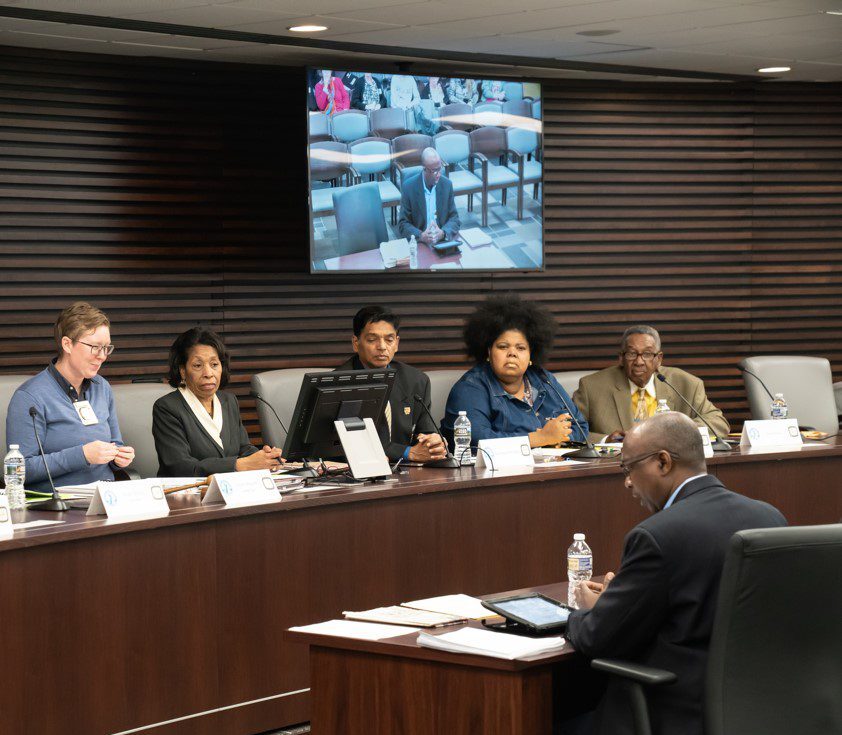
Since this supreme court ruling, Newark’s board has continued to work with residents who report misconduct incidents to identify patterns and develop recommendations to the city. Its members also advocate for better access to records and more transparent investigations and for the state to give them stronger powers.
“It gives folks a stake in what is happening in the police department, and that’s important in developing the trust and transparency between the police and the community,” said DaWuan Norwood, a commissioner on Newark’s board who is also a policy counsel at the ACLU of New Jersey.
“In the absence of that subpoena power, we need to show the various efficacies of a CCRB, and one of them is transparency and trust building,” Norwood added. The Newark CCRB, he thinks, is “making the case for why that subpoena power is all the more important and necessary.”
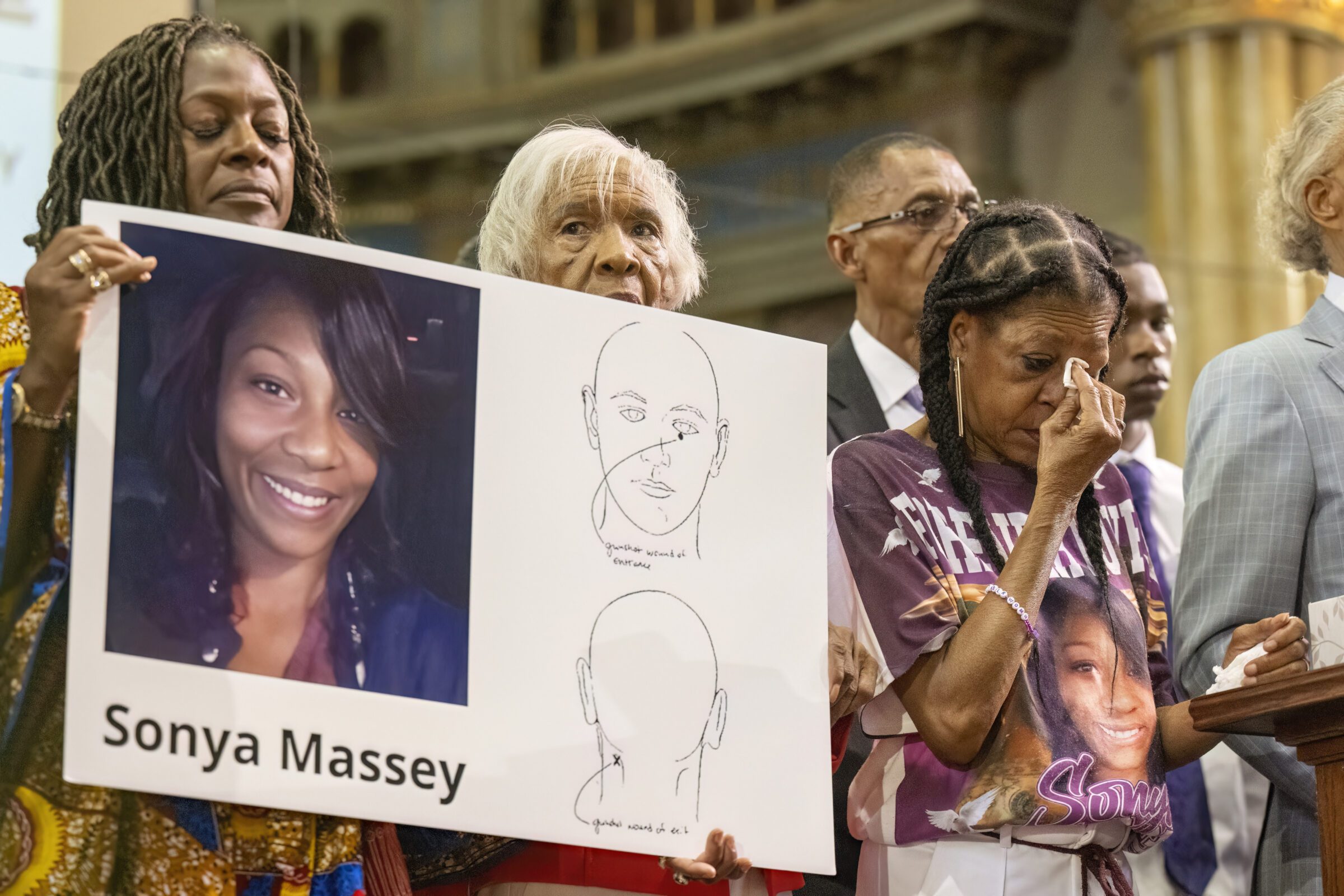
Jersey City, unlike Newark, has no civilian board whatsoever at the moment. The local push to create one gained urgency in August 2023 after a police officer shot and killed Andrew Washington, who was armed with a knife, after breaking through his front door during a mental health call. The shooting ignited local protests for transparency and investigations but nearly a month passed before the release of bodycam footage, audio recordings, and dispatch logs; a grand jury eventually declined charging the officer. The city is in an ongoing civil rights lawsuit with Washington’s family.
In October 2023, the city council approved a resolution that called on New Jersey officials to change state law to strengthen civilian oversight—to no avail so far. The resolution was sponsored by Solomon, who was then a councilmember.
Solomon kept talking about his support for a CCRB during his campaign for mayor this year, when he beat Jim McGreevey, a former governor with support from local police unions.

In 2024, the DOJ ignited the same debate in New Jersey’s capital, Trenton, with a report that determined that the local police department “ignores officer misconduct in plain sight” and is ultimately “inadequate to the task of investigating alleged misconduct fairly.” The report tore into patterns of discriminatory traffic stops and police brutality, plus the department’s unworkable system for reviewing complaints. It said civilian complaints are routinely mishandled and allegations misclassified as minor; not a single allegation of excessive force or an illegal stop was sustained in the five years of internal investigations reviewed by the DOJ.
Edwards, the city council member, says the police often sweeps grievances under the rug. “I have had dozens of police officers come to me, telling me stories about their internal issues and things that had happened out in the street that weren’t done right, and that they reported it and it went nowhere,” she says.
She drafted an ordinance to create a CCRB and she plans to push for a vote in city council next spring, she told Bolts. Even though the board Trenton could create at the moment would lack real investigatory powers due to state law, she still wants the city to force the issue.
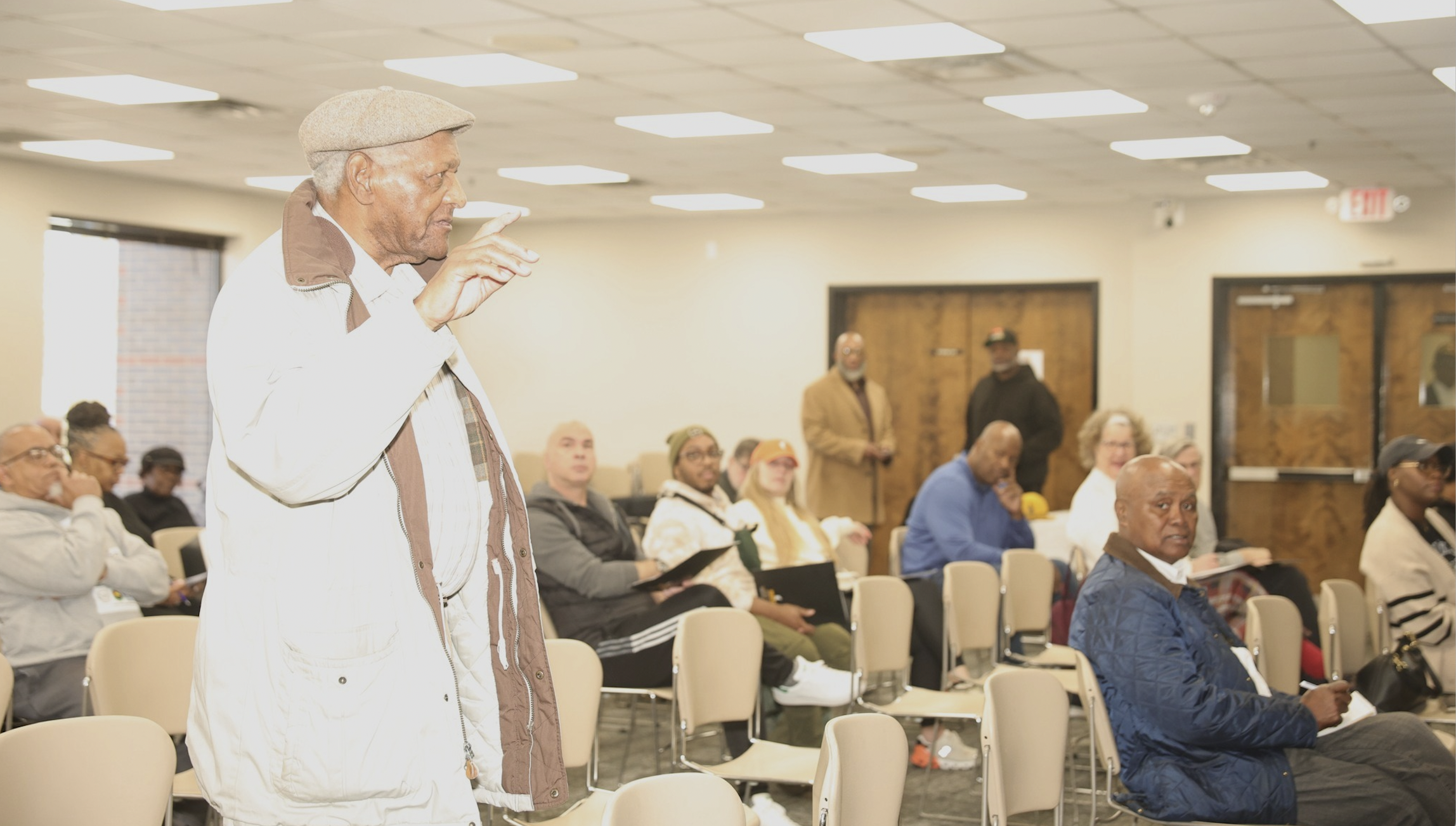
Edwards hosted a series of community meetings in Trenton this spring and summer to gather input on what a local board could look like, and how it could serve an advisory role even absent a change in state law to at least elevate people’s voices. She was accompanied by state Senator Angela McKnight, a Democrat who represents Jersey City and is one of the chief sponsors of the bill that’d strengthen oversight powers and greenlit subpoenas.
“Without subpoena power, CCRBs are left without the tools they need to conduct meaningful investigations, which limits their ability to deliver real oversight and real change,” McKnight told Bolts in a written statement via a spokesperson. “My goal at the state level is to establish a clear framework that guides their work, gives them the tools and authority to drive real change, and strengthens accountability between law enforcement agencies and the communities they serve.”
Multiple iterations of McKnight’s bill have stalled in the legislature since it was first introduced in 2020, a failure proponents have attributed to the influence of police unions. The current version of the reform, Senate Bill 2943 and Assembly Bill 3441, would authorize all cities to form review civilian boards with subpoena power, but it has not advanced this year.
“Expanding community oversight of policing has been an uphill battle for decades,” McKnight said. “My hope is that the conversation around CCRBs continues to grow, and as more towns and cities voice their support, we can finally move the needle toward turning this legislation into law.”
If the legislature were to pass the bill in the current lame-duck session, it’d be up to Governor Phil Murphy to sign it; his office did not respond to a request for comment. If the next legislative session passes a bill next year, it’d land on the desk of the state’s new governor, Sherrill.
As a member of Congress, Sherill has expressed support for police accountability and civilian oversight, and co-sponsored the George Floyd Justice in Policing Act that would have limited police officers’ qualified immunity. But she also told officers at an event hosted by the New Jersey State Policemen’s Benevolent Association, a prominent police union, that she does not support giving civilian boards full investigative powers.
“We have worked with civilian boards and I support civilian boards, but not up to the level of subpoena power,” Sherrill said in the April meeting, first reported by Politico. Her team did not reply to repeated requests for comment for her views on civilian oversight boards.
Sherrill defeated a Republican opponent in November who was a lot more openly hostile to police oversight. Jack Ciatterilli, who lost to Sherrill by thirteen percentage points, ran on dismantling all civilian boards—including ones without oversight—and further shielding officers from investigations by restricting the release of internal records to the public.
In the Democratic primary, though, Sherill defeated Baraka, the Newark mayor who created the CCRB ten years ago. “The moment to make this a resounding issue was then, and we missed that opportunity,” said Reverend Doctor Charles Boyer, executive director of the Trenton-based Salvation for Social Justice, a group that advocates for stronger accountability.
Sherrill faces another momentous decision as she’ll soon be appointing a new attorney general. This office wields an uncommonly large authority to control internal policies, shape complaint review processes, and issue binding guidance to all local police departments.
Boyer’s group is advocating for an attorney general pick who would be friendlier towards civilian oversight, but also one who’d improve use-of-force policies and tackle patterns of discrimination against Black drivers. He wants the next attorney general to overhaul state guidelines around internal reviews and force police to adequately manage complaints.
He’s also advocating for broader reforms, such as ramping up programs that’d dispatch civilian alternatives to policing for some low-level emergency calls.
Boyer says he wants to see cities enhance civilian police oversight, but that advocating for their creation is not a priority for his organization as long as CCRBs would lack real power due to state law. “The worst thing you can do is put a whole lot of energy and get people behind something that ultimately is going to fail them, because then, then you lose their trust,” he said.
Ephros, the incoming city council member in Jersey City, echoes Boyer’s caution about whether to move forward with creating a CCRB when the legislature still hasn’t changed state law and granted them real investigatory authority. “Sometimes when we put forward progressive change that isn’t fully equipped, then people will point to it not actually functioning as well as it should, as a sign that this progressive change doesn’t work,” he said.
Still, Ephros is open to pushing for a CCRB in Jersey City now since there’s grassroots energy around it and thinks it’d be an opportunity to convince newcomers. “It is my understanding that organizers who have been pushing for this would be excited to just get the ball rolling,” he said.
“Communicating with people who don’t know what a CCRB is or who are skeptical of oversight over police, that needs to be part of this,” he added. “Having these community meetings, introducing the idea and bringing the community out to town halls, and discussing what public safety means in a much broader sense, I think that’s a core part of this too.”
Sign up and stay up-to-date
Support us
Bolts is a non-profit newsroom that relies on donations, and it takes resources to produce this work. If you appreciate our value, become a monthly donor or make a contribution.
Related Posts