
On His Way Out, New Jersey Governor Vetoes Legislation to Bar Local Assistance to ICE
Phil Murphy killed a bill meant to codify restrictions on how sheriffs and police can partner with ICE. Some restrictions remain in place, for now, due to an attorney general directive.
| January 20, 2026
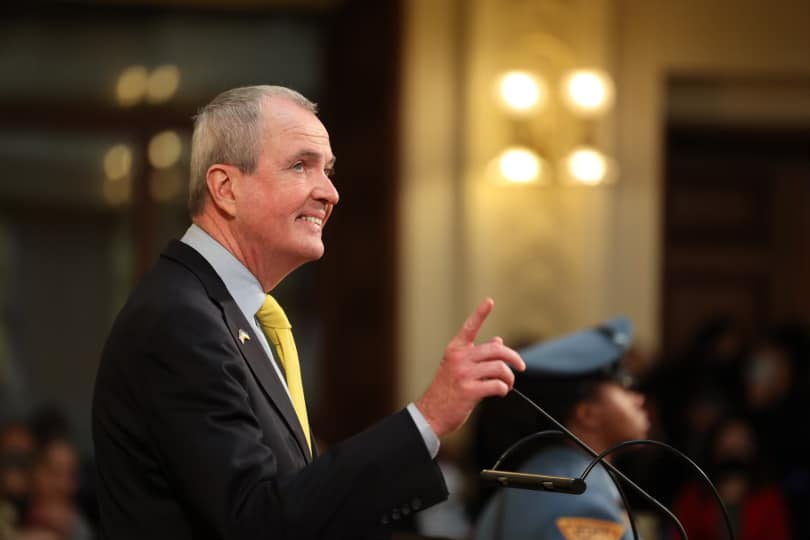
On his last day in office, outgoing New Jersey Governor Phil Murphy on Tuesday vetoed legislation that would have restricted local and state law enforcement from cooperating with federal immigration authorities under certain circumstances. Murphy explained that the bill would have invited new legal challenges from the Trump administration that would risk “endangering hundreds of thousands of immigrants in New Jersey in one fell swoop.”
Immigrants’ rights advocates said Murphy’s concerns were misplaced and expressed anger at his decision.
“ICE is already here, kidnapping people, and we can’t obey in advance out of fear of what Trump might do,” Nedia Morsy, director of Make the Road Action New Jersey, told Bolts on Tuesday. “I think Murphy had the power to protect immigrants on his last day, and he chose not to use it, and it’s a failure of leadership when we need it the most.”
Murphy also vetoed a second bill that would have banned local and state agencies from sharing certain sensitive data with federal immigration authorities.
Subscribe to our newsletter
To learn more about immigration enforcement
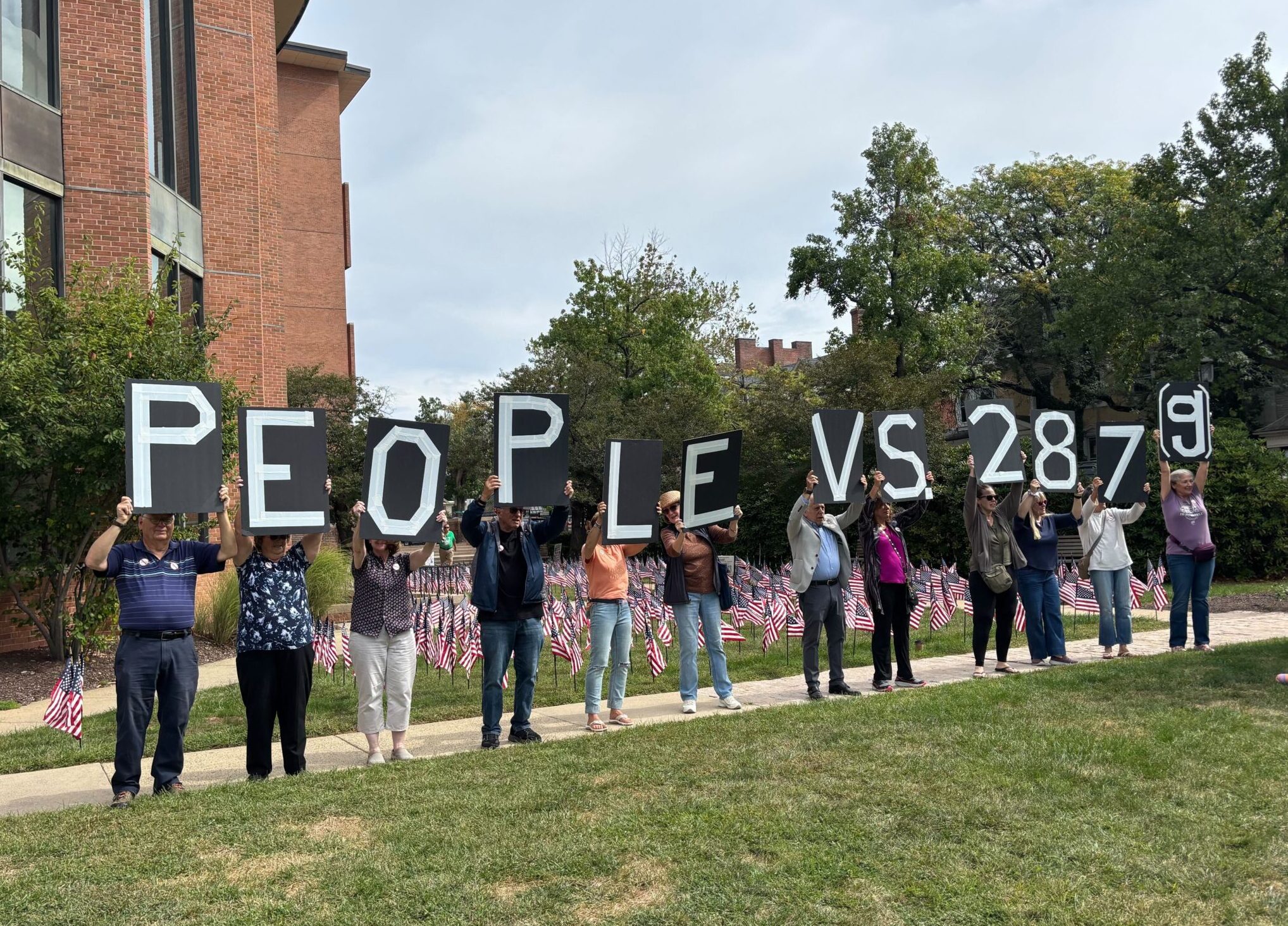
Advocates had pushed for Murphy to sign the first, more substantial piece of legislation, Assembly Bill 6310, to make permanent existing protections that were put in place in 2018 under an order known as the Immigrant Trust Directive. This directive was issued by Attorney General Gurbir Grewal, a Murphy appointee, but it could be repealed or changed by other administrations since it is not codified into law.
Immigrant rights organizations pushed for this legislation urgently last fall because Mikie Sherrill, a Democrat who won the governor’s race to replace Murphy in November, has not committed to keeping the directive in place going forward. The Democratic-run legislature then passed the bill on party lines earlier this month, sending it to Murphy’s desk.
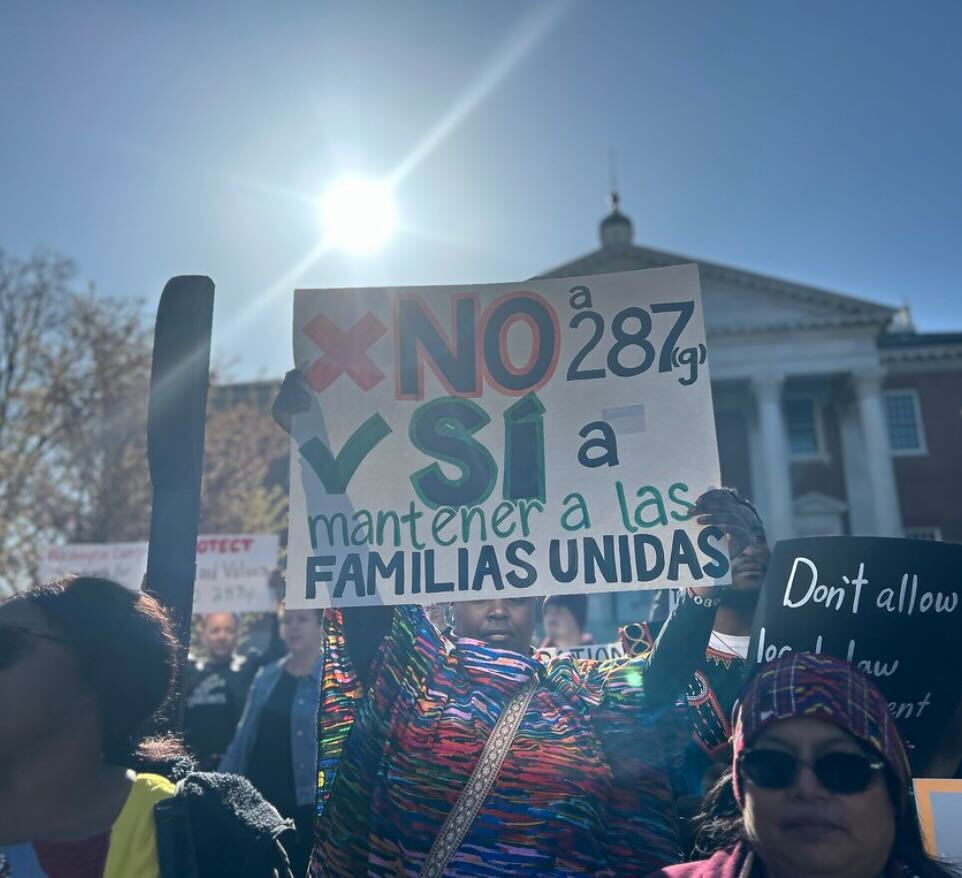
That 2018 directive, and amendments that strengthened it in 2019, banned local sheriffs and police departments from participating in ICE’s 287(g) program, which deputizes local officers to enforce immigration laws; this ended up forcing several local sheriffs to quit the program. It also prohibits law enforcement from inquiring about citizenship status when it doesn’t relate to an investigation.
The vetoed bill included those restrictions and would also have expanded them. New provisions would have barred law enforcement from notifying ICE about a prisoner’s release even when a federal judge signed their final order of deportation, and imposed new limits on how state and local authorities can use funding to help ICE.
The state’s existing Immigrant Trust Directive has already been upheld in two federal courts, including by a Trump-appointed judge. In a statement explaining his decision on Tuesday, Murphy said he vetoed the legislation out of fear that those two provisions wouldn’t withstand additional legal challenges.
“Re-opening the door to judicial scrutiny of our State’s immigration policies, combined with the Trump Administration’s increasingly targeted actions against states and cities, is a recipe for disaster for our immigrant brothers and sisters and puts them in greater danger,” wrote Murphy.
California, Delaware, and Illinois have all adopted laws to ban 287(g) contracts, and some other forms of local cooperation. Similar legislation faltered in Maryland last year.
Murphy on Tuesday signed another immigrants’ rights bill, The Safe Communities Act into law, directing the attorney general to create policies limiting immigration enforcement at places such as hospitals, shelters, schools, and courthouses.
The legislation is aimed at protecting immigrant populations who attend such places from the threat of arrest.
“This is barely worth celebrating,” Asma Elhuni, an organizer with Resistencia En Accion, told Bolts. “We have spent a long time helping policymakers understand the real threats facing our communities. While safe spaces matter, they are not the only protections our communities need.”
The second bill Murphy vetoed, the Privacy Protection Act, would have restricted the collection and sharing of information such as immigration status and social security number by state and local agencies. Murphy said his team found a “drafting oversight…if signed into law, could jeopardize billions of dollars of federal funding” but was hopeful it could be quickly corrected.
The legislature will have to start over in passing the bills Murphy vetoed whether in identical or modified form, and it would be up to Sherrill, who was sworn into office on Tuesday, to sign them into law.
Sherrill, a Democrat, has voiced similar concerns to Murphy about legislation codifying the Immigrant Trust Directive, and declined to say whether she would keep the Immigrant Trust Directive in place. In a November interview, she said, “there are areas of it that I’m very supportive of and areas I think need to be addressed.” She pointed to her conversations with law enforcement about how the directive addresses those who are in “real danger.”
Morsy said that her organization is “eager” to work with the Sherrill administration to pass the legislation.
A spokesperson for Sherrill’s office did not immediately return a request for comment.
In December, Sherrill announced that she would appoint Jennifer Davenport, a veteran prosecutor who has worked in the attorney general’s office, as the state’s next attorney general.
With the failure of AB6310, it’ll remain up to Davenport whether to continue implementing the Immigrant Trust Directive. Davenport expressed general support for the order after her appointment in December, while saying she would review whether it needs changes.
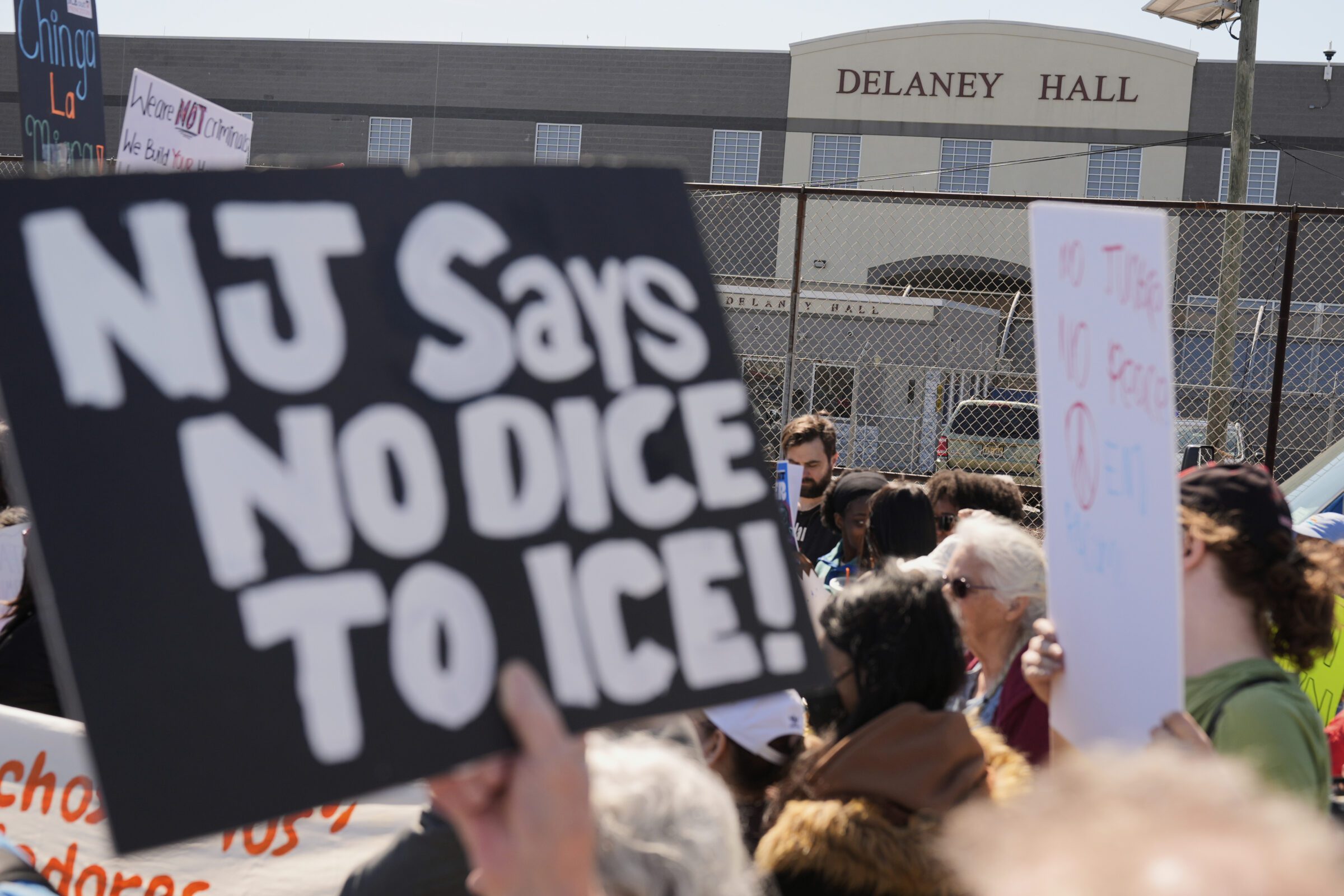
As of November, ICE had arrested more than 3,000 people in New Jersey during President Donald Trump’s second term. Earlier this month, ICE raided Morristown businesses, arresting 11 people. Among them was a high school senior who was later released after a judge determined he was unlawfully detained. Another, who has lived in Morristown for 10 years, was detained while he was out picking up food, leaving his six-year-old daughter to wander the streets looking for him.
Federal enforcement has been met with protests, including a high-profile incident last spring where authorities arrested Mayor Ras Baraka while he tried to visit an ICE detention facility in Elizabeth, New Jersey. U.S. Representative LaMonica McIver, a Democrat who represents northern New Jersey in Congress, is currently facing federal prosecution over her presence at the protest.
“When the history of this time is written, it will show that many of our supposed leaders backed down, but that we the people never did,” Adam McGovern, spokesperson for the immigration advocacy group Wind of the Spirit, told Bolts. “With irresponsible, unrepresentative government like this, we are faced with an unchanged landscape of disappointment and danger, and an undiminished necessity and determination to act.”
Sign up and stay up-to-date
Support us
Bolts is a non-profit newsroom that relies on donations, and it takes resources to produce this work. If you appreciate our value, become a monthly donor or make a contribution.