
North Carolina Governor Denies Nearly All Juvenile Lifers Seeking Clemency
After the state’s previous governor created a board to consider clemency for people sentenced to lengthy prison terms as minors, a new administration closes their pathway to freedom.
| May 13, 2026
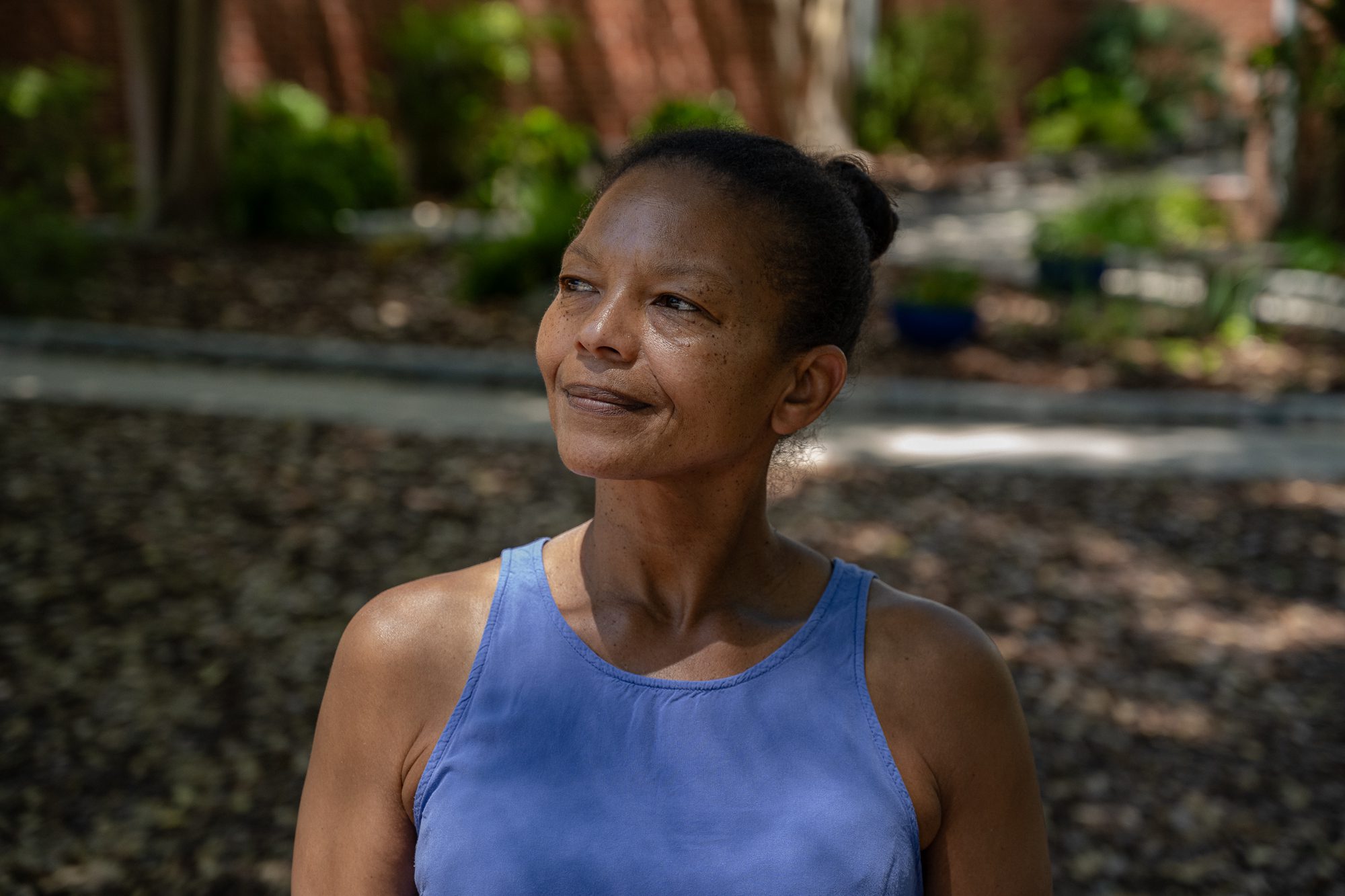
In the four years since she was released from state prison, April Barber Scales has earned an associate’s degree and most recently, a bachelor’s degree in criminal justice. When she first got out in 2022, after spending more than three decades behind bars, Barber Scales, 50, worked as a home healthcare aide. Now, she has a job in behavioral health, working at a facility that provides “wrap-around” services for people with mental illness, like employment and transitional housing. She’s also now pursuing a master’s in social work.
Barber Scales was one of the first people to receive clemency through North Carolina’s Juvenile Sentence Review Board (JSRB). The board, which was born out of the state’s now-shuttered Task Force for Racial Equity in Criminal Justice, launched in the wake of George Floyd’s murder to review the lengthy sentences of hundreds of prisoners, like Barber Scales, for crimes they committed as children in North Carolina.
When he created the board in 2021, then-Governor Roy Cooper cited the need to address racial bias and “promote sentencing outcomes that consider the fundamental differences between children and adults.” Bolts reported last year how nearly 200 people given life or other very lengthy sentences for crimes they committed as children filed petitions for the board to consider their cases and recommend clemency by the governor, who makes the ultimate decision.
But Barber Scales would only be part of a small group of people released at the recommendation of the board. Of the 191 incarcerated people who petitioned for the JSRB to review their cases, Cooper granted clemency to just 14 people. Of those, 12 individuals were released, while the remaining had their sentences commuted so they could become parole eligible.
When Cooper left office at the end of 2024, the four-person board disbanded, and the 75 people who filed petitions that hadn’t yet been decided by the governor were left waiting for consideration from North Carolina’s new Democratic governor, Josh Stein. According to Ben Finholt, director of Duke law school’s Just Sentencing Project who tracks petition outcomes, Stein denied 58 of the remaining petitions, while a dozen other people who applied for clemency were ultimately released before the governor made a decision. One other person who filed a petition died in custody before a decision was made, according to Finholt. Of the four petitions still pending, two are from men who have already been exonerated of their crimes yet remain incarcerated.
Finholt, who largely drafted the executive order that Cooper signed to form the JSRB, told Bolts he expected it to provide a pathway out of prison for more people at the time it was created in 2021. But he said the limited releases under the short-lived board seem to reflect a return to the political realities around clemency born out of the tough-on-crime era and rhetoric of the 1990s.
“Given where we are now in terms of the backlash to things like George Floyd’s murder and the Task Force for Racial Equity and Criminal Justice, and Trump being elected again, I am not surprised,” Finholt said.
Other states have been chipping away at extreme sentences for children in recent years following a series of U.S. Supreme Court decisions that banned the death penalty and mandatory sentences of life without parole for minors. Some, like Illinois and New Mexico, have abolished life without parole sentences for minors entirely while others like Massachusetts have gone even further by banning the sentence for young adults.
Subscribe to our newsletter
for more reporting on sentencing reform
In North Carolina, the state supreme court ruled in 2022 that sentences of more than 40 years are functionally equivalent to life without parole and effectively set a new 40-year limit before someone convicted as a minor can become eligible for parole—unless a judge deems them “irredeemable” or “incorrigible.”
But the GOP-run legislature has kept championing tougher criminal penalties. Last year, Republican lawmakers targeted Cooper and the task force that led him to review lengthy juvenile sentences, claiming its policy proposals, like eliminating cash bail for some misdemeanors, were “soft on crime.” Following the August 2025 stabbing death of Iryna Zarutska, a 23-year-old refugee from Ukraine, on Charlotte’s light rail, Republican lawmakers falsely blamed Cooper for releasing the alleged killer from prison early as they passed legislation tightening pretrial release conditions; Stein signed the bill into law, leading to a surge in jail populations
Cooper is currently running for an open seat in the Senate against Republican Michael Whatley, a former Republican National Party Committee chair and President Donald Trump’s pick for the seat. Last month, in a Truth Social post, Trump blamed Cooper for Zarutska’s killing. A few months earlier, Trump had falsely claimed the alleged killer was an undocumented immigrant.
In response to the backlash, Cooper, who also served four terms as the state’s attorney general, said he has “fought to make North Carolina safer.” A Cooper campaign spokesperson told Fox News in February that the former governor “is the only candidate who spent his career prosecuting violent criminals and keeping thousands of them behind bars as attorney general, and signing tough on crime laws and stricter pretrial release bail policy as governor.”
Given the political climate, Barber Scales, too, told Bolts she’s not shocked that Stein recently denied nearly all of the remaining JSRB petitions. Still, she’s upset and disappointed, acknowledging how discouraging it is for those still incarcerated, their morale and for their families.
Amid all the denials, she said she believes that there had to be at least one person in the dozens of petitions awaiting the new governor who “surely to God, would have deserved a second chance.”

By the time Cooper ordered her release, Barber Scales, who is Black and Native American, had already spent 31 years in prison, after pleading guilty to first-degree murder for a blaze she set at her adoptive grandparents’ home that killed the couple. Barber Scales, who was just 15 at the time and pregnant by a man twice her age, says the man convinced her to set the fire after her grandparents tried to pressure her to have an abortion.
Democratic state House member Marcia Morey, a former chief district court judge who served on the JSRB, told Bolts she saw much the same patterns when she was on the bench—“the vulnerability of young people” and the influence of “older, bad actors.”
“These were bad crimes,” Morey said. “There’s no doubt about that. And the sentence they had, in many cases, was justifiable.
“But in all the cases to have a teenager sentenced to life in prison, to never walk outside having any freedom after they’re the age of 16, is pretty harsh,” she added. “It’s unforgiving.”
A few months after Barber Scales’ release in 2022, there were still more than 900 people in North Carolina prisons incarcerated for crimes committed while they were minors, the Raleigh News & Observer later reported. Of those, more than 80 percent were people of color, a group disproportionately sentenced to terms of life in prison or terms longer than 30 years.
Morey told Bolts she’s hopeful that cases will continue to be reviewed and that the JSRB will eventually be reestablished. Still, she wished more people had gotten relief.
“I think a lot of people that we considered when we were operational for three years were very deserving of clemency,” Morey said. “I don’t think they pose any threat to public safety at all. They’d served decades in prison, did very well, had good reentry plans, and I think they’re still deserving of consideration.”
But Morey also cautioned that board members only saw “part of the picture,” and the final decision rests with the governor. The governor’s process for reviewing cases and deciding clemency in North Carolina is so opaque that advocates have described it as a “black box.”
“We saw the crime. We saw what happened with the adjudication, the trial, the sentencing, what had happened in prison, courses people had taken to redeem themselves, apologies, and then once we gave a recommendation to the governor’s office, they carried it further to talking to victims and also the district attorneys in the counties where the crime occurred,” Morey said.
Those conversations with victims and district attorneys likely “held a lot of sway,” she added.
Stein’s office did not respond to an interview request from Bolts, nor did the governor’s clemency office.
While few JSRB applicants had their sentences commuted, Finholt still believes others likely benefited from the process—and that some, in direct and indirect ways, even gained relief.
“It did have the knock-on effect of also creating more clemency opportunities for other people who were not juveniles at the time of the crime,” Finholt said. “I do think that one of the legacies of the JSRB is that it revitalized clemency in North Carolina.”
Before Cooper left office, he commuted the sentences of 15 people on North Carolina’s death row to life in prison without parole. In total during his time in office, he commuted the sentences of 43 people, compared to other recent governors who didn’t commute any sentences.
Finholt also believes some JSRB petitioners were likely paroled in part because they went through the clemency process. For many who applied, Finholt said it was the first time someone took a real look at their case and talked to them about what their childhood was like, what they’ve accomplished in prison, and what they would do if they were released.
“It was the first time that people had all those conversations, put all that information together and submitted it to anyone,” Finholt said.
Still, many who applied will likely never leave prison, as the JSRB was their only viable path to release.
“I think that we gained a lot of awareness, some traction, but it wasn’t as much as it could have been,” Barber Scales said. “And it’s still, by far, not as much as it could go. I think that it takes people that have been through the system to make the change. We’re the ones with the lived experience.”
Sign up and stay up-to-date
Get timely updates about pressing stories and elections.
Support us
Bolts is a non-profit newsroom that relies on donations, and it takes resources to produce this work. If you appreciate our value, become a monthly donor or make a contribution.
Related coverage
In North Carolina, Juvenile Lifers See a Pathway to Freedom