
The NYPD Has Final Say on Civilian Oversight. Will That Change Under Mamdani?
New York City’s Civilian Complaint Review Board, ostensibly a police watchdog, cedes much power to police leadership. Experts say the mayor has the power to boost its independence.
| May 29, 2026

New York City’s Civilian Complaint Review Board, the watchdog agency that oversees the New York Police Department, consistently touts its independence—“independent agency” is the first descriptor on all of the board’s official communications.
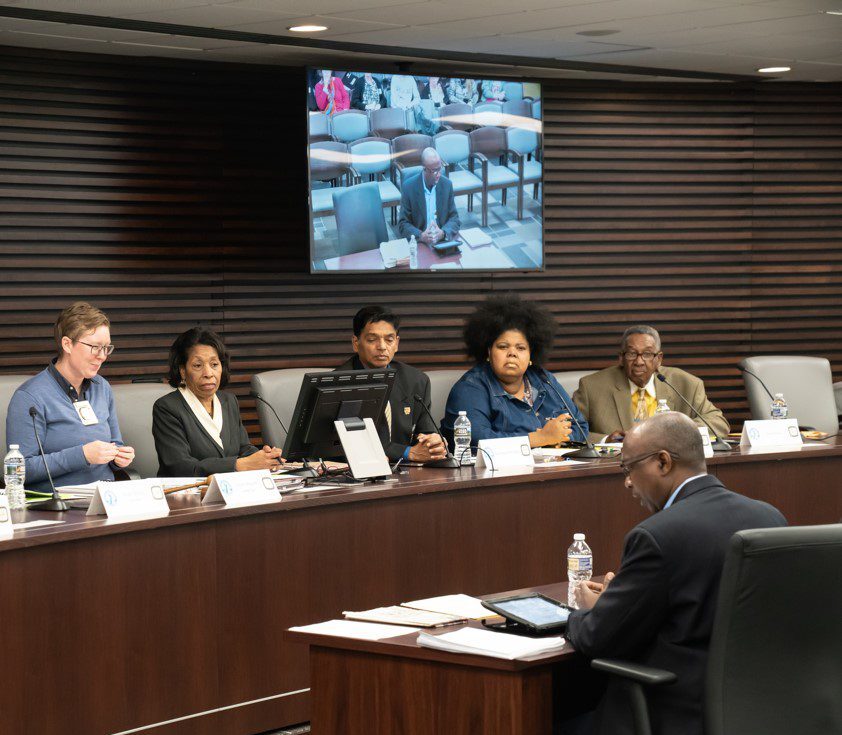
The board, which investigates instances of alleged misconduct by officers and votes on whether to recommend discipline, is led by 15 civilian members who, in theory, represent democratic control over the police. But in practice, the department retains control over virtually every step of the civilian review process, even right up to the final one, where the police commissioner can simply overturn a disciplinary recommendation. “Even if it were functioning as fairly as possible, it’s still very much set up so that the power is in the hands of the NYPD,” said Yul-san Liem, the deputy director of the Justice Committee, which organizes against police abuses.
What’s at stake for officers isn’t incarceration or a criminal conviction. At most, it’s termination from the NYPD and the loss of a pension. More often, it’s the loss of a few vacation days—sometimes, just a fraction of one day—or extra training. But the NYPD, and its unions in particular, tend to react to CCRB investigations with as much furor as they display in response to criminal cases against NYPD officers, and have insisted on police leadership having the final say.
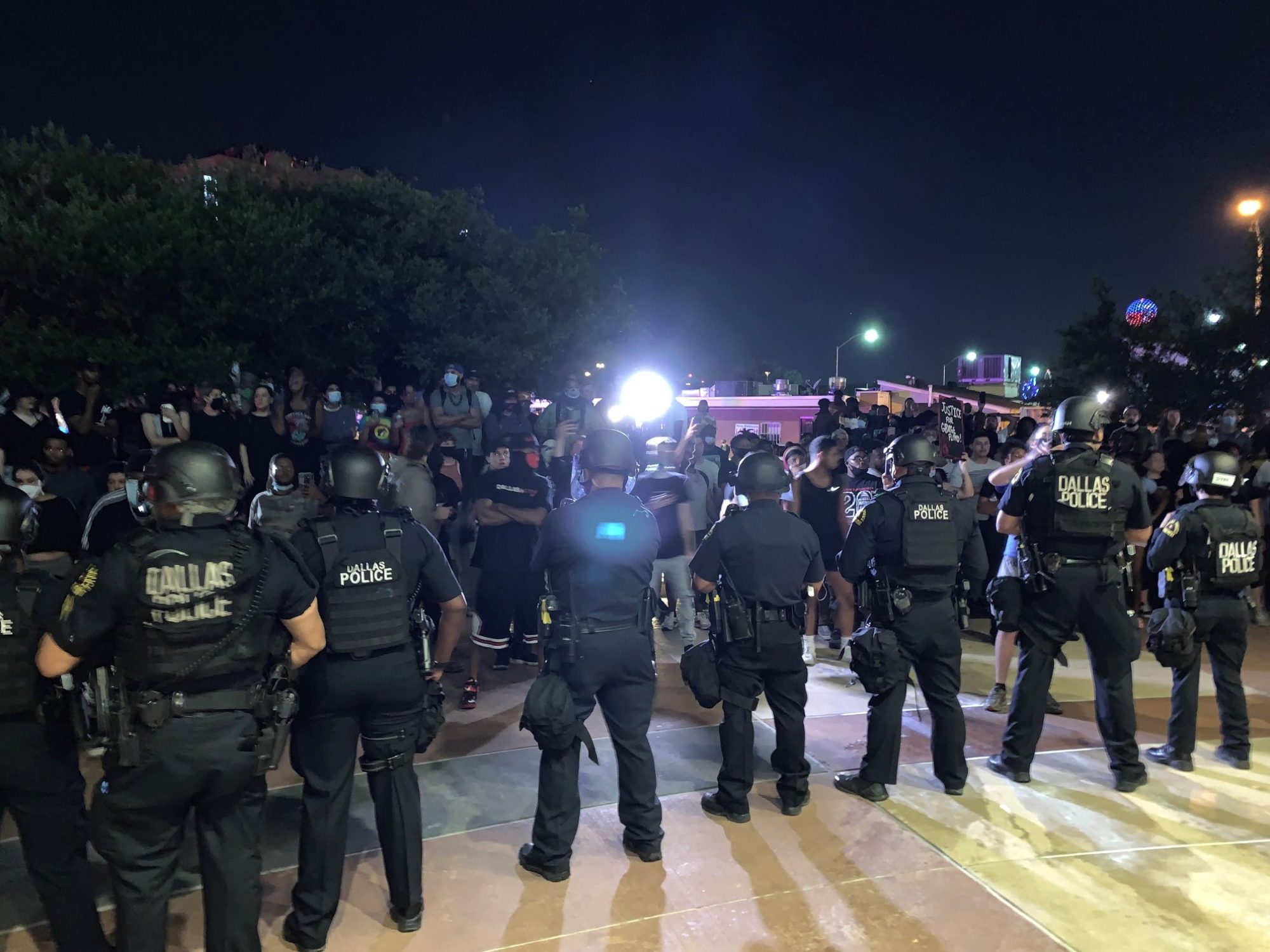
The push to make the board independent from the NYPD in the 1990s provoked an infamous cop riot. More recently, under Mayor Eric Adams, two successive CCRB interim chairs were forced out after their vocal support for greater independence put them in the NYPD’s crosshairs. When, on the campaign trail, Zohran Mamdani briefly expressed support for giving the CCRB final say on disciplinary decisions, the police unions’ chief spokesperson responded that such a change would mean the “end of policing in this city.” In April, the city’s largest police union sued the CCRB twice over disputes involving public access to disciplinary records. Lately, the union has been leaking investigators’ social media posts to theNew York Post, demanding they be fired for “cop-bashing” rhetoric. It has even singled out one of its own, a former NYPD chief and police commissioner pick, for recommending discipline too often.
The union told Bolts it believes that the CCRB doesn’t give officers a fair shake, in violation of the city charter mandate for it to conduct investigations impartially and in a way that both the public and the department can have confidence in. “It would be a mischaracterization to imply we are seeking ‘control over the process,’” union spokesperson John Nuthall told Bolts, noting that false accusations of misconduct can hurt officers both personally and professionally. “We are simply seeking the fairness required by the Charter.”
The city’s elected leaders don’t appear to possess a countervailing urgency to curb the NYPD’s influence and bolster CCRB’s independence. The board currently has only 11 out of 15 seats filled; the seat representing the Bronx, ground zero for abusive police practices like stop-and-frisk, has been empty for nearly three years. On Dec. 31, the final day of his mayoralty, Adams vetoed a bill opposed by the city’s police unions that would have allowed CCRB investigators automatic access to NYPD bodyworn camera footage. This would have constituted a major reform to the “central issue with the CCRB,” according to Mac Muir, a former senior investigator for the board: “the agency cannot be a real, functioning oversight entity without direct access to body cam [footage].”
For more stories about police accountability
Subscribe to our newsletter
But this January, as the new city council overrode a slew of Adams’s last-minute vetoes, the CCRB bill was one of just three the council failed to revive—in part because new members reportedly didn’t understand its import.
Liem and other advocates and experts argue that this deficit of attention to the CCRB has created a lack of accountability for everything from routine humiliations to police killings, allowing the NYPD’s pattern of violence and disregard for civilians to continue. “The CCRB has no constituency,” said LatinoJustice PRLDEF criminal justice counsel Andrew Case, who worked at the board from 2001 to 2008. “People only think about these entities in a crisis.”
Still, the city’s mayor retains “extraordinary power” over the CCRB, according to Udi Ofer, former executive director of the New Jersey ACLU and an expert on law enforcement oversight. While Ofer has long criticized the CCRB for granting too much control to the city’s executive, he told Bolts that same flaw also presents an opportunity to reimagine the city’s beleaguered civilian review board now that a mayor who has professed support for civilian oversight and police reform is in charge.
Over Mamdani’s tenure, the CCRB will test just how interested the mayor is in using his considerable power in creative and novel ways to bolster independent civilian oversight, or whether he will defer to the police unions and his commissioner on a complex issue that attracts little public attention.
The CCRB’s structural pitfalls “can be compensated by a mayor who’s committed to strong civilian oversight over the police,” Ofer said. “We’re now in the Mamdani era, so let’s see what the mayor’s office will do with the CCRB.”
Civilian oversight of the NYPD has been contested since its earliest incarnation in the 1960s. After police objected strenuously to the mayor’s creation of a review board, prominent New York City conservatives such as William F. Buckley collected signatures to trigger a referendum challenging its legality, and the union mounted a “vociferous red-baiting media campaign” against the board that was ultimately successful—a history that is recounted in Blue Power, Stuart Schrader’s new book on the history of police unions.
In 1992, when David Dinkins, New York’s first Black mayor, tried to make a later iteration of the CCRB independent of the NYPD, drunken off-duty cops rioted at city hall, brandishing racist signs and shouting slurs. The police union president told the crowd that the CCRB represented “the forces of evil.” Eric Adams, then a young cop, would compare the scene to a lynch mob.
Rudy Giuliani, who spoke at the riot, ousted Dinkins from the mayor’s office a year later, backed by the police union. Giuliani intervened to stop the CCRB nomination of Iris Baez, whose son was killed by police—the only time in the history of the CCRB that a mayor has done so. To this day, no family member of a person killed by the NYPD has ever served on the CCRB.
Muir worked at the CCRB from 2016 to 2022. Last year, he and fellow former investigator Greg Finch published Cop Cop: Breaking the Fixed System of American Policing, a rare look inside the CCRB and its limitations. Emphasizing the importance of civilian oversight, Muir told Bolts,“You see the real gap between an officer’s perspective on the harm that they can do and the harm that is apparently done. A stop and frisk that can seem totally normal to a cop can be life altering to the person who’s actually stopped and frisked.”
One issue is the board’s comparatively narrow jurisdiction. Oakland’s civilian oversight body, which Muir ran after leaving the CCRB, is empowered to investigate any allegation against an officer, including extracurricular criminal activity like drunk driving or domestic violence. The CCRB, by contrast, only has authority toward on-duty behavior in five categories.
Cop Cop also details the NYPD’s wide latitude to hold up, interfere with, and ultimately overturn the results of a CCRB investigation. “Final authority is the last moment where the NYPD or the police unions can subvert the case,” Liem told Bolts. “Really, there are these obstacles and roadblocks every step of the way.”

Take the case of Allan Feliz, whom NYPD lieutenant Jonathan Rivera shot and killed in 2019 during a traffic stop in the Bronx — a traffic stop that only commenced because a cop thought Feliz wasn’t wearing his seatbelt. After New York Attorney General Letitia James declined to file criminal charges, Feliz’s family decided to pursue consequences for Rivera via the CCRB, Allan’s brother Samy told Bolts. This was the beginning of a five-year journey that would span the tenure of two mayors and seven different police commissioners, and see Samy Feliz change careers and become an organizer working with the Justice Committee. “It is an extremely arduous process that requires a lot of strength and tenacity,” Liem said.
While some aspects of a CCRB case mirror those of a criminal procedure, the agency only handles administrative proceedings against officers. Serious disciplinary “charges,” like those against Rivera, usually go before an administrative judge who either exonerates or holds the officer culpable, in which case she recommends discipline rather than a prison sentence. CCRB attorneys, meanwhile, serve as the prosecutors, and police union lawyers or private attorneys as the defense.
But unlike every other civil service employee in the city of New York, including correctional officers, whose disciplinary hearings are held by the same administrative office, police officers’ disciplinary trials are held at department headquarters, and the judge is a NYPD deputy commissioner. “Everything is handled internally, even up to the location,” Samy Feliz told Bolts. “It’s NYPD all around.”
As the Feliz family fought to ensure “a semblance of justice” for Allan, the NYPD held onto the case for two years, waiting until the CCRB’s 18-month statute of limitations for most disciplinary charges had expired to turn it over to the CCRB. This meant that CCRB attorneys would have to prove that the lieutenant violated state law, not just NYPD policy, in order to get a guilty verdict.
Once the CCRB gets a case, its investigators gather and review evidence and then either “exonerate” the officer or substantiate allegations against them, but those findings have to go through a panel composed of three CCRB members. It’s customary that one NYPD-appointed member serve on each disciplinary panel—which effectively “overweighs” the NYPD in these decisions, according to Case. In Feliz’s case, the investigators substantiated five total disciplinary charges against four cops involved in the incident, but the panel only substantiated two of those charges, and only against Jonathan Rivera, the lieutenant who pulled the trigger.
The NYPD subsequently tried to use its power to intervene in the case several more times, including trying to take the case back away from CCRB entirely.
Finally, in 2025, came the administrative trial. Feliz had only “slim hope” that the NYPD judge—who often exonerates officers—would find Rivera guilty. When she did, and recommended he be fired, it “gave us light at the end of the tunnel,” he said. But their hope was short-lived. Police Commissioner Jessica Tisch, who holds final authority over CCRB and the judge, overturned the verdict on the grounds that the state attorney general had declined to file charges in the first place—a move Feliz called “completely heartbreaking” and that LatinoJustice, in a lawsuit against Tisch, has argued constitutes the wrong evidentiary standard to boot.
“By letting a person like Jonathan Rivera walk, she sent a message to all cops that they can racially profile, abuse, and kill New Yorkers with total impunity, and that they’re always going to be protected,” Samy Feliz told Bolts.
In this, Allan Feliz’s case was far from an outlier: a 2020 New York Times investigation found that, over the previous two decades, commissioners reduced penalties or overturned 71 percent of serious charges against officers. In the history of the CCRB, only one officer has been fired following a CCRB prosecution—Daniel Pantaleo, following a national public outcry over his killing of Eric Garner. Rivera remains on the NYPD, where in early May he pleaded guilty to another administrative misconduct charge, admitting he abused his authority during a different civilian interaction from 2023.
Experts all agree that the mayor of New York City does not actually have the direct power to make the CCRB more independent, by taking final say on discipline away from the police commissioner. Such a change would require the revision of state law and the city charter.
“This can’t be done through executive fiat, but if the mayor’s office believes in it, it has a lot of political capital,” both at city council and in Albany, Ofer said. But, he told Bolts, the mayor “does have unilateral authority in the type of police commissioner that he has.”
Adams’ term as mayor represented a low point for the CCRB’s independence. In addition to serious allegations of corruption within the NYPD, and spikes in the jail population and stop-and-frisk rates, Adams forced out one CCRB chair who spoke out against the NYPD’s interference with cases. Adams also stood by while the next CCRB chair was bullied by the police union, and appointed a police commissioner who flagrantly disregarded and undermined the board.
In April 2024, Adams reportedly asked for Chair Arva Rice’s resignation after she criticized the department for taking 18 months to turn over bodyworn camera footage of police killing Kawaski Trawick, which limited the range of disciplinary charges. Police unions then spent much of last year waging a scorched-earth media campaign against Rice’s successor, Mohammad Khalid, for voting in favor of officer discipline at slightly higher than average rates and calling for the CCRB to retain final authority over discipline. In his resignation letter, Khalid, a Staten Island dentist initially appointed to the board by Mayor Bloomberg, wrote that he felt he had “no other choice,” saying that the union’s spokesperson had “pushed me to the brink.”
In December 2025, after Khalid resigned, Adams tapped board member Pat Smith to serve as the CCRB’s interim chair—a New York Post veteran who has bemoaned “spurious” civilian complaints and argued that complainants whose claims are dismissed should face perjury charges. While CCRB panels historically disagree with their investigators in only about 10 percent of cases, a Hell Gate series found that two 2025 panels including Smith flipped their investigators’ determinations at rates of 48 percent and 40 percent. (The two panels evaluated 190 and 146 discrete instances of misconduct where investigators found enough evidence to substantiate charges).
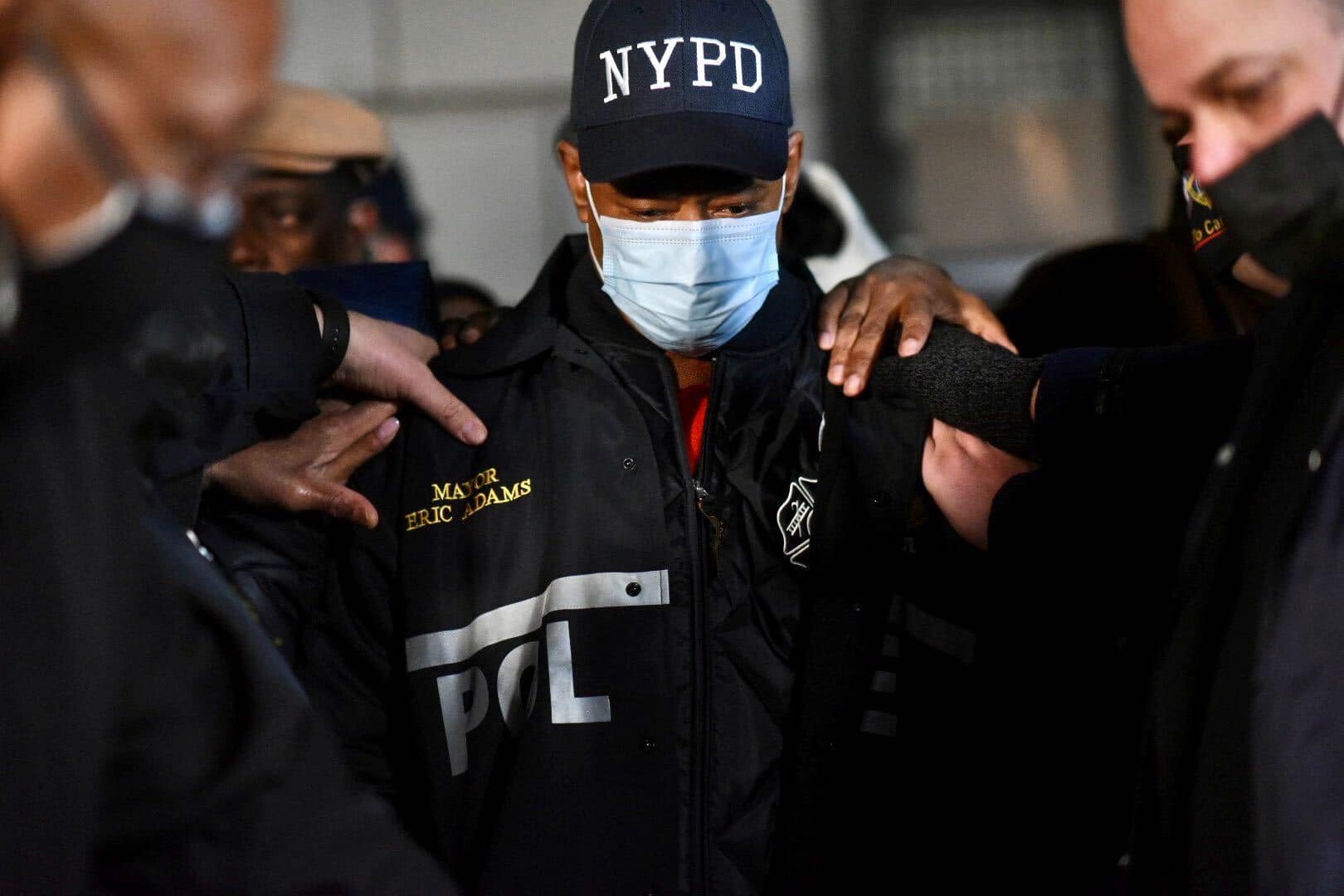
One of Adams’ last acts as mayor was to veto the bill that would have allowed the CCRB automatic access to bodyworn camera footage. Before bodyworn cameras, it was almost always the civilian’s word against the cop’s for CCRB investigations—and the cop’s word carried more weight. But even today, the NYPD still controls the timing and degree of access to footage, frequently holding up cases past the statute of limitations for many disciplinary charges.
And under Adams, Muir noted, the number of staffers in the Office of the Inspector General shrank to just three, down from 37 during de Blasio’s mayoralty. That office is meant to complement the CCRB by focusing on the bigger-picture issues with the NYPD as the CCRB investigates individual complaints and officers.
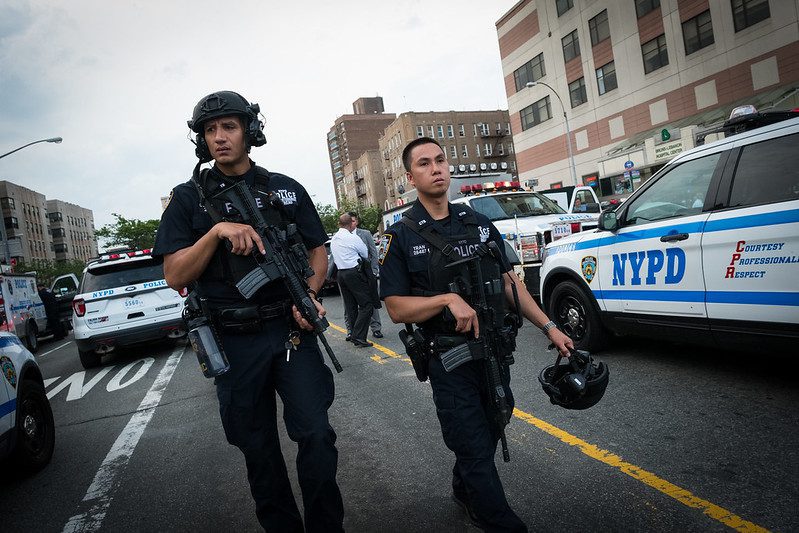
Tisch, Adams’s fourth and final police commissioner, has allowed the CCRB notably more independence than Adams’s second commissioner, Edward Caban, who overturned some 70 percent of CCRB disciplinary recommendations and made a habit of tossing charges the CCRB substantiated within 60 days of their deadline. Still, she continued to exercise her power to block cases regularly in 2025 (she has only done so once since Mamdani’s term started), and her decision to overturn the firing of the lieutenant who killed Allan Feliz provoked outrage. “I cannot wait for the day that the Adams administration is over, and with it, he takes Commissioner Tisch,” a Bronx councilmember said at a rally for Feliz following the decision.
This summer, then-candidate Mamdani caused a brief commotion when he expressed support for a more independent CCRB, rather than the police commissioner, to have the final word on discipline, saying he would “ensure that the recommendations of the CCRB be understood to be the final voice of the question of accountability.”
Shortly after this dust-up, however, Mamdani asked Tisch to stay on as police commissioner—the first time an incoming mayor has retained a predecessor’s commissioner in half a century. The day after the announcement, Mamdani backtracked, now saying merely that the CCRB’s recommendations “should be taken seriously” and that the agency should receive more funding. (The Times reported that Tisch made retaining final authority a condition of her acceptance of the job). This has left many onlookers skeptical of Mamdani’s commitment to taking power back from the NYPD. The decision to retain Tisch “brings great concern for us about…how the CCRB can be changed and reformed within this administration,” Feliz told Bolts.
Case likened Mamdani’s power to effect outcomes at the CCRB to his famous “Freeze the rent” campaign pledge: “Mamdani can’t unilaterally freeze the rent—but he can appoint the rental guidelines board.” The mayor, he said, can appoint CCRB members who are willing to reconsider established policy, take on the police unions, and even sue the commissioner.

A bolder CCRB could end the custom of having one police representative on each three-member panel. Long-term, the Justice Committee wants NYPD-appointed board members off the CCRB entirely, arguing the department is already overrepresented throughout a supposedly independent process. Such a change would require a revision to the city charter, which would have to happen through popular referendum, but the mayor can initiate the process. (There is recent precedent—in 2019, the charter was revised to add a public advocate designee to the board). Case also supports moving disciplinary trials under the same administrative office that adjudicates other city employees’ disciplinary proceedings.
Come fall, Mamdani will have to make a decision regarding the fate of Pat Smith, the interim chair under Adams who has overturned up to 50 percent of his investigators’ charging guidelines. While Mamdani installed another board member with a more traditional police reform background as interim chair in March, Smith remains on the board; his term is up in November. The Justice Committee is asking Mamdani to remove Smith, who Liem said “has consistently been an adversary of police oversight and accountability.”
The mayor’s office declined to respond on the record to a detailed request for comment about how Mamdani would use his power, but offered a statement to Bolts: “Public trust in policing cannot exist without real accountability. New Yorkers deserve an independent CCRB with the power, resources, and autonomy to hold misconduct accountable and bring transparency to our public safety system. The Mamdani administration will continue to support civilian oversight, protect due process, and uphold a fair, credible legal framework for governing police oversight and discipline.”
The city council, which like the mayor has control over five of the 15 CCRB seats, also has a role to play in making the board more effective, namely by filling empty seats. Disciplinary panels have been cancelled because the board has had only 11 members for months now. Bolts asked the public advocate and the Bronx and Staten Island city council delegations why these three seats are vacant. Representatives for the public advocate and the Staten Island delegations did not respond to repeated requests for comment; the Bronx delegation would not comment on the record. Feliz noted that the NYPD has no trouble keeping their three positions filled: “Those seats are never empty.”
The council could also choose to bring back the bill giving the CCRB automatic access to bodyworn camera footage —which many other cities already have — but no sponsor has emerged yet this session.
The CCRB’s 2025 annual report noted that lack of resources has led to case triage. Mamdani’s recently unveiled budget includes $3.2 million in new spending for the CCRB, a promising development if enacted: it would seemingly allow the board to hire well beyond the eight new positions the budget endows.
“My position was always, you should tie the CCRB budget to the police department budget,” Ofer said. (Mamdani’s executive budget includes an additional $120 million for the NYPD). Last year, the city spent over $117 million dollars on legal settlements to civilians who experienced police misconduct (and the true number is likely higher, since this doesn’t include payouts that were agreed upon prior to formal litigation).
Case noted that the city continues to spend millions of dollars paying a federal monitor because the NYPD has not been able to get out of stop-and-frisk oversightfor one main reason: it’s not disciplining officers. “If the city were to take a quarter of the money that is paying the monitor and give it to the CCRB in order to appropriately and thoroughly discipline officers, it would be out of the monitorship in two years and be able to spend the rest of the money on free busses,” he said.
Longer-term, Muir said, the CCRB’s jurisdiction should be expanded and the board empowered to investigate the NYPD in a more comprehensive and holistic fashion. Robust independent oversight is “core to the public’s confidence in the NYPD behaving ethically, which is a serious concern post-Eric Adams.” he said. “We got all these lawsuits, we got all these scandals, and then we got radio silence. And I want to know what happened, and I think a lot of New Yorkers and people around the world do too.”
Muir added, “Whatever it takes to have that happen, that’s what Mamdani has got to do – and that’s what the leaders across New York have to do.”
Sign up and stay up-to-date
Get timely updates about pressing stories and elections.
Support us
Bolts is a non-profit newsroom that relies on donations, and it takes resources to produce this work. If you appreciate our value, become a monthly donor or make a contribution.