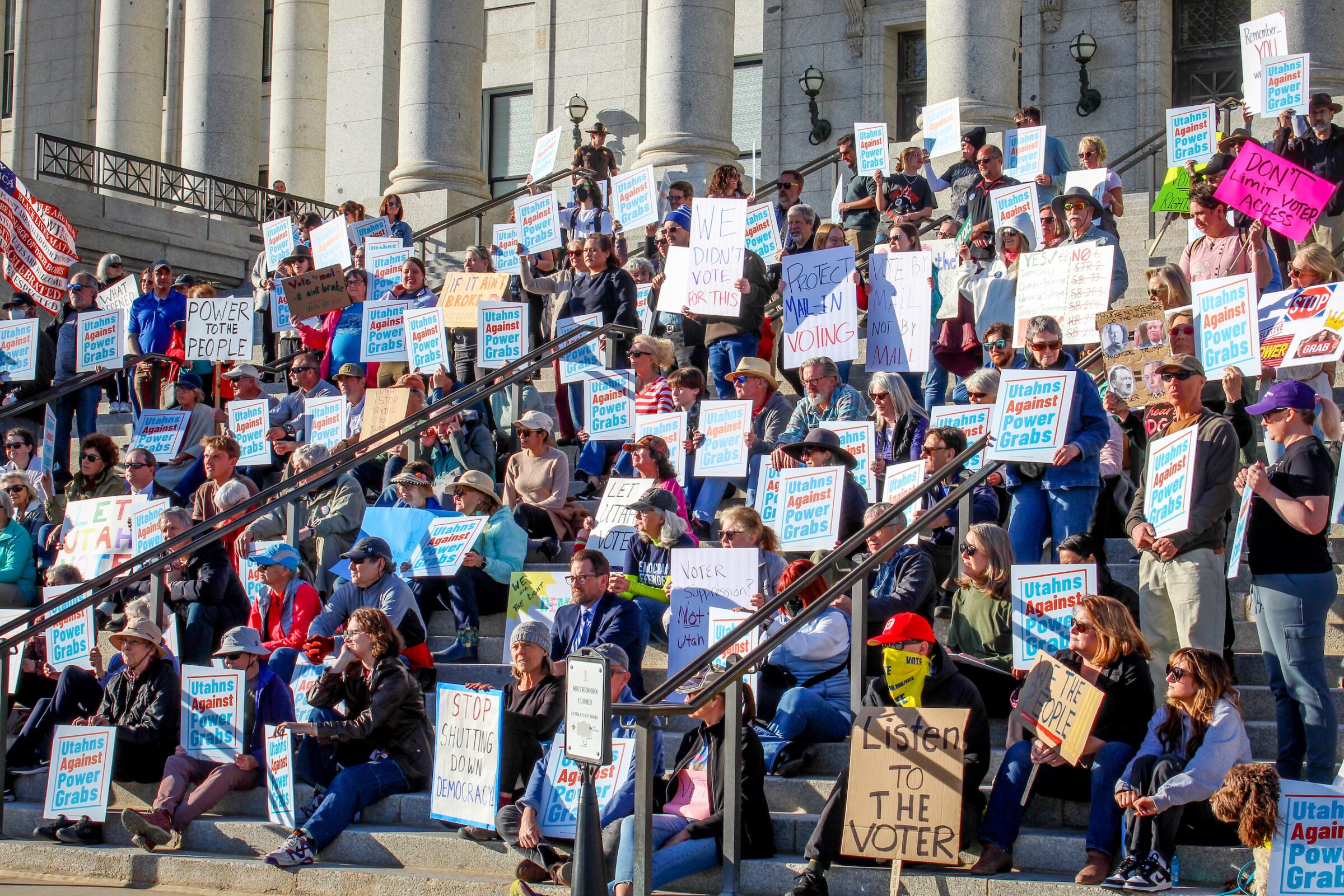

Ohio Bans Grace Periods for Mail Ballots, Fulfilling Trump’s Wishes
Ohio is the fourth GOP-run state this year to ban ballots that are postmarked by Election Day but arrive after. A Supreme Court case could force that policy nationwide next year.
| December 23, 2025

Ohio election official Bethe Goldenfield first learned of Senate Bill 293 in mid-October, when she was busy managing the fall local elections happening in her county Sponsored by Republicans, in a statehouse with GOP supermajorities in both chambers, the bill sought to repeal Ohio’s practice of counting mail ballots that are postmarked prior to Election Day but that arrive up to four days after polls close.
This is a priority for Donald Trump, who is hostile to all manners of mail voting and wants to ban so-called grace periods for mail ballots everywhere. Ohio’s bill followed his lead, threatening thousands of votes in the process.
Ohio reports that about 8,000 ballots that arrived in its four-day grace period in November 2024 would have been tossed under SB 293. Republican Secretary of State Frank LaRose, who supported the bill because he said it would eliminate “voter confusion about deadlines and outcomes,” noted in testimony that 8,000 ballots represent but a small fraction of the nearly 6 million votes cast last year in Ohio. “This is not a disruptive change,” LaRose told lawmakers.
But even that fraction could shift electoral outcomes. In conservative Warren County, for instance, where Goldenfield serves on the board of elections, several contests this year alone were decided by one-vote margins.
Leaders of the state’s association of election officials scrambled to digest SB 293 once it dropped. “There wasn’t enough time to even have a meeting,” Goldenfield, who serves on the association’s legislative committee, told Bolts. “A few of us gave feedback—mostly negative, mostly from Democrats. But there wasn’t enough time. We were in the middle of an election.”
Despite conspicuously limited input from the people who actually run elections in Ohio, the legislature quickly passed the bill this fall, with Democrats unified in opposition and all but three Republicans voting for it. Lawmakers even amended it to add other new ways for ballots to be tossed; they required officials to automatically cancel the voter registration of anyone determined by LaRose’s office to be a non-citizen—despite his recent troubled history of ensnaring actual citizens in his halting hunt for illegal voting.
Republican Governor Mike DeWine signed the bill into law last week, on Friday afternoon. The policy will now be in effect starting with next year’s primary in May, and then again in the November general elections, during which Ohioans will elect a new governor and a U.S. senator, among many other important seats. The new law exempts military and overseas voters only, but bans the grace period in every other case.
“It’s a solution to a non-existent problem,” Goldenfield said. “I don’t see where this is doing anything to help voters. It’s only going to disenfranchise people.”
The state has appropriated no money for public education on this change. But DeWine said after signing the bill that voters should adjust their habits. “People will now be on notice and they can start thinking about that,” he said. “That four-day period is gone. So people can make their decisions based upon that.”
Sign up for our newsletter.
For more on voting rights
There was a time, not long ago, when Republicans—including DeWine—generally favored grace periods for mail ballots. As recently as 2020, almost half of all U.S. states, including a slew of staunchly conservative ones, allowed the counting of mail ballots that were postmarked before polls closed but that arrived after Election Day.
These laws were not controversial, nor antiquated. Conservative Kansas’ grace period, for example, passed the legislature in 2017 with 163 lawmakers in favor and just one opposed.
In Ohio, Republicans sponsored and overwhelmingly backed the 2006 bill that permitted no-excuse mail voting in the state and allowed a ten-day grace period.
Ohio lawmakers upheld the grace period, though they pared it down to four days, with a 2023 bill that Republicans also overwhelmingly supported and DeWine signed
But in Ohio and beyond, Republicans mostly now oppose grace periods. That starts with Trump, who singled out grace periods in a March executive order on “preserving and protecting the integrity of American elections,” in which he ordered the Department of Justice to take “all necessary action” against states that allow them.
The order followed years of GOP crusading against mail voting, which the president and other leaders of the party have falsely claimed introduces widespread voter fraud.
Red states have been glad to work with Trump on this: Kansas, North Dakota, and Utah each repealed their grace periods around the time he issued his order, which means Ohio is the fourth state to do this in 2025. Utah imposed many other restrictions on mail voting, while conservatives tried but failed this year to restrict absentee ballots in Maine.
Trump was a major factor in Ohio’s SB 293. Bill sponsor Andrew Brenner, a Republican state senator, said in late November, “This legislation will ensure that Ohio is abiding by federal election law and President Trump’s executive order.” (Federal election law does not currently preclude grace periods, and Trump’s order has no force of law in states.)
Amid all this state-level change, conservatives are also pursuing a national strategy that may just ban grace periods everywhere at once—including in blue states. Last month, the U.S. Supreme Court agreed to hear a case in which the Republican National Committee is challenging Mississippi law for allowing late-arriving ballots. The court in that case could eliminate grace periods in the 15 states, plus D.C. and three U.S. territories, that still permit them.
That would upend mail-voting procedures for huge swaths of the country. Seven of the 13 most populous U.S. states, including California, New York, and Texas, still have grace periods.
The court has yet to schedule oral arguments, but a decision is expected by late June.
Mail ballots currently lean overwhelmingly Democratic, so the party is likely to be disproportionately affected if hundreds of thousands of votes are tossed in the midterms as a result of Supreme Court action. Votes cast at the last minute also tend to lean Democratic, in part because younger people vote late; this helps explain why the last stages of counting tend to favor Democrats—a “blue shift” that has long frustrated Republican leaders and fueled baseless conspiracy theories.
DeWine blamed the Supreme Court case for his signing of SB 293. He said at his Dec. 19 press conference that he likes the four-day grace period and wanted to veto this bill, but that he worries Ohio would be rushing next year to adapt its election laws should the court rule against grace periods.
“I came down clearly on the side of certainty and to avoid what could have been a real mess leading up to our election,” he said.
Voting rights advocates are watching the Mississippi case closely. “This is not just about technical deadlines, but whether access and fairness in elections are prioritized,” said Scott Seeborg, who manages operations in several states, including Ohio, for the national organization All Voting is Local, which advocates for expanding voter rights. “Narrowing the window when ballots can be accepted, even if they were postmarked with the right date, essentially is disenfranchising folks.”
“Their right to vote shouldn’t hinge on timely mail delivery,” he added.
Seeborg and many other advocates in Ohio warn that SB 293 will be particularly harmful to those most likely to return ballots via the United States Postal Service—namely, older and disabled voters who may lack mobility—and to people registered to vote in Ohio but located elsewhere in the U.S., like college students.
The military and overseas voters exempted from SB 293 comprise a small portion of Ohioans who vote by mail. Ohio’s League of Women Voters found that out of nearly six million votes cast in November 2024 in this state, about one million came by mail ballots from people older than 65.
It’s easy to see why older voters in particular like voting by mail: Ohio only permits one ballot dropbox per county, so the grace period is a key convenience for those who want to vote by mail but cannot easily access a dropbox, and who rely on timely mail delivery in order to have their votes counted.
What’s more, voting rights advocates are alarmed at the disruption they say will result from the requirement in SB 293 that county election officials purge from voter rolls anyone that the secretary of state’s office says is a non-citizen. LaRose’s recent probes for non-citizen voting in Ohio have already thrown into doubt the registration status of some naturalized citizens.
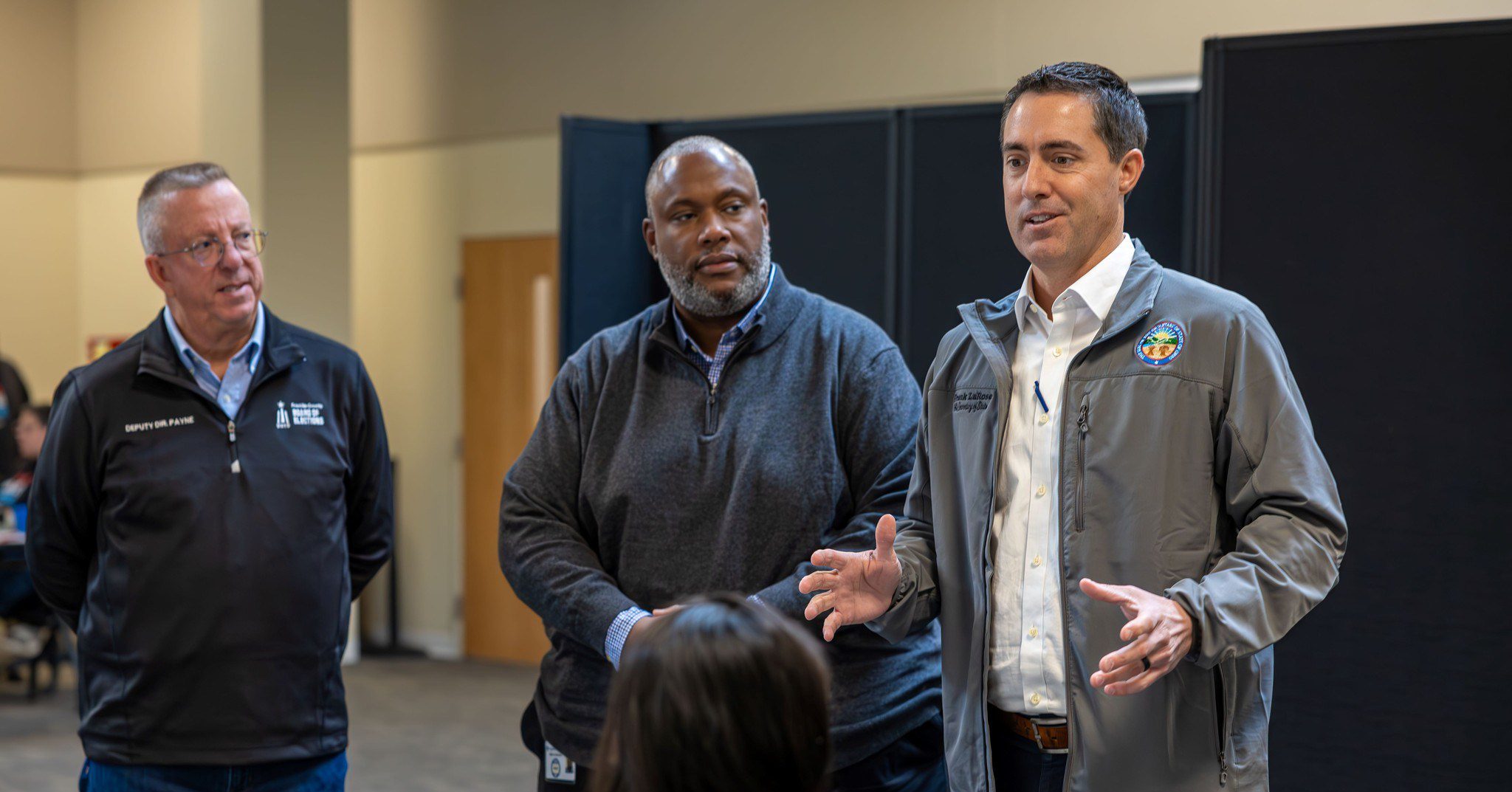
Voters flagged by LaRose’s reports would have to vote provisionally unless they promptly resolved the perceived discrepancy.
More Ohioans have already been forced to cast provisional ballots in recent years. That’s due to House Bill 458, the 2023 GOP bill DeWine signed, which, among other changes, raised photo ID requirements for in-person voters. This made many Ohioans suddenly non-compliant with state election law. A report by All Voting is Local also found that Ohio’s rejection rate for provisional votes soared after it went into effect.
Amending SB 293 beyond its original purpose of banning grace periods will bring more issues, said Mia Lewis, associate director of the voting rights group Common Cause Ohio. “It would throw an enormous number of people into provisional status,” she told Bolts.
“Lots of people aren’t even going to know they’ve been put on that list when they go to vote,” she added. “People are going to show up and not realize they aren’t on the rolls at all.”
Voting rights advocates in Ohio also worry that voters won’t realize next year that the grace period is gone, and may cast mail ballots under the now-incorrect belief that they’ve got a four-day cushion.
Joining DeWine at the Dec. 19 press conference, Ohio House Speaker Matt Huffman, a Republican, offered his advice to voters in the wake of SB 293’s signing: “Don’t vote by mail, because there are too many bad things that can happen. Do it in person if you can.”
That sort of advice is unhelpful to the many Ohio voters who prefer and rely on vote-by-mail, advocates say.
“Where is the priority for voters?” Lewis said. “Where is the sense that our lawmakers are protecting our right to vote? That they even want people to vote?”
Sign up and stay up-to-date
Support us
Bolts is a non-profit newsroom that relies on donations, and it takes resources to produce this work. If you appreciate our value, become a monthly donor or make a contribution.