
In an Intense Election Year, New Post Office Rules Could Trip Up Voter Registration
A change in how mail is postmarked could lead some voters to miss key deadlines, including voter registration. Advocates worry the people most affected will be those already facing voting barriers.
| February 23, 2026
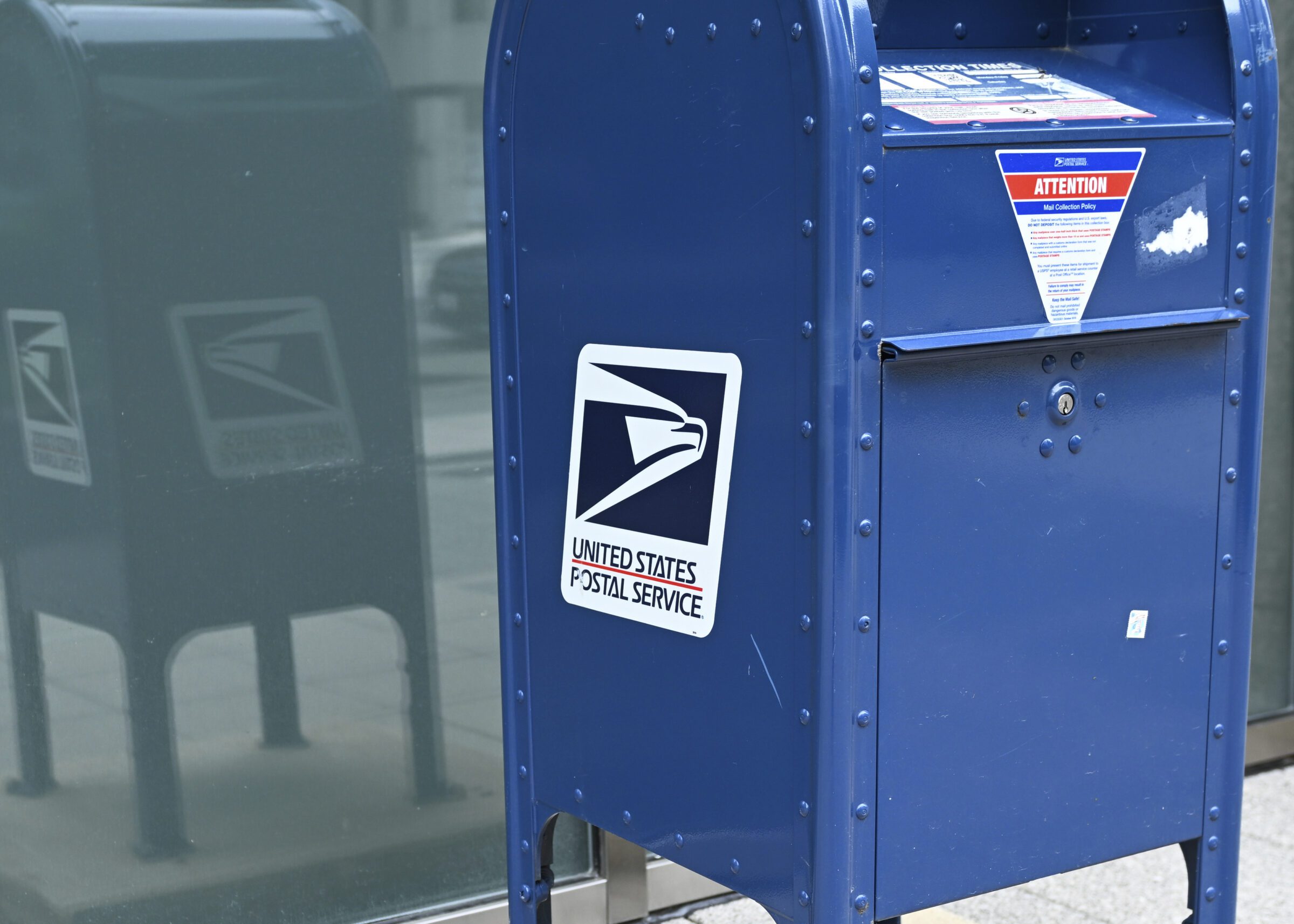
The U.S. Postal Service began piloting a cost-cutting plan in 2023 to remove the machines that sort and postmark mail from local offices and instead consolidate mail processing in regional centers. As they rolled out the program nationwide, Jeremy Schilling, president of a local chapter of the American Postal Workers Union in Oregon, was one of those who spoke out about the adverse effects. His union organized demonstrations against the consolidation plan and blew the whistle on election mail that fell through the cracks due to the slowdown amid the 2024 presidential race.
Election mail that people leave at their local post office in Southern Oregon, where Schilling is based, typically sits overnight until it is collected in the morning since evening dispatches were slashed nationwide at the end of last year. The mail is then trucked nearly 300 miles to a Portland facility that processes mail for most of the state, where it is postmarked, then sent back to the local post office for delivery.
“Any mail that’s getting dropped into a blue box is not getting postmarked on the same day, and likely not on the day after either,” Schilling said. “The mail is so slow that it is an unreasonable amount of lead time that the normal person wouldn’t expect.”
Late last year, USPS announced that this practice was now official policy: It would no longer postmark mail automatically on the date it is received.
Voting rights advocates fear that this may end up disenfranchising voters who rely on postmark dates, and they’re urging people to get ahead of election deadlines.
Ahead of an intense election year that’ll decide control of Congress and state offices, attention has largely revolved around what will happen to actual ballots; 14 states and the District of Columbia require that mail ballots be postmarked by a specific day, often Election Day, and civic groups are concerned that voters won’t know that they should now send their ballots days in advance to account for this new postmark rule.
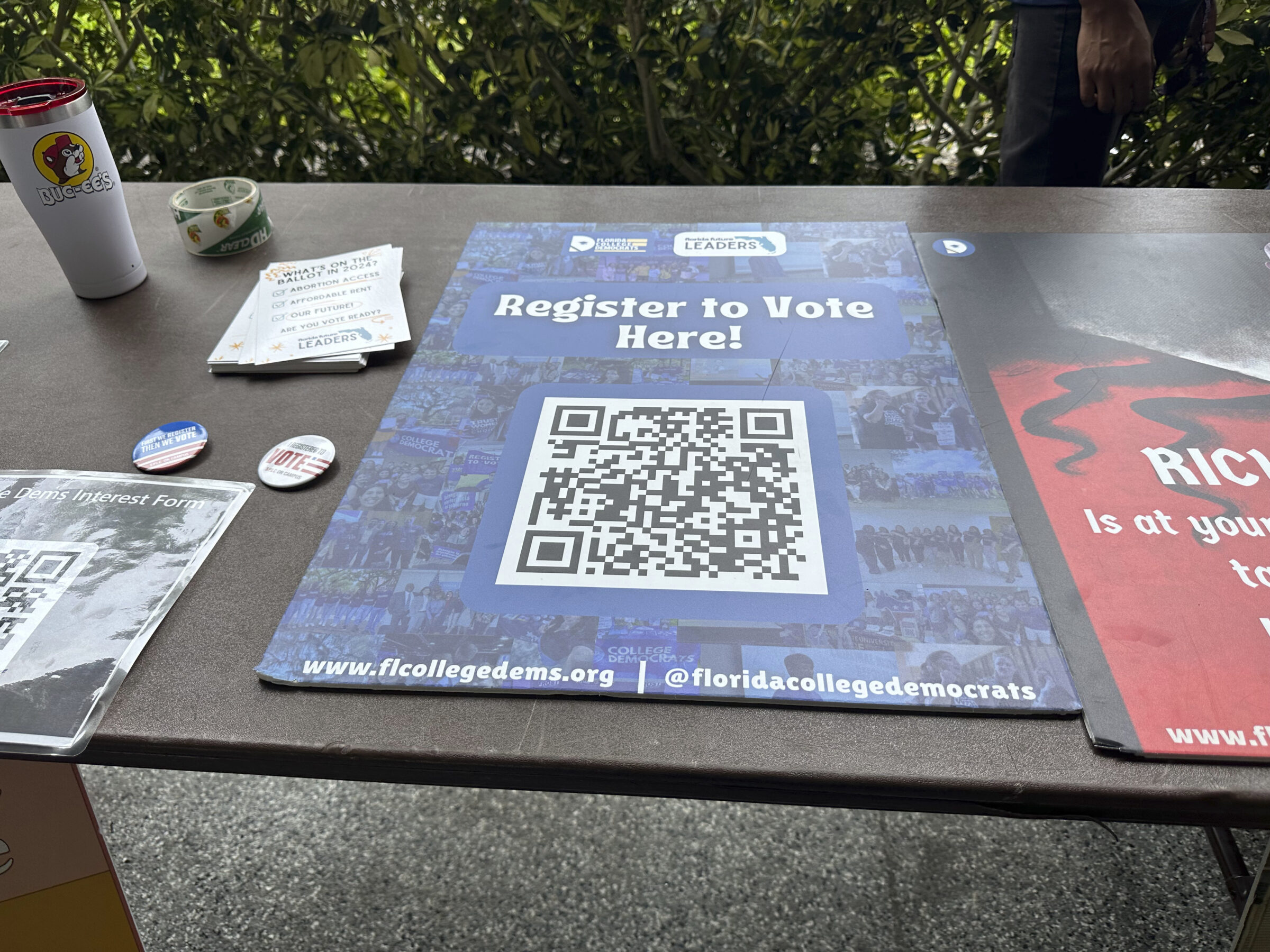
But the change could also leave behind voters who rely on mail even before ballots are cast, by affecting the timing of voter registration forms sent via USPS. Most states require that registration forms be postmarked by a set deadline.
For more stories on ballot access
subscribe to our newsletter
“The new postmark rules shape how ballots are counted in states that have these postmark deadlines, but it also impacts who gets access to the ballot in the first place,” said Rebekah Caruthers, president of the national organization Fair Elections Center.
“If the Postal Service can’t guarantee that the day that you drop off your mail that is going to be postmarked that day, this is where you start to have more friction in the process,” she told Bolts. “Our concern is that there is more friction and more barriers being injected into our system in terms of registering to vote and accessing the ballot. That creates more barriers, and as people run into them it decreases the likelihood of them actually voting.”
According to the new guidance, which took effect on Dec. 24, postmarks “have never provided a perfectly reliable indicator of the date on which the Postal Service first accepted possession of a mailpiece.” Voters who mail their registration forms near the deadline could risk being left off the rolls unless they request a manual postmark at the retail counter of a post office.
In states that don’t have measures like same-day voter registration for people left off the rolls, some may miss out on voting entirely. And even those stop-gap measures may be inadequate.
Wisconsin will soon hold some of the nation’s most important elections this year, including a race for a seat on the Wisconsin Supreme Court, which has made key rulings to overturn the state’s Civil War-era abortion ban and toss gerrymandered legislative maps since liberals won a 4-3 majority in 2023. Last year, liberals fought hard to defend their majority, which the April elections could expand and strengthen their control of the court.
The deadline to register to vote by mail in Wisconsin to participate in the supreme court election is on March 18—meaning the mail has to be postmarked by that day.
Fortunately for voters, Wisconsin does allow for same-day registration, but advocates are urging voters to double check that they are on the rolls.
“These impacted voters may believe they are registered only to find their names are not in the poll book when they go to vote on election day,” said Debra Cronmiller, executive director of the League of Women Voters of Wisconsin. “These voters can register at the polls but may not have the proof of residency needed if they were not expecting to have to register.”
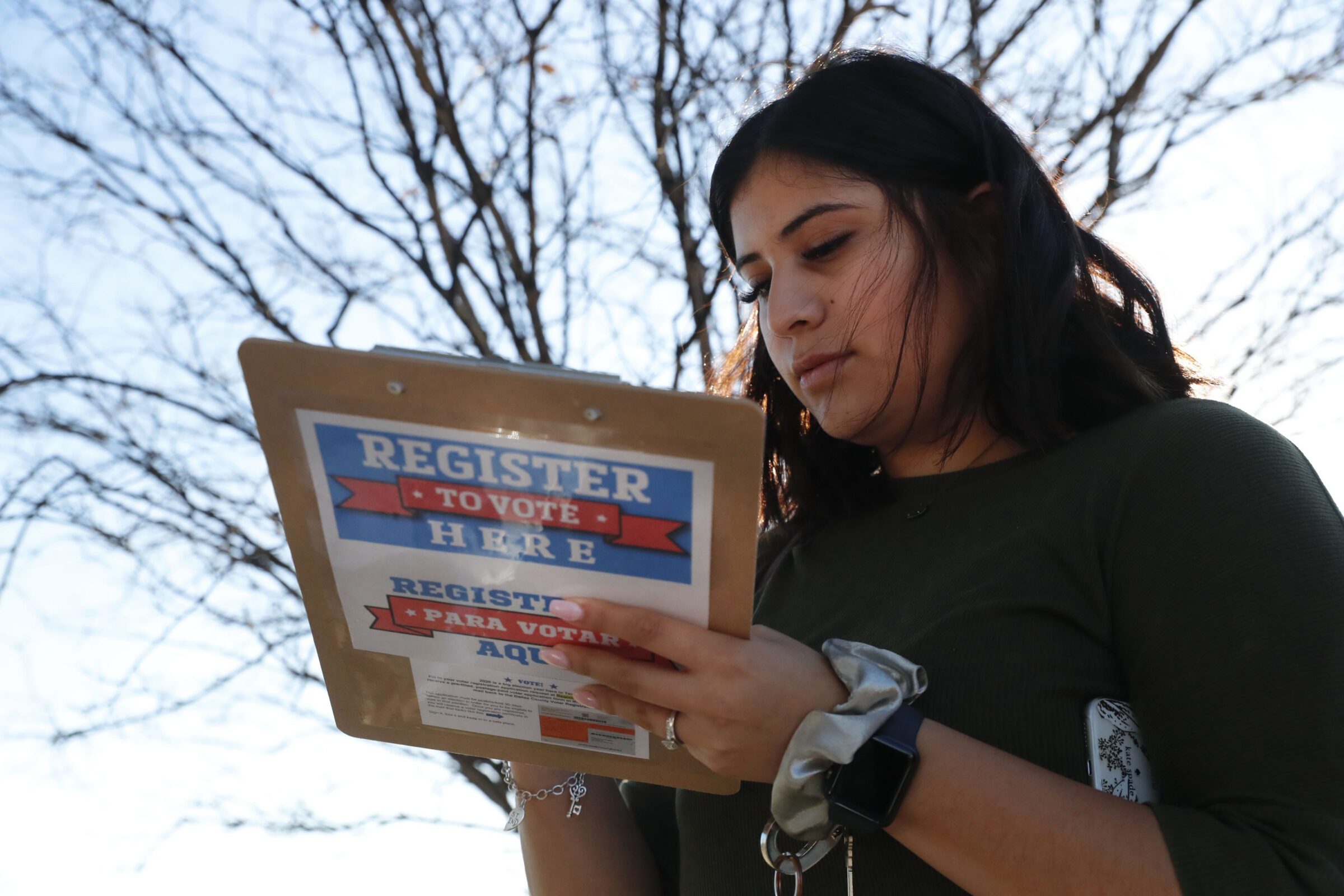
The effects of the new Postal Service policy will differ according to each state’s election rules, but the voters most likely to be left off the rolls following the change are those who already face barriers to accessing the polls, Caruthers told Bolts. Seniors, people with disabilities, rural voters and people who don’t have licenses or state IDs may struggle to register on election day if their forms are not postmarked by the deadline.
Those groups may also have a harder time getting to a post office and waiting in line for a manual postmark, Caruthers said.
The slower and less reliable mail service may also compound other hurdles to voting that states have created, which can push people to rely on mail for mail voting and registration forms in the first place.
“If you already are a very busy person, if you don’t have adequate access to transportation, or you work multiple jobs, or if you have disabilities—if there is only one drop box per county, then you’re going to turn to the mail,” Caruthers said.
Florida, for instance, has tightened rules on voting and registration amid unfounded claims of widespread election fraud from President Donald Trump and Governor Ron DeSantis. A 2023 law has chilled third-party registration drives by setting a tight window for civic groups to turn in voter forms to elections offices after they are signed, imposing penalties of up to $2,500 for each application that arrives late. Groups that still do drives have adjusted their tactics to avoid the fines, often by providing registration forms and stamps to prospective voters and counting on people to mail them on their own before the deadline instead of collecting them.
“Those laws have dramatically impacted how groups operate in Florida, leading some to just stop doing registration altogether,” said Brad Ashwell, state director for All Voting is Local. “Most are just giving people the registration forms or applications.”
Floridians who want to mail registration forms in advance of the upcoming August primaries will have to make sure their application is postmarked by July 20—meaning that,due to the new USPS policies, they should probably be sure to send it days in advance.
Florida does not allow for same-day registration, so those left off the rolls due to a late postmark will not be able to cast a ballot. Bolts reached out to Florida election officials to ask whether they planned voter education around the new Postal Service policy. One election supervisor told Bolts that while voters are encouraged to send their registration forms at least a week before the deadline, he had not considered the issue of unreliable postmark dates and had made no plans for outreach that would be focused on this.
“Voters are unfortunately out of luck if they register late,” Ashwell said. “There is no recourse, and that has been a huge problem. We have advocated for same-day registration, and that is what we’d like to see.”
In Oregon, Jeremy Schilling has already gotten a taste of what the new reality for voter registration could be.
“Historically, you could mail a voter registration from anywhere in the Rogue Valley, and they would receive it the next day,” he said. “People still operate under that assumption. In my own personal experience, the most recent thing I mailed was a newsletter. It took two weeks, and I mailed it just 11 miles from where it was delivered.”
Sign up and stay up-to-date
Support us
Bolts is a non-profit newsroom that relies on donations, and it takes resources to produce this work. If you appreciate our value, become a monthly donor or make a contribution.