
Amid ICE Violence, San Diego’s Volunteer Patrols Remain Undeterred
Community members continue watching immigrant neighborhoods, as disputes between the sheriff and local officials have fueled uncertainty about the region's sanctuary protections.
| June 3, 2026
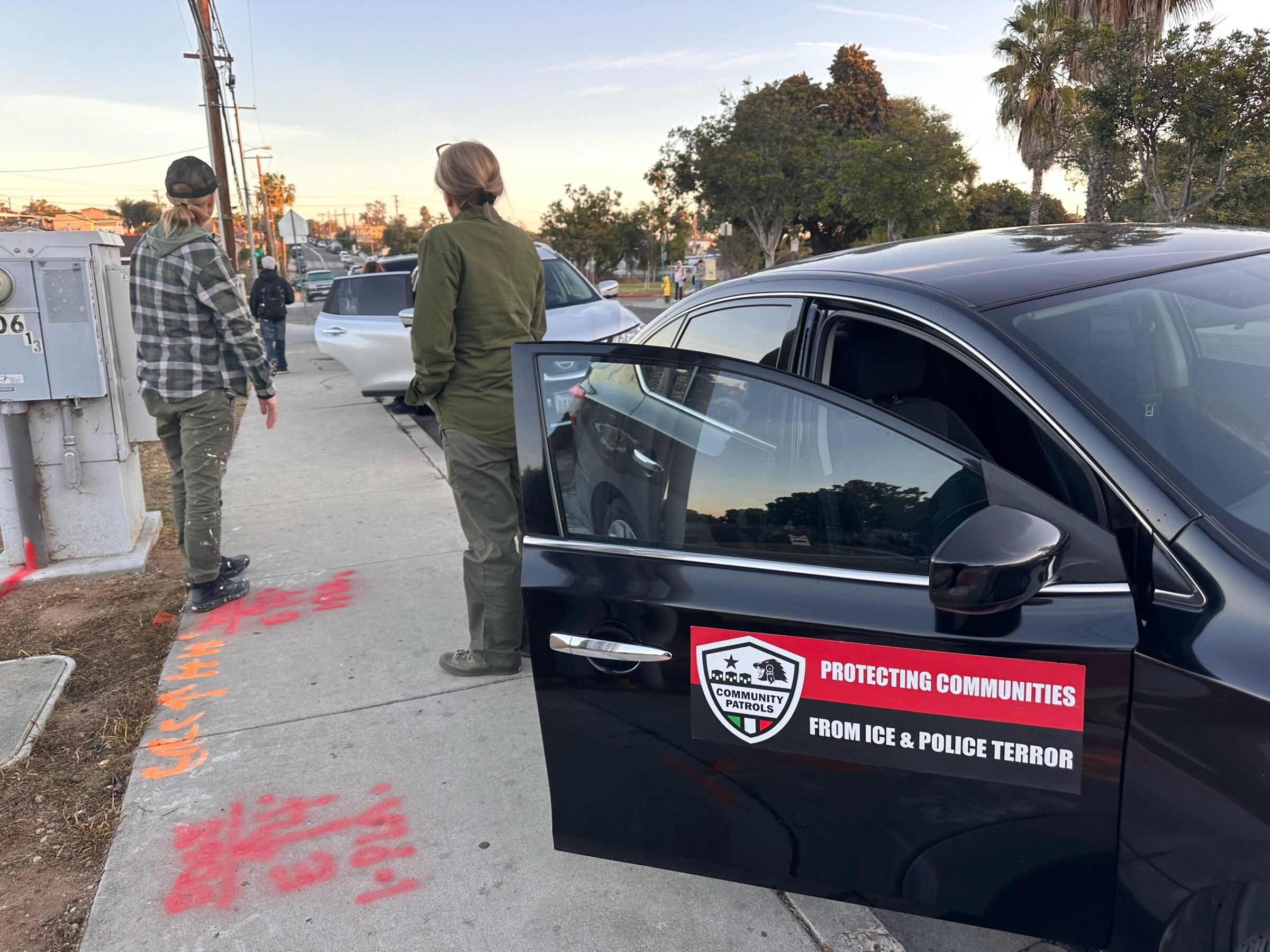
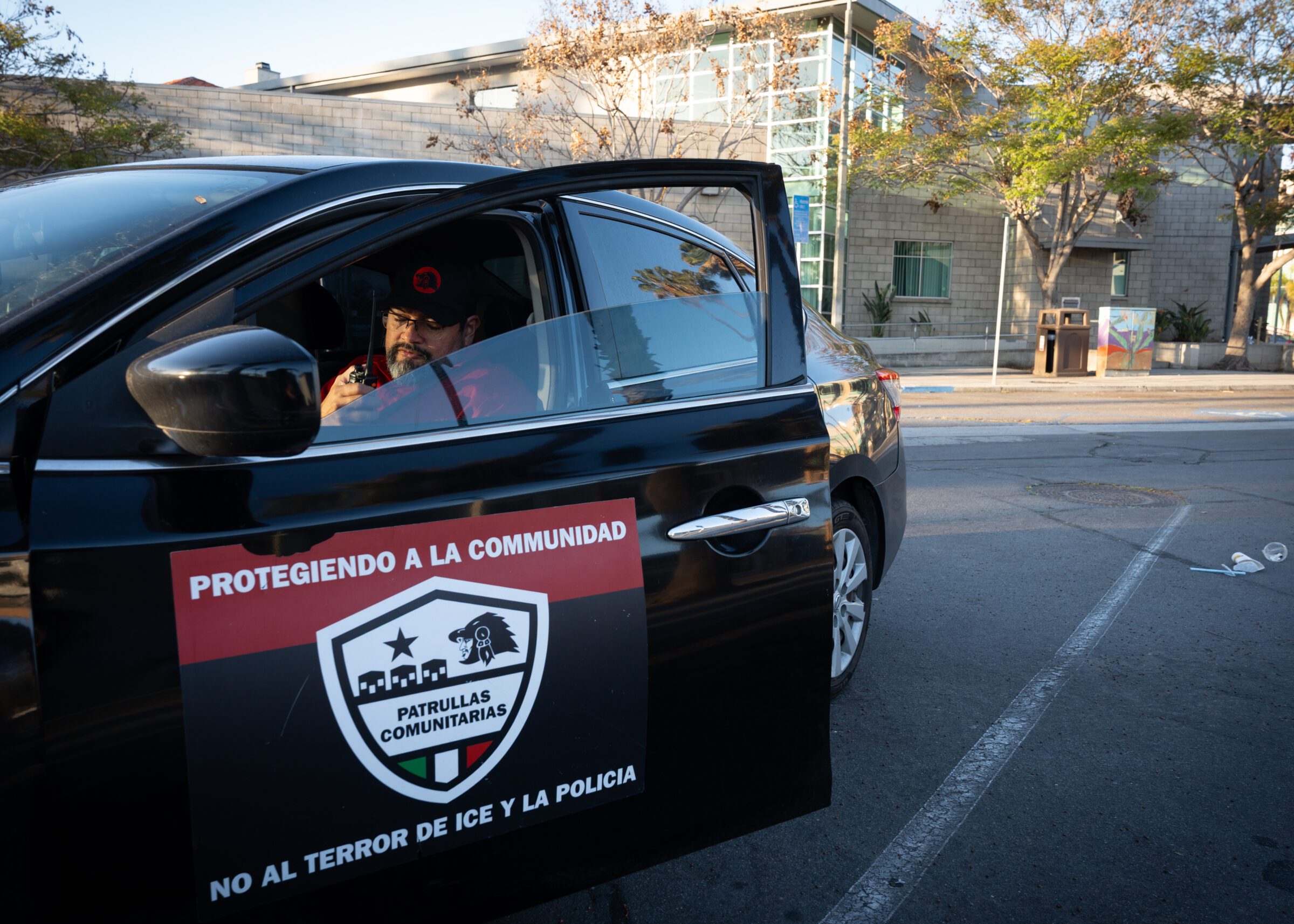
Unión del Barrio started its ‘Patrullas Comunitarias,’ or “community patrol” walks of San Diego’s majority-Latino neighborhoods decades ago and has continued them throughout many presidential administrations, including the promised mass deportations of President Donald Trump. The group, also known as UdB, is an independent Chicano political organization founded in San Diego in 1981 that first launched its patrol program in response to police harassment of Latino youth in the early 90s. In recent years, they’ve shifted focus to patrol for federal immigration authorities.
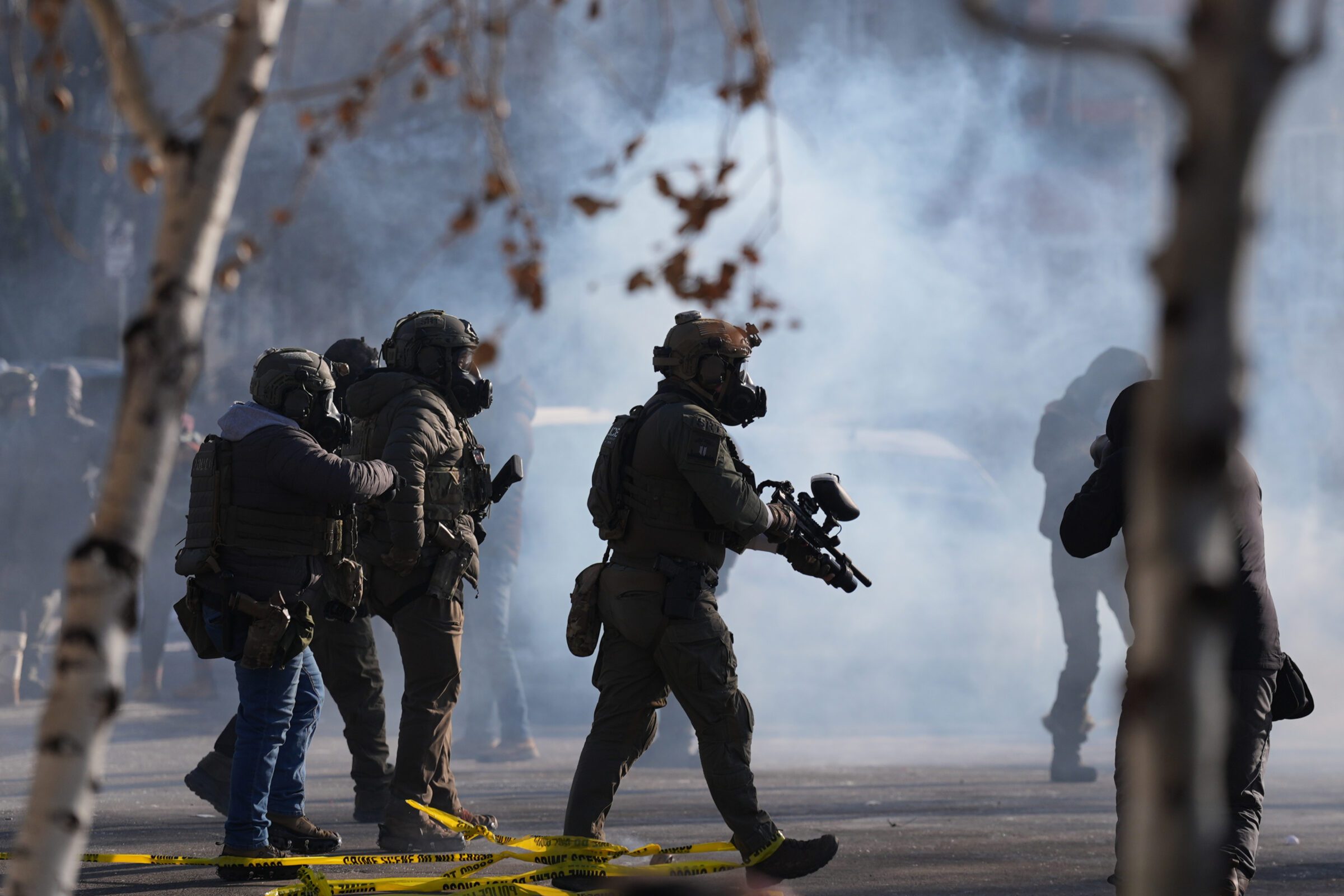
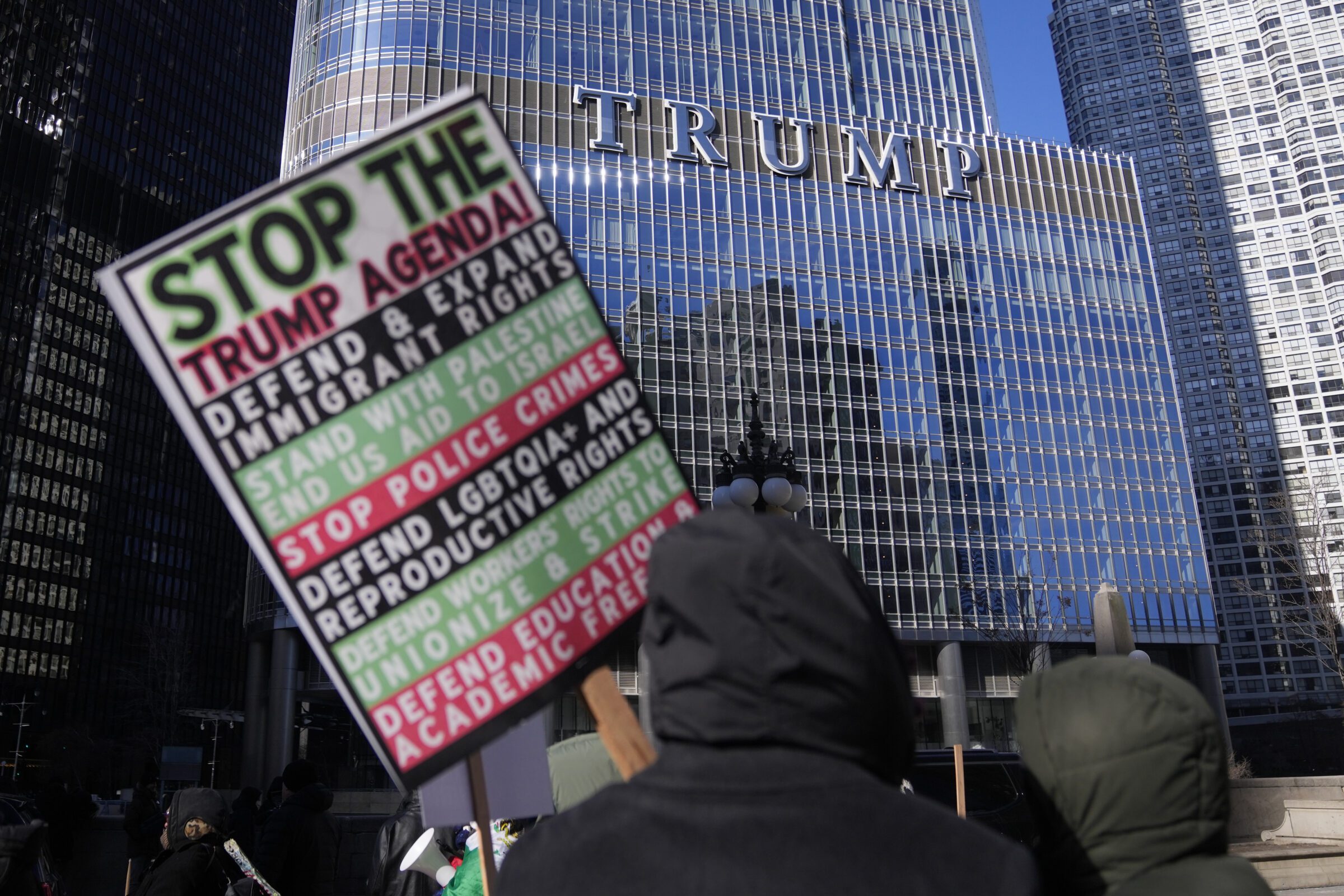
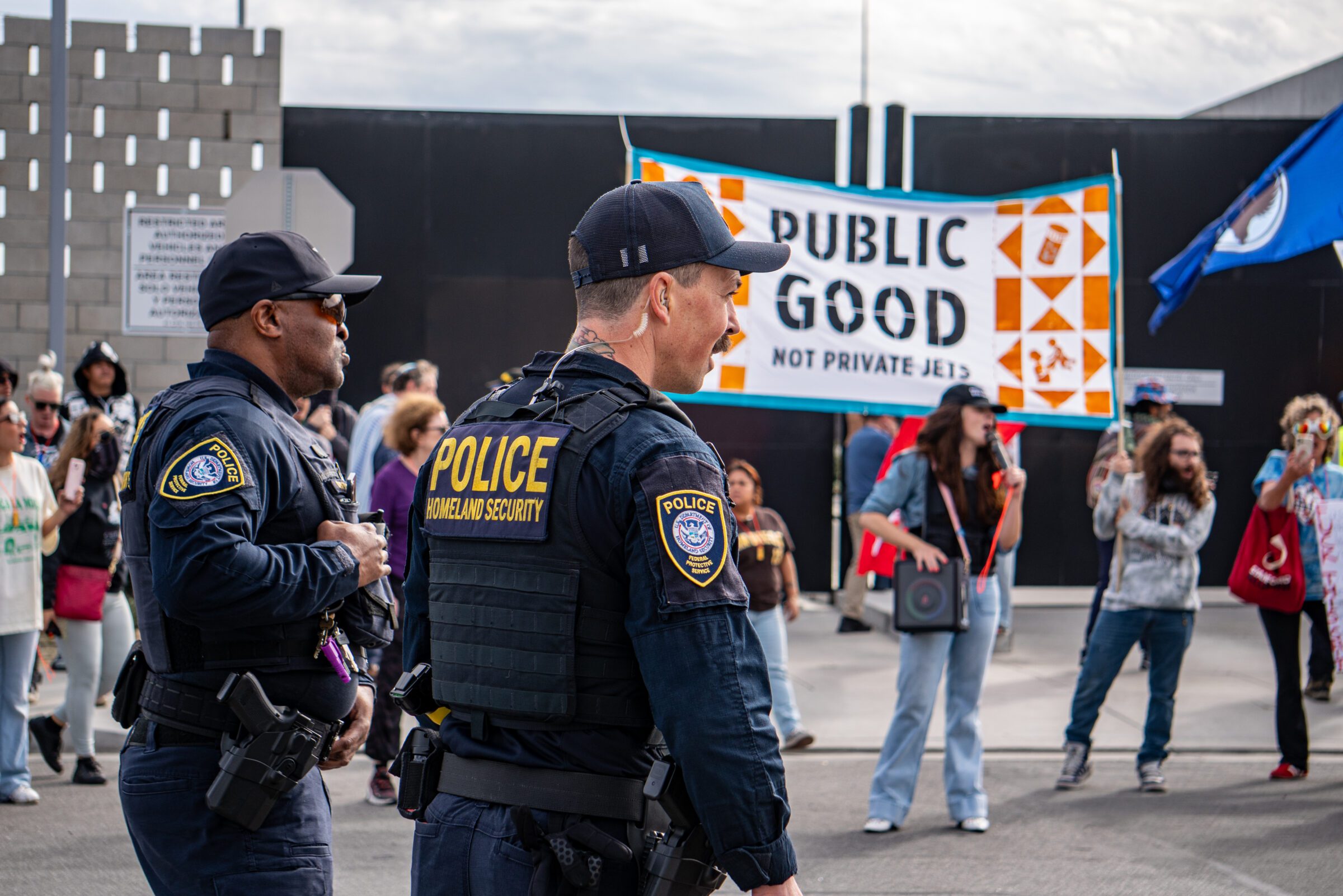
The enforcement landscape has shifted under the second Trump administration, now characterized by increasing violence and militarization. Videos of anonymous masked agents donning paramilitary fatigues in the streets of U.S. cities, as well as inflammatory rhetoric from administration officials like former Homeland Security Secretary Kristi Noem and “border czar” Tom Homan, have now become commonplace. Many activists in San Diego were shaken by the killings of ICE observers Alex Pretti and Renee Good in Minnesota by federal agents.
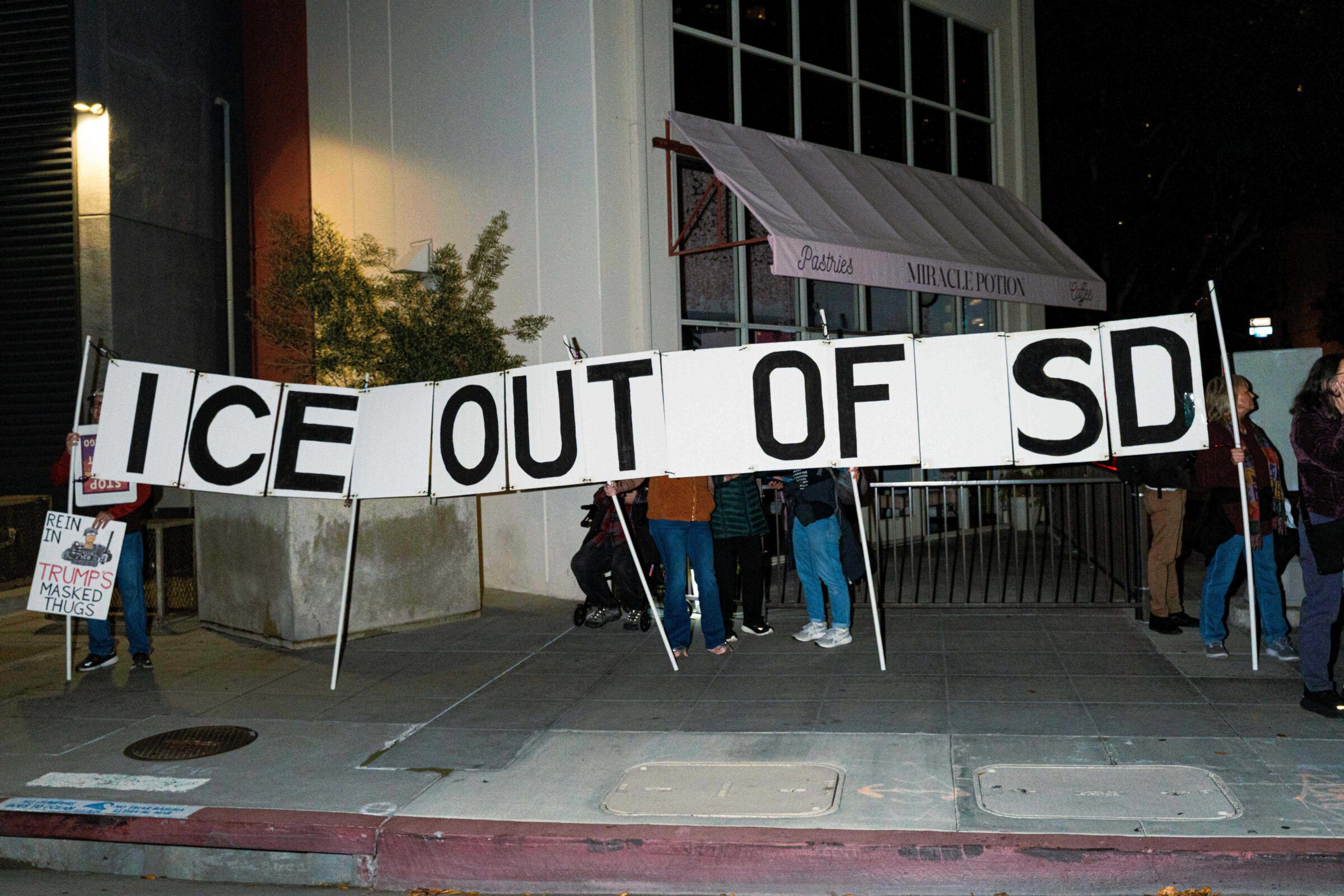
In an era of normalized state violence and the Trump administration using federal power to target perceived enemies, including immigrants and activists alike, UdB volunteers still have not been dissuaded from joining UdB’s efforts. Since 2025, UdB has doubled down on its volunteer-led neighborhood watches, warning immigrant communities of ICE activity and positioning itself as a first line of defense for families at risk of deportation in the region.
Benjamin Prado, a veteran member of UdB since 1996, says that although the region has yet to witness the type of ICE activity on the scale of that seen in Los Angeles, Chicago, or Minneapolis, UdB has been preparing in the event that federal authorities send another surge to California in the summer. “We have been preparing and building capacity to respond in the event that we see a significant rise in these roving immigration enforcement actions.”
UdB has adapted its approach to this new aggressive federal response, and has trained volunteers on how to prepare for the possibility of violent acts from ICE agents and de-escalate situations. Working to resist the surge in enforcement has also meant increasing their geographic footprint. Since the start of 2025, UdB has conducted hundreds of daily patrols and encountered ICE and DHS throughout San Diego County, such as Barrio Logan, City Heights, Linda Vista, El Cajon, National City, and even neighborhoods in the region’s North County, like Vista and Escondido.
That increase in activity has coincided with a 15-fold increase in immigration arrests in the region compared to a year prior. According to federal data obtained by the Deportation Data Project, ICE agents arrested at least 8,000 people in the San Diego region in 2025.
For more stories about local responses to ICE
subscribe to our newsletter
This data only runs through last November, and more recent evidence suggests enforcement has remained aggressive since then. According to a letter written in response to U.S. Representative Mike Levin, a Democrat who had expressed concerns about ICE’s tactics during operations in Oceanside, a small city north of San Diego, a total of 16,368 people were apprehended by ICE agents in San Diego County between Trump’s second inauguration on Jan. 20, 2025, and April 1 of this year. ICE did not specify in its letter to Levin whether the people apprehended had prior criminal records or if the removals were simply part of a broader effort to hit a quota set by the Trump administration.
These arrests have included high-profile workplace raids at an industrial paint shop in the city of El Cajon, and another at a popular Italian restaurant in the neighborhood of South Park, as well as arrests at military bases, near schools, and outside courtrooms following immigration hearings.
Spokespeople for ICE and HSI did not respond to requests from Bolts for comments on either incident for this story.
The increase in arrests in San Diego has come not just from agents grabbing people off the street, but also from the local sheriff’s office transferring people under its custody to ICE, data show. These transfers spiked to 83 in 2025, up from 30 transfers in 2024, according to the department’s annual transfer report.
California’s sanctuary laws generally prohibit local law enforcement from assisting with federal immigration enforcement, but they allow county sheriffs to transfer immigrant detainees to ICE custody in specific cases, such as if they have been convicted of certain serious or violent crimes or if ICE provides a federal warrant signed by a judge.
San Diego County Sheriff Kelly Martinez claims that the increase in transfers is tied to Operation Guardian Angel, a federal initiative launched last spring that relies on judicial warrants to circumvent state sanctuary law limits. In such cases, Martinez emphasizes that she is merely complying with the law. “Those warrants are the epitome of due process,” she told Bolts in a written statement. “A judge reviews the evidence and issues a warrant, which the Sheriff must comply with.”
Community advocates and county leadership, however, have pointed out that California’s sanctuary law is discretionary and does not force sheriffs to transfer inmates, and have renewed calls for Martinez to end the practice, as have other California sheriffs of larger counties—for instance, in Los Angeles. Three of San Diego’s five county supervisors have urged the sheriff’s department to stop coordinating with federal agents.
UdB activists and other immigration advocates also warn that the state’s sanctuary laws are meant to increase trust between local law enforcement and immigrant communities, and that transferring inmates to ICE custody erodes trust and makes people less likely to contact law enforcement, a common concern of immigrants’ rights activists throughout the nation.
Martinez insists her policies haven’t eroded this trust. “I have listened to the migrant communities I serve, and they have overwhelmingly told me that they do not want criminals returned to their neighborhoods,” she wrote to Bolts. “I know that if I were not transferring individuals pursuant to state law, that immigration enforcement officers would go into our communities and search for them. This would further impact and traumatize our communities.”
During San Diego’s TRUTH Act Forum in late March, Supervisor Monica Montgomery Steppe reported receiving numerous inquiries from residents expressing alarm over the presence of sheriff’s deputies alongside ICE agents during raids. Steppe questioned why the San Diego Sheriff’s Department is using county resources to assist federal agents while San Diego faces a structural budget deficit of approximately $118 million.
“We know that the president is going to make sure that ICE gets their money,” Steppe said. “Why on God’s green earth, when we are in a budget situation the way that we’re in, are we helping and participating?”
But Martinez reaffirmed her stance that the board of supervisors cannot dictate jail policy to her because she is an independently elected official and thus not bound by the county’s immigration ordinance.
Eddie Meyer, the immigrants’ rights policy advocate at the ACLU of San Diego and Imperial County, also submitted a comment to the San Diego County Board of Supervisors for the 2026 TRUTH Act Forum, urging the sheriff to stop all collaboration with ICE.
“Due process is not optional; it’s a fundamental right,” Meyer wrote. “Yet across the country, we are seeing federal overreach: warrantless arrests, prolonged detention, and families being torn apart. Local agencies should not be part of that harm.”
The ongoing dispute between county officials and the sheriff’s department has fueled uncertainty about the region’s sanctuary protections. San Diego mayor Todd Gloria last year issued an executive order affirming the city’s commitment to California’s sanctuary laws, but local activists have expressed frustration at seeing little proactive planning from city government since. Although San Diego has not yet experienced the militarized surge of federal agents seen in other cities, questions remain regarding the region’s response should such a surge occur.
UdB says it has been building capacity to respond in the event that the region sees a significant escalation in roving immigration enforcement actions.
Adriana Jasso, a longtime member of UdB, said the killings in Minnesota and local incidents involving law enforcement, plus the threat of being arrested by sheriffs’ deputies, underscore why volunteers are routinely reminded to assess their own risk at every encounter and be mindful of the potential dangers that come with monitoring ICE, Border Patrol, and other law enforcement officers.
“One of the critical parts of our model of community patrolling is to avoid going out to the field as an individual,” Jasso explained. “When people act as individuals, the risk of arrest or violence increases … migra engagement on the ground can shift in a matter of seconds, and we need to always have backup.”
Jasso says UdB volunteers have confided in her that they feel shaken by the actions of the Trump administration. “The killings of the two people in Minneapolis shocked the nation,” she said. “The horrendous response that the responsible parties gave hours after those two assassinations added to the fear of categorizing those killed as “domestic terrorists” without the proper investigation.”
Despite the Trump administration’s threats, Prado said UdB and other community members’ attempts to document immigration enforcement speak to UdB’s long legacy of patrols and volunteer observers since the Rodney King beating in the early 1990s.
“One of the premises of our community patrols effort has been to document state violence and its impact on our communities,” Prado said. “When we first began our community patrols, we invested in a large VHS camera because we recognized the power of video evidence in exposing law enforcement abuse of authority.”
The proliferation of smartphone technology has only made it easier for anyone to monitor law enforcement and document racial profiling and excessive use of force, and broadcast such incidents widely to their community, Patro told Bolts.
“Today, the fact that practically everyone carries a recording device is an advantage that makes every person a documentarian to capture video evidence of the crimes committed by ICE and Border Patrol,” he said.
Prado, like Jasso, stresses that volunteers are taught to avoid interfering with the agents’ duties, focusing instead on observing, documenting, and reporting their findings.
“Tactically, the safety protocols we use remained consistent to ensure the protection of our volunteer patrol participants,” he said. “We have always maintained a protocol of keeping sufficient distance between our patrol volunteers and law enforcement. And we always recommend keeping 15 feet from agents to avoid getting grabbed and assaulted by law enforcement.”
But volunteers have documented increasingly hostile behavior from federal agents even before the surge in Minneapolis, Prado says, recounting an incident activists filmed last December where agents threatened to arrest a team for ‘obstruction’ for recording them.
Such interactions aren’t isolated to UdB. A month prior, Arturo González, a prominent independent activist who documents immigration enforcement on social media but is not associated with UdB, confronted agents during an operation, leading to a violent altercation between community members, activists, and immigration officials at the 47th Street trolley station.
Daylight San Diego later reported that the incident was cited by ICE’s Department of Homeland Security Investigations as part of “Operation Road Flare” an investigation called into an agitators and others for “impending, obstructing and interfering with” ICE activities.
Through this and other run-ins with federal officials, González’s confrontational approach and interactions with law enforcement have sparked intense local debate. Some pro-law enforcement officials call González a provocateur rather than a disseminator of information. However, González and his hundreds of thousands of social media followers view his actions as vital human rights monitoring. He argues that he provides necessary oversight of immigration enforcement and protects communities against unconstitutional detentions.
Tensions further escalated on April 15. González was patrolling in the neighborhood of Linda Vista when a vehicle driven by ICE agents struck him while standing in a crosswalk and left the scene. González, who captured the incident on film, says that he has since filed a police report with the San Diego Police Department, and the department has submitted the incident to the San Diego district attorney’s office as an assault with a deadly weapon, a felony offense.
“I’m not a stranger to them. They know who I am. They know my tactics, and I know theirs”, González said. “For them to use their car as a weapon against me, I believe it was intentional, and I believe that it’s not only an escalation in their tactics but a sign that things have definitely changed.” González is hopeful that the DA will bring charges against the officer, but as of this publication, they have yet to accept the case.
Incidents have continued in 2026. On the morning of April 2, UdB was alerted that a worker who was detained on the on-ramp of the westbound Highway 78 in Escondido, CA. Patrol volunteers who responded say that ICE agents left the man’s vehicle parked on the shoulder after they apprehended him, creating a road hazard for other vehicles.
When UdB patrol members arrived to move the car, they found the vehicle’s passenger-side window smashed out, and a very large rock inside, which volunteers allege was used by ICE to gain entry to detain the driver.
UdB shared photos of the scene on the group’s social media pages to document the abuse, saying, “We denounce the violence of ICE and the unnecessary force they use to abduct our working-class people.
Sign up and stay up-to-date
Get timely updates about pressing stories and elections.
Support us
Bolts is a non-profit newsroom that relies on donations, and it takes resources to produce this work. If you appreciate our value, become a monthly donor or make a contribution.