
Virginia Is Banning ICE Contracts, Unless the Feds Agree to Obey the Law. No One Expects Them to.
A new law does not outright bar local contracts with ICE. But they can continue only if ICE accepts due process rules and state courts having power over its officers.
| March 20, 2026
Editor’s note (April 22): Senate Bill 783 became law on Wednesday, after the legislature accepted the governor’s recommendation to amend the bill to clarify that jails can still honor detainer requests sent by ICE.
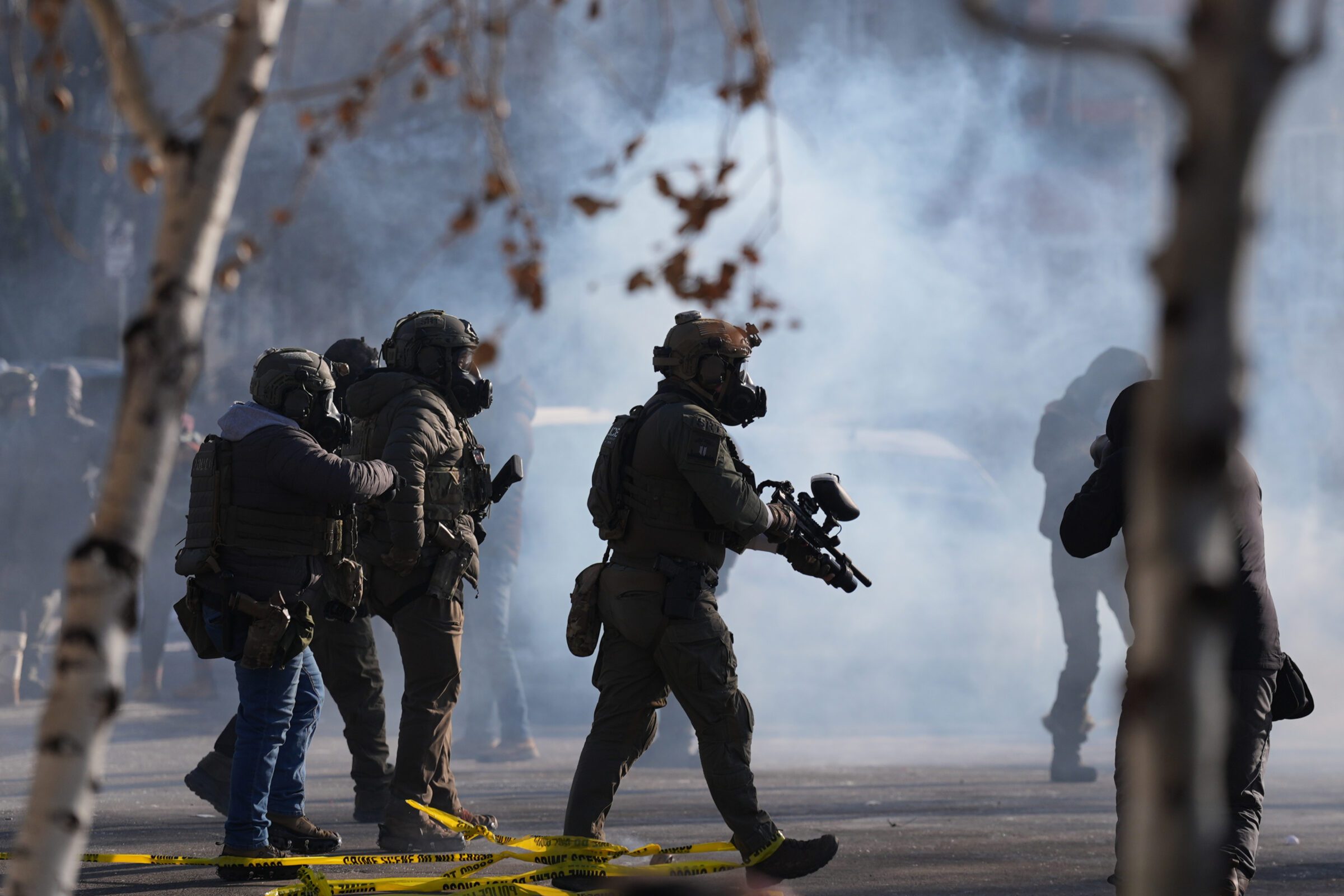
Virginia is poised to impose new conditions on local ICE partnerships, which the Trump administration seems likely to reject. That would effectively trigger a ban on sheriffs and police departments in the state collaborating with federal immigration authorities.
Democratic lawmakers passed a bill last week, near the close of the legislative session, that would require dozens of sheriffs to cancel their contracts with ICE by September if the federal agency refuses the new rules and the state’s authority to enforce them, including the ability of local authorities to prosecute federal officers for violating state law. The conditions clash sharply with ICE’s standard procedures and with President Trump’s position that states lack power over ICE agents.
Many immigrant rights advocates and even some pro-ICE sheriffs believe that the bill’s adoption would end formal agreements with ICE across Virginia, including the notorious 287(g) program that has empowered sheriff’s deputies across the state to act on ICE’s behalf.
“At the end of the day, the outcome is that ICE, as they currently operate, wouldn’t enter into a 287(g) agreement,” said Luis Aguilar, executive director of CASA, the region’s largest Latino and immigrant advocacy group.
Chesapeake Sheriff Wallace Chadwick, a Republican and staunch ICE ally whose jail rents out space to ICE agents, agrees. “I can tell you personally that I don’t think ICE is ever going to sign onto any of this,” he told Bolts.
The bill now awaits the signature of Democratic Governor Abigail Spanberger, who herself has recently moved to limit ICE’s reach in the state.
This reform comes as blue states around the country seek to limit ICE’s reach. Ten states have outright banned local law enforcement from entering into 287(g) agreements, most recently Maryland and New Mexico in February. But Virginia Democrats are taking a different route. Senate Bill 783 lays out what Senator Saddam Salim, who sponsored the legislation, calls “reasonable standards of conduct,” essentially daring ICE to say it won’t abide by state law.
Among the conditions: ICE agents would have to present a judicial warrant to investigate immigration status and enter homes, they would have to notify their local partners of planned local enforcement actions at least a week in advance, and would be required to clearly identify themselves during their operations in the state. ICE would also have to agree to prohibit its agents from being within 500 yards of a polling place.
The bill specifies that ICE would also have to concede that Virginia’s courts have authority over federal agents who violate the state’s rules, and that state police and prosecutors have the power to investigate and potentially charge “any shooting involving any agent” working for ICE.
This would contradict the Trump administration’s claims of “absolute” immunity after federal agents killed Renee Good and Alex Pretti while they were observing ICE activities this year, which the Department of Justice blocked local officials from fully investigating. Already during Trump’s first term, the prosecutor of Fairfax County, in northern Virginia, indicted two U.S. Park Police officers for a fatal shooting but the DOJ fought the charges and got a federal court to dismiss them; that case has loomed over recent analyses of how localities may respond to ICE.
The administration has shown no signs that it would now be willing to comply with Virginia’s proposed rules, which is why many observers expect that SB 783, while not an actual ban on 287(g) and other ICE programs, would functionally amount to a ban.
Still, the legislature’s Democratic leaders stress that their goal is not necessarily to end these contracts, but rather to bring ICE in line with the standards they expect from local and state police. “The objective is to focus ICE on doing their job deporting violent undocumented immigrants while following the same rules Virginia law enforcement has to follow,” Senate Majority Leader Scott Surovell told Bolts.
In defending the reform during a late-January legislative hearing, Surovell said, “What this bill says is that all of our localities are perfectly able to enter into 287(g) agreements if they want—but, if they want, there are certain minimum standards they have to meet.”
In conjunction with SB 783’s requirement that ICE follow Virginia’s state laws before partnering with sheriffs, lawmakers passed two other bills to codify new restrictions on all federal agents.
One of these bills would ban face coverings and require officers to wear identification. The other would create protected locations, including courthouses, where ICE would be banned from operating. Both bills are now also on the governor’s desk, awaiting signatures.
Other states have adopted such rules, but they’ve struggled to enforce them or hold accountable ICE agents who violate them. “We have seen staggering and blatant violations of constitutional rights and due process, not only for immigrants, but for U.S. citizens as well,” said Monica Sarmiento, executive director of the Virginia Coalition for Immigrant Rights. She says SB 783 is a mechanism to demand compliance. “This puts the burden of responsibility back on the federal government.”
Bolts reached out to ICE’s national and regional offices to ask how they plan to respond to the state’s new conditions and restrictions. They did not respond to those questions.
For ICE, in Virginia and around the country, the 287(g) program has been a key force multiplier, offering valuable detention space and information-sharing to federal officers. But this program wasn’t always so popular in Virginia; there were no 287(g) partnerships in Virginia until then-Governor Glenn Youngkin last year ordered state agencies to assist ICE, and urged sheriffs to do the same.
Sheriffs across the state rushed to enter into 287(g) partnerships as Trump’s second term kicked off. Immigration arrests tripled in 2025 compared to the previous year, and most of those targeted had no criminal record, according to records released by the Deportation Data Project.
Today, 25 Virginia offices—two regional jail authorities, plus 23 sheriff offices—have 287(g) contracts. Other jurisdictions like Chesapeake have IGSAs, or Intergovernmental Service Agreements, for ICE to rent beds in their jails.
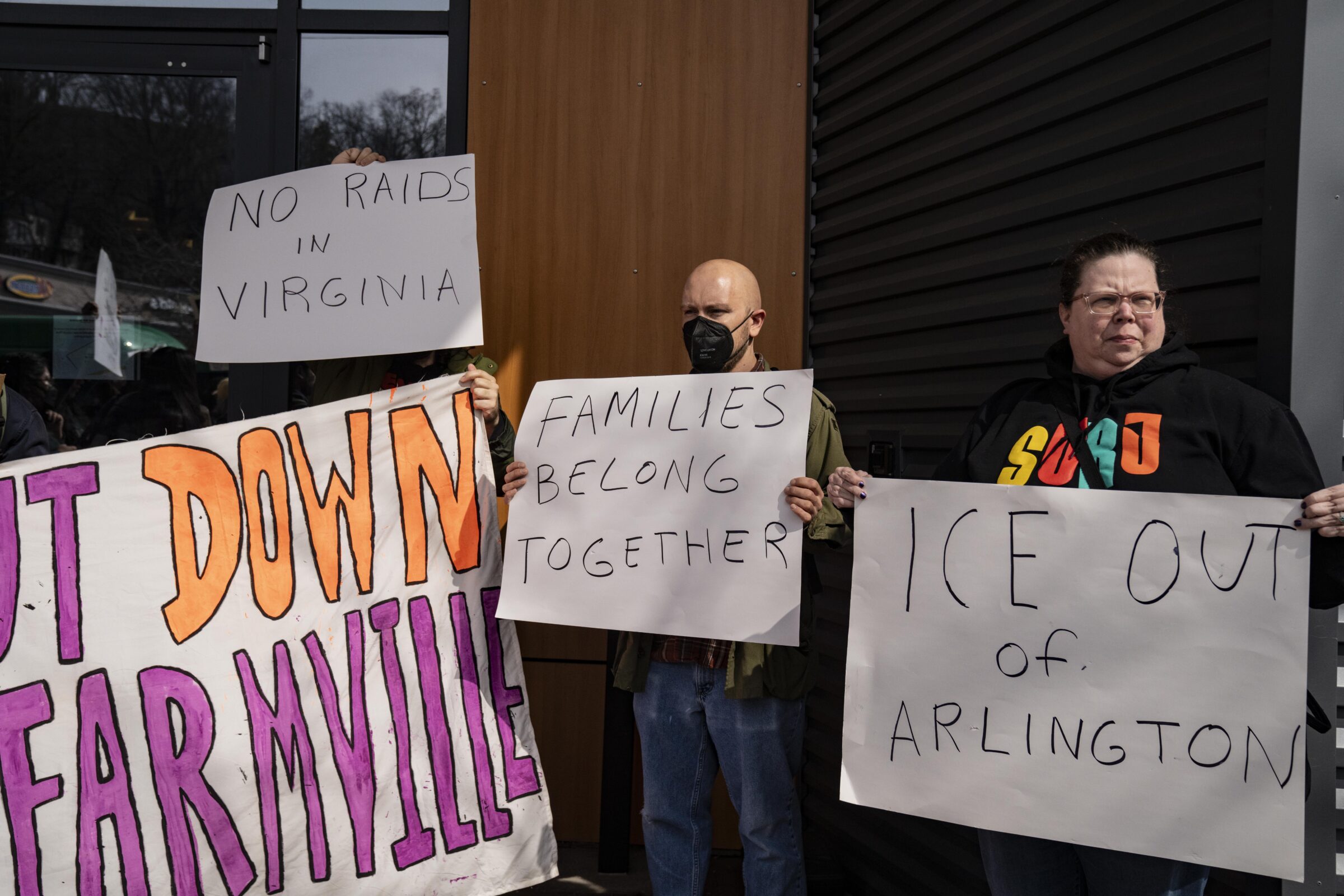
ICE already lost its largest partnership in Virginia in February, when Spanberger withdrew the state police and three other state agencies from the 287(g) agreements Youngkin had ordered. Advocates hope that the Virginia counties that currently participate in the program and help make immigration arrests will follow the state’s lead and quit the partnerships.
Bolts reached out to all 25 offices in Virginia currently partnering with ICE’s 287(g) program. Most did not respond.
Sheriff Steven Smith, of Greene County, told Bolts that he thinks there is little chance that ICE would make the concessions that the law requires to continue with local partnerships. Greene County’s 287(g) agreement allows officers to make deportation arrests during routine traffic enforcement, and the sheriff predicted that the feds may just ignore state law.
“ICE doesn’t have to pay any attention to what the state says,” Smith told Bolts. “If the state tells ICE they have to not wear a mask, they don’t have to listen to them. I can’t answer for ICE, but I can imagine what the response is going to be.”
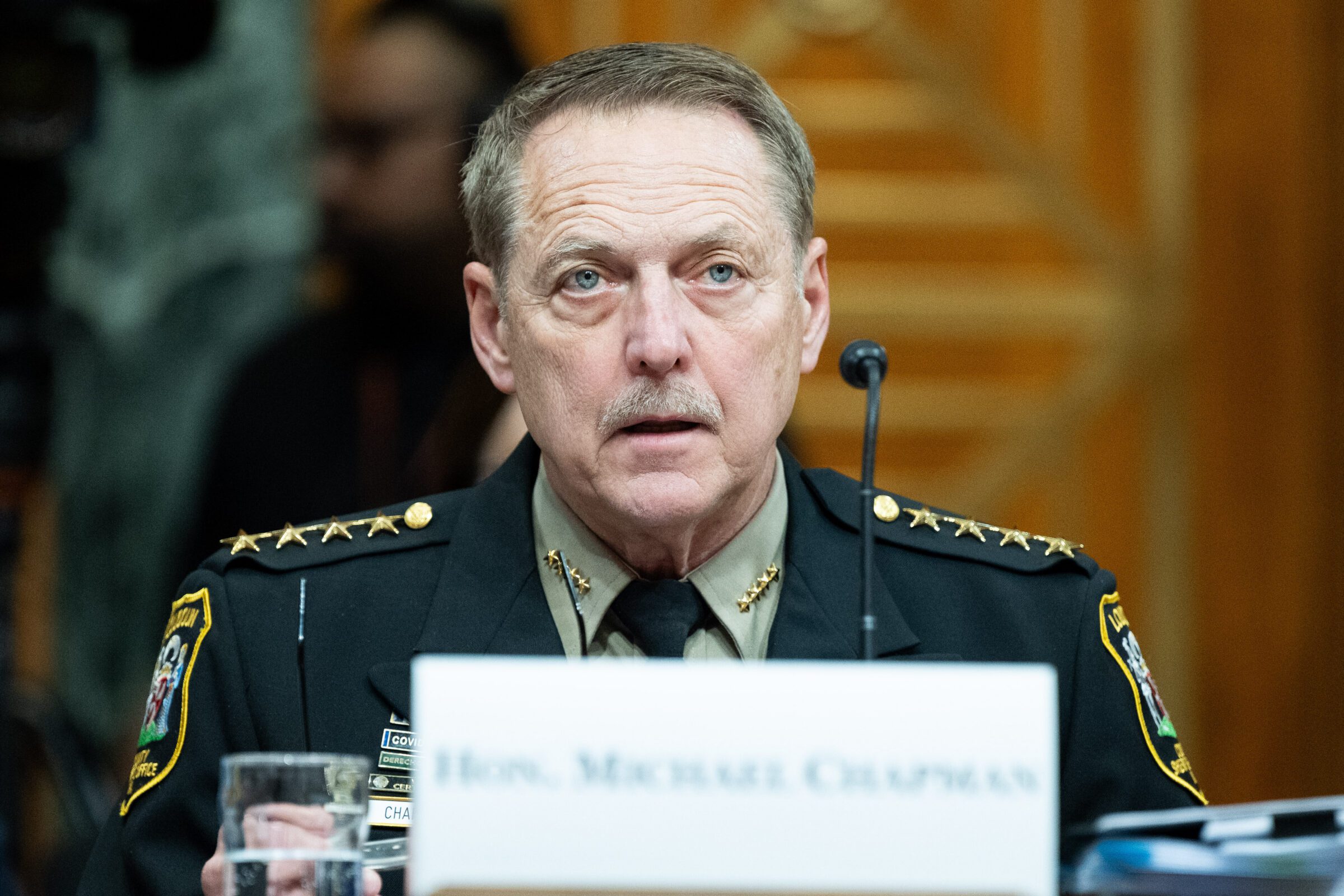
A spokesperson for Loudoun County Sheriff Mike Chapman, a Republican who has joined 287(g) program in his blue county, conceded that SB 783 “may preclude a 287(g) agreement with our jail”—unless, he added, ICE starts seeking judicial warrants, “which so far does not appear likely.”
Immigrants’ rights advocates have long warned that involving local police with ICE can encourage racial profiling and lead officers to focus on civil immigration violations instead of more pressing public safety issues. With the 287(g) program, “every single civilian interaction with police can turn into an opportunity to try to enforce federal civil immigration law, and that blurs the line between federal authority and local public safety efforts,” Chris Kaiser, policy director for the ACLU of Virginia, told Bolts earlier this year.
The GOP’s reconciliation package last summer diverted billions of federal funds toward Trump’s deportation agenda, including paying 287(g) partners for each arrest they make. Critics said this would incentivize sheriffs and local police to target people they perceive as immigrants, in a state that has an extensive history of racial profiling in law enforcement.
Entering IGSAs to detain people on behalf of ICE also comes with financial incentives since jails collect a daily fee for each bed used for immigration detention. The Riverside Regional Jail, which is located in Prince George County south of Richmond but serves neighboring jurisdictions, has detained thousands for ICE since last year, according to reimbursement invoices released by Legal Aid Justice Center; the jail’s board had discussed increasing the number of immigrants held for ICE to help cover a budget shortfall.
“We have seen just aggressive, cruel, inhumane tactics that have been carried out by the Trump administration— how ICE has been using children to try to draw in their parents for deportation purposes,” Sarmiento told Bolts. “Witnessing how un-American all of this is, how does it stand for our values?”
Sarmiento and other Virginia advocates warn that some cooperation may persist even if the most visible partnerships like IGSAs and 287(g) agreements disappear. Sheriffs and police routinely collaborate and share information with federal authorities, and it is harder to identify whether and what exchanges are taking place outside of a formal contract.
In Loudoun County, for example, the 287(g) contract is meant to only apply to what sheriff deputies do within the county jail, and the sheriff’s office told Bolts, “We do not participate in any immigration enforcement activities in the field.” But an investigation into radio communication logs by the local newsroom Loudoun Now revealed instances where officers and dispatchers contacted ICE during traffic stops to report people with an immigration warrant.
The new reform is meant to restrict some types of informal exchanges as well as formal partnerships, and Kaiser thinks that’s valuable in setting clear standards for local and federal law enforcement. “These conditions we’re talking about are not specific to ICE as much as they are basic due process protections,” he said. “I see a lot of value in stating that plainly.”
But, activists must remain vigilant, Kaiser added. “When informal collaboration happens, it is usually not very transparent to the public.”
Sign up and stay up-to-date
Get timely updates about pressing stories and elections.
Support us
Bolts is a non-profit newsroom that relies on donations, and it takes resources to produce this work. If you appreciate our value, become a monthly donor or make a contribution.