
“It’s Time”: Virginia Lawmakers Ask Voters to Repeal Jim Crow-Era Lifetime Ban on Voting
Voters will decide this year whether to end Virginia’s uniquely harsh felony disenfranchisement rules. They'll also vote on abortion, gay marriage, and redistricting.
| January 16, 2026
Voting rights advocates have sought for decades to reverse Virginia’s lifetime ban on voting for people with felony convictions, a 124-year-old Jim Crow relic designed to uphold white supremacy. In a historic move this week, the state legislature advanced a constitutional amendment to repeal the ban.
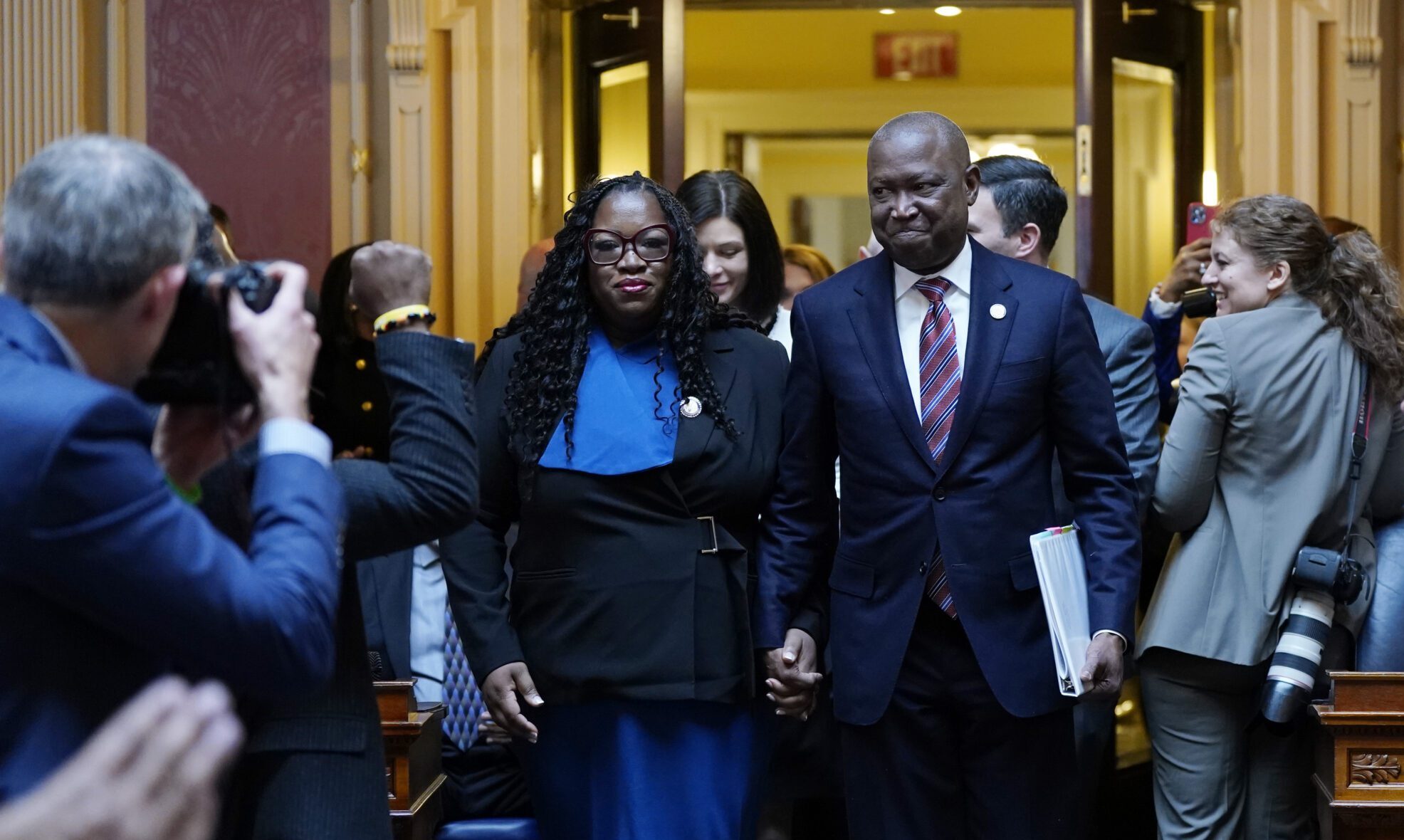
Democratic lawmakers on Friday voted to place a measure on the ballot this year to automatically restore voting rights to people when they exit prison.
If passed by voters, the amendment would eliminate the state’s current, uniquely harsh system: Virginia is today the only U.S. state or territory where anyone convicted of any felony loses their right to vote for life, unless it is personally restored by the governor.
“When I was born, my uncle was in the House of Delegates and they were fighting for this,” Delegate Marcia Price, who is 45, told Bolts on Wednesday, moments before the Virginia House passed the amendment. “It’s time. It’s time for us to have an automatic process. It’s time for us to not be the only state in the union that is doing this to people.”
At the 1902 constitutional convention that enshrined the current system, politicians designed a lifetime ban to, in the words of a lawmaker from the time, “eliminate the darkie as a political factor” in Virginia and guarantee “the complete supremacy of the white race in the affairs of government.” Black people are massively overrepresented in Virginia’s prison population, leading to their massive overrepresentation in the pool of people exiting prison without voting rights; as recently as 2016, 22 percent of Black Virginians were barred from voting for life.
Subscribe to our newsletter
To learn more about voting rights
Virginia governors started to chip away at this system last decade, with escalating executive orders, starting in 2013, meant to automatically restore the voting rights of people with felony convictions. In 2021, Democratic Governor Ralph Northam announced he’d automatically restore the rights of anyone exiting prison. Between 2013 and 2021, about 300,000 Virginians had their voting rights restored.
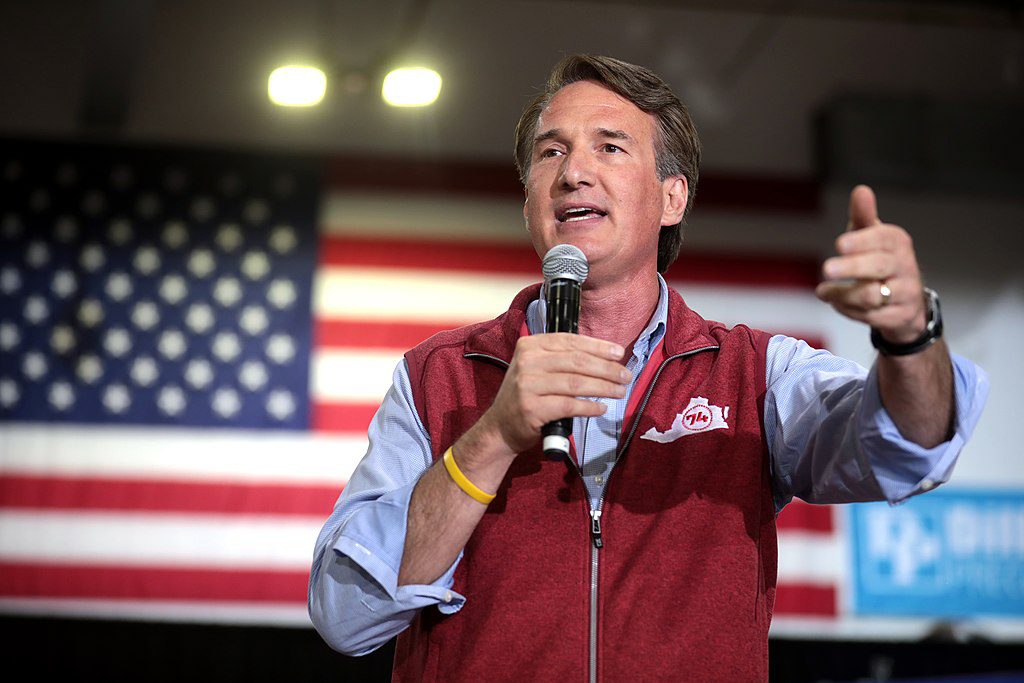
But past governors’ protections were not enshrined into law, and Republican Glenn Youngkin, who succeeded Northam, brought these reforms to a screeching halt, announcing in 2023 that he was ending all automatic rights restoration.
Youngkin’s decision left tens of thousands of Virginians excluded from democracy, with no choice but to hope Youngkin would smile upon them. As of last year, he’d granted voting rights to fewer than 10,000 people total—despite the fact that some 50,000 Virginians have been released from prison during his term.
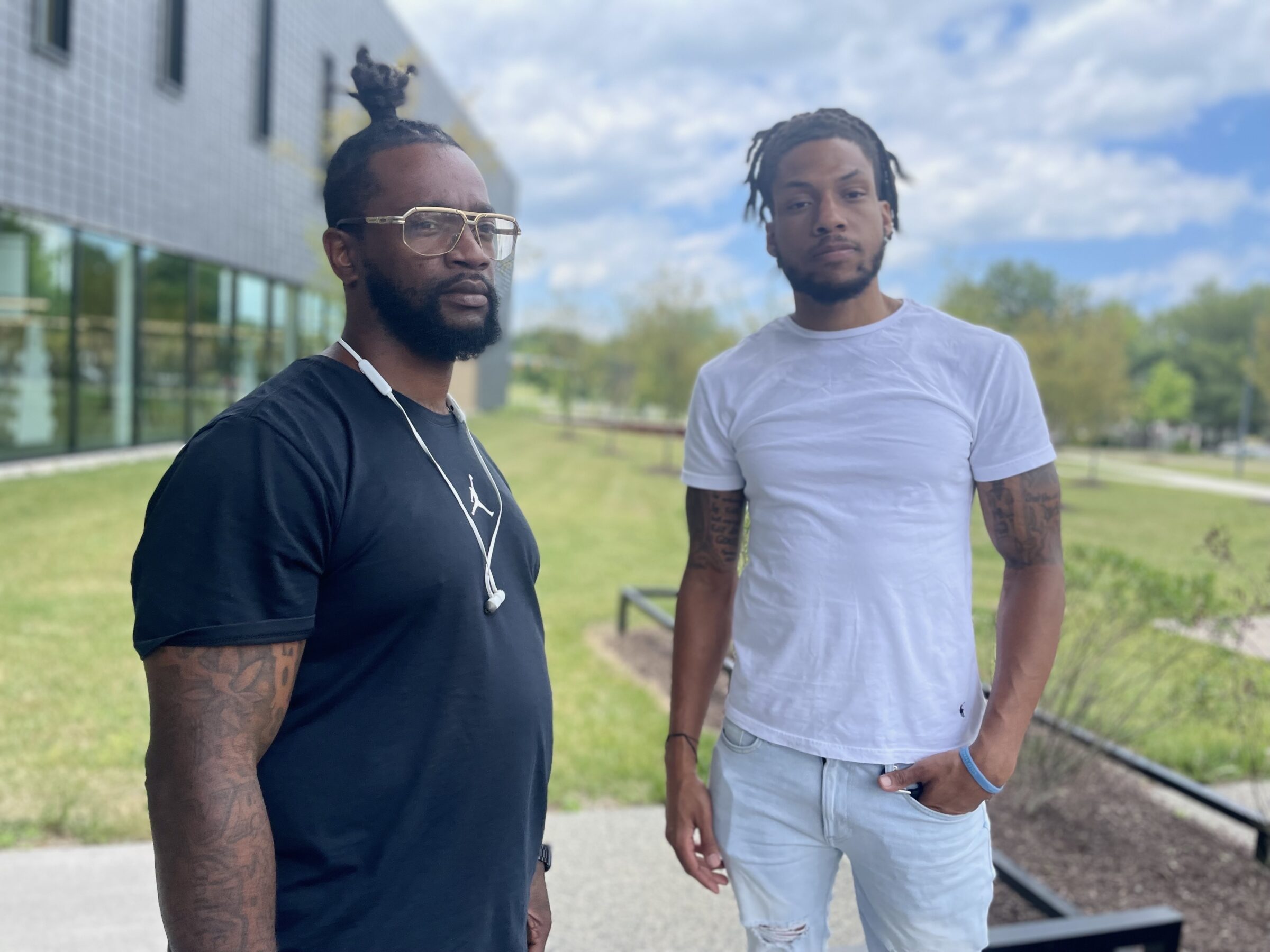
Many disenfranchised Virginians have told Bolts in recent years that Youngkin’s approach has confused and demoralized them. Some said they’ve given up on ever getting to vote again.
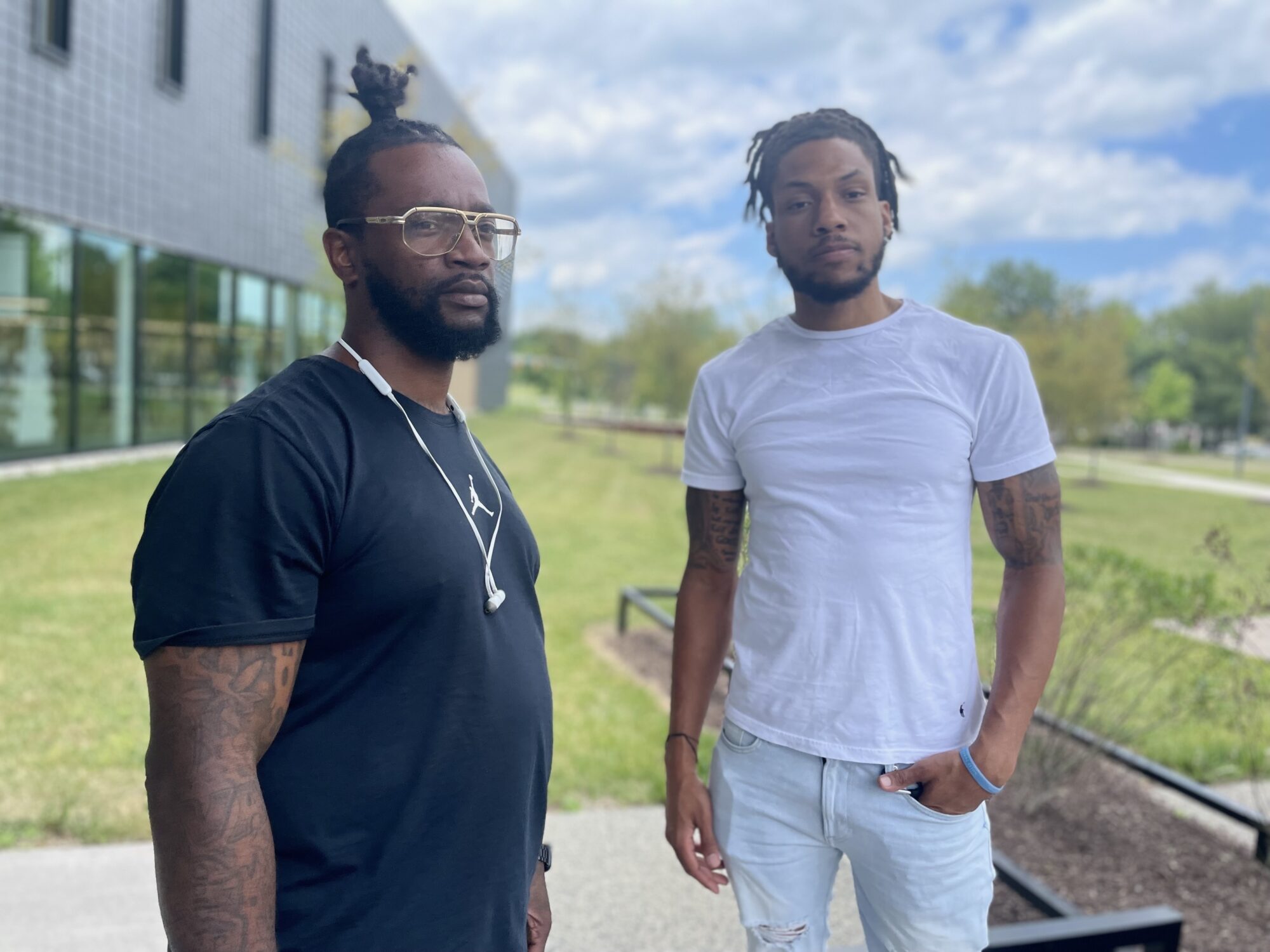
“It’s been so arbitrary,” said Shawn Weneta, a Virginia lobbyist and voting rights advocate who was disenfranchised for 17 years before being restored by Northam in 2021. “He’s been picking and choosing his voters for years.”
Advocates like Weneta have been pushing Virginia lawmakers to enshrine Northam’s executive order into law so that it’s no longer up to a single governor to decide people’s rights.
Changing the constitution requires the legislature to pass an amendment in two consecutive legislative sessions, followed by a statewide referendum. Both chambers passed this same constitutional amendment last January, and then Democrats greatly expanded their statehouse control by triumphing during the November elections.
As their 2026 session opened on Wednesday, they wasted no time this week in bringing the amendment to a vote again.
The House passed the amendment by a vote of 65-33 on the session’s first day, as Republicans protested that this change was too lenient on people with past convictions. “There are violent felons, murderers, people who snuff out the rights of others to ever be able to do anything again in this lifetime, who should be exempted,” argued GOP Delegate Eric Phillips, to cheers from his side of the chamber.
The Senate followed the House by passing the amendment Friday in a 21-18 vote.
Moments before that vote, Democratic Senator Mamie Locke, who sponsored the amendment, told her colleagues, “The question we should be asking ourselves is: Why are we talking about giving something back that should never have been taken away in the first place?”
“The right to vote is an essential currency of democracy,” she said. “Withholding it from hundreds of thousands of Virginians makes a mockery.”
The measure would make Virginia the 26th state to allow anyone who is not presently in prison to vote, including while they’re on parole and probation, let alone when they have completed their sentence. Maine, Vermont, and D.C., also enable people to vote from prison.
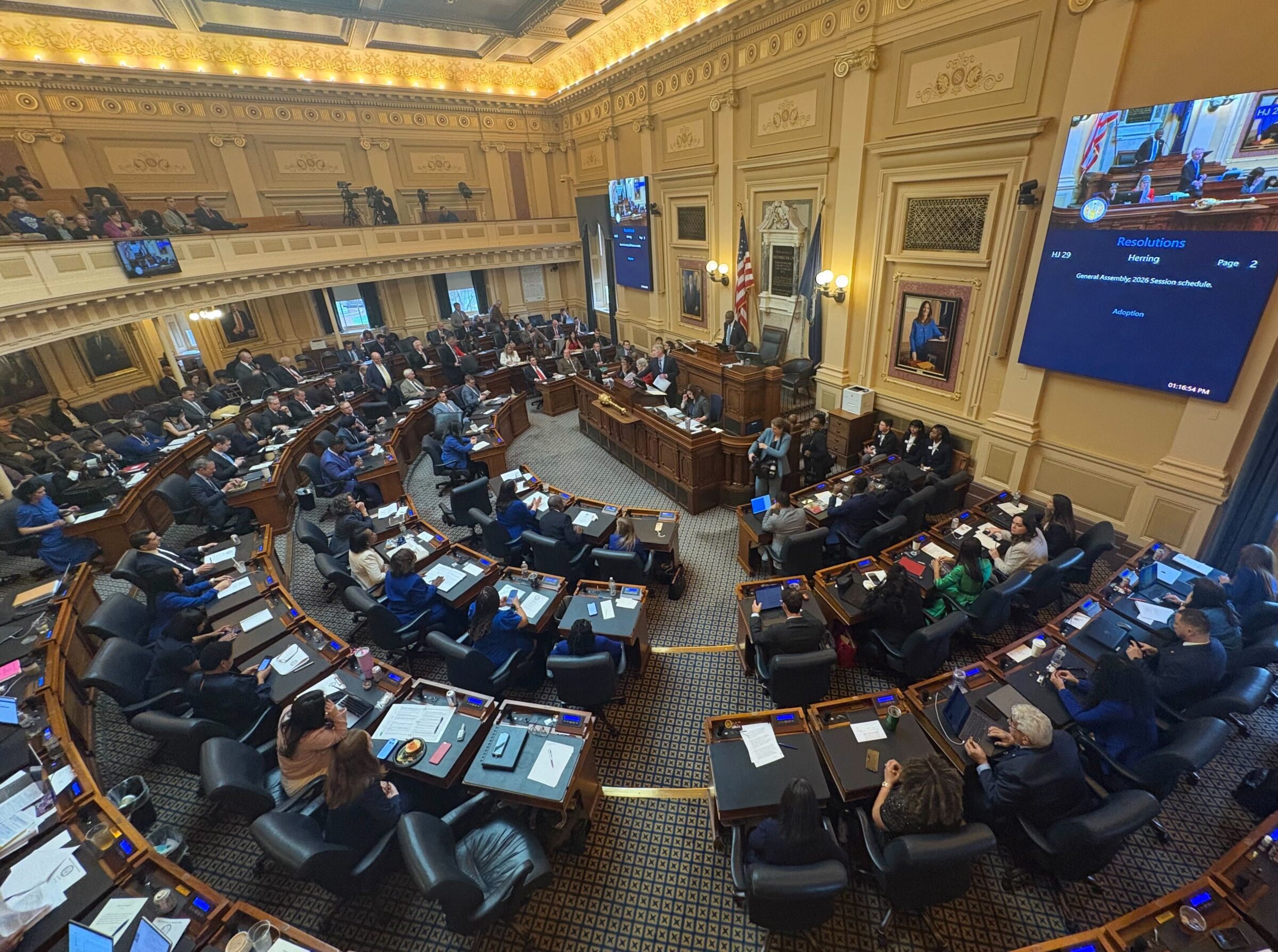
Both chambers this week also voted to advance three other constitutional amendments to the ballot: One would repeal the state’s ban on same-sex marriage, adopted in 2006, and another would enshrine the right to abortion.
A third measure, announced by surprise late last year, would allow Virginia Democrats to temporarily gerrymander the state’s congressional map, in response to GOP states that have, at President Trump’s urging, lately rigged their own maps to try to gain an advantage in this year’s November midterm elections.
“No one wanted to have to take this kind of action. We have stood for fair redistricting for years,” Price said Wednesday. “Virginia literally cannot afford to let this system continue to be rigged.”
Virginians quite recently voted against gerrymandering; 65 percent of voters there approved a measure in 2020 to create a nonpartisan redistricting commission. Democratic Majority Leader Scott Surovell addressed that from the Senate floor Friday: “They didn’t imagine that we were going to have a hyperpartisan fascist ideologue telling state legislators around the country to basically redesign their districts to maximize his own personal political power.”
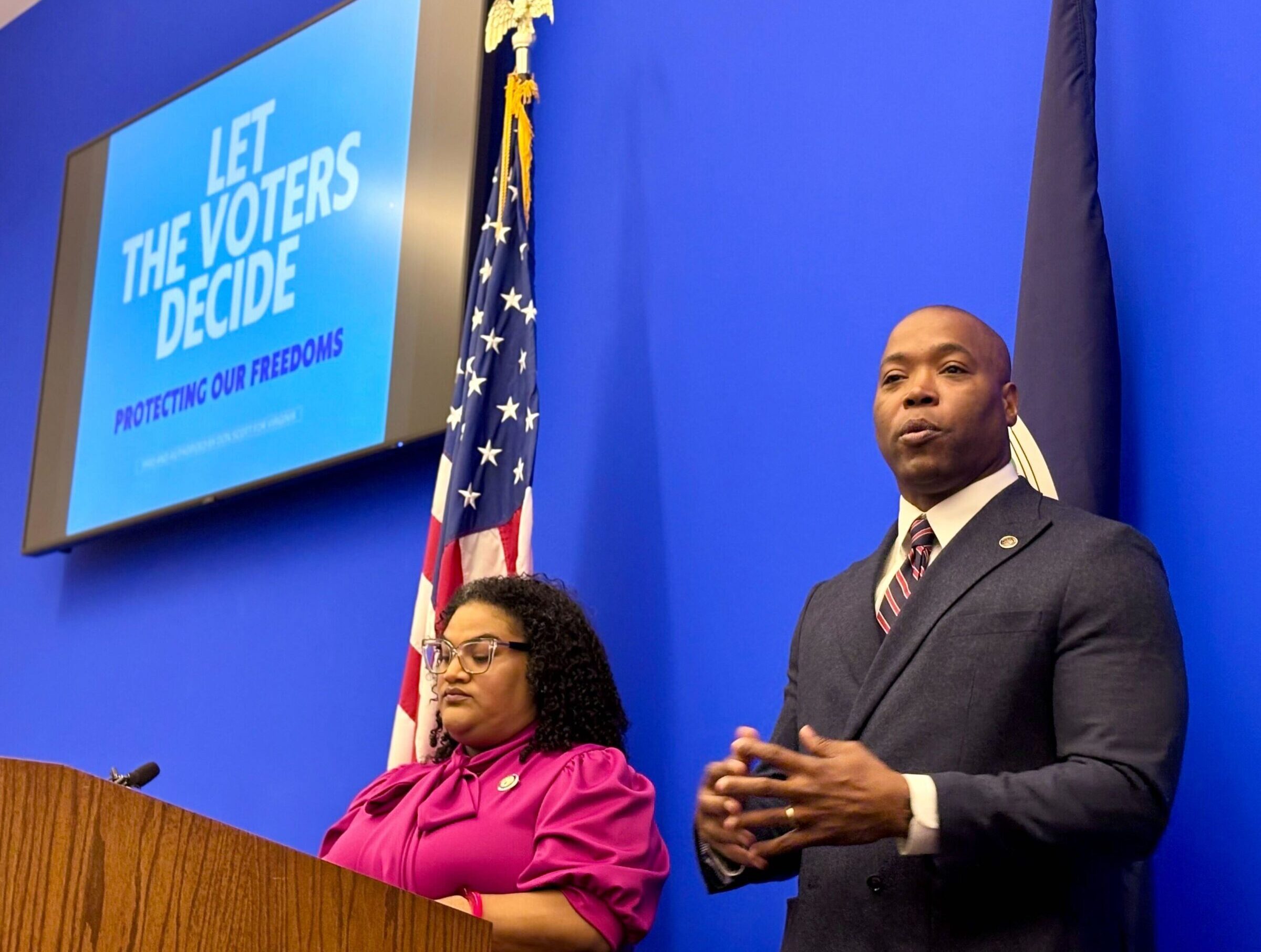
Given the immense national stakes, the redistricting measure has garnered much more attention than any other amendment in this opening week of session. Price and Democratic Senator Aaron Rouse on Wednesday held a press conference to discuss all four amendments, and every single question they fielded concerned gerrymandering.
At the back of the press conference sat advocates for voting rights restoration, quietly celebrating the success of their own measure.
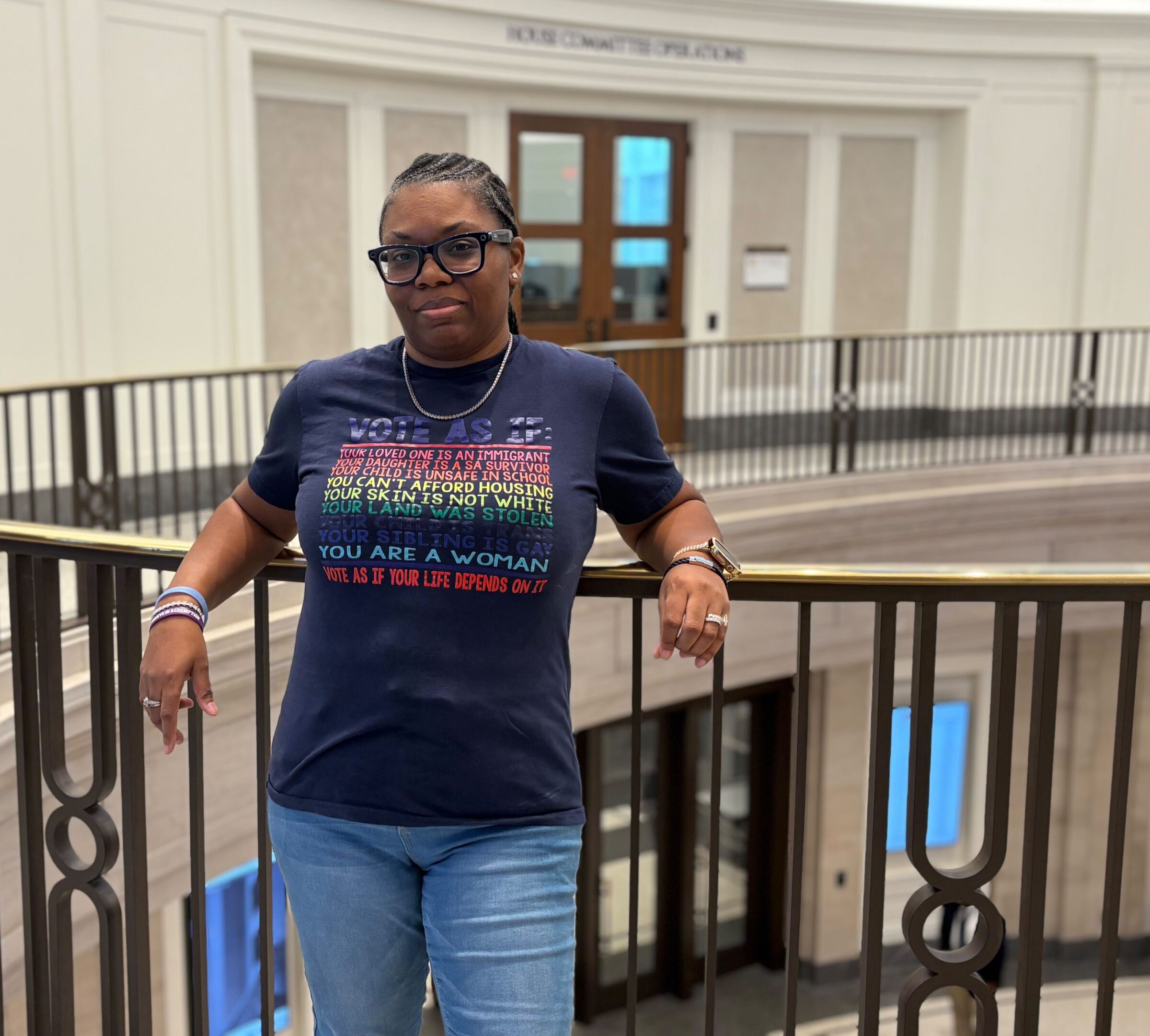
“This is a moment that’s been a long time coming,” Sheba Williams, who fights felony disenfranchisement with the Richmond-based nonprofit Nolef Turns, told Bolts at the statehouse on Wednesday.
Williams and other supporters of this amendment have become extra motivated to pass this reform over the last four years, under Youngkin. “This should never have been in the hands of one individual,” said Williams, who herself was disenfranchised from 2004 to 2013. “This administration just kind of highlighted what’s been wrong with the process for decades.”
State Democrats are planning to schedule a special election this spring to ask voters to adopt the redistricting amendment. This would allow a new congressional map to go into effect in advance of the midterms, though the GOP hopes a court will stop this.
But lawmakers told Bolts they expect the rights restoration measure to be placed on the November ballot. This will be the country’s first state-level vote on felony disenfranchisement since a 2020 California ballot measure restored voting rights to all adult citizens who are not incarcerated.
Until Virginia’s constitution is changed, voting rights restoration remains under the control of the governor’s office. That office changes hands on Saturday, when Democrat Abigail Spanberger is sworn in for a four-year term.
Spanberger has not said what her policy on rights restoration will be, and her campaign in 2025 did not respond to several attempts by Bolts to discuss that topic. But she has endorsed the constitutional amendment, saying in a statement last year that “it should be a priority for any Virginian who believes that the right to vote is foundational to who we are as an American people.”
Williams served on Spanberger’s transition team as an advisor on clemency and rights restoration. She said she’s received no assurances, but that she’s “optimistic” Spanberger will clear the backlog of tens of thousands of Virginians who’ve been blocked from voting by Youngkin, and that she’ll move to automate the restoration process, as Youngkin’s predecessors did.
But Williams added that she looks forward to one day not having to think so much about where Spanberger or any other governor stands on the issue.
“This takes away the authority of one person’s emotions,” Williams said of the amendment. “We don’t know what we get from term to term, and what side of the arc someone will bend to. So we are taking away the chance for the process to change every four years.”
Sign up and stay up-to-date
Support us
Bolts is a non-profit newsroom that relies on donations, and it takes resources to produce this work. If you appreciate our value, become a monthly donor or make a contribution.