
Virginia Governor Vetoes a Ban on Plea Deals That Waive People’s Constitutional Rights
Abigail Spanberger blocked a bill to bar prosecutors from pressuring Virginians to waive protections against unreasonable police searches as a condition of pleas.
| April 14, 2026
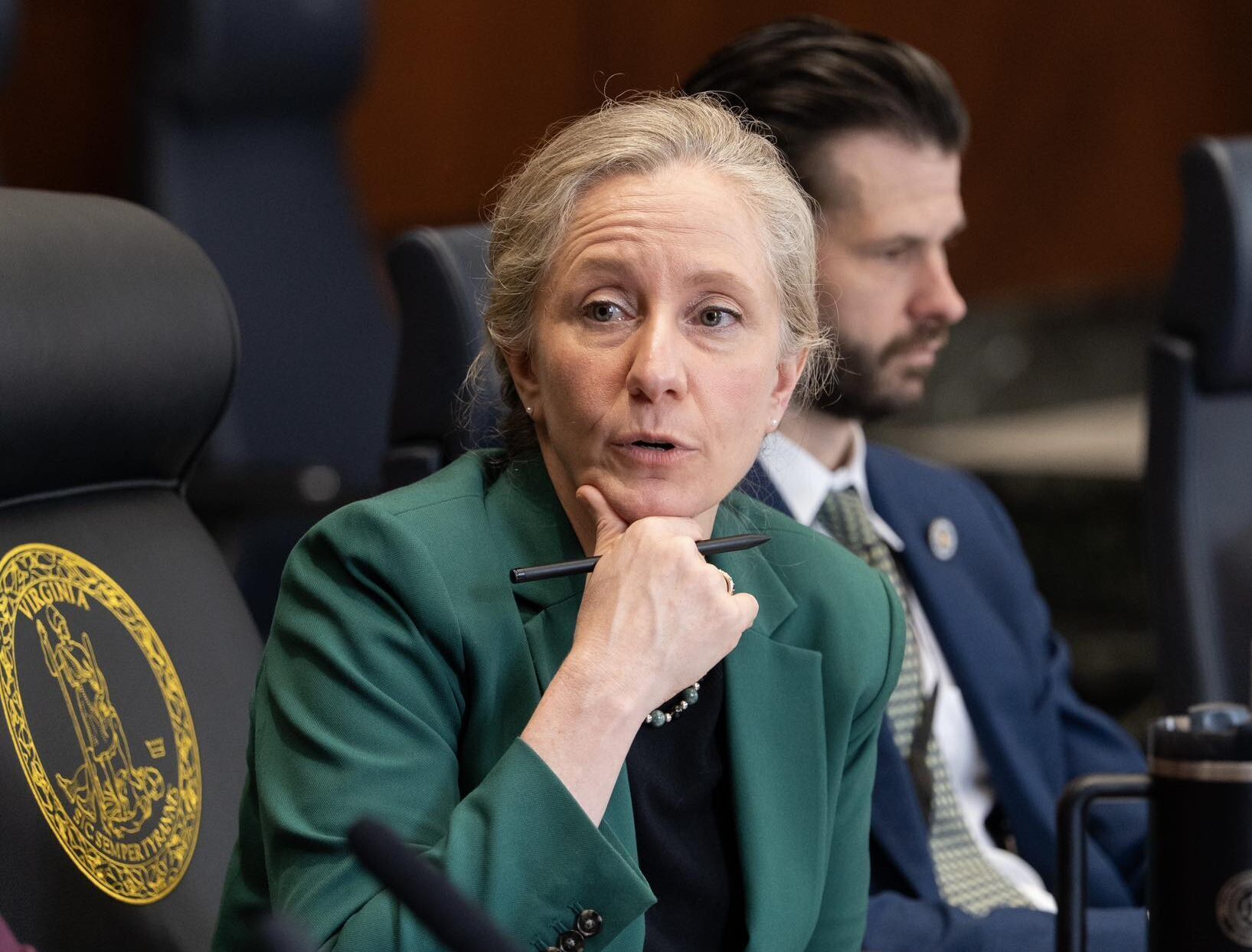
Virginia Governor Abigail Spanberger on Monday vetoed a bill that would have prohibited prosecutors from asking people to waive their Fourth Amendment rights against unreasonable searches in plea deals, a practice that disproportionately impacts people of color.
Spanberger’s rejection of the legislation follows a veto of a similar bill by former Governor Glenn Youngkin, a Republican, in 2024.
Spanberger, a Democrat who took office in January, said in a statement that these waivers are a common practice in Virginia courtrooms, and that restricting them would “limit plea bargaining options for defendants and Commonwealth’s Attorneys as they seek negotiated resolutions.”
Spanberger’s statement closely matched arguments made by the Virginia Association of Commonwealth’s Attorneys, the group that lobbies on behalf of local prosecutors. Nathan Green, the commonwealth’s attorney for James City County and the city of Williamsburg, defended the practice during legislative hearings on the bill, saying the waivers are useful to prosecutors as a bargaining chip during plea deals.
Critics say threatening defendants with harsher sentences if they don’t sign away their constitutional rights is unfair, and leaves them with an “impossible choice.”
“It’s really sad and unfortunate that this practice is going to continue,” Rob Poggenklass, executive director of the criminal justice advocacy group Justice Forward Virginia, told Bolts. He said he was surprised by Spanberger’s veto. “It’s just really disappointing that racial equity has fallen so low on the priority list.”
Opponents of the waivers have argued that their use has been racially discriminatory. In 2020, for example, 96 percent of people living under Fourth Amendment waivers in Richmond were people of color, records obtained by criminal justice advocates and shared with Bolts show. Comparatively, the capital city’s population was 45 percent Black and eight percent Hispanic.
As Bolts reported in 2024, people who agree to a Fourth Amendment waiver give up protections against unreasonable searches and seizures, essentially allowing police to search a person, their home, or vehicle at random for a specified number of years.
Sometimes, these waivers stretch beyond the completion of parole. According to data obtained by Justice Forward Virginia, some people have agreed to waive their rights for as long as 20 years as part of their plea deals. And because a person has waived their rights, they have no legal recourse to challenge anything found by police during a warrantless search.
The legislation, Senate Bill 23, would have barred the waivers in all cases except those involving child sex offenses. The bill would also have prohibited prosecutors from asking defendants to waive their right to later expunge their record or keep it sealed, a practice in some Virginia jurisdictions.
“We shouldn’t be waiving people’s constitutional rights,” Poggenklass told Bolts in explaining why he advocated for the bill. “This is the only right where that happens, where people are out in the world and they’re missing one of their fundamental rights under the Constitution.”
In vetoing the bill, Spanberger broke with the rest of her party. All Democratic lawmakers voted in favor of the reform when SB 23 passed the state House and Senate earlier this year; all Republican lawmakers who took part in the vote opposed it.
Democratic leaders lack the supermajority they’d need to override Spanberger’s veto of SB 23.
Subscribe to our newsletter
To learn more about criminal justice policy
Proponents of the legislation said that the waivers permit police to violate the constitution and protect officers when they engage in misconduct. Ashley Shapiro, a Richmond public defender and board member of Justice Forward Virginia, described how police stop and search people at whim and then use a Fourth Amendment waiver to justify the stop.
“There isn’t really a broader public safety goal that’s achieved by these instead, it’s just a degradation of, again, not only the constitutional rights of people who have them, but everyone else as well,” Shapiro told Bolts.
Court records reviewed by Bolts show how some local cops have integrated the waivers into their regular policing.
One January 2025 legal filing on behalf of a man stopped and searched by police in Harrisonburg, a rural city on the edge of Shenandoah National Park, describes how the state’s probation and parole department has provided monthly lists of people with waivers to the Harrisonburg Police Department. According to the legal filing, city police officers regularly make calls to the dispatcher to ask whether a particular person is on the list. The man, who was searched during his stop because his name was on the list, ultimately had his case dismissed after it was revealed that police were relying on an old list when they searched him.
Aaron Cook, a Harrisonburg attorney and president of the Virginia Association of Criminal Defense Lawyers, told Bolts that prosecutors have used the waivers in every felony plea deal in the city for more than a decade. Some of his clients have had their waivers extended along with their probation because they were unable to pay court costs.
“It was so ingrained that you had to sign it or you didn’t get your deal,” he said. “There’s a lot of issues with it.”
Virginia prosecutors who use the waivers have said they’d end up imposing harsher sentences if they can no longer ask defendants to sign these agreements.
“If we don’t have a substitute to incarceration, we’re left with incarceration,” Green, the prosecutor of James City County and Williamsburg, told lawmakers during hearings on the bill.
“Taking this out of the prosecutor’s toolbox … could have what I think is a contrary impact, where what happens instead is, instead of agreeing to something below the low end of the guidelines with a Fourth Amendment waiver, we don’t have that tool anymore,” he explained.
Richmond Commonwealth’s Attorney Colette McEachin also defended the practice in an interview with Bolts two years ago, saying that signing a waiver “is a difficult choice that that person has arrived at through their own actions.”
But use of the waivers among Virginia prosecutors varies, and some don’t use them at all. Advocates say this shows that prosecutors don’t need them.
“There are plenty of jurisdictions that don’t use these so it’s certainly not integral to crime fighting or integral to clean negotiations, but what it is is super coercive,” Shapiro said.
Spanberger also vetoed other criminal justice reform bills on Monday. One would have allowed judges to defer sentencing in more criminal cases so that people can complete treatment and programs and avoid a prison term. Another would have blocked prosecutors from charging people with felonies for having trace amounts of controlled substances.
Sign up and stay up-to-date
Get timely updates about pressing stories and elections.
Support us
Bolts is a non-profit newsroom that relies on donations, and it takes resources to produce this work. If you appreciate our value, become a monthly donor or make a contribution.