
D.C. Gears Up for First Ranked-Choice Election with Citywide Voter Education Effort
Election officials and community groups are holding education campaigns ahead of Washington D.C.’s first use of ranked choice, with many focused on older and low-propensity voters.
| March 12, 2026
This story was produced as a collaboration between Bolts and The 51st.
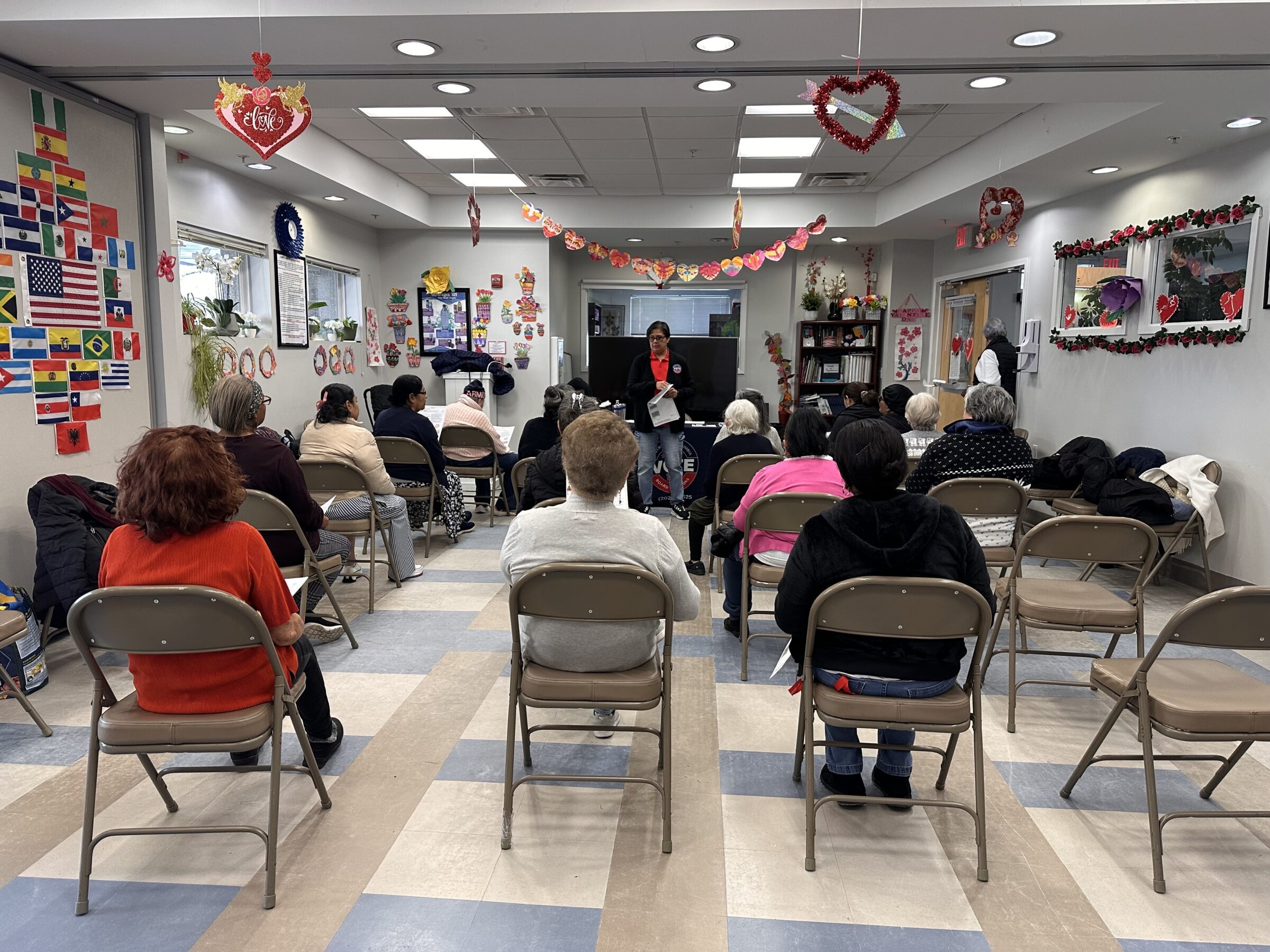
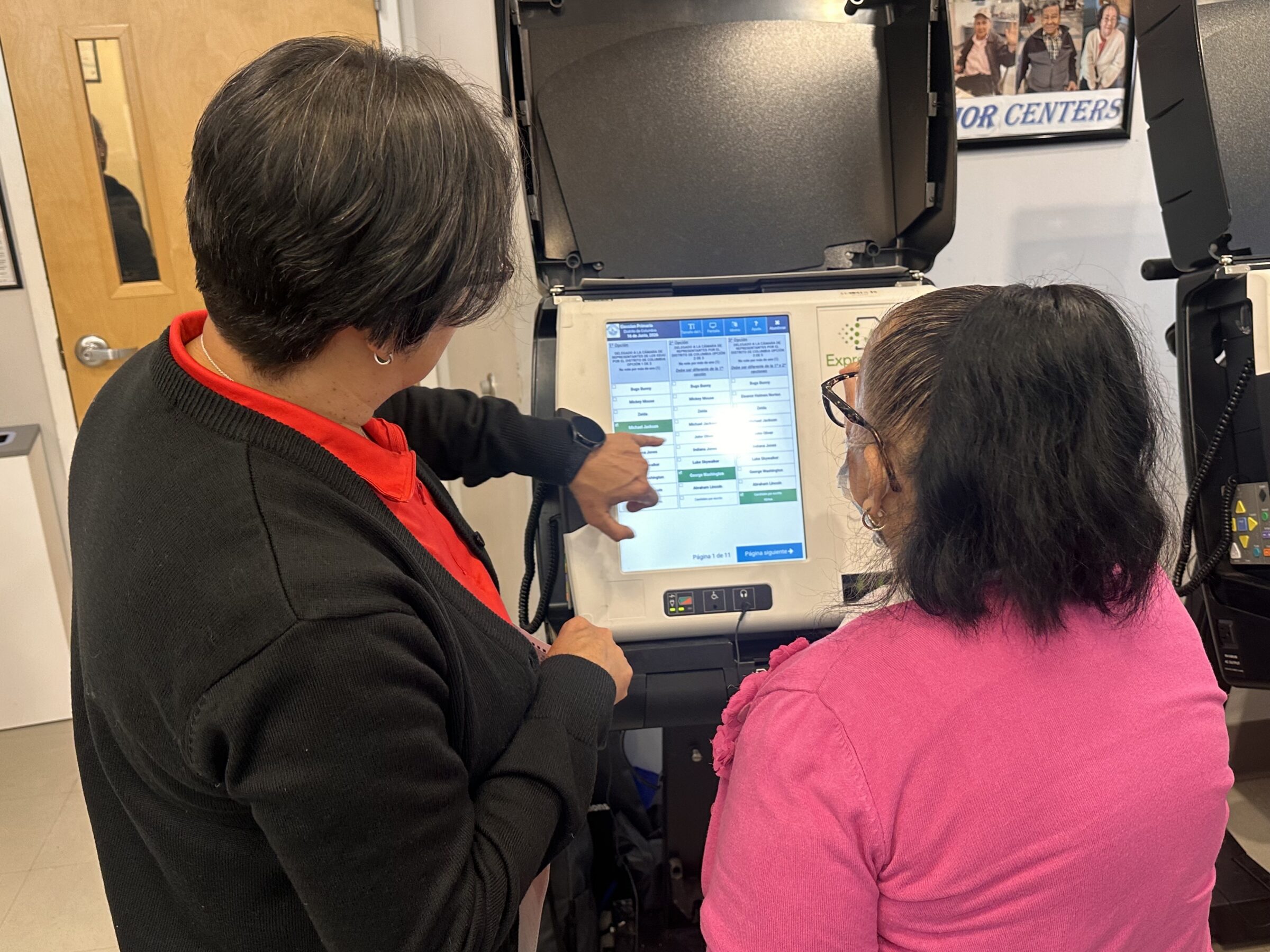
One recent Tuesday, between a Latin dance session in the morning and lunch at midday, a group of residents at a senior center in the Brightwood neighborhood of Northwest D.C got an important civics lesson. The two dozen participants, mostly Spanish speakers, heard from Karla Garcia, a Washington, D.C., Board of Elections voter outreach specialist, about using ranked-choice voting on their ballots. In June, the city will hold its first election using the method, and it’s Garcia’s job to help voters understand the change.
Garcia distributed sample ballots with pretend candidates, and then launched into her presentation.
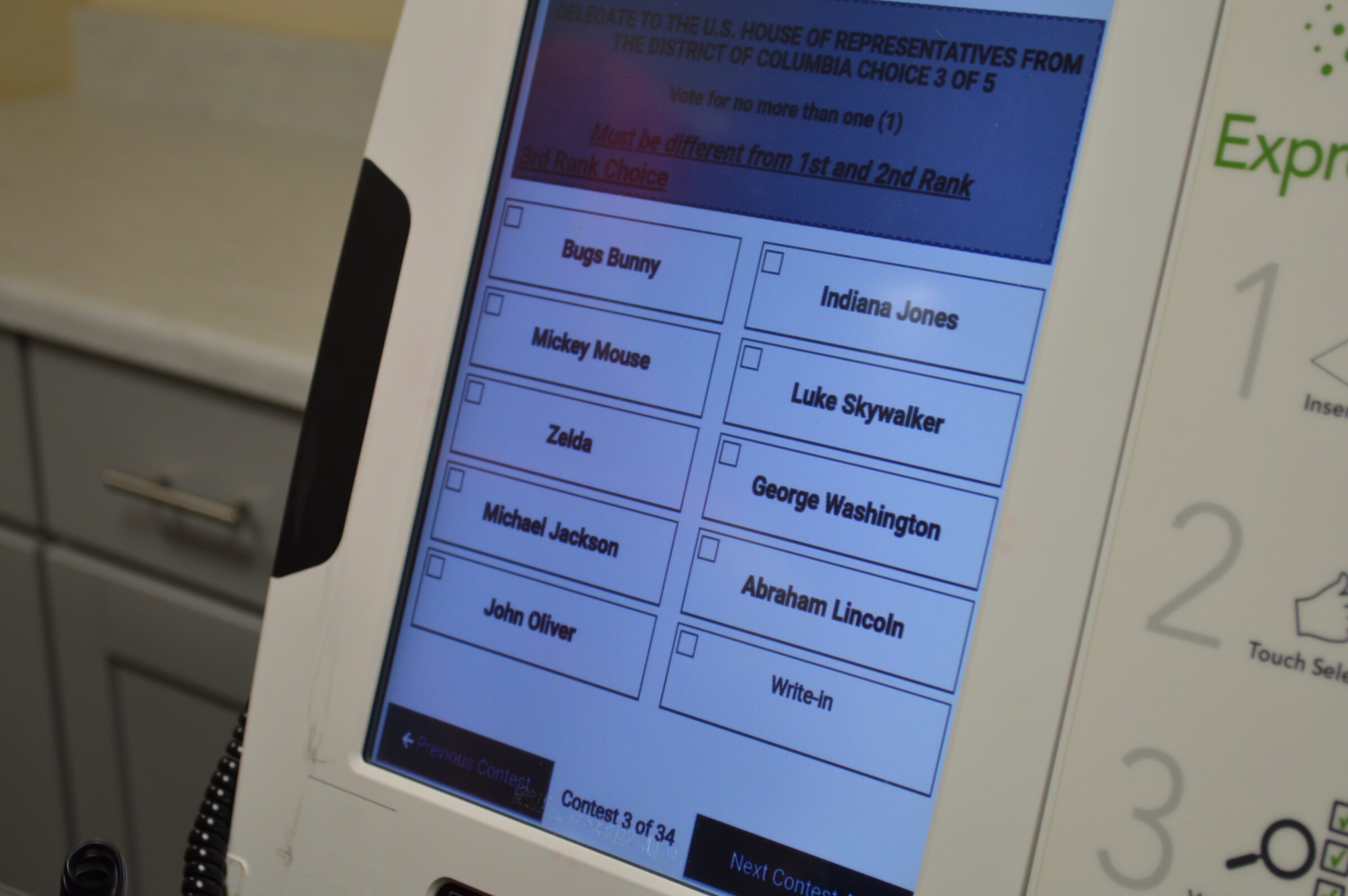
“It’s very different from how we’ve voted before,” she said in Spanish, pointing to the 17-inch ballot with Bugs Bunny, Mickey Mouse, Zelda, Michael Jackson, Luke Skywalker, and George Washington listed next to a grid, where voters could rank them. “Today we can practice so you can get a sense of how to vote.”
In a typical election, voters need to make only one selection per race; a supporter of Bugs Bunny’s campaign can vote for him and move on to the next ballot item. But under ranked-choice, voters are invited to rank the candidate field; the theoretical Bugs supporter can select the rabbit as their first choice, but also rank up to four more candidates besides him, in order of preference.
Since January, Garcia and a few colleagues have fanned out across the city to educate residents on the new way they will be casting ballots during this year’s primary and general elections, where D.C. residents will select a new mayor, seven city council members, and other local officials. They’ve held at least 30 sessions so far, including at high schools, at neighborhood association meetings, and online. Dozens more are planned.
The D.C. Board of Elections, Garcia said, is particularly focused on education for older voters, who, research shows, are more likely to struggle with this method. The city is also targeting those who live in the predominantly Black neighborhoods east of the Anacostia River, where voter turnout trends lower than in other parts of the city.
Subscribe to our newsletter
For more stories about elections and voting
“It’s not hard,” Garcia told the Brightwood crowd as she explained the rules: D.C. voters will be able to rank candidates in any race with three or more candidates, with the option to rank a maximum of five candidates in the most crowded of contests.
If a candidate receives at least 50 percent of first-choice votes, they win. If no candidate reaches that mark, the candidate who received the fewest first-choice votes is eliminated. The votes of the people who ranked the eliminated candidate first are immediately redistributed to whomever those people ranked second, and a second round of counting begins. If someone reaches the 50-percent threshold in the second round, they win, and if not, the cycle of elimination and recounting continues until a candidate clears the threshold.
This year’s change is the result of a November 2024 ballot initiative, through which D.C. voters overwhelmingly approved bringing ranked-choice voting to the nation’s capital starting this year. D.C. joins Maine, Alaska, and dozens of cities and counties, including New York City, San Francisco, and Arlington, Virginia, in adopting this method. It’s a relatively modern concept in the U.S., but it’s been in use in various spots around the world for more than a century.
Proponents say ranked-choice voting gives voters more options to express their opinions and prevents outcomes where a candidate wins without a majority of voter support. These plurality victories happen often in D.C.; for example, Mayor Muriel Bowser’s first election to the city council, in 2007, came in a very crowded race in which she won just over 40 percent of the vote. In 2022, a winning candidate for city council mustered just over 25 percent.
Ranked-choice voting supporters also argue also that this voting method changes the tenor of campaigning, as candidates may hold off on negative campaigning because they need to seek out voters’ second-place ranking if they can’t get the first.
Aparna Raj, currently a candidate in the Democratic primary for the open Ward 1 council seat, vouches for that effect.
“In traditional canvassing, when you go and talk to someone and they tell you they support another candidate, you say, ‘Oh, well, thank you for your time,’” she said. “We’re still getting used to saying, ‘I hope you consider us second.’
“As a candidate,” Raj continued, “you have to be able to build a broad coalition to be able to win. It really changes the way that candidates are thinking about the election.”
But in D.C. and beyond, many ranked-choice voting critics deride it as too confusing—especially for older voters who have gotten used to another way of voting, and for irregular voters less likely to know about changes to election law.
In late 2025 year a pair of Democratic lawmakers tried to delay the rollout of ranked-choice voting by a year, arguing that the elections board wouldn’t have enough time to educate those voters on the new way of casting ballots, potentially resulting in confusion at the polls, spoiled ballots, and ultimately compromised ballot access for some voters.
In other jurisdictions that have tried ranked-choice voting, similar warnings of widespread voter confusion and heaps of spoiled ballots have not necessarily come to pass.
Nationally, more than 99 percent of ranked-choice voters cast their ballots validly, reports the National Civic League, which works to promote voter participation.
Take Alaska, for example. In that state’s first ranked-choice election in 2022, 99.8 percent of ballots were cast validly, according to FairVote, which advocates for ranked-choice voting. Polling conducted after the election found that four in five Alaska voters found ranked-choice voting simple to use in that 2022 cycle, and that voters’ understanding of the method increased by the following even-year election, in 2024. Organizations in Alaska have conducted extensive voter education programming, including logistically difficult outreach in remote parts of the state by organizations that advocate for Native residents.
Nevertheless, opponents of ranked-choice voting in Alaska continue to allege that voters don’t understand the method. Alaska narrowly voted down a ballot measure in 2024 to repeal ranked-choice voting, and is poised to vote on the same measure again this year. “It’s extremely confusing to people, most certainly people that are maybe older and don’t understand it,” argued Judy Eledge, chair of the Repeal Now campaign, in an interview with the Alaska station KTUU.
Juli Lucky, an advocate for ranked-choice voting and the executive director of Alaskans for Better Elections, warned of a self-fulfilling prophecy: When people in positions of influence treat ranked-choice voting as deeply confusing, voters hearing that message may approach the ballot with greater caution than is really needed.
“Honestly, when people come up to me and say they’ve heard that ranked-choice voting is really confusing, I just put a ballot in front of them and, invariably, they can fill it out,” Lucky said.
This is more or less the approach that the Board of Elections’ outreach team is taking in D.C.
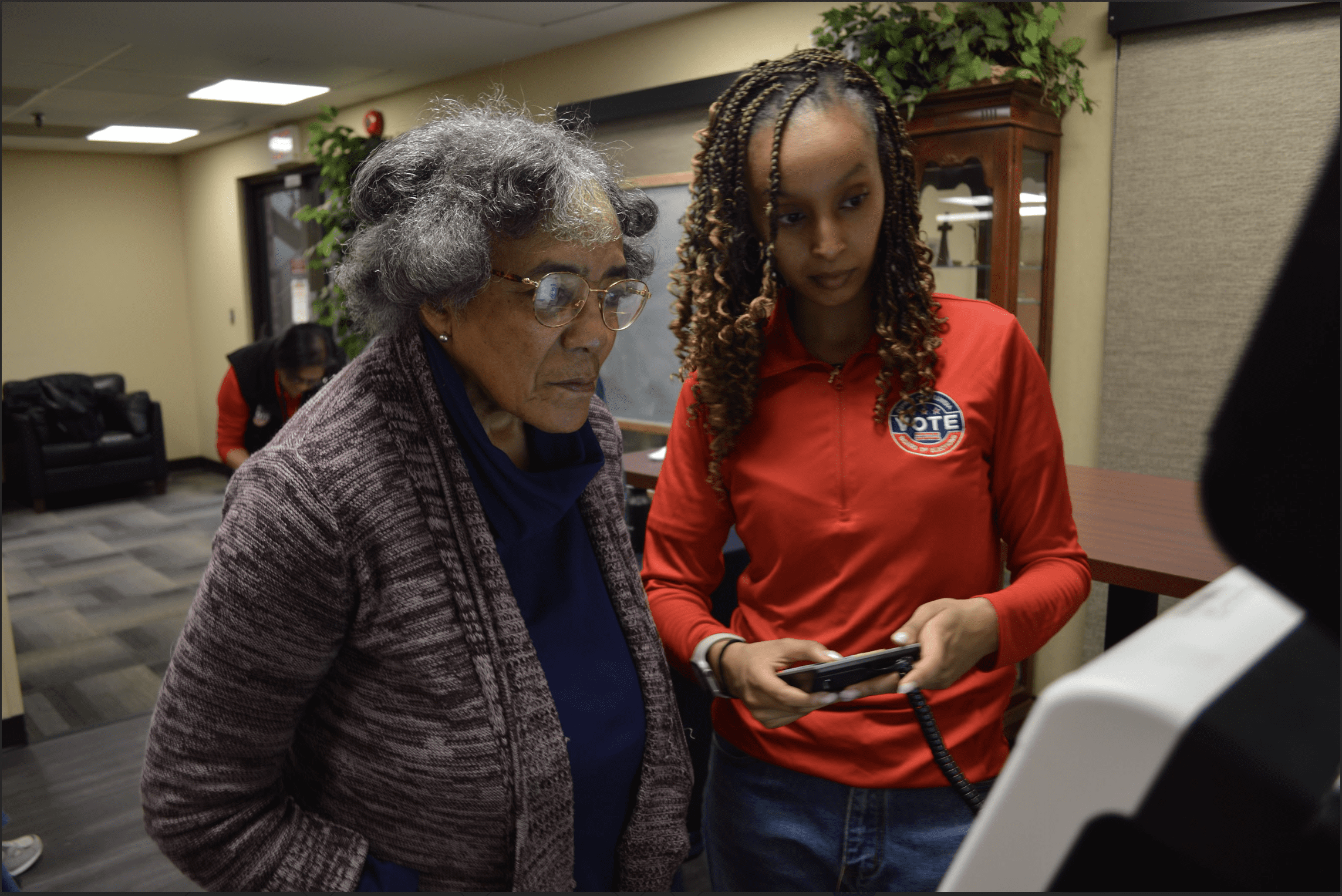
At a senior center in Foggy Bottom, Garcia and her colleague Yewoinhareg Kebede showed voters the same sample ballots used in Brightwood—Bugs Bunny led the candidate field for Congress, while Beyonce faced Donald Duck and others in the mayor’s race.
“I thought I’d be lost,” Arnitta Coley, 79, said after filling out a mock ballot. “When I started to understand that it would give me more opportunities to elect someone that I prefer, even a candidate who may not have been my first choice, I thought that helped.”
Coley has been voting for about 60 years, and expects the change to ranked-choice won’t deter her, or this electorate, from voting again in this election.
“D.C. voters are smart, cognizant,” she said. “And there are always people that want to help.”
After helping Coley, Kebede agreed that voters will do just fine. “It’s always nice to not be the first ones to do something,” Kebede said. “We understand the power of the vote and we want to continue being a voter-friendly city.”
There’s not much time for voters to adapt, though. The city kicked off its education campaign in mid-January, and it now has less than two months until D.C. voters start receiving their ballots in the mail, and just over three months until the actual primary on June 16.
“The biggest challenge for first‑time ranked-choice voting users is simply the unfamiliarity,” said Louis Davis, D.C. state director for the AARP. “Some older voters may worry about whether they have to rank every candidate or whether a mistake could affect their vote. That’s why education is so critical—because voters 50-plus vote in the highest numbers. They deserve clear instructions and confidence that their voices will be heard and their votes counted accurately.”
“I think it’ll be overwhelming for some seniors,” said resident Theresa King-Smith, 71, as she left a city workshop in the Congress Heights neighborhood in Southeast D.C. last month. “I don’t personally care for it, but there’s a lot of things I don’t care for and you have to adapt and move forward.”
Despite her own reservations, King-Smith agreed with Coley: With enough outreach and education, she said, most voters should be able to handle the transition to ranked-choice voting.
But that understanding can’t just come from the elections board, King-Smith added. She said she’s observed churches, advocacy groups, and civic organizations are getting involved, as are informal networks of friends and family. “Once we get some of the younger crowd,” she said, “then they’ll talk to their big mommas and grandmas.”
Just this week, Opportunity D.C., a local pro-business advocacy group, kicked off its own campaign to educate voters on ranked-choice voting, in part because polling it conducted found that 66 percent of Black voters say they have not heard of the new way of voting, compared to just 43 percent of white voters who say the same. That poll also found that voters 65 and older report lower awareness of the change than do younger age groups.
Also taking up the mantle of voter education are, of course, campaigns and candidates themselves—especially in contests with big fields.
Raj, running in Ward 1’s five-person race, said, “There is a real responsibility, I think, for candidates to educate people. I’m definitely thinking about my platform and role as a candidate. … It’s still a little early. I think a lot of people, including myself, still have to switch to that mindset.”
“We’ve definitely been trying to increase people’s awareness,” added Oye Owolewa, who is running for an at-large seat on the D.C. Council alongside 10 others. “The fact that we have mail-in ballots means voters will be able to see and hold the ballot for a month and that will be a good opportunity to educate them.”
Ranked-choice elections outside of D.C. have shown that the candidates themselves can be effective vehicles of public education; campaigns, in growing a candidate’s public profile, can educate while persuading prospective voters. In other words, supporters can feel incentivized to fill out their ranked-choice ballots according to the guidance of their first-choice candidates.
This happened in Mayor Zohran Mamdani’s meteoric rise to power in New York City last year. His primary campaign involved teaming up with competitors like Brad Lander to form cross-endorsements in which candidates asked voters to rank each other. The primary was also punctuated by a deliberate campaign push to tell voters to not rank candidate Andrew Cuomo, essentially blocking him out from this progressive slate.
In D.C., Raj said, candidates in the Ward 1 race have started to discuss similar pacts, and to consider how campaign strategy and public education intersect. Though, she added, “In New York City they had frequent polls for the mayoral race. We don’t have polling for such a local race, so we … don’t have as much information to guide any ranked-choice voting strategizing.”
Whether from campaigns or private groups or the government itself, the outreach and education have to be well-tailored to the groups being targeted, argued Kenyatta Smith, the director of engagement and outreach for Rank the District, a group promoting ranked-choice voting in D.C. “I choose cultural topics that are familiar to them,” she said. “When I work with seniors, it’s ‘Rank your favorite church, grocery store, or favorite Motown artist from D.C.’ I’m really specific about it, and it’s engaging.”
Smith’s group was instrumental in getting the ranked-choice voting initiative on the city’s ballot in 2024. Still, she says that from her experience engaging with voters across the city, she’s confident that critics’ fears that voters will be confused by the new way of voting are unfounded.
”Where the confusion comes is when you discuss results and tabulation. Those are two different things,” said Smith. “But they know how to rank the ballot.”
Sign up and stay up-to-date
Support us
Bolts is a non-profit newsroom that relies on donations, and it takes resources to produce this work. If you appreciate our value, become a monthly donor or make a contribution.
Related Posts

Native Leaders Organize to Defend Alaska’s Ranked Choice Voting System
Nevada Voters Consider Bringing Ranked Choice Elections to a Swing State