
Foes of AI Surveillance Get Wins in Wisconsin. But They Fear They’re Playing Whack-A-Mole.
Privacy activists are celebrating Dane County’s decision to end the use of Flock cameras while also calling for protections that can stop the “revolving door of surveillance companies.”
| May 15, 2026

The sheriff in Wisconsin’s capital county will stop using dozens of AI surveillance cameras posted up across Madison and surrounding towns, after the Dane County Board of Supervisors pulled funding from a contract with Flock Safety, the latest setback in this state for the Atlanta-based tech company.
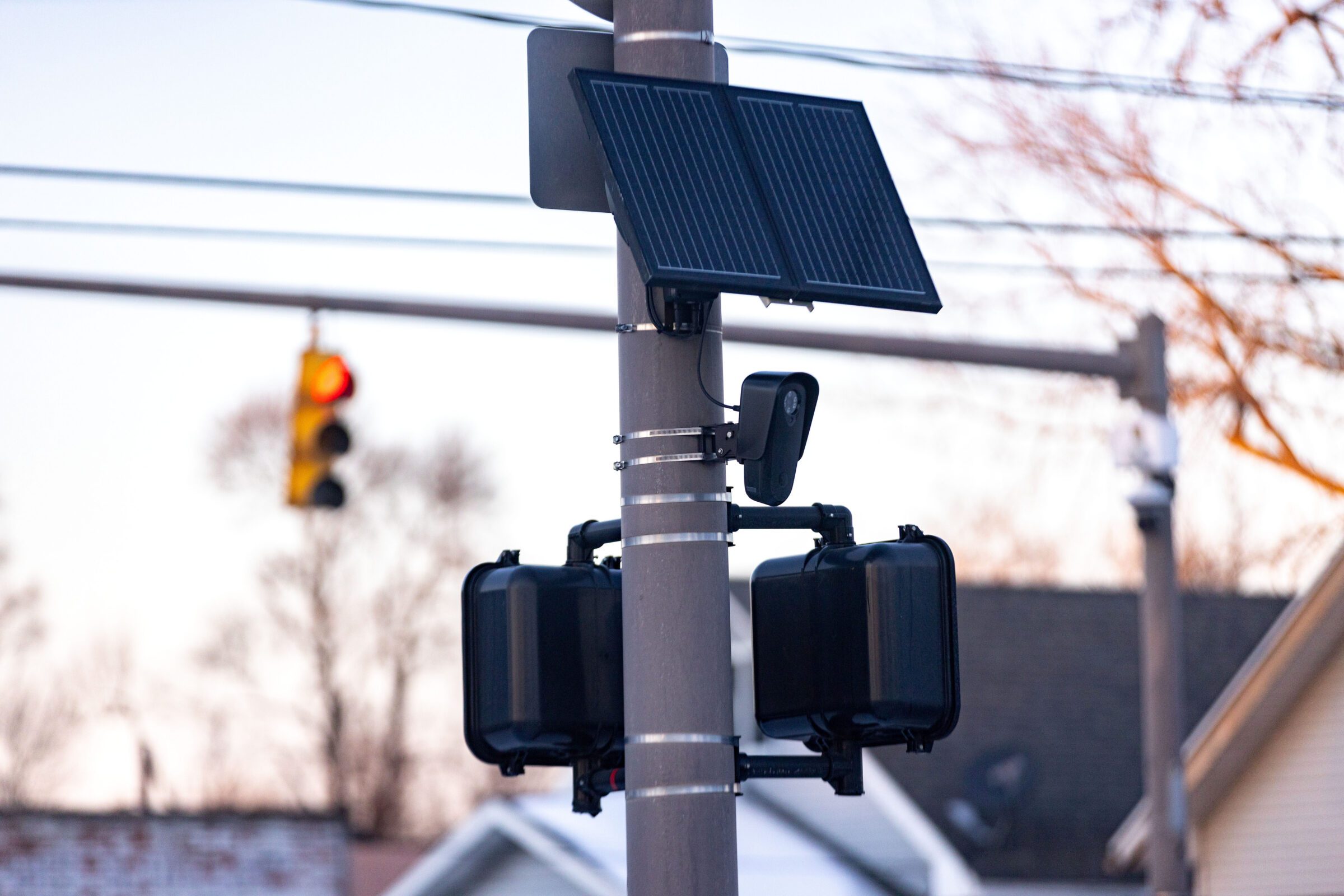
Flock has swiftly grown a sprawling, nationwide network of cameras that photograph passing cars and use AI to track their movements with precision, with thousands of law enforcement agencies installing Flock cameras in exchange for access to the company’s database. But many local governments are now breaking off their agreements with Flock after numerous instances where the cameras were misused and breached, or where the data they collected ended up in ICE’s hands.
Within Dane County, the cascade started when the city of Verona pulled its three automated license plate readers from the Flock network in November, after police officers elsewhere in the country accessed Verona’s cameras on behalf of immigration agents. Bolts previously reported that Flock ignored demands by Verona officials to take down the cameras for months after they ended the contract, and the city eventually covered the surveillance cameras with black plastic bags to protect residents’ privacy. Verona Mayor Luke Diaz told Bolts at the time that the county government’s contract with Flock was “the next big domino” to fall in Wisconsin.
Verona’s representative on the Dane County Board, Supervisor Chad Kemp, then proposed defunding the sheriff’s agreement with Flock, and the board voted 32-1 in April to strip $80,000 from the budget allocated to paying for the cameras. Sheriff Kalvin Barrett’s office confirmed to Bolts via email on April 30 that he will abide by the board’s wishes and cease using Flock.
Other Wisconsin cities have dropped their Flock contracts since Dane County’s vote, including Monona, a suburb of Madison, and Oshkosh, in Winnebago County, where the police chief not just ended the contract but also covered cameras in plastic bags after Flock allegedly misrepresented how their data was used.
Diaz is heartened by this ongoing domino effect that’s rocking Wisconsin. “If police chiefs are bailing on it, that really shows momentum,” he said in a follow-up interview this month. “I feel like, at least politically, it is a sign that we’re winning.”
“It really shows that local activists can make a really big difference,” he said. “Small communities can be laboratories of democracy, and we can stand up to be an example for other communities.”
Now privacy activists are pushing to remove Wisconsin’s remaining Flock cameras, including those operated by the Milwaukee Police Department and by the University of Wisconsin-Madison police.
But beyond targeting any specific Flock contract, they’re also pressuring local officials across the state to set proactive guardrails around AI surveillance technologies.
They hope to stop law enforcement agencies from responding to their wins against Flock by just turning to Flock’s competitors to install similar systems of automated license plate readers (ALPRs).
Subscribe to our newsletter
for more on policing
A spokesperson for the Dane County Sheriff’s Office told Bolts that the office is already exploring other vendors to replace Flock.
Law enforcement agencies often deploy invasive technologies like ALPRs without notifying the people being spied on and without approval from elected officials, said Jon McCray Jones, a policy analyst with the ACLU of Wisconsin. He warns that, without robust protections limiting what police can do, residents will be “playing a game of Whack-A-Mole with surveillance companies” as police seek lesser-known companies like Motorola.
“We’re starting to miss the forest for the trees, where the conversation has been about how bad Flock is,” McCray Jones told Bolts. “Sure, the headline changes with a slightly better company. But the innate issues around ALPRs don’t. You still have similar cameras, similar databases, similar mass, warrantless tracking. You just have a different logo on the contract.”
The Dane County sheriff was able to install the Flock system initially without getting approval from the board since it was paid for by a $68,750 grant funded by a separate surveillance company, Axon Enterprise. Axon used to have a partnership with Flock but has since severed it. The sheriff’s spokesperson ruled out seeking outside funding again.
Jade, a Madison resident and privacy advocate who created Deflock Dane, a project that maps the cameras that watch over the area, warns that a new technology could just as easily be installed to replace the Flock cameras without any public input. (Jade agreed to talk using only their first name for privacy concerns.)
“Some regulation has to be put in place,” Jade said. “Reacting to whatever secretive contract is signed in the future might work, but it is not ideal to have a revolving door of surveillance companies.”
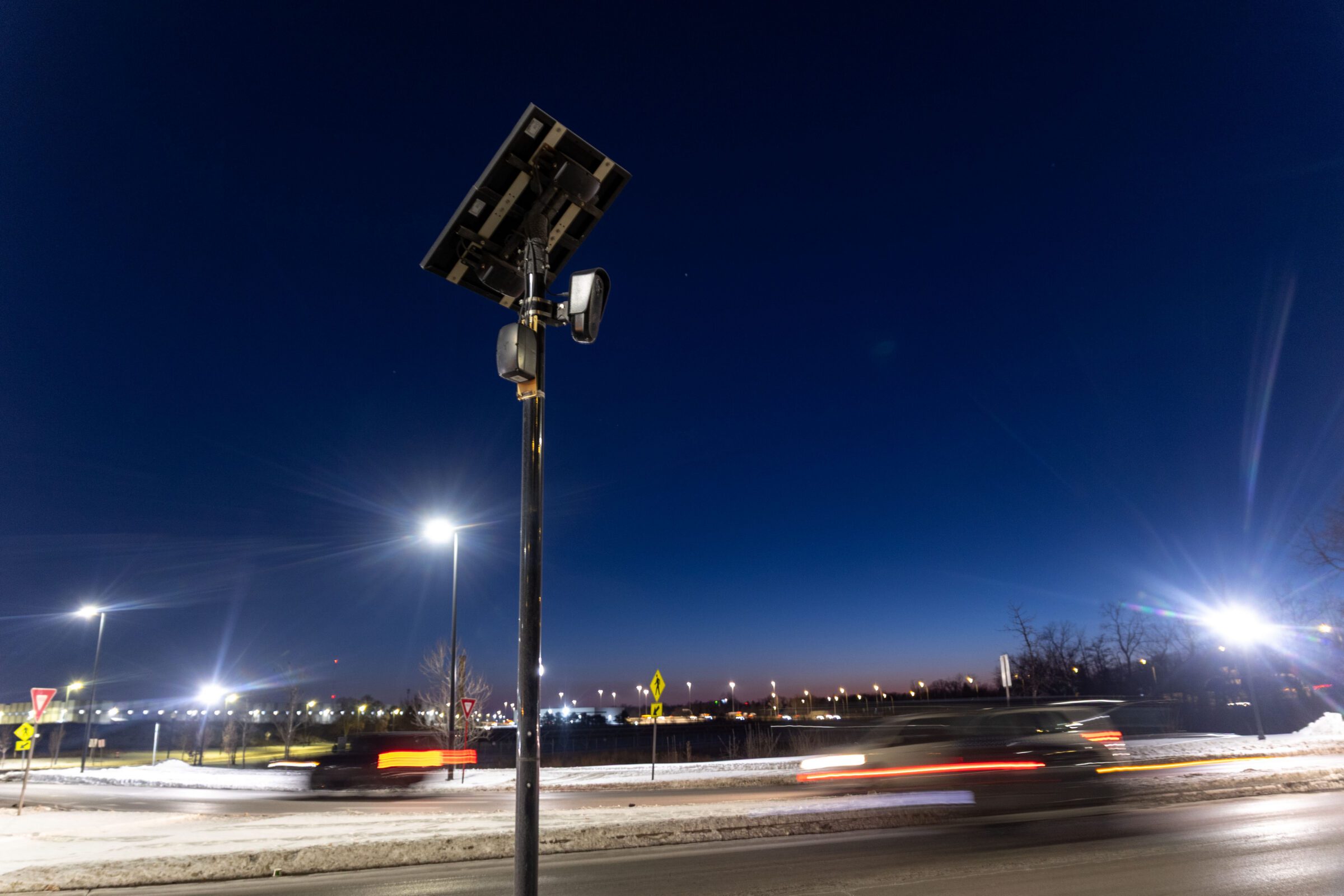
In the absence of state restrictions, the ACLU of Wisconsin is advocating for local governments to adopt ordinances that give elected officials oversight over police surveillance. A model policy endorsed by the ACLU called Community Control Over Police Surveillance, or CCOPS, would require law enforcement to get approval from a city council or county commission before using new surveillance tools, as well as develop use policies and provide annual reports on them.
According to the ACLU, 26 jurisdictions nationwide already have a CCOPS ordinance in place; but the city of Madison is the only one in Wisconsin. (Madison police currently have no ALPR contract.) Dane County has no such ordinance, which gives the sheriff a lot more discretion.
Supporters say CCOPS ordinances allow cities to better vet the vendors that are hired, while also allowing residents to weigh in on what level of surveillance and risk they are willing to accept before the technology is used on them. McCray Jones says elected officials can make informed decisions “instead of having to look into these technologies on their own and after the fact, in the aftermath when the damage is already done.”
But efforts to curtail AI surveillance in this way are hitting a wall in Milwaukee, Wisconsin’s most populous city, which became a cautionary tale for Flock when a police officer repeatedly used the cameras to stalk a romantic partner. The police chief quickly revoked most officers’ access but the city is continuing to use Flock cameras at this time.
In March, four members of the city council, known as the common council, wrote a letter calling on the city to adopt a CCOPS policy. They also demanded other checks on surveillance, such as a requirement for officers to list a case number to justify searching the network, routine civilian hearings and independent audits, and a ban on ALPRs being used for immigration.
Even as they push for stronger oversight, though, a 2023 state law known as Act 12 has sharply limited Milwaukee’s ability to regulate police surveillance.
Though primarily a tax bill aimed at stabilizing pension debts, Act 12 forced Milwaukee to abandon civilian oversight in exchange for the funds. It stripped the Milwaukee Fire and Police Commission of its oversight authority, gave the police chief broad control over department policy, and restricted the city council’s ability to set new rules.
Until then, the commission had offered a relatively strong model of civilian control, like when it banned officers from using chokeholds and no-knock warrants, putting it in the crosshairs of the local police union. Act 12 made it into a “rubber stamp” for the police.
Several alders told Bolts that Act 12 also interferes with their ability to forbid the Milwaukee Police Department from using Flock cameras, enact a CCOPS policy, or set standards for how the city uses surveillance technology.
“We cannot propose that law here,” said Alder Alex Brower, who cosigned the letter endorsing CCOPS. “It was extremely frustrating to find that out. There is less democratic control there should be.”
Another alder who signed the letter, Sharlen Moore, echoed Brower’s concern, saying, “We do not have a lot of power and say so around how they spend their budget.”
Moore and Brower are hopeful that the state could eventually restore some level of outside control over Milwaukee police; voters this fall are electing a new governor and legislature, and Democrats hope to win control of the state government for the first time since 2010. But until the state takes action, the alders say they’ll have to rely on the police to voluntarily restrict their use of surveillance.
Local activists were able to convince Milwaukee police leadership to ban facial recognition technology this year after a massive show of opposition by residents at a public meeting in February.
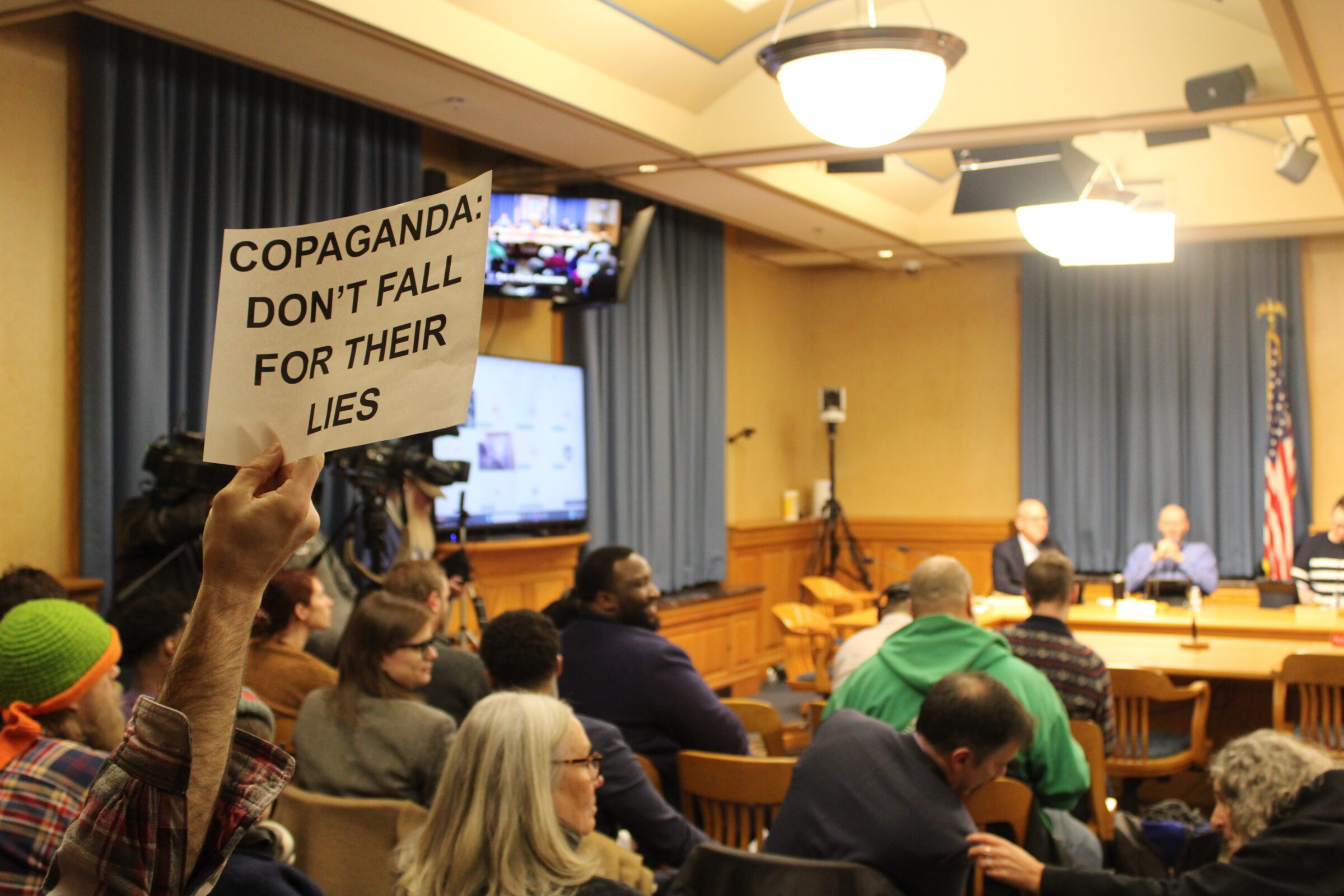
Brower told Bolts, “The police chief would not have banned facial recognition technology on his own if it hadn’t been for the groundswell of regular people.”
Now he hopes for a similar public outcry against ALPRs and other AI surveillance. Echoing the Madison-based advocates who say they’ll keep fighting contracts in Dane County, he said, “We need an active and engaged and organized population that is fighting for their liberties.”
Sign up and stay up-to-date
Get timely updates about pressing stories and elections.
Support us
Bolts is a non-profit newsroom that relies on donations, and it takes resources to produce this work. If you appreciate our value, become a monthly donor or make a contribution.