

High Schoolers Push to Extend the Voting Age to 16 for Local Elections in This LA Suburb
In Culver City, California, students are trying to drum up support for a November ballot measure to let 16- and 17-year-olds participate in city council and school board elections.
| October 19, 2026
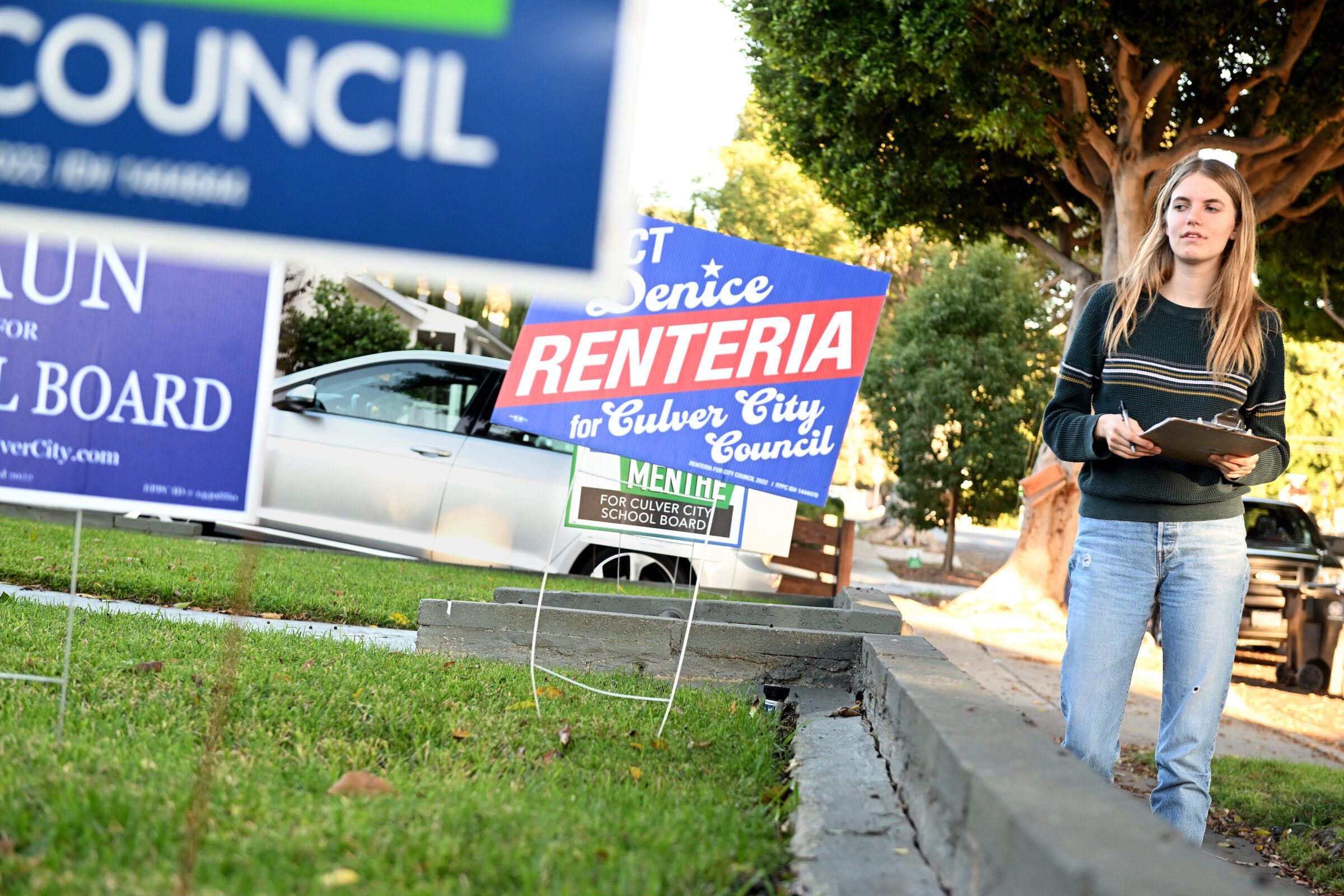
When the Culver City Unified School District hit a budget crisis in 2025, students say they suffered but had no say in the changes that were coming as the school board cut millions of dollars and more than three dozen staff.
Students had two members on the board, but those seats were largely ceremonial; while all three representatives called on the board to protect the district’s art program and keep the schools fully staffed, the board moved forward with the cuts.
Fed up at the decisions being made about their education without having any real voice on the board, students have been leading a campaign to lower the voting age for local elections in Culver City, an affluent suburb surrounded by the city of Los Angeles.
A proposed charter amendment that Culver City students have been pushing for years, which will be on the ballot in November as Measure YV, would allow 16- and 17 year-olds to cast ballots for city council and the school board elections.
Mia Moroz, a senior at Culver City High School and president of Vote 16 Culver City, the school club that has been leading the campaign for years, says the school board and city council have “been creating policy that alters the lives of our teenagers without giving them a way to voice their opinion.”
Moroz says the budget cuts the board made last year, $3.4 million in total, were done in a way that has been “deeply detrimental” for students—including laying off 39 employees ranging from teachers to a nurse, counselor and assistant superintendent for diversity, equity and inclusion. Then this year came with more layoffs that Moroz says fell especially hard on the high school’s “beloved and revered” art program.
After the latest round of cuts were announced this year in March, students and teachers rallied outside a local middle school to warn that the staffing shortages and growing class sizes would shortchange the quality of education in Culver City. “It looks like teachers who have 42 kids in one classroom and not enough seats to sit down,” Moroz said of the recent cuts. “And it looks like our girls’ bathroom not having soap since the first day of school.”
Students at Culver City High School have advocated for years through the Vote 16 Culver City club for lowering the voting age. They came close in 2022, the first time they got the city council to put a measure on the ballot, but it failed by just 16 votes out of the more than 16,500 cast. The club tried to run an initiative in 2024, but they couldn’t collect enough signatures to put the item on the ballot, in part due to restrictions that require an adult chaperone to circulate a petition.
After students renewed the campaign this year, the Culver City Council voted 3-2 in February to put it in front of the voters again.
Subscribe to our newsletter
Get more reporting and updates on voting access
Opponents of the measure call it common sense that 16-year-olds are too young and inexperienced to weigh in on local politics. Ronald Ostrin, an attorney who spoke against the measure at city council meetings, called students “malleable and persuadable,” and argued that putting a ballot in their hands would make them easy targets of political groups seeking an upper hand in local elections.
“I’m sure there are a lot of 16-year-olds who are very mature and very informed, the vast majority are not,” Ostrin told Bolts. “They haven’t paid taxes. They haven’t owned property. They are easily persuadable, and so people are attempting to gain votes through aims that are not really designed to create an informed electorate.”
Steve Gourley, a former mayor who opposes the student voting measure, calls it a “power grab” by the city council’s left flank that would allow them to easily control city politics by catering to students.
“They’ve been changing things like crazy,” Gourley told Bolts, pointing to a $20 million investment into an affordable housing project last year and an earlier move to reduce the number of sworn officers in the Culver City Police Department. Gourley argued that adding 16- and 17-year-olds to the electorate would incentivize worse spending decisions to “appease the students.”
“I would hate that the people running for school board would have to show up at the rally that the students put on at the school and listen to their input in order to become elected officials,” he said. “What if they want an extra day off school? What if they don’t want to take this course, or that one?”
Organizers behind the measure say it’s hardly a power grab, but rather the result of years of sustained organizing from multiple cohorts of student activists who have met regularly with city leaders, spoken at many council meetings, canvassed their neighbors, and written op-eds in the local paper to drum up support for the reform.
As for the accusation that 16- and 17-year-olds are too immature and uninformed to vote in local elections, Moroz said students may actually be more informed about government and politics than some adults because the state requires them to study those issues in civics classes.
“I see all of these students who are so often disregarded as being immature, or not knowledgeable, or disengaged. But I see them caring, and I see them acting,” Moroz said.
Members of the Culver City Vote 16 club hosted a town hall at a local coffee shop in early October where they urged community members to canvass and put up lawn signs for Measure YV. Some who commended the student’s efforts had previously participated in protests in the 70’s that succeeded in lowering the voting age from 21 to 18—when, amid the Vietnam War, advocates for lowering the age argued that teens who were old enough to fight and die for the country were also old enough to have a voice in electing the leaders who would send them off to battle.
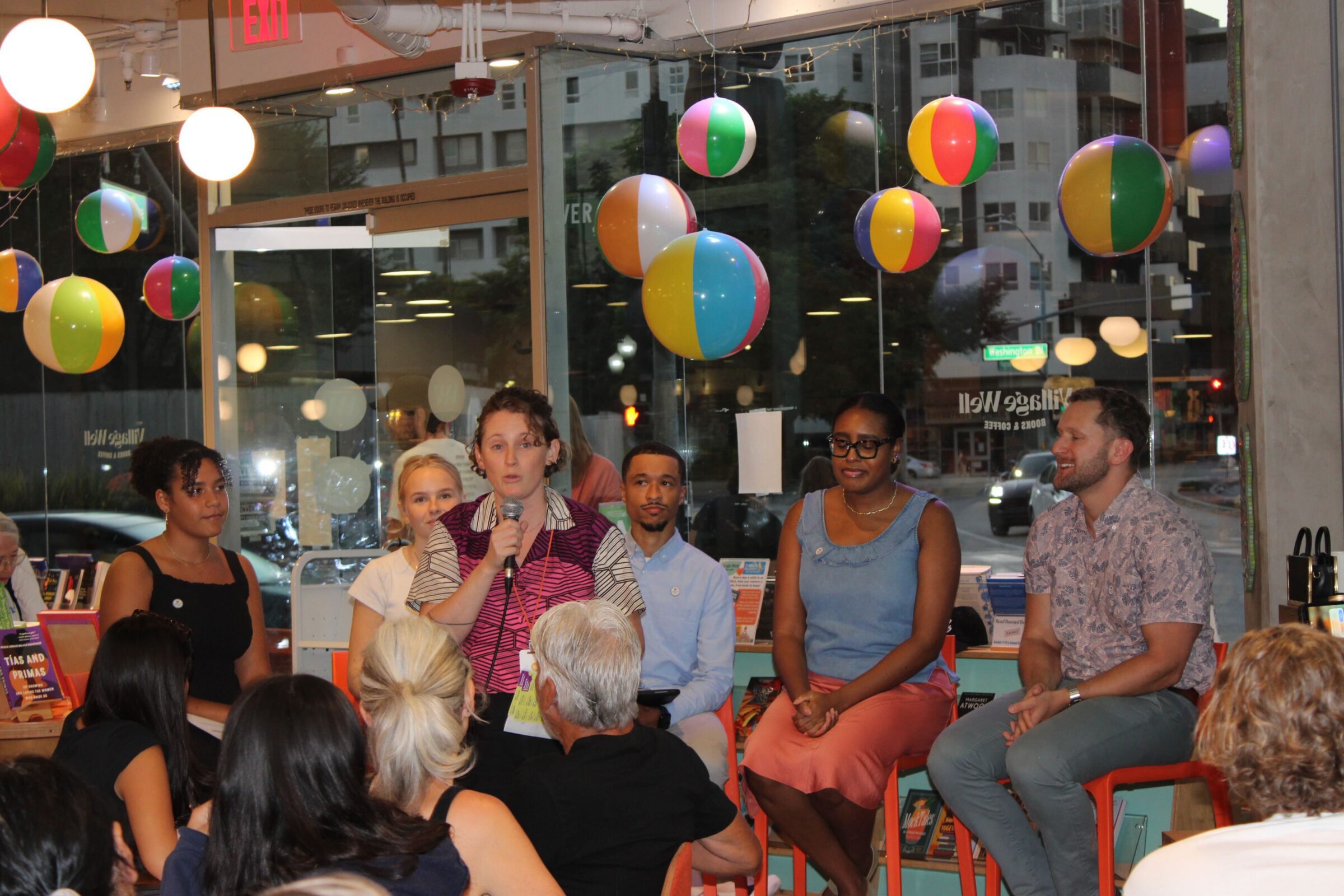
One resident at the town hall said he supported allowing students to help elect their school board, but he couldn’t get behind allowing them to vote in city council elections since students aren’t directly involved in many of the issues that pass through city hall.
The idea of lowering the voting age has gradually gained traction in California, with the Bay Area cities of Berkeley and Oakland allowing 16- and 17-year-olds to participate in school board elections, but not city council elections, since 2024.
These reforms built on earlier experiments with lowering the voting age to 16- and 17-year-olds in Maryland, where 10 cities and towns made the change for local elections, beginning in 2013 with Takoma Park, a suburb of the nation’s capital. Newark, New Jersey, started allowing 16- and 17-year-olds to vote in school board races last year.
Advocates say high turnout among teens observed in some of those cities—sometimes twice that of the general population—provides a glimpse of how Culver City may benefit from the measure, though that pattern did not hold in Newark last year. Several other countries, including Argentina, Austria and Brazil also allow teens as young as 16 to vote, and the United Kingdom plans to lower the voting age in the next general elections. Supporters attending the town hall earlier this month at the Culver City coffee shop touted studies on those places suggesting that people who participate in elections at an earlier age are likely to keep voting and engaging with civic life.
“We are at an existential moment for democracy in this country. And here we have people who are ready and willing to be engaged,” said Culver City Vice Mayor Bubba Fish, who voted with two others on the 5-member council to put the amendment on the November ballot. “It creates habitual voters for life. When they start voting earlier, they keep voting.”
LaJuan Allen, the executive director of Vote 16 USA who joined the students at the event, also argued that excluding young people from civic life trains them to be disengaged even when they come of age. He thinks that bringing young people into the fold at an earlier age can be a way of addressing the poor turnout rates and disillusionment among voters.
“For us as adults to completely disregard them is the reason why trust in American democracy among young people continues to erode,” Allen said during the event.
Student advocates aren’t just engaging with adults. They’re also working with their peers to build an electorate of teens informed and prepared to participate. The Vote 16 Culver City club regularly hosts civic education events and pre-registration drives that help get more teens automatically put on the voting rolls once they’re eligible—something they’ve done even in years when lowering the voting age wasn’t on the ballot.
“How better can we prepare our youth for the realities of civic and political engagement than by including them in it? How better can we represent their needs than by asking them what they are?” Moroz asked. “The answer is simple: We must give them the chance to engage.”
Sign up and stay up-to-date
Get timely updates about pressing stories and elections.
Support us
Bolts is a non-profit newsroom that relies on donations, and it takes resources to produce this work. If you appreciate our value, become a monthly donor or make a contribution.