
In Asheville’s Elections, a View into How North Carolina Is Constraining Local Officials
In liberal Buncombe County, elected officials have watched the state shrink their powers over detention and immigration. Now that looms large over the March race for district attorney.
| February 25, 2026

Editor’s note (March 3): Martin Moore narrowly prevailed in the Democratic primary for DA, and is poised to be the next prosecutor of Buncombe County.
In Asheville, North Carolina, candidates for local office are fighting to distinguish themselves ahead of the upcoming primaries, but state officials have seriously limited their ability to control how law enforcement and prosecution functions within their progressive enclave.
New state laws have led to a ballooning jail population and increased transfers to ICE custody, with widespread fear that the immigration raids that targeted Charlotte in November may debut in Asheville before long. “We have a really interesting state landscape of watching our legislature implement all kinds of laws that are having tremendous, often negative impacts on local communities,” Buncombe County Commissioner Martin Moore told Bolts.
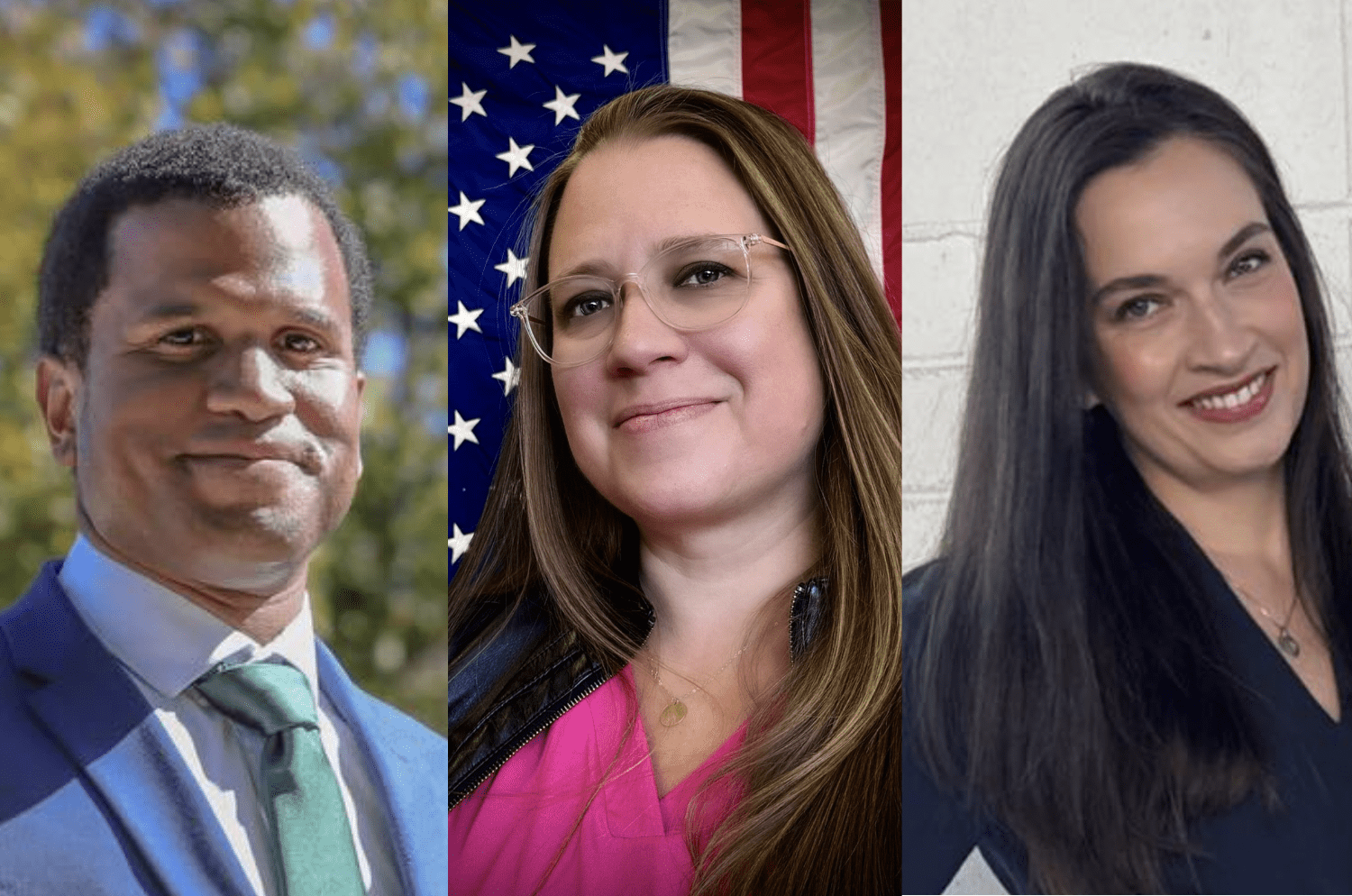
Moore and two other Democrats, longtime public defender Courtney Booth and prosecutor Katie Kurdys, are vying for Buncombe County district attorney; no Republican has filed for this office, so the March 3 primary will be decisive.
Few areas of North Carolina are as liberal, and these candidates are each trying to meet the electorate where it is, denouncing the federal government’s immigration crackdowns and promising to make the court system more fair. As they try to make the case that they’re best placed to bring change, they must navigate new state mandates that constrain the campaign promises they can make—and how they might use the power of the office if elected.
Sheriff Quentin Miller, who is up for reelection this year, has also seen his room to maneuver shrink considerably in recent years: Republicans in the legislature have worked with ICE to pass laws that force Democratic sheriffs like Miller to collaborate with immigration enforcement.
Sign-up to our newsletter
for more on local elections
Then, last fall, after the killing of a young Ukrainian refugee in Charlotte stoked right-wing outrage, the state adopted House Bill 307, known as Iryna’s Law, a sweeping piece of legislation that severely limits pre-trial release, effectively forcing counties to either detain people with repeat offenses or impose money bail as a condition of release, which many people are unable to pay. “The jail is filling up,” Sam Snead, Buncombe County’s chief public defender, told Bolts. “We’re still in the early phases of it, but it appears that more folks are getting into the jail than we are able to get out.”
In Asheville, a resort town with a large number of homeless residents and a history of aggressive arrests for “nuisance” crimes like begging, littering, and public intoxication, Iryna’s Law has resulted in more unhoused people being jailed for longer. A recent city ordinance expanded the areas in which panhandling is outlawed, and Lucy Smith of the Asheville Mutual Aid Wellness Collective told Bolts she’s noticed that unhoused community members picked up on these grounds now can spend a week or more in custody, instead of getting out the next day as they once did.
Iryna’s Law also puts noncitizens at greater risk: People arrested on low-level crimes who once would have been quickly released are now stuck in the Buncombe Detention Center, where they are sitting ducks for ICE. Federal agents rely on being able to identify and arrest people who are already booked and captive in local jails, and North Carolina’s new collaboration requirements have further enabled that access.
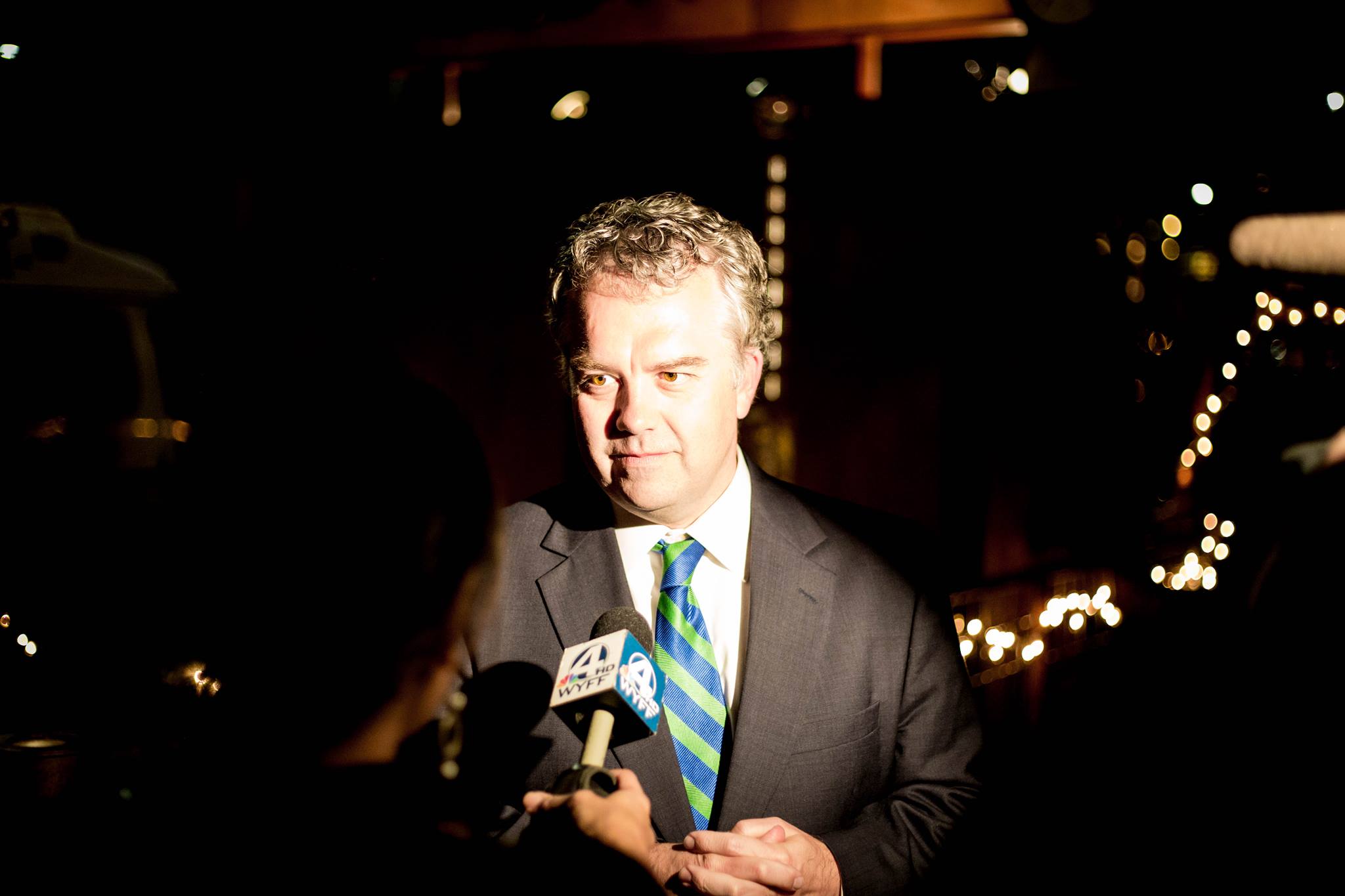
While Governor Josh Stein, a Democrat, signed the GOP-sponsored HB 307 into law, all three DA candidates running in Buncombe County say they are against Iryna’s Law, that the jail is too full, and that cases need to be dealt with more quickly. “We were at capacity before Iryna’s Law, and now it is a complete and utter disaster,” Booth said.
Moore agrees, telling Bolts that the state “has created this unfunded mandate to address mental health without them giving us any resources to do so, so the jail becomes the de facto holding facility for people who might otherwise not be dangerous.” The situation in the jail is “unsafe and makes no one safer,” Kurdys said.
With the candidates united against Iryna’s Law but constrained by it regardless, the question now is how they would choose to exercise the power they have left.
The election will be historic no matter who wins: Moore would be the county’s first Black DA, while either Booth or Kurdys would be the first woman to lead the office. The candidates have generally turned to their work experience and relationships to distinguish themselves rather than focusing on firm policy distinctions.
Booth says her outsider perspective as a career public defender will allow to shake up the system. “If I have the power [of the DA], it would certainly be a lot easier to deliver justice and fairness in our community versus piecemealing it one by one, defendant by defendant,” she told Bolts. That background may not be as unusual in Asheville as it would be elsewhere—the outgoing DA, Todd Williams, was a career public defender before his election in 2014—but Booth is the only candidate running on a strong critique of his record in office.
In 2022, Booth ran against Williams on a decarceral platform, criticizing the incumbent for failing to live up to his reform promises, and lost by just 101 votes.
Kurdys and Booth have stressed their extensive trial experience, arguing that Moore doesn’t have enough time in court to effectively serve as DA. Moore, who worked as a public defender himself for four years, touts his policy background and preexisting relationships with local and state officials and social justice organizations, noting that he is the only candidate with managerial experience. Moore has a wide range of endorsements, including that of the outgoing DA.
Still, the candidates’ policy proposals reveal subtle but important distinctions.
Despite extensive state-level preemption, DAs in North Carolina still retain some leeway to reduce the jail population. Prosecutors “have the power to dismiss, which, if prudently managed, that’s a way to relieve pressure in the jail,” said Snead, the chief public defender. Smith, with the mutual aid collective, said she would like to see the DA identify “which charges coming across their desk are informed by stigma or prejudice” and consider tossing them.
Booth showed the most interest in scrutinizing whether the cases that the DA’s office is pursuing should be prosecuted at all. Given the case backlog, “there’s gonna be a lot of stuff that you’re gonna have to start just dumping,” she said. She criticized the Asheville Police Department for its high number of arrests and charges against unhoused people, and said she would track arrests to try to identify problematic officers. “I will stand up to an officer that I think is dishonest, because I’ve had to do it on the other side many times,” she told Bolts.
Booth also accused Williams, the current DA, of allowing his prosecutors to use North Carolina’s “habitual felony” scheme against defendants accused of low-level felonies, seeking extended prison sentences for things like passing a bad check.
Moore said he’d address the case backlog by prioritizing gun violence and domestic violence cases. “One of the single biggest powers that the district attorney has is control of the court calendar, so you’re deciding what cases are going to jump to the front of line and which ones take a lower priority,” he said. “Low-level homelessness crimes, second-degree trespasses, cannabis charges—those things should not come before people who are asking for justice in a meaningful way.”
Moore acknowledged his authority to dismiss cases once they’ve reached his office, but he stressed that he’d want to intervene earlier in the process. In North Carolina, law enforcement is responsible for charging decisions in all but the most serious cases, and Moore promised to meet with the county sheriff and the Asheville chief of police to explain his office’s charging priorities and encourage different arrest decisions.
Kurdys was most uncomfortable with the idea of adopting a blanket policy of dismissing a specific type of charge, warning of the backlash such a commitment could occasion. “In states like ours, where we have a conservative legislature, if we use our prosecutorial discretion in a way that is like we’re not enforcing the law, they can take it away,” she said, referencing Iryna’s Law. She also argued that there may be cases where the DA would need to pursue homelessness-related charges like trespassing for safety reasons.
Instead, she pledged to emphasize alternative measures like probation and diversion and create a new special court that would resolve charges predominantly levied against homeless people contingent on the defendant completing a program or treatment, calling it an “urgent, urgent priority.”
Similarly, Kurdys said that she wouldn’t rule out seeking death sentences, again citing concern over possible reprisals. Moore also wouldn’t categorically rule this out, even as he, like Kurdys, expressed distaste for capital punishment. Booth told Bolts that she would never seek the death penalty.
Kurdys told Bolts she is already focused in her work on “trauma-informed prosecution,” which she said involves understanding how difficult experiences affect people and considering the mental health background and life histories of both victims and defendants.
Alan Graf, a local civil rights attorney, is skeptical of this characterization of her approach. He faced off against Kurdys in a well-known local case in which the DA’s office prosecuted two journalists for filming the eviction of a homeless encampment. In court, “she was very rigid,” Graf said. “That was not progressive at all, to go after journalists.” Kurdys said she was not involved in the charging decision, though she ultimately believes that prosecution was “in the interests of justice” because the two journalists were working in conjunction with activists rather than present as neutral observers, and noted that the conviction was later upheld by the North Carolina Court of Appeals.
In December, as he announced he would forgo a fourth term as DA, Williams posted an unorthodox note on his Substack attacking Booth’s character and experience, citing her “frequent use of victim-blaming rhetoric.” Snead, the chief public defender, who has worked alongside Booth for years, said he “disagrees with that characterization.”
Booth told Bolts that her defense work requires her to ferret out inconsistencies from witnesses. “If I’m cross examining a victim in a jury trial, that’s my job,” she said.
Sheriff Quentin Miller is also up for reelection this year, a contest he is expected to win; he faces no primary opponent in March and he should have an easy time defeating a Republican in November.
Miller was first elected in 2018 as one of a group of Black Democratic sheriffs vowing to limit collaboration with ICE, and place more of a firewall between local law enforcement and federal authorities to foster trust between immigrants and local police. No longer would North Carolina’s immigrant community “be so fearful that a simple traffic stop could lead to a deportation,” Carolina Migrant Network co-director Stefanía Arteaga told Bolts in 2023.
In response, Republicans in the state legislature called Miller and his peers “sanctuary sheriffs,” and worked with ICE on a bill, HB 10, that gave sheriffs no choice in the matter, forcing them to comply with detainers, or requests to keep someone in jail beyond their scheduled release date to facilitate their transfer to ICE custody, and proactively check the immigration status of people jailed for certain crimes. Critics of the law denounced it as retaliation against the new Black sheriffs for threatening the status quo of white-led local law enforcement in the South.
HB 10 went into effect at the end of 2024. Last year, the legislature went even further with HB 318, or the “The Criminal Illegal Alien Enforcement Act.” The bills, which both became law over Democratic governors’ vetoes, have returned Asheville to its pre-2018 status quo. The first time Snead spoke with Bolts, he said that just that morning, a man who was arrested on a DWI was whisked away by ICE because the sheriff was required to honor ICE’s immigration detainer and keep him in jail–even after he posted bond.
Miller, who did not respond to an interview request, has conceded that he must enforce HB 10 and HB 318. But he has continued to articulate “constitutional concerns” about holding people for ICE without a judicial warrant. He has been outspoken on his refusal to collaborate with ICE beyond what’s legally mandated and last February released a statement saying that immigration agents would not be allowed in the county’s schools, where sheriff’s deputies have a presence, without a court order.
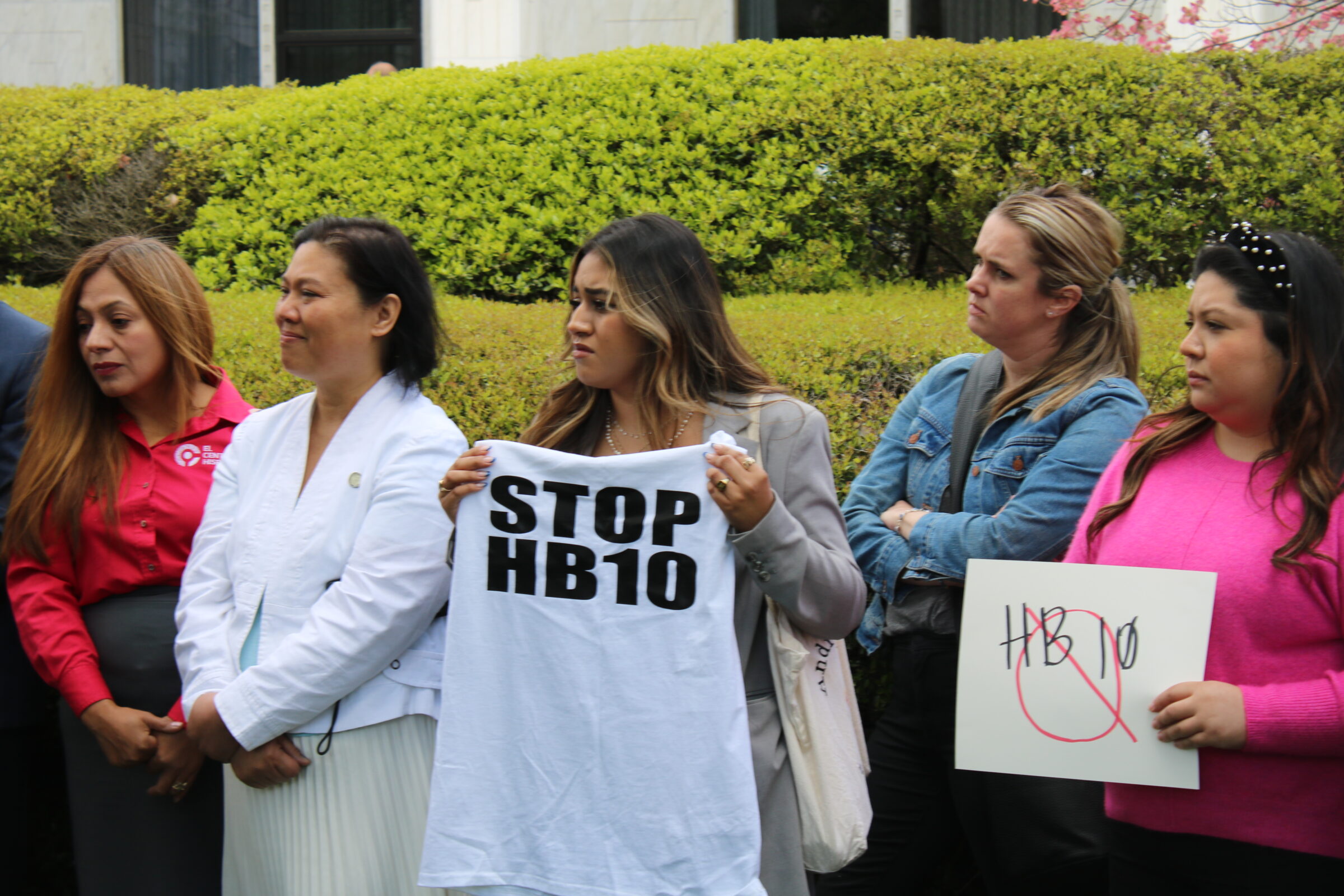
These disputes mirror efforts by other GOP-led states, from Florida to Texas, to compel local officials to comply with ICE or face punishment regardless of local preferences.
Beyond the ongoing transfers from the Buncombe County detention center to ICE custody, Asheville residents are concerned that federal deployments of the sort recently seen in Durham and Charlotte will come to their city this year. Advocates have argued that HB 318 helped facilitate last fall’s raids in their state.
“There’s just general nervousness,” Graf said. “There are a lot of people here who don’t like what the government’s doing.” Graf has organized legal observer trainings and is in the process of putting together a team of lawyers to do mass defense. “If ICE comes to town, there might be mass arrests, and so we need a lot of lawyers there to protect the rights of citizens and non citizens both,” he said.
Kurdys bemoaned ICE’s ability to torpedo criminal proceedings by detaining or deporting victims and witnesses, saying it leaves DAs with relatively little power to protect the immigrant community and ensure the integrity of cases involving noncitizens. She’s had cases where undocumented victims are afraid to come into the courtroom to testify; in one instance, she said, a victim was deported before Kurdys had the chance to prosecute a serious felony case. “I have no control of anything that ICE does,” she said. “I guess the best thing I can think is to handle that case as quickly as possible.”
Booth has been outspoken about wanting to prosecute federal agents who break the law locally, making that a core promise of her campaign. Moore and Kurdys have both signaled their willingness to do so as well. “We’re already treated like the ‘redheaded stepchild’ of western North Carolina,” Kurdys told Bolts. “So would I let that prevent me, or be fearful of blowback? No, I wouldn’t, because the right thing to do is the right thing to do.”
More blowback may already be in store for Buncombe County one way or another; whoever wins the DA race on March 3 will take office aware that federal and state incursions into Asheville will likely only continue. “They’re going to keep whittling away power,” Booth said. “I fully anticipate that.”
Sign up and stay up-to-date
Get timely updates about pressing stories and elections.
Support us
Bolts is a non-profit newsroom that relies on donations, and it takes resources to produce this work. If you appreciate our value, become a monthly donor or make a contribution.
Related Posts