
A New Law Voids IDs of Transgender Kansans. It Also Threatens Their Voting Access.
Kansas Republicans barred trans residents from getting licenses that reflect their gender identity and canceled existing IDs. The move also risks blocking their access to the polls.
| April 7, 2026
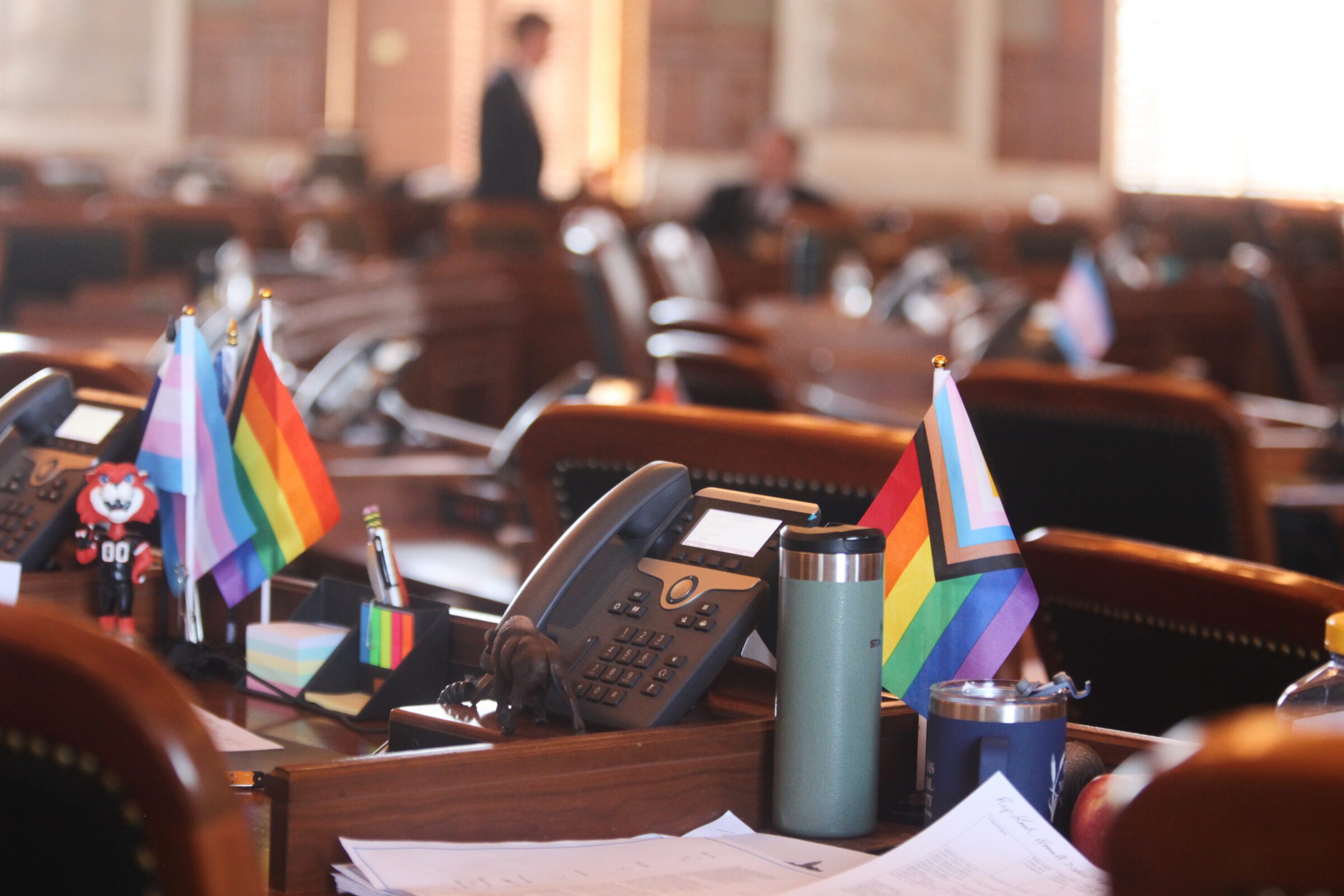
Almost as soon as Kansas lawmakers passed a new law targeting transgender people in late February, state officials started invalidating some people’s driver’s licenses without warning. The law, which makes it illegal for people to use public restrooms that don’t match their assigned sex at birth, also prohibits people from changing the gender marker on their licenses—and retroactively cancels the licenses of some 1,700 trans Kansans who had already made the change following a long legal fight to obtain state IDs that matched their identity.
Nearly overnight, the law became a new threat for trans Kansans in public spaces while also nullifying their freedom to drive, and thus their ability to legally participate in many aspects of daily life.
It also threatens to impede or even outright block their access to another key aspect of democratic society: elections.
Kansas has one of the narrowest voter ID laws in the U.S., requiring those voting in person or by mail to prove their identity, under a limited list of accepted documents. The state’s swift implementation of Senate Bill 244, which Republican lawmakers hastily passed with a provision to take effect almost immediately (unlike most other bills), left a large number of trans people suddenly without a valid ID to use at the polls.
That functionally leaves affected people with two options: Obtain a new state ID with an inaccurate gender marker, and submit to the state’s definition of “gender” as biological sex at birth; or refuse and sit out of elections, not to mention other parts of life that might require a state ID.
Trans Kansans and allied advocates say that voting could still be difficult even for people who are willing to comply with the new law. For one, they have to pay $16 for a replacement license—a kind of poll tax on people whose licenses are being cancelled and who do not possess another form of voter ID accepted by the state, such as a tribal membership card or a U.S. passport.
Plus, requiring people to identify themselves inaccurately at the polls can make trans people vulnerable to awkward and even dangerous encounters. They may be forced to explain themselves during interactions that require them to present an ID—particularly if the person examining the ID perceives any discrepancy between a voter’s appearance and information on their ID, such as their gender marker. “Especially in some of these rural communities, where voter fraud narratives are so ingrained, what if a vigilant poll worker questions you?” said Melissa Stiehler, advocacy director at the Kansas civil rights organization Loud Light. “Anytime you out yourself can be very risky.”
For more stories about voting rights
subscribe to our newsletter
The dramatic escalation against transgender people in Kansas comes amid a nationwide escalation by Republicans to restrict freedom of expression and movement by transgender and nonbinary people. A single week last month alone saw a new law in Idaho felonizing bathroom use by trans people; a proposed anti-trans omnibus law in Ohio; and five anti-LGBTQ bills that would have become law in Wisconsin if not for the Democratic governor’s vetoes.
By creating significant obstacles to daily life for trans Kansans, especially anyone who needs to drive in this rural state with very limited public transit, “It is making it unsafe for trans people to even be in Kansas,” Jae Moyer, who is nonbinary and chairs the LGBTQ caucus of the Kansas Democratic Party, told Bolts.
The Republicans who passed Kansas’ bill focused their messaging on the bathroom ban in particular, with proponents of SB 244 making unfounded warnings about predatory behavior by trans people—even though data consistently show that transgender people are at a much greater risk of violence than the rest of the population, including hugely elevated rates of assault and rape. “This bill protects girls and women,” state Representative Carolyn Caiharr said, as GOP supermajorities in the statehouse overrode Democratic Governor Laura Kelly’s veto. Applauding the override, Republican U.S. Senator Roger Marshall tweeted that the law “deliver[s] commonsense protections for Kansas girls.”
Stiehler told Bolts that “the genocidal rhetoric” of trans erasure that has taken hold in Kansas and beyond already presented real risks at the polls before SB 244. Now, Stiehler and several trans Kansas voters said, this new law has escalated the risks of displaying inaccurate IDs so much that it might dissuade some trans Kansans from trying to vote.
“Think about all the anxiety before that moment of voting,” Stiehler said. “Every part of your life, you have to do a level of risk analysis. Is the risk worth voting? That fear, that gamble, was already something you had to make a conscious decision to take. Will you be safe now?”
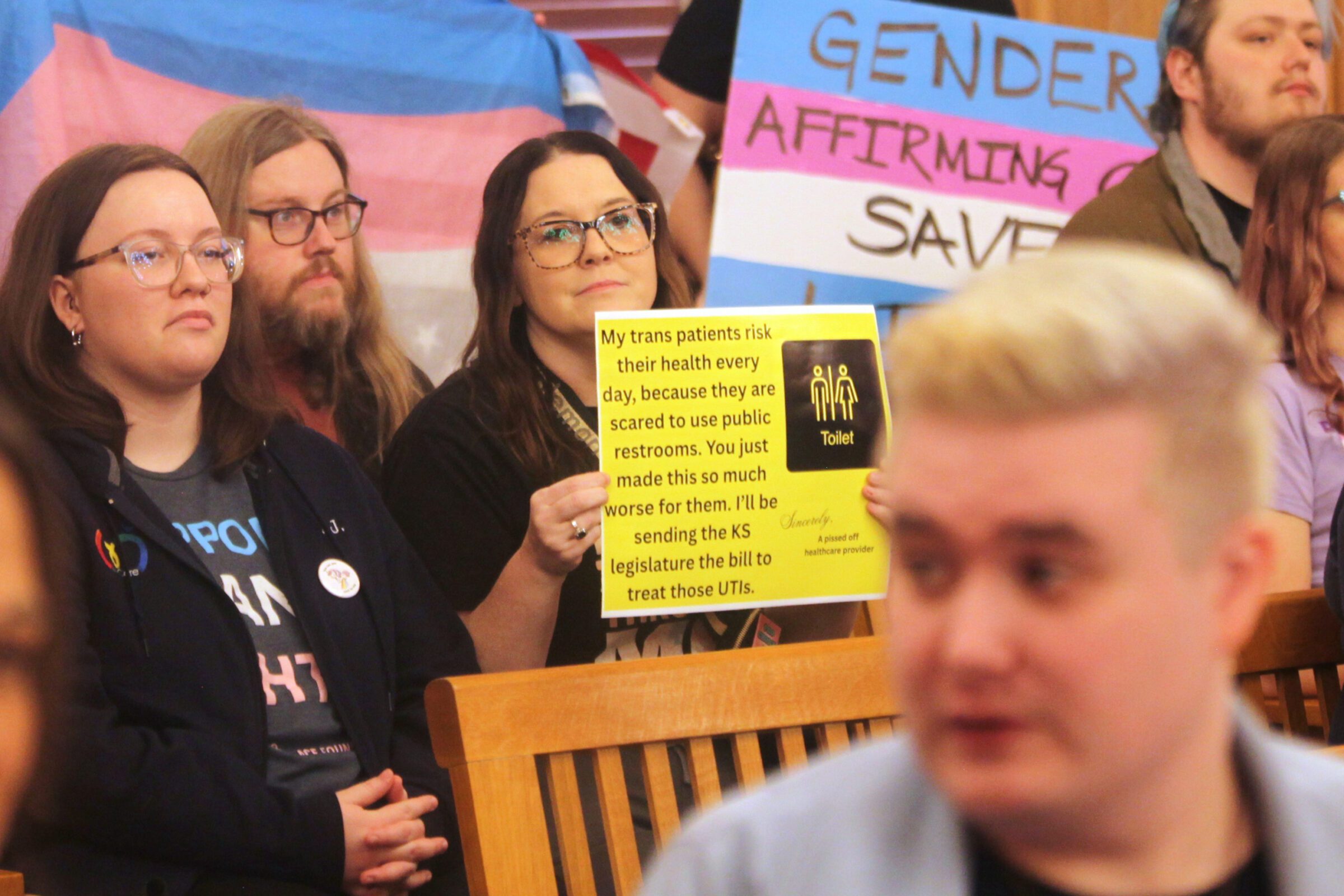
The voting obstacles presented by SB 244 also come as state lawmakers look to limit voter access in general across Kansas, including by restricting vote-by-mail, ahead of the November elections, when voters will pick members of Congress, the state House, the state supreme court, and more. Crucially, this year the state will also elect a new governor, since Kelly, a rare red-state Democratic governor, is term-limited; the crowded primaries to replace her, taking place on Aug. 4, feature a slew of anti-trans Republican candidates.
Matthew Neumann, a trans man who directs the LGBTQ Foundation of Kansas, said he refuses to be sidelined during this and future elections, but that he will not surrender his license that matches his gender. He said he will hope not to get pulled over while driving with a now-invalid license, and that he intends to vote this year with a U.S. passport, which will cost him $165 to obtain.
That passport will misgender him; after Donald Trump returned to office, the State Department, under Secretary Marco Rubio, adopted a policy similar to that written into SB 244: “We only issue a passport with an M or F sex marker that matches the customer’s biological sex at birth,” the department now says. The U.S. Supreme Court affirmed this policy in a decision last November.
Still, Neumann said, he’d rather vote with an inaccurate passport than concede to this new Kansas law.
“I have to be able to vote to get my rights back,” Neumann said. “Even if I have to get something that misgenders me so I can legally vote them out, I’m going to have to do that now.”
But, Neumann predicted, “There are many transgender people in Kansas who won’t do that and who won’t vote at all. They will just abstain from voting.”
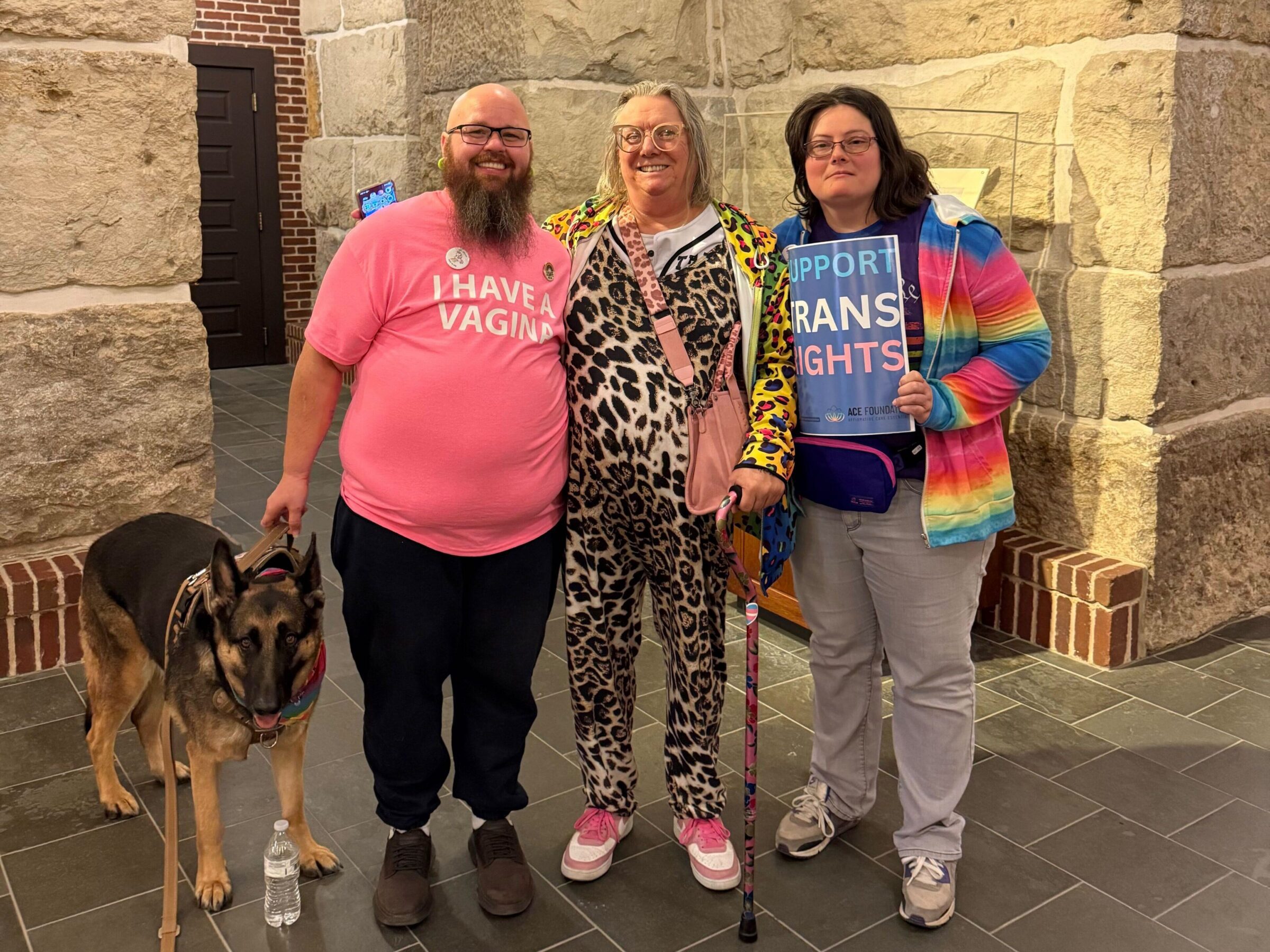
Some trans people have already decided to abstain from voting in Kansas as a result of SB 244. Iridescent Roney, for example, who was born and raised in Kansas and now lives just across the border in Missouri, said she has cancelled plans to move back to Kansas before Election Day.
“I know plenty of people like that, or who are moving out of the state,” Roney said. “Kansas has been our home since we were born, and it’s no longer safe.”
This is a common situation for trans people all across the country, particularly in Republican-governed areas that are increasingly hostile to their very existence.
The 2022 U.S. Transgender Survey, produced by a coalition of trans advocacy groups, found that roughly half of trans respondents said they’d considered moving to a different state because of discrimination they experienced where they currently live, and that 10 percent already had gone through with a move. Jody Herman, a senior scholar at UCLA’s Williams Institute who helped conduct that survey, told Bolts she expects those 2022 figures have risen since then.
Herman has closely studied barriers to voting for trans people. In 2024, she and colleagues at UCLA found that almost 100,000 trans Americans could be disenfranchised in that year’s election, in states with strict voter ID laws. Her report found that twice as many trans Americans could at least “find it difficult” to vote because they lack ID documents that display their accurate name or gender, or both.
But even amid this national landscape, Herman said that SB 244 is “kind of an unprecedented escalation in state laws targeting trans people.” She said it represents “a new wave of very targeted efforts to put into statute that trans people either do not or should not exist.”
Many Kansans are organizing to protect trans people from this escalation, including by arranging rideshare programs to help people who suddenly lack valid driver’s licenses. Neumann said his foundation is fundraising to cover the cost of replacement IDs for those who want them.
“It’s amazing that we’re seeing help and attention and care brought to the community,” Roney said, adding that some LGBTQ advocacy groups have set new fundraising records since SB 244 passed.
But, Roney added, “I really wish we’d seen an outpouring of attention and care before we reached this crisis point. I’m hoping that Kansas is a wake-up moment for other communities across the country, before they reach a point like Kansas has.”
The ACLU of Kansas has sued to block SB 244, though a district court judge denied a temporary restraining order and the case is not set for another court date until late September. By then, Kansas’ Aug. 4 primary will have passed, and Kansas elections officials will have already printed ballots for November, with actual voting soon to get underway. It’s not clear that any good voting options will exist for those targeted by SB 244.
“There’s kind of a binary, and there’s really no in-between,” Roney said. “We either won’t be able to vote or participate in public life, or we change our documents.”
Sign up and stay up-to-date
Support us
Bolts is a non-profit newsroom that relies on donations, and it takes resources to produce this work. If you appreciate our value, become a monthly donor or make a contribution.