
A Ballot Measure’s Defeat, and New Judicial Appointments, Foil Kansas Conservatives
Kansans refuse to shake up their state supreme court, which has protected abortion rights and where a majority more amenable to voting rights cases may be emerging.
| August 14, 2026
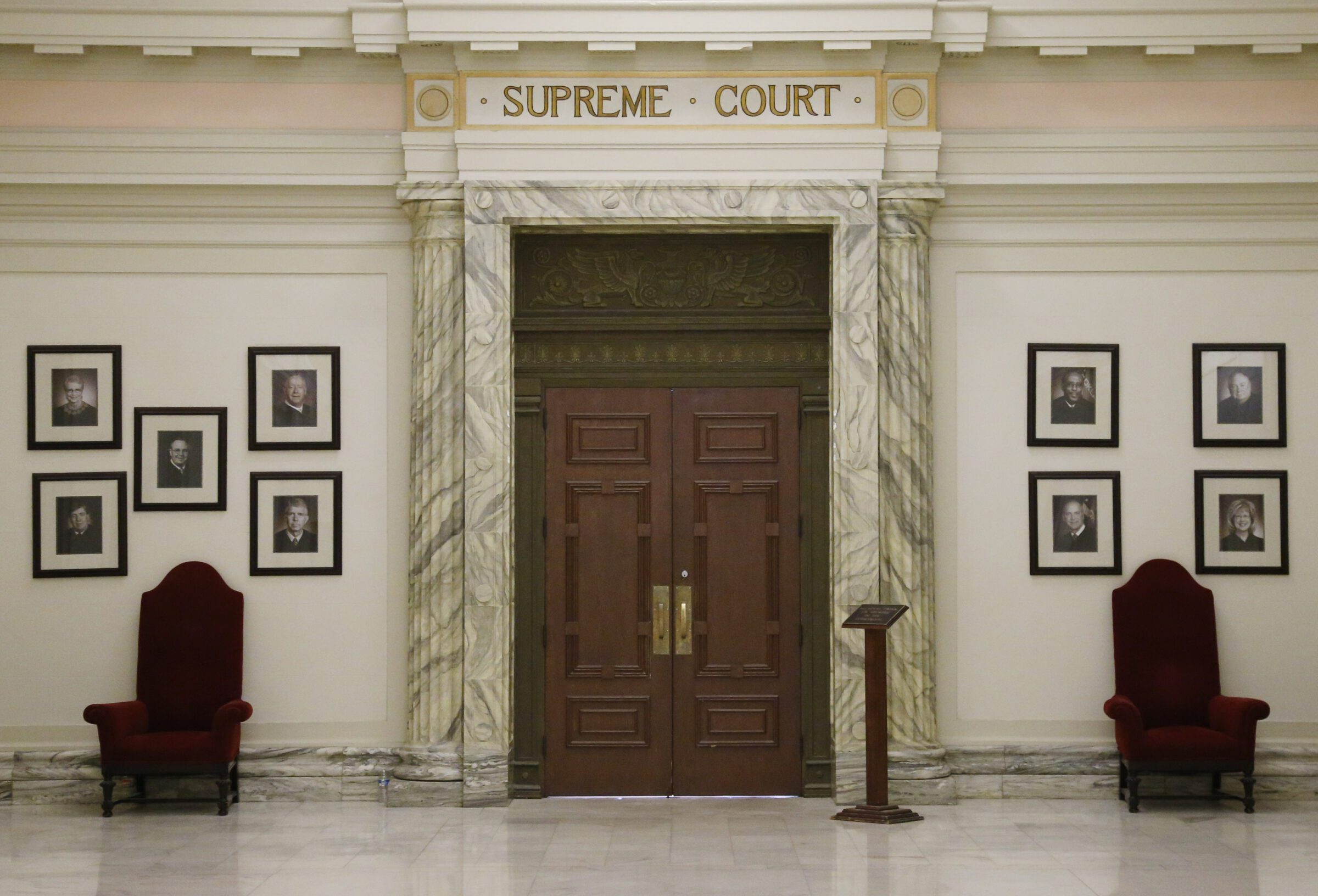
Conservatives around the country cheered in 2022 when the U.S. Supreme Court ended federal protections for abortion. But in Kansas, the anti-abortion movement’s drive to outlaw the procedure has repeatedly been thwarted by the state’s supreme court.
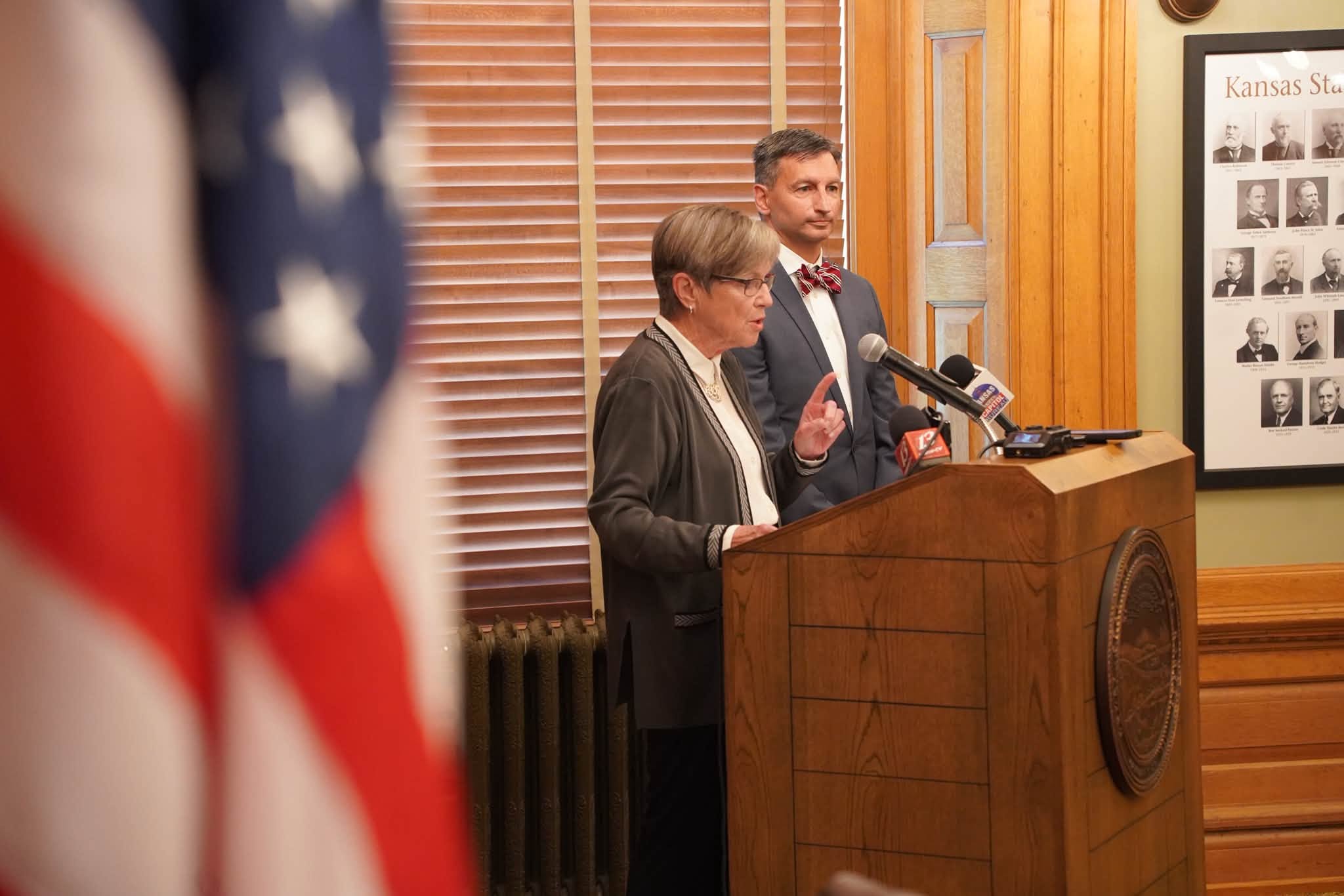
And two new justices appointed by Democratic Governor Laura Kelly over the last year have further eroded the prospect of a reliably conservative court.
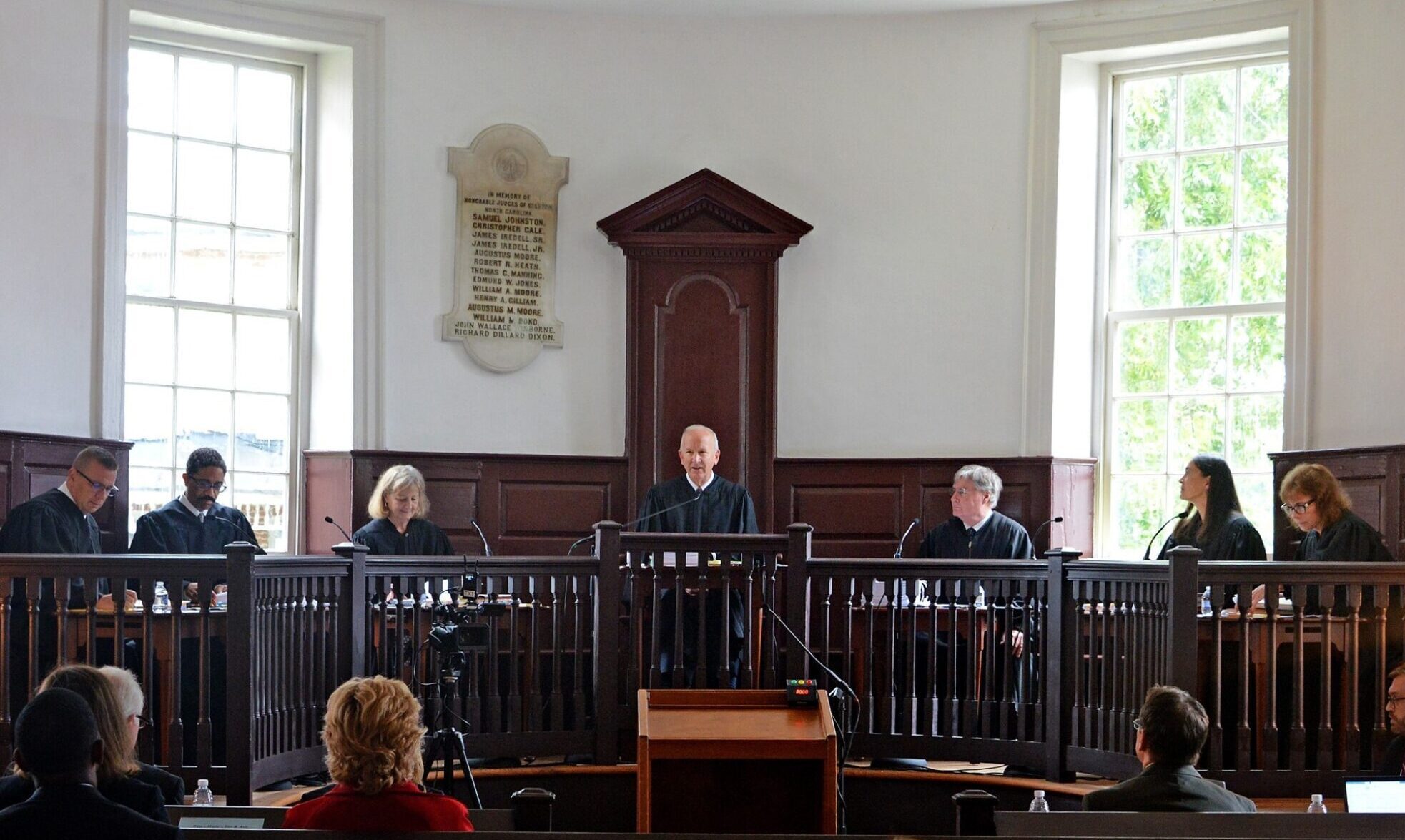
Elsewhere, the GOP has responded to similar circumstances by overhauling state supreme courts—from West Virginia lawmakers removing justices in the last decade to Utah’s legislature expanding their state’s high court this year. In Kansas, GOP lawmakers put a measure on the ballot this month to get rid of the state’s so-called merit system for selecting justices, in favor of direct elections that let voters choose between competing candidates. The measure would have abandoned the current system that’s been in place for 68 years, in which the state’s governor chooses from a shortlist of jurists selected by an independent nominating commission.
Observers thought the proposal would move the court further to the right, since Republicans tend to prevail in statewide elections, and open a pathway onto the court for right-wing applicants who may be unlikely to clear the commission.
But Kansans rejected the GOP proposal on Aug. 4 by a wide margin, 61 to 39 percent, keeping the current system in place. It lost overwhelmingly in urban areas but also in many of the state’s rural, redder counties.
“The margin tells you this wasn’t a close call for Kansans,” said Katie McClaflin, a member of the nominating commission, who told Bolts she was speaking in her personal capacity and not on behalf of the commission. “It was a reaffirmation of a system they trust.”
For more stories about state supreme courts
Subscribe to the Bolts newsletter
The result will make it much harder for conservatives to dislodge justices they dislike, including Kelly’s new appointments, let alone replace them with consistent right-wing allies.
The proposed measure was largely seen as a proxy for the fight over abortion, as the GOP has long tried but failed to find a way around the court’s landmark, 6-1 ruling in 2019 that the Kansas constitution protects abortion access. In 2022, Kansans rejected a conservative measure that would have overturned the 2019 precedent by a large margin similar to the Aug. 4 measure.
“Really, this is about abortion,” said Sandy Brown, head of the Kansas Abortion Fund. “If they can stack the supreme court in Kansas with anti-choice judges, then there’s a chance that other laws can strip us of our rights and bodily autonomy—this is the only way they can make it happen.” The GOP nominee in the upcoming governor’s race, Ty Masterson, said as much last fall when he told a conservative group that setting up direct elections for the supreme court was the “solution” to ending abortion. “But you can’t go out there and say it,” he cautioned.
Brown told Bolts that watching the measure lose on Aug. 4 gave her “enormous relief.”
“I felt a weird combo of tears, nervous laughter, and then such gratitude for the people of Kansas who understood the stakes,” she said. “We fought with strength and focus to defend abortion rights and we won.”
But the failure of Masterson’s “solution” could frustrate GOP ambitions beyond abortion. Conservatives had also hoped that direct elections would quickly reverse the supreme court’s status quo on education; the court repeatedly rejected cuts to school funding last decade, and the issue is set to return next year as lawmakers again determine how schools are funded.
Republicans won a pair of important victories on redistricting and voting rights earlier this decade, but those wins may now be at risk for them, too, since they were decided by the narrowest of margins—and several justices who sided with the GOP on those cases have since left the court.
Instead, Kelly’s latest appointments have opened the door to a new majority that may be more amenable to voting rights litigants, a prospect that could have major ramifications for the GOP’s agenda. In late July, one of her new appointees was part of a majority decision that refused to let Republican officials rush new restrictions on mail voting in the lead-up to the midterms. More lawsuits against GOP election laws will likely hit the court in the coming years, from new restrictions on voter registration to a possible redraw of the state’s congressional map next year.
In mid-July, just three weeks before the referendum on judicial elections, Kelly named Chris Jayaram to the court. Jayaram is a lower-court judge best known for granting a preliminary injunction against the abortion restrictions that GOP lawmakers adopted in 2023 over Kelly’s veto.
Jayaram is Kelly’s second appointment in a year, following the governor’s appointment last summer of Larkin Walsh, a lawyer at a private firm.
Jayaram and Walsh replaced retiring Justices Evelyn Wilson and Marla Luckert, both of whom had voted to affirm that the Kansas constitution provides a right to an abortion—most recently in 2024, when the court reaffirmed its earlier ruling on behalf of abortion rights.
Those precedents will matter most immediately whenever the 2023 restrictions, which are currently blocked by Jayaram’s injunction, make their way to the high court. And the new court makeup, which seems likely to uphold these precedents, could also keep the GOP, which has a solid majority in the legislature, from testing the legality of new bans. Brown said she expects GOP lawmakers to push a new round of restrictions, such as rules against medication abortion, whenever they think the state supreme court will allow them.
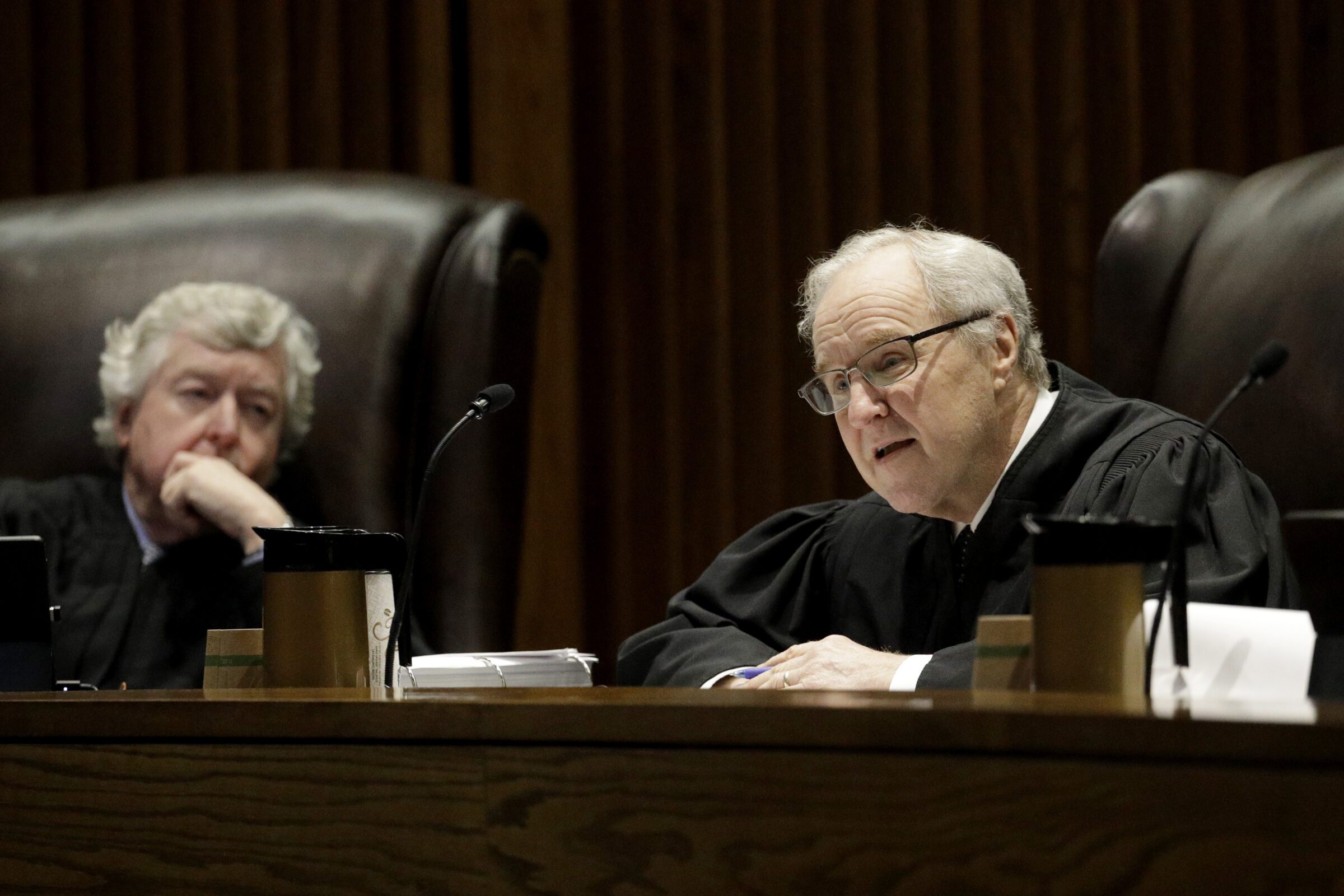
The changes in the court’s composition, meanwhile, could potentially shift outcomes in election cases, which were decided on much thinner margins.
The supreme court recently delivered two big election wins to the GOP, but both rulings came down to a 4-3 split—and both justices who have left the court over the last year were in that narrow majority.
In 2022, they upheld a Republican gerrymander in a redistricting case by finding that drawing district lines for partisan gain does not violate the state constitution and its promise of “equal protections and benefits,” as the plaintiffs had argued.
In 2024, the same four-justice majority upheld a GOP law that made it more likely mail ballots would be tossed over stricter signature matching requirements; the case drew attention because the court rejected the claim that the Kansas constitution protects the right to vote.
That finding drew a fiery dissent from Justice Eric Rosen. “It staggers my imagination to conclude Kansas citizens have no fundamental right to vote under their state constitution,” Rosen wrote. “I cannot and will not condone this betrayal of our constitutional duty.”
Rosen and the other two dissenters in both of these election cases—Daniel Biles, and Melissa Standridge—are staying on the court.
If and when the seven-member court revisits similar legal questions, all it would take is for one of Kelly’s recent appointees to join that bloc for the majority to flip.
A voting rights case in late July already hinted at such a shift.
Walsh, one of the newcomers, joined Biles, Rosen, and Standridge to block another GOP law restricting mail voting. (The other newcomer, Jayaram, was not yet on the court for this ruling.) Adopted in 2025, the law banned so-called grace periods by requiring election officials to reject mail ballots that arrive after Election Day, even if they’re postmarked by then. But a district court stayed the law in mid-July, and the supreme court kept the stay in place; that allowed ballots delivered in the days following the Aug. 4 primary to still be accepted.
Justices K.J. Wall and Caleb Stegall, the only two justices left on the court who were in the majority back in the 2022 and 2024 cases that upheld the GOP’s gerrymandering and mail ballot restrictions, both dissented in this new elections case. “We invite only suspicions about the integrity of our election outcomes at a time when the legitimacy of our voting procedures is under unprecedented assault,” they wrote, language that echoes some conservatives’ baseless suggestion that late-arriving ballots raise doubts about the validity of results.
Sharon Brett, a Kansas lawyer who took part in the lawsuit against the state’s redistricting, and is also a law professor at the University of Kansas, cautioned against any firm predictions that the court will flip its approach to voting cases based on the governor’s recent appointments.
Speaking of the court’s 2022 and 2024 election rulings, she told Bolts that “there is an opportunity to re-examine those cases.” But she said that those precedents set by the court may constrain what justices do in the future—even those who disagreed with the original rulings.
While supreme courts in other states have swung back-and-forth on ballot access and gerrymandering cases depending on who is in control, she says the Kansas Supreme Court is “not a court that routinely overturns its own precedent.”
The next certain vacancy on the court is more than two years away: Biles, a justice that the GOP has consistently clashed with over his votes to protect school funding, abortion access, and voting rights, will hit the mandatory retirement age by early 2029. The final decision of who will replace him will be made by the winner of November’s governor race between Masterson, the Republican, and Democratic state Senator Cindy Holscher.
Kelly, the sitting governor who is not running for reelection, got to choose four justices over eight years. In total, six of the court’s seven sitting members were appointed by a Democratic governor, and four of them won’t hit the mandatory retirement age until the 2040s.
But legal experts interviewed by Bolts stressed that any analysis of the court’s politics just based on who holds the governorship should be done with caution.
Kelly’s appointments were all constrained to a group preselected by the nominating commission, made of a mix of four members appointed by the governor and five lawyers selected by members of the Kansas Bar Association.
When there’s a vacancy on the court, interested candidates must apply and are then vetted by the nominating commission, which forwards just three names to the governor. McClaflin, who was elected to this body by members of the bar, said they consider many factors like candidates’ writing skills, professional reputation, ethics, and feedback on their temperament. “Political affiliation isn’t any part of what we evaluate,” she said. “Where I’ve seen this process play out, no questions were asked about political affiliation, political ideology, or personally held belief.”
Assessing how new judges might reshape the court, then, is mostly an exercise in reading tea leaves—like their prior rulings and their political history. Walsh and Jayaram both declined an interview with Bolts through a court spokesperson.
Jayaram is currently a registered independent but he was a registered Democrat from 1999 to 2017 and 2022 to 2024, according to voter registration records shared with Bolts by the secretary of state’s office. Walsh has been a registered Republican since 2020; in the past, she was both a registered Democrat (no later than 2012) and independent (no later than 2020), and from 2008 to 2012 clerked for a federal district court judge appointed by President Bill Clinton.
This transpartisan history didn’t stop conservative groups from blasting their appointments. When Kelly chose Walsh in 2025, the Kansas chapter of Americans for Prosperity, the libertarian conservative advocacy organization affiliated with the Koch brothers, denounced her as a “liberal progressive.”
“Kansans can no longer tolerate this cabal of unelected progressive attorneys keeping themselves in control of the judicial branch,” Elizabeth Patton, the group’s director, said in a statement at the time, referencing the state’s nominating commission.
This summer, Americans for Prosperity was a leading proponent of the measure to set up direct supreme court elections. In an interview with Bolts, Patton argued that the current system gives undue clout to lawyers, pointing out that members of the Kansas Bar Association get to choose most of the members of the nominating commission, who then vet potential judicial nominees.
“The commission and the supreme court are not ideologically representative of our state, and that is in part by nature of having one homogeneous group choosing very like-minded people who are largely their friends to sit on government,” Patton said. “Instead of being a representative sample of Kansans as a whole, it represents the make-up of the bar association.”
“Would we be okay as a state if we said lobbyists are the experts on what makes a good lawmaker, so they should be the only ones to choose our representatives?” she added. “No one would be okay with that.”
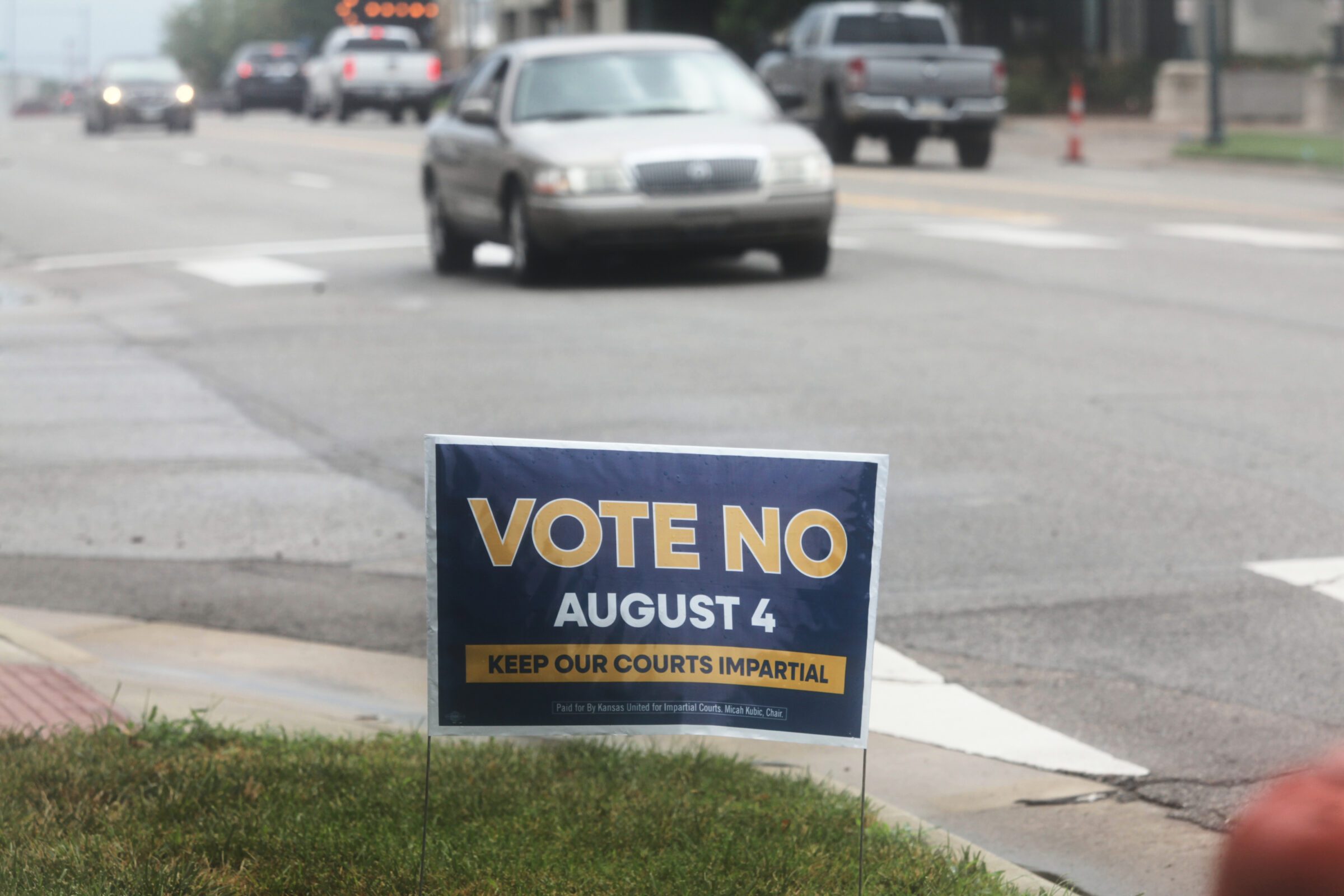
Opponents argued that competitive judicial elections would bring to Kansas the sort of expensive, polarized campaigns common in some states. They pointed to Wisconsin, where a supreme court race last year broke funding records in part due to Elon Musk’s heavy spending. That model compromises the independence of judges, they said, and pressures them to behave like partisan actors. McClaflin said, “Removing the merit-based selection in favor of direct elections would, by definition, make the process one hundred percent political.”
McClaflin also rejected the notion that the current system silences ordinary Kansans, because all justices are subject to an up-or-down retention vote, which happens within two years of a justice’s appointment and every six years after. “The real question isn’t should people get to vote, they already do,” she said. “The real question is, what kind of vote produces better justice?”
Kansas is one of 19 states where justices are appointed by the governor and then face a retention vote.
Walsh is up for retention in November, so the GOP has an opportunity this fall to persuade voters to kick her off the court. Jayaram will stand for retention in 2028.
Critics of Kansas’ current system say retention elections don’t count as real opportunities for voters to have a say. No justice has ever lost reelection since the current system was set up in 1958. That’s common in states with retention systems; incumbents have no actual opponents making the case against them, which can make for clunky campaigns, as Bolts reported last year in Pennsylvania.
“It’s not a real election,” said Patton. “You have a yes or a no voice on a justice, where there is no incentive for them to say anything about themselves or educate the public about that vote. It’s not an effective check.”
McClaflin says she found it ironic that proponents of the measure to change the selection process made arguments about democracy but chose to schedule the proposal to coincide with the August primary, which always has far fewer voters than November’s election.
Roughly 615,000 Kansans voted on the supreme court measure on Aug. 4. That compares to the more than one million who voted in November of 2022, the last midterm cycle, and the more than 1.3 million who voted in the 2024 presidential election.
“They’re saying voters should matter, Kansas voices should matter,” McClaflin said. “Then why was it put on a primary ballot, where there is embarrassingly low voter turnout?”
Sign up and stay up-to-date
Get timely updates about pressing stories and elections.
Support us
Bolts is a non-profit newsroom that relies on donations, and it takes resources to produce this work. If you appreciate our value, become a monthly donor or make a contribution.
Related Posts