
A North Carolina Sheriff and ICE Ally Faces Accusations of Racism—and a Challenger This Fall
Sheriff Terry Johnson, who is battling for a seventh term in Alamance County, was investigated for profiling Latinos long before Trump. His opponent says he’d rebuild trust with local immigrants.
| June 16, 2026
This story is produced as a collaboration between Bolts and NC Local. It is part of Bolts’ series on sheriff elections this fall; read our coverage from Maryland, Washington, and Wisconsin.
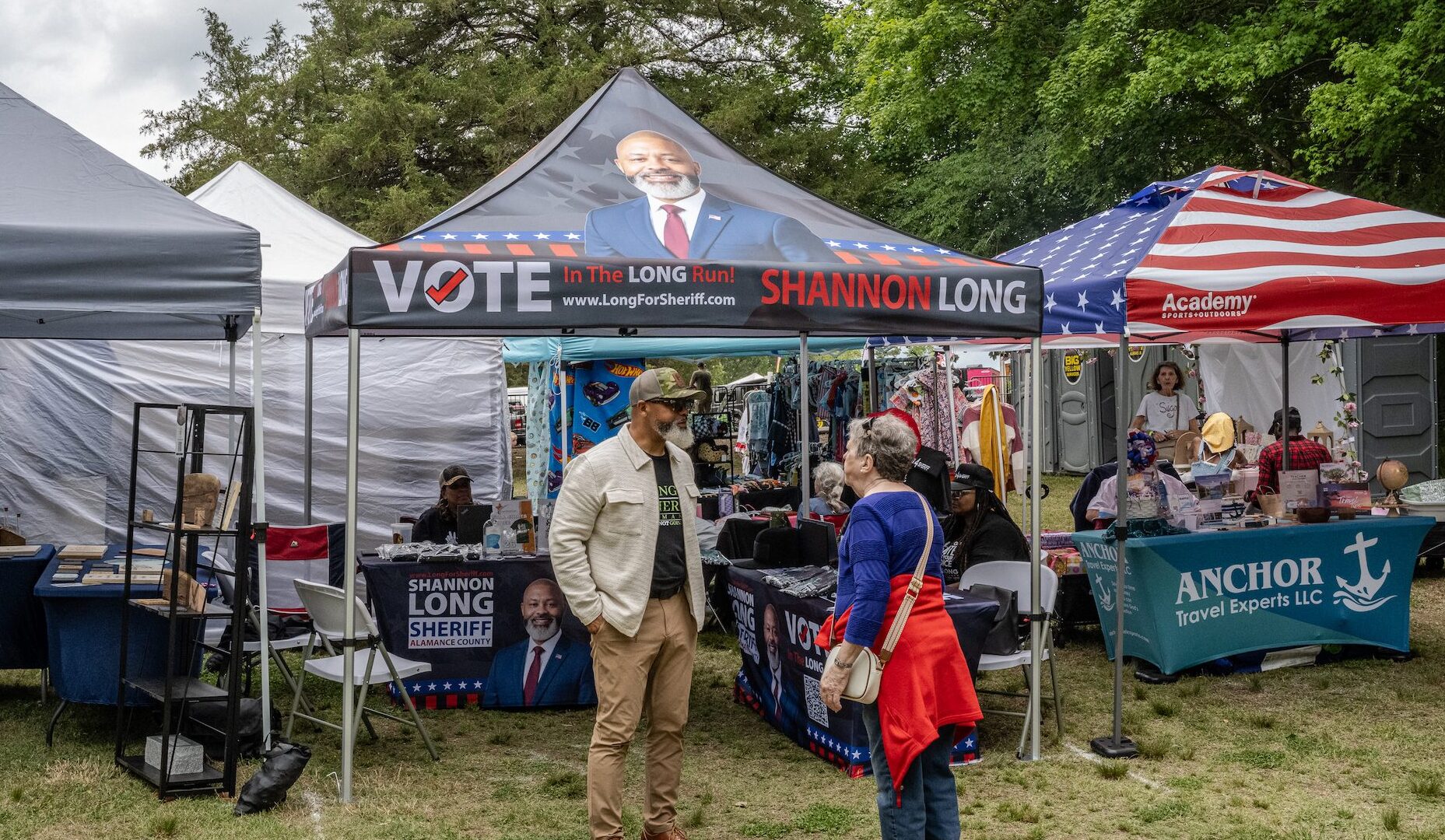
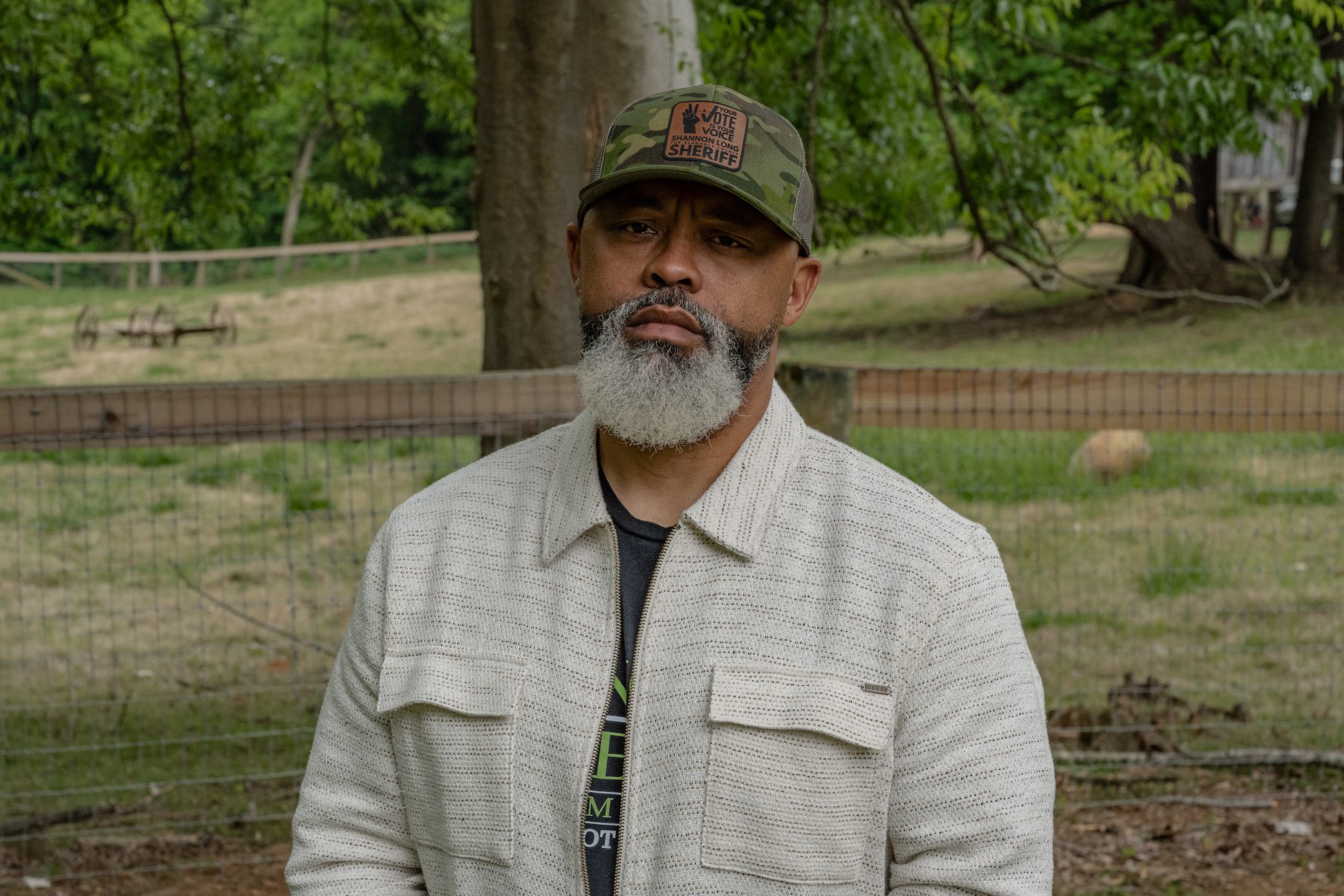
One Saturday in May, Shannon Long, a pastor running for sheriff in North Carolina, set up his campaign tent at a local hot-air balloon festival, and for several hours, met with voters.
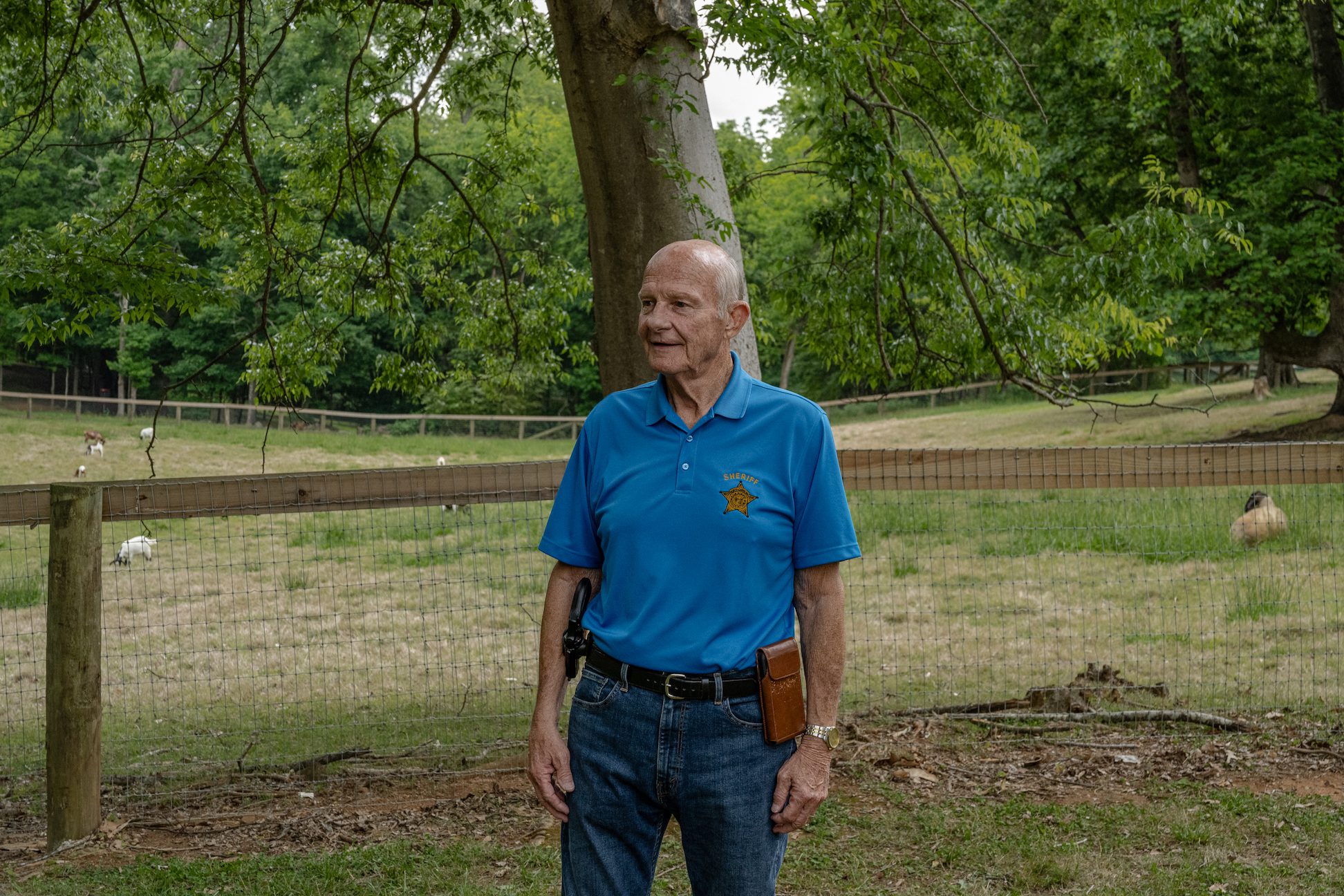
Some sidled up to Long, who was wearing sunglasses and a camouflage trucker hat tagged with the slogan, “Your Vote is Your Voice,” for a quick chat. It was an easy opportunity to meet the man trying to oust Alamance County’s longtime Republican Sheriff Terry Johnson, who has drawn extensive scrutiny over the years for policies and rhetoric that have profiled and assailed Latino residents.
Others sat down next to Long, a former school resource officer who now runs a local Christian ministry and barber school, and listened to him speak in a soft-spoken cadence about his plan to restore trust in law enforcement in this county of roughly 190,000, with large rural and suburban swaths.
One Latino man, who had immigrated to the U.S. as a toddler and did not want to provide his name, told Long “a new voice, a new vision” was needed to rebuild trust in the community.
But it won’t be simple; every Latino person has a different experience, he said. His wife, an elementary school teacher, stood nearby and told Bolts and NC Local she often hears xenophobic comments about Latinos in the community. She said she understands her husband might be profiled because he’s Latino, that people might think “he’s done something wrong.”
Amid the Trump administration’s immigration crackdown, she said her Latino students share their fear with her while they’re in school. “They’re old enough to tell me, ‘I’m scared,’ or, ‘my family is afraid,’” she said.
These fears have been a throughline not just for Long’s candidacy, but also for the struggles around immigrants’ rights in Alamance over the last several decades. The county is now far more populous and diverse than when Johnson came in office in 2002, with Latinos more than doubling their share of the population from roughly 7 to 16 percent.
Throughout his tenure, Johnson has faced accusations of racism and illegal policing tactics. More than a decade ago, the Department of Justice accused him of fostering “a culture of discrimination against Latinos” in Alamance County and referring to Latino residents with racist epithets such as “taco eaters.”
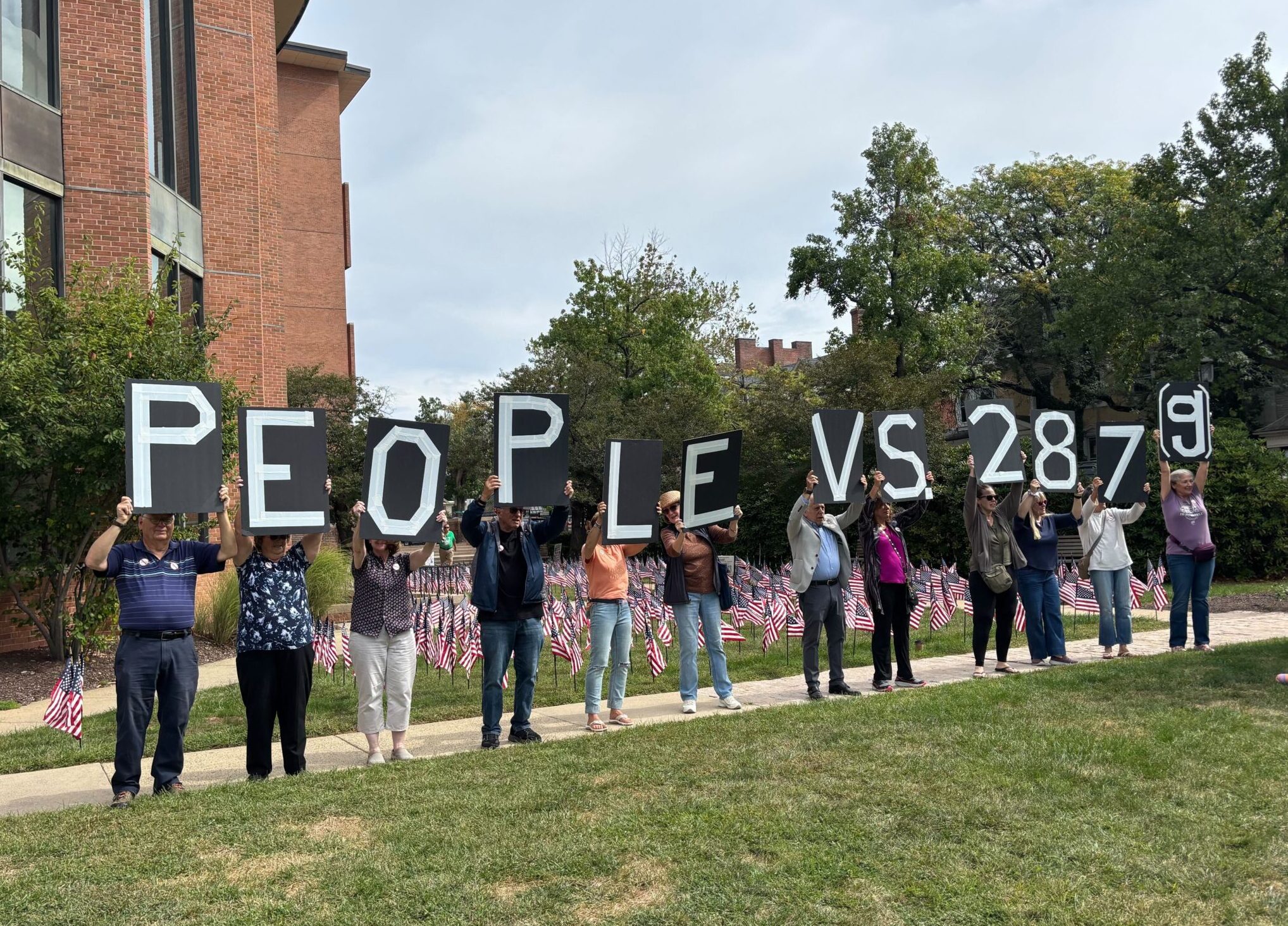
Since then, protests from immigrants’ rights activists have continued as Johnson has partnered with Immigration and Customs Enforcement and taken the county in and out of ICE’s 287(g) agreement, a program requiring local law enforcement to cooperate with federal immigration agents.
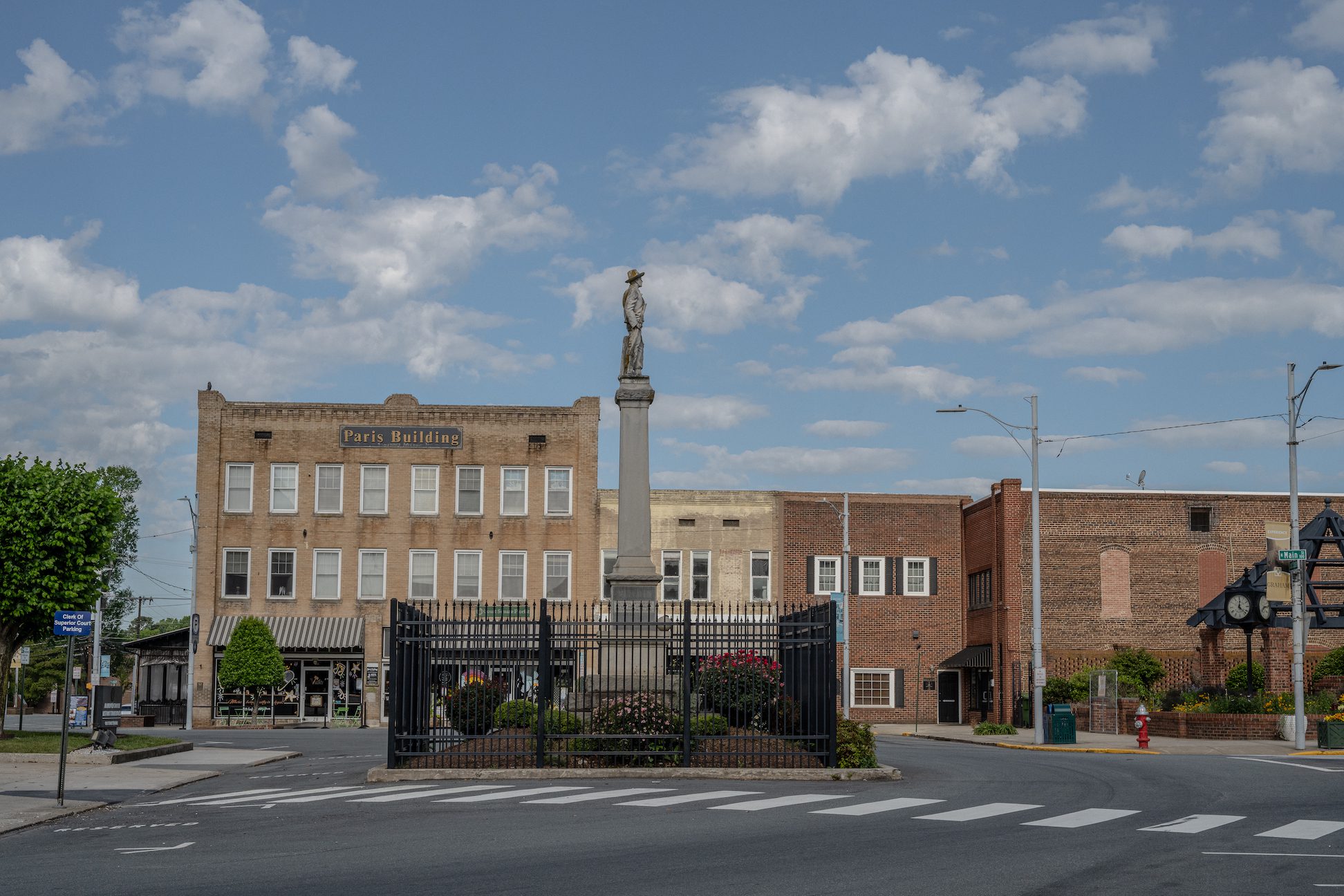
And he faced complaints of excessive force, including when his office countered Black Lives Matters protestors with violence in 2020. When demonstrators gathered a block from the sheriff’s office in Graham, demanding the removal of a Confederate monument from the town square, deputies pepper sprayed attendees, including some children. A lawsuit against Johnson and other officials resulted in a $336,000 settlement.
Despite these tensions, he has drawn few challengers at the ballot box. In 2022, he defeated his first opponent in 12 years with 59 percent of the vote, outperforming Trump, who won here by eight percentage points in 2020 and 2024. He prevailed again this year in the March GOP primary, beating a retired state highway patrolman by 15 percentage points in a race that tested his popularity and county Republicans’ appetite for change.
“Every election cycle, folks say they want to get him out of office, and every election cycle, he’s on the ballot, and he’s like the top vote getter in the county,” said Ian Baltutis, a city council member in Burlington, the county’s most populous city, and its former three-term mayor. “That’s really demoralizing for the idea that we deserve better and more professional law enforcement.”
In an interview with Bolts and NC Local at the balloon festival, Johnson said he has “a great working relationship with the good Latino community.” He emphasized the word “good” and said distrust for his office exists only among “the criminal elements.”
Earlier this year, he told The Assembly that he’s “the furthest thing you can see from a racist.”
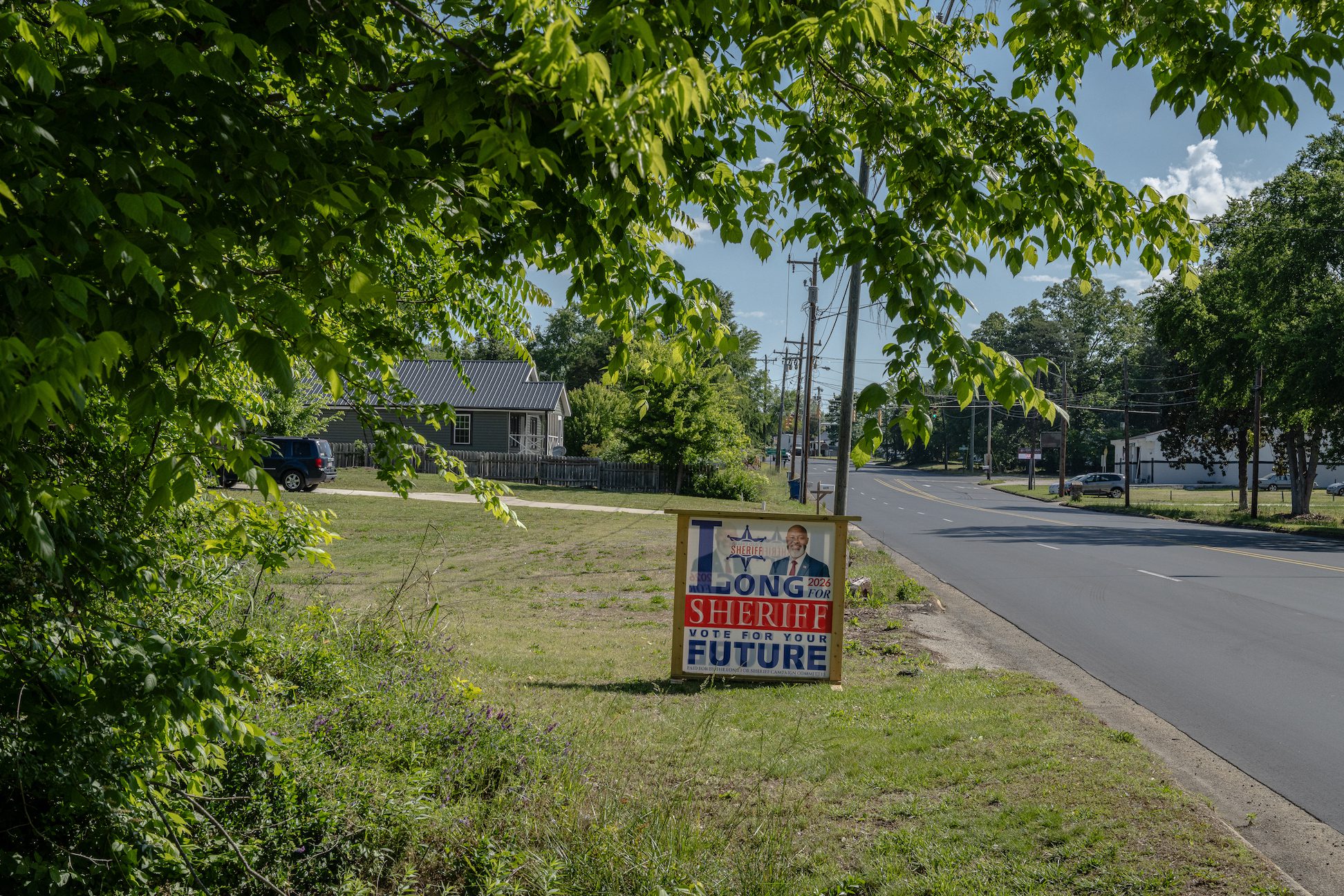
Long, who is Black, said he is determined to do better this fall than Johnson’s past challengers. By March, he had gathered more than 4,700 signatures to get on the November ballot as an unaffiliated candidate, and he describes how fostering a stronger relationship with Latino residents is key to differentiating his approach.
But he said it has been difficult to make headway among Latino residents because many are scared of the local sheriff’s office and its deputies. He told Bolts and NC Local, “They feel distance now with the community, with politics. They feel like they’re not heard.”
“I’m having to talk to people through the crack of their doors in certain communities because they’re afraid of law enforcement,” he said. “Lost trust is hard to gain back with anybody, so it’s been tough.”
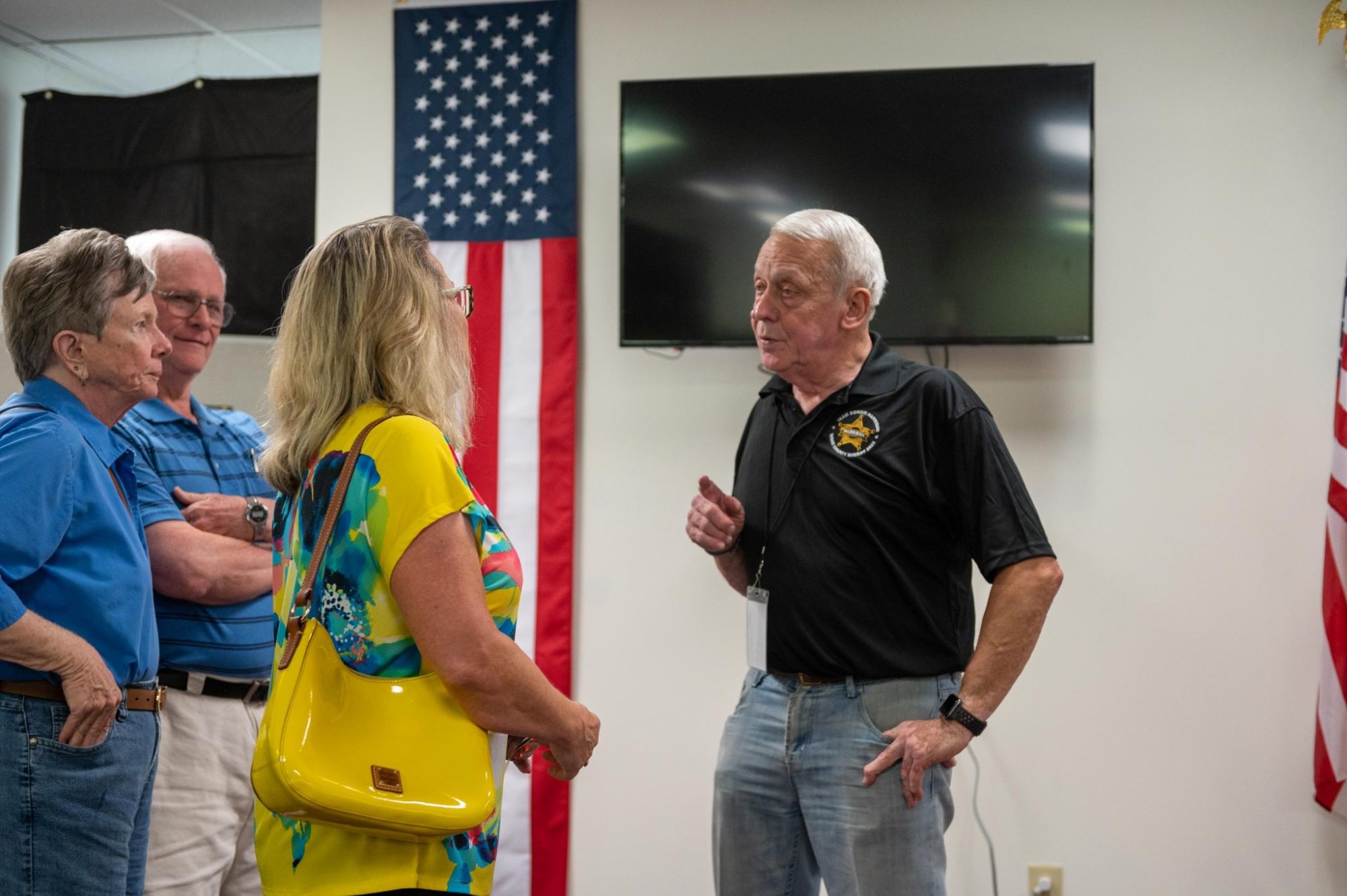
Johnson first entered ICE’s 287(g) program, which authorized his deputies to interrogate people about their status while on patrols, in 2007. He also signed a separate agreement to hold detainees for the agency. High-profile incidents quickly followed, like when a sheriff’s deputy arrested a Latino woman during a traffic stop in 2008, leaving her three children stranded on the side of the highway.
Immigrants’ rights advocates sprung up to counter Johnson’s tactics and support local immigrants. They established the group Fairness Alamance in 2008, in direct response to 287(g), accusations of racial profiling by the sheriff’s office, and the arrest, and deportation, of a local librarian. Other groups arrived to provide means of identification to immigrant residents who couldn’t obtain government IDs.
Justifying his partnerships with ICE, Johnson told a local newspaper at the time that people in the country illegally were a drain on county resources. He also stressed that holding them would bring in extra money for the county; ICE pays counties when it rents their jail space.
But Johnson hit a roadblock in 2012, when the Obama administration kicked the sheriff’s office out of 287(g) and the DOJ filed a lawsuit against Johnson alleging he was unjustly targeting Latinos during traffic stops.
Federal investigators found that Latino drivers in Alamance County were four to 10 times more likely to be pulled over than non-Latino drivers. They alleged the sheriff’s office intentionally set up check points in Latino neighborhoods, singling out Latino drivers for arrest.
Investigators also accused Johnson of instructing supervisors to tell deputies, “If you stop a Mexican, don’t write a citation, arrest him.” Johnson denied the allegations at the time. During a 2012 news conference, he said his office “never discriminated against Spanish-speaking persons in any way, shape or form.”
A federal court dismissed the lawsuit, finding that the DOJ had failed to prove that the sheriff’s office engaged in a pattern of discrimination. But the DOJ appealed, and Johnson agreed to settle by adopting a “bias-free policing policy” and monitoring its traffic stops. Three months later, Trump was elected to his first term as president on hardline immigration policies, like building a wall on the border with Mexico.
Despite the settlement agreement, local officials like Baltutis remained skeptical. Baltutis recalled that, during his time as mayor of Burlington from 2015 to 2021, the city looked for opportunities to distance itself from the sheriff’s policing style and rebuild trust with Latino communities.
“It was always that balancing act of figuring out how to manage Sheriff Johnson’s ego and his public activities,” said Baltutis, who remains very critical of the incumbent but has not formally endorsed Long.
In 2020, during the tail end of the first Trump administration, Johnson reentered 287(g) and signed a new agreement to hold ICE detainees, and he collaborated with both programs until late last year.
But then, last fall, he ended up terminating his agreement to hold ICE detainees, citing overcrowding in the local jail, plus a new state law that has forced harsher pretrial detention rules and has since made jail populations swell.
Alamance County remains on ICE’s database of counties with an active 287(g) contract at this time, though Johnson told Bolts and NC Local his deputies no longer actively participate in it.
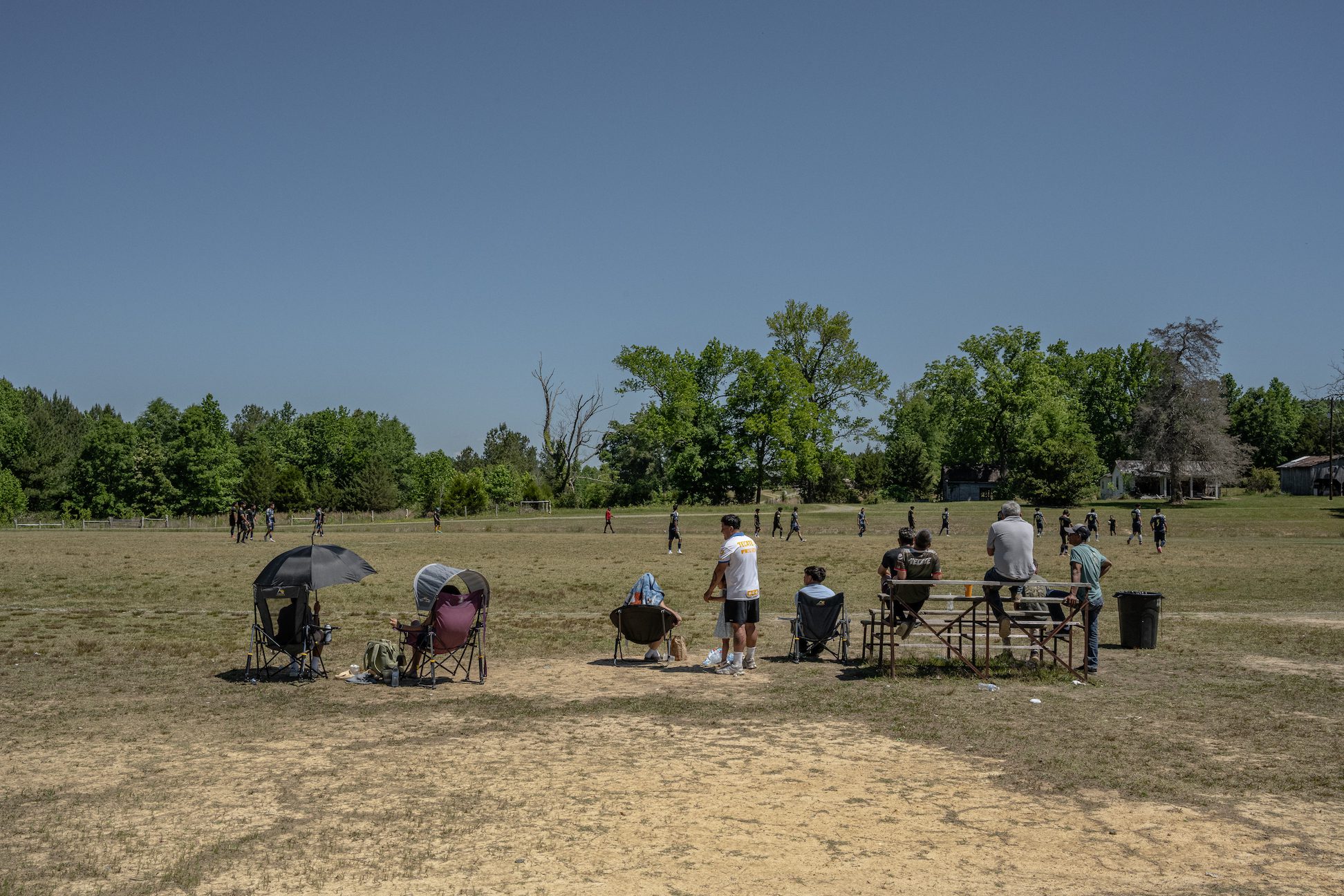
The day after the hot-air balloon festival, dozens of Latino men played soccer in a rural part of Alamance County. Just a few miles away, a tattered Confederate flag hung limp on a pole in an empty field, moving with the wind of passing trucks.
Antonio Cruz, who organizes the soccer games, later said in a text message that Johnson caused the Latino community “a great deal of harm,” especially during the Obama administration. But he says his family and friends trust the sheriff’s office more, and feel less afraid, now that he has pared down his partnerships with ICE.
Cruz said he’s unsure what a change in local leadership would mean. “We’d just have to wait and see how they act,” he said.
Republicans in the state legislature have, in recent years, imposed new requirements for sheriffs to comply with ICE. They created these mandates after North Carolina’s largest counties elected Black sheriffs in 2018 who scaled back collaboration with ICE, including quitting the 287(g) program. Some of these sheriffs have said that they were targeted because they were Black.
Still, Long believes he can make changes if elected.
He said he would not hold people for ICE in the county’s detention center outside what’s mandated by state law and that he would not contract with the 287(g) program in its current form. He made the case that 287(g) is operating with “neglectful policy and procedure,” specifically related to the racial profiling of Latinos and the targeting of immigrants who aren’t “high-level criminals.”
To alleviate residents’ fears, he said deputies would be more visible in the community—“actually getting out of the car and meeting with the residents of the county.”
And he plans to increase training for deputies, specifically around racial profiling, but also around physical and mental health support and deescalation techniques.
These are issues of concern to Melissa Meeks, a resident of neighboring Randolph County who spends a lot of time in Alamance for events.
During the balloon festival, Meeks was showing off her black Dodge Charger with purple accents in the car show, a few hundred yards from Long’s tent. She said she is fearful of getting pulled over by the sheriff’s office when she drives in the county, worried they might not be trained to handle someone with autism, like herself.
“I am afraid of authority figures,” said Meeks. On the back of her car, she displays a specialty autism license plate and a Thin Blue Line decal on her car believing it might ease law enforcement fear during a traffic stop.
“I’m not combative, but I get tongue-tied, and I have a problem talking to them,” she said. “I’m fearful when they stop me that they’re going to see that as something illegal.”
She likened that fear to what a member of the region’s Latino community might feel.
“They’re afraid for the reasons that they’re afraid, whether it’s getting arrested because they don’t have the proper paperwork, or arrested because they look wrong,” she said. “I know from my personal experience that I have that same fear—that I’m going to strike a chord wrong with them because I don’t have the right facial communication or the right words or the right gestures because of my autism, and that’s going to trip a trigger for them.”
Johnson showed up in front of Long’s tent at the festival and the two spoke, exchanging awkward pleasantries. He offered Long a tour of the jail, if he were to win in November.
Johnson also suggested a winner-take-all boxing match, a way to chirp at some voters’ concern about his age.
Asked about the accusations of racial profiling, the sheriff told Bolts and NC Local, “Yeah, we profile—we profile criminals. I don’t care if you’re Black, white, short, tall, fat, small, Democrat, Republican, independent. If you’re a criminal, we coming after you.” Of Latinos who commit crimes, he said, “They want to bring dope in here, whatever.”
Johnson frequently says drug cartels are operating in Alamance County, blaming, in part, the two major interstates that bisect the county.
That’s a common argument from proponents of hardline immigration enforcement, but Baltutis disputes that characterization when it comes to Alamance. Johnson has a reputation for using “drug busts as huge publicity stunts,” Baltutis said. “He paints it like it’s a war zone, and it is not.”
For Long, too, the sheriff’s office in Alamance County has been too focused on immigrants. He said he believes immigration enforcement is primarily a federal responsibility, telling Bolts and NC Local, “I’d just rather for immigration to do what they have to do, versus us intertwining with them.”
He added, “We’re going to do our job, and our job is not to do what they’re doing, which is, right now, racial profiling.”
Sign up and stay up-to-date
Get timely updates about pressing stories and elections.
Support us
Bolts is a non-profit newsroom that relies on donations, and it takes resources to produce this work. If you appreciate our value, become a monthly donor or make a contribution.