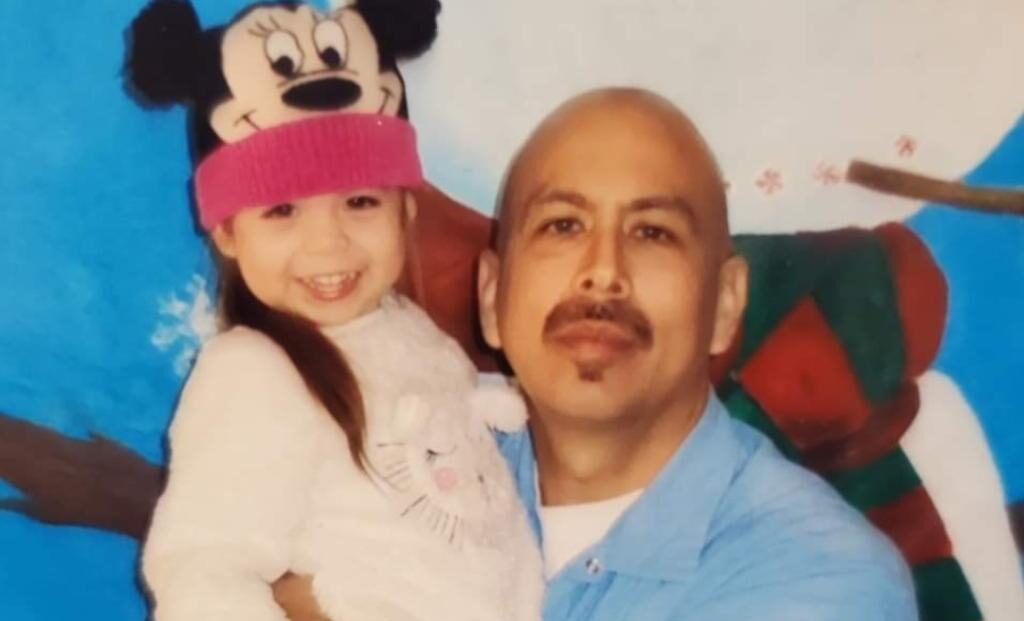

This New Law Will Make It Easier for Californians to Visit Family in Prison
Families of incarcerated people have long faced arbitrary denial of visits and harassment by prison staff. They advocated for reforms that passed last week.
| October 9, 2026
After driving five hours to visit her son in prison, Anita Wills, 80, found herself in an impossible situation: fish her bra wire out of the fabric using only a paperclip, or be turned away from visiting with her son. Those were there rules at the California State Prison in Lancaster that day—bra required, but underwire bra forbidden. While the wire was so small that Wills didn’t even know it was there, the visiting staff would not let her see her son until she removed it. They claimed to not have scissors, giving her only a paperclip.
Wills cried as she struggled for over an hour to remove the wire with the paper clip, and says she heard guards laughing because they knew it was impossible. But giving up would mean she couldn’t see her son, and that the long drive and hotel costs would have been for nothing, so she tried for as long as the guards would let her, to no avail.
“I did not get a chance to see my son that day,” Wills told Bolts. “Knowing that he was on the other side of those bars, that was just really hurtful. The state that I live in and pay taxes in treats people like that. It’s so inhumane.”
Wills, who has been visiting her son in California prisons since he was incarcerated in 2003, says it’s not uncommon for staff to prevent people from visiting loved ones for similarly arbitrary reasons—or sometimes even absurd sounding explanations. Willis says guards have on multiple occasions turned her away claiming she was dressed too provocatively.
“I don’t even have provocative clothes at my age,” Wills said. “Everything was covered up, and I was taking this personally.”
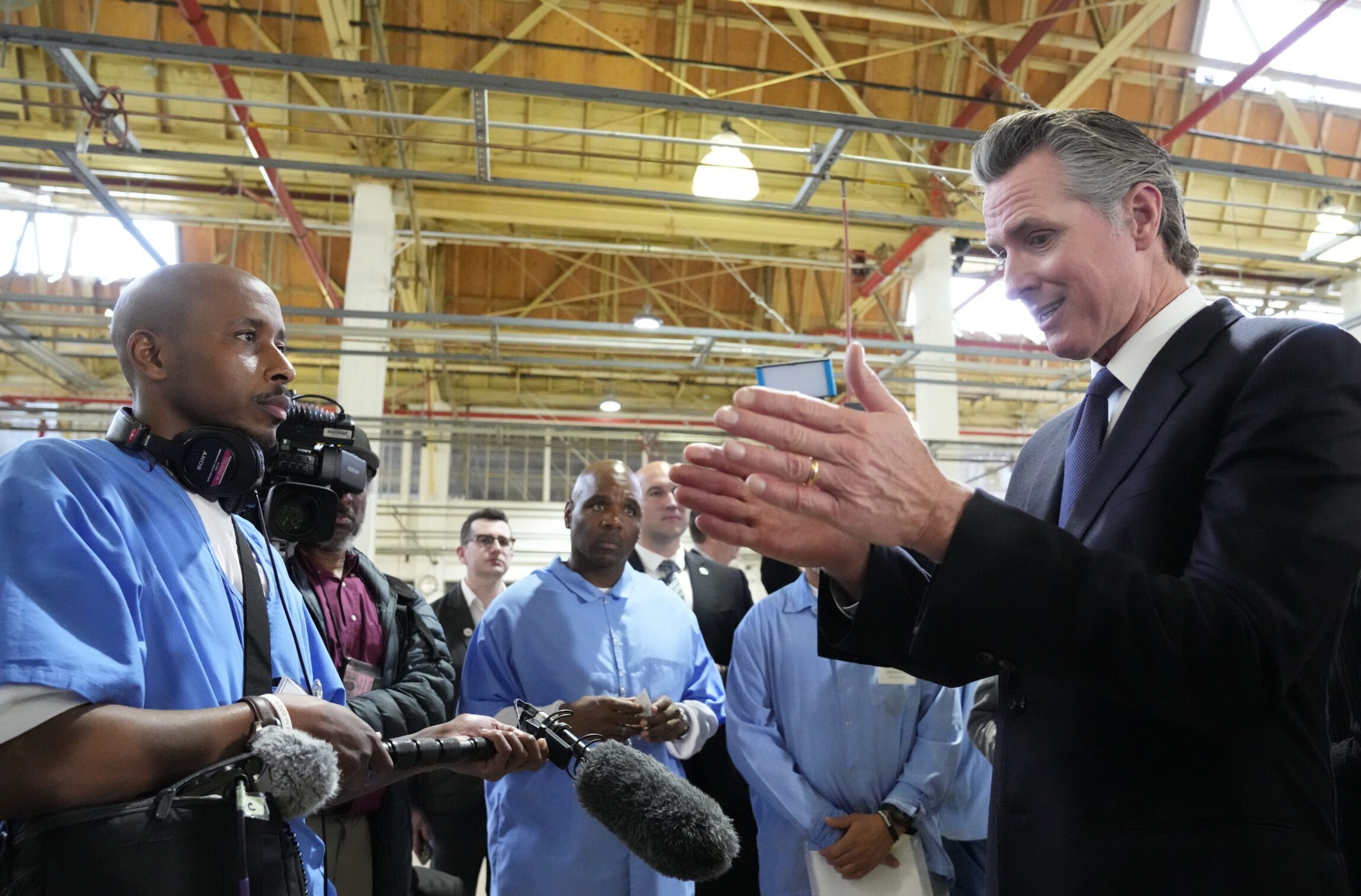
But now, Wills is hopeful not to have a repeat experience thanks to the adoption of Assembly Bill 2434, the Visitor Protections and Safety Act, which Governor Gavin Newsom just signed into law last week. The measure, which was introduced by Assemblymember Mia Bonta, will establish standards that all searches of visitors must be voluntary, non-contact and conducted in the least intrusive way, and done by a same gender officer when unclothed searches are required. It also only allows denials on serious rules violations or risks to safety, and prioritizes preserving visits when issues are minor and correctable, such as dress code violations.
The law entirely prohibits same-day denials when a visitor has traveled more than 170 miles and has not visited within 30 days unless there is a credible safety threat.
Sign up for our newsletter
Get more reporting on mass incarceration
“We were all sitting on pins and needles waiting for Governor Newsom to sign this,” Wills said. “I feel a lot better and more confident now that this has passed.”
The California Department of Correction and Rehabilitation’s website has established restrictions on what a visitor can wear, but those mostly police women: no halters or strapless tops, no skirts or dresses that expose more than two inches above the knee, no clothing that reveals breasts, and no wigs.
But Wills said that in practice, when and how these rules are enforced is left to the correctional officers, and this discretion about whether to turn someone away is often abused. What one woman wore to a prison one day might be deemed “provocative” the next, leaving families in a state of uncertainty that could result in them not getting a visit at all.
Wills has also seen firsthand how arbitrary enforcement affects families—Willis says that when she took her grandson to visit his dad, he was also turned away and hasn’t visited since.
“It’s supposed to be the Department of Rehabilitation and Corrections, not of continually harassing and punishing families,” Wills said. “We’re not in prison.”
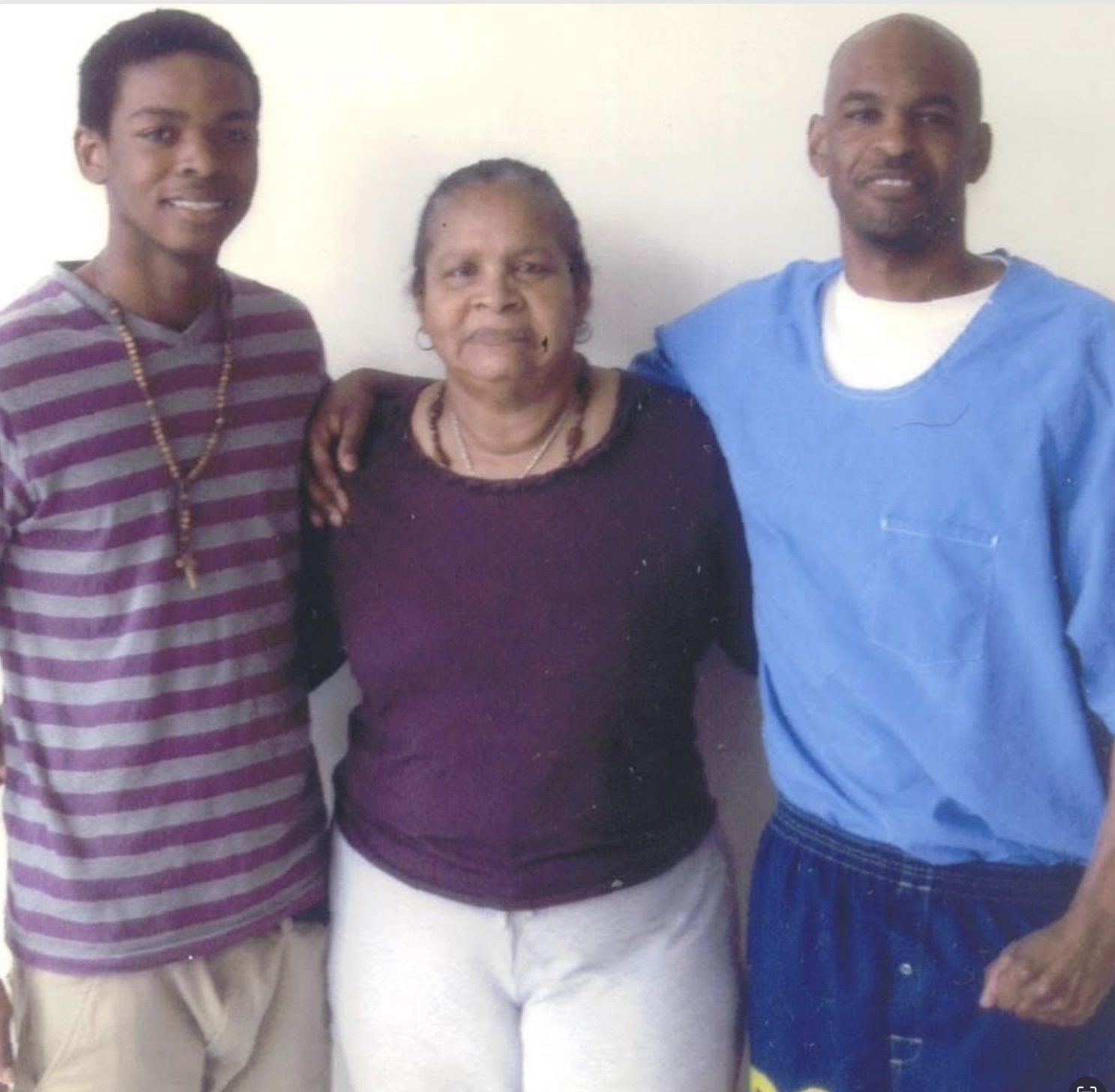
Her frustration, along with hundreds of other women with incarcerated loved ones, manifested in other bills that just reform the rules of visitation; alongside AB 2434, Newsom also signed AB 1645 and AB 1646 into law in September.
The first, the Humanizing and Uniting Generations Safely Act, defines what does and doesn’t constitute excessive contact during visits. The other, the Hug Act, gives youth held in juvenile detention the right to hug their families during visits, as some facilities did not allow contact visits.
Ellie Virrueta Ortiz is community organizer and policy associate at Essie Justice Group, a nonprofit that Wills co-founded which works with more than 700 women who have incarcerated loved ones. Virrueta Ortiz said that she has also heard from the group’s members that they have experienced visits being cancelled because correctional officers claimed they had excessive contact with their incarcerated loved one; she says a pregnant woman once told her she had her visit terminated because her incarcerated husband placed his hand on her belly.
“There are so many other experiences like that where just a simple hug or a peck is constituted as excessive contact again because the [correctional officers] have so much discretion over what that is,” Virrueta Ortiz said. “This bill really tries to define that normal and appropriate physical contact does not constitute excessive contact and should not result in visits being terminated.”
Virrueta Ortiz said there has been a movement to pass bills protecting the prison visiting experience in California since the 1990s tough-on-crime era, when visits lost their status as a protected right and was reclassified as a privilege that could be taken away to give correctional officers more control. Families impacted by incarceration have been on the frontlines of this fight to pass bills, drawing motivation from their own experiences.
This year, Essie Justice co-sponsored the bill along with Restoring Hope and Bridges of Hope, other organizations that are all led by families impacted by incarceration.
Their successes this fall stand out against a string of recent failures. In 2021, Newsom vetoed a visiting bill called AB 990, which would have restored the right to visits, saying that the legislation would “likely result in extensive and costly litigation from individuals denied visitation for what may be valid and serious safety and security concerns.” When the bill was reintroduced as AB 958 in 2023, it was held in the Senate Appropriations Committee. After that, families continued to champion visiting bills without specifying it as a right but still targeting arbitrary denials. In 2024, the bill AB 2709 was similarly held in the same Senate committee.
That same year, families with Empowering Women Impacted by Incarceration and Jessie’s Place also championed bills to limit the reasons for which prison staff can block visits and to reduce the exorbitant cost of food in the visiting room, as families already often pay for gas, flights and hotels just to visit—but those measures also died in the Senate.
Newsom also has a history of vetoing bills related to carceral reforms. He blocked the Mandela Act, which in 2022 attempted to put parameters for solitary isolation in prison in accordance with international standards. (When he signed a much-whittled down version two years later, the original community sponsors withdrew their endorsement.) He also rejected a 2022 measure that would have put limits on youth probation.
“I’m proud we are promoting California values and prioritizing rehabilitation,” Bonta, the legislative sponsor, said in a statement. “Visitation reduces recidivism, improves behavior behind bars, and helps people successfully return to their communities … I am grateful for Governor Newsom’s signature, which follows years of work led by women and loved ones of incarcerated Californians, promoting dignity and healing for families navigating our prison system.”
Virrueta Ortiz said she believes this year’s win has to do with Essie Justice Group’s campaign, which involved its hundreds of women with loved ones in prison at every step of the legislative process from drafting the bill to lobbying lawmakers on the ground in Sacramento. A week before Newsom signed the bill, Virrueta Ortiz said that the justice group delivered postcards from their membership and partners all across California urging the governor to sign.
“Our members are women with incarcerated loved ones, so we’re experiencing the atrocities of visitation, and that I think was critical in the momentum,” Virrueta Ortiz said. “I think that what resonates for us is that highlighting how this is visiting rooms are sites of gender-based violence.”
As the bills go into effect next year, Virrueta Ortiz said that Essie Justice Group will continue to follow the issue and make sure that the California Department of Corrections and Limitations implements them as they are intended.
“Now that these bills were signed, we still need to develop what that’s going to look like,” Virrueta Ortiz said. “We will be working with the next gubernatorial administration to ensure that these bills are implemented to their full potential.”
Sign up and stay up-to-date
Get timely updates about pressing stories and elections.
Support us
Bolts is a non-profit newsroom that relies on donations, and it takes resources to produce this work. If you appreciate our value, become a monthly donor or make a contribution.
Related coverage