
Blow to Voting Rights Act Amplifies Stakes of Georgia’s Supreme Court Elections
A pair of liberal attorneys say they'll be more aggressive in defense of democracy as they try to oust Georgia justices on May 19, as the Callais ruling may make state courts more pivotal.
| May 1, 2026
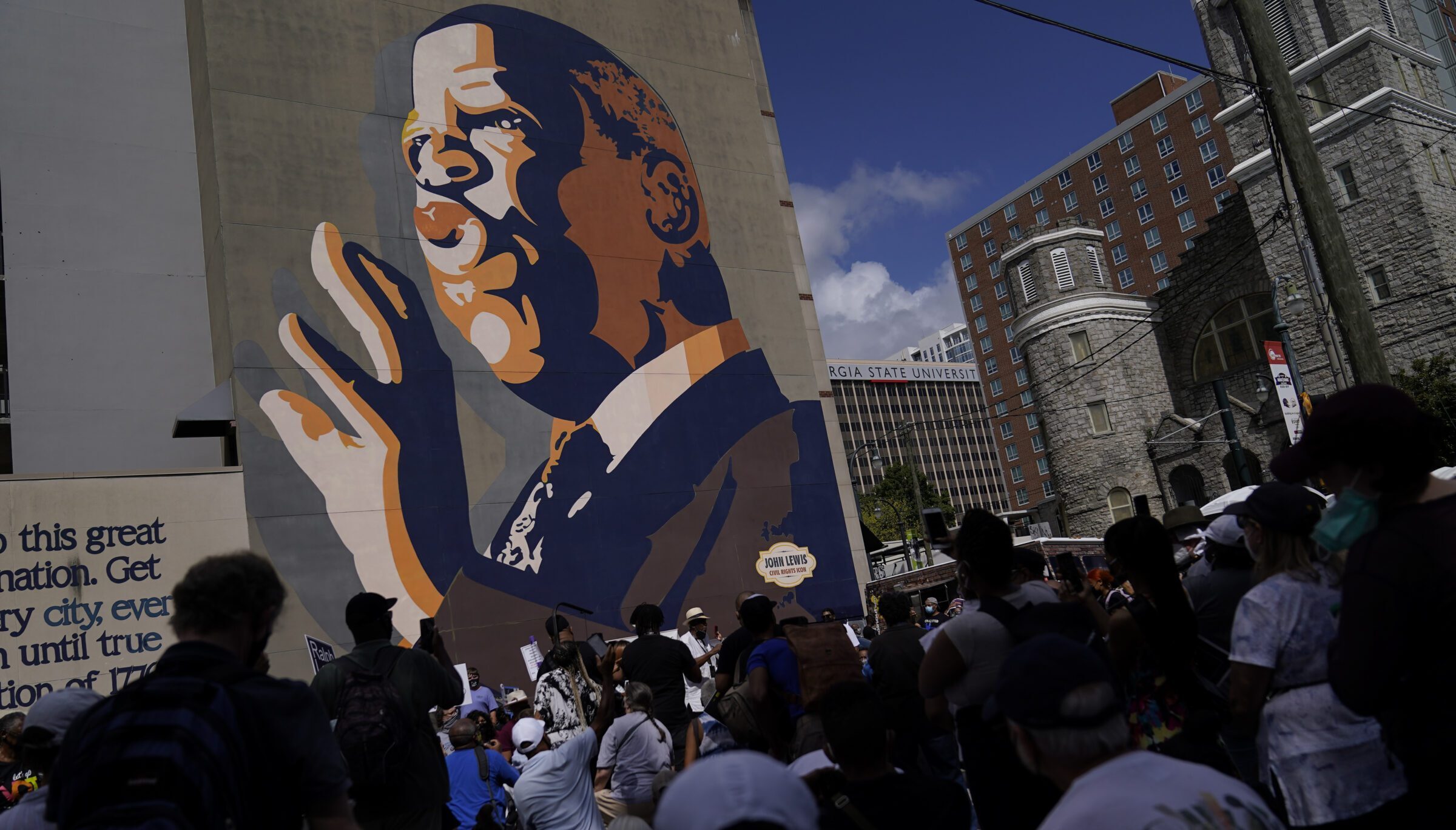
A pair of unusually heated Georgia Supreme Court elections grew even more consequential on Wednesday, when the U.S. Supreme Court dramatically weakened the Voting Rights Act with a 6-3 decision in Louisiana vs. Callais—effectively inviting states to overhaul their election laws and pursue a fresh round of gerrymandering.
Within hours of the ruling, prominent Republicans called for the adoption of new maps that could gut Black political representation in Georgia, which already has a long history of limiting Black voting power.
The Callais decision comes as no surprise to the candidates in Georgia’s May 19 judicial elections, who told Bolts in interviews ahead of the decision that they were preparing for such a ruling, and that they expected it would hand the Georgia Supreme Court, like its counterparts in the rest of the country, greater responsibility on matters of election law.
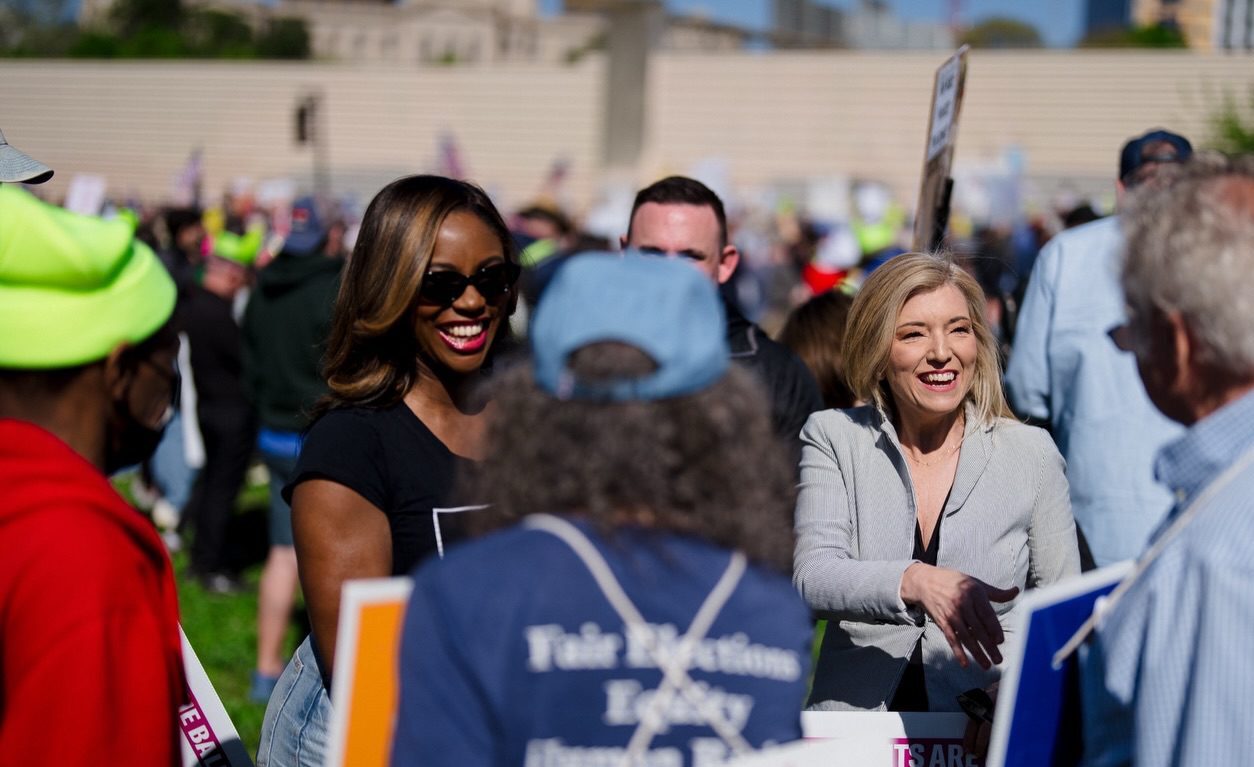
Two liberal lawyers, former Democratic state Senator Jen Jordan and personal injury attorney Miracle Rankin, are seeking to oust Justices Sarah Warren and Charlie Bethel, respectively, and all but Warren agreed to interviews with Bolts. The elections are officially nonpartisan, but the challengers are running with Democratic Party backing, while Governor Brian Kemp and other Republicans have rallied around the incumbents.
In a post-Callais America, Jordan told Bolts, “People are going to have to start bringing more and more of these challenges to the state court system … I’m looking forward at what’s going to be coming down the pike in terms of democracy or election challenges.”
“Pro-democracy, pro-people justices—that’s the majority I would like to see,” she said.
Bethel, one of the incumbents, agreed that the case could land more voting rights issues in state courts, telling Bolts, “A lot of questions that have been litigated and understood through a federal lens are likely to come into the state system.”
For more stories on voting rights
subscribe to our newsletter
Bethel, a former Republican state lawmaker who has sat on the supreme court since 2018, added, “I suspect that they will also come with a lot of interest from various legislatures and legislators on revisiting state voting systems that for more than a generation have been unattended. We’ll then be called upon to look at what that means.”
Bethel declined to comment on how he’d approach voting rights cases, saying, “It’s not for me to have a view as a person about when should there be more or less ballot access, or when should there be more or less anything, from a policy standpoint.”
His opponent, Rankin, took another tack, telling Bolts that all levels of government should protect the right to vote.
“In order for us to have a fair democracy, we have to be able to hear the electorate, and I personally believe that the electorate should not be blocked in trying to make sure they can vote fairly, and there shouldn’t be unreasonable obstacles in place to block the vote,” she said.
Voting rights were already at particular issue in this election and in this state, where Donald Trump in 2020 famously pressured officials to “find” votes to overturn his defeat that year—and where now, six years later, Trump’s administration is laying groundwork for a fresh round of interference by investigating the election office in liberal Fulton County. Though Georgia Republicans rebuffed Trump’s efforts in 2020, they subsequently passed laws that restricted voter access and mail voting.
The challengers, Jordan and Rankin, have run on a promise to be more aggressive than their opponents in defense of democracy. They’ve also called out Georgia’s election rules for protecting incumbents.
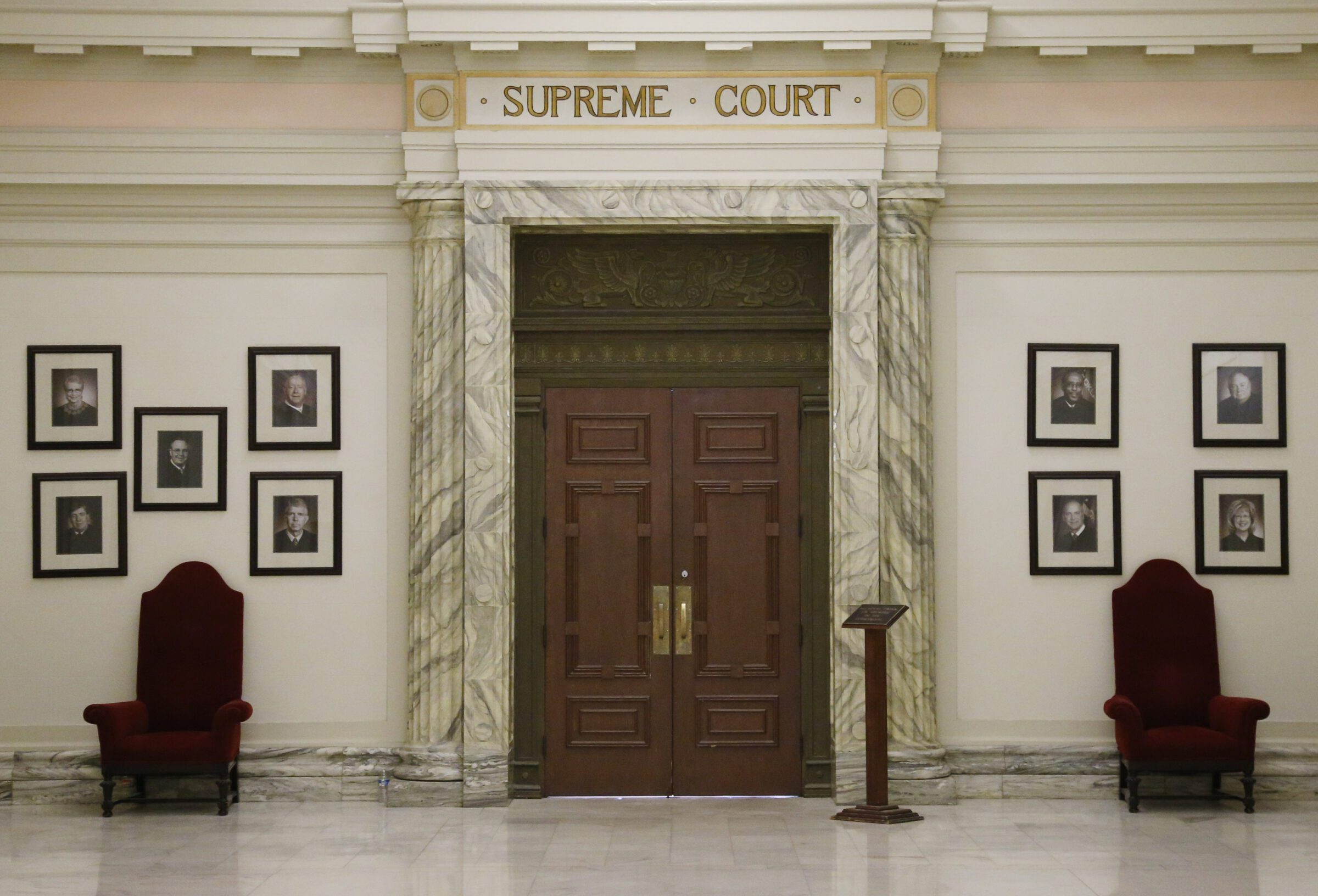
No justice on the Georgia Supreme Court has lost an election in more than 100 years. That is in part the product of an election system that shields judges from competition, limits voter turnout, and, today, has left this swing state with a high court dominated by GOP appointees.
Eight of Georgia’s nine sitting justices, including Bethel and Warren, were originally appointed by Republican governors, and they have delivered conservative outcomes in key areas.
“We’re anticipating that more and more we’ll need to build up a jurisprudence in the state courts,” said Andrea Young, executive director of the ACLU of Georgia, “and right now we have a Georgia Supreme Court that’s not very sympathetic to civil rights in general.”
Young is frustrated especially by this court’s record on abortion. The justices reinstated a six-week ban on abortion in 2024 in a 6-1 decision, with Bethel and Warren in the majority. The lone dissent came from the sole justice who was not originally appointed by a GOP governor, but instead elected by voters directly.
Democracy cases, meanwhile, have had mixed results.
In a setback last year for Trump allies looking to overhaul the state’s elections, this court issued a unanimous ruling that mostly struck down a series of rule changes proposed by the Republican-controlled state elections board. The changes sought to impose strict new, MAGA-aligned standards on voters and election administrators, including by requiring hand-counting of some ballots and by allowing local officials to delay certification of election results.
“We applauded that [ruling],” said DeMitris Causer, a Georgia native and voting rights attorney for the NAACP’s Legal Defense Fund. “I can put some semblance of faith that we’ll find an independent judiciary here, especially when it comes to our voting rights, that I wouldn’t have in the U.S. Supreme Court or other state courts.”
But this court has also disappointed voting rights advocates. Importantly, it played an instrumental role in shielding Donald Trump from criminal punishment for his efforts to overturn his election defeat in Georgia in 2020.
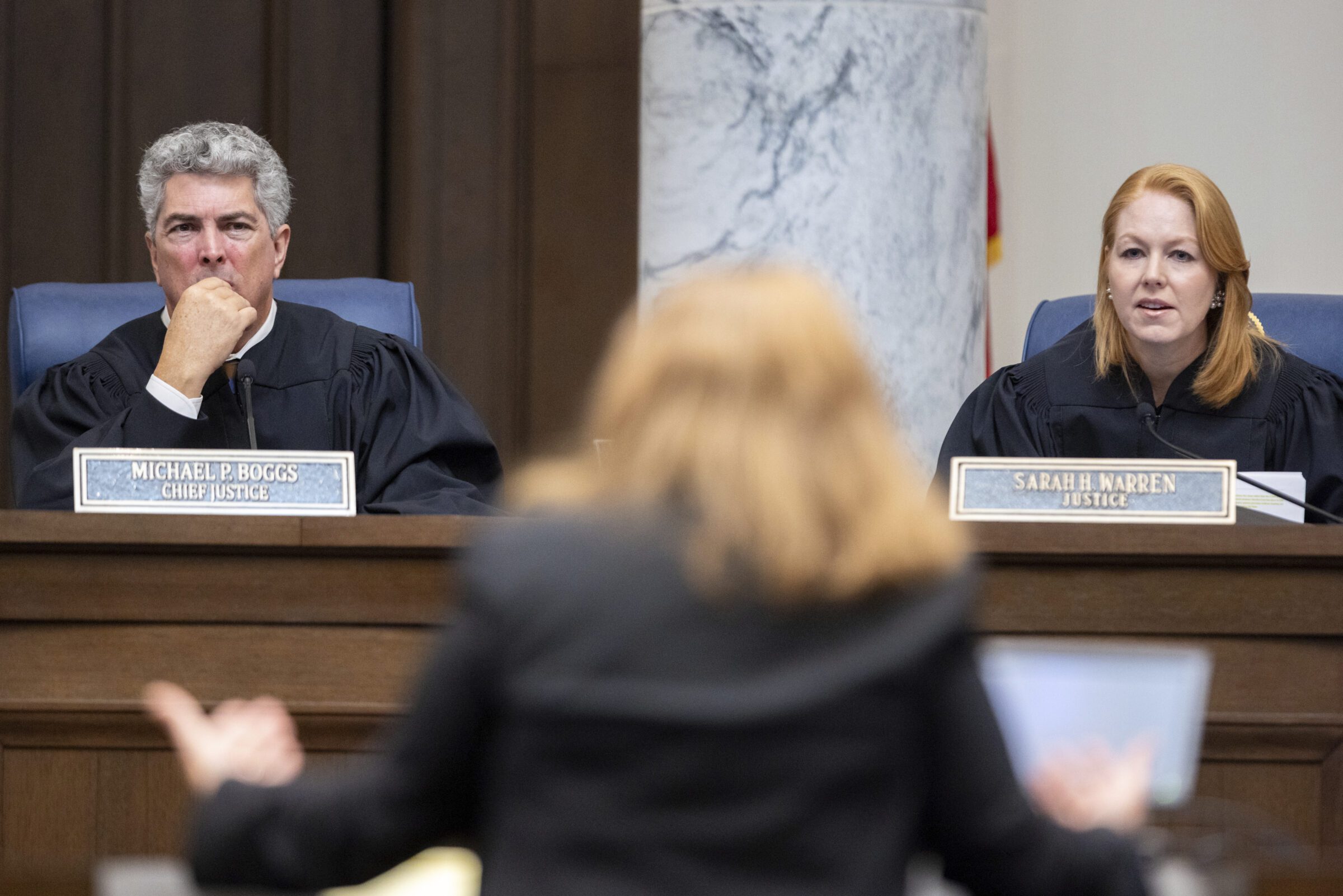
It did so in September 2024 in a 4-3 decision, with Bethel and Warren both in the majority, in which it declined to intervene in Fulton County District Attorney Fani Willis’ request for permission to prosecute Trump. A lower court had disqualified Willis on the grounds of an “appearance of impropriety” due to her romantic relationship to a special prosecutor in that case. When the state supreme court declined to hear her appeal, it cemented that disqualification. The case against Trump was dropped altogether shortly thereafter.
Jordan takes issue with that ruling. “It was clearly a political decision that was done for specific results: namely, getting rid of the prosecution of Donald Trump,” she said.
Then, the day before the 2024 elections, the court ruled 5-3, with Bethel and Warren again in the majority, to deny relief to some 3,000 Atlanta-area absentee voters whose ballot access was thwarted when election officials failed to mail out their ballots in a timely manner.
Speaking generally on voter access, Jordan said, “We should always be trying to expand the franchise, and not restrict it.” New restrictions on voters, she added, “need to be evaluated very, very critically.” Jordan was still a lawmaker in 2021 when the state GOP restricted mail voting and ballot drop boxes and set up criminal penalties for bringing refreshments to people waiting in line to vote; Jordan voted against the legislation.
This court also helped limit voter access to the court itself, in a 2020 ruling that expanded the secretary of state’s power to cancel judicial elections.
The case stemmed from Justice Keith Blackwell’s announcement in February of that year that he would resign in November, just weeks before his term was due to end. Blackwell had been due to face two challengers in May, but when he announced his plans to step down in the future, five months after voters were set to weigh in, state officials said the election should be postponed until 2022. Blackwell’s opponents sued to keep the election on the ballot, but the state’s high court sided against them in a 6-2 ruling, with Warren in the majority. (Bethel recused himself from this case).
“Anybody who is thinking about running has to run the risk that they pull out the rug from under you,” one of the candidates for Blackwell’s seat, John Barrow, told Bolts in 2022.
The dissenters in that case warned that this ruling could even allow a justice to resign after they’ve already lost an election, in the lame-duck period, so that the governor could nullify the result and preempt the winner from joining the bench. A local judge tried to do just that in December 2024, pleading with Kemp to accept his resignation to cancel his reelection loss from earlier that year; Kemp refused, and the judge committed suicide on his last day in office.
Jordan and Rankin both criticized Georgia’s loophole. Jordan called it “ridiculous” and said she’s concerned that Warren could lose in May but then resign, and that Kemp could then attempt to appoint a replacement, effectively nullifying her win.
Warren, in addition to declining an interview request, also declined to respond to written questions.
Rankin said she has faith that this scenario will not take place in her race, and Bethel pledged to Bolts that he would serve out his full term, whether or not he wins next month.
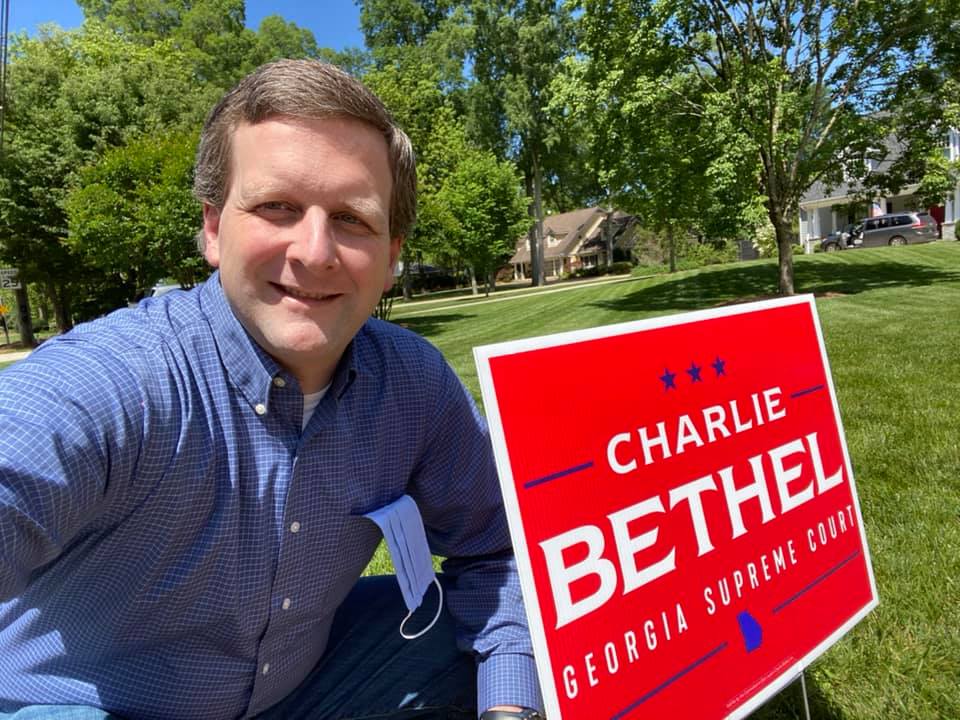
The specter of canceled elections only compounds concerns about the state’s system for judicial elections. Georgia holds supreme court races during springtime primaries of even years, when turnout is routinely less than half as large as it is during the November elections that follow, and many voters are not paying attention, especially independents who don’t care to participate in the more visible party primaries. Most supreme court races in Georgia are uncontested: Over the last decade, sitting justices have run unopposed in 11 of the state’s 15 elections.
“It’s unbeknownst to many Georgians that we even elect supreme court justices, and many years pass before there’s an election for the court,” said Causer, the Legal Defense Fund attorney. “That kind of produces some atrophy within our collective consciences about elected positions within the state.”
Would-be candidates, Rankin told Bolts, have felt it’s “taboo” to run against sitting judges. But, she added, “When you’re in unprecedented times, it requires unprecedented actions.”
Asked to elaborate on these “unprecedented times,” Rankin pointed immediately to abortion.
“I am a young woman that’s of child-bearing age still,” she said. “My daughter is living in a world right now where she has less rights than what I was born into. I also have less rights.”
This issue helped motivate her to run for state supreme court—and to be open about her beliefs in order to “let the citizens of the state know what our beliefs and values are.”
Jordan and Rankin both oppose the state’s restrictions on abortion, and have made that stance a feature of their campaign messaging. Planned Parenthood has made a nearly million-dollar ad buy this election in support of the challengers, the Atlanta Journal-Constitution reported in a story last week that tallied atypically high spending in general this cycle.
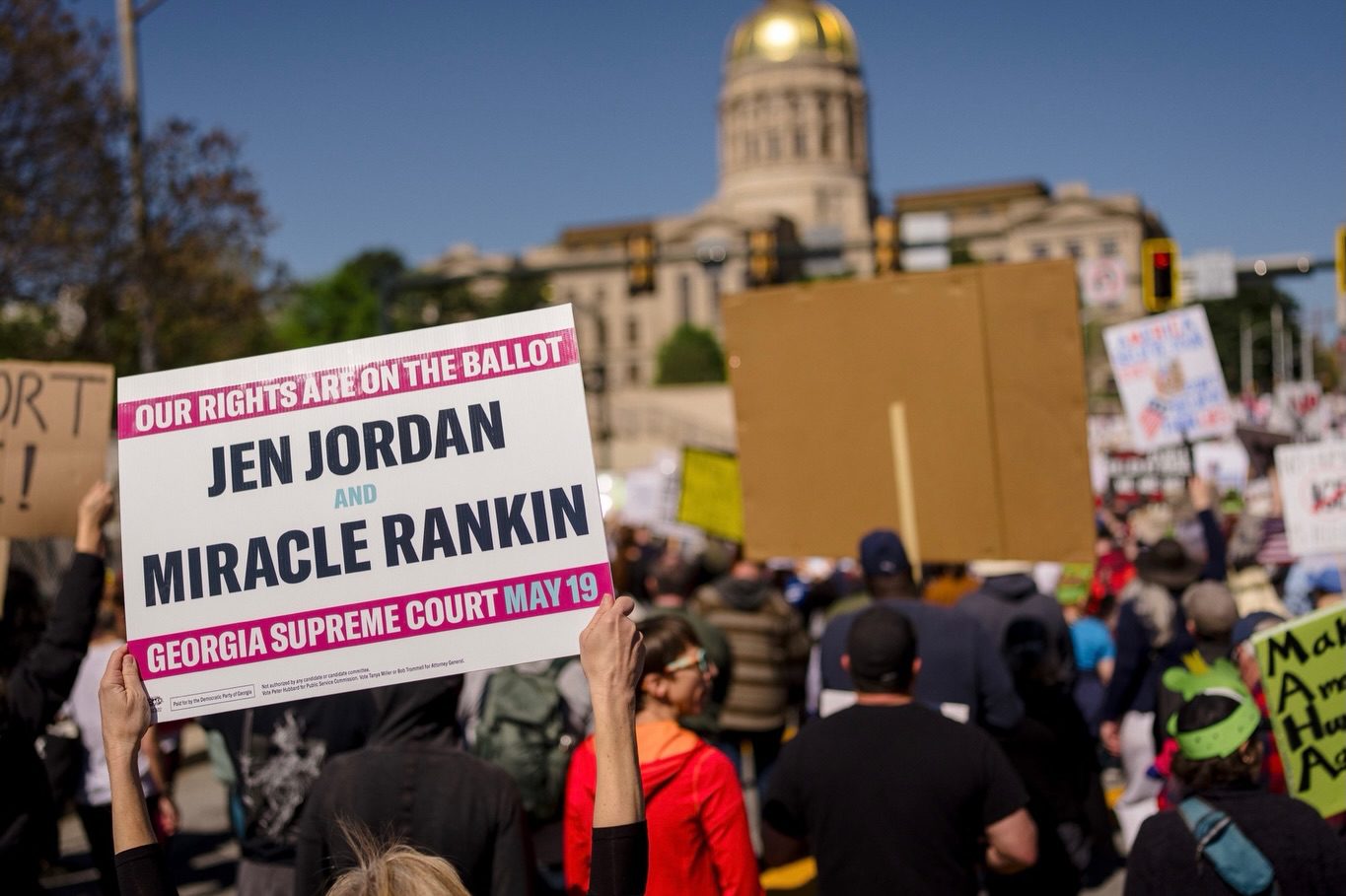
Bethel, Warren, and their liberal opponents are joined by a fifth candidate this year: Ben Land, a Kemp appointee who has no opponent and so is guaranteed to retain his seat.
Jordan and Rankin both told Bolts that, win or lose, they hope this cycle kicks off a new era for a court that has so rarely been subject to any election competition, and that more candidates and voters start to treat it as the important elected body that it is.
Three more Georgia justices come up for election in 2028, meaning that a victory from this year’s challengers could even open a longshot path for a liberal majority on the court ahead of that year’s presidential election.
By 2028, it’s entirely possible that Georgia’s high court will already have heard important election cases. Voting rights advocates are bracing for that, and Causer said he hopes this moment catalyzes greater voter interest in the judiciary and its system of elections.
“Imagine a world where the process for electing state supreme court justices is no longer statewide,” Causer said. “Imagine a world where Republicans gerrymander the hell out of Georgia. It’s a battle I pray we never have to fight, but it’s very much possible in a post-Callais world.”
Sign up and stay up-to-date
Get timely updates about pressing stories and elections.
Support us
Bolts is a non-profit newsroom that relies on donations, and it takes resources to produce this work. If you appreciate our value, become a monthly donor or make a contribution.