
The Most Overlooked But Wide-Reaching Office on the Los Angeles Ballot
Voters face a stark choice between two candidates in the race for city attorney, an office with a large mandate from policing homelessness to enforcing consumer and tenant protections.
| September 28, 2026
In June, when Hydee Feldstein Soto became the first Los Angeles city attorney to lose a primary reelection race in nearly 100 years, her ouster put the spotlight on an office that is as consequential as it is obscure to most Angelenos.
The city attorney is, simultaneously, a legal advisor, a public interest litigator, a prosecutor of low-level crimes, and a defense attorney—where they find themselves in the strange position of having to defend their client, the city of LA, against their own constituents. Staffed with more than 500 lawyers, the office could theoretically, in a single day, file a lawsuit against the Trump administration, prosecute an unhoused person for violating an open container law, advise the department of water and power on a complex legal matter, sue a local slumlord, and defend an LAPD officer accused of violating a civilian’s constitutional rights.
It is, to say the least, a “difficult balancing act,” according to Sergio Perez, a civil rights attorney who has worked extensively on oversight and transparency issues within LA local government.
As the office responsible for defending the city from lawsuits, the city attorney is the end of the line for policy and budget choices that result in unsafe infrastructure, or violations by city employees, including LAPD officers; the city paid out $289 million dollars in civil settlements and verdicts in fiscal year 2024, a significant factor in its public debt. And yet, despite all this, “The seat is often viewed as a place where, as an attorney and as an elected official, you can sort of cool your heels, wait for another spot to open up,” Perez told Bolts.
For more on local elections
Sign up to our newsletter
That may be changing, as Feldstein Soto’s loss indicates. Her tenure has been marked by turbulence and scandal: She has presided over rapidly rising lawsuit payouts for issues like the excessive police force and civil rights violations, has run up a massive tab on outside counsel, was accused of retaliating against her senior staff, allegedly dropped a price-gouging case filed by a deputy city attorney against one of her campaign donors, aggressively pursued a lawsuit against a journalist for obtaining information via public records requests, and tried to terminate Stay Housed LA, a funding stream for organizations that help people keep their housing.
When Angelenos select Feldstein Soto’s replacement in November, they will face a stark choice between two candidates with very different backgrounds and visions for the office. The race is nonpartisan, but each of the leading candidates has emphasized distinct aspects of the city attorney’s powers that correlate with different political priorities.
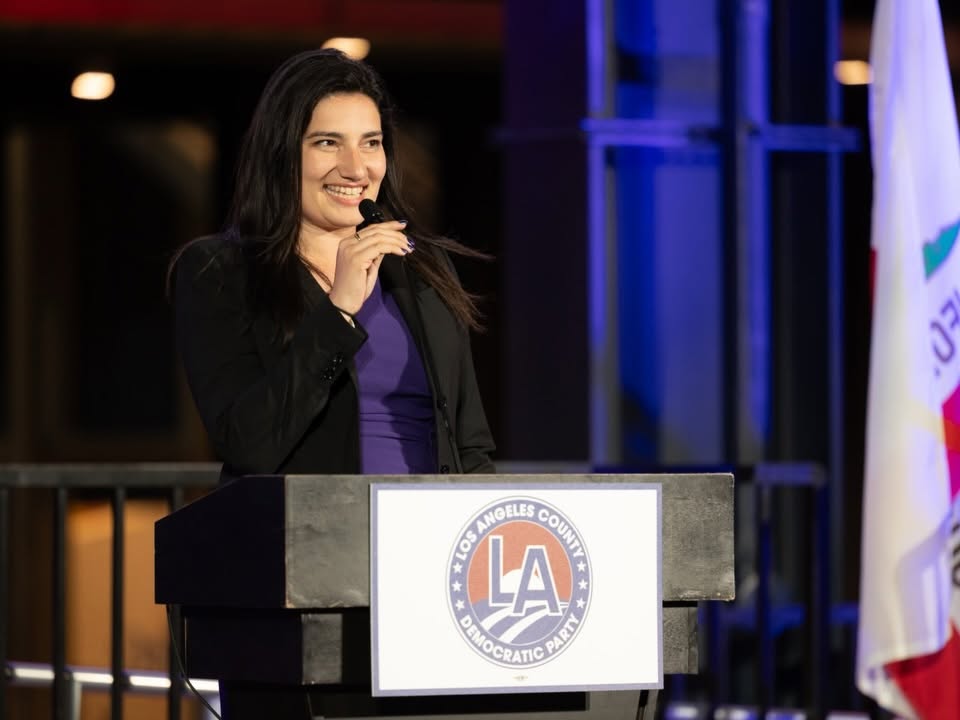
Marissa Roy, a deputy attorney general at the California Department of Justice who has been endorsed by local labor unions, the LA County Democratic Party, and the local chapter of the Democratic Socialists of America, has branded herself “the people’s lawyer” and centered her campaign around the power of the city attorney to improve people’s lives through affirmative litigation. Roy came in first in the primary with 43 percent of the vote.
“The people who are having their wages stolen, who are having to work two to three jobs to get by, the tenants who are being forced to live in uninhabitable conditions, who are being harassed out of their rent-stabilized housing—it shouldn’t fall on their shoulders to take on these corporate goliaths,” she told Bolts.
Roy’s opponent is John McKinney, the director of specialized prosecutions for the LA county district attorney’s office who ran unsuccessfully for DA in 2024, and has emphasized cracking down on crime in his bid for city attorney. He has vowed to more vigorously prosecute illegal gun possession, a crime that can be charged as a misdemeanor in California, and to ramp up enforcement of offenses related to homelessness, which he has called “an albatross around the neck of this city.” He has the support of DA Nathan Hochman, who ousted the county’s progressive chief prosecutor two years ago, as well as several past DAs; he is also endorsed by the Los Angeles Police Protective League, a local police union.
The next leader will get to determine which of its areas of focus receive staffing and resources. But an equally interesting test will be how they attend to those parts of the office that don’t jibe as naturally with their background or the interests of their supporters.
While Roy has focused her campaign around public interest work to better protect the residents of Los Angeles, this currently represents only a small percentage of the office’s function; far more resources are devoted to prosecuting low-level crimes committed by Angelenos. McKinney, meanwhile, would have a great deal of power to shape how misdemeanor crime is prosecuted in LA, with potentially huge consequences for LA’s houseless population. But his campaign promises to defend tenants’ rights and proactively reduce city liability would likely put him into conflict with the LA police union and the landlord and real estate interests that are supporting him.
And whoever is elected will have to determine what course to chart when the role’s duties—to the city itself, its various entities, its employees, and its residents—inevitably come into conflict.
Much of the harm done to workers, consumers, tenants, and the general public in Los Angeles currently happens not because the law allows it, but rather because the laws on the books are not being enforced.
Los Angeles is often referred to as the “wage theft capital” of the US: with an average of $1.6 to $2.5 billion in wages stolen from workers every year through a variety of tactics including employee misclassification, offering workers less than minimum wage or refusing to pay overtime, and denying required breaks and meal time.
Housing advocates lament a similar situation for tenants’ rights. In 2021, the city council passed a tenant anti-harassment ordinance that aims to curb landlord practices like refusing to accept rent payments in order to try to evict a tenant, entering a home without notice, or failing to perform necessary repairs. It’s up to the city attorney to use this ordinance to press charges, but five years and some 23,000 official tenant complaints later, the city attorney’s office has only taken action on a handful of cases.
The only landlord who has been criminally charged under the ordinance is Nela Petrusan, whom various tenants have accused of lighting a car belonging to a tenant on fire, menacing them with a rifle, threatening to call ICE, and siccing her pit bull on them, causing serious injuries. (Petrusan has denied any wrongdoing.) “It seems to take this level of violence up to the point of death for the city to even kind of like make a case and take it seriously,” David Albright, an organizer with the LA Tenants Union who works with Petrusan’s tenants, told Bolts. “This is just one situation, but across Los Angeles, tenants are being harassed, are living in deadly, uninhabitable conditions, and we don’t think that the city attorney’s office takes that seriously at all.”
But even charging a landlord under the tenant anti-harassment ordinance “doesn’t necessarily yield anything for the tenants,” Albright cautioned. “These landlords who are negligent, who are abusive, have [an] enormous amount of power over working class people’s lives.” He is calling on the next city attorney to ramp up its use of civil seizure—exercising the city’s right to temporarily take control of properties in order to target the property owner’s ability to continue to do business. When asked by Bolts about the proposal, Roy declined to endorse civil seizure as a tactic but said that “every single remedy is on the table.”
Roy has vowed to “transform” the LA city attorney’s office into the “largest public interest law firm in the city,” using the office’s prosecutorial powers to hold abusive landlords to account; she said she similarly wants to go after businesses that pollute the environment and steal wages.
Feldstein Soto consolidated the office’s public rights work into one department, but there are fewer attorneys dedicated to this work than before her tenure, according to one veteran city attorney who spoke with Bolts for this piece—just 26 out of around 500 total. Still, it is one of the few divisions within the office that has the capacity—and desire—to take on more cases.
These attorneys “often face headwinds when [they] want to get cases pitched or approved,” Roy told Bolts, adding that lawyers in the public rights division have told her “they are feeling very tied down right now, and they want to be able to do more.” She hopes to eventually expand the division to 100 lawyers, noting that, since some California public rights laws award civil penalties to the winner of a case, the expansion could pay for itself.
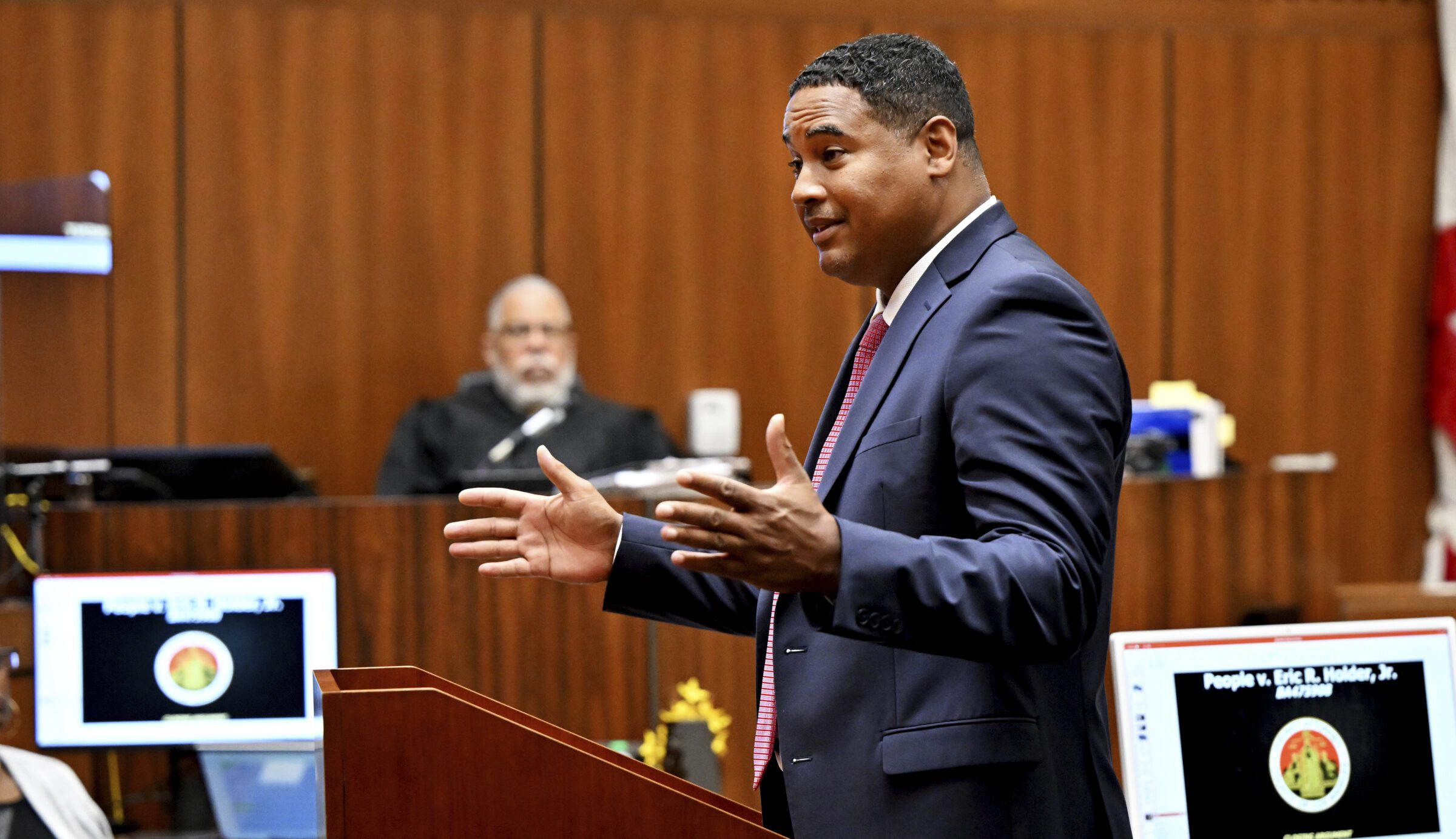
McKinney’s plan to protect tenants proposes beefing up endorsement of existing laws, including the tenant anti-harassment ordinance and state anti-price gouging laws. He argues that the “core responsibilities” of civil litigation are the same as with a criminal case, telling Bolts, “Unlike Marissa Roy, I bring decades of direct courtroom experience to the office.”
McKinney is receiving considerable financial support from real estate and corporate interests that are spending to defeat Roy; a committee sponsored by Airbnb, for instance, has donated $2.1 million towards McKinney’s election. McKinney did not respond directly to a request for comment about how he would navigate such conflicts in office.
Roy says she was “expecting a blowback” for her positions from corporate and real estate interests. “That shouldn’t deter anyone,” she told Bolts. “I have not been shy, the entire campaign, saying that I am going to sue abusive corporations, that I am going to sue abusive landlords.”
The city attorney also has to act, quite literally, as the city’s attorney—and this is where “the different set of hats that the city attorney has to wear at any given moment really come into conflict,” Perez told Bolts.
In addition to advising the city on legal matters, the city attorney acts as counsel for Los Angeles city employees and departments who have been sued. The top source of expensive lawsuits by far is the LAPD, which alone accounted for some $435 million in payouts between fiscal year 2020 and the end of 2025, including $188 million for civil rights violations and excessive or unlawful force.
In the past, Los Angeles officials have appeared to regard these massive outlays as the price of doing business. So has the LAPD itself: Last year the department declined to respond to LA Public Press’s questions about whether they monitor settlement patterns to try to identify and prevent future harm, saying only, “The department is always looking at ways to reduce risk and liability.”
The city attorney’s role as counsel to the LAPD’s chief and the city’s police commission gives them influence over how the department conducts its business, but no past city attorney in recent memory has sought to meaningfully shift the department’s approach, in Perez’s view. “If you look at the constant flow of lawsuits and the persistent lack of apparent change in LAPD culture, of which the city attorney’s office plays a role in shaping and safeguarding, I think the grade you’ve got to give the city attorney’s office is an F,” he said.
“What really disturbs and frustrates me is the number of times we see repeat lawsuits,” Roy told Bolts. She believes that the city attorney can still defend the city while putting pressure on the department to stop systemic violations, with the goal of both preventing future harm, and reducing future liability payouts.
“When the city is the defendant, you still have to remember that on the other side is your constituent,” she told Bolts. “I do think it comes down to representing the people of Los Angeles in those ‘confidential’ spaces where no one is watching,” Perez said, but it’s a challenge to balance those more diffuse interests with those of the actual clients who are in the room—“and that’s where you often see things fall apart.”
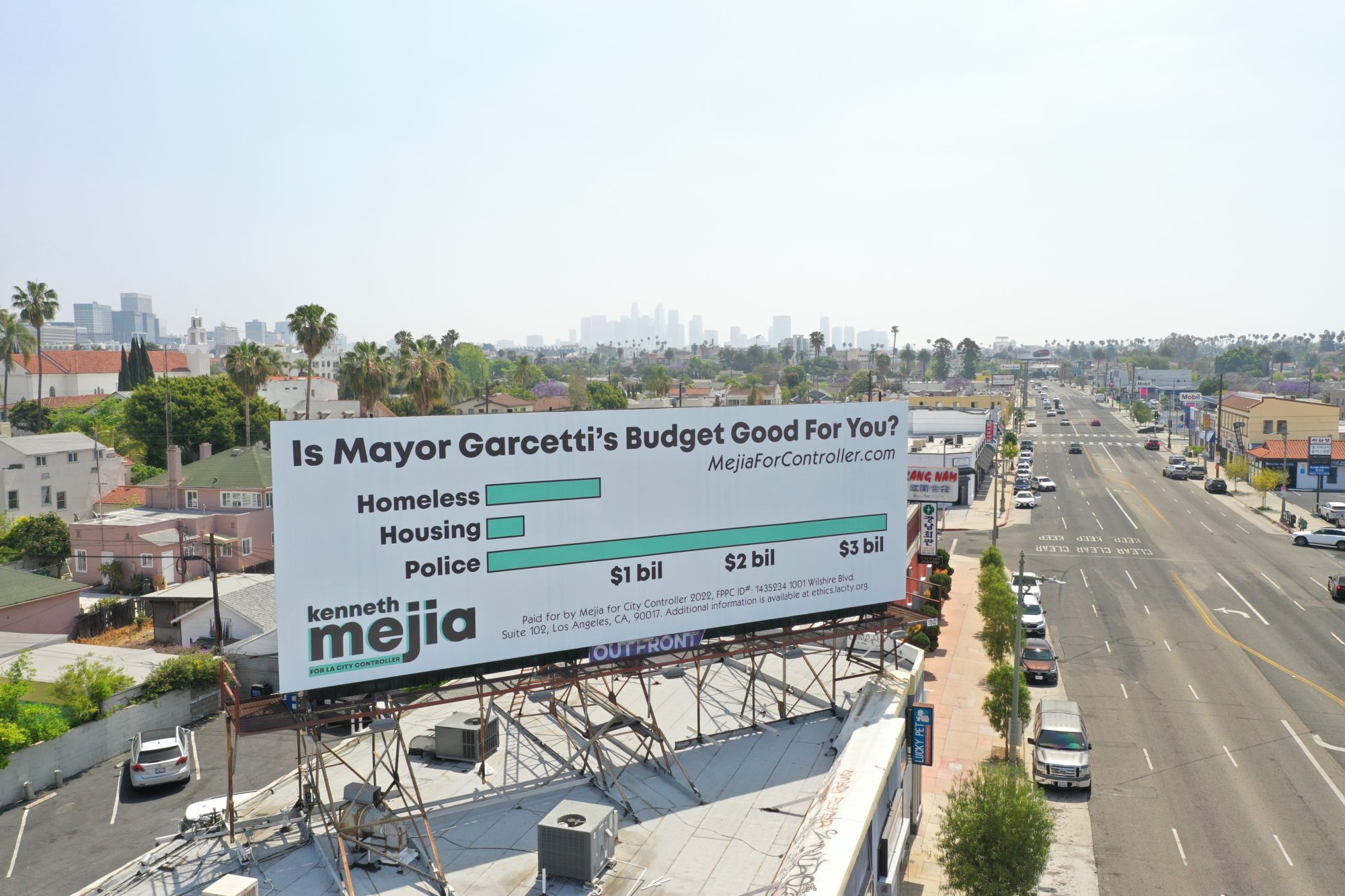
Roy has proposed teaming up with City Controller Kenneth Mejia, a progressive official who created a liability dashboard that visualizes the city’s payouts and has undertaken a “risk management audit” to try to identify the patterns and warning signs that precede lawsuits.
Mejia has clashed with the current city attorney after Feldstein Soto blocked him from investigating Mayor Karen Bass’s signature anti-homelessness program and a controversial homeless services nonprofit. Roy said she would hand over data from the office readily so that Mejia could perform an LAPD liability audit, and then use its lessons to ensure proactive compliance from the department.
She also hopes to work with Mejia to analyze data on dangerous conditions lawsuits, which make up the largest category of claims against the city, in order to present information to the city council that they might be able to use to make different choices about resource allocation. “When we don’t spend, for example, $200,000 on streetlamp repair, how much is it costing us in lawsuits?” she asked. “Having a number like that could help justify to the council why we need to invest in our infrastructure.”
McKinney has also criticized the rise in lawsuit payouts under Feldstein Soto. On his website, he endorses working “proactively with city departments to identify legal risks before they turn into costly litigation.” He did not respond specifically to Bolts’ question about how he would advise the LAPD to curb its use of excessive force and civil rights violations.
At present, the biggest department of the city attorney’s office—by far—is its criminal branch. The office is tasked with prosecuting misdemeanors, which has in recent years put the city attorney at the forefront of the debates over LA’s ongoing homelessness crisis.
A 2024 Human Rights Watch report found that homeless people in LA are disproportionately charged with misdemeanors compared to the broader population—and the disparity for citations and infractions is even greater. This is in part because of municipal ordinances explicitly targeting homeless people that prohibit camping or having bulky items in public, but also because certain crimes, like open container laws, are almost exclusively enforced against unhoused people.
John Raphling, the author of the Human Rights Watch report and an organizer with the LA Community Action Network, told Bolts that a city attorney who wanted to curb the criminalization of homelessness could stop filing charges for crimes correlated with street homelessness unless there are aggravating circumstances. Past LA city attorneys’ charging decisions have influenced LAPD street enforcement: in 2013, then-city attorney Mike Feuer announced that he would treat a long list of minor crimes as infractions rather than misdemeanors, including violations of LA’s controversial 41.18 ordinance, which prohibits sitting, lying, or sleeping in designated public areas. In response to this, the LAPD sent out a memo telling officers to do the same.
This reform was ultimately limited: Raphling noted that infractions carry many of the same consequences, and that police are still using the ordinance as a pretext to start encounters with unhoused people that may end in other forms of criminalization. In their capacity as city counsel, Raphling said, “the city attorney should be advising the police to back off of criminalization in all of its forms, both from the arrests and citations to the generally coercive encounters or coercive contacts that they’re having.”
Roy told Bolts she would eschew a “one size fits all approach” and would not commit to foregoing prosecution of certain categories of crimes, a staple of former DA George Gascón’s.
Her campaign told Bolts that she would ramp up diversions for people accused of nonviolent offenses correlated with homelessness, saying, “evidence shows diversion programs that address root causes have more impact than cycling people between jails and our streets.” She declined to say whether she would assign any prosecutors away from the misdemeanor division.
McKinney has emphasized his experience as a felony prosecutor, putting the office’s powers over misdemeanor criminal cases front and center. He says it’s important to connect homeless people to resources but also frames unsheltered homelessness as a public safety issue, highlighting the dangers of encampments and proposing “compassionate accountability.”
While he ran for DA in 2024, McKinney released a platform that pledged to ramp up the prosecution of low-level offenses associated with homelessness: “Under my leadership we will return to prosecuting misdemeanors like loitering, resisting arrest, open drug use, vandalism, and drug possession.” Bolts asked McKinney’s campaign if he would do the same as city attorney. He declined to respond specifically, but said he would “enforc[e] city laws regarding public camping and unhoused individuals firmly and fairly” and “balance the ability for residents and businesses to operate as well on clear sidewalks with no impediments.”
Homelessness has also been the central issue animating the Los Angeles mayoral race between incumbent Karen Bass and progressive challenger Nithya Raman. Much of the debate has come down to funding for programs, and the best strategies to get people off the street and into shelter. But as Angelenos go to the ballot box to choose a mayor who will set LA’s broader vision for homelessness policy, they’ll also be selecting a city attorney whose advisory role will shape that policy into the future—and whose approach to enforcement will have consequences for LA’s homeless population on day one.
Ultimately, no matter whether Roy or McKinney is elected, Raphling hopes that the next city attorney will be guided by “what’s actually going to be good policy that’s going to help people get out of houselessness and help the city resolve the problem—as opposed to what’s going to satisfy this group of wealthy homeowners who have an agenda related to their own property values.”
Sign up and stay up-to-date
Get timely updates about pressing stories and elections.
Support us
Bolts is a non-profit newsroom that relies on donations, and it takes resources to produce this work. If you appreciate our value, become a monthly donor or make a contribution.
Related Posts

Auditing the Status Quo in Los Angeles