
This Maine Lawsuit is Testing the Boundaries of Suing Federal Immigration Agents
Federal law makes it very difficult to file lawsuits against federal officers, but some states have adopted their own laws to give people a so-called cause of action to sue.
| July 7, 2026
One morning in late January, civil engineer Juan Sebastián Carvajal-Muñoz was driving to work in Portland, Maine, when federal agents in town for the so-called Operation Catch of the Day immigration crackdown boxed in his car, smashed his window, and shackled him, allegedly refusing to look at his work visa as they locked him in a windowless cell in Massachusetts. Hours later, he was released without explanation about a hundred miles from home, at night.
Although Carvajal-Muñoz had a valid visa to be in the country, he alleges that immigration agents falsely arrested him for hours, violating his Fourth and Fifth Amendment rights to equal protection and due process.
His experience is far from exceptional: Scenes like this have played out all across the country in recent months as the Trump administration has engaged in broad, violent arrest operations that have caught citizens and immigrants alike in the dragnet. And while federal judges have restricted aspects of this effort, released people from detention, and even ordered the return of people who were deported, there are surprisingly limited avenues for someone like Carvajal-Muñoz to receive redress once their constitutional rights have already been violated.
Now, lawyers and state lawmakers are vying to change that by leaning on state law to constrain federal overreach. Illinois and New York have passed new statutes since Donald Trump’s return to office to allow people to file civil lawsuits against individuals, including federal agents, who violated their constitutional rights; lawmakers elsewhere have filed similar bills. And in some states that already had laws on the books allowing people to sue public officials for damages—including Maine’s Civil Rights Act and California’s Tom Bane Act, each over 30 years old—plaintiffs are now trying to flex them in lawsuits against federal agents.
This spring, Carvajal-Muñoz used that Maine law to sue the federal agents who arrested him, saying in his complaint that the Maine Civil Rights Act “provides a state-law cause of action for violations of the federal constitution by federal officers.” In so doing, he is serving as an early test of the legal theory that these state-level statutes could serve to constrain ICE agents.
Carvajal-Muñoz’s lawsuit is one of several active cases to lean on state law to sue federal officials for damages; another is a case out of California, in which a print shop owner René Quiñonez is alleging that USPS officials violated that state’s Bane Act by unconstitutionally seizing shipments. Jaba Tsitsuashvili, an attorney at the Institute for Justice working on that case, told Bolts: “There is a kind of a bellwether feel here.”
“In the past, we’ve had scenarios where the states were violating people’s rights and the federal government had to step in and use its remedial tools,” he said. “We’re in a kind of reverse situation right now, where you see these federal rights violations, and it’s an opportunity for the states to step in.”
The issue states are stepping in on is that federal law makes it very difficult for someone to successfully bring a lawsuit against a federal officer when their rights are violated.
Congress in the Reconstruction era created a provision known as Section 1983 that allowed individuals to sue state and local officials on constitutional grounds, but it left out federal officials. In 1971, the U.S. Supreme Court ruled in a case known as Bivens v. Six Unknown Federal Narcotics Agents that a man named Webster Bivens could sue federal narcotics officers for a warrantless search of his home. That created a so-called cause of action for people to bring civil suits against federal agents, in some circumstances.
But the court has since dramatically narrowed the criteria for when Bivens claims could be brought, all but foreclosing that possibility for most would-be plaintiffs. In particular, the court has repeatedly rejected lawsuits against Border Patrol agents, for instance refusing to let a Bivens claim move forward in the case of an officer who shot and killed a teenager at the Border in 2010.
For more about states and immigration enforcement
Subscribe to our newsletter
What some states are trying to do in response is ensure that there’s some pathway—some cause of action—for individuals to sue federal agents. And if that’s not going to be found in federal law or in the standards set by the Bivens case, then they’re setting it up in state law.
Their laws need not create new rules for federal agents to meet. They’re only reiterating what agents already have to do—follow the U.S. Constitution and its constraints—while giving the residents of those states a way to actually hold them to it.
“It is arguably more challenging in 2026 to sue a federal actor for money damages if they violate your constitutional rights than it has been at any other point in American history. There is simply no consistent, reliable mechanism,” said Harrison Stark, director of special projects with the State Democracy Research Initiative at the University of Wisconsin Law School, who has researched the issue and been involved in filing amicus briefs around it. “The idea behind these laws is there is an unfortunate remedial gap in the American constitutional landscape.”
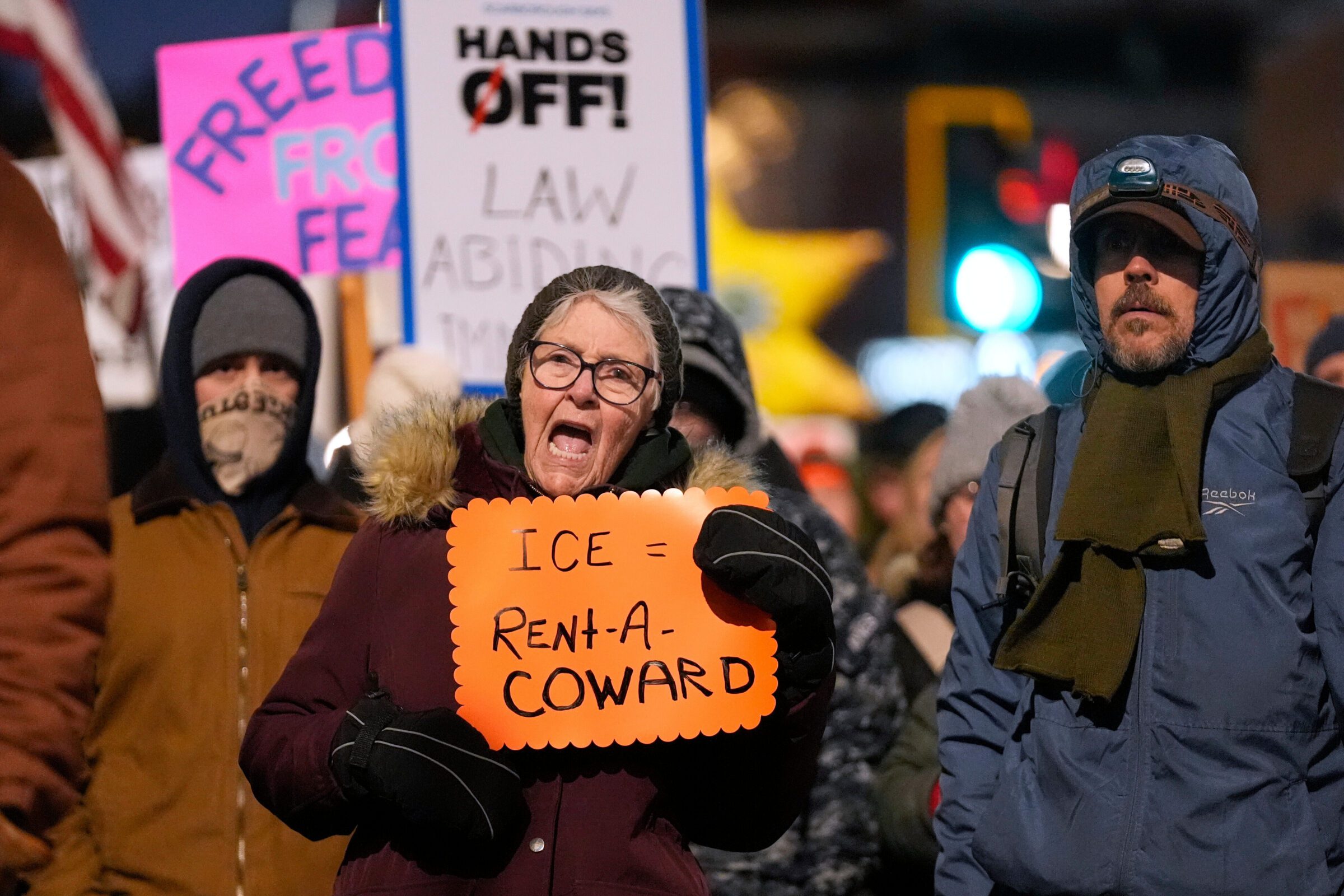
Carvajal-Muñoz, who is being represented by the ACLU, is still invoking Bivens, as well as the Federal Tort Claims Act, in his civil suit against the federal agents who arrested him. His attorneys argue that both of these should provide enough standing. But they hope that, even if a judge doesn’t agree and would otherwise throw the case out, his claims could still proceed in federal court under the Maine Civil Rights Act alone.
While state law is usually contested in state courts, federal law removes legal action against federal officers to federal courts and generally gives federal courts original jurisdiction over constitutional questions, meaning that even cases brought only under these state laws would be heard in federal courts.
“Mr. Carvajal was being abducted during the 15 hours that he spent in ICE custody, he did not have the opportunity to find a lawyer and run to court and say, ‘Stop. Stop detaining me. Release me,’” Scott Michelman, legal director of the ACLU of D.C., who is representing Carvajal-Muñoz, told Bolts. “All we can do now is, after the fact, try to get him compensation for his ordeal and also, through that compensation, try to deter further unconstitutional aggression by federal officers.”
Michelman is very familiar with just how difficult it is to sue federal officers using federal law. Following the infamous 2020 clearing of D.C.’s Lafayette Square of police reform protesters, after which Trump stood for a photo op at St. John’s Church, the ACLU helped sue federal officials for violations of the First Amendment. While federal judges allowed lawsuits against local police to move forward, they threw out claims against their federal counterparts—some standing literally side by side with local police—under the rationale that they could not clear the strict Bivens criteria.
“What’s at stake is whether people can sue for violations of their constitutional rights in one of the nation’s most important public forums,” Michelman said at the time. Federal courts answered him with a resounding no—at least for a jurisdiction like D.C. that did not have its own cause of action.
In Maine’s Civil Rights Act, Michelman hopes to have found a legal grounding that can withstand federal courts’ disregard for Bivens.
The California case also involves the 2020 protests in the aftermath of the killing of George Floyd. In that instance, René Quiñonez, the owner of a small screen-printing business in Oakland, had tried to ship boxes of masks with BLM-associated slogans like “STOP KILLING BLACK PEOPLE” to organizers around the state via the U.S. Postal Service. A USPS clerk and then U.S. Postal Inspectors set aside and seized the boxes without explanation, prompting Quiñonez to sue for violations of the First and Fourth Amendments.
Here, too, the suit was brought under both federal and state grounds, though the plaintiffs are really hanging their hat on California’s civil rights law. Tsitsuashvili, the Institute for Justice attorney, thinks the suit is at the “forefront” of this type of litigation.
“In our case, it’s pretty clear that it’s state law remedies or nothing, because the federal remedies—the Federal Tort Claims Act, the kind of moribund Bivens remedy—they are almost certainly off the table,” he said.
In an early setback, a district court threw the case out in January 2023, ruling that a law known as the Westfall Act limited Quiñonez’s ability to sue. The law, which limits when and how people can sue federal officials, was passed in 1988 in response to a Supreme Court decision that had allowed federal employees to face individual civil liability for certain actions, setting off a panic that they would face floods of lawsuits for things they did on the job. The plaintiffs are now appealing to the Ninth Circuit, pointing out that the Westfall Act carves out liability for constitutional violations specifically and that California’s Bane Act only enables lawsuits on constitutional grounds. The circuit court has yet to rule on the appeal.
Carvajal-Muñoz’s case, filed in April before the District Court of Maine, remains in early days and it is unlikely to see any rulings for several months.
For Stark, at University of Wisconsin Law School, these statutes are a return to form, drawing on a time when state common law was used to hold federal officials accountable before roughly the late 19th century. “The originalism case for these kinds of laws is very strong, even for a jurisprudence that may otherwise be skeptical of something like mask bans or other more novel attempts for states to limit immigration enforcement or federal law enforcement in some way,” he said. “States enforcing the Constitution has a very strong historical pedigree.”
State legislators elsewhere have taken notice and passed their own versions of Maine and California’s older legislation as part of broader packages meant to push back against the federal government’s overreach under the second Trump administration.
Illinois lawmakers named the legislation they passed late last year, which allowed people to file civil lawsuits against federal agents and created a state-level cause of action, the Illinois Bivens Act, emphasizing that it was meant to fill the legal void left by the narrowing of the 1971 Bivens case. (The Trump administration is now suing over Illinois’ law for discriminating against the federal government, as it only applies to situations involving civil immigration enforcement.)
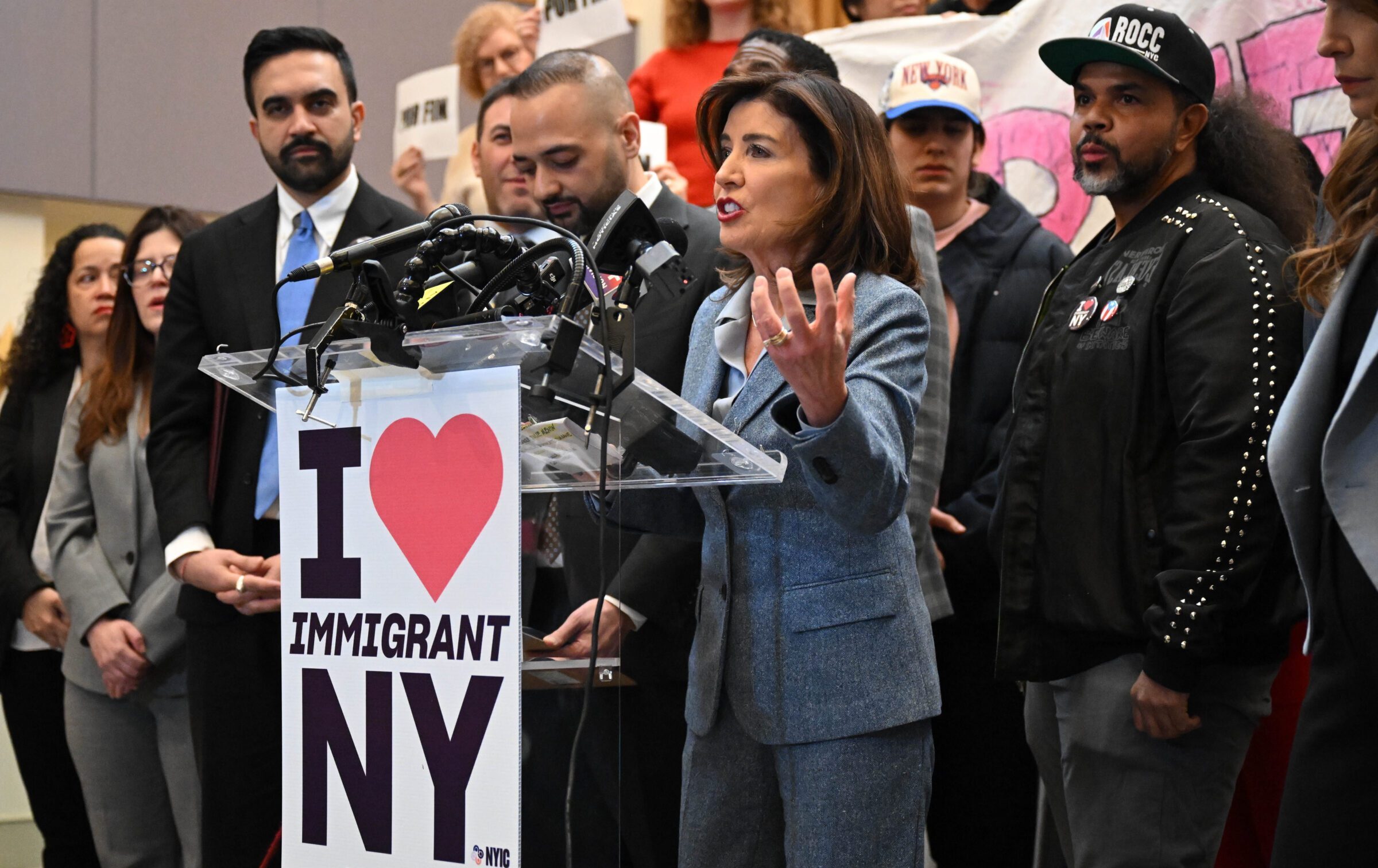
New York lawmakers did the same, passing the New York State Bivens Act this spring as part of their budget negotiations.
The New York bill was sponsored by Senator Zellnor Myrie, a Democrat from Brooklyn. “I started doing some court watching at [the immigration court in] 26 Federal Plaza, and I had obviously been seeing and hearing what was happening, but it was a jarring experience to see in person,” Myrie told Bolts.
“This is one of the things I am more proud of in my eight years here in the state Senate, because of what the implications are,” he added. “It isn’t just about this snapshot in history, and the turmoil, and the chaos, and the fear that people are feeling, but it is a longer view of, what does it mean to be a part of this country, and what does the Constitution mean at all.”
Other states are considering similar legislation. In Washington, state Representative My-Linh Thai said she began working on a state bill after George Floyd’s murder that would allow people to sue law enforcement officers and ban qualified immunity, which is the doctrine that protects officers from civil suits unless there’s clear precedent established in a prior case. She says the effort was initially not well-received among her colleagues in part because other lawmakers felt that the potential lawsuits brought against state law enforcement would be a financial burden.
Thai also recalls some law enforcement officials coming to her office and “asked me point blank, ‘why do you expect me to know people’s constitutional rights? My job is to make sure I’m protecting public safety.’” She says she was in disbelief—but that things have now changed under Trump.
“Fast forward, now we are under a regime, this administration that blatantly violates constitutional rights left and right across the nation, so I’m delighted to see that there seems to be a political will to get this work going,” she said, adding that she hopes that the bill will be acted upon in the 2027 session.
Proponents of these bills say one reason they’ve struggled to build momentum is that they can seem very inside baseball; the average person might intuitively understand what it means for a state to, for example, ban 287(g) agreements, and for local law enforcement to refuse to collaborate with federal immigration enforcement. But making arguments about individual constitutional causes of action to circumvent the Supreme Court’s narrowing of Bivens, under a certain interpretation of the Westfall Act, as it intersects with state law—it all becomes very arcane very quickly, and comprehension can fall apart.
“The Supreme Court has been tearing Bivens apart for almost 10 years now, and this has not been a subject that has risen to the level of national outrage that it deserves, because it’s a very technical subject,” said Michelman, of the ACLU. “It’s not about what the Constitution means. It’s about whether the Constitution can be enforced”
Yet the brazen approach of federal operations under Trump has gotten more people to think about how, exactly, they could vindicate their rights. Stark, at University of Wisconsin Law, agrees.
“Most Americans, in their everyday lives, are not interacting with federal law enforcement officials… I don’t think that many state legislators are hearing from their constituents, not hearing complaints historically, of widespread constitutional violations by federal law enforcement,” he said. But that has now been shifting.
Myrie also emphasized that these laws could be useful well beyond the immigration enforcement context. He pointed to “the First Amendment context, where we potentially see retaliation against speech that is disfavored by a federal administration, or people being treated unequally because they are of a certain religion.” He speculated that media organizations and higher education institutions might be able to use the law to bring suit against federal officials for punishing criticism or making funding contingent on certain viewpoints, for example.
Ultimately, the goal of all of these state civil rights laws, new and old, is only to create a viable path for individuals to bring a civil suit in the first place, not to guarantee that these lawsuits will be successful. Federal officials retain plenty of ways to ward off these lawsuits, including the ever-popular qualified immunity doctrine. Plaintiffs would need to prove that agents acted clearly outside the scope of their duties, among other things. Limits to qualified immunity would present their own legal and political issues.
But the uncertainty of the ultimate legal outcome is not dissuading state lawmakers from moving forward. “The federal administration, they’re doing things that are unprecedented every day,” said New York’s Myrie. “They are not constrained by history or precedent in their direction, and I think that that is something we should be doing in the other direction, and fighting pretty hard.”
Sign up and stay up-to-date
Get timely updates about pressing stories and elections.
Support us
Bolts is a non-profit newsroom that relies on donations, and it takes resources to produce this work. If you appreciate our value, become a monthly donor or make a contribution.