After Years of Runaway Spending, Alaskans Vote to Reinstate Cap on Campaign Donations
The success of Measure 1 brings back campaign contribution limits after a court ruling ended them. But the reform can't stop the cash flow to elections via outside political groups.
| August 19, 2026
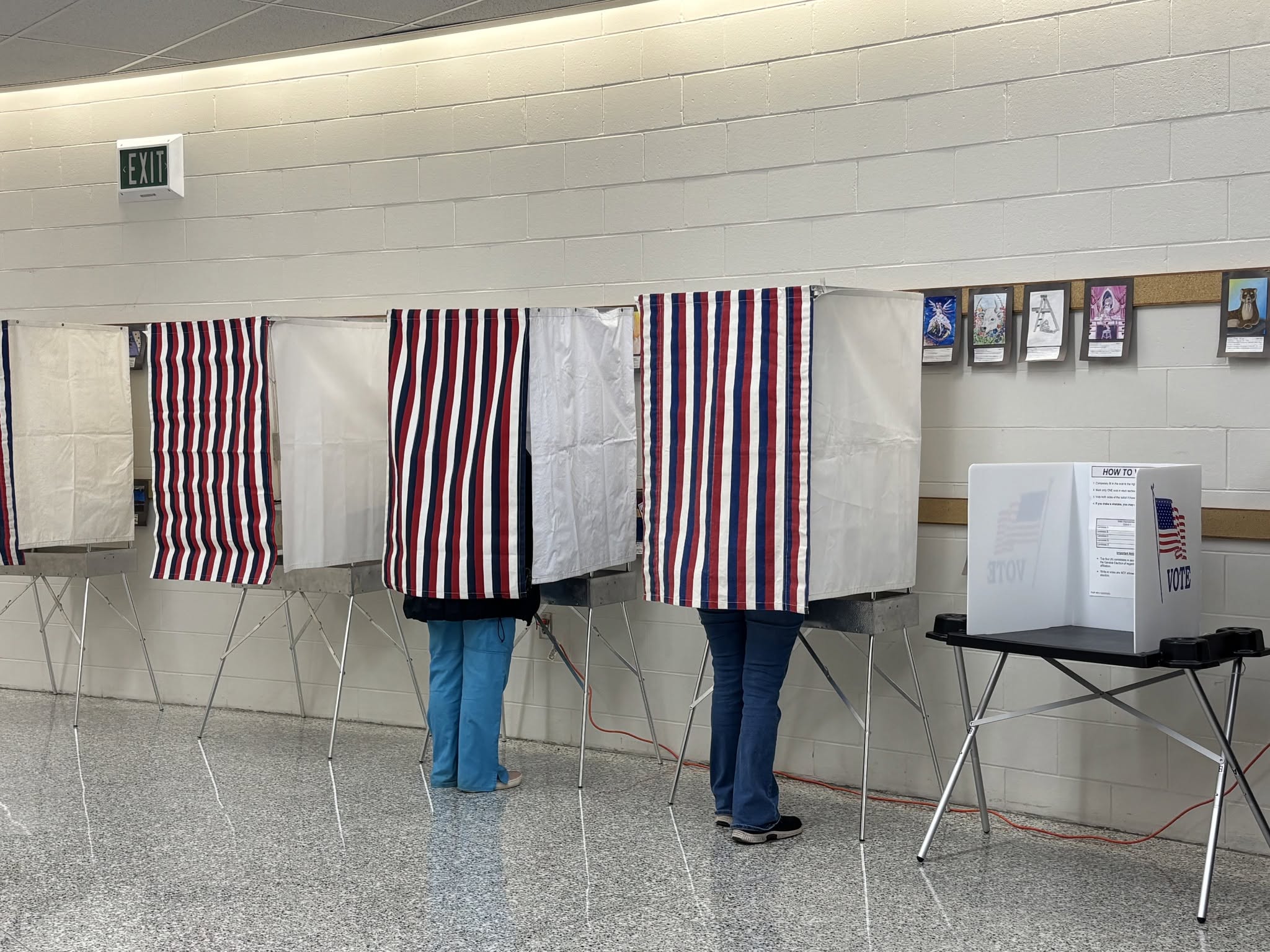
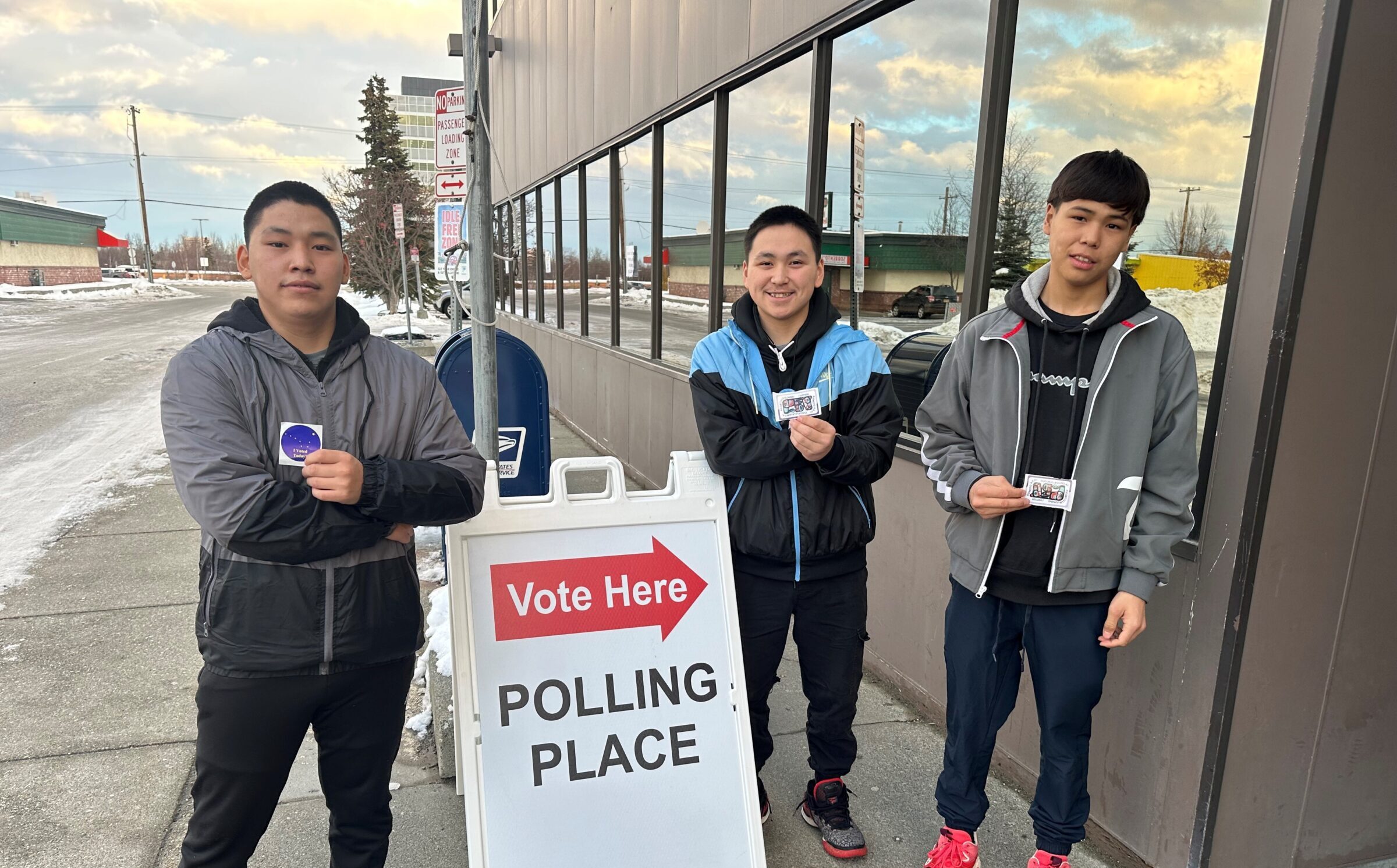
Five years after a federal court ruling introduced unlimited spending in Alaska elections, voters there hit back on Tuesday, defying their Republican governor and approving new limits that restrict the ability of rich donors to bankroll candidates.
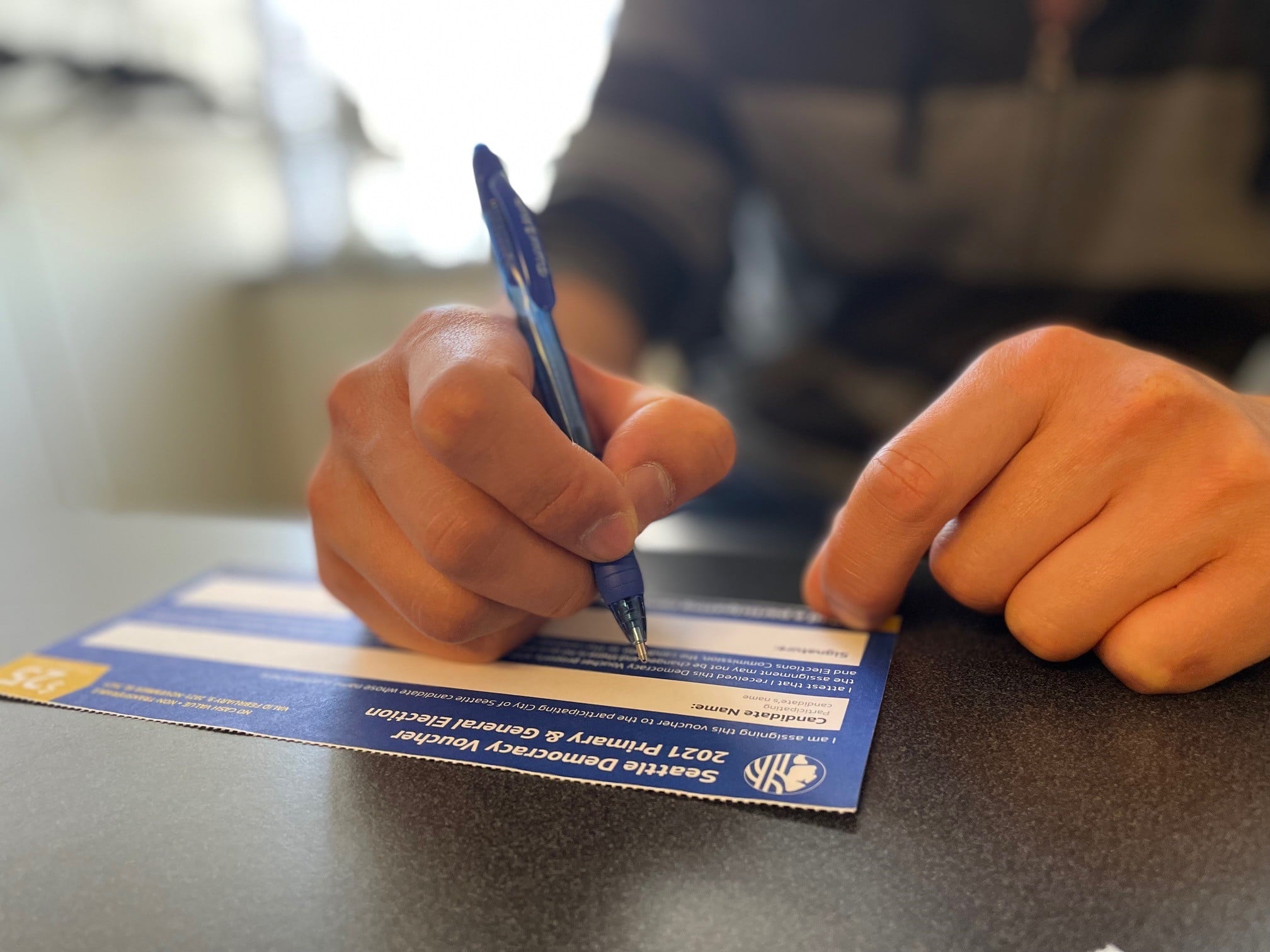
Ballot Measure 1, a citizen initiative that caps donations to individual candidates at $2,000 per person per year, with a $4,000 cap on donations to governor-lieutenant governor tickets, passed easily. It leads 71 to 29 percent as of Wednesday morning.
This measure would never have been voted on in the first place, but for the fact that Republican Governor Mike Dunleavy last month vetoed a bill to impose the very caps proposed by Measure 1. Because that bill was substantially similar to Measure 1, the measure would have been cancelled had Dunleavy signed it; his veto ensured the matter would be put to voters, who on Tuesday left no question about where they stand.
“They have endorsed the principle that the person who is elected is everyone’s representative, and not someone’s investment,” Bruce Botelho, the former state attorney general who helped lead this initiative, told Bolts late Tuesday night.
For more elections news
subscribe to the Bolts newsletter
Alaska has a tradition of going further than other states to limit big money in elections. In 2006, voters there overwhelmingly approved a donations cap of $500 per person per year for state elections. As of 2020, this was the strictest cap in the U.S.
But everything changed in Alaska in 2021, when the 9th U.S. Circuit Court of Appeals, responding to a Republican lawsuit, struck down those limits as unconstitutional. Alaska instantly went from having the country’s lowest donation limits to having no limits at all, and it had remained in that position until Tuesday.
Alaska’s reform leaves just 11 states that allow unlimited donations to candidates. Many others have extremely high caps; California, for example, lets individuals donate up to $39,200 to gubernatorial candidates, while New Hampshire allows individuals to give up to $15,000 to candidates for any state office.
In striking down Alaska’s previous limits, the 9th Circuit had taken issue both with the extraordinarily low cap installed by the 2006 ballot measure, and with the fact that Alaska had no mechanism to adjust the cap to inflation over time.
Tuesday’s Measure 1 appears to resolve both of those concerns: The new donation caps bring Alaska roughly in line with much of the country, and Measure 1 allows for these caps to be adjusted for inflation once every decade, beginning in 2031. Measure 1’s limits apply only to state elections; Federal Elections Commission guidelines still apply in this and every other state, imposing a donation cap of $3,500 per person, per election to candidates seeking federal office.
Measure 1 shared the ballot Tuesday with various primary elections in Alaska, including a 17-person open race for governor that laid bare the effects of the 2021 decision at the 9th Circuit. The Anchorage Daily News reports some candidates in the race have enjoyed heaps of five- and six-figure individual donations, many of which have come from out-of-state donors.
Two Democrats, Jonathan Kreiss-Tompkins and Tom Begich, advanced to the four-way general election in November. They’ll be joined in that election by two Republicans, though the race for those third and fourth spots on the ballot was too close to call as of Wednesday morning.
Many candidates enjoyed huge individual donations from wealthy backers; Begich, for instance, got more than $600,000 from just two donors, the Daily News found, which would be impossible under the new limits.
The last time Alaska held an open race for governor—in 2018, when Alaska’s previous donation cap was still in effect—candidates combined to spend about $1.6 million total leading up to that year’s November election. This year, with no cap, total spending on the governor’s race had already surpassed $10 million before the primary was even held, with millions more sure to be spent through November.
“The floodgates are open,” independent state Representative Calvin Schrage, who helped lead the campaign in favor of Measure 1, said last month at a legislative hearing on the proposal. “When a single donor can spend hundreds of thousands or even millions of dollars on a single candidate, it creates a dangerous environment.
“It not only grants undue influence to the ultrawealthy, but it also exposes our elected officials to the risk and perception of quid pro quo corruption,” Schrage said during the hearing.
But even the backers of Measure 1 understand that this reform cannot alone stop rich donors from spending lavishly to influence Alaska politics. That’s because donors will retain the ability to give unlimited cash to outside groups, like independent expenditure committees, which can in turn use that money to campaign for or against candidates and issues. Those groups legally cannot coordinate with campaigns or candidates.
One such group, Fair Deal Alaska, spent $800,000 this cycle to boost two little-known candidates in Tuesday’s U.S. Senate primary, Alaska Public Media reported. Those candidates, neither of whom actually lives in Alaska, combined to receive less than 1 percent of the vote.
In another recent example of unlimited outside spending in Alaska, Elon Musk gave $1.5 million last month to a Wisconsin-based PAC supporting a conservative-backed initiative, Measure 2, on the ballot in November to repeal ranked-choice voting and open primaries in Alaska. Conservatives, irked by Democrat Mary Peltola’s victory in the 2022 ranked-choice election for Alaska’s sole U.S. House seat, tried this repeal already in 2024, losing by only 0.2 percent.
This latest repeal attempt, which Donald Trump has endorsed based on the lie that ranked-choice voting is “very fraudulent,” slips in another significant provision: In addition to eliminating ranked-choice voting and open primaries, it would also eliminate Alaska’s “true source” law requiring individuals and groups to disclose their identities when giving $2,000 or more in political contributions. Without this guardrail, donors like Musk could give unlimited amounts of dark money without ever having to identify themselves.
The official campaign in favor of Measure 2, Repeal Now, conspicuously makes no mention on its site of the fact that its initiative includes repealing this “true source” law.
Ruth Hall, deputy manager for the campaign against Measure 2, told Bolts, “That Musk donation really shines a light on how important transparency is.”
Since the 9th Circuit struck down Alaska’s previous donation cap, she said, “we haven’t had any limits on the amount of money people can spend—but what we did require, and do require, is that you say who you are and where you’re from,” when spending big on elections.
Measure 2 will be joined on November’s ballot by yet another GOP-backed election proposal: Measure 3, which would amend state law to specify that states that non-citizens cannot vote in Alaska elections. Non-citizens are already banned from voting in Alaska—even though the state itself has often erroneously registered non-citizens to vote—and so Measure 3 simply reiterates existing policy and would not actually change state election laws.
Measure 1, meanwhile, does represent a big change, even as Alaskans and campaign finance watchdogs seem to agree that it alone cannot stop rich donors from influencing elections in Alaska; it will likely just re-route money to outside groups.
“It does not take money out of politics, which I think we can agree is an admirable goal. It changes where the money goes,” Ben Carpenter, a Republican former state representative who opposed Measure 1, testified during an August legislative hearing.
Proponents of Measure 1 noted a similar point.
“This in no way affects the ability of super PACs or independent expenditure groups to set themselves up,” said Botelho, Alaska’s former attorney general, who also served as mayor of Juneau.
Still, he and other proponents of Measure 1—and, evidently, a supermajority of Alaska voters—agree the change is better than nothing. The federal judiciary, in Citizens United and other cases, has defined unlimited outside spending as a form of political free speech, which has opened up state and federal elections to enormous outside spending by mega-donors, much of which is dark money. Before Citizens United, during the 2006 election cycle, outside groups spent $70 million on federal elections nationwide, according to OpenSecrets. In 2024, the figure topped $4.2 billion.
Botelho said the campaign to install new individual spending caps in Alaska would also like to limit outside spending, but that it saw no levers to pull. “We may have had early ambitions about trying to do something further, but we very quickly did not explore them,” he said.
Indeed, no state has successfully imposed direct spending limits on outside groups since Citizens United. Montana tried in 2012, but the reform was struck down by the U.S. Supreme Court.
“We’ve seen the phenomenon, primarily out of Montana, of the idea of limiting corporate involvement in political campaigning,” Botelho said. “That’s something I think would be determined to be unconstitutional, so we did not spend a lot of time trying to figure out how we could solve the entire system.”
Correction (Aug. 19, 2026): A previous version of this article misidentified Measure 3 as a proposed constitutional amendment. It is a ballot initiative to amend state statute.
Sign up and stay up-to-date
Get timely updates about pressing stories and elections.
Support us
Bolts is a non-profit newsroom that relies on donations, and it takes resources to produce this work. If you appreciate our value, become a monthly donor or make a contribution.
Related Posts
Americans by Name, Punished for Believing It