
Missourians Veto New Gerrymander, and Make It Trickier for GOP to Adopt Another
Republicans had tried, unsuccessfully, to dismantle a Kansas City-based district. Voters also retained one of the justices who blocked the new gerrymander from being used this fall.
| November 4, 2026
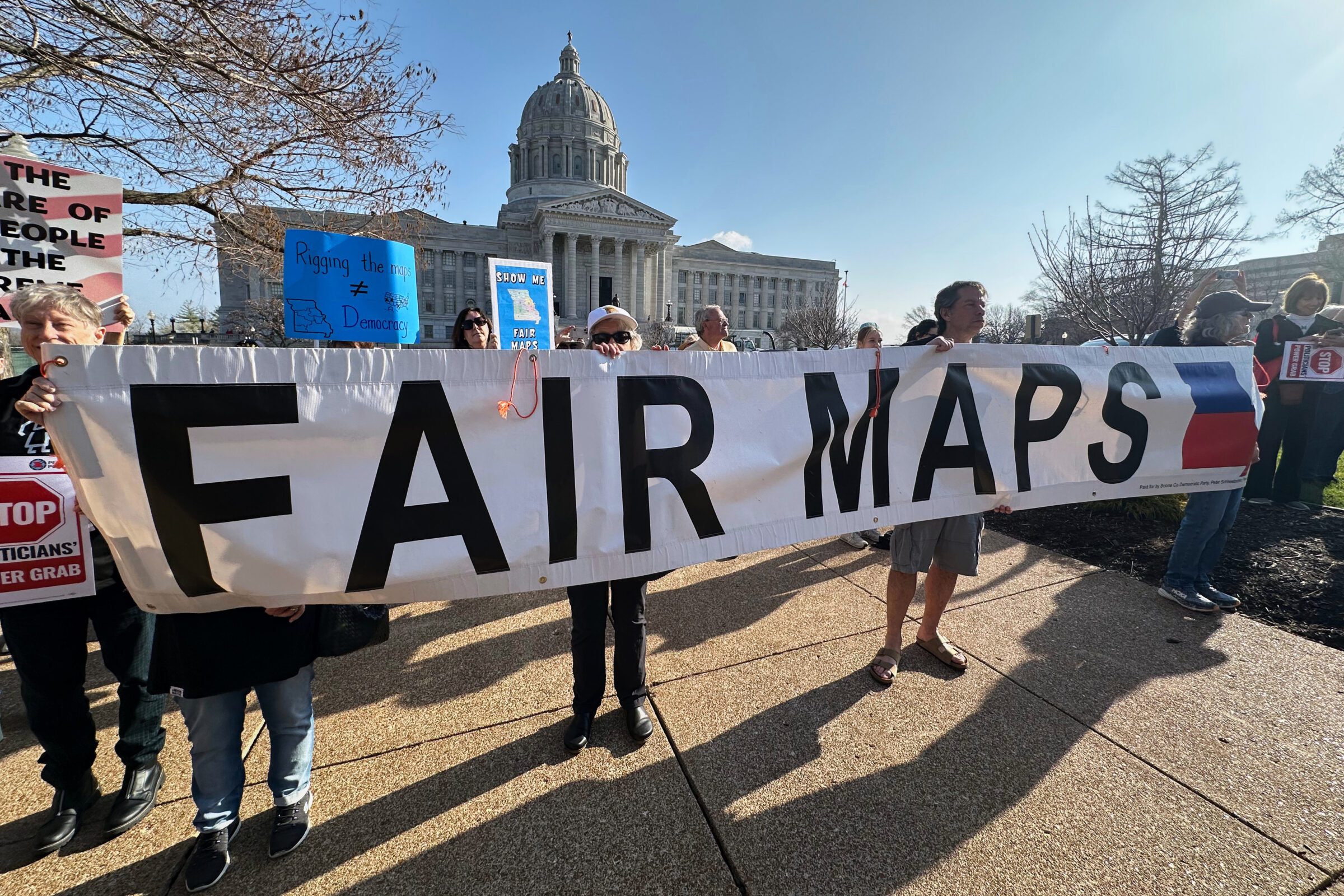
Missourians rejected the GOP’s latest attempt to gerrymander their state on Tuesday, siding instead with the organizers who collected hundreds of thousands of signatures last winter to force a veto referendum.
That means Missouri will keep its current congressional map, adopted in 2021, rather than switch to the map that Republicans passed in late 2025 at Trump’s urging. The result is a relief for Kansas City voters as it preserves the district anchored around the city that the GOP tried to tear apart.
And it’s a blow to Republicans’ nationwide push to use an unprecedented wave of mid-decade redistricting for an edge in the U.S. House.
Missourians also easily reelected Justice Paul Wilson, who in September joined the rest of the Missouri Supreme Court in blocking state officials from implementing the new map before voters could weigh in on it. Republicans vowed revenge against the court but then did not mount a serious effort to oust Wilson, the only Missouri justice who was on the ballot this fall.
With nearly all ballots counted, 63 percent of voters chose to retain Wilson in an up-or-down election.
The referendum against the gerrymander, meanwhile, succeeded by a wide margin, with 62 percent of voters opting to block the GOP’s latest gerrymander. In Jackson County, home to Kansas City, the veto referendum received 71 percent of the vote.
For more 2026 election results
Subscribe to the Bolts newsletter
Tuesday’s results also keep Republicans from gaining an early edge in the 2028 cycle. The GOP could try to gerrymander Missouri again next year, but it would face major political and legal headwinds. They’d be likely to face another veto referendum. Plus, voters on Tuesday approved a separate constitutional amendment that will restrict lawmakers from just ignoring a ballot measure and doubling down after a people’s veto.
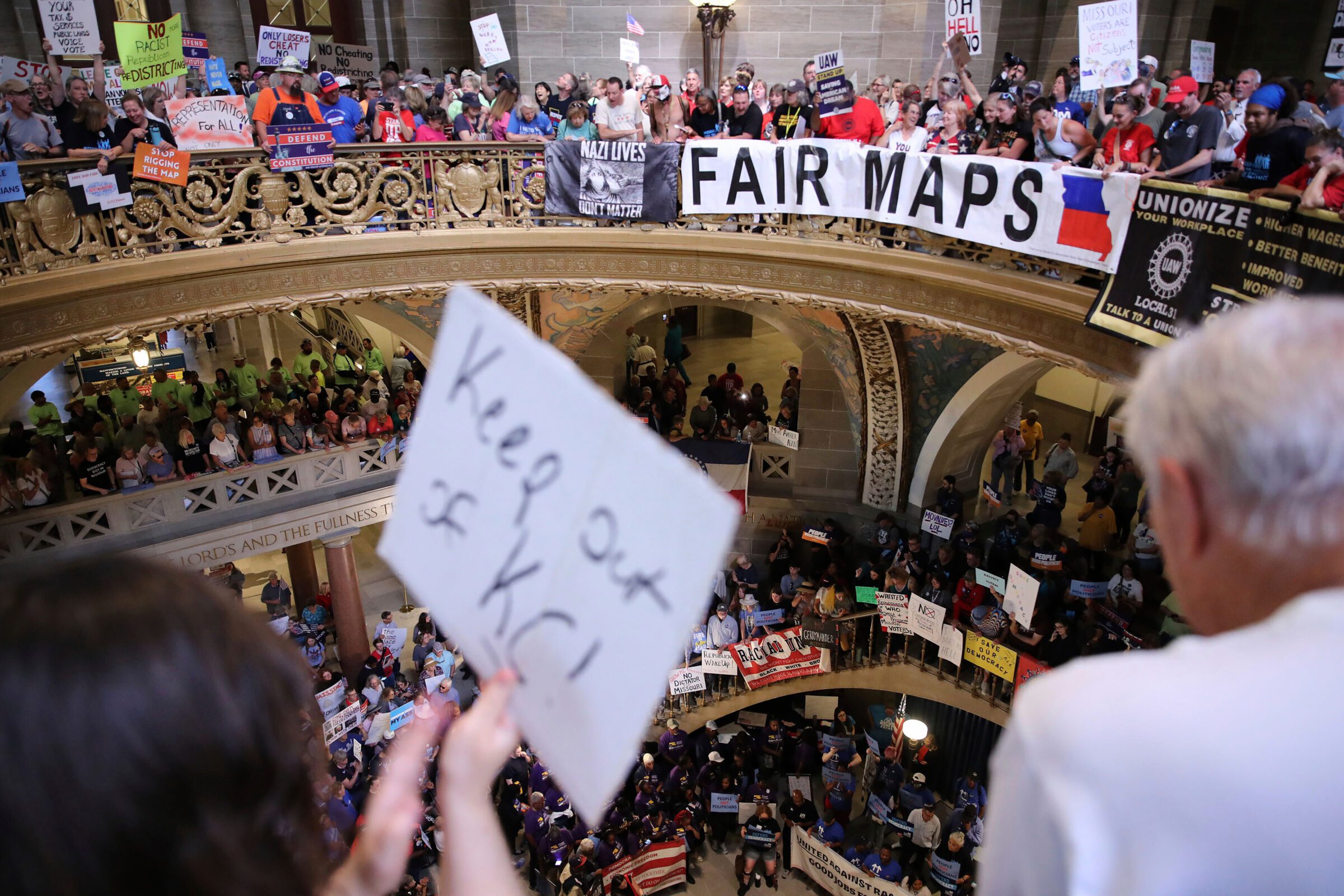
“Missourians are fed up with politicians trying to rig the rules in their favor and take power from voters,” Richard von Glahn, executive director of People Not Politicians, the organization that led the efforts to pass the veto referendum, told Bolts. “It’s best when people get to pick our politicians, and politicians don’t get to pick their voters.”
While the congressional map adopted in 2021 already favored Republicans, GOP lawmakers redrew the state’s districts last year to gain a seat in the midterms. They split up Kansas City and dismantled the seat held by Emmanuel Cleaver, a Black Democrat, turning it into a GOP-leaning seat. They also shored up a district in the St. Louis suburbs held by Republican Representative Ann Wagner to make her less vulnerable to a Democratic wave.
Nimrod Chapel, president of the Missouri NAACP State Conference, says the gerrymander was “a Republican attempt to enact plain Jim Crow politics by limiting Black voices in Kansas City.” He compared it to other schemes by Missouri Republicans to crack down on local governments in Kansas City and St. Louis, both cities that have a substantial Black population.
“This was just partisan politics, with an extra dose of racism,” Chapel told Bolts.
But nothing turned out as the GOP planned. Missouri allows citizens to block a new law from going into effect if they can collect enough petitions to put a veto referendum on the ballot, and Democratic-aligned groups poured time and money into that effort. Republicans mounted an extraordinary effort to derail the process; led by Secretary of State Denny Hoskins, they denied that a veto referendum could apply to redistricting and tried to run out the clock so they could hold the midterms under their new map.
The Missouri Supreme Court rebuked them in September. The justices ruled unanimously that the veto referendum should be on the November ballot.
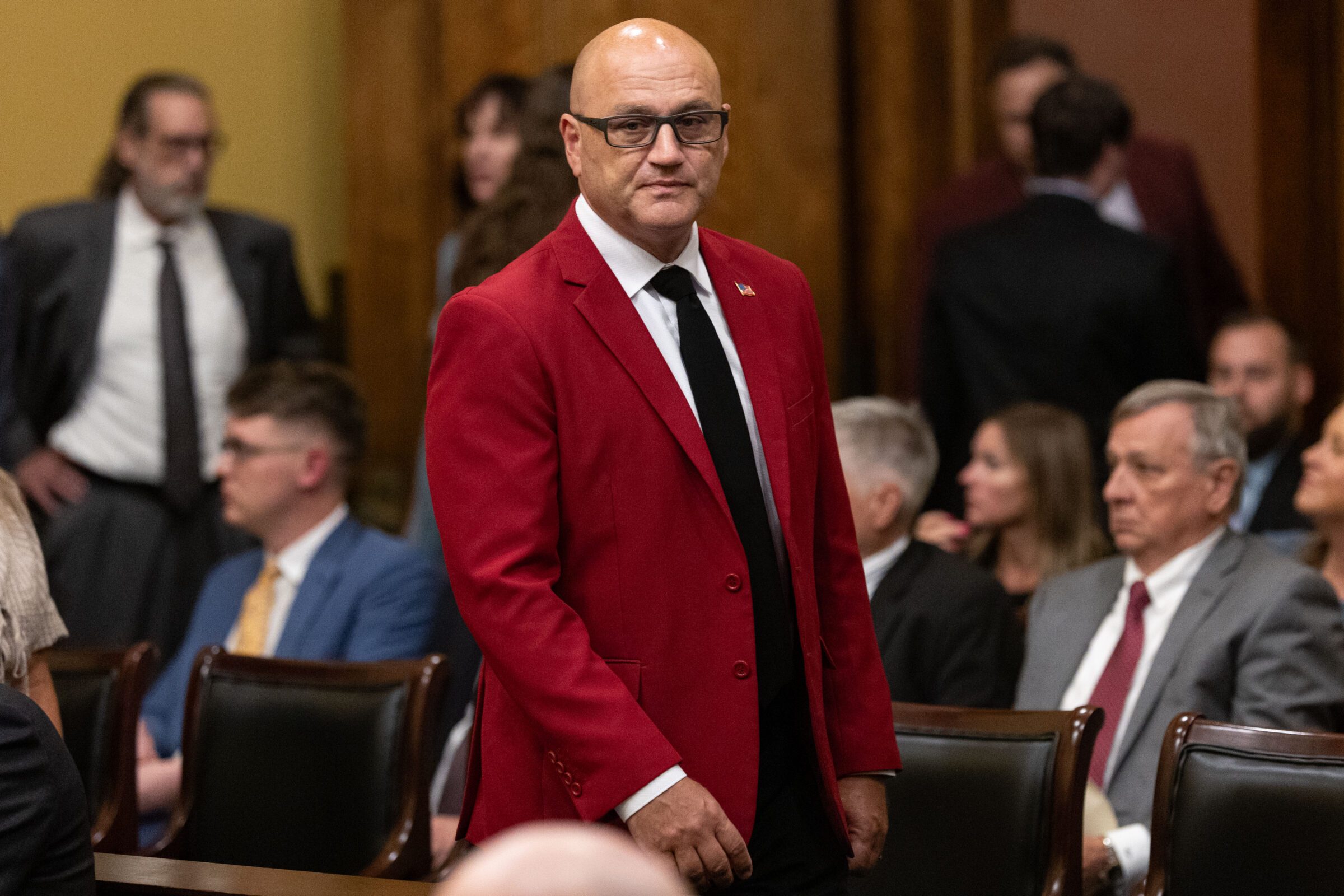
They also held that Missouri must hold November’s congressional elections using the old boundaries drawn in 2021. Republicans appealed and got some temporary reprieves in federal court, but the U.S. Supreme Court repeatedly rebuked them.
As a result, Tuesday’s elections were held under the 2021 map, and Cleaver easily won reelection in Missouri’s Fifth District, which remained anchored around Kansas City. Plus, Democrat Fred Wellman ousted Wagner in the Second District, one of dozens of flips Democrats secured in red-leaning territory on their way to flipping the U.S. House of Representatives.
And voters jumped on their chance to weigh in on the 2025 map. The result stands in stark contrast with referendums in California in November 2025 and Virginia in April 2026, where voters approved gerrymanders placed on the ballot by state Democrats.
To win those elections, California and Virginia Democrats spent millions to make the case that their new maps were a response to Trump-led efforts to gerrymander Missouri and other red states. But Missouri Republicans did not mount any such effort to defend their map once the supreme court greenlit the referendum.
St. Louis Public Radio reported last week that there was no state campaign committee devoted to supporting the gerrymander. The group opposing the map, meanwhile, raised millions to defeat it.
The result added to the wave of failure the GOP experienced on Tuesday in its yearlong effort to use mid-decade redistricting to gain an edge in the U.S. House. Of the 15 Democratic-held seats that Republicans redrew since 2025 to make them more vulnerable, they appeared on track as of Wednesday morning to only flip two, with a third going to a runoff]
Chapel said he was relieved to see Missourians from around the state rally to defend Kansas City, telling Bolts that the results “should demonstrate to fat cat politicians that Missourians will live by their motto—the Show Me State. When politicians started pushing around citizens telling them they can’t pick their leaders, Missouri citizens showed them.”
Republicans could still attempt a new gerrymander next year in advance of the 2028 elections; the party retained its majorities in the state legislature on Tuesday and Governor Mike Kehoe, a Republican, was not up for reelection.
But any such repeat would have a new obstacle to contend with. Besides vetoing the GOP gerrymander, Missourians approved Amendment 6, a constitutional amendment that is meant to strengthen safeguards for direct democracy.
The measure affirms that Missourians have a fundamental right to citizen initiatives, which will make it harder for future laws to restrict the initiative process. It also restrains lawmakers from circumventing the results of a ballot measure they dislike.
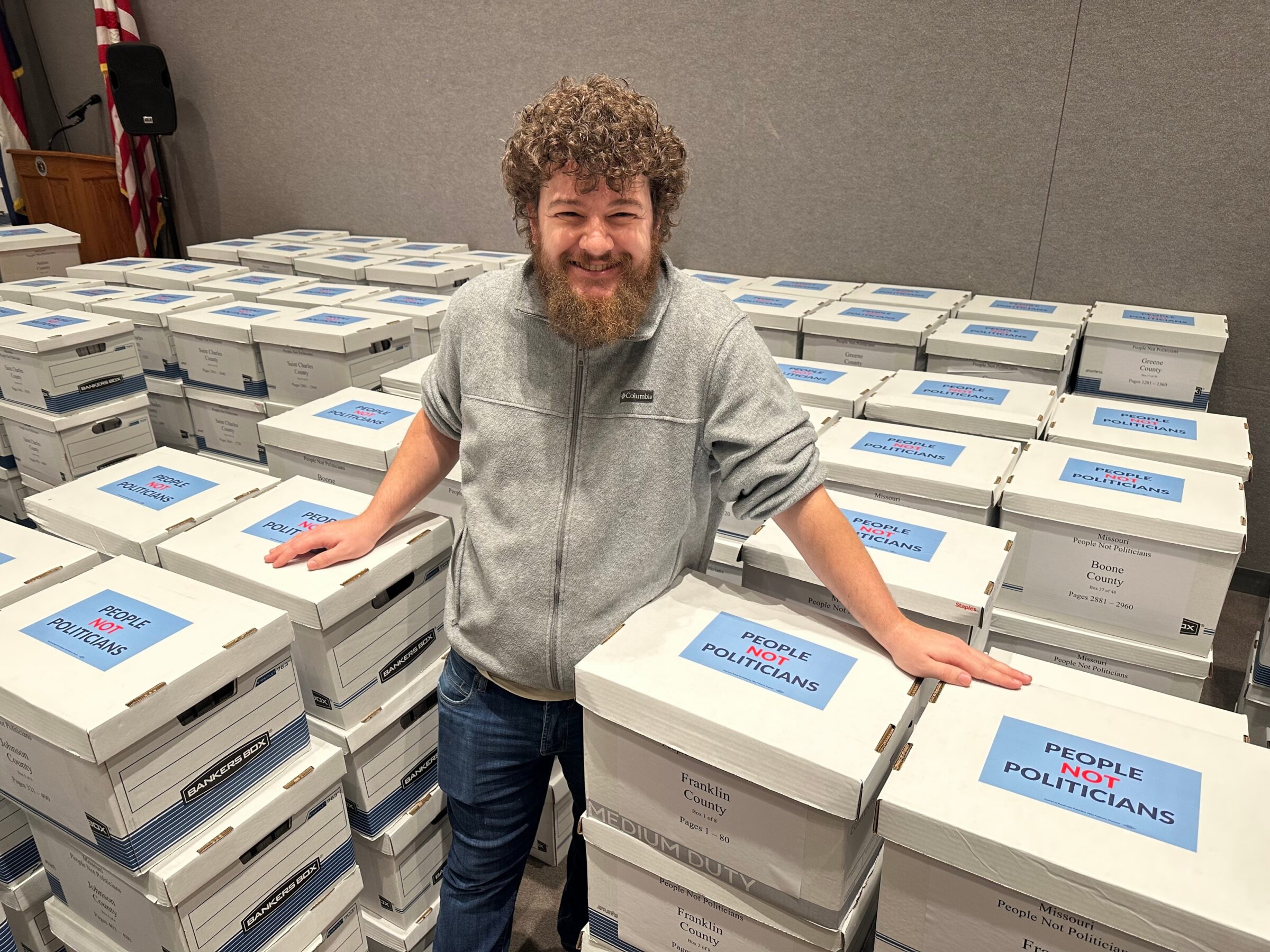
In particular, Amendment 6 imposes new rules for what lawmakers can do after a successful veto referendum. It says that, when voters veto a law, the legislature cannot pass legislation that is “similar in effect” unless 80 percent of lawmakers support this. Missouri Republicans don’t have such a large majority—far from it.
Republicans could try to pass a new gerrymander with a regular majority and say their new map is different enough from the old one, so the requirements of Amendment 6 don’t apply. If they go down that route, it would be up to Missouri courts to decide whether the two maps are “similar in effect,” says Derek Clinger, a legal scholar at the University of Wisconsin Law School who researches democracy in state constitutions.
“I’d expect any judges or state supreme court justices applying the ‘similar in effect’ standard to be skeptical of any legislation that doesn’t pass the smell test, but I’m not sure where they’d draw the line,” Clinger told Bolts.
The fight would likely end up in front of the Missouri Supreme Court, which showed impatience toward GOP officials this fall on how they handled gerrymandering, effectively accusing Hoskins of operating in bad faith and threatening to hold him in contempt. And Wilson, the justice just retained by voters, would be part of future deliberations; he has rebuffed Missouri Republicans on direct democracy cases beyond September’s showdown.
Regardless, opponents of gerrymandering are sure to have another tool at their disposal to stop a future gerrymander—the one they just used to sink the 2025 map.
They could once again collect signatures to block a future law and force a veto referendum. It would be a time-intensive and expensive endeavor, but one they now have a clear template for.
Von Glahn told Bolts that his organization, People Not Politicians, is ready for another veto referendum should Missouri officials try to adopt a new gerrymander.
“We’re not going anywhere,” he said. “If politicians try this again, the result will be the same.”
Sign up and stay up-to-date
Get timely updates about pressing stories and elections.
Support us
Bolts is a non-profit newsroom that relies on donations, and it takes resources to produce this work. If you appreciate our value, become a monthly donor or make a contribution.