
To Get Ahead of ICE, New York Leaders Learn from Other States and Cities
Immigration authorities haven’t yet descended onto New York in the numbers they have in other cities. Advocates want public officials to use this time to redouble protections.
| March 31, 2026
At a recent online webinar for Local Progress, a coalition organization for local elected officials, council members from around the country were instructed to, among other things, think about public parking lots.
It wasn’t a discussion about public transit or land use, but the possibility that federal agents could use city lots and other publicly-controlled property to stage mass ICE-led operations of the sort that had already come to cities like Minneapolis and Chicago. The session was part of a broader “No Secret Police” campaign Local Progress had put together, where participants also discussed questions of data-sharing with federal entities, securing sensitive locations like schools, and, if need be, enforcing policies like prohibiting agents from wearing face coverings and requiring badges.
Among the coalition engaging with these thorny questions are New York City Councilmembers Alexa Avilés, Sandy Nurse, and Tiffany Cabán, who form part of the Local Progress network. They and other legislators, policymakers, and officials around New York have been part of an effort in recent months to beef up the immigrant protection policies already in place across the five boroughs.
The Trump administration has spent the last few months carrying out its signature multi-agency “shock-and-awe” operations ostensibly focused on immigration enforcement and deportation, but which have the effect of disrupting life in mostly Democratically-led cities. As hordes of federal agents have descended upon Minneapolis, Los Angeles and Chicago, other cities have taken notice—perhaps none more so than the nation’s largest and one of its most diverse, New York City, prompting residents and officials to begin preparing for a similar surge of federal agents.
To be sure, ICE and the many other federal agencies detailed to its mission have already been active in New York, though not at the scale seen elsewhere. Agents have spent almost a year aggressively detaining people at the city’s immigration courts. In November, agents burst into a private Queens home with guns drawn and without presenting a warrant, and just last month agents allegedly misrepresented themselves as local police in taking a Columbia student into custody.
Bitta Mostofi, a onetime NYC immigration commissioner, who is now helping spearhead a series of sanctuary compliance audits mandated by a recent executive order issued by new NYC Mayor Zohran Mamdani, says she’s talked with officials in cities targeted by ICE to hear “their experiences and their responses, and sort of what some of the lessons learned were.”
Subscribe to our newsletter
For more on local responses to ICE
New York City has had sanctuary policies on its books since at least 1989, limiting local police and other city staff’s ability to cooperate with federal immigration authorities. Since 2014, it has been forbidden in most cases for the NYPD or the Department of Correction to communicate with ICE about detainees or honor detainer requests to hold a person in custody beyond their release date so ICE can come pick them up. ICE is also prohibited from making arrests at courthouses and other government facilities, though that hasn’t always stopped them from doing so.
But now, New York City and state officials are looking more deeply at their efforts, understanding that a passive refusal to cooperate might not cut it given the specter of a federal deployment that could be acutely dangerous and disruptive for the city, particularly its 500,000-plus undocumented residents. Some local leaders are planning in the way they might for, say, another communicable disease outbreak or a hurricane. Other cities have responded in ways that have seemed reactive and disorganized when ICE comes to town, so New York officials are now gaming out options for how to act, what red lines exist, and how they can exercise their own authority against federal overreach.
Federal actions such as those in L.A. “helped us understand different sorts of tactics that are deployed,” Mostofi said. “We’ve learned a lot in terms of, how has rapid response worked in other places, and what does that mean in terms of the role of the city?”
The audits Mamdani ordered to ensure the city is complying with its existing sanctuary laws are aimed specifically at the agencies for health, social services, children, corrections, probation, and NYPD—the last of which has been under in the last year scrutiny for interactions with federal immigration enforcement that seem to undermine the city’s protections.
The mayor’s executive order also prohibits use of city lots for non-city purposes, requires training for city employees and privacy officers on how to respond to and contend with federal agents and requests for information, and creates an interagency response committee headed by the First Deputy Mayor to essentially develop a plan of action—ensuring city agencies are prepared for, and able to respond to any crises related to immigration enforcement.
Mostofi emphasized that the committee wouldn’t just be plugging holes but taking a “multi-pronged strategy towards being responsive and also recognizing that there are things that we should be doing to strengthen and sort of shore up existing processes, protocols and laws.” Mamdani gave the agencies until May 7 to submit reports resulting from the audits and publicly post “policies and protocols regarding interactions with immigration enforcement.”
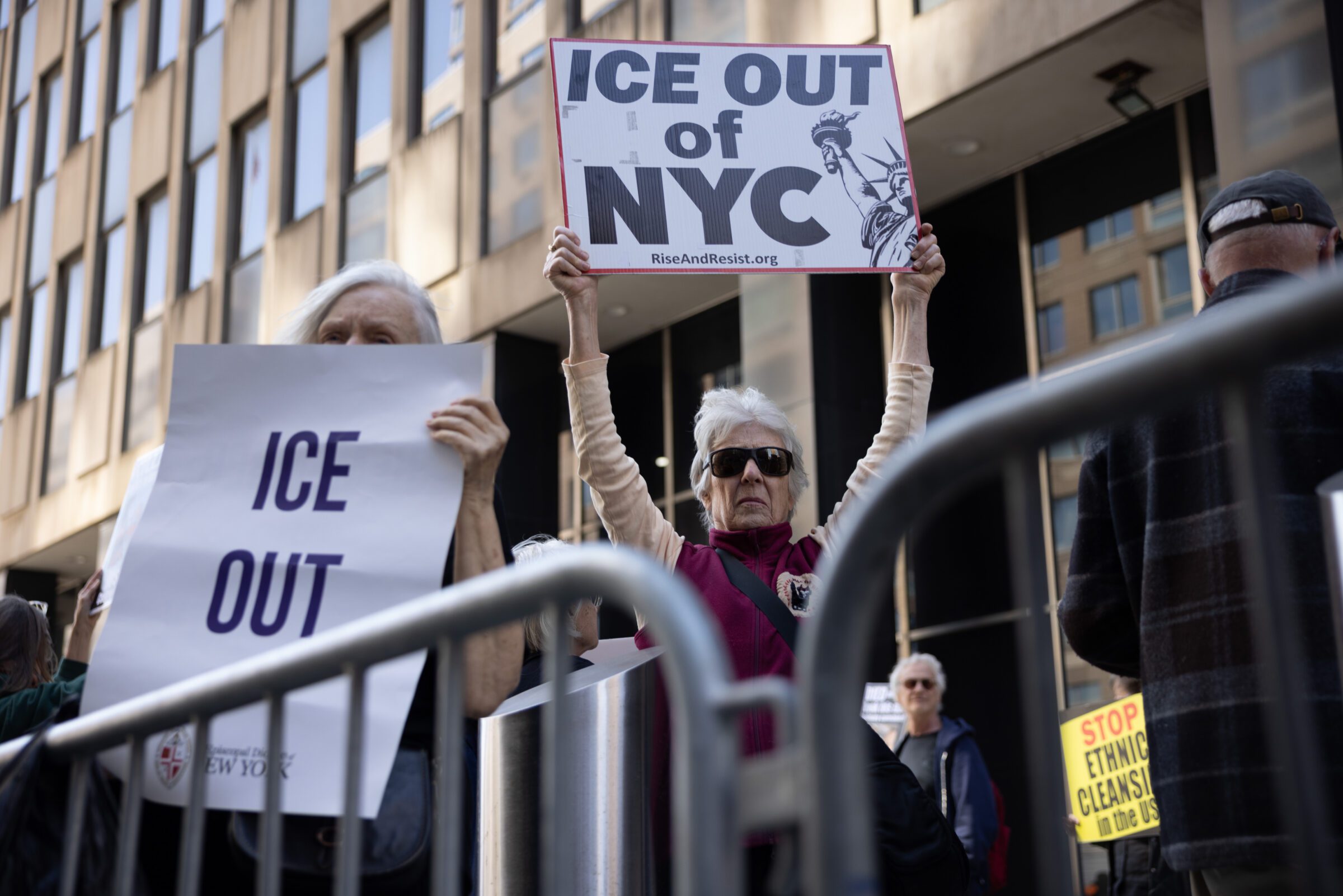
Queens Assemblymember Catalina Cruz already has one bit of public space in mind for the city to look at: a city parking lot at Flushing Meadows Corona Park, which she alleges ICE has been using to stage its limited NYC operations. “We tried to raise this to Mayor Adams and the Parks Department, who were unwilling to do anything, but as you saw, [Mamdani] issued an executive order not allowing for activity like that to occur,” Cruz said. She added that the city’s actions in these cases can also help set the tone for private actors, mentioning a push to get TD Bank, for example, to prevent ICE from using a lot at its Northern Boulevard location. (In a statement, TD said it “receives no prior knowledge of law enforcement activity on or around TD property” and that is parking lots are generally open on and after business hours for customer use.)
When Mayor Eric Adams, who became a Trump ally towards the end of his term, departed, there was some concern that Mamdani’s arrival as his replacement would trigger political retaliation; specifically from the White House and the chief architect of its immigration crackdown, Stephen Miller. Yet some of those fears were tempered with a bizarrely friendly meeting between Trump and Mamdani in November, and lately Trump has expressed some recognition that the mass deportation campaign is unpopular and a building political liability.
Several organizers and officials expressed skepticism that a broad, Twin Cities-style operation would ever occur in New York City, for a number of reasons including the terrain itself. NYC is more densely populated than L.A. or Washington, D.C., and the only borough that is not an island or part of an island is the Bronx. Even its more suburban outer-borough neighborhoods tend to require transiting through narrower residential streets that make it more difficult to surge with a convoy of federal vehicles. The city is also the nation’s financial hub, and there are whispers that Wall Street has privately warned Trump that a heavy-handed operation could disrupt markets—not that Trump has seemed particularly concerned with reducing trading volatility.
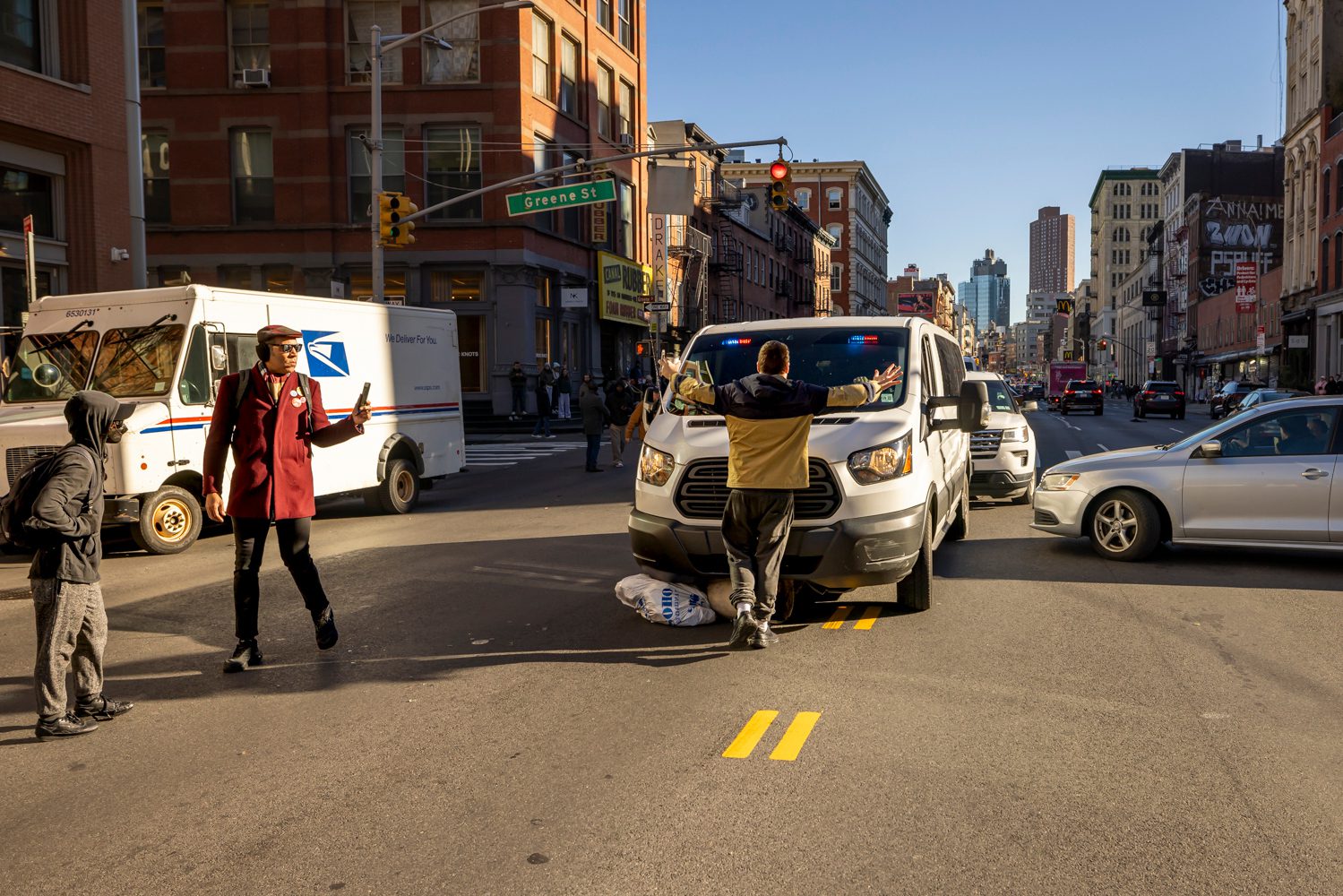
About a week after the Trump-Mamdani meeting, hundreds of federal agents attempted a flashy raid in the downtown Manhattan commercial corridor around Canal Street, the same area that was targeted in an operation the month prior. It was a spectacular failure; word got out in advance and activists blocked the agents’ vehicles as they exited the garage where they’d staged the raid, a result that enraged leaders within Homeland Security. DHS has not tried mounting a similar large-scale raid in NYC since.
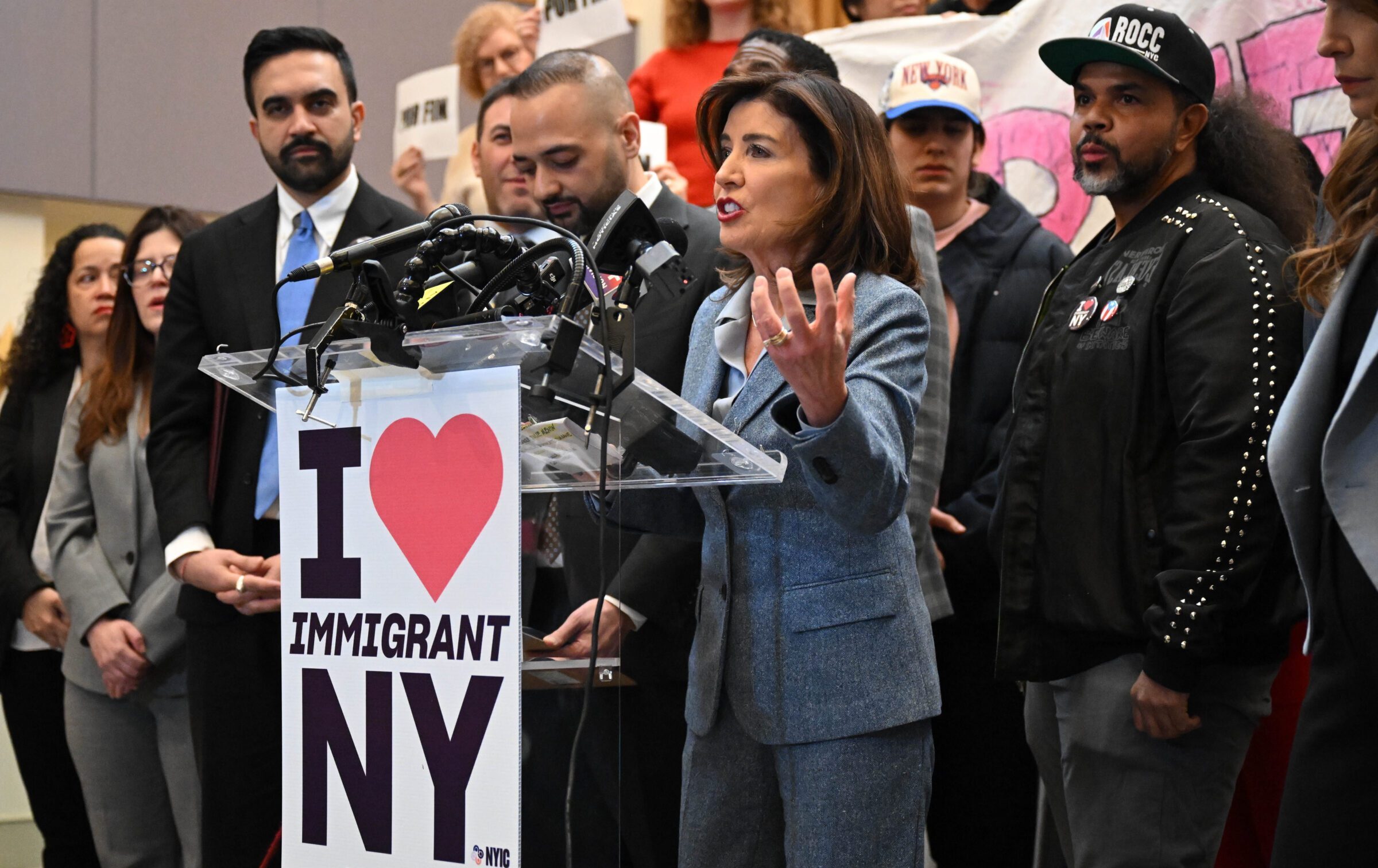
Some of the action has been legislative; Cruz and other legislators have long pushed the New York For All Act, which would heavily restrict immigration-related data collection and prohibit public personnel from cooperating with civil immigration enforcement across the entire state. The bill has been brought up in every legislative session since 2020 but has never passed. Governor Kathy Hochul, who is said to have privately become much more forceful in her commitment to curbing Trump’s immigration crackdown in the wake of the Twin Cities deployment, still hasn’t expressed support for New York For All.
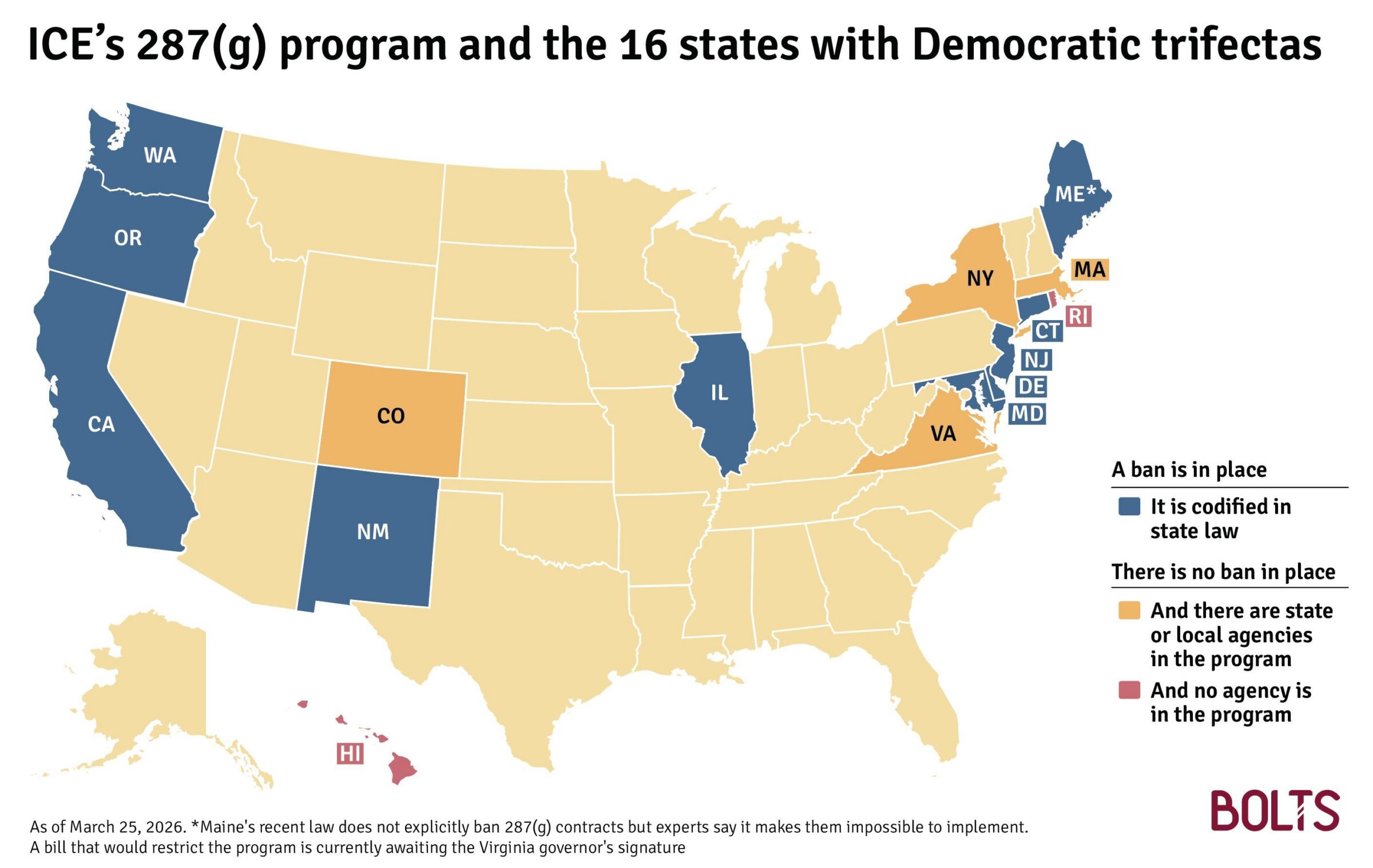
But she recently proposed a more limited bill that would bar formal 287(g) cooperation agreements between ICE and local law enforcement, and has been calling for legislators to create explicit legal pathways for New York residents to be able to sue federal agents that violate their rights.
After Maryland and New Mexico passed laws banning 287(g) last month, and New Jersey joined them just last week, New York is now one of only four states under full Democratic control where any law enforcement agency has an active 287(g) agreement. Fourteen different agencies in the state have active agreements, perhaps most notably in Long Island’s Nassau County, adjacent to NYC. County Executive Bruce Blakeman, who is running against Hochul in the upcoming gubernatorial election, has defended the agreement as a matter of public safety. Those would end immediately if Hochul’s proposed bill, the Local Crimes, Local Cops Act, is passed.
But her proposal includes a sunset date of July 1, 2029, in theory allowing agreements to return in a post-Trump world, making some lawmakers skeptical of the effort. State lawmakers may now include some compromise language on immigration enforcement in the state budget, which is due on March 31.
Murad Awawdeh, the president and CEO of the umbrella organization New York Immigration Murad Awawdeh, the president and CEO of the umbrella organization New York Immigration Coalition, said that groups around the state were already coordinating amongst each other and with the city and state to figure out rapid response. She urged the passage of New York For All, which he called “the floor at this point,” and called on the legislature to move forward with a plan to surge $175 million to additional legal services.
As LiJia Gong, outgoing policy and legal director at Local Progress, pointed out, thousands of habeas petitions in federal courts have been one of the only things stymieing the Trump administration’s mass deportation efforts, and that requires a significant expenditure on legal services. Gong also brought up creative legislative pushes elsewhere, such as efforts to ban the wearing of face coverings by federal agents, or Maryland’s effort to bar some agents from obtaining future state-level employment. (Gong has recently left Local Progress to join the Mamdani administration as Senior Advisor to the Deputy Mayor for Economic Justice.)
Much of what the governor could do, though, would run through executive power, which functionally means deciding what state law enforcement will or won’t do in the event of a heavy-handed federal operation. A high-level state official told Bolts that the enforcement question is tricky because one of the things they really want to avoid is so-called “blue on blue” conflict, or the idea that state law enforcement would have to face off with federal law enforcement. Having state personnel engage in enforcement against heavily-armed federal officers would not only be a logistical nightmare but a legal quagmire that would raise questions around the constitutional Supremacy Clause—which generally makes federal law supreme over state law—and whether agents were technically acting within the scope of their duties.
A massive ICE deployment to the city would almost certainly engender situations where state law enforcement would have to choose to act against the federal government or not, with each decision carrying implications. That was demonstrated in the aftermath of the killing of Renee Good by ICE agent Jonathan Ross in Minneapolis; federal prosecutors attempted to investigate the shooting but were reportedly shot down by supervisors, who wanted the investigation to instead focus on Good and her widow. Now, local prosecutors probing the killing are suing the federal government for evidence that they say federal personnel collected but has not turned over, and which they had been actively prevented from collecting at the scene.
“These [local] law enforcement agencies are used to cooperating with the federal government,” said Gong. This reflexive cooperation has been used by federal agents in jurisdictions with their own sanctuary or noncooperation policies to get indirect assistance during immigration operations. She brought up an incident last year in which federal agents sparked an angry public response in part by instigating a vehicle crash and violent arrest in Evanston, Illinois, and then relied on local police to come in and disperse protesters so they could leave.
In New York, the NYPD’s Strategic Response Group is “known for excessive tactics, and that might be escalatory in these moments when that’s probably not helpful,” said Gong, suggesting that the unit could get pulled into de facto enforcement against protesters, for example. It was created in 2015 but came to some public infamy in 2020 as its officers cracked down on that year’s George Floyd protests, leading to a legal settlement constraining its protest response. As one former NYPD official who helped form the unit recently told Gothamist, the unit is trained and equipped for both counter-terror and protest, presenting something of a conflicting sense of mission that a federal agency could try to exploit. During his campaign, Mamdani promised to disband the unit, though that debate has been politically complicated by a recent attempted terror attack outside Gracie Mansion.
A situation where state and local law enforcement in New York actively work against federal police would also go against all of the structural ways in which these agencies are set up to work together—for example, regional fusion centers established after 9/11 for local, state and federal police to collaborate under the banner of investigating and preventing terroristic threats. As for the prospects of enforcing any state or local constraints on federal operations, consider how ICE agents deployed chemical agents and arrested one person at a Minneapolis city park last month, even after the city’s mayor and parks board had issued policies prohibiting ICE using municipal spaces as staging grounds.
Both state and local officials and community groups on the ground in New York are trying to thread a needle when it comes to how much of these plans they’re willing to communicate publicly. Several acknowledged the frustration among a public that wants to know how their leaders are planning to respond to what could be an immensely hazardous situation, but also made the point that keeping some details secret is a matter of safety; too much forewarning might enable the Trump administration to adjust ex ante or prepare counter-measures.
What government decision-makers, as well as community and nonprofit organizations like those under the NYIC, all agree on is that New York cannot just wait until thousands of federal agents—many now poorly trained new recruits—alight on New York City before they figure out how to respond. The questions raised are thorny but predictable, many of which other cities have already faced. What New York allows and how it enforces these decisions will have broad implications for everyone, citizen or not, in the nation’s quintessentially immigrant city.
Sign up and stay up-to-date
Support us
Bolts is a non-profit newsroom that relies on donations, and it takes resources to produce this work. If you appreciate our value, become a monthly donor or make a contribution.