
The Feds Targeted Charlotte. Now a Local Democrat Who Helped ICE Faces Voters.
North Carolina lawmaker Carla Cunningham voted to mandate compliance with ICE, and derided immigrants on the House floor. The Democrat faces an intense March primary.
| February 17, 2026

This article was produced by Bolts and republished in Spanish by Enlace Latino NC. Leer en español.
Editor’s note (March 3): Carla Cunningham lost to Rodney Sadler on March 3, 70 to 22 percent.
Last July, North Carolina state Representative Carla Cunningham, a seven-term Democratic lawmaker from Mecklenburg County, startled party members when she stood on the state House floor and said “all cultures are not equal” and suggested immigrants “must assimilate” and “adapt to the culture of the country they wish to live in.”
Cunningham’s floor speech came after she cast the lone Democratic vote to override North Carolina Governor Josh Stein’s veto of a Republican-backed bill forcing local law enforcement agencies to work more closely with U.S. Immigration and Customs Enforcement.
The override succeeded thanks to her crossover vote. Cunningham, whose safely Democratic district includes part of Charlotte, a city that has been singled-out by the Trump administration’s immigration crackdown, had already voted in 2024 to override the veto of another bill requiring sheriffs to cooperate with ICE.
“At the end of the day, she didn’t sound any better than some of these ultra-conservative people who were demeaning Black and Brown folk on a regular basis,” said Rev. Rodney Sadler, a Bible scholar and longtime community activist in Charlotte. “It felt like a betrayal of the utmost.”
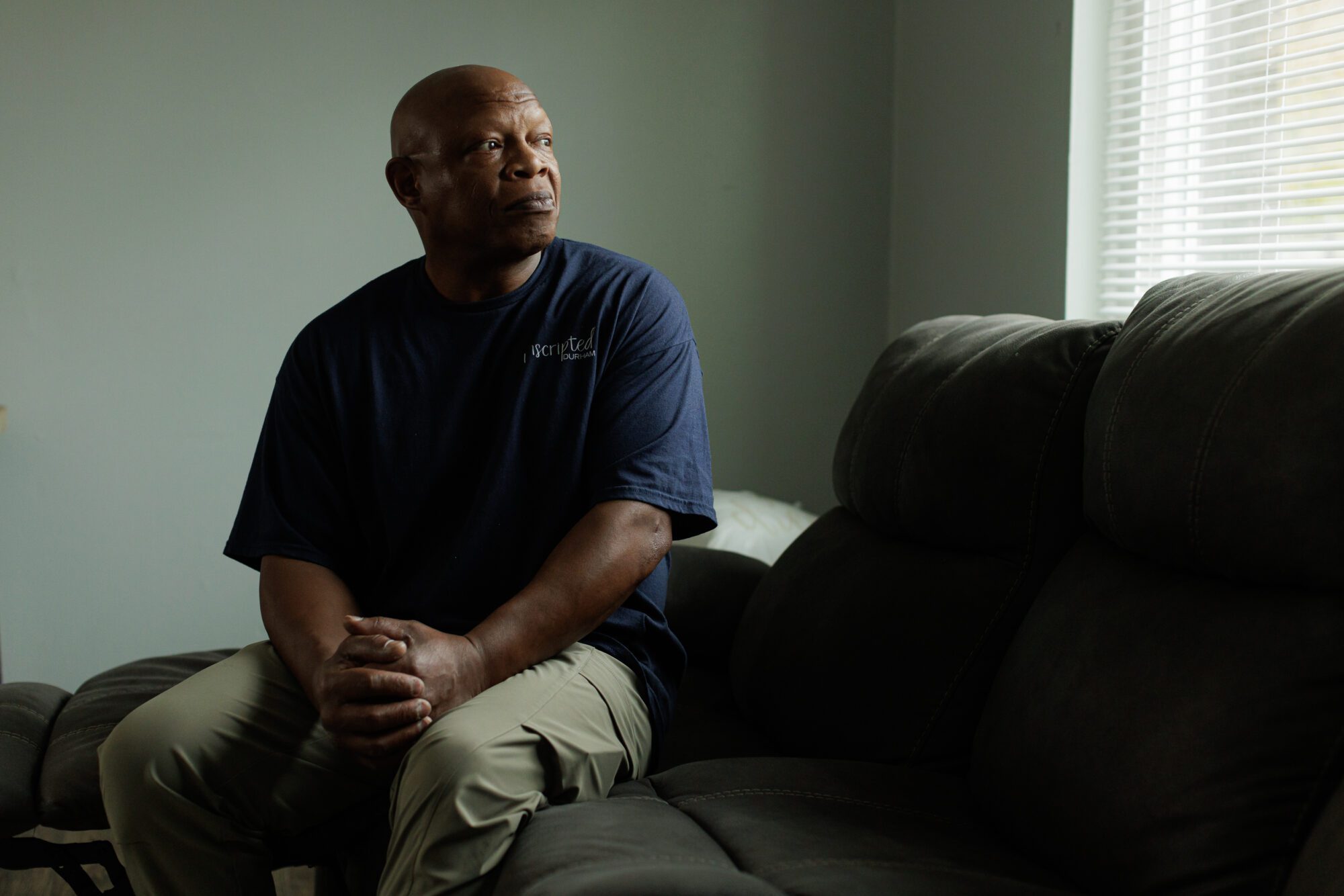
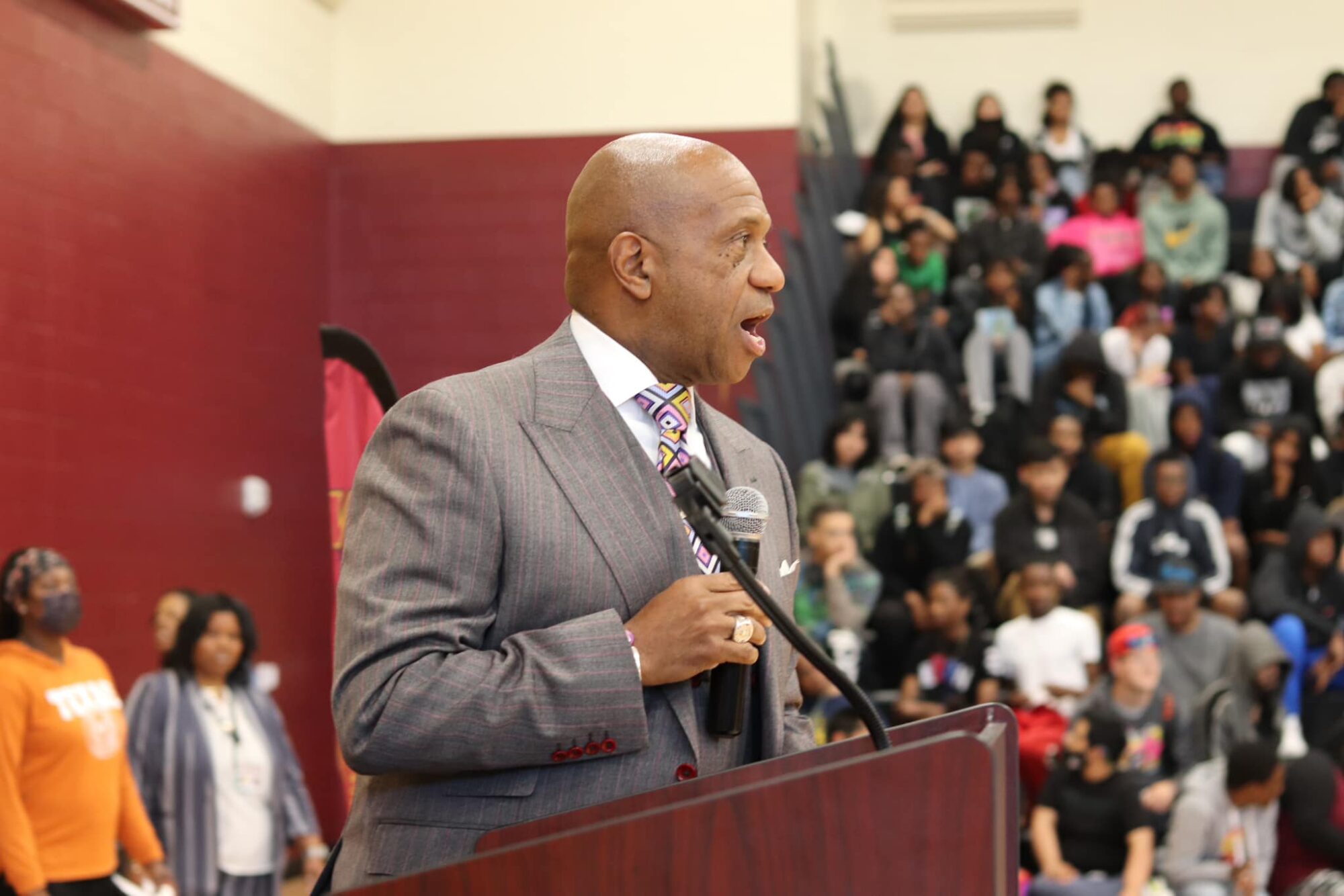
Cunningham’s comments proved so problematic for Sadler that he said he realized that she was “no longer worthy of being our representative” and he had to run against her. “It drove me to a point of saying, ‘She needs to go, and she needs to go now,’” the 58-year-old pastor, who works at Charlotte’s Union Presbyterian Seminary, told Bolts.

On paper, North Carolina Republicans are one seat short of a supermajority in the state House, but Cunningham and a small group of fellow Democrats have supplied votes to help them override Stein’s vetoes on immigration and other issues, including bills to expand gun rights and restrict LGBTQ+ rights. Several of these Democrats face challengers in the March 3 primaries.
But Cunningham’s floor speech, paired with her record of supporting cooperation with ICE while representing a region targeted by the federal government, have proved most alarming to Democrats who have fought the president’s immigration crackdown.
Prominent Democrats and progressive organizations who oppose Cunningham have rallied around Sadler’s candidacy. Stein, the governor, has endorsed him, as have former Charlotte Mayor Jennifer Roberts, Planned Parenthood, and Advance Carolina, and major unions like UNITE HERE.
Sadler and Cunningham are joined on the March primary ballot by a third candidate, Vermanno Bowman, who already ran against Cunningham in 2024 and believes she no longer represents “the true values of our district.”
At this point, Bowman told Bolts, Cunningham is “basically a Republican.”
If Cunningham’s two challengers split the support of voters who are upset with the incumbent, it could help her get through with a plurality of the vote. (North Carolina primaries only head to a runoff if a candidate fails to top 30 percent of the vote.) The winner of the Democratic primary is likely to prevail in November as no Republican has filed to run.
Cunningham’s critics believe that her July vote for House Bill 318, titled “The Criminal Illegal Alien Enforcement Act,” made it easier for U.S. Customs and Border Protection to conduct its operation in North Carolina last November. The operation, named “Charlotte’s Web,” after the children’s book, netted more than 400 arrests statewide, according to the Department of Homeland Security, which oversees CBP and ICE.
“It opened the door for them to come here and go into communities, stoking fear and arresting people, even people who were citizens or who were here legally, and violating their rights,” said Bowman, a quality control coordinator with Power the Vote NC. “That’s what that bill did, and that’s what she voted for.”
“By opening up that Pandora’s box, we were subject to the worst that they wanted to send our way,” Sadler said. “It suggested that they were welcome and that what they were doing is legitimate.”
Cunningham, through her campaign manager Marjorie Fields Harris, declined an interview with Bolts. Asked for her response to remarks Sadler and Bowman have made about Cunningham and her record, Harris then said the campaign would not provide comment. “Your questions and the statements presented rely on inflammatory characterizations rather than sincere inquiry, thus failing to meet the criteria for a constructive or fair response,” Harris wrote in a Feb. 10 email.
HB 318 built on HB 10, the earlier legislation the GOP championed in 2024, which required local officials to check the immigration status of people booked into jails for certain crimes. The bill also forced local law enforcement agencies to honor immigration detainers, which are requests sent by ICE that a jail keep someone in detention beyond their scheduled release to give federal agents more time to take them into custody.
Subscribe to our newsletter
for more reporting on local immigration policies
Before HB 10’s passage, many Democratic sheriffs in North Carolina were refusing to comply with detainers, and said detaining people without a warrant violates their constitutional rights, but the new law forced them to change their policies.
HB 318, which went into effect last fall, goes even further in constraining those sheriffs. Now, a jail must reach out to ICE whenever a local magistrate is unable to determine the immigration status of an individual, and detain the person for two hours to allow the agency to respond. The bill also gives ICE more time to make an arrest after issuing a detainer.
ICE uses local law enforcement as a force multiplier to find and detain undocumented immigrants, even as the agency’s budget has soared since Trump’s return, and GOP lawmakers around the country have passed laws to squash any reluctance from sheriffs and police.
New research by the Public Policy Initiative confirms that a large share of ICE arrests take place in jails, and that many more immigrants are arrested where local governments are cooperating.
During Trump’s first nine months in office, ICE arrested more than 3,300 people in North Carolina, about double the number arrested in all of 2024. Most people were apprehended from local jails, prisons and “other lockups,” data show.

Besides Cunningham, two Democratic representatives voted for HB10 in 2024, helping the GOP override then-Governor Roy Cooper’s veto. They’re each on the ballot in March. Shelly Willingham, who represents the 23rd district, faces primary challenger Patricia Smith. Michael Wray already lost in 2024 to progressive opponent Rodney Pierce in the 27th district, but he is seeking a rematch next month.
The state Democratic Party has revoked access to party resources to Cunningham, Willingham, and Wray, an unusual move meant to punish them for their history of voting to override Democratic governors’ vetoes. Cunningham and Willingham, in particular, have been the “thorn in the side of the Democratic establishment for a few sessions,” says Christopher Cooper, a professor of political science and public affairs at Western Carolina University who studies North Carolina politics.
Cunningham’s speech last July pushed the thorn in even deeper, bringing awareness of her record in office to more voters.
“Her speech got replayed not just on political nerd Twitter, but to real people who don’t normally pay attention, frankly, to state legislative politics,” Cooper said.
Months later, Cunningham walked back some of her remarks, telling WFAE in December that she should have said that cultures are “not the same,” not unequal. “I am not a bigot and I am not anti-immigrant,” she said. In a January video posted on her campaign website, Cunningham apologized for her comments.

Still, in early February, Charlotte-area members of Siembra NC, an immigrants’ rights organization, unanimously voted to endorse Sadler.
The members heard directly from Sadler, who spoke about his work with the Moral Monday Movement and the Poor People’s Campaign advocating for higher wages, increased public education funding and healthcare access. He also explained why he entered the race, citing in part Cunningham’s veto override vote of HB 318 and her subsequent remarks.
A few months before the vote, Sadler said, he had spoken to Cunningham and begged her not to override Stein’s veto.
“It was hard enough hearing her on the day that she did it, talk about the decision she made,” Sadler told the group. “But then when she tried to justify it with bigoted tropes, talking about some cultures are better than others, I was sort of wondering, ‘So, which culture is lesser?’”
Sadler’s answers to the group’s questions, which ranged from housing affordability to immigration enforcement, appeared to check off most boxes for Siembra members.
Carlos Magaña, a Siembra member, told Bolts after the vote that he appreciated how Sadler presented “an actionable plan” on important issues and said having Sadler represent the district would be significant given Cunningham’s vote to override HB 318.
“It very much was a painful stab in the back, with our representatives basically just voting to hurt us,” Magaña said. “Having someone who has a background in activism and more bottom-up grassroots politics would be very much a step in the right direction. It would raise many people’s spirits here in Charlotte and just North Carolina in general.”
Sign up and stay up-to-date
Support us
Bolts is a non-profit newsroom that relies on donations, and it takes resources to produce this work. If you appreciate our value, become a monthly donor or make a contribution.