
Oregon Voters Have Zero Choice in DA Races
Each of the state’s 15 district attorney elections is uncontested this year, shutting the door for public debate around prosecutors’ policies and power over people’s lives.
| April 10, 2026
Local elections in the U.S. routinely go uncontested, with incumbents to powerful offices often running unopposed. But even with that very low bar, the district attorney elections that Oregon is holding this spring stand out for the utter absence of challengers: Only a single candidate has filed in each of the state’s 15 DA races.
That includes Jefferson County, where Eric Nisley, the sole candidate for DA, will now almost certainly return to public office eight years after he was briefly suspended from practicing law for lying to state investigators while he was DA of neighboring Wasco County. Voters there ousted Nisley in 2020, when a defense attorney ran against him; but residents in his new county won’t see any other choice on their ballot next month.
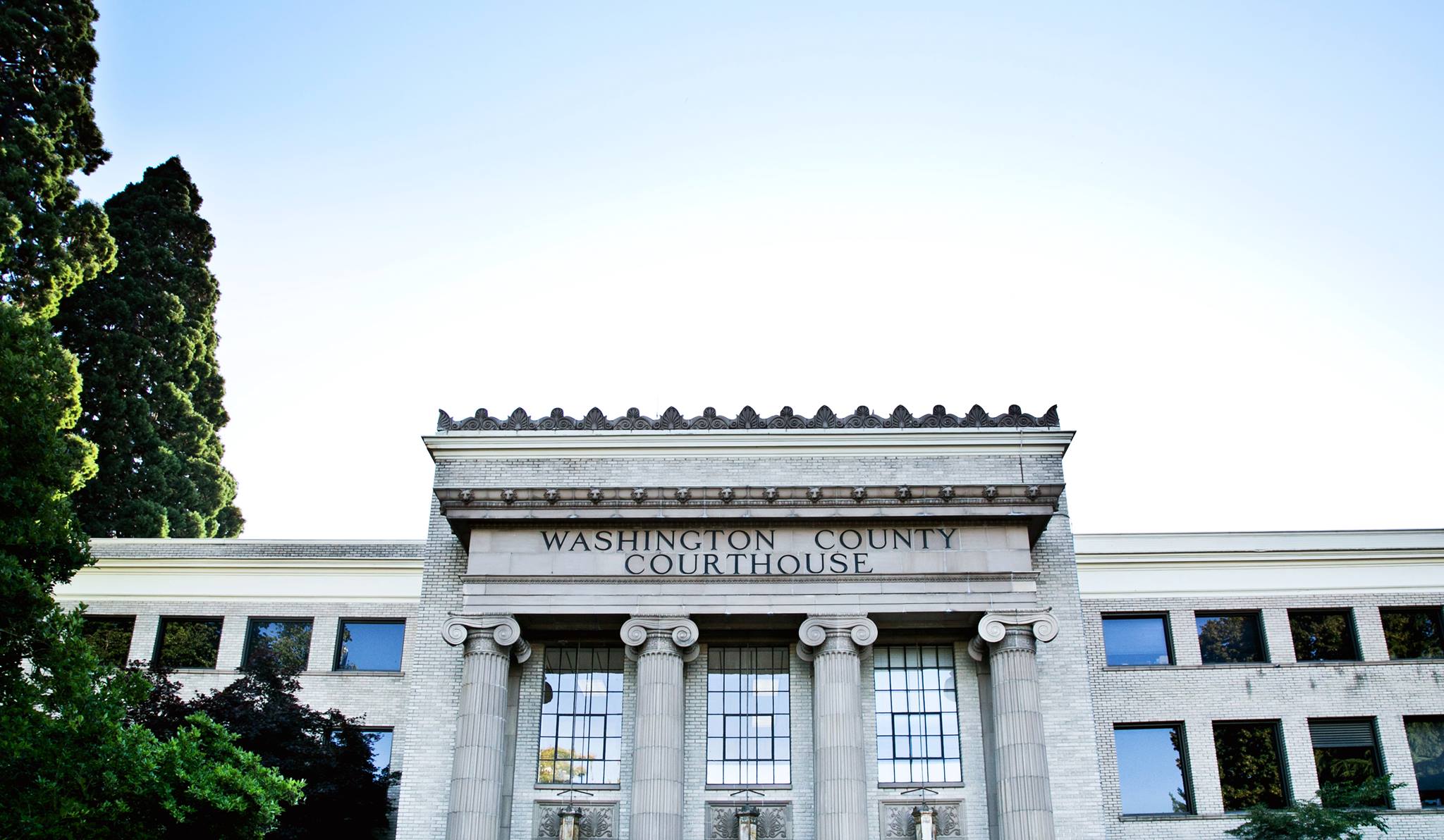
The list of uncontested races also includes Marion County, home to the state capital of Salem, where the DA is retiring and her deputy is the sole candidate. In Washington County, Oregon’s second-most populous, DA Kevin Barton, a longtime opponent of the state’s criminal justice reforms who has also fought against efforts to increase funding for indigent defense, is running for reelection unopposed.
Bolts’ review of election records since 2000 shows that this is the only cycle so far this century in which all of Oregon’s DA races have been uncontested.
“The criminal justice system is too often done in secret, unless and until there’s an election, so I think it’s unfortunate for the residents of Oregon that no community in the state is going to be having that conversation this cycle,” said John Hummel, who was the DA of Deschutes County from 2015 to 2023. “Too rarely does a community have a conversation about what they want their criminal justice system to be, and that happens if you have a contested district attorney race.”
Subscribe to our newsletter
for more coverage of prosecutors
Hummel told Bolts that he filed to challenge the incumbent DA in 2014 because he wanted to offer voters an alternative vision for how the criminal legal system should function—one less focused on punishment and prison sentences than the approach prosecutors have traditionally pursued. He says he regrets that those sorts of debates won’t happen in any of the state’s DA elections this year.
“People bring their priorities when they are enforcing the law,” Hummel said. “What are you going to focus your limited resources on? Are you going to be advocating for treatment or incarceration? Are you going to be focusing on the root causes of crime? Do you think the legal system is black and white, or do you think there’s shades of gray throughout? There’s strong differences on all those topics.”
During his tenure, Hummel vocally supported some major reforms like the 2019 law that restricted mandatory minimum sentences for children, breaking with the Oregon District Attorneys Association, which has vocally opposed reforms that pare back harsh sentences. “For a long time, it was kind of me, and then 35 other [DAs] who had different philosophical views on the role of a prosecutor,” Hummel told Bolts.
Hummell’s isolation broke in 2020, when he was joined by two prosecutors with similar politics: Matt Ellis, the defense attorney who defeated Nisley in Wasco County, and Mike Schmidt, who became the DA of Multnomah County, which includes Portland. But Hummel retired in 2022 after eight years in office, and Schmidt lost reelection to an opponent backed by local police unions in 2024. Ellis is still in office, though he is now the DA of Hood River County, a rural community where he moved to run two years ago.
Several Oregon lawyers told Bolts that a law that took effect in 2024 encouraging prosecutors to “deflect” defendants toward treatment programs in lieu of traditional prosecution has underscored the differences in how DAs wield their power over people’s lives. The law, which created grants to help counties connect people to treatment, coincided with the state lawmakers reimposing criminal penalties for possession of small amounts of controlled substances three years after Oregonians voted for a ballot measure to decriminalize drugs.
The law also largely left it to DAs to determine how those programs would work in their counties and who is eligible for alternatives to jail—with some local officials imposing strictly limited criteria for jail-deflection programs or even using the bulk of that state grant funding to buy more police equipment, hire additional prosecutors or cover overtime pay for officers.
These policy battles are nowhere to be found on the ballot this year. Twelve incumbent DAs are seeking new terms entirely unopposed; in the three other races, the chief deputy DA is running to replace their boss and won’t face any competition.
Bolts reached out to the three non-incumbent candidates who are certain to become DA to ask about their policies and plans for office. Brendan Murphy, the sole candidate in Marion County, declined a request for an interview, saying he is only granting interviews to local media; Bolts didn’t find local media interviews with Murphy about his candidacy since his announcement to run last September, when he said his priorities would include better communication with the public about the office’s work.
Dawn Buzzard, the sole candidate in Clatsop County, didn’t respond to Bolts. Nor did Nisley, the former Wasco DA mounting a comeback in Jefferson County who began working in Jefferson County shortly after losing reelection in Wasco County in 2020. Nisley also faced ethics complaints for failing to disclose information with defendants and protecting police officers with a history of misconduct, though state investigators later dismissed those complaints.
Spencer Todd, a public defender who ran for Marion County DA in 2022 and lost to incumbent Paige Clarkson by six percentage points, chose not to run again this year, even though Clarkson is retiring. He told Bolts he talked to several lawyers who made the same decision, and he thinks the vitriol he faced during his own race weighed on their mind.
When Todd challenged Clarkson in 2022, it was the county’s first contested DA election since at least 1992. During the campaign, the DA sent voters a mailer accusing Todd of “paling [sic] around with defense attorneys and convicted criminals” that also listed the names of 11 other local defense attorneys—drawing backlash from the legal community in Salem and prompting one member of a state advisory committee to resign in protest of Clarkson’s continued inclusion in the group.

Todd says he believes that kind of campaigning has led to a dearth of candidates.
“The toxicity level being that high, it’s something most people aren’t interested in,” Todd told Bolts, calling it a “big barrier to entry.”
Oregonians who spoke with Bolts mentioned other reasons why local attorneys would be reluctant to run for DA, including concerns that losing could be damaging to their careers practicing law in the county. People already working within the DA’s office may fear being fired if they challenge and then lose to an incumbent DA, while a defense attorney might worry about the office retaliating with harsher treatment toward them and their clients.
“‘It is a big professional risk,’ is what we’ve heard when we talk to lawyers about running,” says Shannon Wight, deputy director of Safety & Justice Oregon, an advocacy organization in Oregon.
Plus, lawyers can usually make more money working for private law firms than as prosecutors—or any other public sector jobs like a public defender—and small rural counties often have trouble attracting attorneys to work for them in the first place. “This is a real job where you might have to get up at midnight and go to a murder scene, and they’re like, what?” Wight added.
Another factor that has largely shut the door for debate around Oregon DAs is their longstanding habit of resigning shortly before their term is up, which has allowed the governor to appoint an interim replacement who then stands as the incumbent in the next election.
That has given the governor’s appointees a large advantage that can dissuade other contenders from running. “Historically, the default has been that these races are uncontested,” says Brian Decker, who narrowly lost the DA race in Washington County in 2022. “It tends to be a career person who stays in the job for a long period of time, retires, somebody is appointed, and then that person runs uncontested.”
The ACLU of Oregon has tried to raise awareness about how appointments and uncontested elections “lock in the criminal justice status quo,” but the pattern has persisted. In 2020, an outright majority of DAs who were running for reelection had first been appointed.
This year, of the 12 incumbent DAs who are running, five owe their initial promotion to the office to an appointment by the governor. In Crook County, for instance, Kari Hathorn was appointed DA in February 2022, just four months before the office was due to be on the ballot, after the governor appointed the incumbent DA, Wade Whiting, to a judge’s seat—one appointment begat another (Whiting himself was also first appointed to the DA’s office).
Hathorne was then unopposed when she ran for a full term in the spring of 2022, and is again running unopposed this year.
Of course, the prosecutor’s office is just one of the many local agencies that shape the criminal legal system, and some Oregonians who want to see change are running for other offices. Willy Chotzen, a public defender, spent years publicly arguing there is insufficient funding for legal counsel for indigent defendants; in 2024, when he decided to seek public office to address that issue head-on, he chose to run for a seat in the state House.
“I felt like the state level was an important way to try to address the public defender crisis,” he told Bolts, “but also, even more so, trying to actually create a system where we didn’t need so many public defenders, where we were addressing the root causes of harm, where we were finding alternative systems of accountability and justice.”
The Oregon Supreme Court ruled in February that the state is violating the rights of indigent defendants by not giving them timely legal representation, and ordered that charges be dismissed if the state fails to provide a defense attorney after 60 days in misdemeanor cases and 90 days for felonies. Barton, the Washington County DA who is running unopposed this year, was among the ruling’s harshest critics, issuing a statement that proclaimed “Our house is on fire” and saying the court’s decision would “cause real harm to victims and the public.”
Barton has argued that the backlog in defendants awaiting representation is the result of mismanagement by the state’s public defense system, insisting that it already has enough funding and asking the courts to order public defenders to release internal data proving excessive caseloads.
Chotzen regrets that the voices of public defenders are a lot less visible in legislative debates than those of prosecutors and says he wants to balance that. He has sponsored reform legislation over his first term, including a bill that was signed into law last year that made it easier to expunge criminal records. A bill he sponsored to allocate $10 million to indigent defense has stalled in the legislature.
This year, Chotzen has focused on pushing back against the Trump administration’s immigration crackdown, telling Bolts, “The perspective that a public defender brings—how do we protect someone’s constitutional rights, how do we stand up for people when the government is overreaching—is a really useful and transferable skill set to this broader kind of federal moment.”
Hummel, the former DA, wishes that this perspective was more widely represented among prosecutors as well. He says that’s why he ran—to focus “on the root causes of crime, poverty, homelessness, transportation, addiction, mental health issues, living wage jobs, all the issues that the data shows us actually reduces crime.” He thought at the time, “I don’t know if our community is ready for what I’m selling, we’ll see. And if I don’t win, that’s fine.”
He told Bolts, “When you don’t have elections, most people are not getting representation from someone who’s aligned with their values.”
Sign up and stay up-to-date
Get timely updates about pressing stories and elections.
Support us
Bolts is a non-profit newsroom that relies on donations, and it takes resources to produce this work. If you appreciate our value, become a monthly donor or make a contribution.