
Pennsylvania Lifers Fight to Break Legislative Stalemate, and Find a Pathway Out of Prison
People serving life in prison for murders they themselves didn’t commit hope new legal challenges can enforce a court ruling that called their sentences unconstitutional.
| November 17, 2026
In March, the more than 1,000 people sentenced to life without parole for felony murder convictions in Pennsylvania finally had hope that they might not die in prison after all.
That’s when the Pennsylvania Supreme Court ruled that the state’s especially harsh practice of automatically sentencing people to life without parole for felony murder—a charge allowing prosecutions for murder due to someone’s involvement in a crime that led to a death, even if they didn’t personally cause or participate in the killing—violated the state constitution’s protections against “cruel punishments.” Pennsylvania was one of just two states to mandate that anyone convicted of felony murder, which is classified as second-degree murder in the state, receive a sentence of life without parole.
While the ruling only changed things for single person at that moment—Derek Lee, who was sentenced to life without parole more than a decade ago for his participation in a 2014 burglary in which his accomplice fatally shot the homeowner during a struggle—it looked like the court’s decision in his case could pave a pathway out of prison for more than 1,000 Pennsylvanians serving a mandatory life without parole sentence for felony murder. Even though the court declined to make its decision retroactive, it gave the legislature a 120 day deadline to “consider appropriate remedial measures.”
Subscribe to our newsletter
Get more reporting on criminal justice
But those four months passed without lawmakers agreeing on how to respond to the court’s order. The state’s Republican-controlled Senate passed a bill imposing a minimum of 35 years in prison before people who were already convicted of felony murder could apply for parole. The Senate bill also created a mandatory minimum sentence of 35 years for anyone convicted of felony murder in the future, with some exceptions for defendants who meet mitigating circumstances. And it still preserved the option for judges to choose a sentence of life without parole for felony murder under certain aggravating circumstances.
The House, under Democratic control, thought the Senate’s legislation was too harsh and passed a bill that didn’t specify a mandatory minimum for felony murder. The House bill also established that the hundreds of people already convicted of felony murder should be considered for parole after a minimum of 30 years in prison. Ultimately, the two chambers never agreed on a compromise.
But there’s a possibility for change in the near future. Democrats gained full control of Pennsylvania’s state government on Nov. 3, which gives them the power to set policies in the state, a first since the early 1990s.
They flipped the state Senate and expanded their majority in the state House. Governor Josh Shapiro, who had filed an amicus brief in support of Lee’s appeal and then applauded the supreme court’s decision this spring, easily won a second term over a Republican who faulted Democrats for making it too easy for people convicted of second-degree murder to be released.
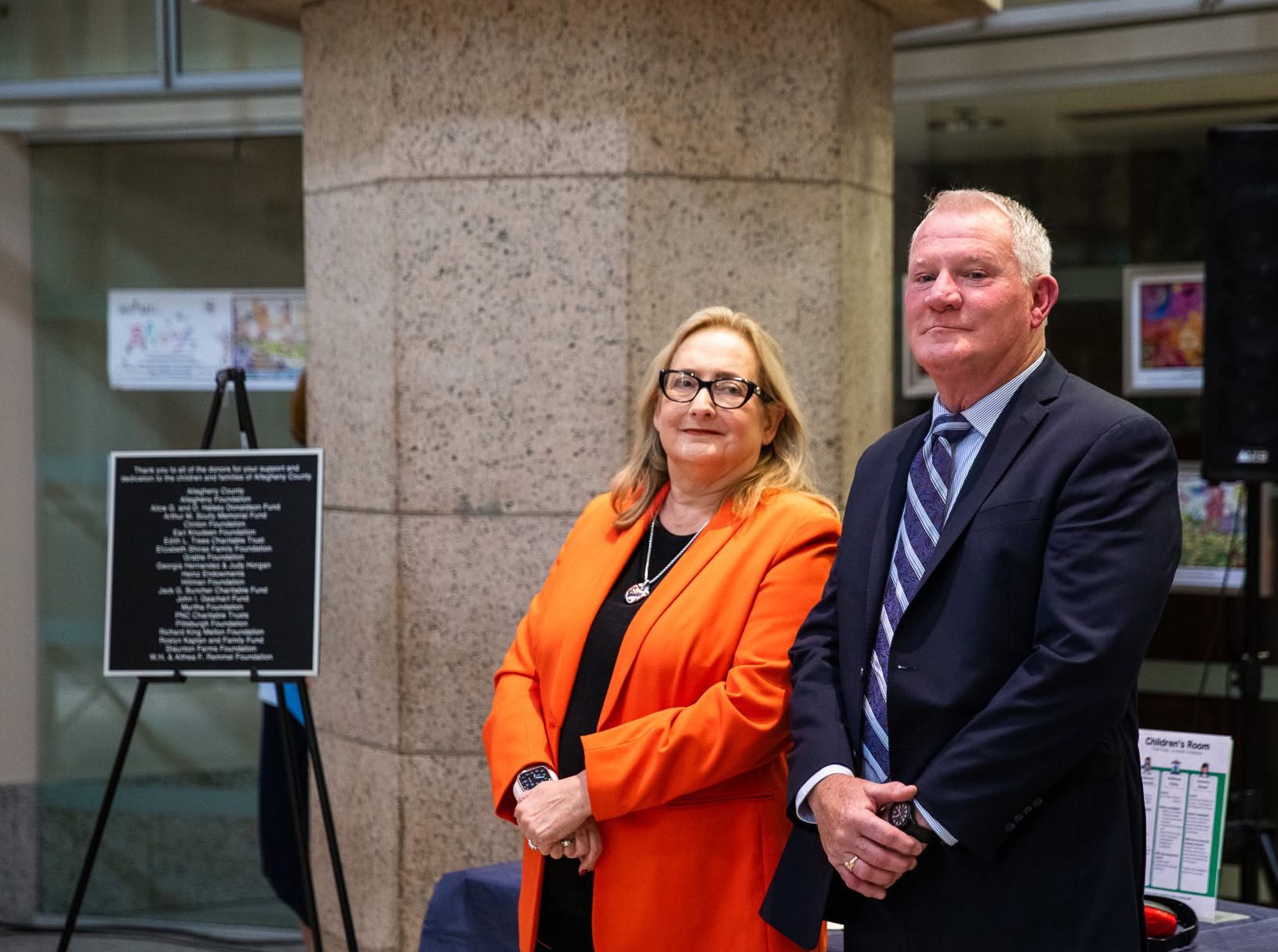
Sean Damon with Straight Ahead, an organization dedicated to ending life without parole throughout Pennsylvania, says that the new Democratic trifecta could make criminal legal reforms more likely to pass next year.
“It’s a more hopeful landscape,” he told Bolts, adding that lawmakers across the spectrum already seem to agree that people convicted of felony murder should get a chance to someday rejoin their communities. “The Senate Republicans, Dave Sunday (the Republican Attorney General), Governor Shapiro, the House Democrats, everybody agrees,” he told Bolts. “The question is how much time and what the new sentence should be.”
People who have already spent decades behind bars aren’t waiting for legislative action, however, and have been asking the supreme court to take matters into its own hands. A week after the ruling in Lee’s case this past spring, Jerome Coffey filed a petition challenging the felony murder conviction that’s kept him in prison for more than three decades. And in late September, the state supreme court announced that it was willing to take up Coffey’s argument that the ruling should apply to his case retroactively. What the court decides could determine resentencing proceedings for Coffey and others.
“While the Pennsylvania legislature has failed to address retroactivity, despite bipartisan support for this general idea, we look to the Pennsylvania Supreme Court to ensure that its decision in Lee is fairly applied to more than a thousand people serving a life sentence for felony murder,” Rupalee Rashatwar, managing attorney of the Abolitionist Law Center, which is representing Coffey, told Bolts. She called the court’s decision to consider Coffey’s case “the culmination of decades of organizing against death by incarceration sentences.”
“His case shows us the collective power we can build when movements come together to hope for a better world,” Rashatwar said, “a world where those who never intended to take a life have a right to be judged individually and for their own actions, a world with a glimmer of hope after 33 years of incarceration.”
Coffey’s attorneys say that a litany of problems with his felony murder conviction, which he has spent 33 years fighting, exemplify the urgent need for the state supreme court to enforce its ruling this past March and apply it retroactively to him and others.
Philadelphia prosecutors accused Coffey of being involved in a 1992 murder, alleging that he helped abduct and move the victim before a co-conspirator shot and killed him. At trial, they presented no physical evidence, resting their case solely on shaky eyewitness testimony.
One key witness in the case, Nemo Kennedy, recanted his initial statement to police that implicated Coffey before he went to trial. Kennedy then claimed during a pretrial hearing that he and a family member had been threatened by police, and that he had feared being charged as the shooter if he didn’t name Coffey.
Still, prosecutors put Kennedy on the stand during the 1994 joint trial for Coffey and his co-defendant. Kennedy was vague in his testimony, simply saying that on the night of the shooting, Coffey came to his house and told him he “just did something.” He also testified that two days later during a phone call, he told Coffey that people were saying that he’d killed Moss, to which Coffey allegedly responded that he “don’t care what people say.”
Kennedy also admitted during his testimony that he had been consuming PCP, codeine, and marijuana coated in embalming fluid both on the night of the killing and when he was first questioned by police.
One jailhouse informant testified that Coffey’s alleged co-conspirator confessed to the shooting and that Coffey threatened the informant’s sister if she testified against them at their trial. But a jail official demonstrated during testimony that the two men were never in the same housing unit and would never have had a chance to interact.
Coffey’s court-appointed defense attorney offered up his mother and twin sister as alibi witnesses. Both testified that Coffey was at home with them on the night of the shooting, which was the same day that his sister returned from the hospital with her newborn baby. Rashatwar, the Abolitionist Law Center attorney currently helping represent Coffey in his appeals, says that 30 years after the trial, her team uncovered that the prosecution had records confirming that his sister was discharged from the hospital the day of the shooting, but never gave those records to Coffey’s trial lawyer and didn’t present them at trial. So the jury never got to see those records that seemed to confirm their alibi testimony.
Coffey was convicted of second-degree murder and given a mandatory sentence of life without the possibility of parole. His co-defendant, Lee Smith, was acquitted.
In the decades following his 1994 trial, lawyer after lawyer abandoned Coffey as he tried to appeal his conviction—a common experience for Pennsylvanians trying to appeal their convictions due to lax rules, paltry pay, and crushing caseloads for court-appointed lawyers in the state, as ProPublica recently reported.

Coffey’s first attempt to appeal was dismissed because the court-appointed lawyer who represented him at trial failed to file a brief. Following the court reinstating Coffey’s right to appeal, his next lawyer was dismissed from his case after ghosting him for seven years. The lawyer who took over next also failed to file a brief and Coffey’s appeal was again dismissed. One of the other lawyers who was appointed to but hardly touched Coffey’s case was later imprisoned and disbarred for serving as consigliere for a Baltimore drug trafficking and money laundering ring.
Things started to change in 2017. By then, Coffey was in solitary confinement and had been organizing to improve prison conditions. The men in isolation looked out for one another and, if they thought someone was innocent, would pass their names along to their attorneys. That was how Coffey’s case eventually came to the attention of the Abolitionist Law Center, which in 2021 joined his attempts to appeal for his freedom.
This past March, Coffey’s lawyers filed his appeal with the state supreme court a week before it issued the decision in Lee’s case that ruled it unconstitutional to automatically sentence people with felony murder convictions to life without parole; Coffey’s lawyers then quickly amended their petition to add that decision to its list of arguments. While the supreme court rejected their other claims—such as ineffective assistance of counsel and the prosecution’s failure to hand over several pieces of exonerating evidence—it decided to hear Coffey’s argument that the recent state supreme court ruling should allow him the possibility of resentencing.
Coffey’s twin sister Jeanne is hoping that further action from the courts or legislature could give her brother a chance at freedom. She still calls him “Hoagie” because he had a penchant for eating the sandwiches before the start of his legal nightmare. She recalled how the 2017 election of Larry Krasner as Philadelphia District Attorney gave the family hope that his case might get a fresh look from the prosecutor’s office. Krasner set up a conviction integrity unit in 2018 to review possible wrongful convictions, and the unit produced many exonerations in the following years.
Jeanne says their elderly mother, who’d had a stroke by that point, was especially excited by the idea that her brother had a renewed chance at someday getting out. “The only thing she really wanted was to see her son coming home,” Jeanne recalled.
But Krasner’s office ultimately declined to review his case. Later, his office opposed his post-conviction relief act petition and the court agreed that, despite the many irregularities, these were not prejudicial and there was not a reasonable probability of a different trial outcome.
“There were so many things that were wrong in this case, and if you combine all of them together, that would have led to a different outcome,” Rashatwar with the Abolitionist Law Center said about Coffey’s case. “If you try to whittle it down to just one thing, you’re missing the bigger picture of all these problems that happened in this trial.”
Coffey’s mother died in October of 2021.
Jeanne says she’s not giving up hope that her brother could come home. She recalled how during Sunday dinners with their mother, her twin brother used to pluck food off her plate, joking, “You don’t want that.” Sometimes, he’d swipe an entire cheeseburger, telling her, “You was having it sit there too long.”
She wants to recreate that feast with him someday. “I want to make him every type of food just to see what he likes to eat.”
Among the many Pennsylvanians currently serving life without parole sentences for felony murder and hoping for a chance at freedom is John Marshall Payne, who is 71 and has spent more than 40 years in prison.
Much like Coffey, Payne’s 1986 conviction for being involved in a murder rested not on any physical evidence but rather eyewitness testimony that raises serious questions. Two of the three key witnesses were incarcerated at the time and, in exchange for reduced sentences, testified at Payne’s trial that he’d made statements that implicated him in the murder. One of them was facing first-degree murder in an unrelated case, for which the prosecutor had stated he would seek the death penalty; he was allowed to plead down to lesser charges that allowed him to be released on parole in 2017. The third witness testified that Payne admitted to being in a house where a woman had been killed, but upon cross examination, the witness admitted that she wasn’t sure if Payne had made the alleged statement at all, and that her heavy use of LSD caused her to “misperceive things.”
Payne’s attorney introduced testimony from multiple other people who contradicted the testimony of the prosecution’s key witnesses. This included testimony from his alleged accomplice who stated that he had never even met Payne; a man who was housed with one of the jailhouse informants, who testified that the informant told him that he’d learned about details in the case from a police officer, not from Payne; and a law librarian who testified that, on the day of Payne’s alleged confession to the second jailhouse informant, he was working in the law library with him and that the confession never happened. Nonetheless, the jury convicted Payne of felony murder. He was sentenced to life without parole.
Payne says he was devastated when he heard his sentence. Both of his daughters were young at the time, one of them 11 and the other just 18 months old. Like Coffey, Payne has never accepted the possibility of dying in prison and has spent his decades in prison trying to challenge his conviction and sentence any way he could—through court appeals, DNA testing, and a petition for commutation.
Then came the decision in Lee’s case this past March declaring life without parole sentences like theirs to be unconstitutional. Payne says he’d been following Lee’s case, but had tried not to get his hopes up. “It seemed like everybody expected it, but the courts can be very disappointing,” he said. “You think you’re going to win and you’re going to go home soon, and these things don’t always happen. I wasn’t going to set my goals too much on this case. When it happened, it was just overwhelming.”
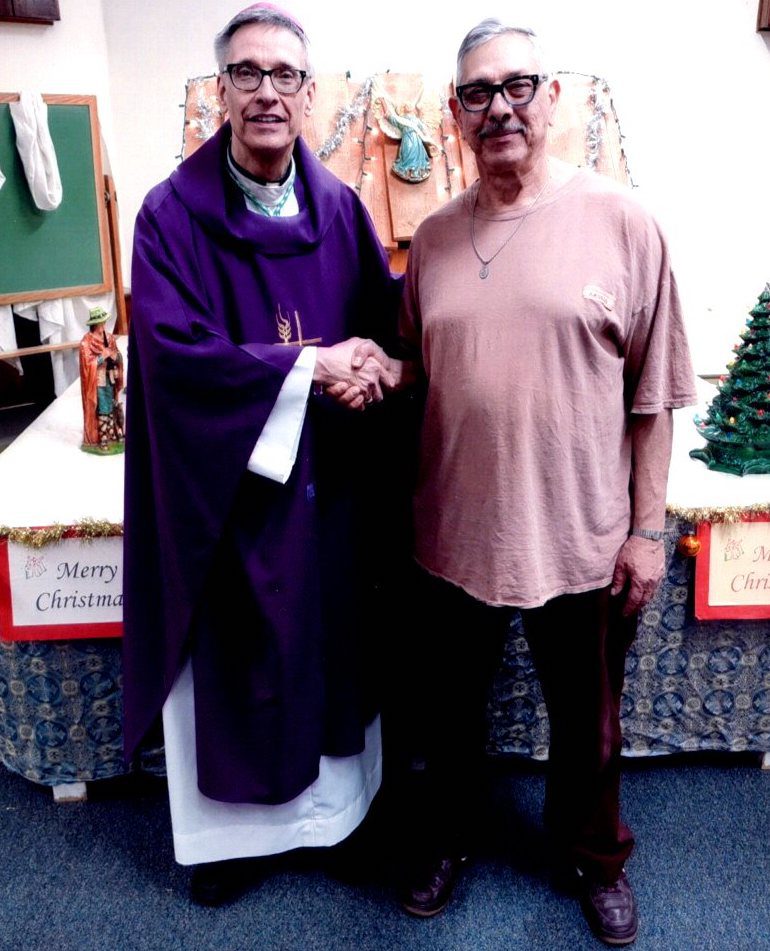
In September, after the legislature failed to meet the supreme court’s deadline to pass a bill, Payne and his attorneys at the Pennsylvania Innocence Project filed what’s called a King’s Bench petition, which, if granted, allows the state supreme court to decide on issues of immediate and significant concern, such as whether to apply a precedent-setting ruling retroactively. Payne and several others sentenced to life without parole for felony murder also recently signed onto an amicus brief filed in support of Coffey’s petition that’s now before the state supreme court.
Payne remembers his last Halloween with his daughters; his older daughter dressed as a cat, while his baby daughter was too young to really participate in the festivities. Since then, Payne has missed 40 years of holidays, birthdays, graduations, weddings, and the births and baptisms of every one of his five grandchildren.
Both of Payne’s daughters now live outside of Pennsylvania. He says his older daughter, who recently turned 50, visits four to five times a year, a considerable expense when factoring in airfare, hotel and the rental car needed to reach State Correctional Institute Huntington, which is nearly 150 miles from the Pittsburgh airport. Once a year, she brings her three children, the oldest of whom is now ten, right around the age she was when Payne was arrested.
Payne now says he’s holding out hope that the case before the state supreme court or action from lawmakers will soon give him a chance to forge more memories with his grandchildren, like outings to the park or trips to get ice cream. “I’m looking forward to that adventure,” he said when reflecting on the chance to be a grandfather outside the confines of prison.
Terri Harper has also closely followed the state supreme court cases over Pennsylvania’s especially harsh punishment for felony murder. Harper, who was also convicted of felony murder and has spent nearly 35 years in prison, says she believes that Coffey’s appeal that’s currently before the high court “will be paramount to us getting retroactive relief.” She has less confidence in lawmakers taking action, even with the recent shakeup in state government, given their failure to pass reforms this year.
“I don’t know if they will stand and make real decisions that affect me and 1,000 others, but I pray all this delay/nothingness will get me to my family, a new life and my desire to be a voice for a large community of voiceless human beings,” Harper said in an electronic message to Bolts.
Others serving extremely lengthy sentences are closely watching what happens, in hopes that the tide is turning against such severe sentencing.
Louisa Reyes was 16 years old when she was convicted of second-degree murder in 2020. Eight years earlier, the U.S. Supreme Court ruled that mandatory life without parole for people under 18 was unconstitutional. Reyes, who had been 14 when her then-boyfriend killed a friend of her mother’s, was sentenced to a range of 40 years-to-life instead of life without parole.
“I’m blessed to have a number in my sentence, but what does 40 years mean?” Reyes, now 22, reflected in an electronic message to Bolts. “My mother is in her 50s. My father is in his 70s. Will they be alive when I step out into the world?”
Reyes will be eligible for parole in her 50s. Another bill the Pennsylvania House considered but didn’t pass this session included a provision allowing those who were under 15 at the time of the offense to be resentenced between 20 to 30 years. If such a reform passed, Reyes could rejoin her family sometime between her mid-30s and mid-40s.
“As a child, my sentence made me barren, it took any chance of me building a love and memory rich life with my sisters and brother, and time that I would need to build whatever career of my choice,” she reflected.
“In no way am I taking away from the tragedy I was part of upon a family, and that memory and emotions that come with that night, no matter what sentence I receive, will be a life sentence of its own,” Reyes continued. “But there needs to be healing, for both ends. For my mom, who keeps my sandals at the door as if I were going to walk in any moment from school; for my sisters who were bullied at school and were rejected from their town because of my actions; and for my uncle who was harassed to the point where he left Pennsylvania, never to be seen or heard of again. With a second chance, hope and healing can return to my family as well as myself.”
Sign up and stay up-to-date
Get timely updates about pressing stories and elections.
Support us
Bolts is a non-profit newsroom that relies on donations, and it takes resources to produce this work. If you appreciate our value, become a monthly donor or make a contribution.
Related coverage

In North Carolina, Juvenile Lifers See a Pathway to Freedom