
This DA Tried to Punish Stanford Protesters Again, Until Judge Pulled Him from Case
Defendants had asked for Santa Clara DA Jeff Rosen to be recused after evidence emerged that he was using the ongoing prosecution to fundraise for his reelection bid on June 2.
| May 20, 2026
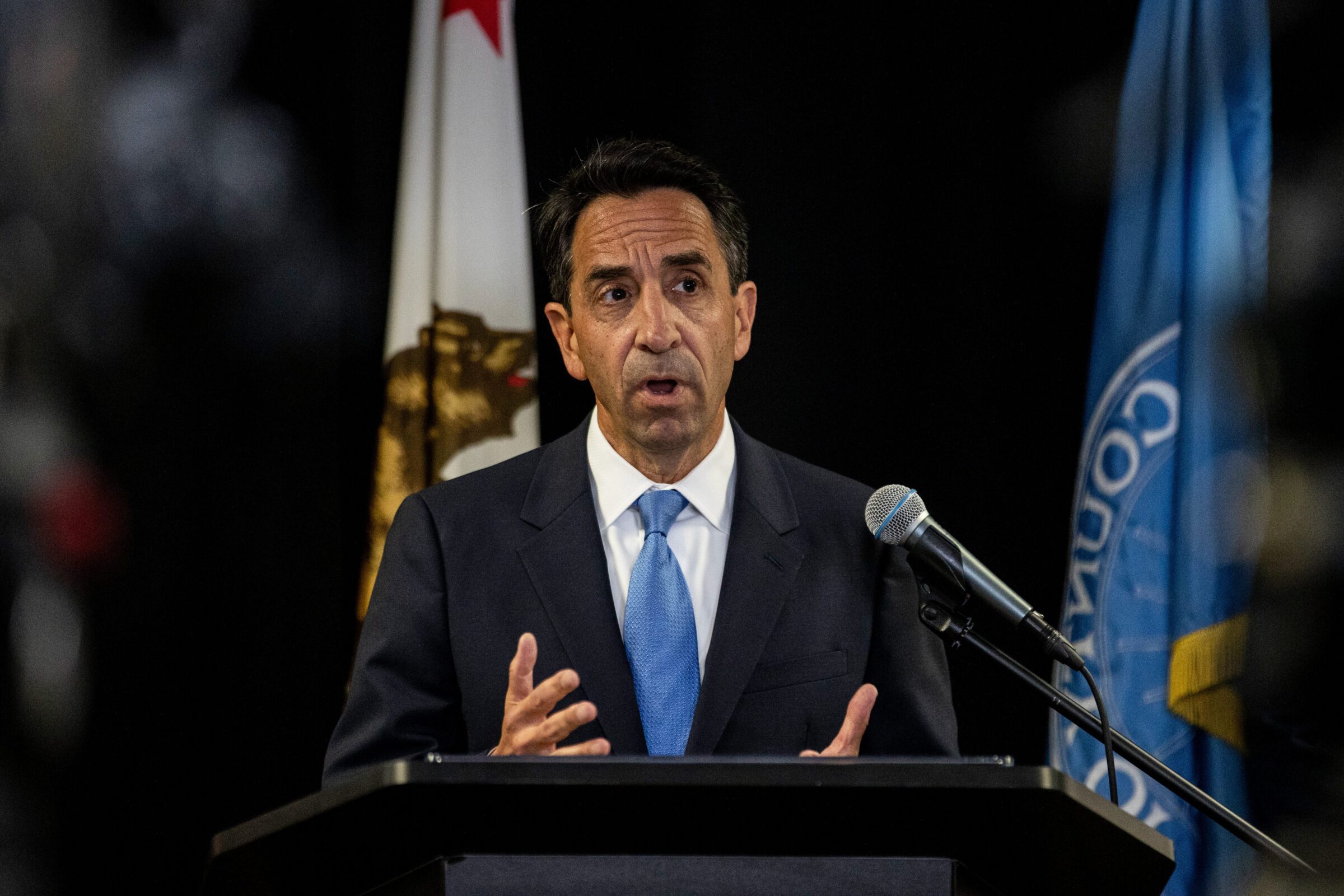
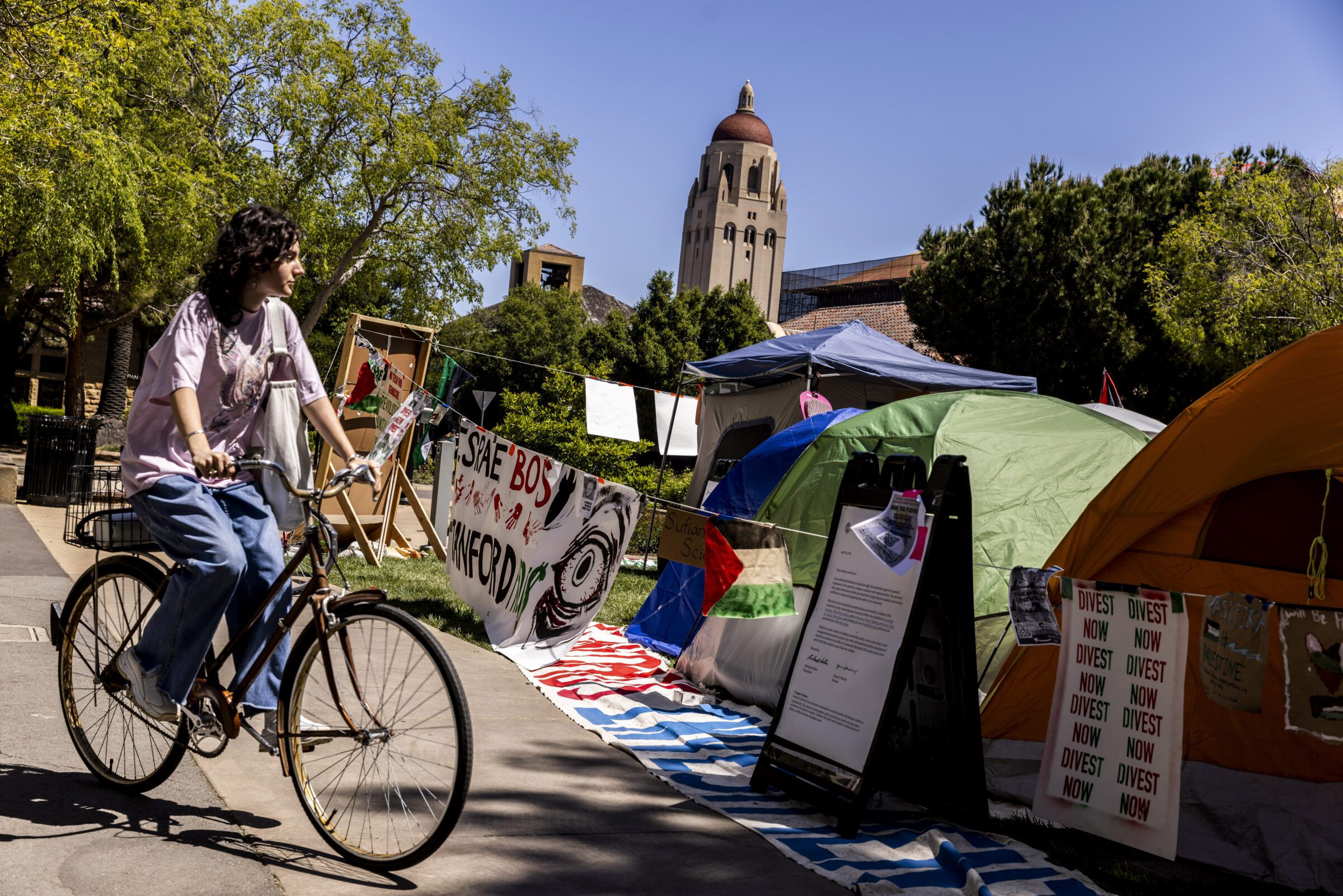
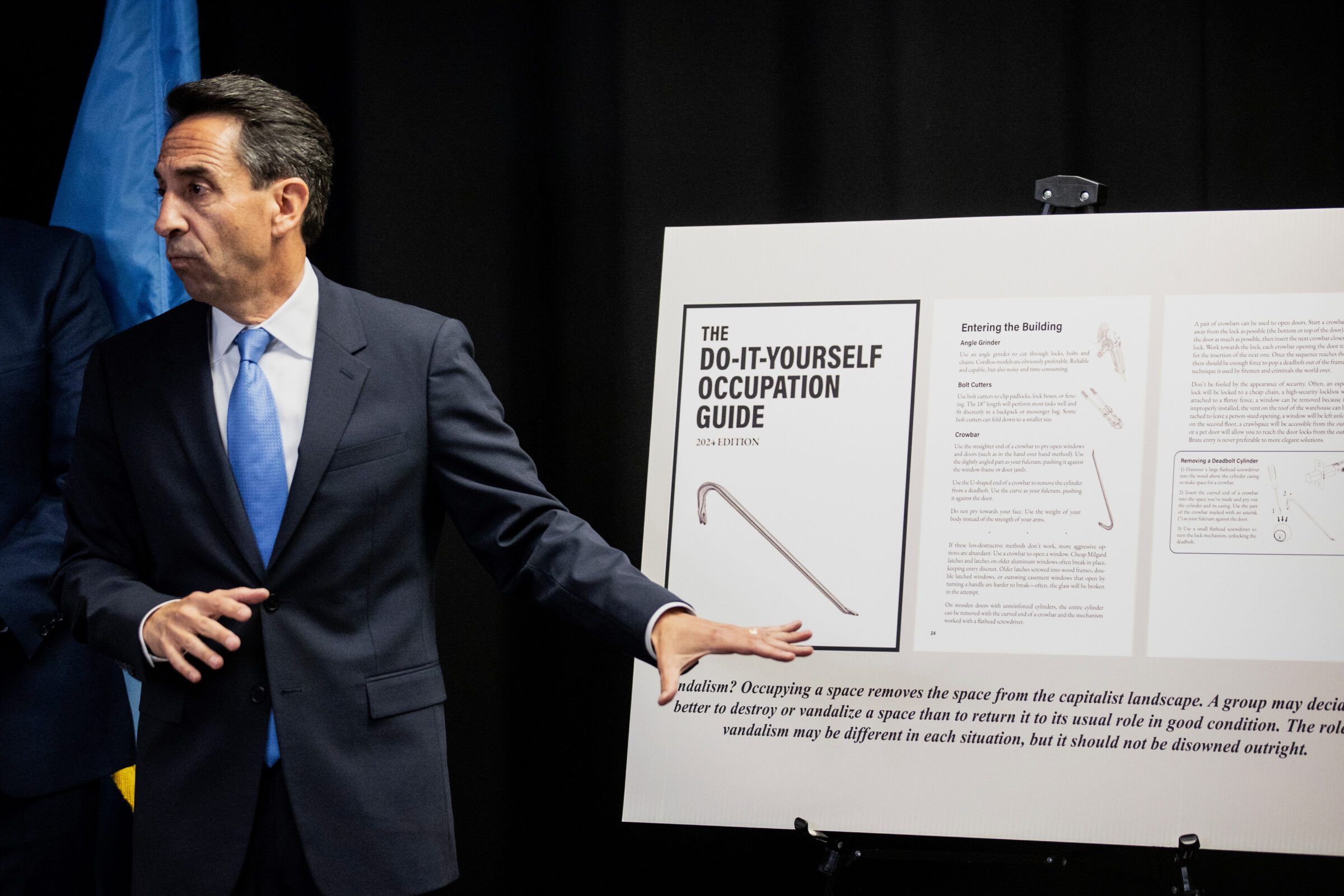
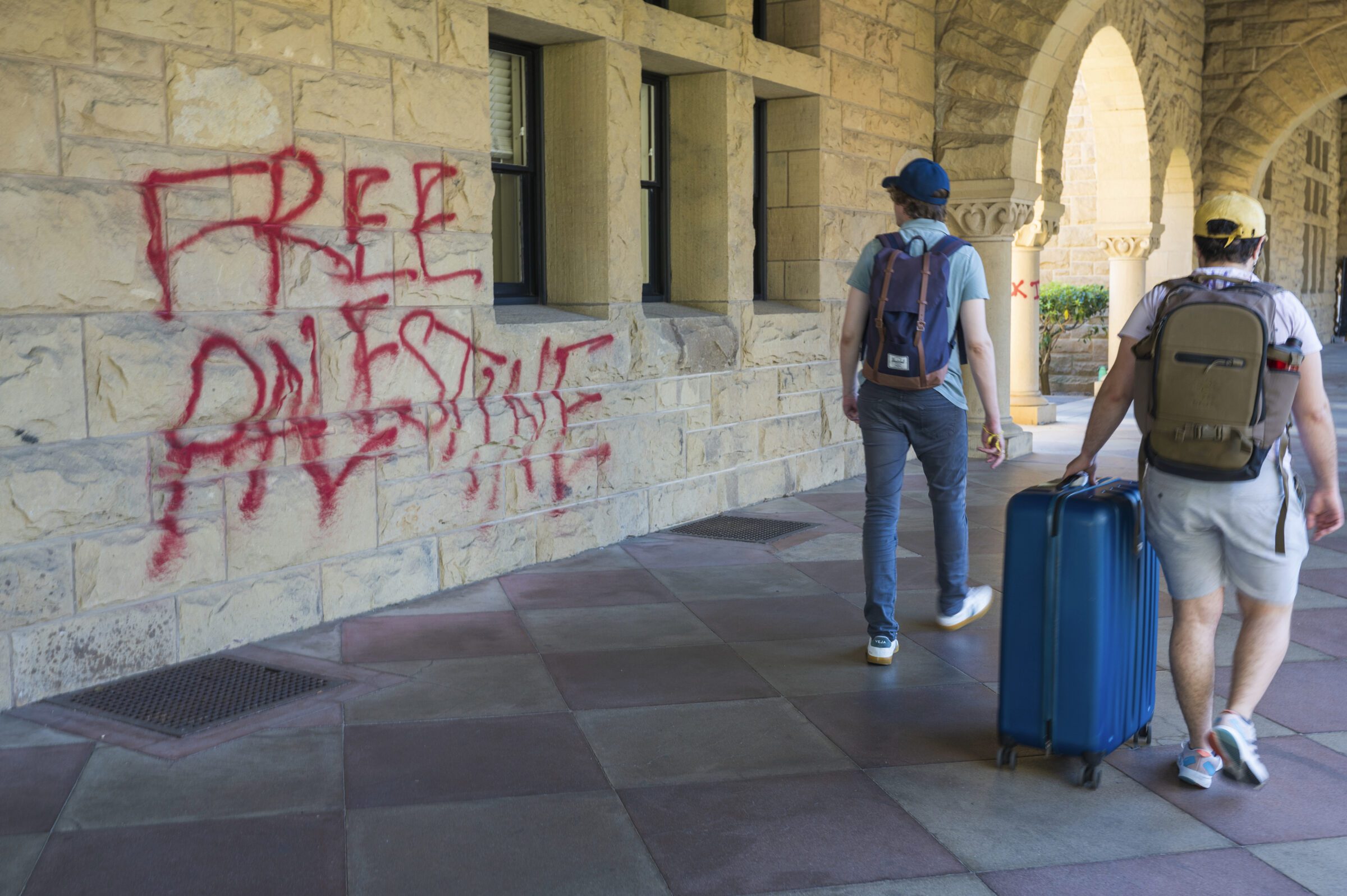
Santa Clara District Attorney Jeff Rosen has twice now brought felony conspiracy and vandalism charges against Stanford University students who occupied a campus building in 2024 in protest of Israel’s genocide in Gaza. After the initial trial ended in a hung jury in February, with jurors unable to reach a determination on either charge, Rosen immediately moved for a retrial. But on May 7, a Santa Clara County Superior Court judge removed him and his office from the case, finding that they could not impartially try the protesters—a rare rebuke for a district attorney, and a major twist to one of the harshest prosecutions of student protestors for Palestine anywhere in the US.
Stanford undergraduate student German Gonzalez, one of the defendants, told Bolts that the decision had lifted a weight off his shoulders. “This really feels like a vindication,” he said.
Rosen has said the decision to prosecute the students is neither personal nor political. “I think the best we can hope for in our elected officials is that they recognize the biases, that they set them aside and do their duty,” he told the LA Times in April 2025. “And that’s what I do every day.”
Privately, though, he framed the case as part of his larger battle against antisemitism and support for Israel, two issues that he has stated are personal causes for him. Rosen even used the case to solicit campaign donations as he seeks a fifth term as district attorney this year. Both moves were at the heart of the judge’s decision to force him off the case.
Back in February, Bolts was the first to report that Rosen was using his personal campaign website to showcase the Stanford prosecutions as an example of “fighting antisemitism.” Upon learning this, Santa Clara public defender Avi Singh, who represents Gonzalez, filed a motion to recuse the DA’s office from retrying the protesters, which in the process uncovered further evidence of Rosen using the ongoing prosecutions to fundraise for his reelection.
Singh argued that Rosen’s use of the case to raise money, and his allegations of antisemitism regarding a case where no such bias was formally alleged, constituted major conflicts of interest. “DA Jeff Rosen’s ‘fighting antisemitism’ website is the core of the recusal motion,” he told the court during a hearing on March 18.
On May 7, just four days before the second trial was slated to begin, the judge, Kelley Paul, sided with the defense. “The conflict is so grave as to render it unlikely that the defendants will receive fair treatment during all portions of the criminal proceeding,” she concluded.
For more stories about local prosecutors
subscribe to our newsletter
Paul’s ruling means that California Attorney General Rob Bonta is now responsible for either prosecuting the case or choosing to drop it. (As is standard, the AG’s office represented the Santa Clara DA in arguing against recusal.) The AG has successfully petitioned the court to postpone the case until July. Bonta’s office said they needed more time “to properly evaluate the entire case file in order to determine whether or not to retry the case after the first mistrial,” including “decisions about whether or not to amend or dismiss the charges for each defendant.”
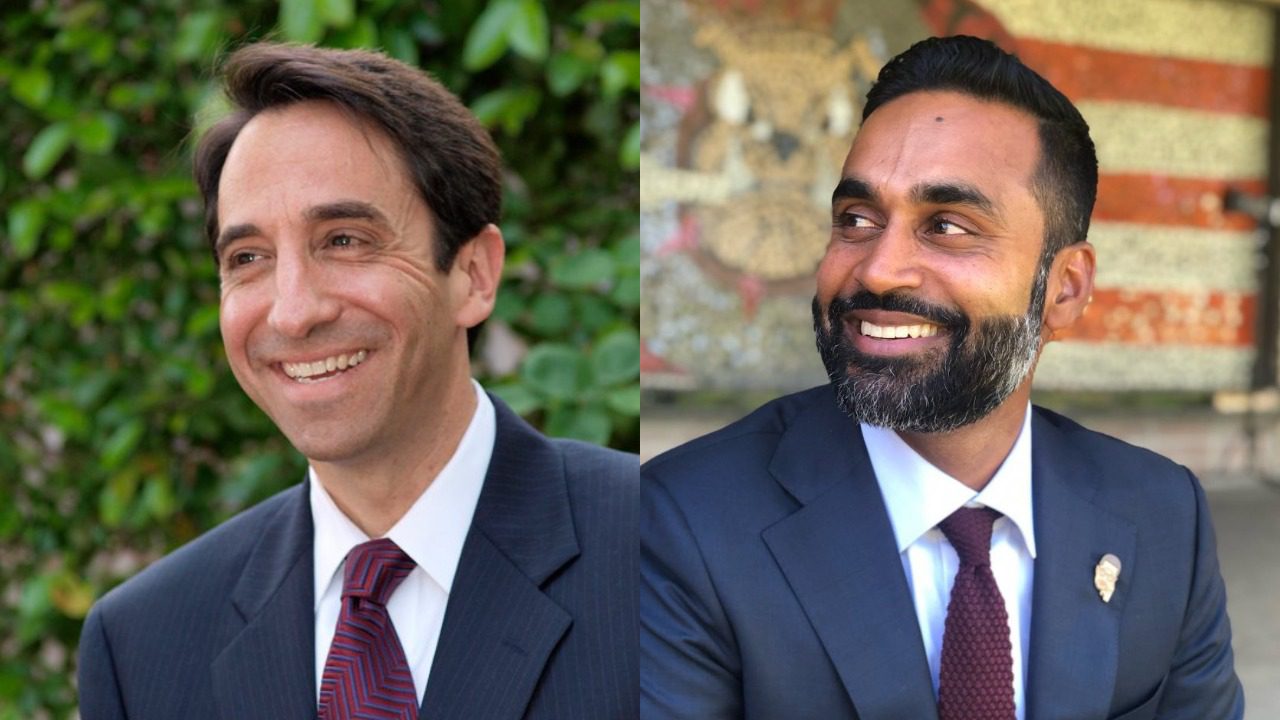
The decision comes as Rosen runs for reelection on June 2, facing an opponent, Santa Clara assistant DA Daniel Chung, whom he easily beat four years ago. Chung has criticized the Stanford prosecutions, telling Bolts the case was “very politically motivated, rather than driven by a pursuit of true accountability and restitution.”
“Sometimes I feel like DA Rosen is playing right into the Trump playbook of going after free speech and going after any perceived enemies of Israel,” Chung told Bolts.
The DA’s office declined to comment for this story. They responded to the recusal with a statement saying, “While we disagree with the judge’s ruling, we respect it.”
Rosen, a Democrat, has served as DA of Santa Clara County since 2011. In that time, he has cultivated a reputation as a criminal justice reformer, advocating for resentencing reforms to bring home some prisoners who had already served long sentences and backing Proposition 47, a landmark 2014 California sentencing reform initiative that only three of the state’s DAs supported at the time.
But Rosen also opposed a bill to ban the adult prosecution of 14- and 15-year-olds, and spearheaded a law that requires mandatory minimum sentences for some acts of sexual violence. And his long tenure as a Bay Area top prosecutor has coincided with the rise of a bolder ‘progressive prosecution’ movement in the region, characterized by former DAs like Chesa Boudin in San Francisco and Pamela Price in Oakland, whose core tenets went significantly beyond Rosen’s platform—and who attracted significantly more scrutiny and opposition in response; both Boudin and Price were ultimately ousted following well-funded recall campaigns.
In April 2025, Rosen announced felony charges against 12 Stanford student and alumni protesters who had occupied the president’s office nearly a year earlier. One defendant chose to cooperate with the prosecution; six more pled guilty to lesser offenses. The five remaining defendants opted to stand trial. They faced up to three years in prison, a permanent felony record, and $329,000 in restitution to Stanford for alleged property damage. Gonzalez, a low-income first generation student whose parents are refugees from El Salvador, told Bolts that the sum would “ruin my family financially for the rest of our lives.”
Court records show that on Dec. 5, as prosecutors prepared to take the Stanford case to trial, Rosen’s campaign sent out an email blast to 621 individuals in the Los Angeles area. The email invited them to an upcoming fundraiser event and asked them to donate to his reelection campaign.
The email went on to discuss Rosen’s Jewish faith and family history while directing recipients to his campaign website and saying, “My parents taught my brother and me to love and respect four things: America, the state of Israel, the Jewish people, and Judaism. I do. Here is a link to some newspaper articles and short videos which illustrate my commitment to these four things.”
The link navigates to a hidden page of Rosen’s campaign website titled “DA Rosen Fighting Anti-Semitism,” which prominently features a news video and LA Times op-ed article that discuss the Stanford prosecution.
Rosen did not charge the defendants with hate crimes in the case, and antisemitism is not alleged anywhere in the complaint against the students or in any of the case’s legal documents. In fact, the LA Times article featured on the campaign webpage quotes Rosen saying there was not enough evidence to show that the students’ actions showed bias against Jewish people rather than anger at Israel’s actions.
But to the defense attorneys in this case, as well as outside experts on prosecutorial norms and ethics consulted by Bolts, Rosen’s reelection campaign seemed to be telling potential donors in private that the students’ conduct was antisemitic, and that his decision to prosecute them was a part of his commitment to Israel.
“The DA’s campaign fundraising around this particular prosecution, and his identification of this particular prosecution with his pro-Israel sympathies, raise serious doubts whether he can treat these defendants fairly and impartially,” Bruce Green, the Louis Stein Chair of Law at Fordham University, told Bolts. (Green spoke with Bolts before the judge’s recusal decision.)
Lawyers for Rosen’s campaign have argued in court filings that the defendants have not sufficiently demonstrated that the DA’s “communications to supporters about his Jewish identity are relevant to the vandalism prosecution.”
The attorneys opposing Rosen’s recusal fought to avoid disclosing the identities of the 621 recipients of the fundraiser invitation email that links to the “DA Rosen Fighting Anti-Semitism” website. In an email to the DA’s office, Rosen’s campaign manager described them merely as “Jeff identified voters in Los Angeles County.” In an email exchange between Rosen and his campaign manager about the fundraiser invite, Rosen referred to these contacts as the “AIPAC emails” and “the AIPAC list.” (The campaign manager, Leo Briones, did not respond to multiple requests for comment).
The fundraiser mentioned in Rosen’s Dec. 5 email was held in Los Angeles a little over a week later. About 50 people attended, and LA District Attorney Nathan Hochman also spoke. Rosen’s publicly disclosed campaign finance records show that he raised over $8,300 from individuals or businesses in LA County in the month following the email blast, though it’s unclear which of these donations came in direct response to the invitation or the fundraiser.
During the recusal process, the defense team sought access to more information about this event, but lawyers for Rosen’s campaign consultants argued that the campaign was not in possession of the list of invitees or a copy of Rosen’s remarks that day.
Rosen’s team cast the defense’s effort to gather more information about the fundraiser as a “fishing expedition into the District Attorney’s Jewish supporters” and argued that “at worst (and a real possibility), this information is sought for a pernicious purpose, such as to harass an ethnoreligious minority.”
During his 15 years leading the Santa Clara DA’s office, Rosen has used his public position to advocate for pro-Israel policies and work with pro-Israel groups. He is affiliated with the Bay Area Jewish Community Relations Council, which has provoked controversy among other Jewish groups in the region by, among other things, petitioning local officials to oppose resolutions supporting a ceasefire in Gaza. An announcement for an event the DA spoke at in 2025, organized in partnership with Silicon Valley Hillel and the JCRC, described Rosen as working “within local and state Democratic party politics to push back against anti-Israel stances.”
In her ruling removing Rosen from the case, the judge pointed to another event at which Rosen spoke, this one hosted on March 9, 2025 by the Silicon Valley branch of Hillel. The event’s keynote speaker was Shai Davidai, the Columbia Business School professor who was removed from campus after harassing other faculty, and has used his large social media following to dox pro-Palestine student protestors.
Rosen attended the event in his professional capacity and a video of his speech was posted on Youtube by his chief of staff at the DA’s office. His “Fighting Anti-Semitism” campaign page also links to the video.
During his Hillel speech, Rosen referred to Students for Justice in Palestine as an example of “student groups that are sort of the opposite of what they stand for.” He concluded his speech by saying, “We’re gonna fight for Israel. And by doing that we’re gonna fight for America.” A month later, he announced felony conspiracy and vandalism charges against the 12 Stanford students. Gonzalez is on the steering committee of Stanford’s Students for Justice in Palestine chapter, and his four co-defendants organize informally alongside SJP.
The defense attorneys argued that Rosen’s behavior fit with the precedent established by People v. Lastra, where an appellate court upheld a trial judge’s decision to recuse the San Luis Obispo County DA’s office from prosecuting college students protesting George Floyd’s murder. Evidence for recusal included disparaging comments that the DA, Dan Dow, had made about Black Lives Matter, a fundraising appeal for the DA’s reelection that cited the need for him to “keep leading the fight in SLO County against the wacky defund the police movement,” and his appearance alongside prominent commentators who criticized BLM.
In her decision, the judge agreed that the Stanford case had met the precedent established by Lastra. She cited Rosen’s comments about Students for Justice in Palestine during his Hillel speech and said the Stanford case was “not a hate crime case” and shouldn’t be characterized that way: “The characterization of the prosecution as a fight against antisemitism runs afoul of case law.”
“A decision to recuse a DA’s office is rare, and there’s a high standard that needs to be met,” Miriam Krinsky, a former federal prosecutor and the founder of Fair and Just Prosecution, a network for reform prosecutors, told Bolts.
Recently, during an endorsement interview with the Bay Area News Group, the DA said publicizing cases he’s prosecuting is a normal practice for an elected official, and that he hadn’t faced recusal motions in other such cases. The accusation of bias in this case, he claimed, was itself antisemitic. “But in this case, because it’s about antisemitism, and it’s because I’m a Jew, it’s the oldest fucking antisemitic trope,” he said. “And that’s exactly what the defense attorney is doing in this case.”
“Our motion is grounded in a very close examination of the factual record and the Lastra, Eubanks, and Schumb cases,” Singh told Bolts in response, referencing the San Luis Obispo case plus two other California recusal cases.
Chung, Rosen’s opponent in the June race, is technically still a deputy DA within his office, though Rosen has twice attempted to fire him and does not allow him to work or set foot on Santa Clara DA property amidst litigation over Chung’s reinstatement.
The roots of this discord go deep: In 2021, after Chung wrote an editorial arguing that California’s sentencing reforms could lead to increased violence against Asian people, Rosen demoted him. The following year, during the 2022 midterms, Chung ran against Rosen from the right, denouncing the DA as insufficiently tough on crime. Rosen was also challenged from the left that year by a Santa Clara public defender, Sajid Khan. At a candidate debate that year, Chung and Khan both alleged that Rosen intentionally tripped Chung.
Chung remains a critic of California’s major criminal justice reforms as he challenges Rosen a second time. He continues to oppose the landmark measure Prop 47, which downgraded a number of crimes from felonies to misdemeanors, and supported a major rollback in 2024.
He also takes issue with Rosen’s handling of the Stanford prosecutions, denouncing the DA for alleged conflicts of interest and for “only targeting political enemies.” Chung has attended rallies on the students’ behalf. He told Bolts that the Stanford case is a huge waste of taxpayer money and office resources and that he would have given the protesters diversion. In his view, Rosen’s conduct in this case “does not align with the values of a progressive prosecutor” and is “really antithetical to really promoting public safety, promoting rehabilitation, giving people second chances.”
Rosen is the incumbent and enjoys widespread support from political leaders in the Bay Area. He’s received endorsements from U.S. Senator Adam Schiff, U.S. Representative Ro Khanna, and San Jose Mayor and gubernatorial candidate Matt Mahan, as well as a host of other state and local legislators and area police unions. In 2022, Rosen displayed a number of prominent criminal justice reformers on his endorsements page, but that category and those individuals are not listed this year.
Gonzalez told Bolts that while the recusal is a relief, he won’t feel completely relaxed as long as the AG still has the case: “We’ve said since the beginning that we were going to keep pushing to get the charges dismissed.” In the meantime, he plans to keep organizing on campus. “This is all for Palestine,” he said.“ The moment that that ruling came through, it was right back to work.”
Sign up and stay up-to-date
Get timely updates about pressing stories and elections.
Support us
Bolts is a non-profit newsroom that relies on donations, and it takes resources to produce this work. If you appreciate our value, become a monthly donor or make a contribution.