
In Seattle Mayoral Race, Tensions Between Crackdown and Compassion on Homelessness
Seattle Mayor Bruce Harrell has ramped up sweeps of homeless encampments in his first term. In his reelection bid, he faces a progressive challenger who wants to curb them.
| October 10, 2025
This article is part of our coverage of law enforcement issues in the municipal races of 2025. Read our stories on New York City and Minneapolis.
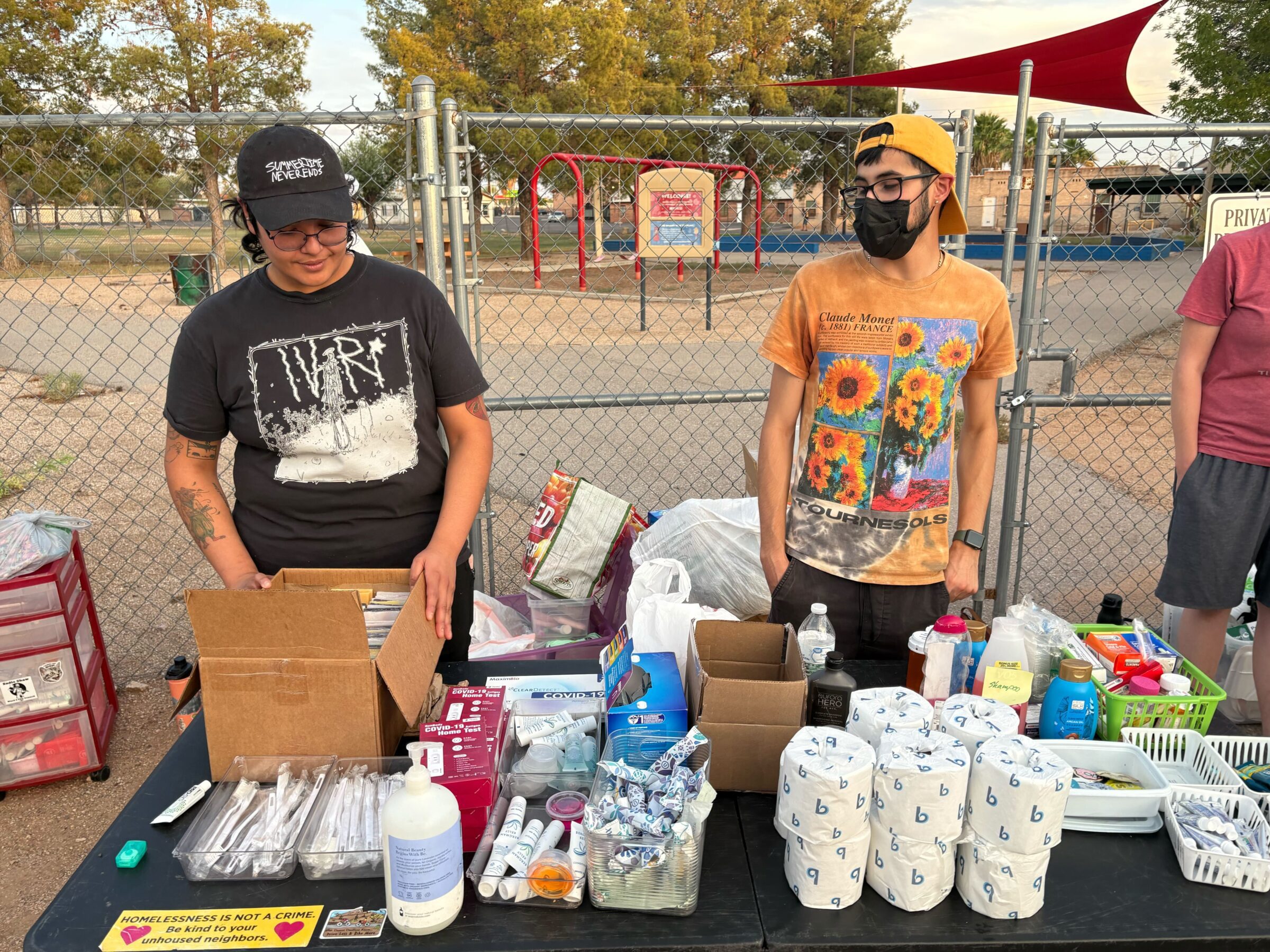
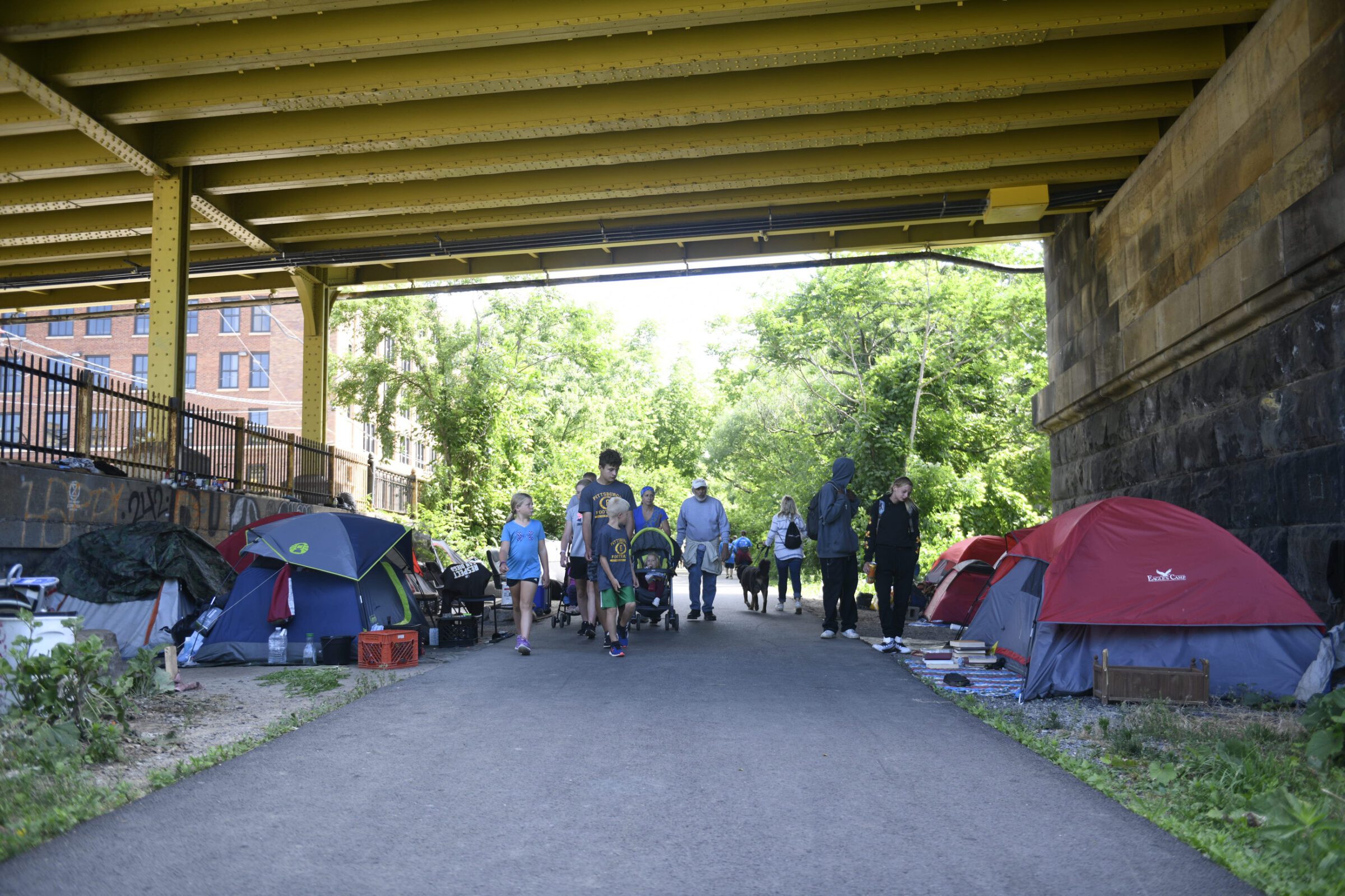
Like other big cities, Seattle has struggled to address its homelessness crisis, which has only worsened in recent years amid a tech boom, and economic shocks of the COVID-19 pandemic that all led rents and house prices to skyrocket. According to the Point-in-Time survey done for the Department of Housing and Urban Development (HUD), King County, which comprises Seattle and its surrounding area, had the nation’s second largest unsheltered population as of 2024. It’s second only to Los Angeles, and the numbers have significantly risen in recent years.
The crisis has led cities across the U.S. to adopt increasingly punitive policies toward those living outside, including camping bans and encampment removals, commonly dubbed “sweeps.” Since the U.S. Supreme Court’s Grants Pass ruling last year, more than 200 municipalities have passed new anti-camping fines and criminal penalties. And at the federal level, President Donald Trump seized upon this anti-homeless animus with a July executive order that directed the government to ramp up funds to local law enforcement for encampment sweeps.
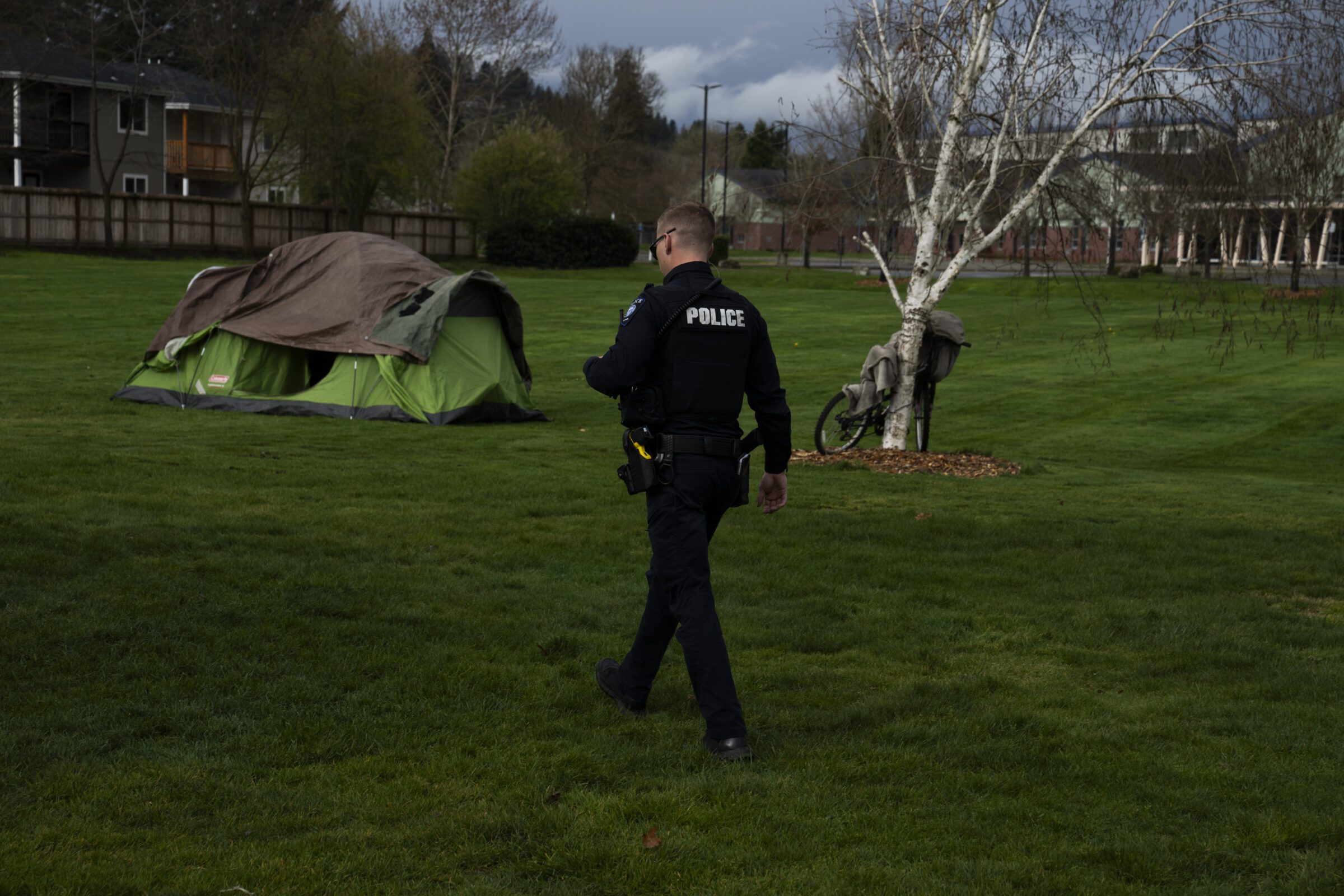
Seattle has been at the forefront of this trend, carrying out hundreds of homeless encampment removals every year since the early 2010s. Under the leadership of current Mayor Bruce Harrell, the city saw an unprecedented expansion in the displacement of homeless people, with more than 4,200 tents, RVs, and other living structures removed during sweeps in 2024 alone.
Harrell is now running for a second term, and Seattle voters will have a stark choice between him and progressive challenger Katie Willson, a community organizer with no experience in elected office, but who has resonated with voters. Wilson, who founded the advocacy organizations Transit Riders Union, won the nonpartisan August primary by more than 18,000 votes. The general election in November is now being seen as a clash between the centrist and progressive wings of the city’s Democratic Party, animated in part by debates over Harrell’s punitive policies against homeless people.
Wilson says she’d ban most encampment sweeps if she leads the city, as she finds the practice harmful and counterproductive; when the city conducts a sweep, she says she’d require prior notice and outreach to the people who’d be affected, with an eye to finding alternatives.
She has made creating an average of 1,000 new units of shelter a year over the next four years a cornerstone of her homelessness policy platform. She argues that if the city sufficiently scales up shelter options, it will not have to rely on sweeps to ensure public spaces are clear.
Sign up to our newsletter
For more on local debates around homelessness policy
Chanel Horner, a human rights activist who has experienced homelessness and currently lives in a tiny house shelter, has been subjected to multiple sweeps herself, and she says she is supporting Wilson because she views the surge in sweeps to be pointless.
“You’re going to sweep them and they’ll be gone, but they’re just going to come right back,” Horner told Bolts. “It’s not actually helping anything.”
Starting in 2017, Seattle established a formalized agency dedicated to sweeping encampments and connecting people with services, known as the Navigation Team. It was made up of a mix of Seattle Police Department officers, parks personnel, human service providers and other city contractors. They would arrive at homeless people’s encampments and RVs—sometimes with up to three days’ notice but usually without—and force residents to move, throwing away trash and rarely storing property left behind.
During the 2020 Black Lives Matter protests, city officials at the time including then-Mayor Jenny Durkan, were under pressure to slash the police budget and pledged a 50 percent cut and reallocation of funds, but the city council never implemented the plan. It did, however, vote to disband the city’s sweeps team in August 2020.
Encampment removals dropped sharply, from more than 900 incidents in 2019 to around 50 in 2021.
However, the halting of most sweeps was not paired with a scale-up in shelter; in fact, many shelters had been forced to close or decrease capacity during the pandemic due to public health guidance. This led to the establishment of many large, semi-permanent outdoor encampments throughout the city. By 2022, the annual Point-in-Time count revealed 7,685 unsheltered people, nearly a 50 percent increase from 2019.
As a mayoral candidate in 2021, Harrell capitalized on frustration over the visible poverty, pledging to clear public parks and green spaces. After easily winning that year, Harrell established the “Unified Care Team” (UCT), an almost exact reboot of the Navigation Team, just with far more resources and staffing.
This team maintained the same broad mandate of clearing encampments and vehicles from public parks and right-of-ways. The team also connects homeless residents to shelter, but many sweeps do not feature any human services personnel, and even when people are ready to accept referrals, there are hardly any vacancies, with an average of 99 percent of beds set aside for encampment residents full.
Deploying these teams has been Harrell’s primary tool to combat street homelessness. From January 2022, when he took office, to June 2025, the UCT carried out 6,800 sweeps, an average of more than five per day, and more than under his four mayoral predecessors combined.
Approximately 85 percent of sweeps are categorized as obstructions, requiring no prior notice from UCT staff before beginning removal.
Seattle is on track to have spent a cumulative $85 million on sweeps during Harrell’s term by the end of 2025. According to Seattle’s homelessness action plan, the sweeps policy was at least successful in Harrell’s goal of reducing encampments: It resulted in a 72 percent reduction in observed tents and 57 percent reduction in vehicles from June 2022 to March 2025, according to the city’s own official estimates.

In an interview with Bolts, Harrell acknowledged that the removals are not a solution to homelessness, but rather intended to mitigate negative effects associated with encampments like crime, gun violence and unauthorized fires.
“The Unified Care Team is not a model to solve homelessness,” Harrell said. “They are a model to make sure everyone is safe in an area.”
Harrell said his strategy on homelessness is two-fold, the UCT sweep teams paired with a rapid scaling up of shelter and affordable housing. He, like Wilson, says he subscribes to a Housing First model which posits that housing should be provided to chronically homeless people regardless of whether they have substance use disorders.
Seattle’s 2025 homelessness budget reflects this split, with about $30 million dedicated to the UCT and $135 million to fund around 3,000 units of shelter and other services for homeless people.
But while Harrell’s impact on encampments is clear, results on his administration’s efforts at expanding shelter and housing are more muddled.
During his 2021 campaign, Harrell promised to “identify” 2,000 new units of shelter and housing for homeless people. His office says they exceed the goal, locating 2,065 new units of shelter and permanent supportive housing by the end of 2022.
However, reporting by Axios has cast doubt on the figure, reporting that about 550 of the new units were already in development prior to when Harrell took office and another 200 were replacements for shelter and housing that had been demolished.
HUD data show that between 2020 and 2024, the Seattle region saw no effective increase in the number of year-round shelter beds. Seasonal and overflow shelter beds increased by about 800 during that period. The region has seen a net increase of about 2,200 new housing units for people experiencing homelessness, per the HUD counts, although a large portion of those units have been funded by the county and not the city.
When pushed by Bolts about the discrepancy in the figures, Harrell stood by the 2,000 number, adding that he identified another 1,000 units of new housing and shelter in the nearly three years since.
Seattle has seen a significant increase of investment in affordable housing in recent years. But critics have questioned the extent to which that can be attributed to Harrell. For example, one initiative that funded the development of 1,400 new housing units for chronically homeless people was passed by the surrounding county, not the city. Likewise, a major payroll tax on Amazon and other big businesses that has brought in hundreds of millions of dollars for affordable housing was passed in 2020 when Harrell wasn’t in office.
Harrell did back the 2023 Seattle housing levy, which was triple the funding of the previous one and is estimated to enable the construction of 3,000 affordable housing units over a seven-year period.
“I used a lot of political capital to pass a housing levy at $970 million,” Harrell said.
Longtime homelessness advocate Anitra Freeman does not believe Harrell has acted with enough urgency to roll out new city-funded shelter beds. Freeman is a member of SHARE/WHEEL, a grassroots nonprofit that runs five indoor shelters and two tent cities in the Seattle area.
The organization gets most of their funding from government grants, and has had difficulty maintaining their Tent City 4 (TC4) sanctioned encampment. After a one-year stint at a church’s parking lot in the Lake City neighborhood, the 120-resident encampment had been looking to move to a nearby city-owned lot in May. However, just a week and half before the scheduled move, city officials revoked permission.
Following pushback from activists and elected officials, the city relented and allowed the move to the proposed site.
On the campaign trail, Wilson has criticized Harrell for what she calls his appeasing attitude toward housed residents who oppose encampments as well as homeless shelters in their neighborhoods, leading to the delay or cancellation of housing projects that receive significant pushback. Last August, the city stopped a planned tiny house village by the organization Nickelsville following complaints by upset neighbors in South Seattle. The project was only resumed after news outlets reported that one of Harrell’s deputy mayors personally cancelled the permit.
A spokesperson for Seattle’s Human Services Department told the independent news outlet PubliCola that delays in permitting were mainly procedural, waiting for another department to process paperwork.
Wilson sees these two examples as a part of a wider pattern by Harrell in deprioritizing new shelter.
“We’ve seen in the city’s behind the scenes opposition to the Brighton Village site for Nicklesville, in all the drama around the tent city placement in Lake City, his focus has been on appeasing a few cranky neighbors, to put it kindly,” Wilson said in an interview with Bolts.

Freeman of SHARE/WHEEL similarly believes the current city leadership’s priorities are misplaced. “Instead of ramping up and creating resources to meet the need, he has spent money on sweeps that not only don’t solve the problem, they increase the problem,” Freeman said. “He’s pulling a con job on the public by saying, ‘Look, I’m doing something about the homeless problem,’ when sweeps are not solving the homeless problem.”
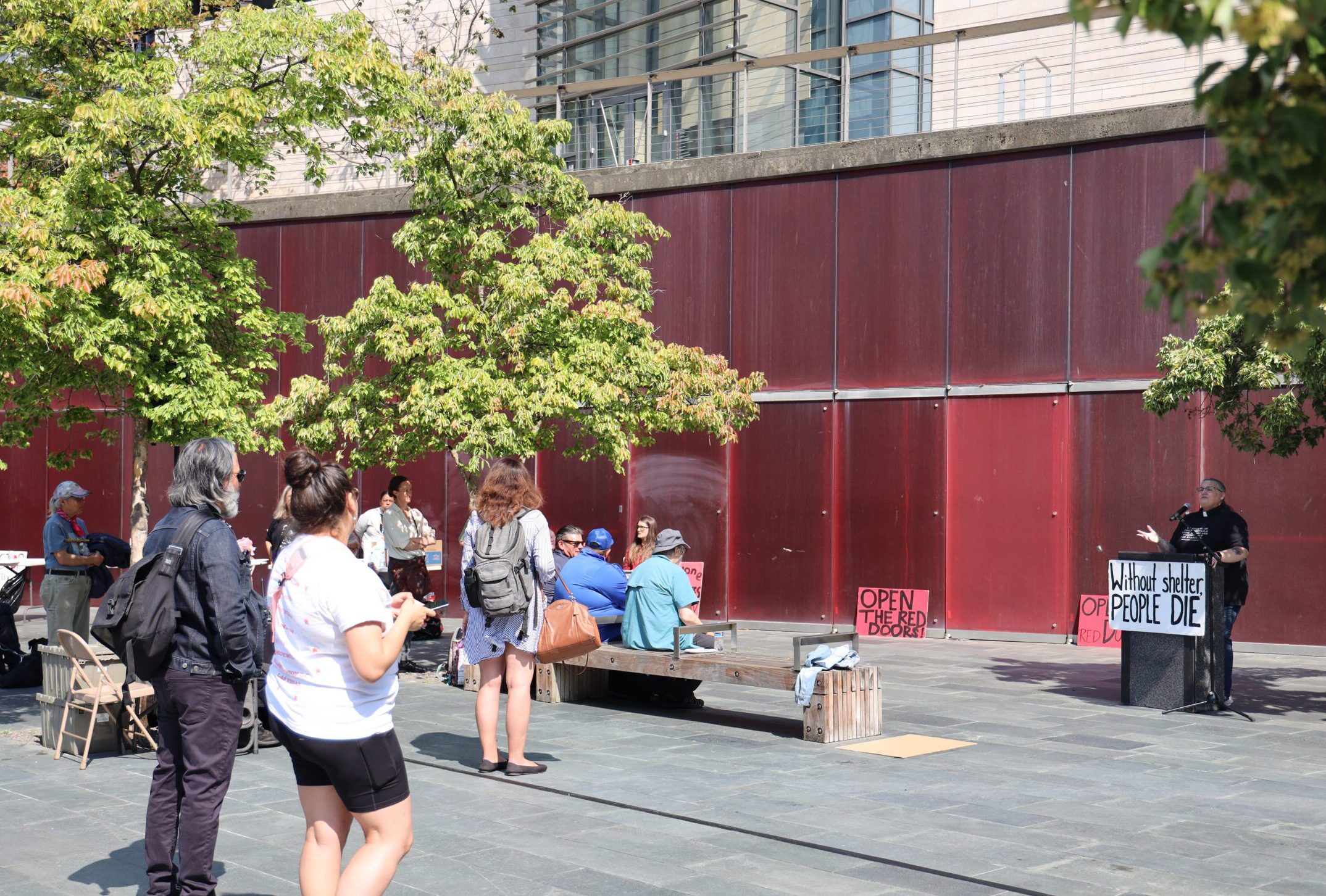
Both Wilson and Harrell say they have met with TC4 residents to hear their concerns, with Wilson participating in a Sept. 2 rally for more shelter organized by SHARE/WHEEL outside city hall. Harrell, who was also invited, did not attend. He did tell Bolts that he visited TC4 in August and thought they were “a great community” and assured them “we would find another place for them to live.”
As he faces Wilson’s challenge, Harrell has also received criticism from the other side—from housed Seattle residents for not doing enough to sweep unhoused people out of public view. Public records obtained and analyzed by Bolts found that complaints about homeless encampments have risen substantially since Harrell took office.
In 2021, at the height of Seattle’s visibly unsheltered homeless population following the pandemic and the reduction of sweeps, residents submitted more than 12,000 complaints to Seattle’s customer service bureau. This figure nearly quadrupled to more than 47,000 complaints in 2024, even as encampment sweeps ramped up during the same time period. The number of unique individuals submitting complaints also doubled from 5,500 to 11,000 over those four years.
Many of the complaints include references to drug use, trash and dumping, and some contain extremely stigmatizing language. For example, one complaint accuses a homeless individual of being a “drug drunk zombie” and another “a cancer on the neighborhood.”
The increase in complaints about encampments correlates with an increase in sweeps, but the data also show that there have been more complaints at a time when official encampment counts are at a low. This raises questions about the accuracy of the city’s encampment survey, but could also point to a paradoxical situation where the visible presence of a responsive sweeps team in the UCT—paired with the roll out of an app with a dedicated encampment reporting function—is emboldening housed people to complain more about their homeless neighbors, even as they disappear from the streets.
Anti-homeless rhetoric has dramatically escalated in Seattle and more broadly, most recently epitomized by Fox News host Brian Kilmeade’s comment endorsing the mass euthanasia of homeless people.
Prior to announcing her run for office, Wilson wrote an opinion column in The Stranger arguing that Seattle’s left had lost the argument on homelessness, contributing to electoral defeats in 2021 and 2023. She thought that although progressives generally proposed sound policy solutions, they lacked attentiveness to common concerns associated with homelessness like public drug use, behavioral health crises and trash—the sort of grievances that have come up in residents’ formal complaints
But Wilson has remained steadfast in saying aggressive sweeps are not the solution. She has pointed specifically to a program funded, until recently, by the Washington State Department of Transportation (WSDOT) to resolve encampments under highways as a model. The program removed a relatively small volume of encampments—47 between spring 2022 and August 2024—but also saw a higher success rate in getting homeless people to accept shelter. Instead of just days of outreach, WSDOT had outreach workers spend weeks building relationships with encampment residents. The program boasted bringing about 1,200 people inside, with just under 900 people remaining in housing as of August 2024.
In his interview with Bolts, Harrell said he would stay the course with the UCT and continue investments in housing and shelter, including $5.9 million in new funds for 100 new tiny house village shelters in 2026. He also criticized Wilson’s plan of significantly ramping up housing projects and shelters as unrealistic, faulting her for a lack of specifics.
“My fear is that people can be sold on a false bill of goods, an empty promise, when in fact we know exactly what we’ve done and what we will do,” he said. “And she has absolutely zero experience in the housing space and homelessness space. No track record at all.”
For her part, Wilson doubled down on her statements in The Stranger, telling Bolts that the left should be more open to understanding where housed residents’ frustrations are coming from—even if for the sake of building more momentum for progressive responses.
“I think there was a tendency to pin anyone who was concerned about public encampments, who was concerned about a tent city being in their neighborhood or permanent supportive housing being in their neighborhood, as being simply NIMBYs , who just don’t want to look at the problem,” Wilson said. “And I think that really, that attitude was very much not helpful in building the kind of strong public support that we need to actually solve the problem.”
Sign up and stay up-to-date
Get timely updates about pressing stories and elections.
Support us
Bolts is a non-profit newsroom that relies on donations, and it takes resources to produce this work. If you appreciate our value, become a monthly donor or make a contribution.