
With Latest Win, Progressive Vermont Prosecutor Looks to Double Down on Reforms
Over nearly a decade in office, Burlington’s chief prosecutor Sarah George has pursued a platform of restorative justice and dialing back low-level prosecutions.
| August 12, 2026
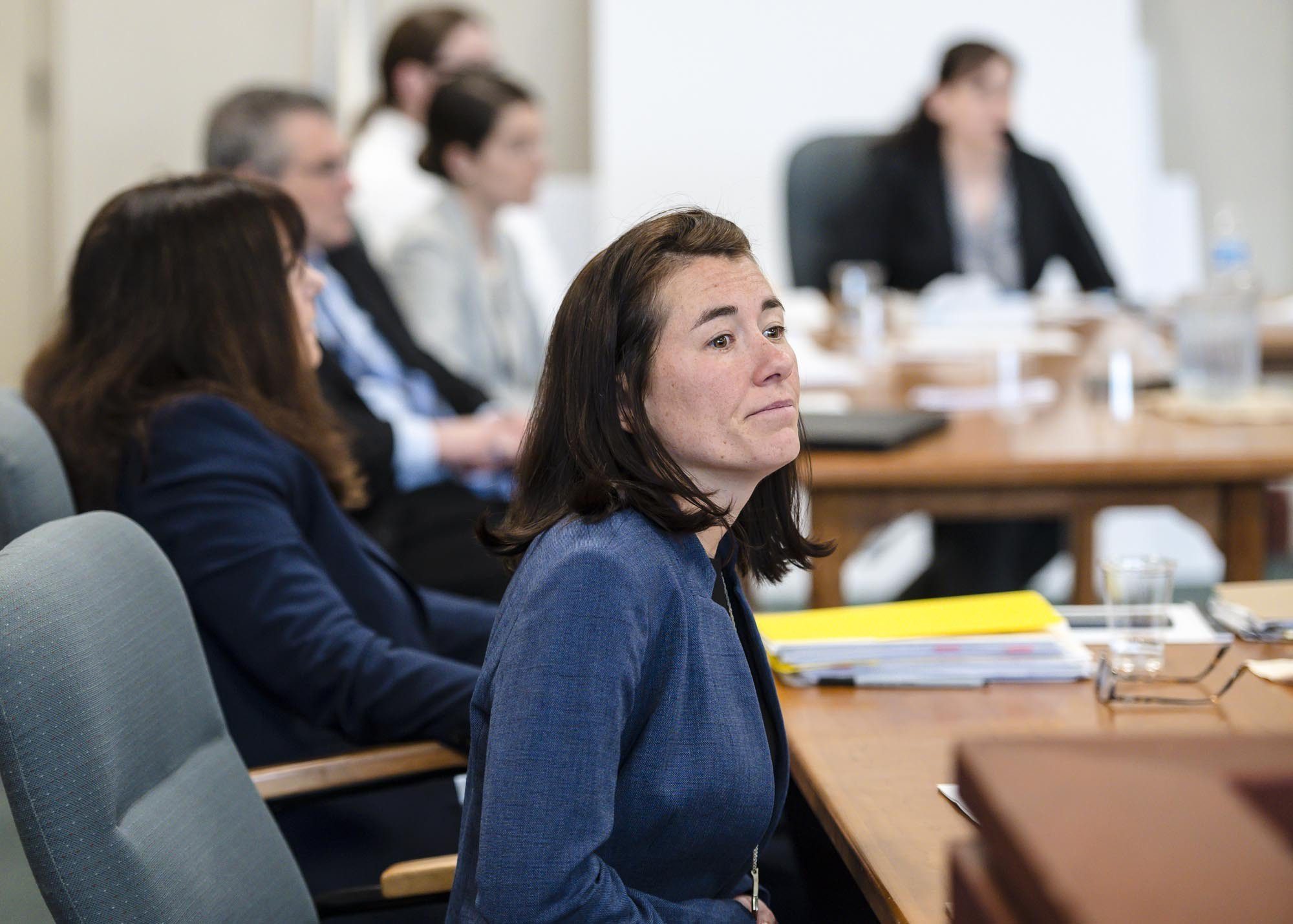
Sarah Fair George, one of the most durable avatars of the progressive prosecution movement, all but secured another term on Tuesday as the top prosecutor of Burlington, Vermont.
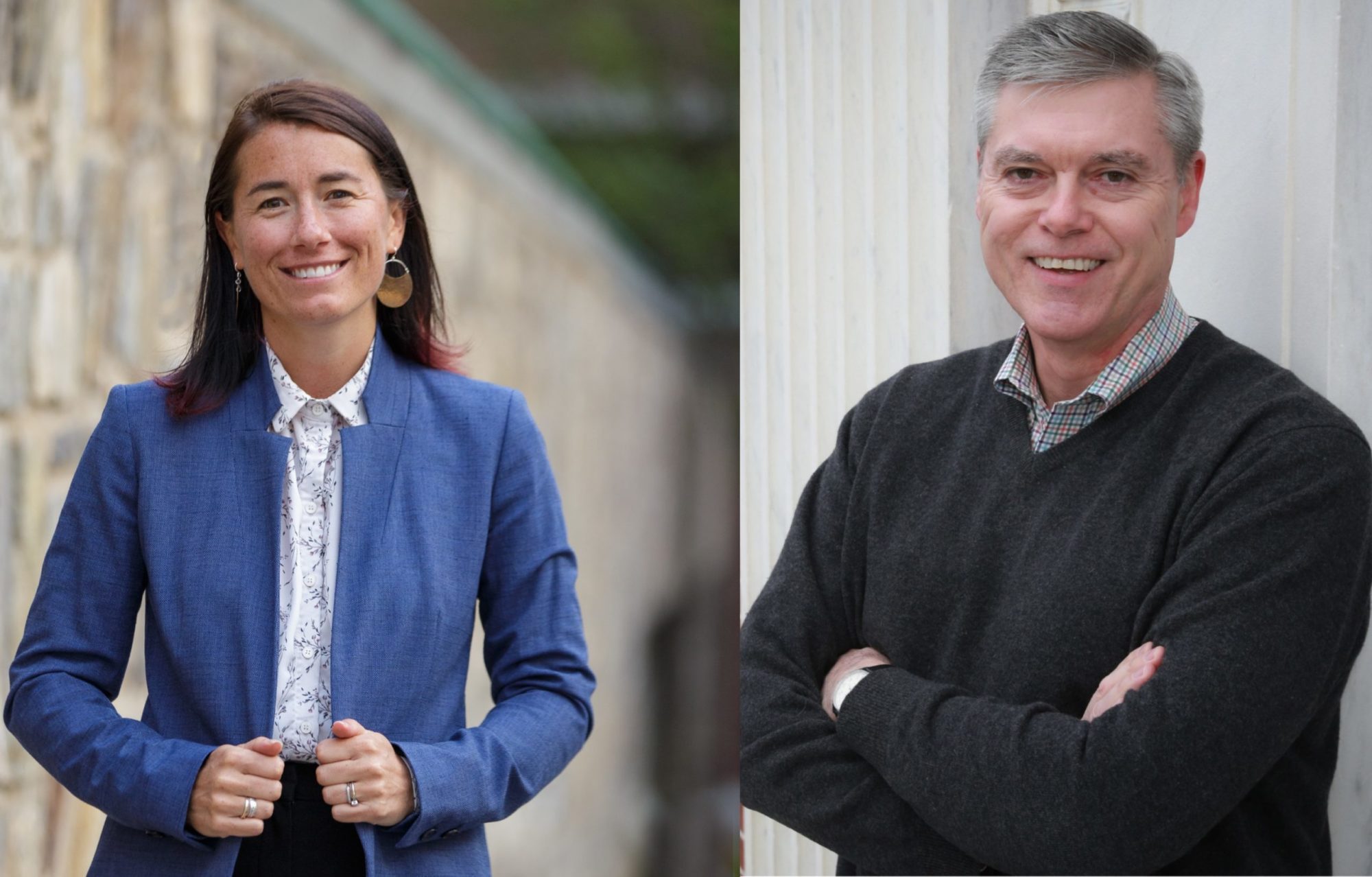
She narrowly prevailed over challenger Bram Kranichfeld in the Democratic primary for Chittenden County state’s attorney, and faces no opposition in the general election in November. Kranichfeld, who currently serves as the state’s attorney of nearby Franklin County, sought to frame George as insufficiently tough on low-level crime and repeat offenders. He vowed to roll back many of her reforms, a similar dynamic to George’s last reelection bid in 2022.
“I’m a prosecutor because I think all prosecutors should be trying to put themselves out of work,” George said in a Bolts interview following her win.
After nine years as a state’s attorney, she believes that “you can do the most good fixing a system when you are within the system.” She added, “I’m grateful that I’ve been able to get into this position…Now twice, with really clear choices for the voters, they’ve continued to elect me to continue to do that.”
George was first appointed as Chittenden County’s state’s attorney in 2017, just months before nationally recognized reformer Larry Krasner was elected as Philadelphia’s district attorney, and she has won two elections since then. She has now outlasted other prominent reform-minded prosecutors, some of whom were ousted by voters and replaced with tougher-on-crime successors, such as San Francisco’s Chesa Boudin, and others, like Chicago’s Kim Foxx, who retired.
George remains part of a national network of reform prosecutors, including Krasner, who easily secured a third term last year.
During her time in office, George has championed the use of restorative justice as an alternative to prosecution, going so far as to encourage police to send cases directly to the county’s Community Justice Centers rather than to her office. She ordered her staff prosecutors to visit a prison, hoping it would make them think twice before seeking a long sentence. She has also held fast to “blanket policies” of refusing to prosecute certain categories of crimes. Such policies proved politically troublesome for other progressives, who ultimately abandoned or downgraded similar policies.
She has refused to seek cash bail under any circumstance. And she has a policy against charging violations that result from “non-public safety-related” traffic stops, citing data showing that such stops are often pretexual and racially biased, which led to significant reductions in traffic stops in Burlington in 2022 and 2023, according to the ACLU.
Her policies and other choices, like her recent decision to forego charging most protesters who participated in an action opposing an ICE raid in South Burlington, have angered police both locally and across the state. In 2022, the Burlington police union called the traffic stop policy “disastrous.”
Still, George has been able to operate with comparatively less scrutiny in large part because, while Chittenden is Vermont’s most populous and racially diverse county, it is also a comparatively high income, progressive enclave. Violent crime is generally scarce, and even lower this year than the past few years.
Though Vermont has a Republican governor, Phil Scott, George has not experienced the sort of preemption that other progressive prosecutors have faced from right-wing state leadership; Scott, a moderate, was actually the one who first appointed her to the position. After instituting a very similar policy governing presumptive non-prosecution of traffic stops, Tampa’s chief prosecutor Andrew Warren was suspended by Florida Governor Ron DeSantis.
In the 2026 race, both of George’s marquee blanket policies emerged as central points of criticism for Kranichfeld, who accused his rival of bypassing the legislature and making up her own laws, rather than enforcing them. He pledged to reverse the no-bail rule on his first day in office, arguing that cash bail is appropriate in some cases, and told Compass Vermont he would “prosecute serious crimes discovered from traffic stops” and “meet with law enforcement agencies to ensure that we have a healthy working relationship.”
George told Bolts that Kranichfeld had “taken advantage of an inaccurate narrative” about her office’s work and said that her campaign was “focused on giving people accurate information, giving them the policies, giving them as much research that that we use to come up with these policies as possible.”
In a way, Kranichfeld represented a road not taken for Chittenden County: Back in late 2016, he and George were co-workers, line prosecutors who were both considered strong contenders for the office’s top position after their boss, TJ Donovan, was elected as Vermont’s attorney general. Like George’s 2022 challenger, attorney Ted Kenney, Kranichfeld attracted the support of business owners in Burlington who believed George’s policies were responsible for drug use and low-level crime in the city.
But unlike Kenney, Kranichfeld declined to seek police union support, and the unions didn’t weigh in on the race. He spoke of balancing “compassion” for people struggling with mental illness and addiction and “accountability” for repeat offenders, and supported strengthening some alternatives to incarceration like restorative justice and diversion.
Kranichfeld ultimately fell short by a closer margin than his predecessor. He lost 48 to 52 percent, and even beat George by about 60 votes within the city of Burlington. He told local outlet Seven Days that while he was disappointed in the results, he felt his campaign had “changed the conversation in this county around public safety.”
Krainchfeld’s decision to run in Chittenden County means that he did not seek a full term in Franklin County. Zach Weight, a Republican, is running unopposed to replace him as Franklin County state’s attorney.
This year’s campaign also played out in the shadow of the Trump administration’s aggressive immigration enforcement. George’s campaign announcement this year said prosecutors must act as an “independent firewall for Vermont’s values,” and she has joined forces with a national group of prosecutors who have vowed to file state charges against federal agents who break the law locally. She has declined to prosecute nearly all people arrested at a series of anti-ICE actions, including demonstrations at an ICE intelligence office in Williston in both February and May, and a melee between rapid responders, ICE, and state and local police during an immigration raid in South Burlington in March. (The three people arrested by Burlington police during the latter incident were sent to restorative justice programs).
While George initially implemented her traffic stop policy over concerns about statistics showing Black motorists in Burlington were much more likely to get pulled over, it has taken on new resonance amid the heightened risk of immigration enforcement under Trump.
In mid-July, after pulling over a vehicle without a front license plate, a Chittenden County deputy sheriff summoned U.S. Border Patrol and helped the responding agents detain the two passengers, leading to one of the passengers being detained and eventually deported by ICE. (These actions are also a violation of Vermont’s Fair and Impartial Policing Policy, which forbids local law enforcement collaboration with ICE).
The idea behind George’s policy of not prosecuting arrests stemming from routine traffic stops is that it’ll discourage law enforcement from making them in the first place. But in this case, the incident happened in neighboring Franklin County, where Kranichfeld is the prosecutor.
“If that had happened here, and there had been a criminal charge from it, we’d have been very likely to decline it,” George said. “But the damage has already been done.”
Sign up and stay up-to-date
Get timely updates about pressing stories and elections.
Support us
Bolts is a non-profit newsroom that relies on donations, and it takes resources to produce this work. If you appreciate our value, become a monthly donor or make a contribution.