
Wyoming Voters Oust GOP Faction that Wants to Crack Down on Elections
In a break with the Trump era, the winner of the secretary of state primary strongly defends election systems, and the far-right Freedom Caucus lost a lot of ground in the legislature.
| August 27, 2026
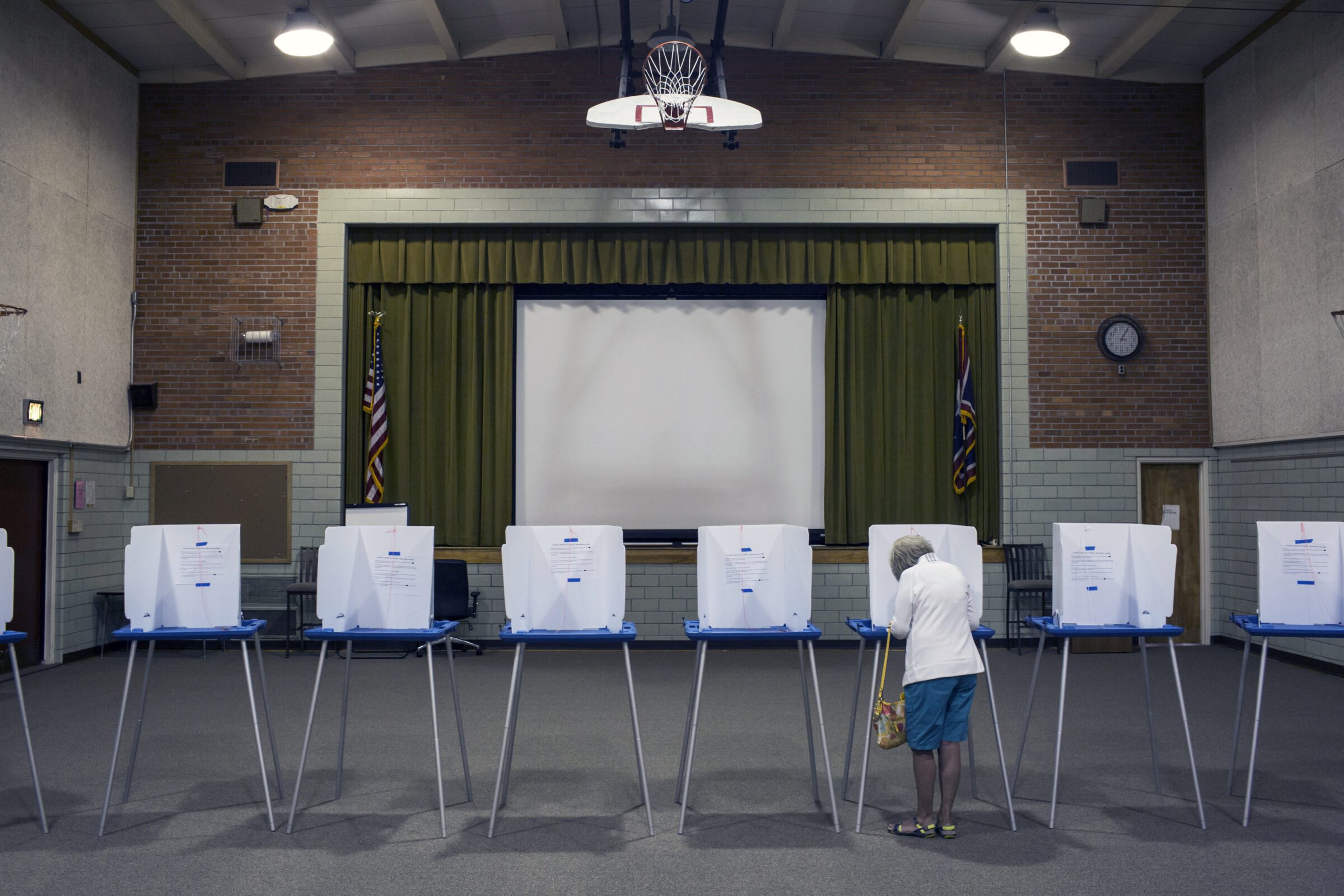
It’s an unusual sight in the Trump-era GOP: In many of Wyoming’s state primaries last week, Republican voters chose candidates who defended the state’s voting systems and election workers, over those who amplified the president’s lies about voter fraud.
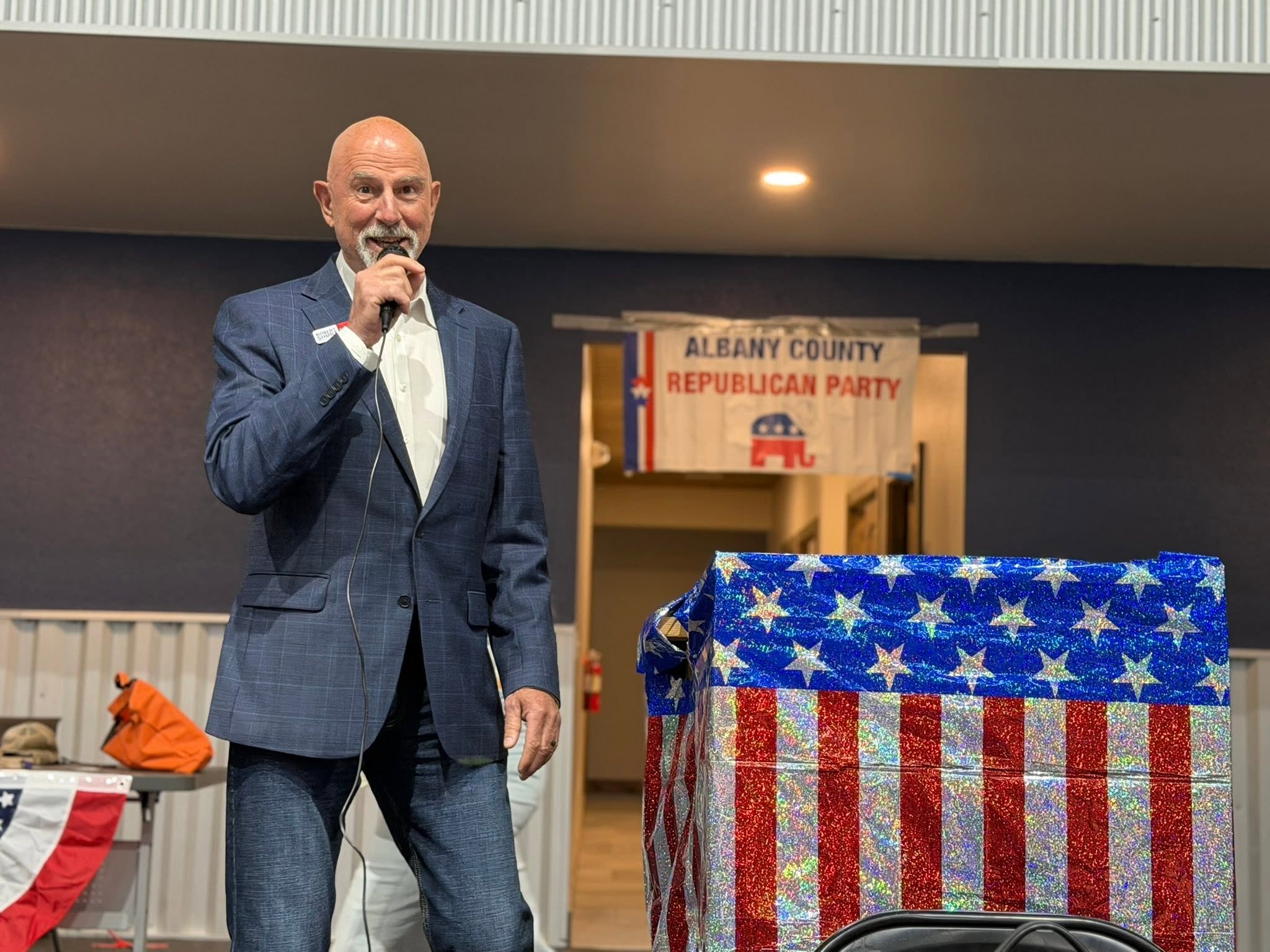
In the contest to be Wyoming’s next chief elections official, GOP voters nominated a county commissioner, Robert Short, who says elections are secure and that reforms should focus on making voting more accessible and inclusive.
And they ousted many of the Republican lawmakers who, in recent legislative sessions, pushed hard to restrict voter access and crack down on everything from mail ballots to voter registration.
The results are sure to shake up the balance of power in Wyoming and deflate the far-right’s ambitions to make this state a laboratory of MAGA-style election administration. Marguerite Herman, who lobbied against those proposed restrictions at the legislature on behalf of the League of Women Voters of Wyoming, told Bolts she was delighted to see that many of the officials who championed them won’t be in office come next year.
“We’re hoping we don’t have to fight those battles yet again, and fight all the false bases for it,” she said. “We’re hoping we never have to face these restrictive things to answer security issues that don’t exist.”
The state’s ultra-conservative faction did get a victory in Wyoming’s marquee federal primary, as Chuck Gray, the outgoing secretary of state and chief proponent of new voter restrictions, won a crowded primary for the U.S. House seat with 25 percent of the vote.
Assuming he prevails in November, Gray would be able to champion severe changes to federal election law from D.C., most notably President Trump’s SAVE Act, which would require voters nationally to provide proof of citizenship to register. But his agenda suffered multiple setbacks in Cheyenne.
For more on election administration
subscribe to the Bolts newsletter
Gray won the state’s previous secretary of state race in 2022 as an election denier who said the 2020 presidential election was “clearly rigged.” Over the next four years, he worked with far-right lawmakers in Wyoming’s powerful Freedom Caucus, which has run the state House since 2024 but remained a minority in the state Senate, to push a barrage of restrictive election bills, animated by unfounded claims of rampant voter fraud.
This ultraconservative bloc had successes, notably a harsh law that took effect last year that requires voters to provide proof of citizenship to register to vote. Wyoming’s governor criticized the legislation and said it threatened to disenfranchise eligible voters, but he still let it become law without his signature.
But many of the far right’s core proposals stumbled, including bills to ban electronic voting machines and ballot drop boxes, a secure voting method that has fueled baseless conspiracy theories about the 2020 election. During his 2022 campaign, Gray hosted screenings of the debunked film “2000 Mules,” which falsely blamed drop boxes for Trump’s loss in the presidential race.

Heading into Aug. 18, the Freedom Caucus hoped to expand its power in Wyoming, a ruby red state where GOP primaries largely determine which ideological factions hold power. Had they succeeded, they may have been able to push through their elusive demands.
Instead, the primaries largely turned into a rout for Freedom Caucus members.
In the primary for secretary of state, Freedom Caucus Chair Rachel Williams lost by 13 percentage points to Short, a Converse County commissioner who took the opposite approach as Gray and the Freedom Caucus as he ran on defending elections as trustworthy.
“Methods utilized for conducting elections in Wyoming by county clerks are incredibly effective at finding issues,” he said in an interview with Bolts after his primary win.
“We should not be making it harder for legitimate citizens to vote,” he said.
Short says he opposes the policy demands of Gray and his legislative allies, including the proposals to ban electronic voting machines and eliminate drop boxes. He stressed that mail ballots and drop boxes are a critical convenience in Wyoming, where many people live very far from population centers.
“Many of these folks work on very remote jobs, whether it be in the extraction industry or in agriculture, meaning that they do not have the luxury of just going to town to vote whenever they feel like it,” he said. “For them being able to drop their ballot into a box, that is the most effective way to allow them to cast their vote.”
Instead, Short says he wants to find ways to expand voter access, like allowing people to register to vote online; Wyoming is currently one of only eight states that do not allow online voter registration.
He also would like to set up voting opportunities within assisted-living facilities. “I believe this would go a long way in helping these folks who spent most of their lives as voting members of our society and now are having challenges voting simply because of their living situation,” he said.
Short also said he’d be open to bringing automatic voter registration to Wyoming, a practice that exists in nearly half of U.S. states and that’s meant to shift the burden of registering from citizens to public agencies that already possess information to determine which residents are eligible. “Whatever we can do to make voter registration and access to the ballot easier for Wyoming citizens, I am absolutely in favor of,” he said.
But when asked about the proof-of-citizenship law that passed last year, Short did not offer a definitive answer, instead mirroring Governor Mark Gordon’s qualified criticism that it’s important to restrict voting to only citizens, but that the law risks keeping some people from voting. “I was not in opposition of the premise, but the practice is challenging for some folks,” he said.
Alongside Short’s victory in the secretary of state primary, voters tossed out many of the far-right lawmakers who were in charge of their faction’s voting agenda.
Of the eight Republicans who sit on the Wyoming House Corporations, Elections, and Political Subdivisions Committee, the panel that reviews election bills and that has been the incubator of restrictive voting proposals, seven lost their primaries last week.
All seven were members of the Freedom Caucus or aligned with it, according to WyoFile.
Many other Freedom Caucus members not on the Corporations Committee also lost their GOP primaries last week, and the Caucus will no longer control a majority of the state House as it did since 2024.
Christopher Dresang, the Republican who ousted Corporations Committee member Tony Locke in the 35th House District, confirmed in an exchange with Bolts that he differs on election issues from the man he beat, as he rejected the very premise that there’s any problem to address.
Dresang said he opposes banning drop boxes and mandating pen-to-paper ballots—changes Locke has supported. And in a clear break with Gray and the Freedom Caucus, he repeatedly said he would follow the lead of local election officials when it comes to voting procedures.
“I trust county clerks and local election officials, who run these elections and answer to their own voters, over one-size-fits-all mandates from Cheyenne,” he said. “They’re the ones administering these elections and best positioned to judge what’s secure and workable for their county.”
Short, too, praised election workers on the campaign trail—and again in an interview with Bolts.
“Election workers, election judges, county clerks—they are our friends, neighbors, our family members; they are volunteers, most of them,” he said. “To insinuate that they would do this job for nefarious reasons is really disingenuous. It’s insulting.”
The language is a stark break from Trump’s usual rhetoric, as well as that of Gray and his allies, who have continually warred with county clerks and their statewide association. The president of the County Clerk’s Association of Wyoming, who did not reply questions for this story, often testified against Gray’s proposals.
Gray’s office also did not respond to a request for comment.
In the governor’s race, the candidate who most embraced Gray’s voting agenda, Brent Bien, finished a distant third. He was endorsed by the Freedom Caucus but lost to Eric Barlow, a state senator who has clashed with ultra-conservative lawmakers.
Republican nominees will be favored in November in this deep red state that Trump won by 46 percentage points in 2024, but even here, Democrats hope to make inroads this year—and they’ve said the unpopular influence the Freedom Caucus has had on the state could help their candidates.
In the secretary of state race, Democrats last week nominated Bryan McCarty, an attorney who ran unopposed in the primary. He also rejects the notion that fraud is a rampant issue that requires new voting restrictions. Of Wyoming’s 2025 law requiring proof of citizenship, he told Bolts, “It’s a solution in search of a problem that does not exist.”
Asked about the Freedom Caucus’ proposals to restrict mail voting, he said, “I’m going to just point out that the president votes by mail.”
McCarty thinks that Short is running a good campaign but that it’s important for voters to reject the party that has enabled Trump, including around voting issues. “The consequence of a lot of the stuff they are proposing is that it does and will make it harder for people to vote, and that is very blatantly the objective of their exercise,” he said. “They want to stymie voting.”
McCarty and Short, who’ll face each other in November, both saved their sharpest criticism for the man they’re seeking to replace. McCarty blamed Gray for following Trump’s lead during his four years as Wyoming’s top elections official, while Short faulted the outgoing secretary of state for undermining people’s confidence in elections.
Short said, “I believe that fomenting distrust in a world full of hyperbole that’s echoed and even amplified by social media was just a ploy to gain notoriety.”
Sign up and stay up-to-date
Get timely updates about pressing stories and elections.
Support us
Bolts is a non-profit newsroom that relies on donations, and it takes resources to produce this work. If you appreciate our value, become a monthly donor or make a contribution.