
Pennsylvania’s Supreme Court Reins in Life Sentences for Felony Murder
The court’s ruling could create a pathway out of prison for more than 1,000 people who were automatically sentenced to life without parole for murders they themselves didn't commit.
| April 1, 2026
The Pennsylvania Supreme Court ruled last week that it’s unconstitutional to automatically sentence someone to life in prison without the possibility for parole for a killing they didn’t participate in or personally commit.
The ruling cites protections against “cruel punishments” in Pennsylvania’s state constitution in order to rein in the state’s especially harsh sentences for so-called felony murder—a charge that allows officials to prosecute someone for murder because of their involvement in a crime that led to a death, even if they didn’t cause it.
The decision could offer a pathway out of prison for more than 1,000 people convicted of felony murder; under Pennsylvania law, they were automatically condemned to what advocates for sentencing reform have called “death by incarceration.”
Derek Lee, who challenged his life without parole sentence a decade ago and whose appeal resulted in the court’s decision, says that prayers of thanks began to run through his mind when he first heard news of the ruling last week.
“I went to the cell and praised God, prayed, shed some tears and turned on some gospel music, worshiped not caring who heard,” he told Bolts.
Lee was convicted of felony murder, which is classified as second-degree murder in Pennsylvania, for his participation in a 2014 burglary in which his accomplice fatally shot the homeowner during a struggle; Lee, who was 29 at the time, wasn’t in the room when the shooting happened. Pennsylvania law mandates life without parole for second-degree murder, one one of only two states to do so alongside Louisiana.
Subscribe to our newsletter
for more reporting on harsh sentencing
Attorneys from the Abolitionist Law Center, an organization that had already mounted several challenges to life without parole in the state, eventually assisted Lee with his appeals, arguing that his sentence violates the state constitution’s prohibition of “cruel punishments.”
The state’s prohibition is different than the federal constitution’s Eighth Amendment, which bans punishment that is “cruel and unusual.” With nearly 1,100 Pennsylvanians currently serving life without parole sentences for felony murder, the punishment may not be considered unusual, but Lee and his attorneys argued that it is nonetheless cruel to automatically condemn someone to die in prison for a killing they didn’t commit.
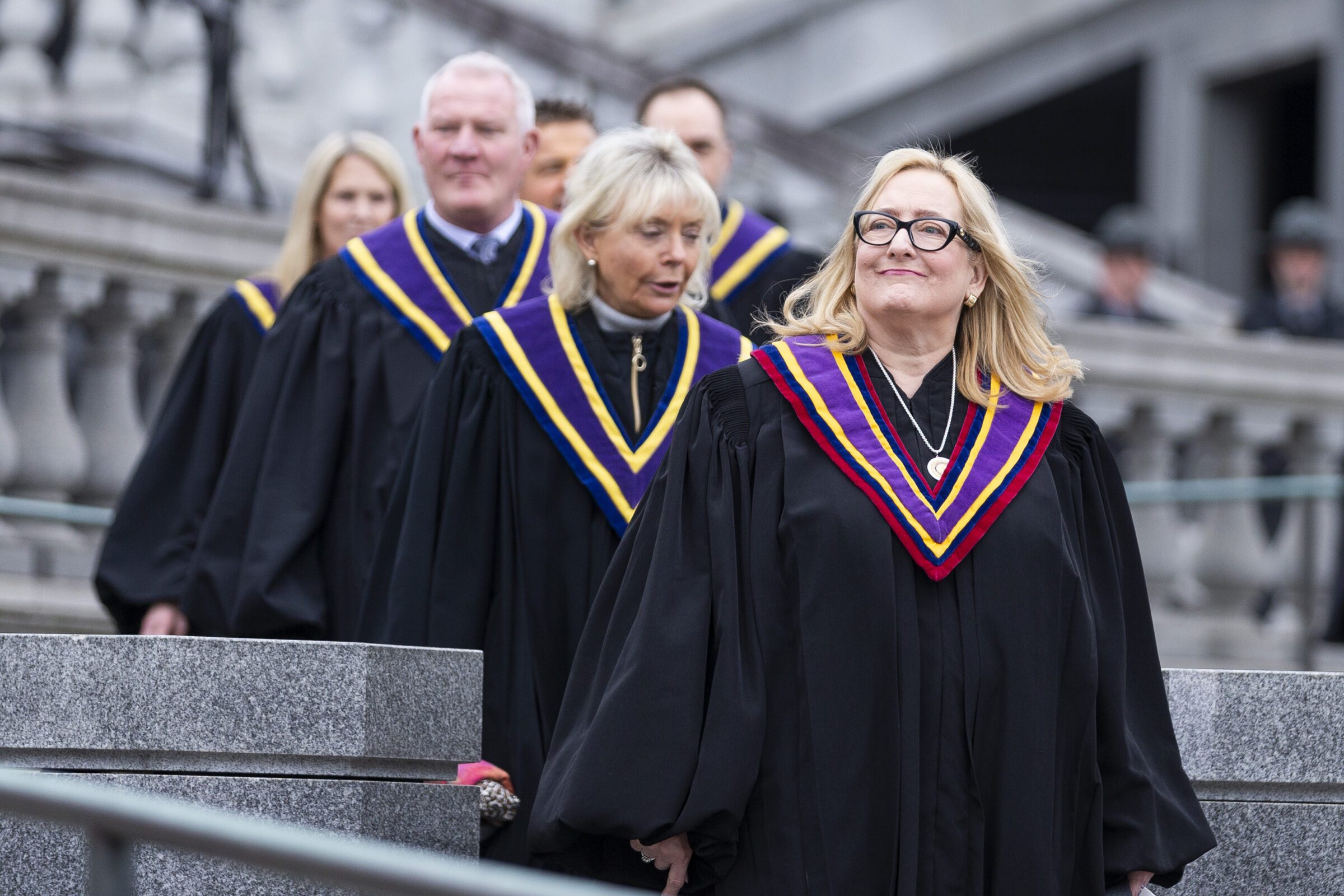
This past Thursday, two years after agreeing to hear Lee’s appeal, the state supreme court ruled in his favor. Justice Debra Todd, a Democrat, wrote in the majority opinion, “Ultimately, we find that the mandatory sentencing scheme for second degree murder poses too great a risk of disproportionate punishment, and, thus, find it to be cruel.”
The four other Democratic justices joined Todd’s ruling, and Republican Justice Sallie Mundy filed a concurring opinion. Justice Kevin Brobson, the court’s only other Republican, wrote separately to concur in large part with the majority, but he also dissented over the ruling’s directive for remedying the situation.
The ruling highlights the doctrine of felony murder, which is applied even more broadly in some other states and has even resulted in people being executed for murders they themselves didn’t commit. The case also underscores how life without parole sentences have proliferated across the country as death sentences in the U.S. have declined, with the Sentencing Project estimating that more than 56,000 people are now imprisoned on life without parole sentences.
Pennsylvania has the nation’s third-highest number of people serving life without parole sentences—around 5,100 people, with nearly one in five of them being punished for felony murder.
Bret Grote, the Abolitionist Law Center’s legal director and the lead attorney on Lee’s appeal, told Bolts that the decision “has profound implications for the future of criminal punishments in the state of Pennsylvania,” by finding that the state constitution’s protection against “cruel punishments” goes further than the U.S. Constitution.
“The right to be free from cruel punishments has never been given any independent, distinct meaning that provides greater protections than the federal Constitution’s cruel and unusual punishment clause until today,” Grote said on the day of the decision.
But Grote also emphasized that the victory in Lee’s case was not due only to legal strategy, but also because of years of organizing inside and outside of the state’s prisons.
“The right to be free of cruel punishment has been part of Pennsylvania’s constitution of 1790,” he said. “It now has substantive meaning for the first time in its history because of a movement built by people serving the sentence on the inside. This was not something that was done by a law firm. This was a product of these movements done in radical consultation and collaboration with people on the inside and the family members and in coordination with other strategies.”

Pennsylvania’s ruling adds to a trend of success for civil rights advocates who have increasingly pled with state courts to go further than the U.S. Supreme Court in affirming constitutional protections, and have seen critical wins from Hawaii to Michigan.
Many of these rulings have restricted life without parole sentences. Since 2021, the supreme courts of Michigan and Washington have said it is unconstitutional to automatically sentence young adults to life without parole regardless of the crime, extending protections usually applied to children. The Massachusetts supreme court went even further in 2024 by striking down all life without parole sentences for people up to age 21.
The Pennsylvania Supreme Court did not say whether the ruling should be retroactive and apply to the people who are already serving sentences of life without parole.
Instead, it asked the state legislature to address the question, and stayed its ruling for 120 days “to provide a reasonable amount of time for the General Assembly to consider appropriate remedial measures.” While Lee’s case is now remanded to the lower courts for resentencing, the thousand or so others will have to wait and see what lawmakers do in the next four months. The court specifically declined to address the question of retroactivity.
Even if lawmakers or the court were to eventually say that the ruling applies retroactively, it would not automatically free anyone from prison. Instead, they could make people eligible for resentencing or give them sentences that allow them to apply for parole.
State Senator Sharif Street, a Democrat, already filed legislation last year that would allow people who are already serving a life sentence for second-degree murder to apply for parole after serving 25 years in prison. The bill has yet to receive a committee hearing in this GOP-held chamber, though a Republican senator is co-sponsoring Street’s bill.
Governor Josh Shapiro, a Democrat who had filed an amicus brief in support of Lee’s appeal, publicly applauded the decision on Thursday.
“Today, Pennsylvania’s Supreme Court ruled that mandatory life sentences without the possibility of parole for second degree murder are unconstitutional,” he stated on X. “I have long believed this law is unjust and wrong.” He urged the legislature to “come up with a thoughtful, just process to address those who are serving life sentences for second degree murder.”
News of Lee’s legal victory quickly spread through Pennsylvania’s 25 state prisons. Sheena King, who is incarcerated at SCI Muncy, one of the state’s two women’s prisons, told Bolts that the women around her have “been celebrating, crying, and praising God” since last week’s ruling. While the decision doesn’t apply to King, who was sentenced to life without parole for first-degree murder, she was rejoicing nonetheless. “There are only about 12 to 15 women here with second-degree, but the win feels good and it brings much needed hope in this place,” King told Bolts.
Terri Harper, who is one of the women serving life without parole for felony murder at Muncy and has been imprisoned since 1991, says she first learned of the court’s decision during her daily call to a friend who received clemency and has been released.
“I still don’t know if there are enough words in all of creation to express the joy and level of HOPE I/we feel right now,” she wrote to Bolts. “The decision brings a renewed vision of how life could look outside, which is sorely needed, given the unrest and discontent in our country.”
Lee told Bolts that one of the best moments of last week was when he got to share the news with someone who’s been in prison for 51 years for a felony murder conviction and was denied commutation months ago.
“To hear him say that this was the best news he’s got in 50 years was a blessing to hear,” Lee wrote to Bolts from his prison cell. “I’m just prayerful that the legislature does the right thing and give those men and women the opportunity to show and prove that we are worth the price of REDEMPTION! There are thousands of human assets who are ready and willing to show their families and communities that we have worth, and can be valuable assets if given the chance.”
Sign up and stay up-to-date
Get timely updates about pressing stories and elections.
Support us
Bolts is a non-profit newsroom that relies on donations, and it takes resources to produce this work. If you appreciate our value, become a monthly donor or make a contribution.