

GOP-Backed Justices Prevail in Georgia in Unusually Spirited Supreme Court Elections
No sitting justice has lost reelection here in over a century, but two liberal attorneys aimed for an upset while stressing the importance of state courts for voting and abortion rights.
| May 20, 2026
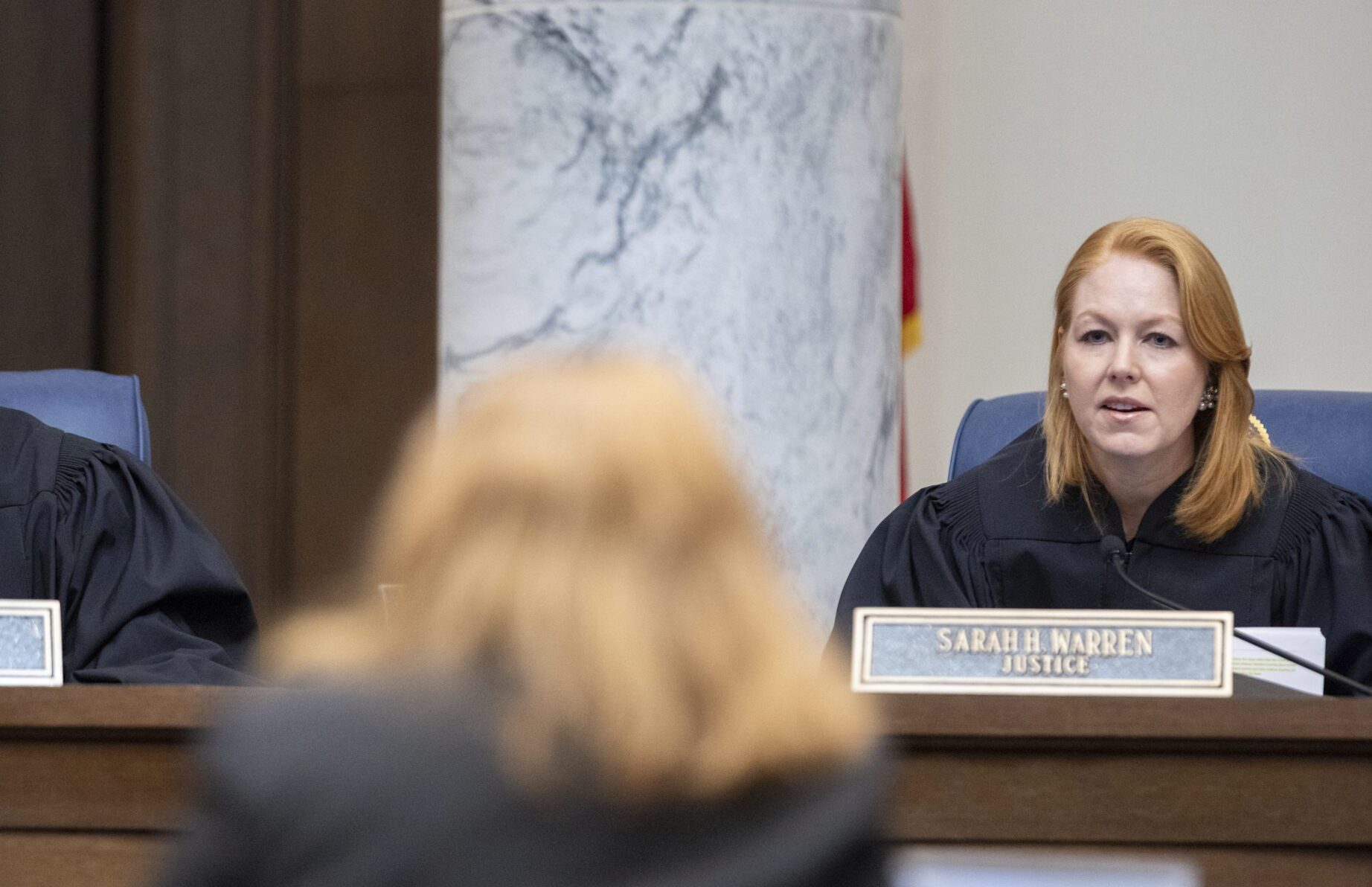
Two Georgia Supreme Court justices fended off unusually spirited election challenges from a pair of liberal attorneys on Tuesday, in a setback for Democrats who’d hoped to make inroads on this court in order to advance abortion and voting rights.
One of Tuesday’s two supreme court races was a rout: Justice Sarah Warren led former Democratic state Senator Jen Jordan by about 19 percentage points early Wednesday.
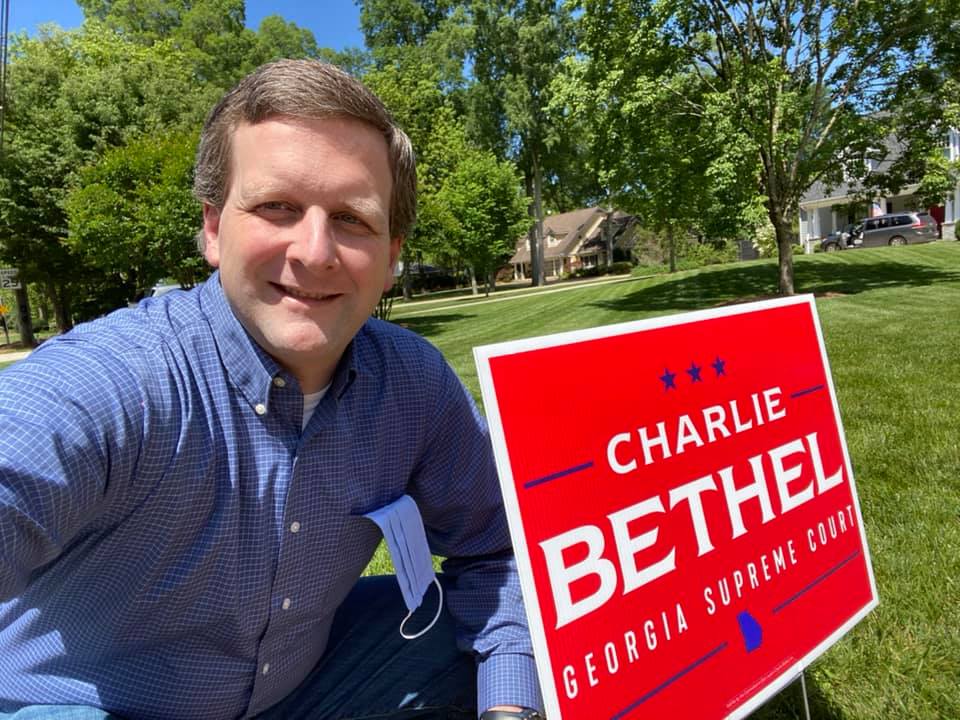
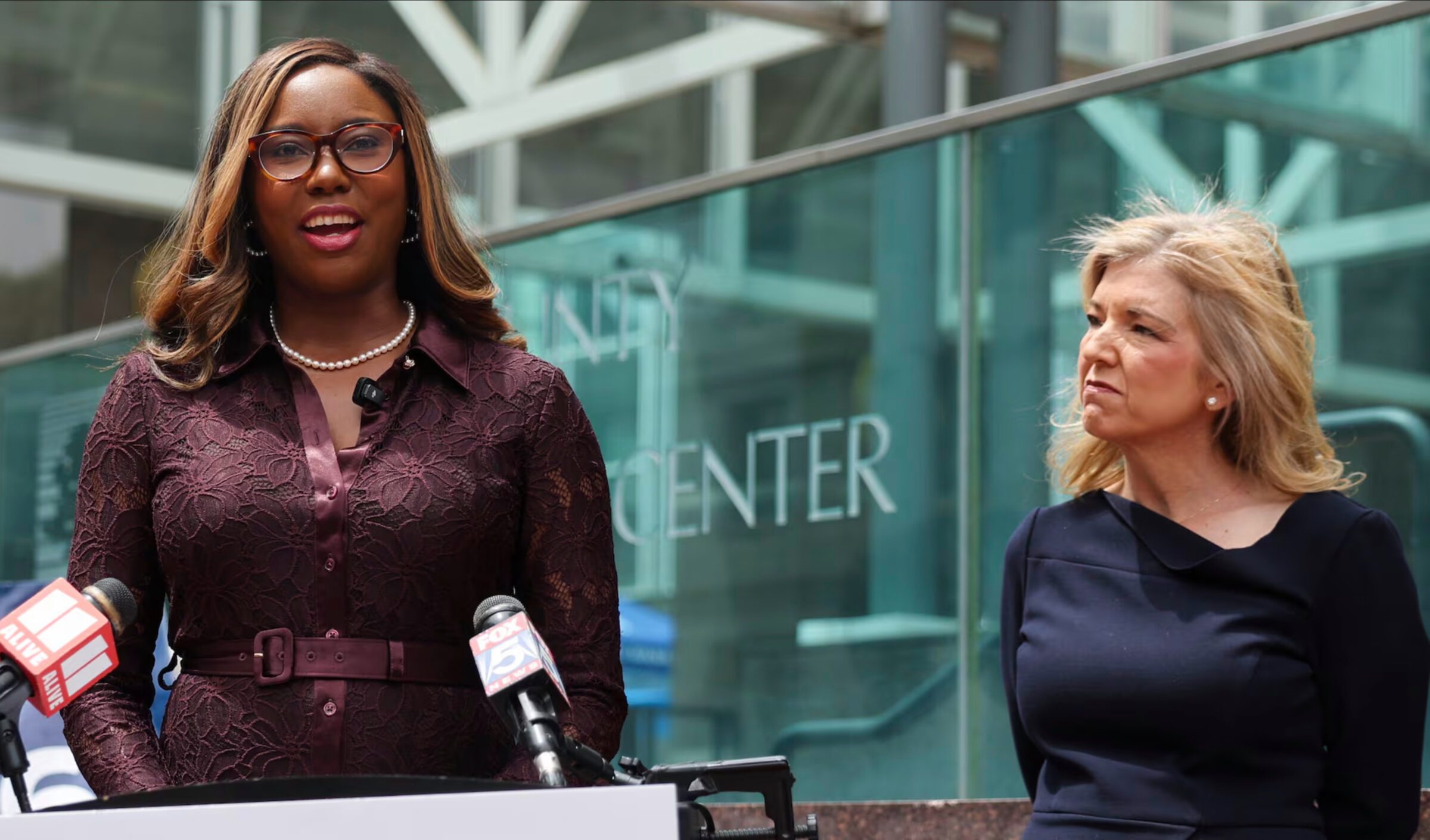
The other contest was much closer: Justice Charlie Bethel, a former Republican state representative, led personal injury attorney Miracle Rankin by roughly 2 points when the Associated Press called the race shortly after midnight.
Results were delayed on Tuesday because gunshots near an elementary school in the morning resulted in an hourslong manhunt and shut down a polling site in the Atlanta suburbs. Voting eventually resumed there, but a judge ordered the site to remain open an extra four hours, which prevented Fulton County from releasing any of its results until after 11 p.m.
Both of Tuesday’s winners were appointed to the bench by former Republican Governor Nathan Deal and endorsed this spring by Republican Governor Brian Kemp, the state GOP, and various conservative groups. Jordan and Rankin ran with the support of former President Barack Obama, the state Democratic Party, and other left-leaning groups. Bethel and Warren each earned six-year terms, as did incumbent Justice Ben Land, who was unopposed on Tuesday.
The contests were officially nonpartisan and no party label appeared on the ballot, though sitting judges were marked as incumbents. More voters cast their ballots in the Democratic primary than the Republican primary on Tuesday but that wasn’t enough to carry the challengers.
No incumbent on the Georgia Supreme Court has lost a reelection bid in 104 years, and relatively few have even faced serious challenges. Jordan and Rankin tried to buck that history this year, outspending typical judicial candidates and highlighting the importance of state courts now that the federal court system has veered so staunchly conservative.
Georgia Democrats last fall won their first non-federal statewide offices since 2006 when they ousted two Republican members of the Public Service Commission, and had hoped Tuesday’s court election would add momentum. Georgia will hold key battles for governor, secretary of state, and U.S. senator in the fall, and held primaries for those offices on Tuesday.
Abortion, which has been severely restricted in Georgia since the state supreme court reinstated a six-week ban in 2024, was a major issue in Tuesday’s supreme court elections. Bethel and Warren each voted to uphold that ban in 2024, and Jordan and Rankin, backed by Planned Parenthood, campaigned against it.
Democracy issues also featured heavily, particularly in the campaigns of Jordan and Rankin, in a state in which Donald Trump famously pressured election officials to “find” votes to overturn his defeat in 2020. His administration is now investigating the election office in liberal Fulton County, which is home to Atlanta.
The U.S. Supreme Court’s late-April decision in Louisiana vs. Callais to gut the Voting Rights Act increased the campaign’s stakes. Blessed by Callais, Republicans in Georgia, like their counterparts in other Southern states, are preparing to redraw the state’s statehouse and congressional maps. They’re expected to, at minimum, eliminate one majority-Black, Democratic-leaning congressional district by 2028.
In interviews with Bolts in the run-up to Callais, which they correctly anticipated would be a conservative win, Bethel, Jordan, and Rankin all agreed that the weakening of the VRA would shift more voting rights cases onto state supreme courts. Warren declined to be interviewed.
“A lot of questions that have been litigated and understood through a federal lens are likely to come into the state system,” Bethel said, predicting that the state government would soon be “revisiting state voting systems that for more than a generation have been unattended.”
This court has in the last few years already issued a slew of major rulings on democracy matters. It mostly shot down a proposed set of Republican-backed changes to state election law. It also effectively halted Fulton County’s prosecution of Donald Trump for attempted inference in the 2020 election, in a 4-3 ruling in which Bethel and Warren were in the majority.
On the eve of the 2024 election, in a 5-3 ruling in which Bethel and Warren were again in the majority, it denied relief to thousands of Atlanta-area voters whose ballot access was threatened because election administrators had failed to mail ballots in a timely manner.
On Monday, in the very final stretch of the campaign, a state judicial ethics panel announced that it “reasonably believes” Jordan and Rankin breached the state judicial code, and warned that it could initiate a full investigation. The panel blamed the candidates for endorsing each other and openly stating legal positions, including their support for abortion rights.
Jordan and Rankin asked courts to block the judicial ethics panel from reviewing this matter during the election, the Atlanta Journal-Constitution reported. Jordan told the newspaper that open discussion of her stance on abortion is “both my responsibility and my First Amendment right” as a candidate.
In April, Rankin told Bolts that Georgia’s abortion ban had motivated her to run for the court, and that she felt it important to share her position on that issue with voters. “I am a young woman that’s of child-bearing age still,” Rankin said. “My daughter is living in a world right now where she has less rights than what I was born into. I also have less rights.”
Republicans, meanwhile, seized on this to attack Jordan and Rankin, whom the state GOP called “partisan activists” after Monday’s panel ruling.
The victories by Bethel and Warren on Tuesday ensure continued conservative dominance on this court. Eight of the nine justices were originally seated via appointments by Republican governors.
Georgia judges rarely face challenges—they ran unopposed in 11 of the 15 state supreme court races in Georgia prior to Tuesday’s election—and they typically coast to victory when they are challenged, which made this year’s campaign all the more unusual.
Because Georgia holds its supreme court elections during primary elections, the electorate is skewed to include only those who are moved to vote in partisan primaries. Turnout is unsurprisingly depressed: as of publication, Georgia had tallied about 1.9 million votes in each of the state supreme court elections—far below the more than 5 million Georgia voters in November of 2024.
In 2028, three more supreme court judges, all appointed by Republican governors, will be up for election in Georgia.
But Georgia justices commonly resign early rather than finish their terms, leaving it to the governor to select a replacement. The governor’s appointee can serve for at least two years before having to face voters. This means it’s quite possible Georgians will not end up voting on one or more of the three seats currently set to come up in 2028.
Any replacement for a justice who does resign ahead of that year’s elections would be appointed by the next governor—lending extra stakes to November’s open race to replace Kemp.
Sign up and stay up-to-date
Get timely updates about pressing stories and elections.
Support us
Bolts is a non-profit newsroom that relies on donations, and it takes resources to produce this work. If you appreciate our value, become a monthly donor or make a contribution.