
“Disrespectful for Voters”: The Dakotas Weigh Raising the Bar for Direct Democracy
Frustrated that voters are bypassing the legislatures they control, the GOP is pushing two ballot measures this fall in North Dakota and South Dakota to require a supermajority to amend the state constitutions.
| August 20, 2026

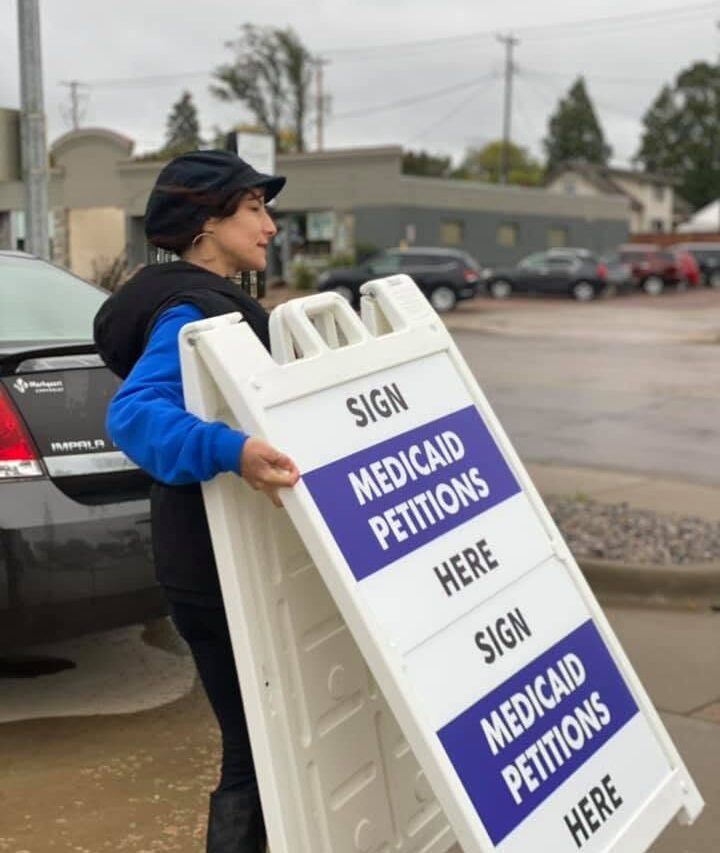
Over 50,000 South Dakotans became eligible for Medicaid three years ago thanks to a constitutional amendment to vastly expand health care coverage that voters approved in 2022. Despite opposition from the Republicans who control South Dakota’s government, supporters brought the Medicaid initiative to the ballot and passed it with over 56 percent of the vote.
But in future cycles, initiatives that win that same level of support could fail to be enacted. Republican lawmakers placed a measure on the ballot this fall that would raise the bar for amending the state constitution from 50 to 60 percent. All four amendments approved by voters since 2020, including the Medicaid expansion, have fallen short of that threshold.
Advocates who have worked on prior initiatives warn that the proposal, which will appear on the ballot as Amendment L, would undermine the power of voters to enact reforms when legislators refuse to do so. Rick Weiland, co-chair of Dakotans for Health, a grassroots network that campaigned for the 2022 Medicaid expansion, says that Republicans, who currently hold 97 out of the 105 seats in South Dakota’s legislature, are pushing to change the rules because they resent that their control can still be “circumvented by the initiative process.”
“Voters in South Dakota enjoy the fact that if we don’t like what is going on in the capital, we can do something about it. But there are efforts every session to try to completely neuter the process,” Weiland told Bolts. “It’s a death by a thousand cuts.”
This November, South Dakota is one of the two states that will be voting on near-identical measures to raise the threshold for approving any constitutional amendment to 60 percent. Republicans are championing the same change in neighboring North Dakota.
North Dakota’s leaders have also grown frustrated at recent popular initiatives that have managed to bypass the legislature. Voters in 2018 created an ethics commission to investigate corruption by public officials, and in 2022 they set term limits for the governor and legislators. “You aren’t going to have politicians lead the charge on term limits themselves,” said state Representative Jared Hendrix, a Republican who spearheaded the 2022 initiative on term limits before he was elected to the legislature. He now opposes the upcoming referendum.
Learn more about direct democracy
Subscribe to our newsletter
These proposals add to a broad national push by Republican officials in red states to restrict direct democracy, which remains a rare path forward for popular reforms the GOP opposes. They’ve passed laws that make it more difficult to qualify measures for the ballot, including by criminalizing routine signature gathering methods with harsh punishments for missed deadlines and clerical errors.
Still, when voters have weighed in on new restrictions, they have typically rejected them. Just this month, Missourians overwhelmingly rejected a measure that would have forced initiatives to pass in every congressional district—a geographic supermajority of sorts.
In the Dakotas, too, voters have kept killing past proposals meant to weaken direct democracy.
In 2014, North Dakotans shut down attempts to ban popular initiatives that require spending public funds. In 2020, they blocked a proposal that would have required that initiatives first be submitted to lawmakers for approval. And in 2024, they rejected a measure that would have raised the number of signatures a petition must collect to qualify for the ballot.
And South Dakotans have twice refused to impose a supermajority on ballot measures, in 2018 and then again in 2022. Republicans rushed that second measure in the summer of 2022 in hopes of blocking the Medicaid amendment, which was ultimately approved later that year.
“This is the third time in about eight years that our legislature has attempted to make it more difficult for citizens to use direct democracy methods,” says Chase Jensen, the organizing director of Dakota Rural Action, a South Dakota-based organization that supported the popular initiative to expand Medicaid.
“The last two attempts both failed by wide margins, and so having a third attempt here is more than just annoying,” he added. “It feels disrespectful for the voters of South Dakota, who have already spoken very clearly.”
In addition to the Dakotas, two states will vote on measures this fall that would impose supermajorities specifically on citizen-led ballot measures that create new taxes. Republican legislators are proposing the change in Utah. In California, the November measure was advanced by the Democratic-run legislature as a compromise with a conservative advocacy group that was planning a proposal that cracked down even further on tax initiatives; the Democrat who sponsored the measure in the legislature is now urging voters to reject it.
This year’s measures in the Dakotas would change rules for any and all constitutional amendments, whether an amendment is initiated directly by the people or placed on the ballot by legislators.
South Dakota Representative John Hughes, a Republican who is leading the push for new rules in that state, argues that the bar for constitutional amendments should be much higher than for passing ordinary laws. The state’s constitution is meant to be a framework for “the rights, duties and values that we hold to,” he said at a House committee meeting last year.
Hughes also said the simple majority currently needed to approve amendments has made the state a magnet for out-of-state interest groups seeking to sway voters. He complains that a large share of the funds behind a 2024 abortion access initiative, which did not pass, came from donors outside of South Dakota.
“There is a weariness and a fatigue over deceptive ads paid for by millions of out-of-state dollars to reshape and remold our constitution,” Hughes said at the hearing. “It is only because we have the 50 percent plus one majority that we are a target for being used as a laboratory for the emergence of new values and new ideas that many, many, many South Dakotans do not share.”
But South Dakota advocates who oppose Amendment L say it is already difficult to amend the state constitution.
In order to qualify a constitutional amendment on the ballot, organizers must collect twice as many signatures as they would for a regular popular initiative: 10 percent of the number of votes cast in the latest gubernatorial race, which is over 35,000 signatures this year. Plus, Jensen said, most people default to voting against an initiative unless they understand the issue and it resonates with them, which makes any campaign an expensive and uphill battle.
“It would definitely create a rule of the minority situation where it would be nearly impossible, or it would become so expensive to make anything happen,” he said.
Hendrix, the North Dakota lawmaker who led the 2022 campaign for term limits, also rejects the claim that the bar to amending his state’s constitution is too low. To make it on the ballot, his campaign had to sue state officials after they rejected the signatures for the term limits initiative.
“I agree that it should not be easy to change our constitution, but I would say that it’s generally not easy,” he told Bolts. “It should still be an avenue that we can use with reasonable guardrails.”
Critics of the proposed supermajorities also say amending a state constitution can be essential to prevent state lawmakers from rolling back a popular initiative they don’t like.
Utah’s supreme court in 2024 restricted lawmakers’ ability to just ignore the results of a popular initiative, but many states lack such protections. In South Dakota, voters in 2016 enacted an anti-corruption reform to create an independent ethics commission to oversee compliance with campaign finance and lobbying rules. But that initiative only changed ordinary statutes rather than amend the constitution, and legislators repealed it three months later.
They “couldn’t keep their hands off of it,” Weiland told Bolts.
South Dakota’s Republican officials have so far been unable to cancel the 2022 measure that expanded Medicaid since that initiative amended the state constitution.
This year, they’ve advanced a constitutional amendment to weaken the Medicaid expansion, but they need voters to sign off on the change. That item, which will also appear on the ballot in November as Amendment I, would repeal the 2022 expansion if the federal government ever reimburses less than 90 percent of Medicaid costs. Currently, South Dakota adults who earn up to 138 percent of the federal poverty line are eligible for Medicaid, which is $45,540 for a family of four. The repeal would make non-disabled individuals ineligible and it would include only people with children that earn below 46 percent of the poverty line, or $15,180 for a family of four.
“They have been looking at different ways of trying to get rid of Medicaid expansion in the state since it was passed popularly by the voters,” said Jensen, of Dakota Rural Action.
South Dakota was the first state in the nation to create a system of direct democracy when it established an initiative process in 1898. Proponents saw it as a way to balance against the corporate interests that had come to dominate the legislature as new railroad development brought industry to the region.
Since then, that pathway for civic groups to be directly involved in lawmaking has remained an essential part of South Dakota’s political identity, “especially since we have a single party rule for a very long time,” said Jensen. He hopes that this means voters will reject the latest effort to restrict this pathway.
“A lot of people were upset about the way that our decision makers were not representing the will of the people, and there’s a lot of that same sentiment around today,” he said. “So I don’t anticipate anybody is excited to give up one of their rights in our state.”
Sign up and stay up-to-date
Get timely updates about pressing stories and elections.
Support us
Bolts is a non-profit newsroom that relies on donations, and it takes resources to produce this work. If you appreciate our value, become a monthly donor or make a contribution.