
Mail Voting in Turmoil: Your Questions Answered
As the Trump administration and USPS look to restrict mail voting ahead of the midterms, we asked Bolts readers to send us your questions—and our team has tackled 10 of them.
| August 28, 2026
Editor’s note: On Sept. 14, the Supreme Court blocked the new USPS rule that would severely restrict mail voting. The decision removed a huge amount of uncertainty from the midterms, though the legal battle around the rule will continue ahead of 2028. A separate USPS policy that may increase rejected mail ballots remains in place, however. Our explainer below lays out what you should know—and what you can do—about the various attacks on mail voting this year.
Vote-by-mail was not always such a hot topic. It’s a longstanding practice in the U.S., dating back to the Civil War and even before then. It’s secure, with audits repeatedly detecting virtually zero fraud. And it’s a very popular convenience. Every single state and territory permits it on some level.
Everything changed in 2020, when President Trump falsely blamed his election defeat on voter fraud and subjected mail voting to particular ire, lying to the public by calling mail ballots “fraudulent” and “a very dangerous thing for this country.”
Now that he’s back in power, Trump has tried, and so far failed, to command sweeping election administration changes by executive order, including proposing severe limits on vote-by-mail access. Republican leaders have generally fallen in line, in many cases passing state-level legislation that directly answers his calls to restrict mail voting.
Trump issued a sweeping executive order this spring to give the U.S. Postal Service new authority to refuse to deliver mail ballots in states that don’t comply with the president’s directives. A federal judge issued her latest order blocking these changes on Thursday, but they remain subject to a fierce legal battle that Justice Ketanji Brown Jackson has warned may inject “chaos and uncertainty into the upcoming midterm elections.”
Separately, voting rights advocates worry that new USPS rules on postmarking risk causing a surge in mail ballot rejections this fall. A third possible disruption to mail voting faltered when the U.S. Supreme Court in June rejected a Republican effort to enact a national ban on so-called grace periods.
We thought you would have many questions on the state of mail voting ahead of the midterms and so we asked you to send them to us. You all delivered dozens of queries.
And today, we’re tackling 10 of your questions. Select the one you are most interested in, or keep scrolling to explore them all.
What are the new USPS policies?
Who can even get a mail ballot?
What could states do in response?
Do states with an all-mail voting system have a plan B?
Can you print out your ballot at home?
What is the justification of for these changes?
This is the latest in our “Ask Bolts” series where we answer our readers.
For more on voting rules
sign up to our newsletter
“What are the new USPS policies?” — @givedogsthevote on Bluesky
There are separate issues that have made people nervous about mail ballots this year.
First: USPS no longer automatically postmarks mail on the day it is received. Instead, they postmark it when they process it, sometimes after it has traveled hundreds of miles to a central facility, which can take days.
This matters greatly in states that require mail ballots or voter registration forms to be postmarked by a certain day to be valid, as Bolts explained earlier this year. If voters mail their ballots or forms close to the deadline, USPS may not postmark them in time; the ballots would then get tossed by election officials.
There’s evidence from primaries held this year that the change is having an impact; election offices are reporting a marked increase in ballots that are rejected because their postmark is late. In Yakima County, Washington, for instance, roughly 5 percent of mail ballots cast for the Aug. 4 primary were rejected this summer, up from 1 percent between 2016 and 2024.
Michelle Kanter Cohen, policy director and senior counsel for the Fair Elections Center, is afraid that voters are not aware of this issue. “People have generally assumed that when you put your mail in the official blue box, that it will be postmarked that day,” she said. “But it is clear from this rule that this is no longer the case.”
The second new USPS policy stems from an executive order that Trump issued earlier this year.
The order has been blocked by courts for months, and it remains blocked for now, but USPS last week released a 95-page rule that outlines how it intends to implement Trump’s directive.
The most intrusive requirement is for states to prepare lists of voters who are eligible to vote by mail and send the lists to the federal government.
The rule says USPS will only deliver mail ballots to people on that list. It also says it will only deliver ballots with envelopes that meet criteria set out by the federal government.
USPS says it will refuse to deliver mail ballots to voters in states that do not comply with the order and do not share lists with the federal government.
Separately, the order directs the Department of Homeland Security and the Social Security Administration to create a citizenship list to be used by states to determine who is eligible to vote.
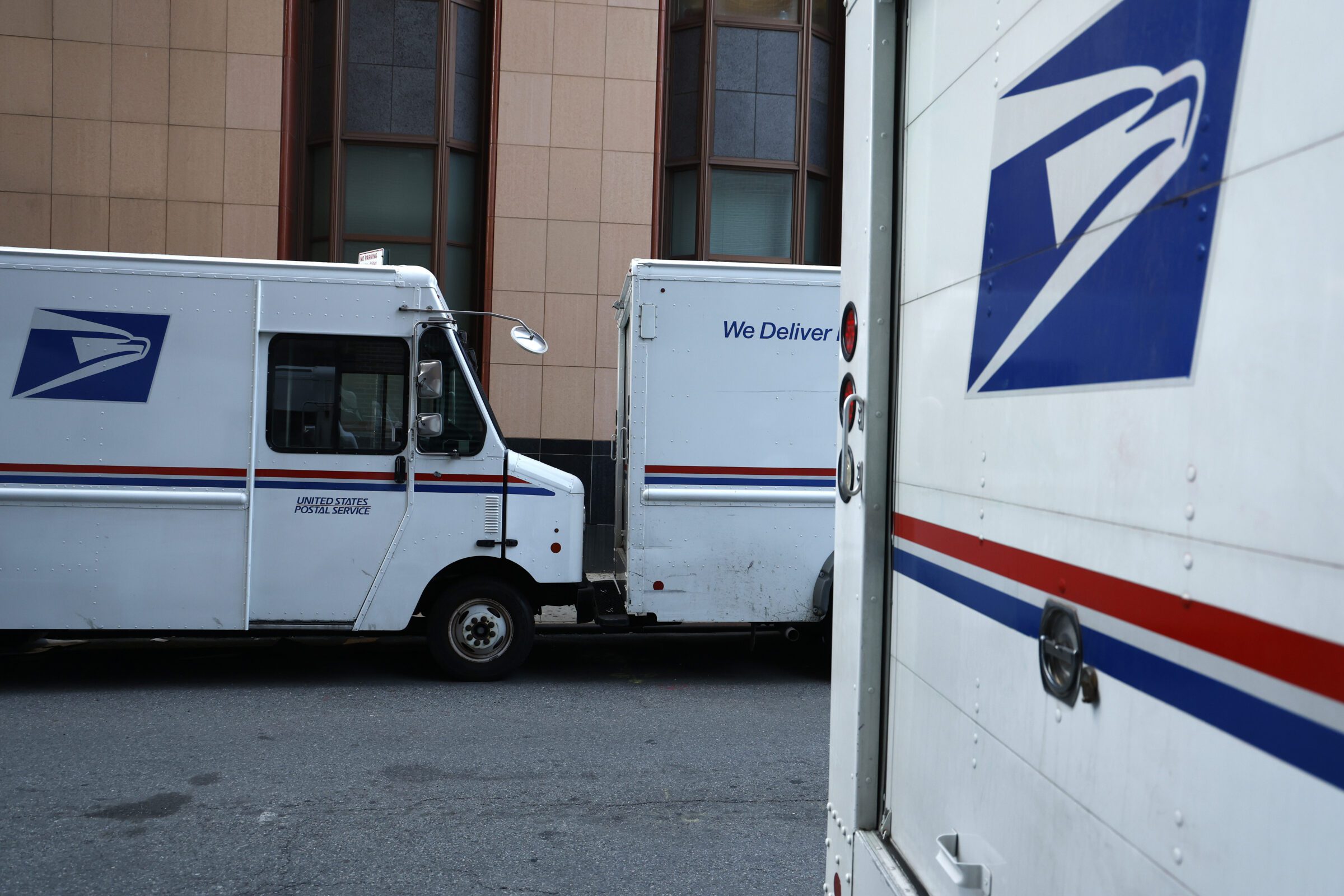
“It sounds like Trump wants the postal service to refuse to deliver some people’s mail. How can a president do this? Is there any precedent?” — Joseph, from Maryland
Many election professionals share your assessment and are alarmed by the administration’s claim that the Postal Service can refuse to deliver some ballots to individuals who are not on their list.
For now, it seems federal judges agree as well; courts have intervened to stop the order from taking effect.
Cohen, of the Fair Elections Center, says Trump’s order “would require that USPS not accept and deliver ballots that it deems out of compliance with the voter list requirements in the executive order. That is really outrageous, illegal, and would be unprecedented because the postal service’s job is to accept and deliver mail from every person who mails a mail piece.”
Leah Aden, senior counsel for the NAACP Legal Defense Fund, accused Trump of “transforming the USPS from a neutral mail carrier to an arbiter of who may cast a ballot by mail.” She told Bolts, “Federal statutes governing the USPS do not permit the agency to pick and choose who can vote by mail.”
The executive order is currently facing a series of lawsuits making these and other arguments.
Democratic officials in 23 states, plus D.C., filed a lawsuit in April, with another lawsuit filed by the League of Women Voters and other voting rights organizations. They argue that Trump’s order violates powers granted by the Constitution for states to administer elections and determine who is eligible to vote. They also say the order violates the separation of powers clause by usurping the authority of Congress to make laws around federal elections.
“This executive order is unlawful and an unprecedented attempt by the federal government to interfere with how states administer elections,” Celina Stewart, CEO of the League of Women Voters, told Bolts. “The President cannot override state authority over election administration, and he cannot impose new election rules by executive order. There is no modern precedent for the federal government directing USPS to reject mail ballots based on voter eligibility.”
U.S. District Judge Indira Talwani, who is overseeing both lawsuits, issued a pair of injunctions this summer blocking Trump’s order, which prompted the administration to appeal to the U.S. Supreme Court. Earlier this week, the court’s conservative majority said Talwani’s move was premature since the executive order had yet to be finalized into a rule—even though their ruling came days after the Postal Service had indeed publicly posted its policies for enforcing the sweeping new restrictions. The court was careful to say it wasn’t addressing the merits of the issue; still, in her dissent, Justice Jackson said the conservative justices’ decision creates a “Kafkaesque nightmare” that “risks severe disruption of the upcoming midterm elections.”
The Democratic states and the League promptly amended their lawsuits to target the rule that USPS just issued, and Talwani issued a temporary restraining order on Aug. 27 that blocks the Postal Service from enforcing it.
This means that, as of publication, USPS cannot refuse to deliver some voters’ mail ballots.
Update: This time, the U.S. Supreme Court blessed Talwani’s decision and thwarted the Trump administration’s effort of upending midterm voting. On Sept. 14, the court issued an unsigned ruling that rejected the administration’s appeal and said it was “unlikely to succeed on the merits,” meaning at least five justices have serious doubts about the legality of the USPS rule.
Justices Clarence Thomas and Sam Alito dissented. Justice Brett Kavanaugh wrote that applying the rule this fall would be “arbitrary and capricious” because “state and local election officials do not have sufficient time to reasonably implement the rule before the elections.” In the meantime, a second federal judge, Carl Nichols, had issued a ruling similar to Talwani’s.
The Supreme Court’s move means USPS won’t be allowed to implement its policy of selecting whose mail ballots it delivers in the run-up to the November midterms. But the legal battle is not settled and will continue ahead of the 2028 presidential election.
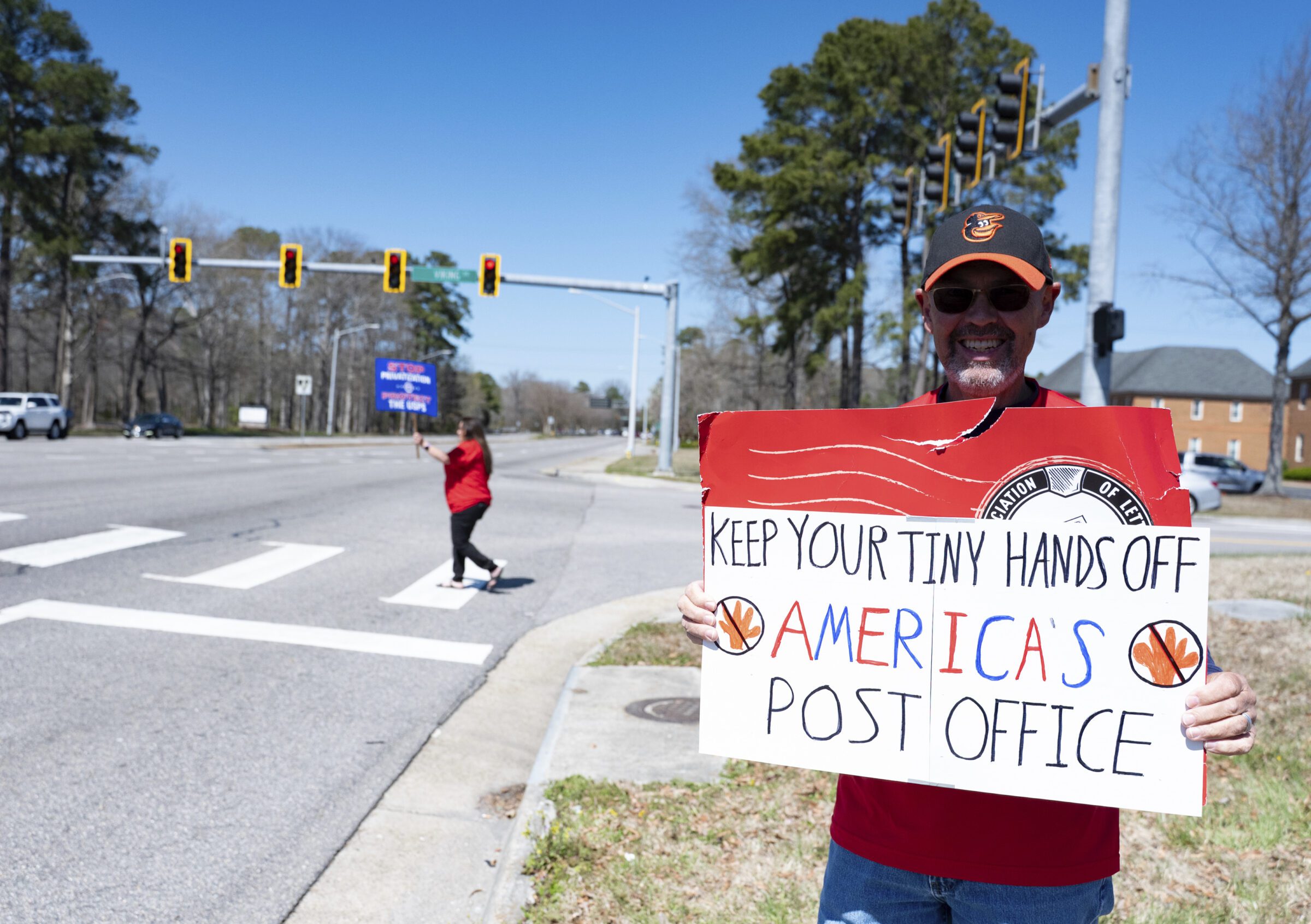
“It seems to me that it would be impossible for the USPS to set up a functional system, much less a fair one, before the November elections to decide which ballots could and couldn’t be sent. Is this plan even feasible?” — Nancy, from California
To be clear, elections experts broadly agree that Trump’s executive order and the resulting USPS rule is illegal. They also say that, even if the Supreme Court ends up blessing it and reversing Talwani’s stay, the timing of the dispute would make it extremely difficult and messy to enforce ahead of the midterms.
Some states are due to send out mail ballots as soon as early September.
To abide by the order, they’d have to rush to share voter lists with the federal government in the coming weeks. Preparing lists with the requisite data would be a huge undertaking for state and local election officials—particularly now, amid all the other tasks of preparing for the midterms.
“The voter lists themselves that the states maintain, those took years and millions of dollars for each state to develop,” said Stewart. “People in all the state governments will be scrambling over the next couple of weeks to get the data together, and make sure it’s in the right format, and make sure all this works.”
According to the new USPS rule, the agency intends to launch a web portal to collect and store voter lists from states. But that portal has not yet been developed or even piloted at a smaller scale. Even if it launches, said Charles Stewart, of MIT, there is no guarantee that it will be secure, functioning, and compatible with each state’s different system for managing voter rolls.
Plus, local election officials would be hard-pressed to design and obtain new envelopes that meet the USPS requirements within a matter of days.
Even if states have no time to meet the new mandates, harm would still come if USPS refuses to deliver ballots in states that don’t comply. But Talwani’s order this week froze the Postal Service’s authority to do that at a crucial time, just as states are about to send their first ballots. Justin Levitt, a voting rights expert and professor at Loyola Law School, is confident that voters will receive ballots next month due to this timing.
“I think it’s exceptionally likely that by the time we hit mid-September, the world we live in is a world where ballots are going into voters’ hands and it’s both too late and not permitted for USPS to do anything with them except deliver them,” Levitt says. “There’s nothing in the rule that suggests USPS is claiming the authority to reject ballots coming back in to election officials in October.”
But Levitt allows that it’s possible that the Supreme Court lifts the judicial block so quickly that it could allow USPS to try to enforce a non-delivery policy in the coming weeks.
Plus, most states allow voters to request a mail ballot as late as two weeks before Election Day, and a hypothetical Supreme Court ruling favoring Trump later this fall might affect them.
Should the agency regain the authority to implement the order, postal officials have said they expect widespread errors.
No matter what happens before November, if the conservative justices end up siding with Trump, the administration and USPS would then have multiple years to try to implement their new rules in advance of the 2028 presidential election. And recent history tells us that many red states, at least, may be glad to amend their election deadlines in order to match the order.
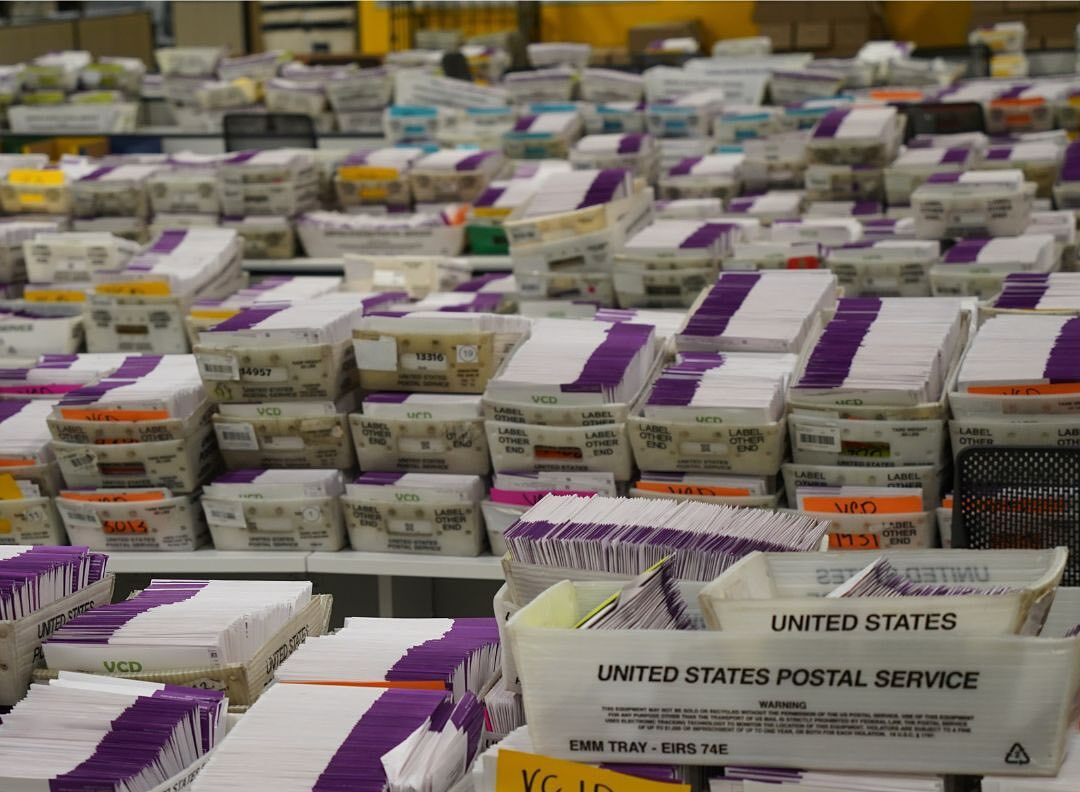
“I have voted by mail since the pandemic and it’s been great but what am I supposed to do differently now? Should I stop?” — Suzie, from Wisconsin | “Should people mailing their ballots use drop boxes and avoid the post office in case USPS decides to cave to pressure from Trump and ignore court decisions?” — @scribunda on bluesky
Given that Trump’s executive order is currently suspended, several experts told Bolts that mail ballots remain a safe and reliable way to vote at this time.
But they stress that voters in states with postmark deadlines should send in ballots far ahead of Election Day because of the separate delays in how USPS postmarks mail. “People should mail their ballots or registration applications early,” Cohen told Bolts.
Voters can also request a postmark from the retail counter at their local post office to ensure they meet the deadline.
The landscape could still shift in coming weeks, with the possibility that the U.S. Supreme Court lets Trump implement his order in advance of the midterms. While experts remain skeptical that USPS can feasibly enforce its new policies by November, as laid out above, they also say voters should learn about all the voting options available in their state and use a guide to make a plan that suits them.
In states that allow early voting, people may have plenty of time to cast their ballots in person. Many states have secure ballot boxes that allow people to submit their absentee ballots—if they have already received them—without relying on the Postal Service. And in some places, voters who wish to vote from home may be able to print out their ballots themselves (more on that below).
Voters can call their local elections offices or refer to voter guides to learn more, Cohen said.
These alternatives are no panacea for voters whose mobility may be impaired or for whom in-person voting poses a practical difficulty. “The reason that the administration is attacking mail voting is that it has helped millions of Americans vote—particularly people who are older, people with disabilities, people in rural areas that don’t live close to an election office,” Cohen added. “So Americans should exercise that right honestly and in defiance of the attacks on it.”
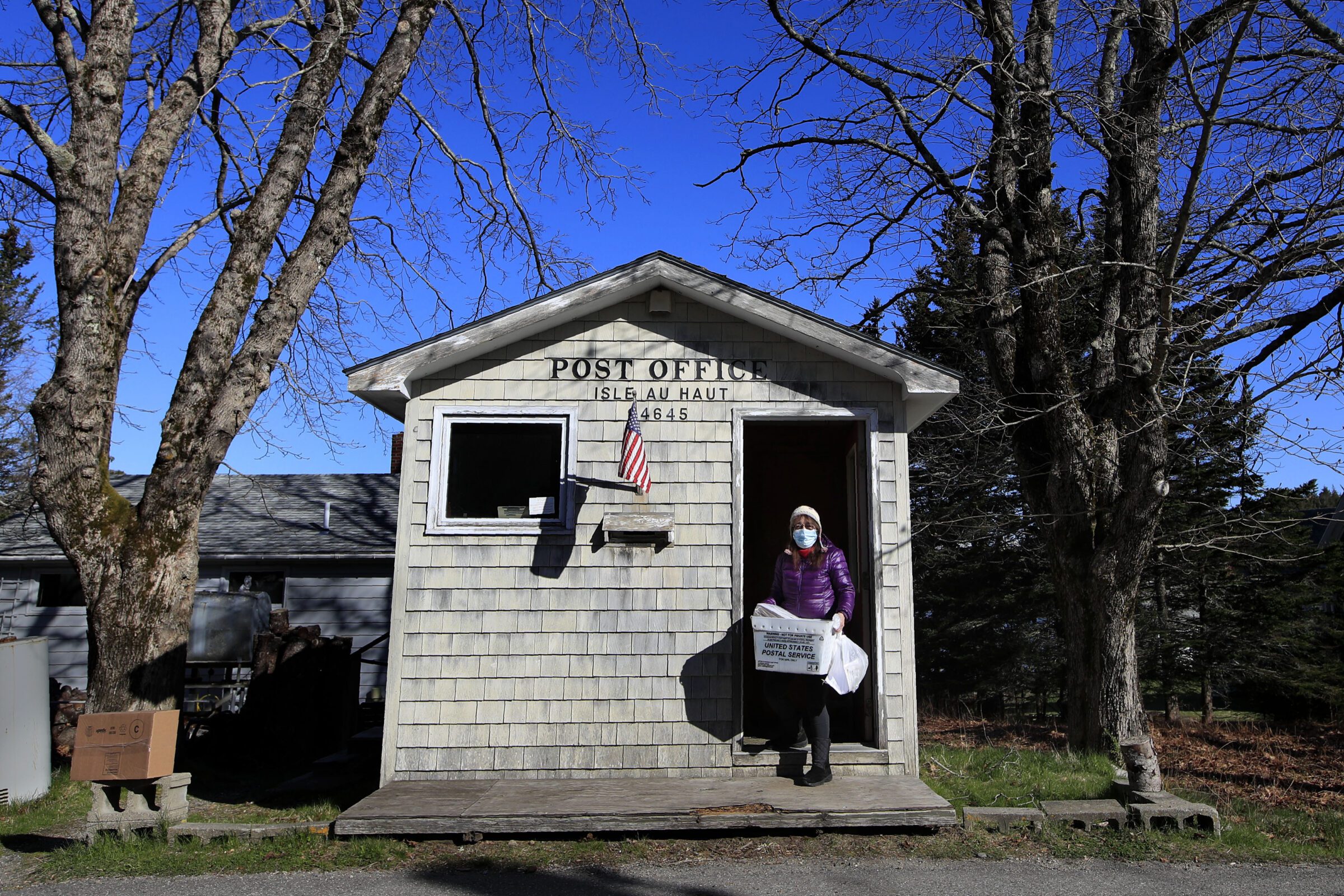
“As an overseas voter, would I be affected by this USPS list requirement? How could I even prove my citizenship from here?” — @THEScottPHarris on X, from France
Voter participation among overseas American citizens is already much lower than it is for other American citizens, and the turnout rate would almost assuredly drop as a consequence of any stricter deadlines for mail-voting eligibility or added requirements for voter identification.
“Voters that live in our community have a much easier time of coming to our office in person and providing documentation—birth certificate, driver’s license, passport,” said Lannie Chapman, the elected clerk of Salt Lake County, Utah. “It’s a lot more difficult for [overseas voters] to be able to provide us some of the documentation they might need.”
Mark Lindeman, policy and strategy director of the organization Verified Voting, told Bolts he remains confident that voter access for overseas citizens is secure, but he also hesitates to look too far ahead: “Conceptually, are these proposals threatening to the voting rights of people overseas? Yeah, absolutely. Do we think these people’s votes are at great risk in 2026? My current assessment would be no.”
“But,” he added, “that’s cheap talk, because we can’t control what the courts and Supreme Court do.” (Courts have, so far, held the line against GOP attacks on overseas voter access.)
Importantly, overseas voters have special legal permission to obtain and submit ballots digitally, and commonly do. This may become a more popular method soon, in the face of federal threats to mail voting.
The group Democrats Abroad, for one, has lately implored its members to consider this option: “We strongly encourage voters living abroad to protect themselves from Donald Trump’s weaponized U.S. Postal Service by going to votefromabroad.org and requesting to receive their ballot by email,” it said in a recent email blast.
“Do most jurisdictions make you request a mail-in ballot? Do any localities send one automatically?” — Bolts Lover, from Virginia
Rules for mail voting vary widely by state, but let’s make this simple by breaking the country down into three rough categories: all-mail, no-excuse, and excuse-required.
That first category, all-mail, includes Washington, D.C., and eight states—California, Colorado, Hawaii, Nevada, Oregon, Utah, Vermont, and Washington—that automatically send all registered voters ballots in the mail for every election. D.C. even mails ballots to residents it has proactively determined are eligible to vote, even if they’re not yet formally registered.
Most of the rest of the country—29 states, to be exact—falls into the second category: Any eligible voter can cast a mail ballot, but they need to request it.
That said, in 10 of those states, people who want to vote by mail only need to apply once in order to receive mail ballots for subsequent elections. This status, known as “permanent absentee” voting, keeps voters from having to ask for their ballot every cycle.
The remainder of states are a lot more strict: They require people to present a specific excuse, like disability or religious belief, if they want to vote by mail. This group includes 13 states, mostly in the South.
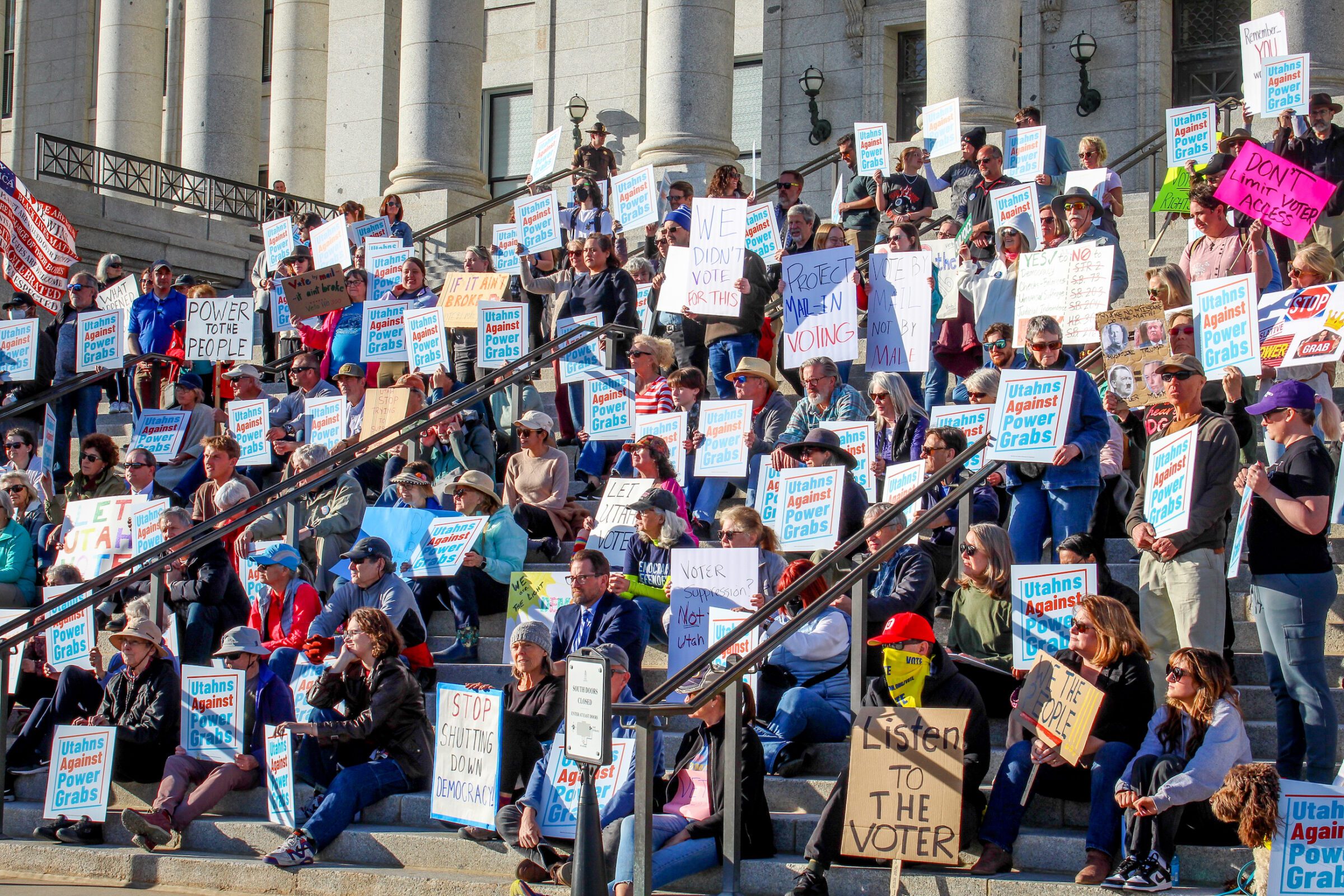
States commonly tweak these rules. Connecticut, for instance, was the latest state to repeal the requirement that mail voters provide an excuse, with a law adopted this spring. Utah, on the other hand, is sunsetting its all-mail program due to growing MAGA hostility against the practice.
To be clear, in all states, voters still have access to some in-person voting sites if they prefer that method.
“Are there any things the blue states can do to speed up mail delivery and ensure mail votes are timely like they should be?” — Mandy
Local and state election offices have no control over USPS policy, but the people who run those offices can and often do take action to try to cut down delivery times of election mail. Some elections officials personally visit their local post offices to collect delivered ballots.
“I already go to the post office daily, after we’ve mailed out ballots, to pick up any returns that they might have for me, instead of waiting for the post office to bring me those mail ballots,” Chapman, the Salt Lake County clerk, told Bolts. “I go directly to the horse’s mouth and it makes sure we’re being as efficient as possible.”
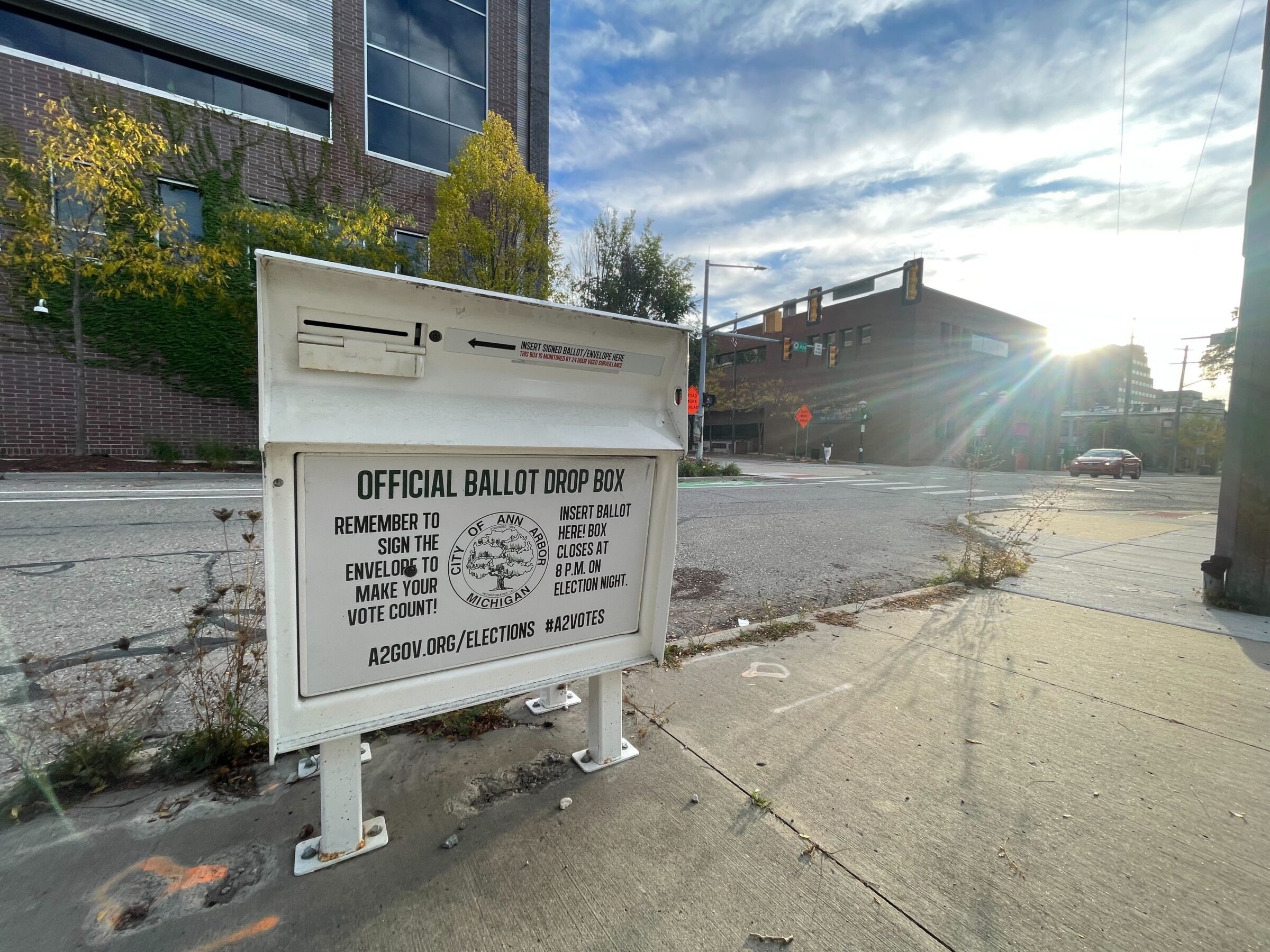
State and local governments can also cut down delivery times by expanding voting opportunities. The more dropboxes and election sites a given area has, the easier it is for voters to return ballots to election officials while avoiding USPS entirely, and the lower the chances are that someone’s ballot return gets slowed down.
States vary widely in how much authority they confer upon election officials to expand delivery opportunities. Arkansas, for example, prohibits dropboxes. Ohio allows only one ballot dropbox per county. Rhode Island requires every single town to provide at least one dropbox.
“You can’t force the Postal Service to do anything,” Phil Keisling, the former Oregon secretary of state, and now a national advocate for mail voting, told Bolts. “But you can make voting convenient. Letting people drop ballots off at fire stations, city halls, libraries—that’s the kind of thing states can do, where they have the authority.”
“I want to know if states like mine (Washington) that only do mail-in voting have any Plan B? Especially if the USPS does not deliver mail-in ballots, is there any way that FedEx or UPS could be used?” — Sarah, from Washington
Bolts put this question to several elections officials in all-mail states, and they all were on alert for if and when USPS is no longer reliable for mail voters.
“There’s a reason we’re up at 3 a.m., and this is it,” said Chapman, the Salt Lake County clerk.
“We think about worst-case scenarios,” she said. “We continue to come up with solutions to what we hope are preposterous hypotheticals.”
Importantly, even all-mail states still do have physical voting systems in place, meaning that even severe threats to vote-by-mail would not stop most people from exercising their right to vote. In addition to polling sites and voting centers, of which most counties have at least one, voters generally often have lots of choices for returning ballots by dropbox. Washington, for one, reports having nearly 600 ballot dropboxes across its 39 counties. Much tinier Vermont, which is the only all-mail state in the eastern U.S., reports more than 250 dropboxes.
If USPS became unreliable for mail voting, Chapman and others said, elections officials could consider beefing up staffing and operating hours for in-person polling stations. Officials could also explore contracting with private mail carriers, though no state currently relies primarily, or even in significant part, on private carriers for mail ballots.
State and local responses would vary, of course, in the event of significant future USPS disruption.
“Those scenarios are always being contemplated,” said Keisling, the former Oregon secretary of state. “Big fire, typhoon, earthquake, you name it. I’m confident election officials have worst-case scenarios for something as absurd as the Supreme Court allowing the Postal Service to decide which mail it delivers.”
“King County, Washington, gives voters the opportunity to print their ballot online. Does this happen elsewhere? If not, what are the barriers to making this happen? It seems like the only option that completely bypasses the USPS (print at home, drop in dropbox).” — @kaybee71 on BlueSky
This isn’t universal, but it’s more common than you might think.
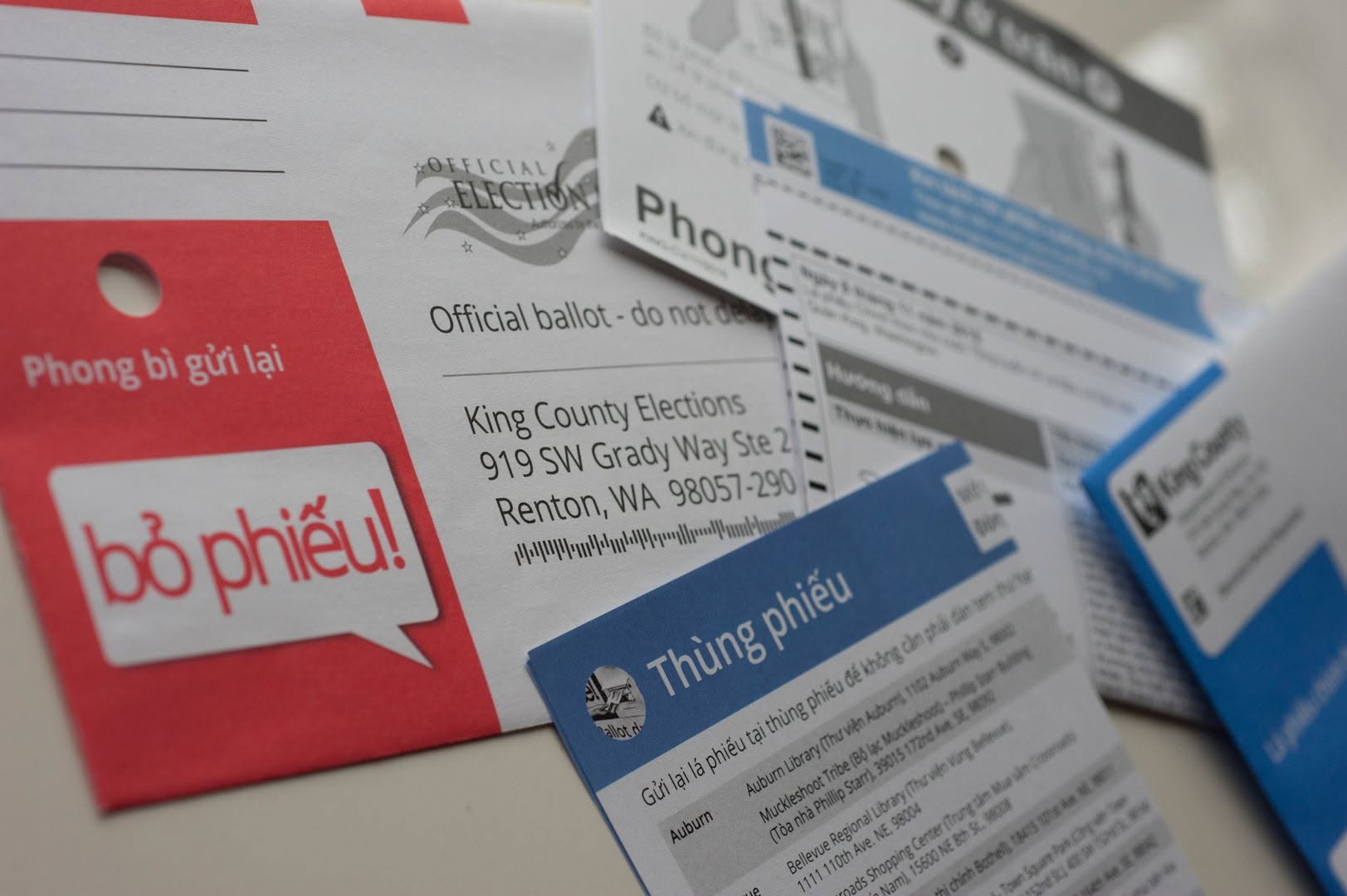
In King County and elsewhere in Washington, voters who need a fresh ballot—that includes people whose ballots were lost, stolen, or damaged, or whose ballots never arrived—can enter their name and date of birth online, then access their local ballot and print it out for return. Here’s King County’s site, for anyone curious.
The state of Washington was actually pushing this option recently, as wildfires ravaged many communities during the state’s recent primary elections. King County officials have also promoted the idea as a possible way to guard against USPS delays.
California also allows all registered voters to print ballots at home, and then return those ballots in person, in a drop box or by mail. Maryland allows all registered voters to request a ballot via secure email, which voters can then print and return.
Still, some voting advocates don’t see this as a panacea in the face of slow USPS delivery.
Lindeman, an expert on voting systems with Verified Voting, said that ballots printed at home can be more difficult for state and local vote tabulators to interpret—a significant potential barrier to expanding the process. For example, in Maryland, Lindemann said, election officials have to duplicate home-printed ballots submitted by voters onto pages that the state’s systems can process.
“You try not to introduce complications unless they’re necessary, and printing ballots is kind of a Rube Goldberg way to vote,” Lindeman said.
“If mail voting has been used safely by millions of Americans for years, what’s the actual evidence behind the new restrictions? Are these changes solving a real problem, or creating new barriers before November?” — @ariananiko on BlueSky
To hear Trump and allies tell it, their attacks on mail voting are justified by the fact that mail voting leads to fraud so widespread as to make election results fundamentally untrustworthy.
But audit after audit and analysis after analysis has found that mail-voting fraud is exceptionally rare—literally well under one in a million. Mail voting is reliable, tested, and increasingly common; even Trump votes by mail.
There has been evidence of ballots being delivered to wrong addresses, or to the address of a deceased person, which is then used to feed conservative attacks. But even so, studies and investigations routinely find that there are vanishingly few instances of actual illegal voting. States have verification systems to ensure only one ballot from each person is ever counted, using signature matching and other measures, including tracking systems with unique barcodes.
But the data tell us something else important: Democrats tend to trust and utilize vote-by-mail more often than Republicans. There was not so clear a partisan divide prior to 2020, when Trump began his crusade against mail ballots, but that year, and in 2022 and 2024, post-election reports confirmed that Democrats voted by mail much more often, while Republicans voted more often in person.
This helps explain why Trump and the GOP continue to target mail voting. Their attack undermines a method Democrats tend to prefer, and makes mail voting a scapegoat when and where Republicans want to cry foul on election results. Trump himself has said the quiet part out loud: Mail voting “doesn’t work out well for Republicans,” he once tweeted. “You’d never have another Republican elected again,” he said of expanded voter access generally in 2020.
Sign up and stay up-to-date
Get timely updates about pressing stories and elections.
Support us
Bolts is a non-profit newsroom that relies on donations, and it takes resources to produce this work. If you appreciate our value, become a monthly donor or make a contribution.