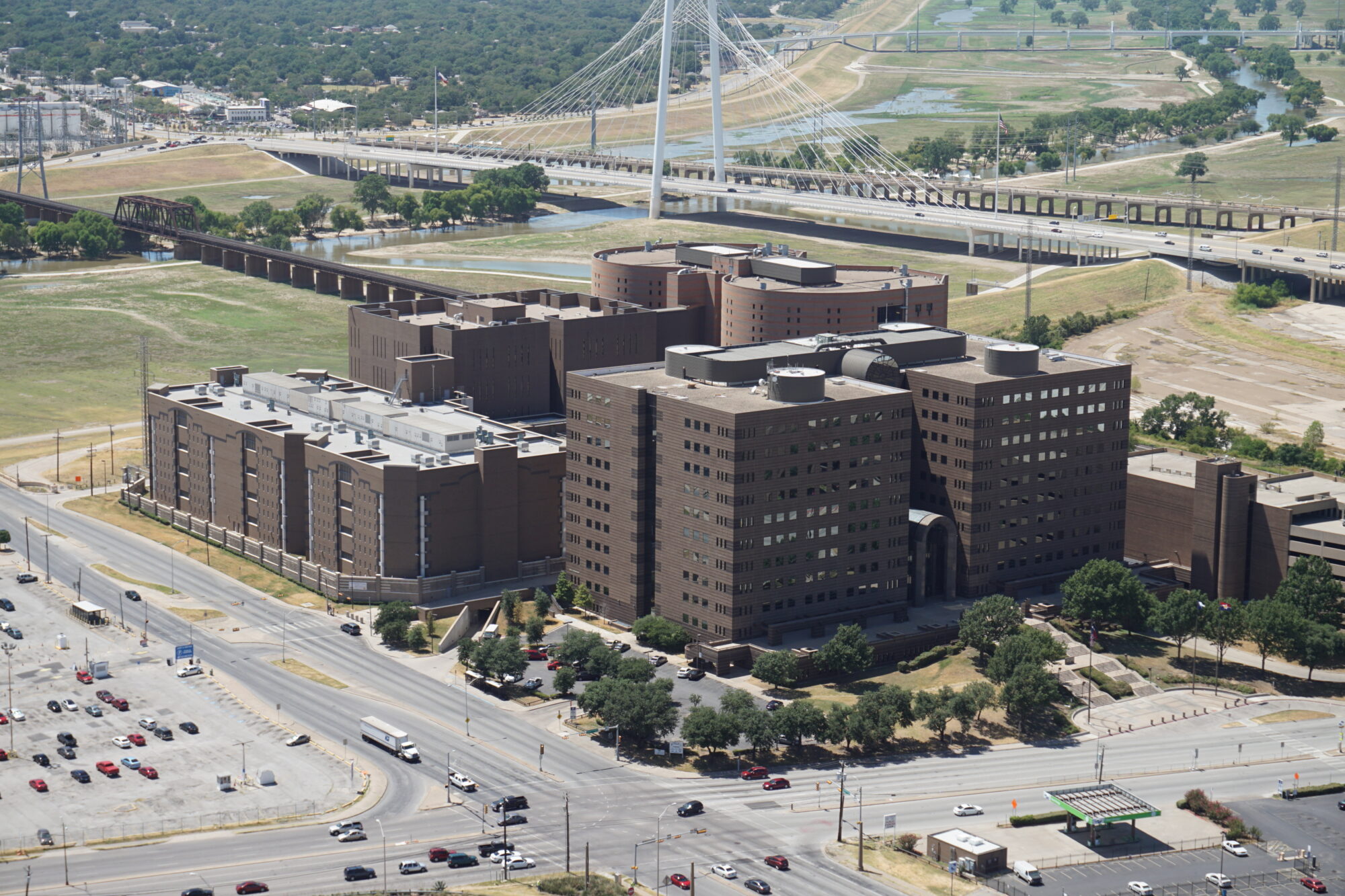

Maine Prisoners Organize to Protect Their Rare Right to Vote
Maine is one of the only places in the country where prisoners keep their right to vote. But logistical barriers to voting still contribute to their larger exclusion from the political process.
| August 7, 2026
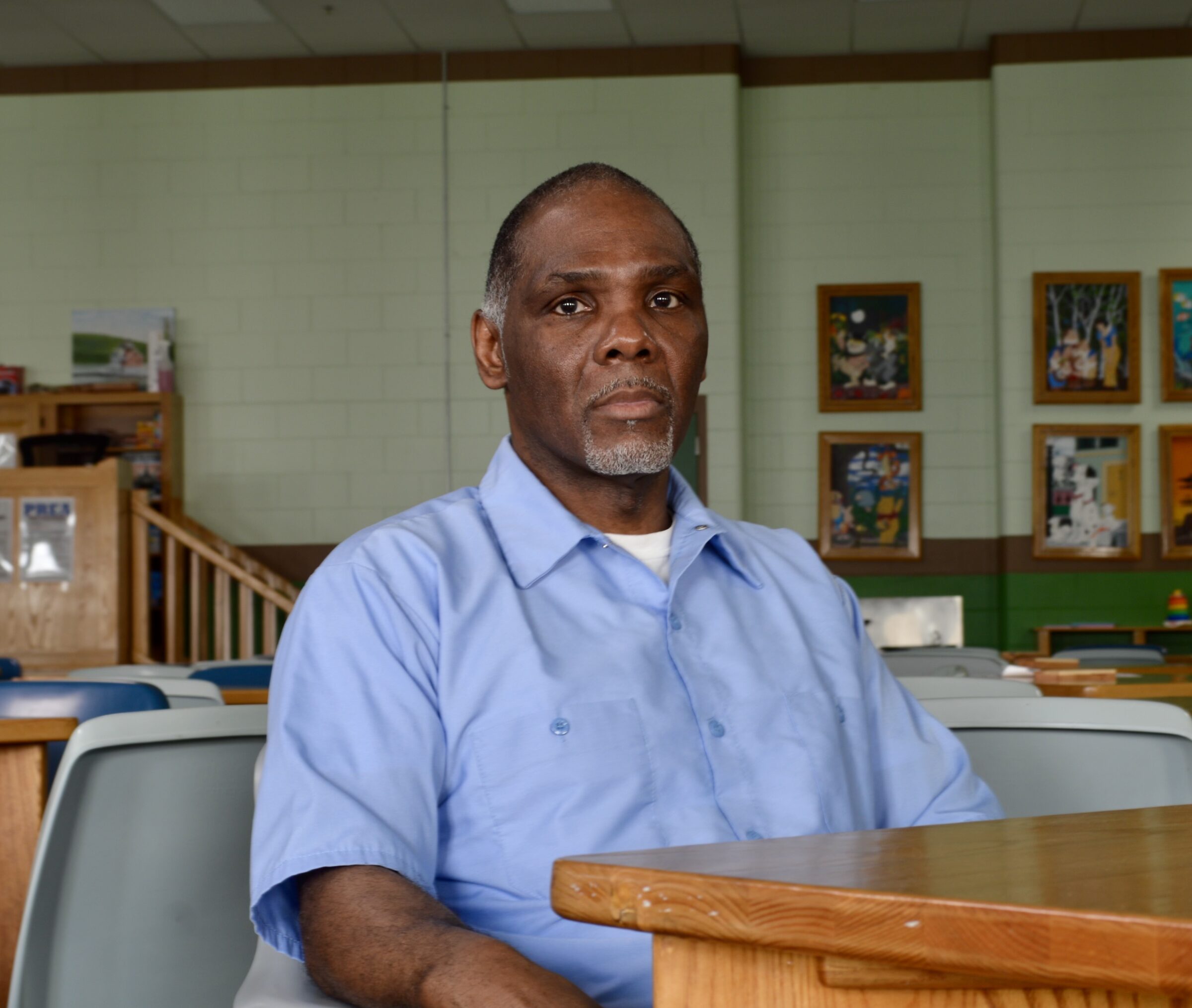
Djvan Carter often thinks of what he’ll say at a parole hearing if he ever gets the chance.
Serving a life sentence for attempted murder, Carter says he’d want a parole board to know he’s sorry for his crime, but that it does not reflect his true self; at the time he committed it, he says, he was high on methamphetamines and had been awake for six days straight. He’d tell the board he’s worked hard on himself since, including by pursuing a bachelor’s degree and joining the NAACP branch at Maine State Prison.
“And I’d let them know that I’ve got kids, that I’ve got loved ones counting on me,” he said. “I want them to know I don’t want a get-out-of-jail-free card, that I’ve got accountability.”
Carter has no way to plead his case, though, because Maine abolished parole in 1976. Lifers like Carter will die in prison, absent an extraordinary reprieve, like clemency from the governor.
That might change soon. Some state lawmakers have been seeking to restore parole and an election this year could prove pivotal: Democratic Governor Janet Mills, who opposes parole and has threatened to veto parole legislation, is nearing the end of her time in office. The polling favorite to replace her, Democrat Hannah Pingree, supports reinstating parole, which she says could encourage prisoners to work toward rehabilitation.
The prospect of this reform has made Carter and many other Maine prisoners keenly interested in this year’s election. Fortunately for them, they happen to live in one of the only places in the country where they can have a say: Alongside only Vermont, Washington, D.C., and Puerto Rico, Maine is unusual in that it never strips people of their right to vote because of a felony conviction, including while they are incarcerated.
On paper, that should give incarcerated people the opportunity to weigh in on the state’s next leaders. But it remains difficult for many of them to actually exercise that right.
Incarcerated would-be voters routinely encounter logistical obstacles that public officials often fail to clear up, despite some recent examples of reforms they could borrow from other states. Many do still vote, but that is a credit to remarkable organizing by imprisoned activists over many years, rather than to the state.
Even though incarcerated people in Maine have always retained the right to vote, voting behind bars has been functionally inaccessible for most of the state’s history. Almost nobody voted from prison here until the 2000s, after incarcerated organizers with the NAACP branch inside Maine State Prison began agitating for ballot access. As recently as 2018, a rare study on prison voting by MIT found, the turnout rate in Maine prisons was just 6 percent.
The NAACP prison branch, backed by a small but committed corps of outside allies, has helped significantly expand voting access for prisoners in recent years. Maine elections officials, who say they’re committed to ensuring incarcerated Mainers can vote, now regularly visit prisons for voter education and registration events.
Read more on voting rights
Subscribe to our newsletter
This past spring, in advance of Maine’s June primary, at least 269 prisoners—about one out of every seven people imprisoned in the state—registered to vote or requested to receive an absentee ballot, according to the secretary of state’s office.
Still, when I went to Maine, I met many prisoners who said they face barriers in casting mail ballots—which is the only way they can vote, since, unlike their peers in some other places, election officials in Maine have never conducted in-person voting inside the state’s jails or prisons.
Some say they still have trouble obtaining mail ballots in time for them to be submitted and counted, often because they get held up in a prison mail room. Some say they can’t afford the postage for a mail ballot—a relatively tiny cost, but one that can still be a hurdle for incarcerated people who make very little money. The state also says it has no process in place for incarcerated voters to fix submitted ballots that are at risk of being tossed due to filing errors, such as a missing or mismatched signature on a ballot sleeve.
On top of the trouble with mail ballots, Maine prisoners struggle to participate in the political process on basic levels. Candidates rarely visit them, and prisoners cannot remotely attend most forums or other election-related events. Last month brought a fresh reminder of that barrier: Prisoners were blocked from remotely attending the convention to replace Graham Platner as Maine’s Democratic U.S. Senate nominee, despite some last-minute attempts by prisoners and advocates.
Luca Mellon, a law student and prisoner ally who sounded the alarm ahead of the convention, told me he finds that prisoners are not only excluded from civic engagement events, but often not even considered. “Most people who care about voting rights don’t seem to be orienting that in any way toward prison voters,” he said. “I think that part of incarceration is designating you to a less-than-human status. So, yes, you have the right to vote. But being able to actually, fully participate? Eh, not really.”

And while the state Department of Corrections has allowed voter registration events in recent years, it has continued to block advocates’ longstanding attempts to hold elections forums to keep incarcerated voters informed on candidates and issues. “The decision has been to keep politics out of the facilities,” the DOC commissioner, Randy Liberty, told me. Though uncommon, such events do happen behind bars elsewhere, including in Vermont and Michigan.
“For years, under Democratic administrations, we’ve been asking for town hall meetings in prisons with candidates,” said Rachel Talbot Ross, a Democratic state senator and longtime champion for voting access in Maine prisons. “We’ve been asking since 2006, and it’s always been ‘no.’”
By the time I visited Maine State Prison, in late May, voting was already underway for the primary on June 9. Many of the men I met seemed interested. “They feel like parole is on the ballot,” Foster Bates, the president of the NAACP prison branch, told me. He, like Carter, is a lifer, sentenced 24 years ago for what he insists was a wrongful conviction.
But when I met Carter, he was still worried about whether he’d even be able to vote on Maine’s next governor. He said he wasn’t sure how or when he could expect to receive a ballot, and said that no one working at the prison has talked to him about the process.
“I’ve been getting ready to vote,” he said. “But the facility itself, the administration, they don’t help us or guide us. It’s all on us.”
At the turn of this century, prisoners in Maine mostly had no idea of their constitutional right to vote, according to organizers who were imprisoned at that time. It was not until 2004, they say, that many prisoners began to discover their rights—not because of guidance from Maine officials, but rather their own research into the state constitution. The NAACP’s Maine State Prison branch formed around this time, with voting access as a foundational demand.
Incarcerated organizers, backed by the NAACP branch in Portland, Maine’s largest city, asked to hold voter registration drives for prisoners, but they were denied for two years by the administration of then-Democratic Governor John Baldacci, recalls Talbot Ross, who at the time led the Portland NAACP. The voter registration drives began in 2006, and by 2008, prisoners were lining up to vote for Barack Obama, according to Bates.
The project of prison voting in Maine today largely relies on a few committed folks—but in those early days, the group was even smaller. Talbot Ross recalls regularly driving an hour from Portland to the secretary of state’s office in Augusta to collect voter registration cards, then another hour to Maine State Prison to personally deliver them to voters. One election, she says, she traversed the state just to hand ballots to two incarcerated women who were struggling to vote.
Talbot Ross would research candidate positions and ballot issues to cobble together makeshift ballot guides, and while visiting prisons she’d read out her findings to incarcerated people who otherwise had little access to the facts they’d need to cast informed votes.

“We had to make up our own processes, because there’s nothing in place,” Talbot Ross said.
They kept the work under the radar because they feared that publicity would motivate “tough-on-crime” figures to try to repeal prison voting rights. Journalists, Talbot Ross says, would sometimes ask her about this work, but she’d decline to comment: “We’d never, ever, ever speak about it, because we knew if we did there’d be legislation the next year to try to restrict the right.”
That still happened, despite their secrecy. Lawmakers in 2007 and 2013 considered, but did not pass, constitutional amendments to introduce felony disenfranchisement to Maine. In 2016, Talbot Ross ran for and won a seat in the Maine House of Representatives—the first Black woman ever elected to the state legislature.
She followed her father, Gerald Talbot, who founded the Portland NAACP and was Maine’s first Black legislator, and who died in May at 94. Talbot Ross told me she ran for office in large part to be a voice for prisoners, and that she has continued in politics because she feels incarcerated people’s rights, including to the ballot box, continue to be threatened.
Just last year, Republicans in the state organized behind a failed ballot measure that would have limited mail voting in Maine, and functionally eliminated access for incarcerated voters.
The founder of Maine’s NAACP prison branch, Joseph Jackson, who is free now and lives near Lewiston, says that in the early days of prison voting in the state, organizers like him were challenged not only by institutional apathy and occasional hostility, but by the fact that almost no other place in the country allowed prison voting.
Felony disenfranchisement, which is less common in other countries, has long been a dominant feature of American politics. It has always disproportionately affected people of color, given the fact that every single state disproportionately convicts and incarcerates non-white people. The racial skew of disenfranchisement is no accident: Dating back to Reconstruction and the Jim Crow era, felony disenfranchisement schemes have often been designed explicitly to limit Black political power.
But Maine and Vermont, the two states with the highest percentages of white people in their respective populations, stand out for never having stripped the right to vote from people with felony convictions. It is no coincidence, Jackson argues, that these are the only two states to allow prison voting. “That cannot be lost in this conversation. The Maine model ain’t happening in Louisiana,” he said.
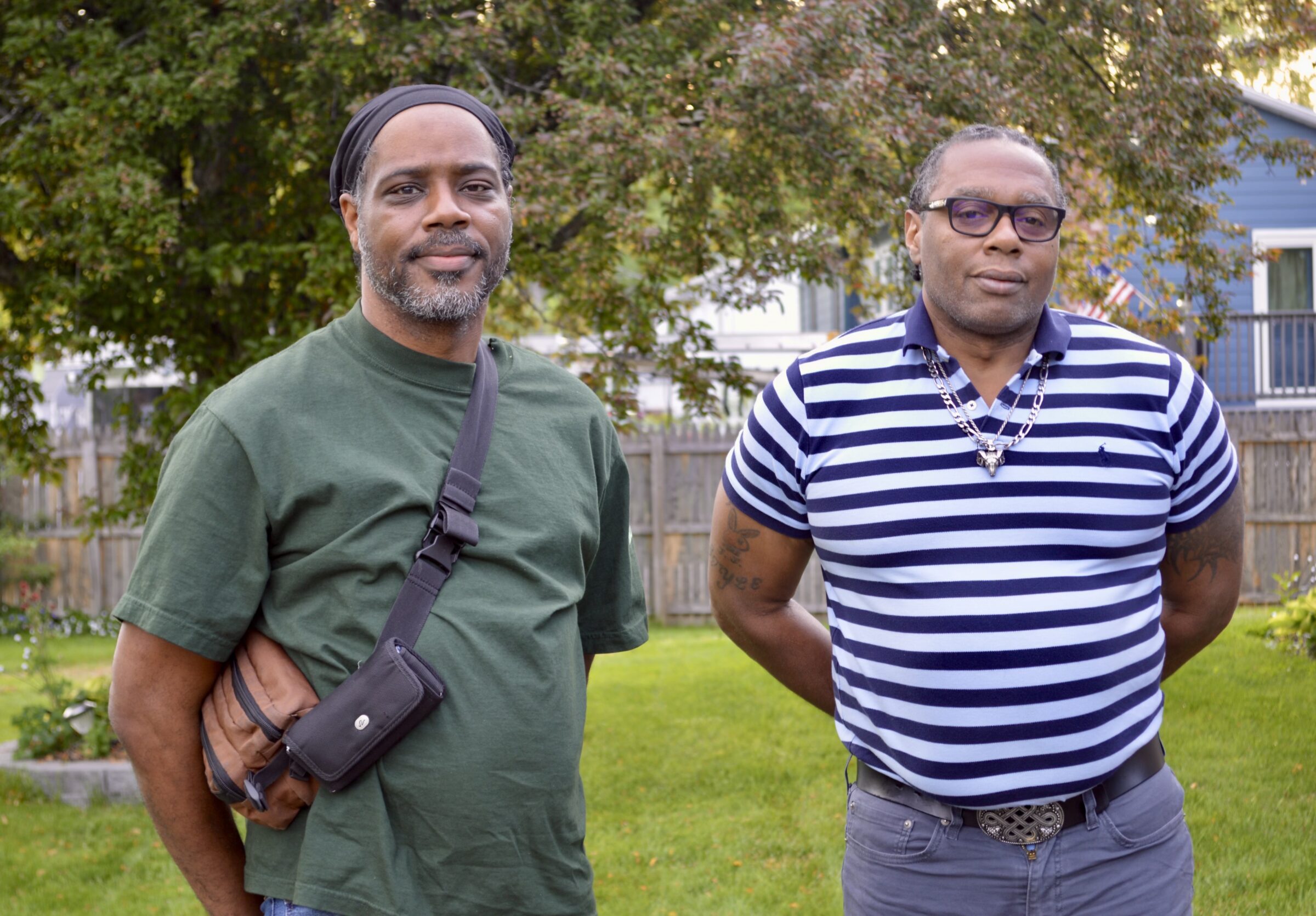
Without many best practices to draw from in other states, Maine’s incarcerated voters and their free advocates have had to invent processes as they go.
For example, when in past elections voters have lacked the money to cover postage for ballot envelopes, the Maine Prisoner Advocacy Coalition has sent cash to incarcerated colleagues to buy stamps for their peers. When ballots have been held up in mail rooms, advocates like Jackson and Talbot Ross have sprung into action to urge prisons to get them into voters’ hands.
In November of 2025, when Maine was voting on the referendum to limit mail voting, some at Maine State Prison did not receive their ballots until the weekend before the election—which did not give them enough time to fill out and return the ballots by the state’s deadline. And so advocates worked to convince the Department of Corrections to pay for overnight shipping of the affected ballots. Jackson called that episode a “horrible oversight,” but added that it was an unsurprising feature of a system that, even today, relies on informal cooperation and goodwill, as opposed to actual state laws.
Liberty, the DOC commissioner, downplayed this incident. “When we receive those ballots, they go out,” he told me, emphasizing that the department’s policy is to deliver mail ballots to voters within 24 hours of their arrival. And when an issue arises, he added, “We’re doing any means possible, to include overnighting and even hand-carrying them” back to elections officials.
While those held-up 2025 ballots made it out in time thanks to emergency organizing, other voters still fall through the system’s cracks.
I spoke with one of them, Mark Barrett, at Maine State Prison. He’s in his sixties and just arrived at the prison in February. This spring, his hometown of Lewiston held a special election on school funding. Barrett is a lifelong voter, so he would have wanted to participate in any event, but he was especially interested because he’s now got two grandkids in public schools in Lewiston.
“I couldn’t vote. I didn’t get my absentee ballot until the day after the election,” Barrett told me. He said he’d have voted in favor of the school funding measure, which failed by 371 votes. He suspects his ballot was held up in the mail room.
“I don’t think it’s fair that that can determine whether I vote. It’s always, ‘Oh, yeah, you can vote’—but let’s see how much my vote actually counts,” he said.
I met other incarcerated and formerly incarcerated Mainers who said they’ve never even gotten as far as Barrett did. This was especially true of people held in facilities besides Maine State Prison, where Foster Bates and the NAACP are potent forces; advocacy around carceral voting is much less organized and powerful in other jails and prisons in Maine.
To this day, many incarcerated Mainers still do not even know they have the right to vote. A recent Sentencing Project survey of prisoners in Maine and Vermont found that few reported learning of their voting rights from the people who work at their prisons; the vast majority found out via word-of-mouth among peers. Half of respondents said they still did not know how to vote.
Liberty said the DOC’s training for rank-and-file prison staffers doesn’t mention ballot access, though the agency claims it will soon release a “directive” for senior staff on prisoners’ voting rights. In its report last year, The Sentencing Project found that “Maine has neither an official voting rights policy nor a formal write-up for staff guidance on how to guide incarcerated residents.”
“I didn’t know, prior to someone actively telling me,” says formerly incarcerated organizer A. Cuba Jackson—no relation to Joseph Jackson, though they work together now—who was in Maine State Prison from 2013 to 2018.
“That’s where the grief is for me,” A. Cuba Jackson says. “The ‘someone’ wasn’t the administrators. It wasn’t the case workers, or people in the community who cared. It was the people inside the prison who happened to figure this stuff out and began to bang the pots, who were then met with so much resistance. It wasn’t a clean, straight path—any wrinkle in the process became an almost insurmountable barrier.”
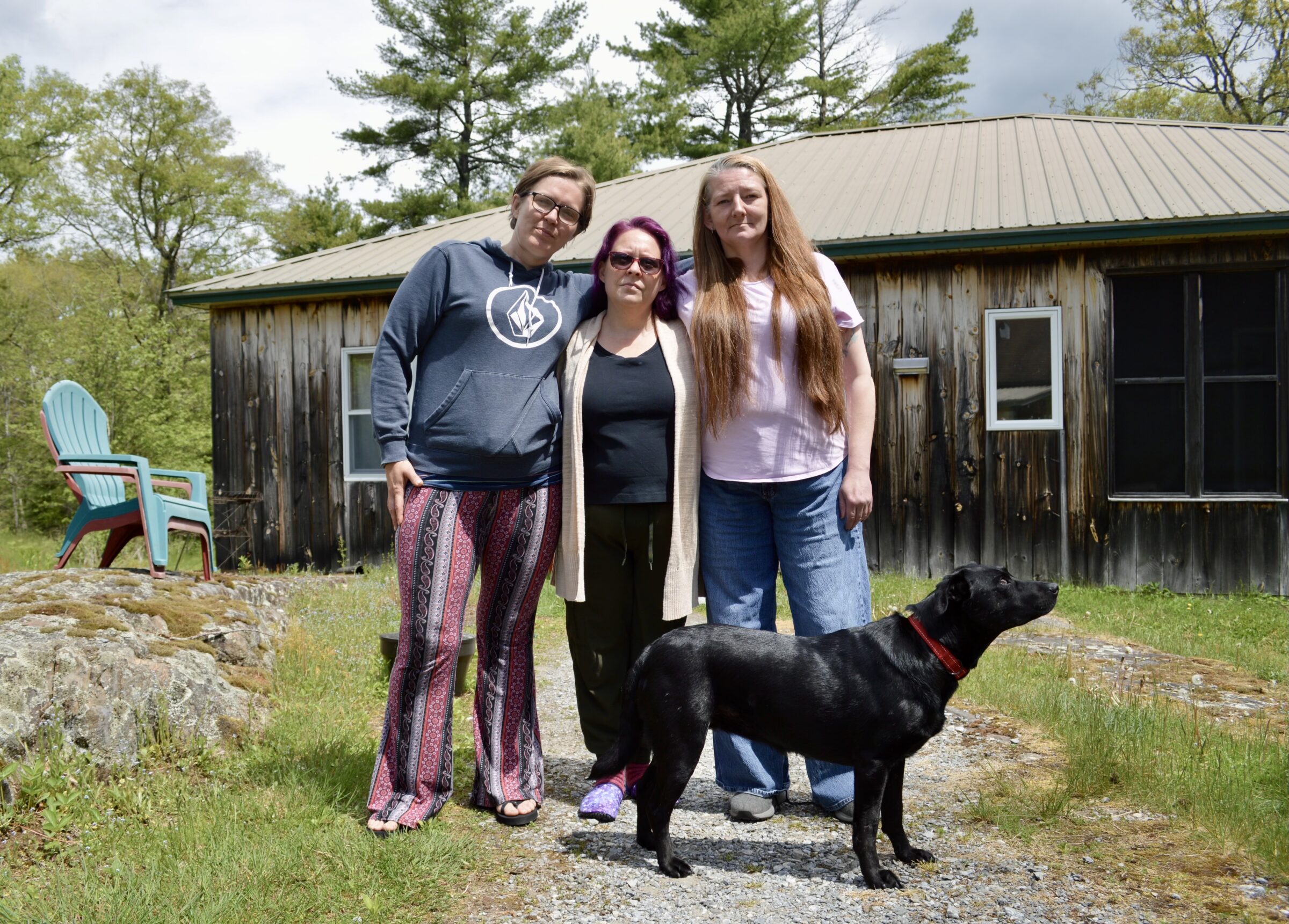
At a home for addiction recovery in Edgecomb, a quiet town north of Portland, I met with three women who had all recently been incarcerated in Maine during at least one election cycle. Two of them had been in jails and another had been at the state’s sole women’s prison. All said that they were never offered the chance to register to vote, much less to request an absentee ballot. Though the state does registration drives inside prisons, it does nothing inside of Maine’s 15 county jails.
Vanessa Diaz Gaumond, who leads prison voting efforts at the secretary of state’s office, said the office is early in talks to remedy that, but has no plans at the moment. “We are truly, truly committed” to incarcerated people’s voting rights, she said, adding that voter access in jails is still “in those really early stages.”
Nicole Murphy, the manager of the addiction recovery home, told me that nobody asked her whether she wanted to vote during the 2024 presidential election, when she was in prison.
“I never understood it,” she said. “Are we not still people? Why wasn’t I asked? It felt like your voice was completely silenced in there. There’s voting stuff going on in the media, but we’re out of the conversation. What can you feel in that, other than completely disconnected?”
Heather Belmain, who lives with Murphy and was in jail in Maine during the state’s November 2025 election, recalls overhearing a fellow incarcerated woman asking a jail guard about how she could obtain a ballot. “The guard said they just didn’t do it there,” Belmain told me. “So it was never something that was available to us. Everyone was wondering why.”
Over coffee in Portland, Talbot Ross spoke of a need for Maine to set standards in state law for incarcerated voter access. As a senator, and the former speaker of the Maine House, she’s certainly got the standing to kick off that conversation, and she told me she’s got a good idea of some of the reforms she’d write into a potential bill.
For one, she wants Maine to facilitate in-person voting for incarcerated people instead of making them rely exclusively on vote-by-mail. That’s rare in carceral facilities in this country, but not impossible; Colorado in 2024 pioneered a first-of-its-kind state law to require all jails to set up polling places during certain elections, a reform that led to a surge in turnout in the 2024 elections. Elsewhere, a few local officials have also chosen to set up polling locations within their jails.
Diaz Gaumond, with the secretary of state’s office, said this would be difficult for Maine to pull off because it would require coordination with the hundreds of local officials in Maine’s towns and cities who run elections. Prisoners register to vote using their last address before incarceration, so in-person voting, Diaz Gaumond said, would require the state to obtain ballots from across the state, then send them back to the relevant local administrators. “That is not something that really works with the procedure we have set up,” she says.
Talbot Ross still wants candidate forums for incarcerated people. She wants the state to guarantee that it will cover the cost of ballot postage, and to always treat ballots as privileged mail so they’re never held up on the way into or out of a carceral facility.
Many others involved in this work, including incarcerated organizers, say they, too, would like to see pro-voter provisions codified in state law, lest political winds blow away existing rights for incarcerated folks.
“The minute you think you’ve got some agreement with a warden or a commissioner, it changes, and it starts all over again,” Talbot Ross said. “This can be taken away in a nanosecond.”
Liberty, who is stepping down soon as DOC commissioner, isn’t worried about that. He says he believes that voting is now engrained in Maine prisons and that he’d tell his successor, who will be appointed by the next governor, that ensuring ballot access for prisoners is a “priority” and “duty” of the office.
Pingree, the favorite to become Maine’s next governor in her race against Republican Bobby Charles and independent Rick Bennett, seems open to pro-voter reforms in carceral settings. She told Bolts in an emailed statement that strengthening voter access in Maine’s prisons and jails was consistent with her “broader commitment to making sure every eligible voter can exercise that right without unnecessary barriers,” and she committed to working with DOC leadership and advocates “to identify the current gaps and challenges and address them.”

Talbot Ross is hesitant to bring a reform bill—even though the politics of this issue have changed considerably since the early 2000s; even though she is now a power player at Maine’s statehouse; even though Democrats control the House and Senate; and even though the likely next governor is sympathetic. In spite of all those advantages, she still worries about galvanizing opponents of prison voting.
“I have remnants of nervousness. The minute we introduce something, everything becomes debatable, and we run some risk,” she said.
Inside prison, some Mainers have the same worry. They say they’ve been punished by prison staff over the years—though less often these days—when they’ve been forceful in advocating for voting access, or for improved conditions generally.
Bates, the chair of the NAACP prison branch, has been trying to find a successor, should the day come that parole returns and he is released, or if he otherwise is unable to lead the organization. “It’s hard, though, because of the bullseye on you,” he says.
Santanu Basu, a leader in the NAACP branch, has been at Maine State Prison more than 20 years, and has seen the Department of Corrections ease up significantly on people who make noise about voting. He still describes voter access in prison as fragile, and says turnout here would “go down dramatically” if Bates ever stopped working in this space. He’s also skeptical that the department cares very much about voting; he believes the state’s present-day tolerance is a testament to the fact that prisoners and prisoner advocates have agitated for so long and made so many gains that the DOC can no longer look away. He says that in the past he saw incarcerated organizers sent to solitary confinement for speaking up.
“We are a powerful group, and DOC administration doesn’t like that,” Basu said.
Talbot Ross added, “There’s been retaliation, severe retaliation—loss of job, phone privileges, rec time—put directly on those who are active in the NAACP.”
“Sometimes I think it’s because we are getting somewhere.”
Sign up and stay up-to-date
Get timely updates about pressing stories and elections.
Support us
Bolts is a non-profit newsroom that relies on donations, and it takes resources to produce this work. If you appreciate our value, become a monthly donor or make a contribution.