
A Voting Rights Promise, Betrayed for 156 Years
After the Civil War, Congress readmitted Southern states on the condition they not expand felony disenfranchisement—but they quickly ignored the restriction. It has finally caught up with one state, with a federal court ruling against Virginia and reviving the Reconstruction-era promise.
| July 9, 2026
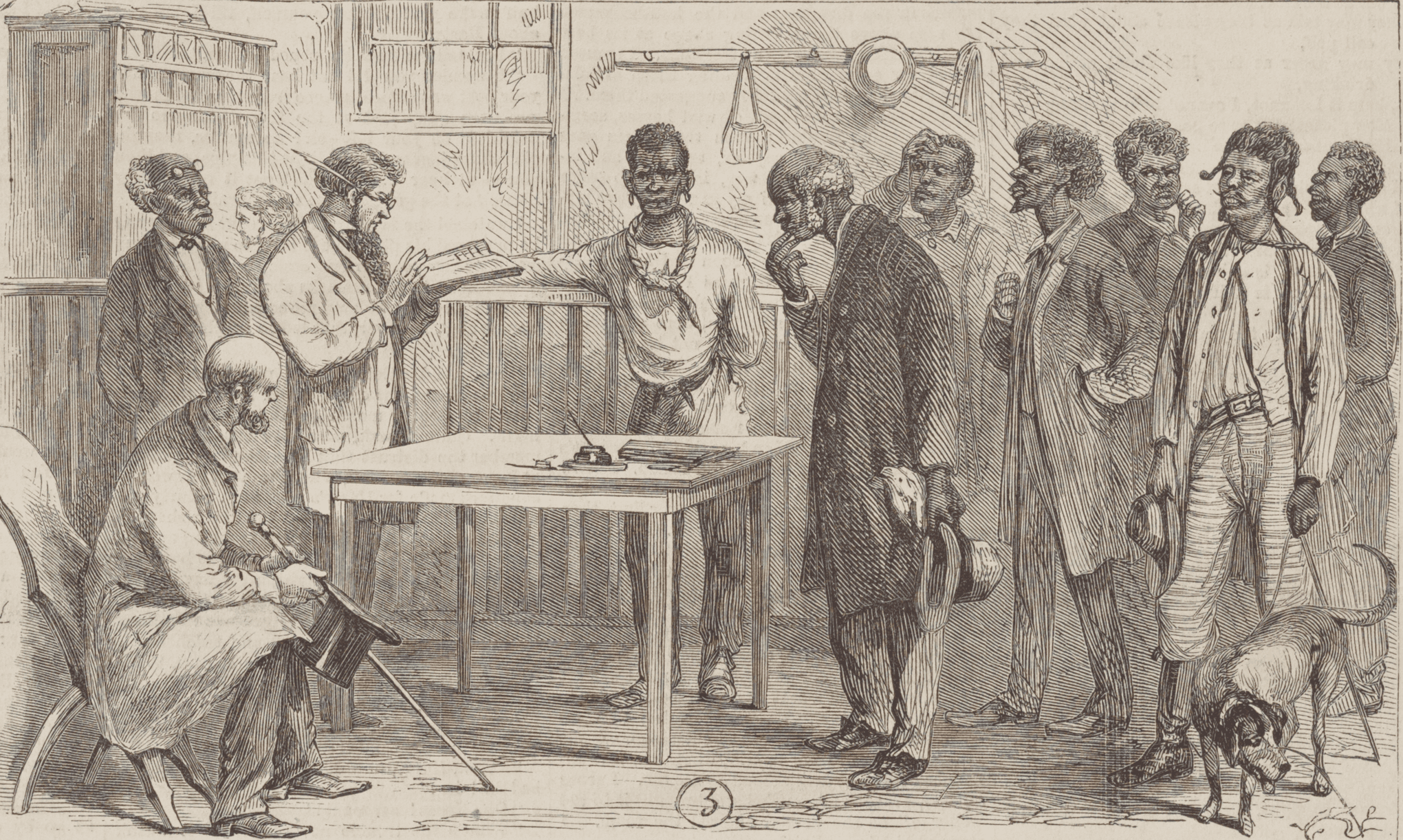
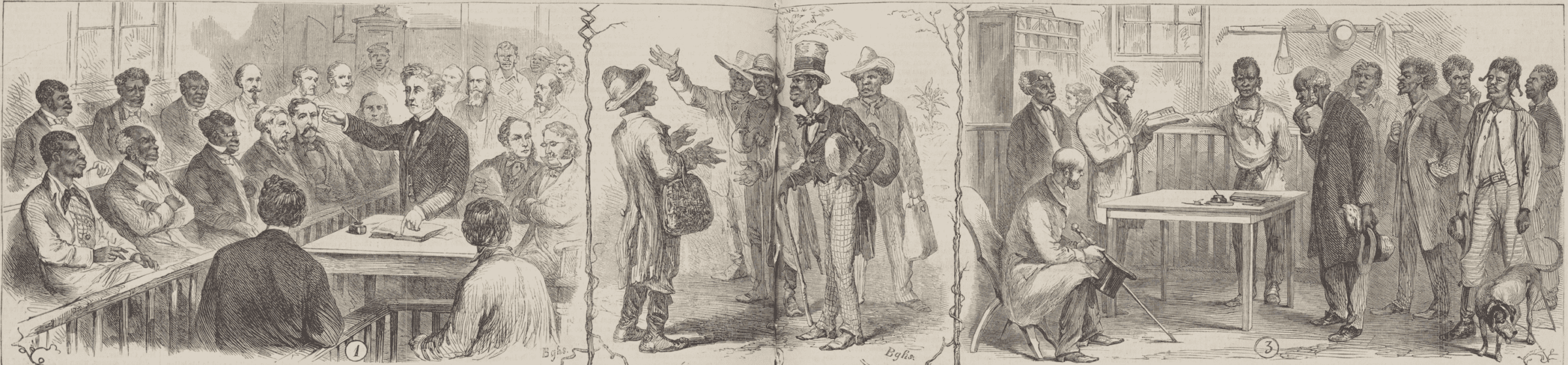
When Confederate states rejoined the Union after the Civil War, Congress anticipated that white lawmakers across the South would manipulate and weaponize the criminal legal system to prevent Black people from voting.
And so, Congress readmitted them on the condition that they respect clear limits on stripping voting rights from people with criminal convictions. As part of the Readmission Acts that brought southern states back into the fold, Congress mandated that people in these states could only be disenfranchised if convicted of a handful of crimes that were categorized as felonies under the common-law system inherited from England: arson, burglary, escape from a prison or jail, larceny, manslaughter, mayhem, murder, rape, robbery, sodomy, and suicide.
But southern states soon ignored the rules of these Readmission Acts in order to block huge numbers of Black people from voting, eventually establishing Jim Crow laws that flouted the promise of Reconstruction. Across the South, white politicians created new felony charges with the specific aim of disproportionately convicting Black residents and disqualifying them from voting.
In January of this year, that open disregard finally caught up with one of these former Confederate states. Deciding a lawsuit challenging Virginia’s disenfranchisement scheme, U.S. District Court Judge John Gibney ruled that the state was clearly violating the letter of the act Congress imposed more than 150 years ago.
Virginia today disenfranchises people for life when they are convicted of any felony—a scheme that covers hundreds of charges that were not common-law felonies and do not fit the state’s agreement to rejoin the Union. Drug offenses alone account for more than 25 percent of Virginia prison entries.
“The Virginia Readmission Act means what it says,” Gibney wrote in his ruling, as he ordered the state to begin restoring voting rights to affected people. Virginia officials are now implementing his order, though they’re clashing with plaintiffs on just how to do so, with the rights of tens of thousands of people hanging in the balance.
The Virginia lawsuit is the first federal case to test whether felony disenfranchisement laws in southern states violate the agreements they made after the nation abolished slavery. While Gibney’s ruling affects only Virginia, the same legal arguments could apply across the South. Between 1868 and 1870, Congress adopted Readmission Acts for nine other former Confederate states, with identical or near-identical language restricting felony disenfranchisement; all nine then vastly expanded their practices for stripping people of the right to vote, well beyond the purview of the Readmission Acts.
For more on voting rights
Subscribe to our newsletter
In a series of interviews with Bolts this spring, voting rights attorneys, political scientists, and Reconstruction scholars around the country argued that similar challenges could possibly be brought to erode felony disenfranchisement laws in southern states—which, applying the reasoning of the Virginia ruling, have wrongfully denied voting rights to millions of people for more than a century, dramatically distorting electorates to diminish Black political power, and thus significantly affecting countless elections, and American history itself.
“There are so many states that have felony disenfranchisement laws that are out of step with the Readmission Acts,” said Blair Bowie, director of the Campaign Legal Center’s Restore Your Vote project.
“Once you see it, you’re kind of like, how can this be happening?” they said.
“The judge is right,” Mark Graber, a constitutional law professor at the University of Maryland and a Reconstruction scholar, said of Gibney’s ruling. “We should be seeing more lawsuits on this.”
Five years had passed from the end of the Civil War when Congress agreed to let Virginia back into the United States, with full representation in the House and Senate, under a couple of key conditions—including restrictions on voter disenfranchisement for anything other than the 11 common-law felonies that would allow for it.
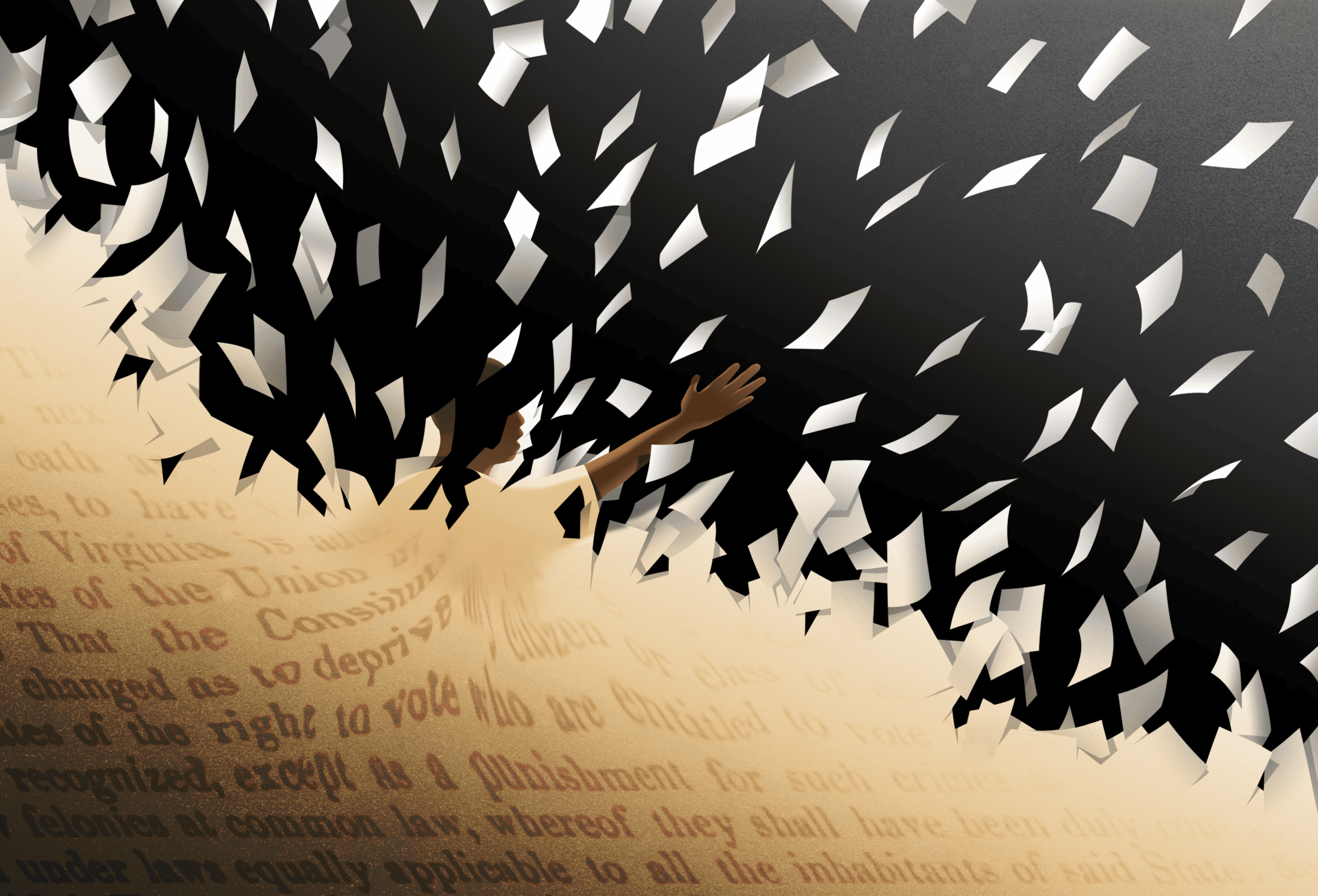
Adopted in 1870, Virginia’s Readmission Act stipulated that the state’s constitution “shall never be so amended or changed as to deprive any citizen or class of citizens of the right to vote, except as a punishment for such crimes as are now felonies at common law.” But the state quickly disregarded those restrictions, including, notably, through a 1902 convention in which Virginia leaders rewrote the state constitution to enshrine a lifetime voting ban for people convicted of any felony.
Virginia officials in 1902 left no question about their intent, with one lawmaker at the time saying he wanted to “eliminate the darkie as a political factor” and guarantee “the complete supremacy of the white race in the affairs of government.”
In parallel, Virginia legislators also designed criminal laws after the Civil War to target freedmen and expand opportunities for police to harass Black people, turning regular conditions like poverty and unemployment into entryways for criminal cases. Local officials had broad discretion to selectively enforce felony laws, disenfranchising Black would-be voters at high rates.
Today, Virginia’s penal code contains more than 1,000 felonies, many of which fall into categories that don’t fit into the 1860s common-law definition of a felony—certain types of identity theft, white-collar crimes, and driving offenses, to name a few.
White politicians elsewhere in the South pursued the same goal. The Readmission Acts for Alabama, Arkansas, Florida, Georgia, Louisiana, Mississippi, North Carolina, South Carolina, and Texas all contain the same limits on felony disenfranchisement as Virginia’s. (The act for Tennessee, which rejoined the Union two years before the rest of the former Confederacy, passed in 1866 and contained no clause on felony disenfranchisement.)
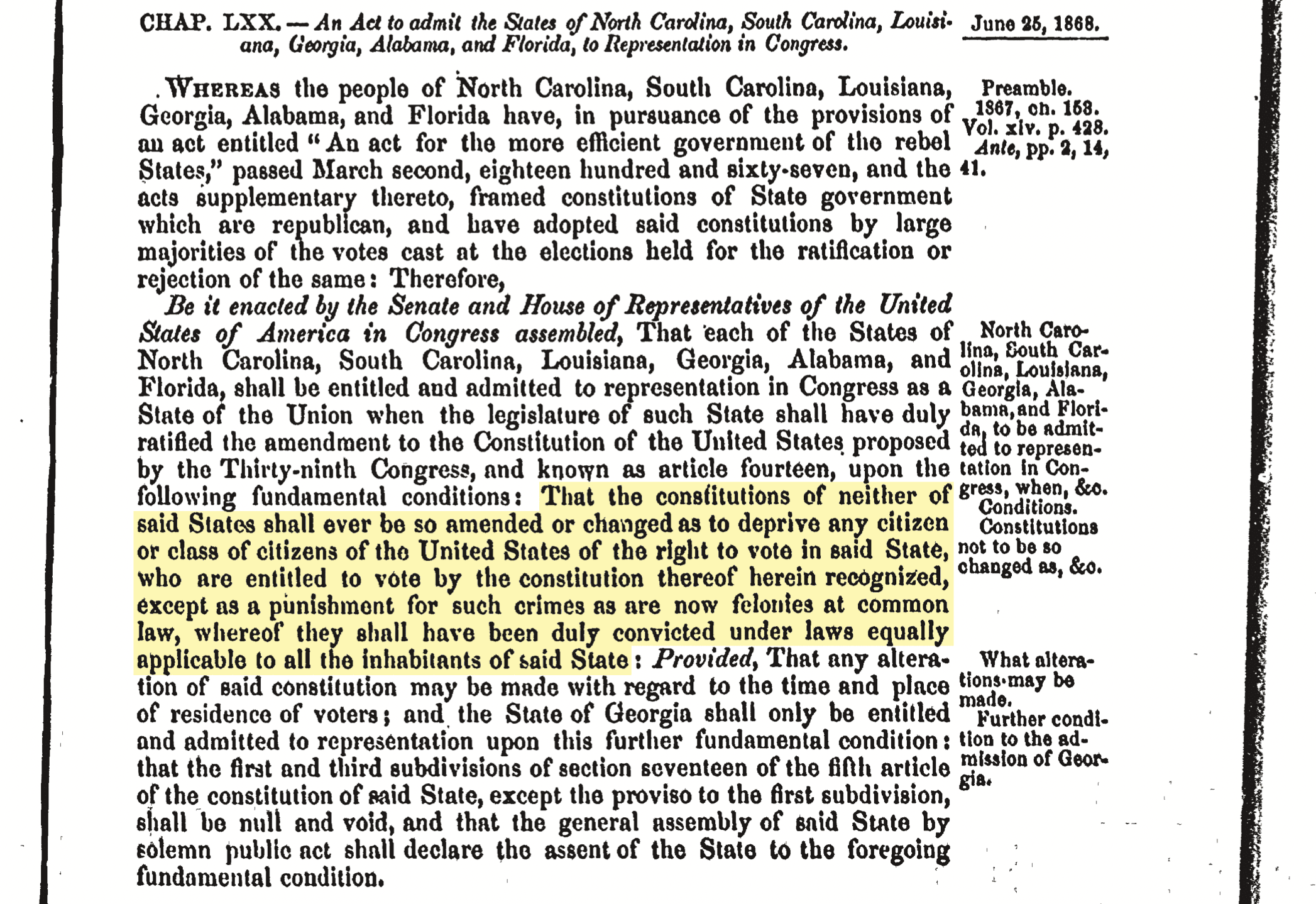
Like Virginia, these states disregarded the blockade. They created specific felony charges of which they expected to disproportionately convict Black residents, and made plans to use those convictions to incarcerate Black people and force them to work, as well as to take away voting rights. Said Alec Ewald, a professor of political science at the University of Vermont who has researched the racist origins of felony disenfranchisement laws in the U.S., “They directly said they were pursuing white supremacy, and that they were using voting rights to do this.”
These schemes produced the sort of racially distorted electorates that Congress tried to thwart in 1870. In Virginia, the Sentencing Project estimated in 2016 that more than 500,000 people, including a whopping 22 percent of Black adults, compared to just 4 percent of the rest of the population, were barred from voting. Since then, Democratic governors have ordered mass restoration of voting rights, which has brought these numbers down significantly—but tens of thousands of Virginians remain disenfranchised for non-common law felonies.
Other states with Readmission Acts have comparable numbers. In Florida, for one, roughly 13 percent of Black residents, and 5 percent of the state’s overall voting-age population, were stripped of the right to vote as of the 2024 presidential race.
The violation of the Readmission Acts, Bowie said, “fits in well with the larger theme of felony disenfranchisement in this country.”
Bowie added, “These are Jim Crow laws that are intentional ways of trying to get around the promise of Reconstruction and of the 14th and 15th amendments. It makes sense that many of the states flouted the explicit mandates of Congress.”
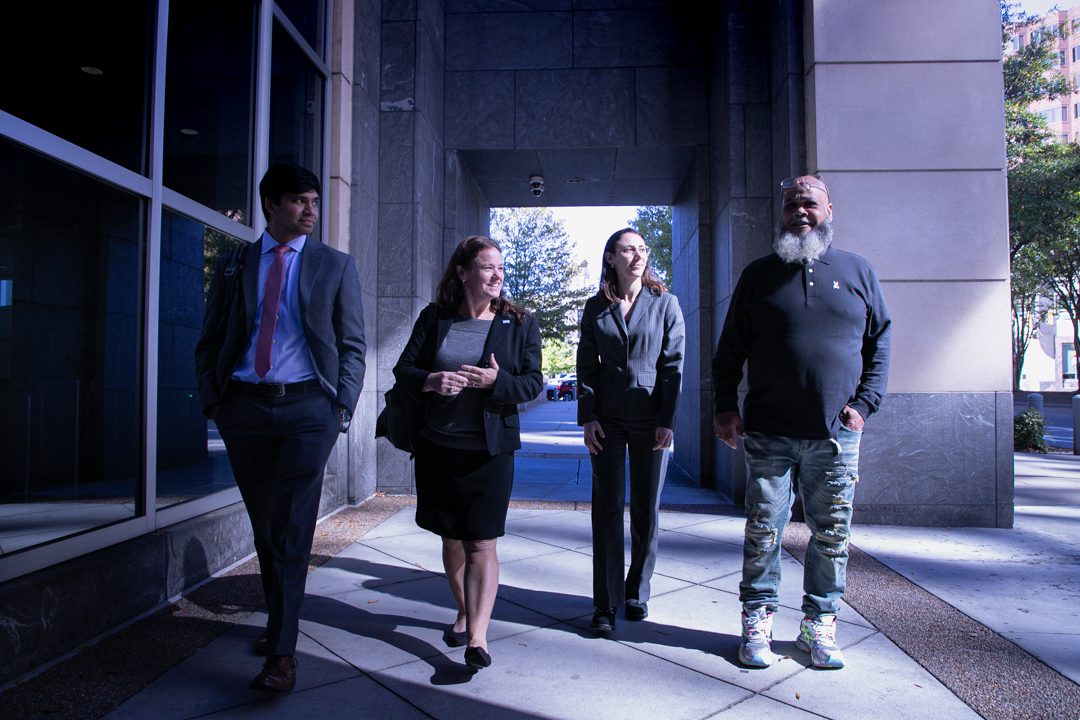
The lawsuit in Virginia challenged this disregard head-on. The case emerged when three Virginians, all barred from voting over non-common law felonies, sued the state in 2023, arguing that it was violating the simple terms of its Readmission Act. “I want to set a precedent for my kids, grandkids, nieces and nephews. I can’t tell them to go out and vote if I can’t do it myself,” one of the plaintiffs, Tati Abu King, said in an interview posted by the ACLU of Virginia.
King was convicted in 2018 of a drug offense—a clear example of a felony excluded from the common-law list in 1870.
Gibney, the judge presiding over the lawsuit, issued his ruling in January. “For well over a century, the Commonwealth of Virginia has disobeyed a federal law designed to protect the right of former enslaved people to vote,” he wrote as his opening sentence.
“Virginia cannot amend its Constitution to disenfranchise citizens except as ‘punishment for such crimes as’ were then ‘felonies at common law’ in 1870,” he explained. “If its amended Constitution disenfranchises someone for any other reason, the Commonwealth violates the Act.”
“Any other reading,” Gibney continued, “ignores ordinary meaning and contravenes statutory structure. Virginia has amended its constitutional disenfranchisement provision, or adopted entirely new constitutions, at least four times. Each change disenfranchised people for reasons other than common-law felonies.”
Gibney, an appointee of President Barack Obama, ordered Virginia to restore the voting rights of people affected by his ruling. Virginia is not appealing the ruling, and the process of implementing Gibney’s order is currently underway.
The Virginia case appears to mark the first time a federal judge has heard the argument that a state’s felony disenfranchisement rules are violating its Readmission Act.
Bolts’ review of legal archives only found one other lawsuit—in Arkansas, half a century ago—that argued that a state can’t disenfranchise people for anything but “common-law felonies.” The Arkansas Supreme Court tossed that suit in 1976 on the grounds that the state’s Readmission Act was unconstitutional; the court said Arkansas’ secession in 1861 wasn’t legal in the first place, so the state can’t have been readmitted.
Legal experts and historians who spoke to Bolts for this story say it’s unsurprising the Readmission Acts have largely been ignored for so long.
After all, so much of Reconstruction was erased soon after the 1870s, as southern states rushed to combine felony disenfranchisement schemes with other suppression tools, like poll taxes and literacy tests, to keep Black men from voting freely. (Women couldn’t vote in any of the former Confederate states, except for Texas, until 1920.)
The Readmission Acts were “intentionally forgotten to history,” said Alon Goldfinger, a litigation fellow at the NAACP Legal Defense and Education Fund who has studied the topic.
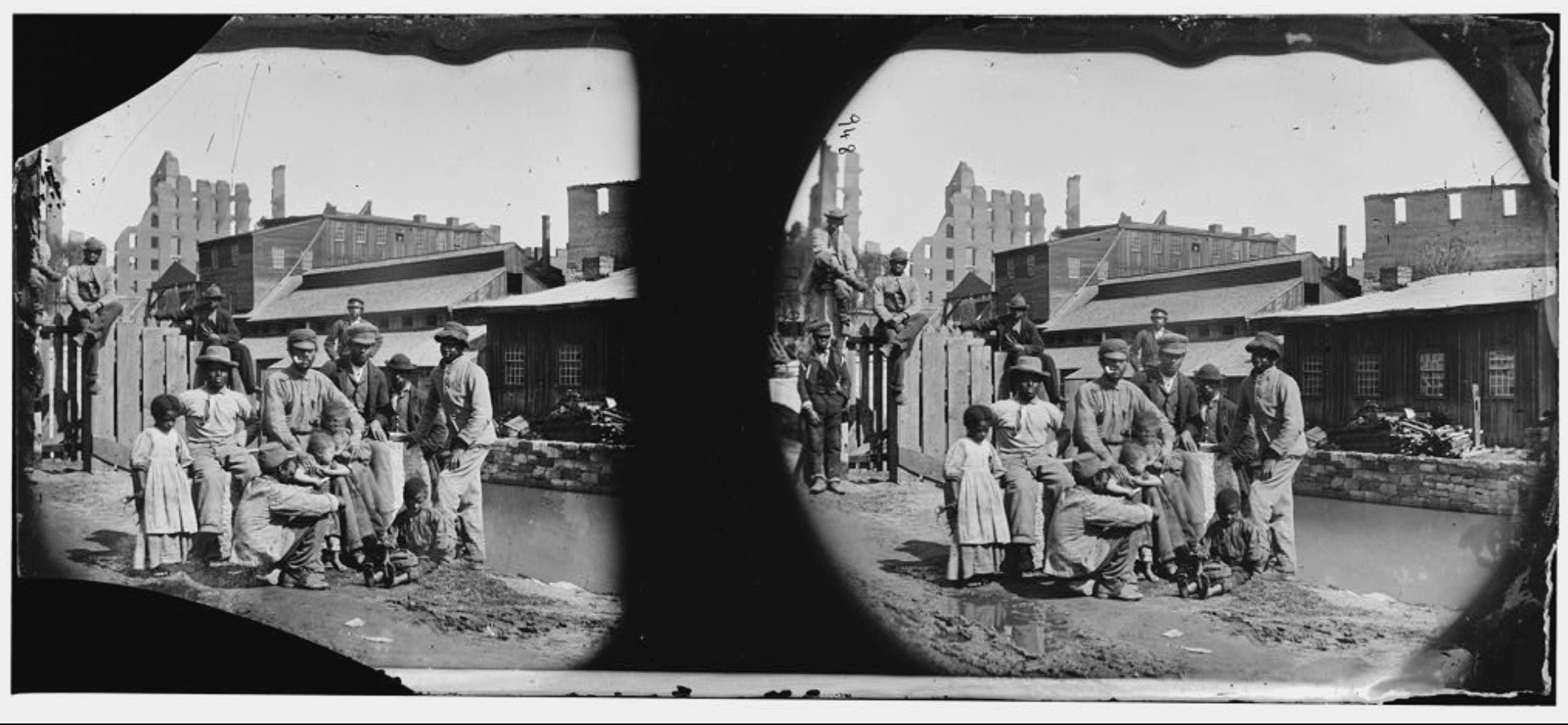
“People who didn’t like what was being done in Reconstruction made sure they wouldn’t be enforced, because they wanted to establish white supremacy in the South,” he continued. “That was not only the actions of lawmakers, but the acquiescence of the courts.”
Goldfinger is among many Reconstruction experts and voting rights attorneys who are now curious to see whether the Virginia case sparks a renaissance for these mostly forgotten documents, and whether it offers a new legal pathway elsewhere in the South.
Experts interviewed for this story agreed that lawsuits concerning the Readmission Acts could plausibly be brought in southern states other than Virginia, though no copycat suits have yet been filed. Bolts spoke with voting rights attorneys across the South, and none had any concrete plans to bring suits, though they did not rule it out.
Jared Davidson, a voting rights attorney with Protect Democracy, and co-lead counsel for the plaintiffs in King v. Youngkin, said he’s not aware of any upcoming related suits, but also did not rule out future action.
Gibney’s sympathetic ruling comes at a time when federal courts have shifted sharply conservative on civil rights. The Supreme Court is dismantling the Voting Rights Act and unwinding the Reconstruction-era 14th and 15th amendments. Lawyers who aim to protect voting rights are turning to state courts or scrambling for new legal arguments that can appeal to right-wing federal judges, and the success of King v. Youngkin resonates in that context.
Davidson emphasized that the backbone of the Virginia case leans on language that should—in theory, anyway—appeal to the conservative jurists who now lord over the federal courts.
“We as a coalition are going to have to think creatively,” Davidson told Bolts. “That includes thinking about how the Readmission Acts might be part of the solution.”
“The text itself could not be any clearer, and there are a lot of more conservative jurists who think of their job as a very narrow one: to interpret either statutory or constitutional text to figure out what the law says,” he said. “This felt like an opportunity to bring a novel legal theory that had not been leveraged before and that could be appealing to members of the judiciary who consider themselves more textualists.”
Gibney, the district court judge, wrote in his ruling that he himself had applied “plain textual analysis” to reach his conclusion. The ruling twice cites the late Justice Antonin Scalia, a conservative who championed a textualist approach.
By the time Gibney ruled, in January, Governor Glenn Youngkin and Attorney General Jason Miyares, Republicans who were in office at the time the suit was filed, had just been replaced by Governor Abigail Spanberger and Attorney General Jay Jones. These new officials, both Democrats, chose to not appeal the ruling.
This means that Gibney’s decision will stand. But it also means that it will apply only in Virginia, without setting a precedent that would affect other states. Davidson’s hopeful hunch—that the argument in King v. Youngkin may appeal to some conservatives—will not be tested at the Fourth Circuit Court of Appeals, nor at the U.S. Supreme Court.
An appellate court has revived the Readmission Acts in at least one other recent context. In 2020, the conservative Fifth Circuit authorized a lawsuit that alleged that funding disparities between schools in Mississippi violated its Readmission Act and its promise of equal education opportunities. The case is ongoing.
Still, several legal experts who talked to Bolts are skeptical that lawsuits copying the Virginia voting case in other states would have much success today.
They warned that federal courts today are just too unsympathetic to voting rights in general, and certainly to the idea that southern states should be treated differently because of their past and present tendencies to limit Black political power.
“Given that it’s an interference with states’ abilities to run elections, and given that the federal bench is, to put it mildly, skeptical of even the Voting Rights Act, it’s just very difficult for me to imagine that federal courts would accept a decision that dredges up a very old statute,” said Ewald, of the University of Vermont.
Goldfinger thinks that the legal argument feels solid on the merits. “This seems like a really strong originalist and textualist argument, and any ideologically conservative justice would agree with this.”
“But,” he added, “we feel like we have said that on many issues, and they’ve gone the other way. Just look at some of the recent Supreme Court rulings.”
Graber, of the University of Maryland, anticipated how the Supreme Court would handle lawsuits invoking Readmission Acts. “We have Republican courts that are hostile to Reconstruction,” he said. “The Supreme Court majority would say that it’s been more than 100 years and we can no longer justify having a special rule for these states. That would be the argument, and I think it was a terrible argument in Shelby County and would be terrible now, but that’s how a conservative might react to these laws.”
In Shelby County v. Holder, the 2013 decision in which the U.S. Supreme Court struck down a key plank of the Voting Rights Act, Chief Justice John Roberts wrote that the VRA had responded to “an extraordinary problem” of racial discrimination—but that Congress should not have reauthorized the law in 2006 “as though nothing has changed.” Racial progress in the U.S. since the 1960s, Roberts wrote, has been sufficient to require that all states be treated with “equal sovereignty.” The court further gutted the VRA this year, in Louisiana v. Callais.
“As with any case,” Goldfinger said of potential future suits concerning Readmission Acts, “you just have to be very strategic with how you bring this.”
In parallel with King v. Youngkin, and even well before that suit was filed, Virginia voting rights advocates have been working to eliminate the state’s longstanding system of lifetime felony disenfranchisement. These advocates are currently seeking to guarantee voting rights for all voting-age citizens who are not incarcerated.
Their yearslong advocacy project is now on the brink of victory: Democrats in the state legislature earlier this year advanced a constitutional amendment, to appear on this November’s ballot, to automate voting rights restoration for disenfranchised Virginians when they are freed from prison or jail.
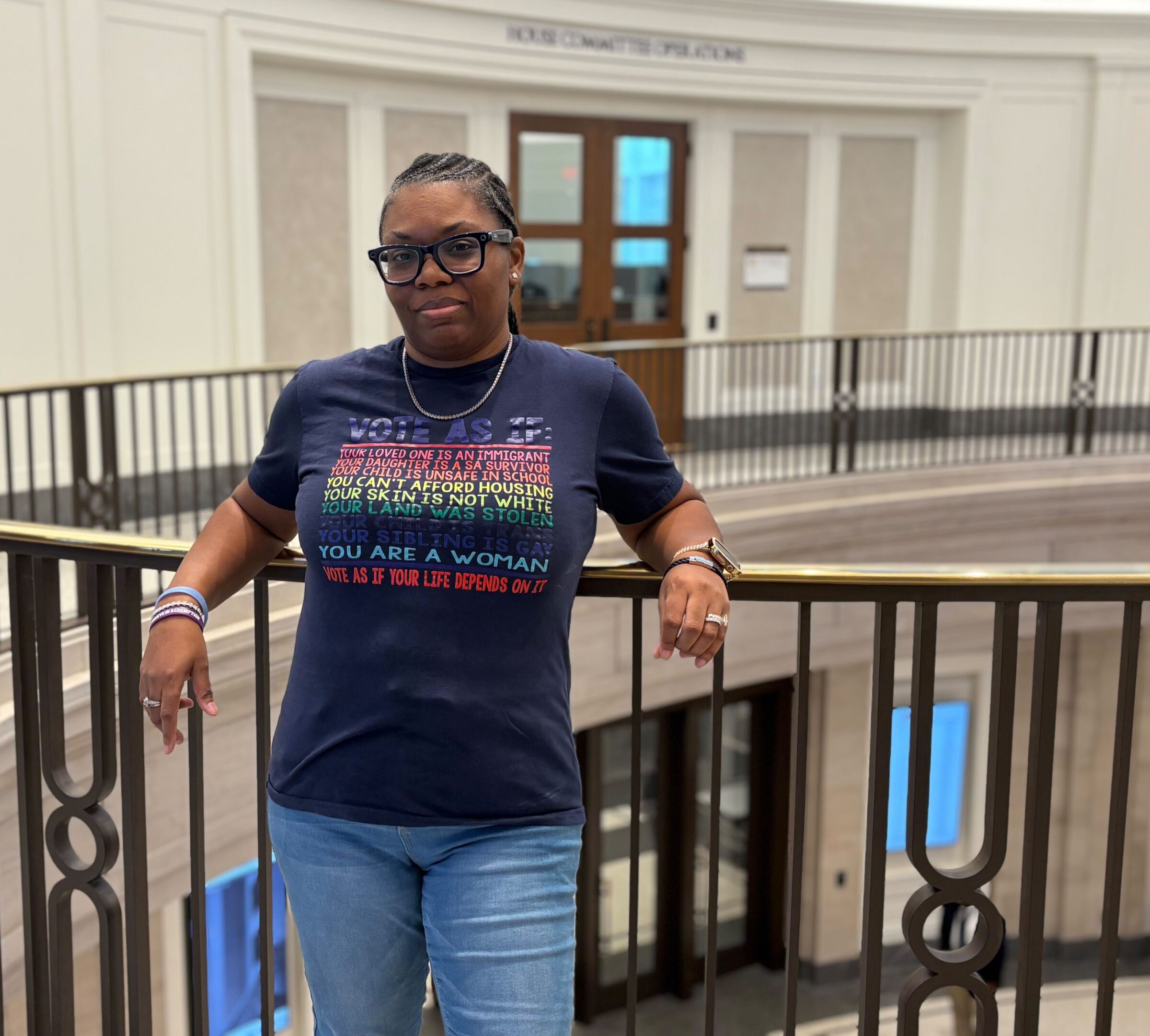
Many formerly incarcerated Virginians helped agitate for the proposed amendment. “This is a moment that’s been a long time coming,” Sheba Williams, who fights felony disenfranchisement with the Richmond-based nonprofit Nolef Turns, and who herself was once disenfranchised over a felony conviction, told Bolts in January.
If the amendment passes in the fall, anyone with any felony conviction—common-law or not—will become eligible to vote so long as they are not incarcerated.
But Gibney’s ruling seems to exceed that proposed amendment in a key way: Plenty of people with non-common law felony convictions are currently incarcerated in Virginia, and the plaintiffs in King v. Youngkin argued that they, too, should be enfranchised.
Letting people vote from prison would not be unprecedented. In fact, in Maine, Vermont, Washington, D.C., and Puerto Rico, people never lose the right to vote, even while they are incarcerated.
Virginia officials, however, oppose the idea.
In February, the Virginia attorney general’s office filed a motion to amend Gibney’s order, arguing that the state is only obligated to let people incarcerated for non-common law felonies register to vote—not necessarily to give them the actual means to vote. This argument rests on semantics: In its motion, the attorney general’s office noted that Gibney had, in January, merely ordered that the state “shall not deny a person attempting to register to vote or cancel a person’s existing registration except for convictions of … common-law felonies.”
The attorney general’s office also sought an expansive modern definition of “felonies at common law,” asking Gibney to let a long list of Virginia crimes be categorized under the broad umbrellas of the original set of 11 common-law felonies considered by the Reconstruction Congress.
Gibney responded in March in the state’s favor, writing that his original ruling meant to upend Virginia’s blanket ban on voting for people with felony convictions, but that the original lawsuit, and thus Gibney’s order in response to it, “did not address the mechanics of how prisoners can vote, or the security concerns that might arise.” “Accordingly,” Gibney wrote, “the Court declines to elaborate on a question not squarely brought prior in the litigation.”
In siding with the state in March, Gibney chided the plaintiffs for “jockeying” to expand upon his order’s intent by insisting on voting rights for affected people who are currently incarcerated, and by asking him to significantly narrow the state’s proposed, interpretative list of “felonies at common law.”
Because Gibney declined to act as arbitrator in the disagreement between the plaintiffs and the state over how many Virginia offenses should be categorized as common-law felonies, Virginia has retained broad authority to devise its own list of over 180 offenses; this is about twice as many as the plaintiffs consider appropriate.
That has left Virginia officials and the attorneys for the plaintiffs locked in a fight over just how to implement Gibney’s order. As with the original order, voting rights advocates around the country are watching this process closely. “Orders that don’t really get implemented don’t change the status quo,” Bowie said.
Bowie drew a parallel between Virginia’s flouting of its Readmission Act and its current refusal both to let some prisoners vote and to promptly enfranchise as many affected, non-incarcerated people as possible.
“This is how white supremacy operates,” they said. “When there’s a breakthrough, it still finds a way.”
Sign up and stay up-to-date
Get timely updates about pressing stories and elections.
Support us
Bolts is a non-profit newsroom that relies on donations, and it takes resources to produce this work. If you appreciate our value, become a monthly donor or make a contribution.