
In Washington, a County Mulls Ending Sheriff Elections—and Ousting Its Right-Wing Sheriff
The ballot measure in Pierce County follows controversies surrounding Sheriff Keith Swank, at a time Washington is grappling with poor oversight over law enforcement.
| September 8, 2026

When Washington state voters approved new gun control rules in 2018, several sheriffs announced they would not enforce them because they believed them to be unconstitutional, prompting warnings from police reform advocates about the rogue conduct of sheriffs.
Now some sheriffs are also insisting that a state law limiting how they can partner with U.S. Immigration and Customs Enforcement is illegal, sparking further disputes over their authority while the Trump administration intensifies immigration enforcement.
As the state continues to grapple with how to exert oversight over sheriffs, voters are poised to step into these debates this fall in Pierce County, Washington’s second most populous county and home to Tacoma. The Pierce County Charter Review Commission placed a charter amendment on November’s ballot that would make the Pierce County sheriff an appointed position rather than elected.
Voters in King County (Seattle), the state’s most populous county, already approved a similar measure in 2020.
If it passes, Pierce County’s measure would take effect by January 2027, cutting short the tenure of Sheriff Keith Swank, a first-term official notorious for his rabble-rousing, inflammatory statements and social media posts, and MAGA-adjacent politics in a blue county. The county executive would appoint a new sheriff, subject to confirmation by the county council, early next year. Swank’s term would otherwise end in early 2029.
“I believe that this amendment will add increased and immediate accountability,” Charter Review Commissioner Jake Hunter, who sponsored the measure, said in a public hearing.
Hunter made the case that shifting to an appointed sheriff would allow the county to focus on candidates’ qualifications, such as how they’d manage large public entities and their budgets, rather than political popularity. “I would like to say this wouldn’t be a question if recent events had not raised serious concerns about accountability and governance for this office,” he said, adding he wanted to design a structure that “provides adequate accountability when concerns arise, regardless of who’s holding the office.”
Referring to Swank, he said, “Our responsibility is not to evaluate one individual, although a lot of us have.”
Swank is a former police captain at the Seattle Police Department, and a Seattle police report determined last year that he would have been fired from that agency over social media posts, including attacks on trans people, had he not retired first. He twice ran for Congress as a Republican, losing in 2020 and 2022, before winning the sheriff’s office in 2024.
As sheriff, he has relentlessly pressed for the authority to collaborate with ICE.
He says a state law protecting immigrants, the Keep Washington Working Act, is unconstitutional and he has appealed to the Trump administration for help. He denounced a resolution passed by the Pierce County Council that affirmed the council’s support of immigrants and its intention to follow the Keep Washington Working Act.
Learn more about sheriffs
Subscribe to our newsletter
Swank’s fight with other county leaders escalated when he tried to hire an outside lawyer to press his case that he should be able to assist ICE. He also claimed that he should not be subject to orders issued by Ryan Mello, the Pierce County executive. Mello had said any county contract that involves federal funding would need to be reviewed and approved by his office. Swank disagreed with the legal advice provided by the county’s chief prosecutor, who warned that he had to obey Mello and that his desire to cooperate with ICE could expose the county to costly litigation, and wanted a second opinion. Swank told Bolts that the county has since allowed him to hire a strategic advisor but that this person is not allowed to be an attorney.
A June 15 meeting of the Charter Review Commission illustrated Swank’s customary confrontational style.
“I’m proud that I have more complaints than any other officer or sheriff in the state,” Swank said. A state oversight agency confirmed to Bolts that it has more open misconduct complaints filed against Swank than against any other sheriff; some of the complaints target his public statements disparaging LGBTQ+ people.
Swank went on at the meeting to urge his critics to file even more complaints. “Instead of saying transgender woman, say man,” Swank said. “Instead of saying gay, say homosexual. Instead of reality challenged, say insane, crazy, wacky. Instead of unschooled, just say stupid. Dishonest means liar. Undocumented immigrant, that’s an illegal alien. Instead of protester, say terrorist.”
Charter Review Commissioner Justin Leighton, who supported the measure at that June meeting, told Bolts in an interview that he thinks an appointment system would allow for more robust oversight over the long term. An appointed sheriff could be dismissed at the will of the county executive, whereas the only recourse for an elected sheriff’s misconduct now is meeting the high threshold of a recall.
He pointed to Seattle Mayor Katie Wilson recently asking Seattle Police Chief Shon Barnes to resign. The ability to dismiss a law enforcement leader at will is not a panacea, however—three police chiefs have left the City of Seattle under a cloud of scandal since 2020.
Swank, on the other hand, believes the charter amendment would centralize too much power in the county executive’s office and raise new accountability problems.
“I think that the amendment is taking away the right of the people to vote for and elect their sheriff of their choosing,” Swank told Bolts in an interview. “It’s funny that the people who pose this amendment talk about how we have to save democracy by making the sheriff an appointed position. That’s an oxymoron there.”
The surge in immigration enforcement has added to this scrutiny over sheriffs in Washington.
Malou Chávez, executive director of the Northwest Immigrant Rights Project, told Bolts that federal enforcement is increasing due to the large amount of resources at the disposal of ICE and other federal agencies. “The arrest of community members, it’s almost normalized in many ways,” she said. “We have seen videos of community members being apprehended and people walking by, going throughout their day nonchalantly walking, not even looking to see that there’s someone being arrested.”
Swank told Bolts that he abides by the Keep Washington Working Act in order to protect his deputies from civil litigation. “I do believe we should work with ICE,” Swank said. “However, we don’t work with ICE. The Pierce County Sheriff’s Office does not work with ICE. We do not do anything related to immigration.”
But Chávez warns that living under the authority of someone like Swank who says he doesn’t want to abide by state protections still causes fear in immigrant communities. She says it makes some residents uncomfortable reaching out to law enforcement when they need help.
Swank traveled to Washington, D.C., in 2025 to meet with Trump administration officials. He later said he had reached out to the U.S. Department of Justice and ICE to ask them if they could help him “fast-track” a lawsuit against the Keep Washington Working Act to the U.S. Supreme Court.
He traveled to D.C. alongside Adams County Sheriff Dale Wagner, another Washington sheriff who has said he thinks the Keep Washington Working Act is unconstitutional.

A few months after their trip, Washington State Attorney General Nick Brown filed a suit against Wagner for sharing information with federal immigration officials in violation of state law. The lawsuit remains in court as of publication. Adams County faced a separate lawsuit alleging that deputies illegally detained someone on immigration grounds, which the county settled.
Should the November measure pass, Chávez said she doesn’t expect to see an immediate difference for the immigrant communities she works with. But over time, she thinks it could be easier for immigrant residents to press for accountability through paths they actually have access to, such as talking to a county councilmember or to the county executive’s office.
As long as the main path is to actively organize a recall, she believes community members may be afraid to speak out. “There’s that fear of retaliation or being targeted, maybe future stops,” she said, “just the potential target that someone could become in their day-to-day lives.”
Washington sheriffs have provoked scandals well before Swank. His own predecessor, Ed Troyer, followed a Black newspaper carrier, called 911, and lied to the dispatcher that the man had threatened to kill him, prompting dozens of officers to arrive on the scene, according to the attorney general’s office, which filed criminal charges against him. Troyer later admitted that he lied about being threatened.
A jury found Troyer not guilty of false reporting and lying to a public servant in 2022, but he opted not to seek reelection two years later and Swank won the contested race to succeed him.
Faced with such controversies, state officials have worked to change Washington’s oversight system for sheriffs. A new reform, signed into law in April of this year with the support of state Democrats, added new eligibility requirements for sheriffs, including a mandatory background check and five years of law enforcement experience.
The law also empowers the Washington State Criminal Justice Training Commission to remove sheriffs from office—whether they are elected or appointed—after investigating complaints against them. The commission already must certify all law enforcement officers in the state, and it has the authority to suspend or revoke their certification. But the law now provides that, if the commission decertifies a sitting sheriff or police chief, they must step down.
Reporting this summer by InvestigateWest raised serious questions about the oversight that the Criminal Justice Training Commission has actually exercised. They found that police officers accused of misconduct have frequently avoided investigations and decertification, and that the commission can take years to start an investigation.
Still, advocacy organizations such as the Washington Coalition for Police Accountability told Bolts that they strongly supported the state’s latest legislation. “The WCPA’s position is to hold these publicly elected or appointed law enforcement leaders accountable as much as we can,” Paul Benz, a member of its advisory committee, told Bolts.
According to state records shared with Bolts by the Criminal Justice Training Commission, the agency is currently reviewing open misconduct complaints against more than half of the state’s sheriffs. As of August, Swank had the highest number of such complaints filed against him at 18—an increase of eight since April.
During the bill’s initial committee hearing, several sheriffs spoke against the legislation, including Swank, whose testimony appeared to threaten severe consequences were the bill to pass.
“You want to give unelected bureaucracy the ability to decertify me and remove me from office because you don’t agree with my speech,” Swank testified. “I don’t recognize your authority to impose these controls over me, and when you try to remove me from office, thousands of Pierce County residents will surround the county city building in downtown Tacoma and will not allow that to happen.”
He added, “I hope it doesn’t come to that, but I and they are prepared. Are you prepared?”
The Washington Association of Sheriffs and Police Chiefs said after Swank’s testimony that it was considering expelling him over these comments, saying that they “devolved into what could be perceived as threatening to legislators.”
The association ultimately decided to stop short of expulsion. “WASPC issued a reprimand to the Sheriff in March 2026,” its executive director Steven Strachan told Bolts.
Swank stood by his comments in an interview with Bolts. “I went down there to tell them that it’s unconstitutional, and if they pass it, I’m not going to abide by it,” he said. “That’s just the way it is.”
A group of four sheriffs filed a lawsuit against the law after its adoption, and a local judge in April blocked the provisions that pertain to sheriffs. “It appears that the Legislature does not trust the people of the state of Washington to have good judgment,” Thurston County Superior Court Christine Schaller said while issuing her ruling.
The state is appealing the decision but, for now, sheriffs in Washington would remain in office even if they are decertified.
Swank casts Pierce County’s November ballot measure in similar terms—as a bid to get rid of him. “This is a way to remove me from office without having to go through the recall process,” he told Bolts.
Mello, the county executive who would nominate a new sheriff if the charter amendment passes, is a Democrat, as is a narrow majority of the county council, which would have to approve the choice. Swank is a Republican, though the sheriff election he won in 2024 was nonpartisan, as were the elections the county held in 2025 to form the Charter Review Commission.
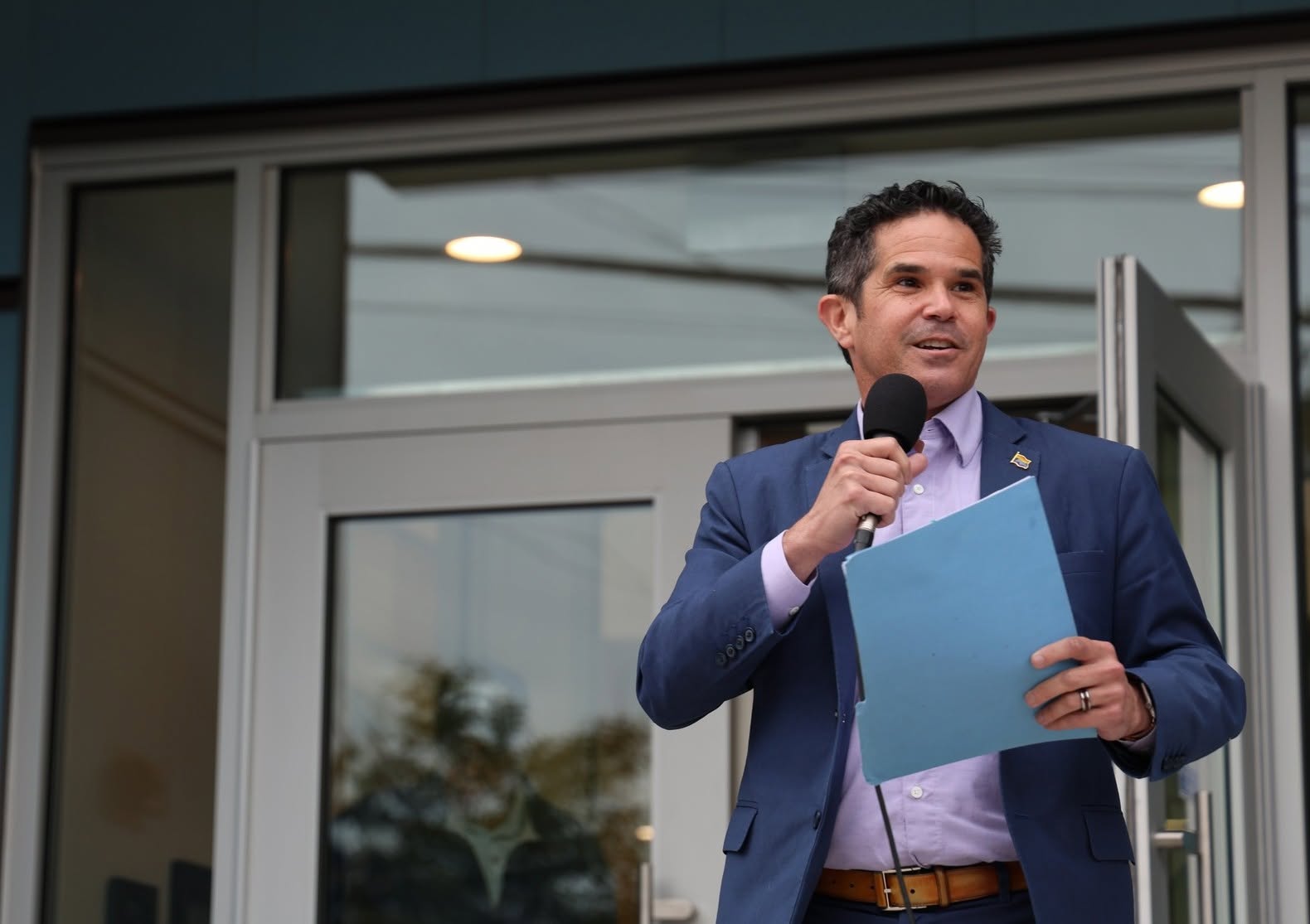
Leighton, the commissioner who proposed the amendment that set the measure’s effective date to January 2027, instead of 2029, says this had nothing to do with the length of Swank’s term.
“I feel very strongly that I don’t want something kind of just lingering for two years,” Leighton told Bolts. “In my mind, it has nothing to do with the person or the term. It is, ‘the voters have decided, let’s move forward with what the voters wanted right then and there.’”
Leighton pointed out that the commission only convenes every 10 years to review possible changes to the county charter, and the community was already talking about this issue before Swank’s election. The county revised its charter back in 1980 to make sheriffs an appointed position, before switching back to holding sheriff elections in 2006.
“Everybody wants to think it’s about Sheriff Swank, but this is really about a broader thought process about accountability, oversight, and transparency,” Leighton said. “It’s about what really we need as a community.”
Sign up and stay up-to-date
Get timely updates about pressing stories and elections.
Support us
Bolts is a non-profit newsroom that relies on donations, and it takes resources to produce this work. If you appreciate our value, become a monthly donor or make a contribution.