

A Pro-ICE Sheriff, Once Investigated for Racist Slurs, Is Ousted in North Carolina
For over 20 years, Alamance County’s Terry Johnson faced accusations of racial profiling against Latinos. He lost to a Black pastor who pledged to rebuild trust with local immigrants.
| November 5, 2026

On Tuesday, a Black pastor who campaigned against racial profiling and eliminating the “good ol’ boy system” of policing ousted six-term North Carolina Sheriff Terry Johnson, an Alamance County Republican who has faced accusations of racism and illegal policing tactics throughout his time in office.
Shannon Long, a former school resource officer who now runs a local Christian ministry and barber school, ran as an unaffiliated candidate and defeated Johnson by nearly 5 percentage points, or more than 3,100 votes. A reliable Republican stronghold before Tuesday, Alamance County also saw its county board of commissioners and district attorney’s office flip for Democrats.
For years Johnson has faced accusations of targeting Latino residents in traffic stops and referring to them with racist epithets such as “taco eaters.” In 2012, the U.S. Department of Justice investigated Johnson and accused him of fostering “a culture of discrimination against Latinos.”
He has also faced complaints of excessive force, including when his office countered Black Lives Matters protestors with violence in 2020.
Maria Mejia, who immigrated to the U.S. from Colombia in 2001 and moved to Alamance County three years ago, told Bolts that Johnson’s actions in office—from partnering with ICE in 2007 to setting up checkpoints outside Latino neighborhoods—has made the sheriff a “fearsome figure” in the community. Mejia, who works as an assistant professor of philosophy at Elon University, near Burlington, Alamance County’s most populous city, has worked with the immigrant rights group Siembra NC to provide ICE verification training to community members.
“These very valid feelings of anger and distrust have been present for so long in the community, and yet Johnson continued to get reelected over and over again,” Mejia said. “I think it was extremely demoralizing for the community.”
Johnson’s ouster, Mejia added, will “give people a sense that they have a voice, that it’s not just the good ol’ boys club, but that they can enact change.”
Johnson has long partnered with Immigration and Customs Enforcement, first as an early participant of the agency’s 287(g) program, which empowered his deputies to interrogate people about immigration status while out on patrols. He also leased jail space to ICE to hold immigrant detainees.
Johnson ended that ICE detention agreement last year and previously told Bolts the sheriff’s office no longer participates in 287(g), though Alamance County remains on ICE’s database of counties with an active 287(g) contract.
Federal immigration authorities routinely contract with local law enforcement agencies to grow their reach, which means that sheriff and police departments are crucial allies. On Tuesday, voters ousted other sheriffs who’ve closely worked with ICE, such as Maryland’s Chuck Jenkins, a notorious far-right sheriff in office for two decades. Jenkins got his county in the outskirts of Washington, D.C., to join ICE’s 287(g) program back in 2008, just one year after Alamance.
The Trump administration has signaled it is undeterred by the results, saying on Wednesday that “deportations will continue.”
Johnson has long denied that he racially profiled residents in Alamance County, where he’s been sheriff for more than 20 years. Asked about the accusations in May, Johnson told Bolts, “Yeah, we profile—we profile criminals. I don’t care if you’re Black, white, short, tall, fat, small, Democrat, Republican, independent. If you’re a criminal, we coming after you.”
Johnson did not respond to a request for comment sent through a sheriff’s office spokesperson. In a statement provided to local media, Johnson congratulated Long and said he respected the election results.
Long campaigned against Johnson’s hardline tactics and said he would rebuild trust in the Latino community. During Johnson’s time in office, Latinos more than doubled their share of the population, from roughly 7 to 16 percent, and some residents told Bolts in earlier reporting that they fear interactions with local sheriff’s deputies.
On Thursday, Long said his win is a “stop the bleeding” moment for the county.
“It’s an opportunity to create change, to increase, to expand, to advance the public safety here in the county,” Long said.
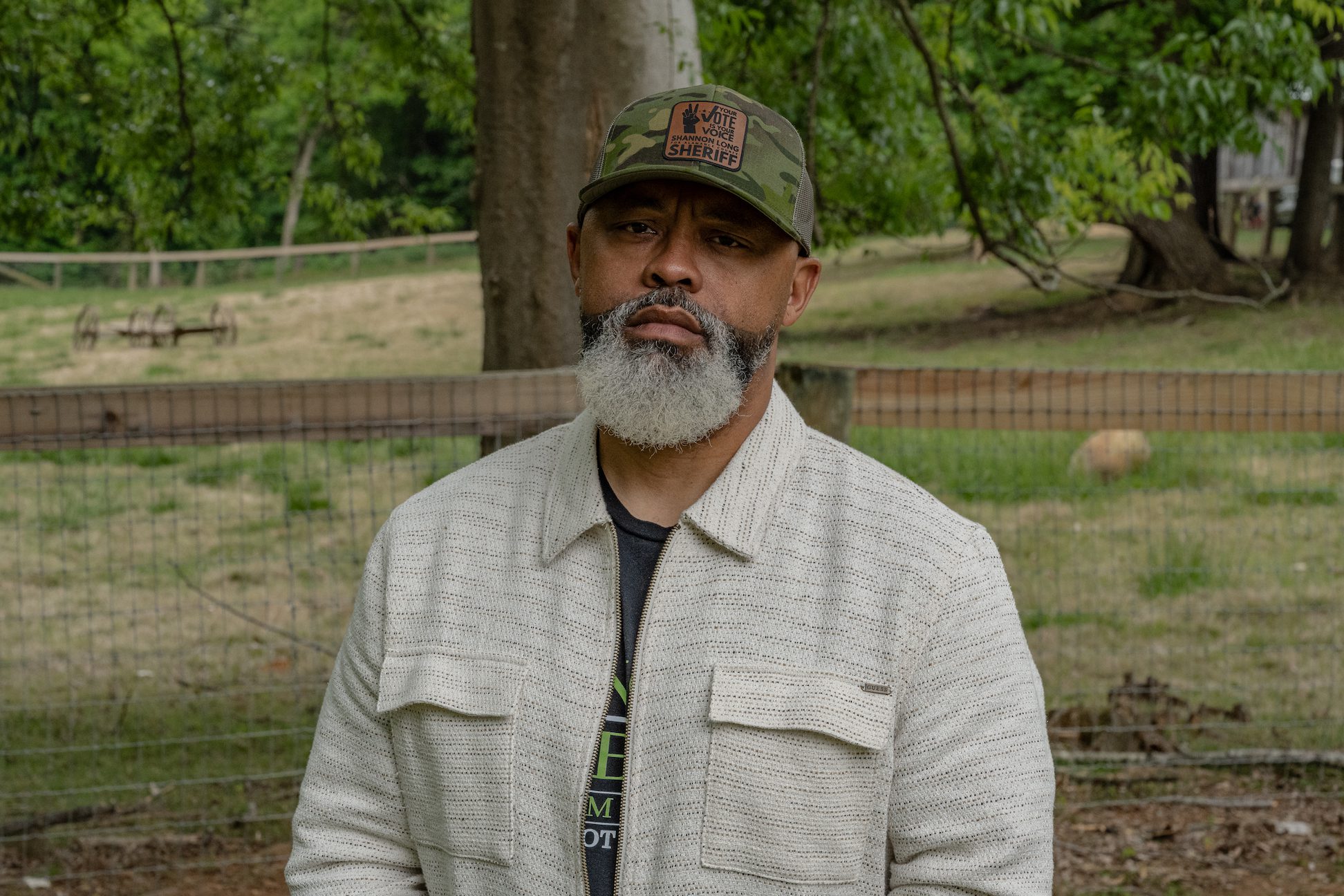
He also pledged to not “do what has been done in the past with ICE,” and said he would not participate in the 287(g) program.
“I don’t see fit to have my officers serve on that side of the law,” he said.
In an earlier interview in May, Long had told Bolts that the 287(g) program, which has rapidly expanded across the country since Trump took office in January 2025, is operating with “neglectful policy and procedure,” specifically related to the racial profiling of Latinos and the targeting of immigrants who aren’t “high-level criminals.” He also said he would not hold people for ICE in the county’s detention center outside what’s mandated by state law.
To alleviate residents’ fears, he wants deputies to be more visible in the community—“actually getting out of the car and meeting with the residents of the county.” He said, “We’re going to do our job, and our job is not to do what they’re doing, which is, right now, racial profiling.”
But it won’t be so easy, advocates say. Mejia told Bolts it’s unclear whether a new sheriff alone can remedy the fear and distrust that became so entrenched under the current sheriff.
“When we look at what makes communities safe and what improves well-being, oftentimes it’s not policing,” they said. “It’s education, it’s food, it’s third spaces where people can be.”
Long acknowledged that the sheriff doesn’t need to be the face of public safety, but he thinks he does need a seat at the table. “I do not have to be the spokesman,” Long said. “I think that’s important, and that’s a part of giving everybody their voice back.”
Ian Baltutis, a Burlington city council member and the city’s former three-term mayor, said Long will also have to contend with the sheriff’s office internal power structure, which Johnson cultivated for more than two decades and could undermine Long’s efforts to rebuild community trust.
“Of anyone who’s run for this race, he most clearly understands that challenge, and is already working to address it,” said Baltutis, a Democrat who won a seat in the state House on Tuesday as his party scored stunning upsets and flipped control of the chamber.
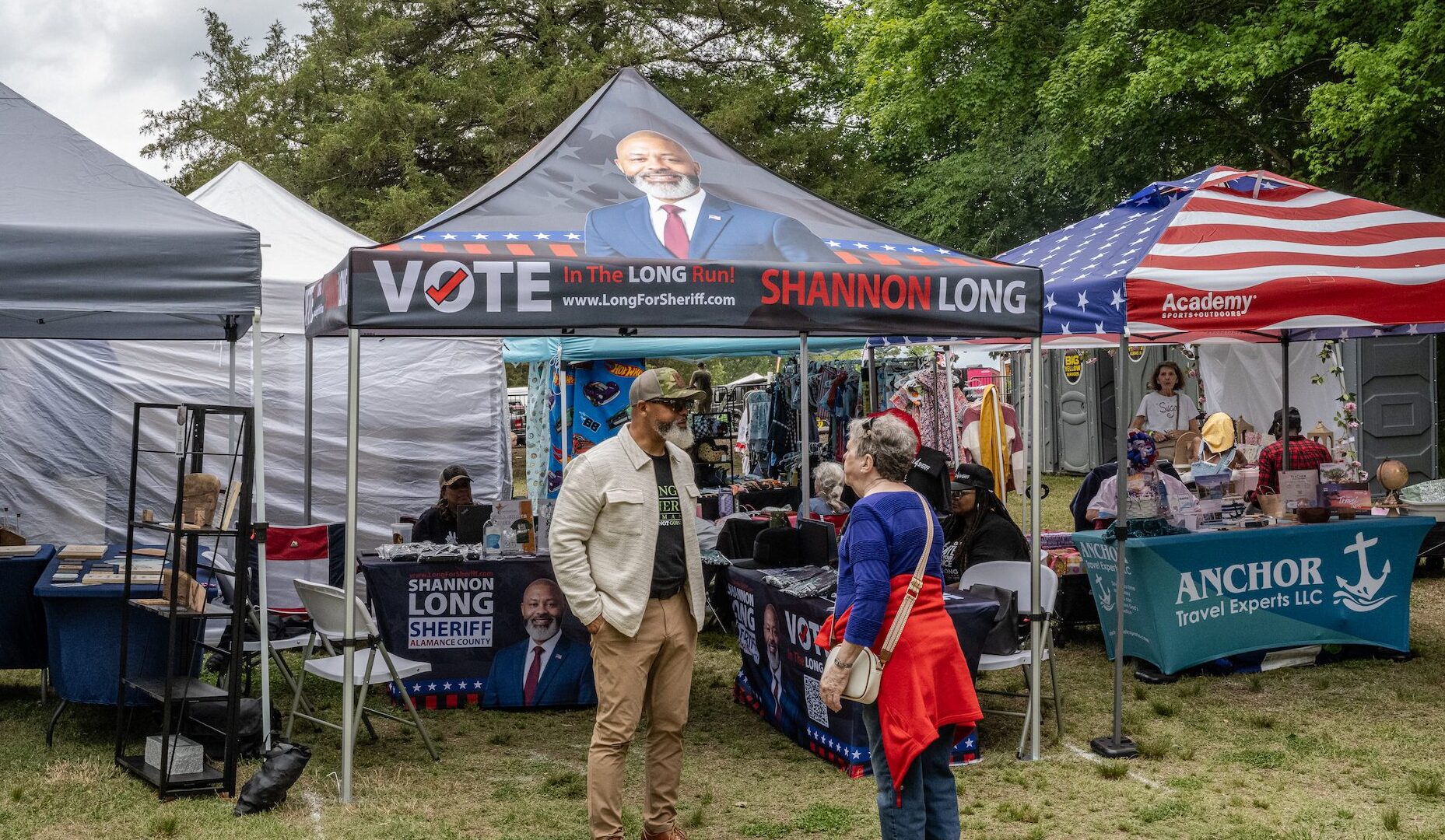
Another immediate challenge Long will face is the county’s overcrowded detention center, which, like many North Carolina jails, saw its population surge following enactment of a new state law forcing harsher pretrial detention rules. Johnson cited the law as the reason he ended his agreement to hold ICE detainees, and also said Trump’s mass deportation plan was straining county resources.
Kristen Powers, executive director of Benevolence Farm, a local nonprofit supporting formerly incarcerated women and gender expansive people that also operates a bail fund, said jail conditions and medical care at the facility are a pressing concern.
“We often bail people out who are in medical crisis and have said, ‘I didn’t get my diabetes medication or my anti-seizure medication,’” Powers said.
Long, she said, has both an opportunity to address how incarcerated people are cared for in the county’s jail, but also a chance to use discretion more strategically when determining whether an individual needs to be jailed, especially if they have mental health issues.
“I think Sheriff Johnson talked a lot about mental health and getting people to treatment, and that was like a big thing of his for a long time,” Powers said. “But I felt there was so much more room to be creative—like, why did that person even need to be arrested by a police officer in the first place?”
Sign up and stay up-to-date
Get timely updates about pressing stories and elections.
Support us
Bolts is a non-profit newsroom that relies on donations, and it takes resources to produce this work. If you appreciate our value, become a monthly donor or make a contribution.