
“We’re Afraid on a Daily Basis”: How a Maryland Sheriff Targeted Immigrants Long Before ICE Raids Spiked
Frederick County’s sheriff turned his office into a force multiplier for ICE before such collaboration became commonplace. As he again faces voters this year, the harm to immigrant communities is impossible to ignore.
| September 22, 2026

The brothers crammed their lives into backpacks. The younger one cried when he hugged his cats goodbye. “They were everything to me,” he says.
They were headed from San Salvador to a new life in Frederick County, Maryland, some 2,000 miles away, where their family had contacts and where their mom, fleeing for her life, had already relocated, along with their stepfather.
The journey would be dangerous, but not as dangerous as staying. Growing up in El Salvador’s capital, both brothers had witnessed gang murders by the time they were 11 years old, and both feared that they themselves could be killed if they turned down the wrong street. The family business, a hair salon, had been extorted to the point that it no longer made money.
They crossed rivers and highways, traveling by foot for long stretches. They survived crooked police and robbery along the way, first in El Salvador and Guatemala and then more often in Mexico. They slept on hard floors and their young bodies ached.
When they finally arrived in Frederick, they were quickly plugged into a local network of support, as this was, and still is, a fast-growing area with lots of Latino immigrants and many thousands of non-citizens, their mother and stepdad included. It’s been almost a decade since they got here, but they still recall an early bit of guidance: “We heard from our community that the sheriff’s office is racist,” the older brother says. “We have heard people saying that many times.” (Bolts is not publishing the names of the brothers and other immigrants interviewed for this story because they’re vulnerable to arrest.)
The longtime sheriff in Frederick County, Chuck Jenkins, earned this reputation by associating with far-right, anti-immigrant organizations designated as hate groups by the Southern Poverty Law Center. Jenkins, a Republican who stands for re-election this November, has become a small-town celebrity who has been a Fox News regular and visited with Donald Trump at both the White House and Mar-a-Lago.
He was an early supporter of Trump, who he said in a 2015 interview is “right on the mark” on immigration.
“As long as I am sheriff of Frederick County, we are going to work with ICE,” Jenkins said in that interview, “and we are going to take the criminal aliens—as many as we can—out of Frederick County.”

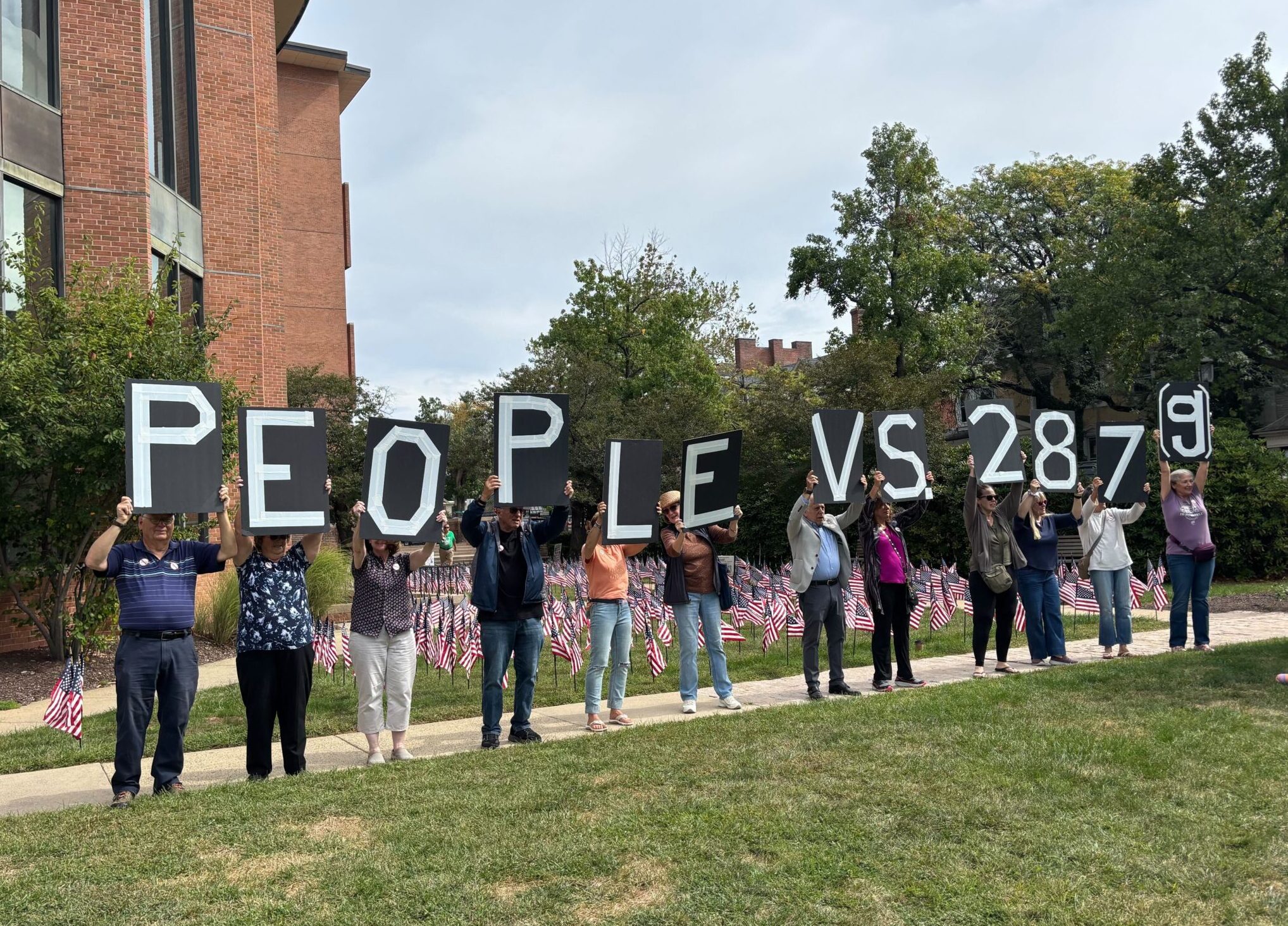
Jenkins matched his rhetoric with policies that targeted immigrants in his community. While hundreds of sheriffs around the country, including many in Maryland, have lately rushed to partner with ICE to assist in arresting, jailing, and ultimately deporting immigrants, Jenkins was doing this long before it was fashionable: In 2008, two years after he took office, Jenkins became one of the first sheriffs in the country to join ICE’s 287(g) program, which deputized his staff to question people’s immigration status inside the local jail. In the 18 years since signing that contract, Jenkins says, his office has used 287(g) to send about 2,000 people into ICE custody for deportation.
“The fear and the justified state of terror and hysteria that folks have been put in nationally under this administration is what folks have been living under in Frederick for years,” Frederick resident Sebastian Brown, an advocacy strategist with the ACLU of Maryland, told me. “People didn’t always know the name 287(g), but they knew that if you got sent to jail, you’d end up with ICE. That fear has been here since 2008 and permeated every part of people’s lives.”
Among Jenkins’ claimed 2,000 ICE referrals was the Salvadoran brothers’ stepdad. One morning last summer, two weeks after their mother gave birth to a baby boy, the stepdad left for work and never came back. A sheriff’s car had followed him, and then he was apprehended by a deputy while picking up work supplies from a local store. He had no criminal record and wasn’t sure why he’d been stopped, but was hauled to the county jail nevertheless.
Subscribe to our newsletter
The older brother says a jail staffer was rudely dismissive when he called that day to find out what had happened, and that he was told the matter had “nothing to do with” him. When the stepdad was able to call home, he relayed that jail staff had told him he’d be released after 48 hours.
“We went there right after the 48th hour to wait for him outside,” the older brother says. “We waited for three hours, and nothing. We tried to call him. … No answer, no information.”
The brothers would later learn that their stepfather never came close to release, because ICE took custody of him at the jail, transferred him to the agency’s own jail in Baltimore, then flew him to yet another jail in Texas, where he spent two miserable months and lost a lot of weight, before finally being deported last fall.
Bills added up for the family left behind, since the stepdad has supported them all financially. The younger brother dropped out of college. Their mother eventually self-deported, taking their baby brother, plus another younger sibling, back to El Salvador. The brothers who stayed in Frederick now struggle to afford food and seldom leave home.
“In our community, the Hispanic community, there is always a fear of being stopped by the sheriff office,” the older brother says.
“We are afraid on a daily basis,” he continues. “We like to go hiking a lot. And there is always this thought in the back of our minds, like, what if ICE is there, in the forest? It’s horrible because there are things you really enjoy, but the joy just vanishes when you think of that.”
Their mother had built a hair salon inside their new home, picking up the career she’d left behind in San Salvador. She’s gone now, but the salon remains untouched. The brothers try not to go in there because it reminds them of her. Their stepdad’s drill and circular saw are collecting dust on the kitchen floor. In the garage, a baby car seat is growing moldy.
Jenkins is well known for his crusade against immigrants in his community, making declarations like “the single biggest threat to our country is the immigration problem,” and, “We cannot continue to absorb this population or we will end up in collapse like a third world country.” After he first took office in 2006, Fox News named him the second-toughest sheriff on immigration in the whole country—behind only Joe Arpaio, the former Arizona sheriff notorious for his racial profiling of Latinos.
Jenkins’ platform became part of a larger backlash against the rising immigrant and Latino population in Frederick County. As Jenkins started working hand-in-glove with ICE to arrest and deport immigrants, local officials declared English to be the official language in the county, attempted to restrict landlords from renting to undocumented people, and even tried to make public schools report their undocumented students to authorities.
Local immigrant rights advocates say that Jenkins’ rhetoric and close collaboration with ICE has undermined public safety by discouraging immigrants from calling police when they witness or are victims of crime. In Frederick County this month, I met with many immigrants who have had family, friends, and neighbors deported, which they say has made them more afraid of local police, especially the sheriff’s office.

One immigrant woman told me she didn’t call 911 after she was recently involved in a car crash, even though she needed help. The younger of the Salvadoran brothers, who saw his family ripped apart by the deportation of his stepfather last year, told me, “My friends don’t feel safe to call the police, because they think that’s going to get them deported. They don’t feel freedom.”
While the Trump era helped embolden Jenkins’ attacks on the immigrant community in Frederick County, the ground has also started to shift beneath him in recent years. The county has become much more liberal as it’s grown in population; George W. Bush carried it by 20 percentage points in 2004, but by 2024 the county population had grown by 50 percent, and Kamala Harris won it by nine points.
Karl Bickel, a top official in the sheriff’s office during the 1990s and the Democratic nominee for sheriff in each of the last three cycles, lost by 26 points when he first ran against Jenkins in 2014. But he’s gotten much closer with each run, losing by 4 points in 2018 and just 2.8 points in 2022.
I met Bickel, who is again challenging Jenkins this November, at a coffee shop in outer Frederick County on a recent Sunday morning. As he has for the past 12 years, Bickel continues to promise voters to take the sheriff’s office in a much different direction, saying he would shun collaboration with ICE and use the office as a check on a federal agency that he says has acted lawlessly.
“The sheriff’s office, once informed ICE is doing anything in the county, would respond,” he said about his plans for the office. “A deputy, or two deputies, and a supervisor would respond, to monitor the activity. We’d find out who the ICE supervisor is, ask them if they have a warrant, and find out what their mission is. They might cooperate and they might not.” He says he’d direct deputies to record these interactions with ICE and produce reports on the agency’s local activities that he would post publicly online.
“A lot of what ICE is doing, if a deputy did it they’d be fired or arrested,” he told me. “The use of force, the utilization of chemical agents, things like that. It’s just not right.”
Much has changed since Bickel’s last unsuccessful run for sheriff. For one, Democrats in the Maryland legislature, responding to Trump’s mass-deportation scheme, passed legislation early this year banning local 287(g) agreements. In a companion bill, Democrats also significantly restricted other, more informal ICE collaboration, blocking police in the state from questioning people’s immigration status in most cases, and blocking most forms of information sharing between local agencies and ICE.
These changes, among other effects, forced the cancellation of Jenkins’ contract with ICE, and that of the eight other Republican sheriffs in Maryland who’d signed up for the program. Jenkins, who strongly opposed the changes, joined 16 other Maryland sheriffs this summer in suing the state to block some of them.
All of the sheriffs who joined the lawsuit, which repeatedly refers to immigrants as “criminal aliens,” are running unopposed in November—non-competitive sheriff elections are typical in this country, even in swing counties—save for Jenkins and Republican Jeffrey Gahler of Harford County.
Bickel says that, if elected, the other sheriffs in the state “wouldn’t like me.” And the differences between him and Jenkins could hardly be more stark, both in policy and personality.
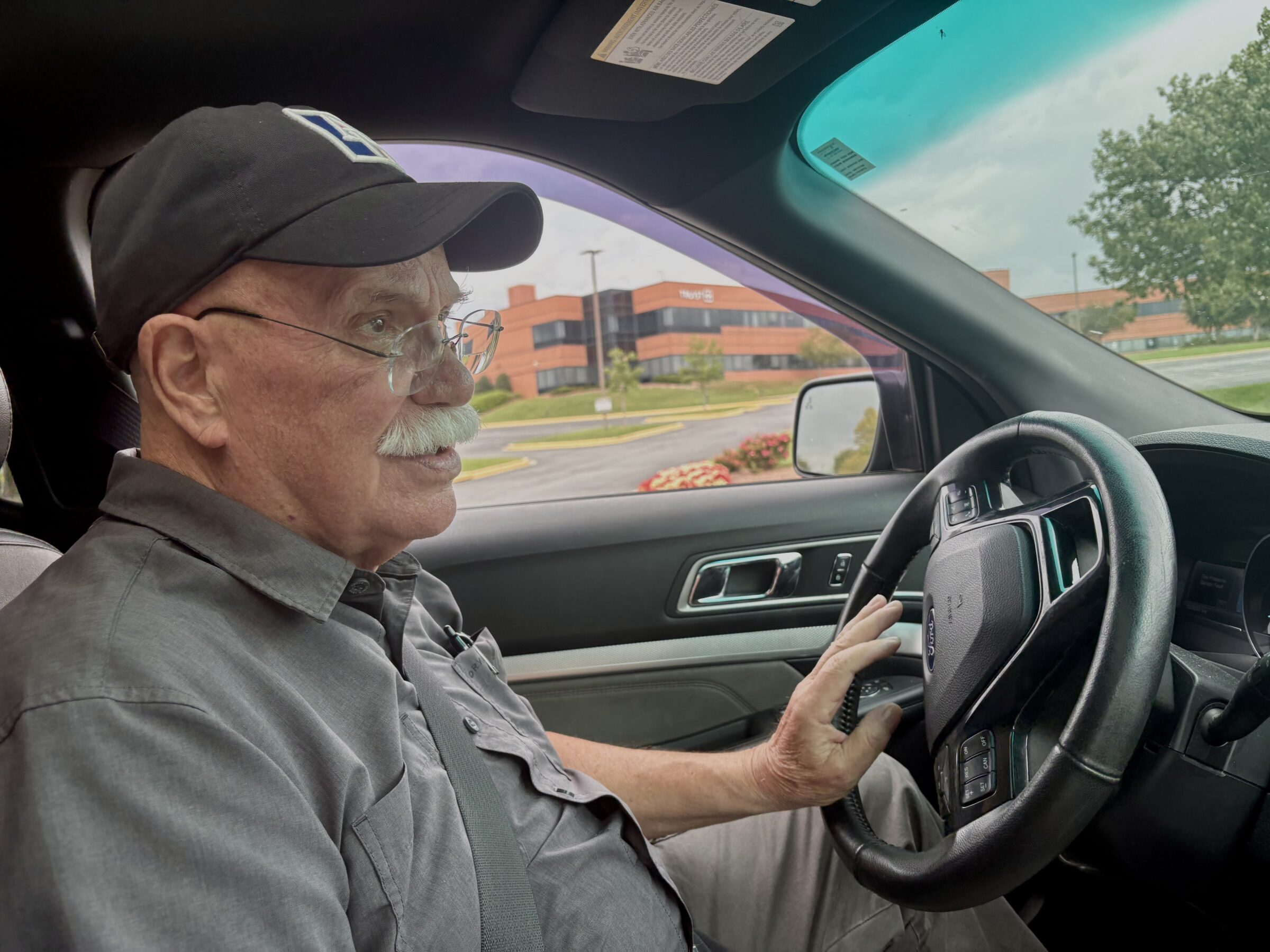
Bickel, who is 76, hasn’t been active in law enforcement in decades; when we took a drive to the county jail together, he wasn’t sure where to park at first because, he said, he had not been there in at least 10 years. He says he doesn’t enjoy campaigning and portrays himself as a bookish intellectual; when we met for coffee, he literally toted four books to demonstrate his reading prowess, and, wearing an American University hat and his class ring, noted several times that he’s received much more formal education than Jenkins. “Ask him what the last book he read was,” Bickel remarked. “My guess is there won’t be one.”
At a farm across town, I met Jenkins as he gathered with some 200 supporters for a barbecue. Jenkins, who rarely misses a local parade or festival, is a natural in this setting. A radio host and a Republican lawmaker lauded him from a microphone, praising the sheriff for having survived a “witch hunt”—a nod to the federal indictment against Jenkins in 2023 on charges of conspiring with a local gun store owner to illegally acquire machine guns, which prosecutors later dropped during the final days of the Biden administration. Multiple senior Jenkins staffers approached me to say that they’ll quit their jobs if the sheriff loses in November.
When Jenkins and I stepped away from the cookout to talk, the sheriff blasted the recent legislation that killed his ICE contract and forced him to change his jail policies. In the past, the jail had what he called “our 287(g) investigative room,” where deputies would “investigate where that person was from, how they got here.”
“If they were in the country illegally, we’d have access to all the ICE databases,” Jenkins said, “and based on that we’d prepare a detainer for ICE.”
According to Jenkins, the state has effectively shut down coordination between his office and ICE. Now jailers just ask about what country a detainee was born in and where they have citizenship. “But we don’t screen for immigration status anymore,” Jenkins lamented.
While Jenkins criticized the policy changes, he saved most of his venom for Bickel, calling his perennial challenger a “treacherous prick.” Jenkins, who is 70, worked under Bickel’s command at the sheriff’s office during the 90s and considers him “devious.”
“I’m going to tell you what, man to man: I’d kick his ass, personally,” Jenkins told me. “Physically. I’d stomp his ass. Someday, he’s got an ass-kicking coming. I don’t like the son of a bitch. Personally, politically, he’s no good. He can read all the books he wants.”
Amid the fear of law enforcement that Jenkins’ rhetoric and policies have heightened for immigrants in Frederick County, many in the community have organized to protect themselves to the extent possible. They’ve alerted one another in encrypted group chats about ICE activity, watched each other’s children, and delivered groceries to people who are scared to leave home.
The recent state reforms, and the restrictions they’ve put on Jenkins’ operations, are still cold comfort for immigrants in Frederick County as ICE enforcement has exploded across the state and country. “Immigrants know there wasn’t a change of heart, but a change of law,” says Maryland immigration attorney Viviana Westbrook, who has worked with many Frederick County residents. “All these years of this kind of messaging is not going to be wiped away by one bill, or by several bills.”
Much of the organizing and mutual aid in Frederick County are conducted by people who are themselves vulnerable to deportation, like the woman recently involved in the car crash, who told me that when she began coordinating grocery delivery in May, she and colleagues had a list of 15 families who needed help.
“Now, it’s more than 50,” she tells me as we sit together in her living room. “In four months it’s grown that big. And these are only the families we know of.”
She tells me about one mother she’s helping, whose husband was arrested last month. “Now she has no idea how she’ll take care of the kids. The father was the earner of that household. She can’t pay for her apartment. It’s very difficult.”
She adds, as her daughter plays on the couch, “I’ve witnessed the harm this does to the children, psychologically. To not see your mom or your dad is impossible. How can we help that situation? You continue because there’s no other way, but a child—what can they do?”
The woman says she knows parents who have withheld their kids from school this year and says she knows others who do send their kids to school but who decline to enroll them in free-lunch programs out of fear of even the friendliest of government interactions. State data show a drop in Latino enrollment across Maryland schools, and in Frederick County specifically, as the immigration dragnet forces vulnerable families into hiding.
After a little while, a friend of the woman swings by. She’s a mother to young children, and among the dozens of immigrants receiving food aid in Frederick County. She tells me about her husband, who was arrested last year and deported: “He worked in roofing. We had a normal life,” she says.
Her husband, who she says had no criminal record, was stopped by ICE on the way to work, for no clear reason. “People said they were only taking criminals, people with records. But when they took him we realized it’s not that way,” she says. This sort of apprehension is now common for ICE; 70 percent of people in its custody have no criminal record, according to Syracuse University’s immigration database.
The wife of the deported man continues: “When you’re with your partner you know how to deal with things. It’s not always easy, but you know. When you’re alone it’s much more difficult.” One of her children is in therapy and sometimes comes home from school crying. “I try to be strong, so they don’t see me down,” she says.
This family’s story is familiar in Frederick County, where immigrants and attorneys for many years have alleged a pattern of racial profiling in traffic stops. In 2019, the ACLU of Maryland sued Jenkins’ office on behalf of an immigrant woman who’d been pulled over by a deputy for a purported taillight issue, and then interrogated about her immigration status.
After being detained on the roadside for nearly an hour while the deputy tried to get an ICE agent to respond, the woman, Sara Medrano, was released with a warning for a nonfunctioning taillight, which she says was working just fine when she checked it later that night.
The lawsuit accused Jenkins of pursuing a policing strategy that “treats immigrants as second class” by subjecting them to “unlawful and unconstitutional interrogation, seizure and detention” based on race and ethnicity. A 2021 settlement in the case awarded $25,000 in damages to Medrano and forced Jenkins to issue her a written apology for what she’d endured. As part of the settlement, the sheriff’s office also agreed to implement training to try and prevent racial profiling and to conduct public meetings about its role in immigration enforcement, including its participation in the 287(g) program.
For the first few years, when ICE was seldom spotted in this area, those post-settlement public meetings were lightly attended. The most recent one, however, was standing room only. Residents one by one aired complaints about the posture of the sheriff’s office toward immigrants.
Notably, however, attendees say that none of the speakers that day were actual immigrants directly vulnerable to ICE. “That tells me they’re afraid,” Westbrook said.
Following the state reforms passed this year, officials like Jenkins are technically prohibited by law from questioning people they stop based on suspected immigration status. But even so, last year the U.S. Supreme Court’s conservative majority ruled that federal immigration agents could racially profile people for apprehensions, and advocates and immigrants in Frederick County say this happens often.
“People are getting picked up every day. Early morning, after work, at worksites, getting pulled over,” says Brown, of the ACLU of Maryland. “With so much increased funding, ICE has replaced the role, with welcoming, open arms from the sheriff’s office.”
He adds, “287(g) was a force multiplier for ICE, but now they’re sending people to Frederick and cutting out the middleman.”
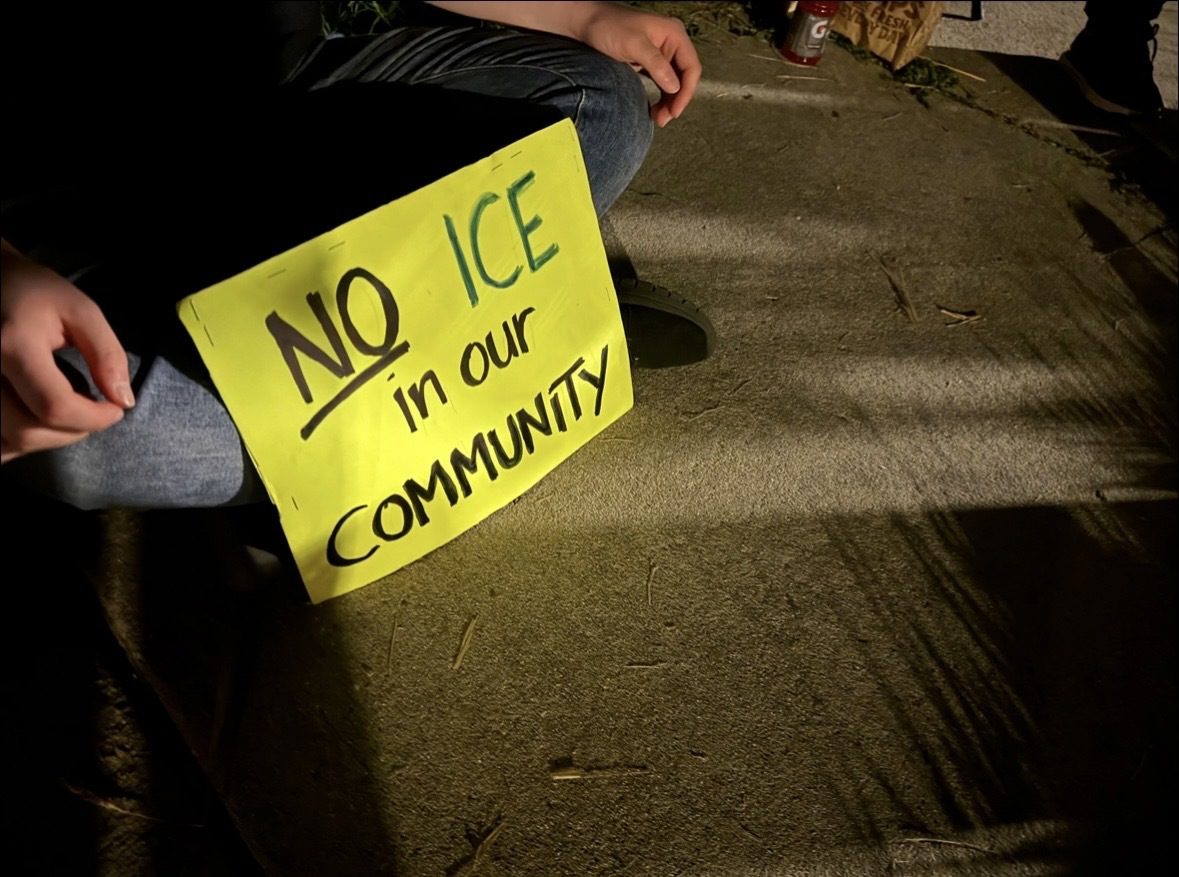
This new dynamic was on display in early September, as ICE descended on a quiet Frederick neighborhood for a multi-day stakeout. Many residents responded in protest, helping to escort children home from school, sharing information in private channels, waving anti-ICE signs, and even linking arms in the street to try to prevent ICE movement. ICE agents reacted violently; an agent beat at least one protester with a baton, according to video obtained by Maryland Matters.
The stake-out would have been an unusual sight two years ago. But ICE’s increased presence locally has galvanized citizen activists—including many who otherwise did not previously participate in such resistance.
ICE opponents across the county say that if Jenkins were to finally lose this November, it would be a credit to the growing outrage of voters who might not have heard of 287(g) before, or who might not have considered Jenkins’ agenda closely in the past. That shouldn’t be an insurmountable challenge; after all, Jenkins has won only narrowly in each of his last two contests with Bickel. And the city of Frederick, which is the county seat, seems to have only gotten more liberal since, as evidenced in part by local immigrant rights leader César Díaz not only winning a seat on Frederick’s city council last fall, but then immediately ascending to become the council president.
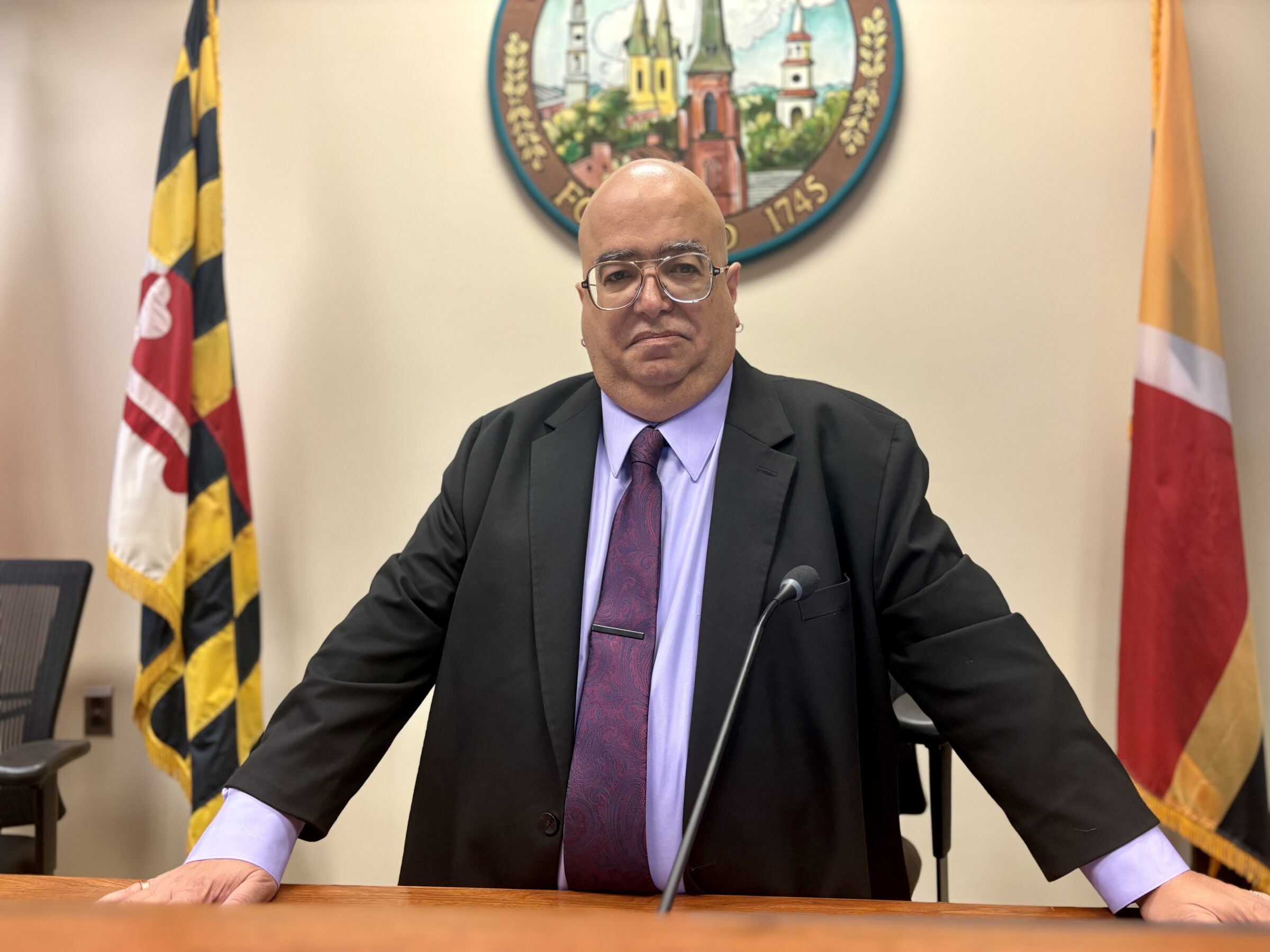
The first ordinance the new council passed was called the City Values Act, which prohibits city employees from assisting ICE without a judicial warrant and bans ICE from using city property for any enforcement activities. That followed another reform, passed in 2024, allowing non-citizens to vote in certain local elections. (Even so, almost none actually have voted, fearing interaction with any level of government.)
But the city is a very different place from the outlying county, which is mostly quite rural and much more conservative, and which has helped carry Jenkins to victory after victory even as Frederick County’s electorate has gotten bluer.
Díaz said he believes Jenkins can be defeated this year because more local voters now seem to care about immigrant protection, which has helped raise awareness of the sheriff’s record.
“The worse things get with the Trump administration, the more support the immigrant community gets,” Díaz told me. “I don’t go two days without someone new reaching out to see how they can help. Every week I’m talking to 10 people or more who are asking, ‘What can we do?’ It’s becoming less and less distant for people. Every day, more people know someone who knows someone, or they know someone directly, or it’s their kid’s friend at school, or their neighbor, or their co-worker.”
The damage to the community, Díaz says, has become impossible to ignore. “Every week we have seven, eight, 10 different families being affected by ICE. Dads who leave for work and don’t come back.”
Sign up and stay up-to-date
Get timely updates about pressing stories and elections.
Support us
Bolts is a non-profit newsroom that relies on donations, and it takes resources to produce this work. If you appreciate our value, become a monthly donor or make a contribution.