

Death Penalty Opponents in Kentucky Prepare for Clemency Push Earlier than Planned
Kentuckians approved new restrictions on governors' power to issue commutations at the end of their term—a period that usually sees active campaigns to get them to empty death row.
| November 10, 2026
Opponents of the death penalty are asking Kentucky’s governor to commute the sentences of people on death row before he leaves office late next year. But their timetable was upended last week when voters approved new limits on a governor’s ability to grant clemency late in their term.
Under the change, governors are prohibited from issuing pardons, reprieves, or commutations starting 60 days before an election and until the end of their term. The Kentucky legislature put the proposal on the ballot via bipartisan majorities this spring, and 71 percent of Kentuckians approved the constitutional amendment last week.
Proponents of the amendment argued that it will stop governors from waiting until the end of their term to grant clemency to dodge political consequences. “Do not wait until electoral accountability has effectively disappeared,” Senator Chris McDaniel, a Republican who sponsored the measure, warned in the Northern Kentucky Tribune last month.
McDaniel, who did not reply to a request for comment, has said he drafted the amendment in direct response to the controversy that erupted in late 2019 when Republican Governor Matt Bevin issued over 400 pardons and commutations on his way out of office. Bevin came under heavy fire over corruption allegations related to his pardon of Patrick Baker, whose family hosted a fundraiser for Bevin that raised $21,500. Bevin also faced criticism for his decisions to grant clemency to people convicted of violent crimes, some of whom ended up back in prison.
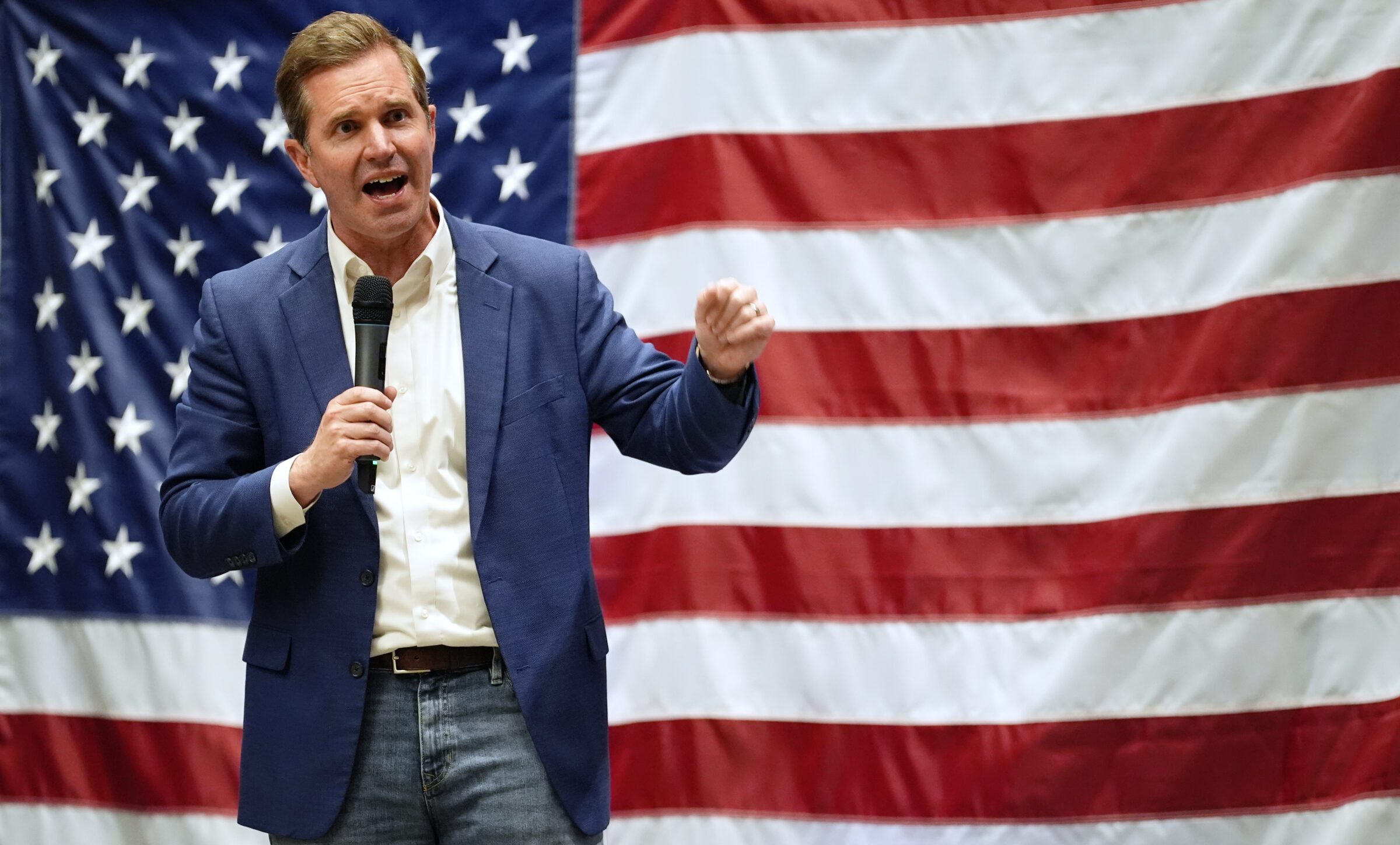
Governor Andy Beshear, a Democrat, will now be the first governor constrained by this rule. It means he has only until early September of next year to issue clemency instead of until the end of his term in December 2027.
Russell Allen, executive director of the Kentucky Coalition to Abolish the Death Penalty, is concerned that executions could resume in Kentucky should Republicans take office next year and he believes Beshear could preempt that by removing people from death row, much like Joe Biden did ahead of Donald Trump’s return to power in 2024. He told Bolts that the amendment made the group’s campaign to convince Beshear to commute the sentences of all 23 people on the state’s death row even more pressing.
“It definitely gives us a sense of urgency, and we want Governor Beshear to have that same sense of urgency when he starts to look at these cases,” said Allen.
For more 2026 election results
Subscribe to the Bolts newsletter
Allen’s efforts in Kentucky mirror similar blitzes elsewhere at the end of a governor’s term, as opponents of the death penalty make the case that the death penalty is applied unfairly and that failing to commute the row could leave the door open to renewed executions under a new governor. The largest grant of death row clemency in modern history came in early 2003 in Illinois, when then-Governor George Ryan commuted the sentence of all 167 people on death row to life without parole just two days before he was to leave office.
Oregon Governor Kate Brown also emptied her state’s death row in 2022, less than a month before the end of her term. Under Kentucky’s new rules, neither Ryan nor Brown would have been allowed to make those decisions at that point of their terms.
Other recent governors have faced similar pressure. As he prepared to leave office in 2024, North Carolina Governor Roy Cooper faced a multiyear campaign to get him to commute the sentences of 136 people but he only ended up committing the sentences of 15—on the final day of his term. And Louisiana activists in 2023 made a comparable push before then-Governor John Bel Edwards, a Democrat, left office and was replaced by current Governor Jeff Landry, a Republican death penalty supporter, but they were foiled in part by Louisiana’s complex rules for clemency, which requires a board’s approval. Landry then promptly resumed executions after a quarter-century hiatus.
In California last week, Governor Gavin Newsom announced he would seek to commute the sentences of the state’s 548 death row prisoners—the largest death row in the nation—to life without the possibility of parole. (California’s supreme court must still approve the majority of those commutations.)
Newsom is a possible candidate for president in 2028, as is Beshear, and their approaches to the death penalty could be an issue in Democratic primaries.
So far, Beshear’s use of clemency—a power that lies solely with him, unlike in Louisiana and some other states—has been limited to posthumous pardons of 43 people who helped slaves escape to freedom. He opposed Amendment 1, saying that his predecessor used his power in “terrible ways” but that voters shouldn’t let that constrain the future. He told the state press in October, “The answer to this isn’t changing the pardon power of every other governor that hasn’t abused it this way, but not electing a guy like Matt Bevin ever again.”

In Kentucky, the death penalty has laid dormant due to a 2010 order by local judge Phillip Shepherd, a frequent foil of Kentucky conservatives, who blocked executions in part over concerns with the state’s execution protocols. The litigation over those protocols has continued in Shepherd’s courtroom since then, including as recently as this summer.
As a result, there hasn’t been an execution since 2008. Also, no one has been sentenced to death in the state since 2014.
But some Republicans in the state are working to change that. Attorney General Russell Coleman petitioned the Kentucky Supreme Court to force Shepperd to lift his injunction and allow state officials to schedule an execution, but the supreme court has repeatedly rebuffed Coleman’s efforts this year. Also this year, the GOP-run legislature overrode a veto by Beshear to pass legislation that expedites the Kentucky Department of Corrections’ drafting of execution procedures by allowing the agency to skip the public rulemaking process, making it easier to resume executions.
Coleman is running for reelection next year. Republicans also hope to win back the governor’s office since Beshear is term-limited from running for reelection. One of the Republican frontrunners in the governor’s race, U.S. Representative James Comer, has styled himself a champion of the death penalty.
Along with the new guardrails created by Amendment 1, the push for Beshear to clear death row “becomes even more important now because of the fact that he is leaving the state in an unsure place,” said Allen.
He explained that that he plans to make the case to Beshear that there are people on death row who could be innocent or otherwise shouldn’t be there because of issues such as intellectual disability
Tim Arnold, an attorney who has worked on clemency petitions at the Kentucky Department of Public Advocacy, the state’s public defense arm, is critical of the amendment.
One of his chief concerns is that the new rule would bar death row prisoners from asking that the governor spare their lives via a commutation or reprieve if their execution happens to be scheduled during the restricted time period.
That would mean that some people about to be executed have access to a common reprieve mechanism while others do not, and Arnold says this could violate their rights. The courts “might feel that there’s a kind of a due process issue if what’s happening is everybody else can get it, but this group of people in this time frame cannot,” he said.
With Amendment 1’s passage, Kentucky becomes the only state that places time restrictions on commutations and pardons, according to Mark Osler, a law professor at the University of St. Thomas and an expert on clemency. He is optimistic about the change, saying that the amendment could force governors to be more deliberate about their choices. “There’s a rush of them at the end, and it’s hard to believe that they’re carefully thought out,” he said. “It’s something that I think is intended to be considered regularly.”
Allen told Bolts that the Kentucky Coalition to Abolish the Death Penalty will launch its campaign, “Do the Right Thing Andy,” in January. He’s hoping that as Beshear contemplates higher office he’ll be inspired by the Democratic momentum from last week’s midterms.
He said, “We think that commuting Kentucky’s death row is a large signal that he believes in a new world and he’s actually putting boots to ground to try to make it happen.”
Sign up and stay up-to-date
Get timely updates about pressing stories and elections.
Support us
Bolts is a non-profit newsroom that relies on donations, and it takes resources to produce this work. If you appreciate our value, become a monthly donor or make a contribution.
Related Posts

Connecticut’s New Commutation Policy Raises the Bar for Second Chances