
Missourians Reject Measure That Threatened to Kill Citizen-Led Ballot Initiatives
Voters on Tuesday overwhelmingly sided against a measure to restrict direct democracy, as Missouri officials are trying to block even more citizen-led reforms from the November ballot.
| August 5, 2026
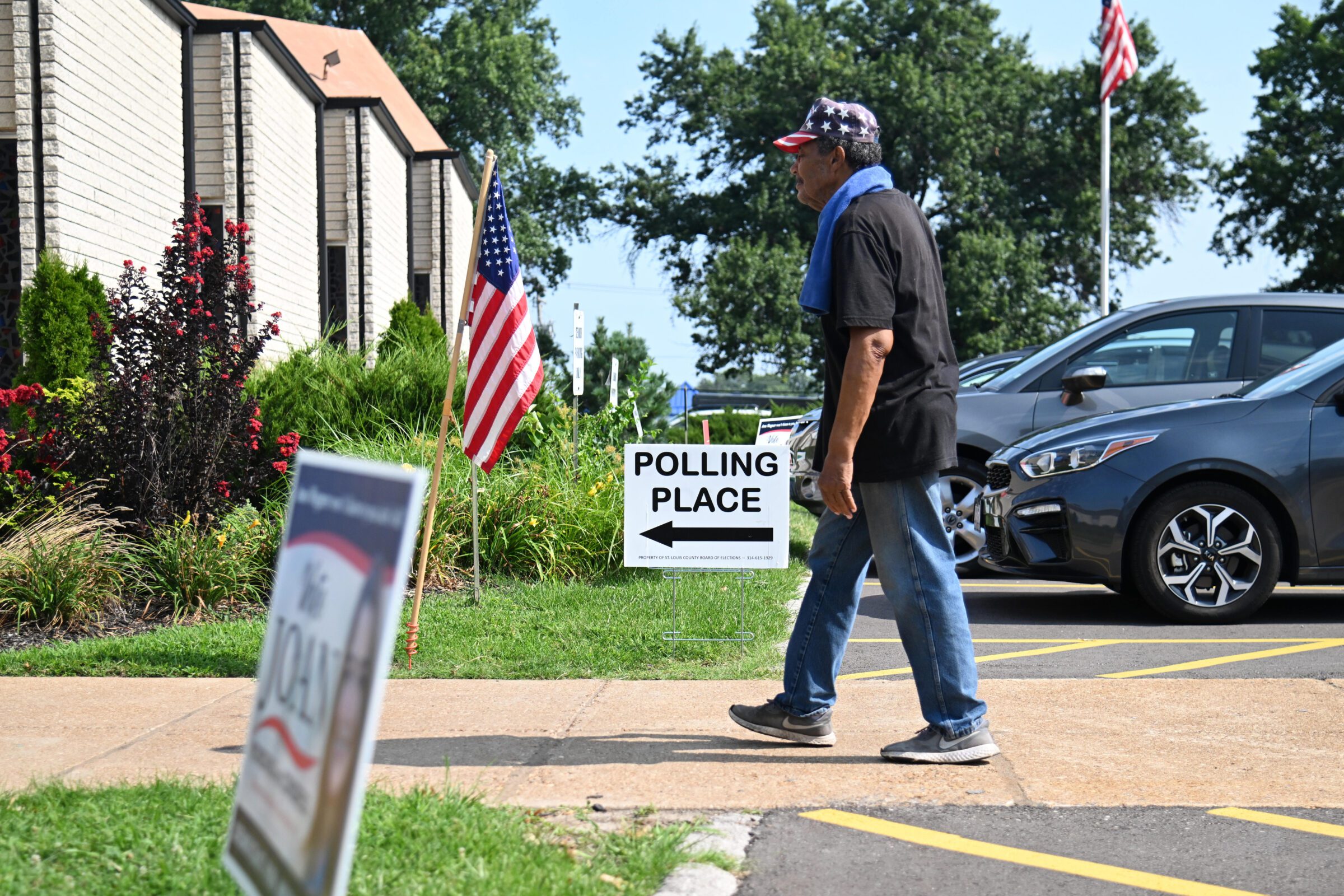
Missouri voters on Tuesday overwhelmingly rejected an effort by Republican lawmakers to drastically raise the threshold for passing citizen ballot measures—which in recent years have allowed Missourians to legalize marijuana, raise the minimum wage, guarantee paid sick leave, expand Medicaid, and revoke the state’s strict abortion ban, all over the objections of state GOP officials.
Angered by these reforms, Republicans who dominate Missouri’s legislature put Amendment 4 on Tuesday’s ballot to try and mandate that future citizen-led initiatives win majorities in each of the state’s eight congressional districts, as opposed to the statewide majority vote that is currently required. Notably, the same rules would not have applied to measures that the legislature sends to the ballot, and critics say that carveout helped rally voters against the restriction.
Under those proposed rules, all five popular initiatives that Missouri voters have approved since 2020 would have failed, an analysis by Bolts found last year.
Get more news about direct democracy
Subscribe to our newsletter
Missouri activists who worked to pass these reforms in recent years had warned that the new rules would spell the end of the citizen-led initiatives in the state.
“It would have neutered the process altogether. Nothing would ever pass again. Missouri voters are just smarter than that,” said Mallory Rusch, executive director of Empower Missouri, an organization that backed measures to expand medicaid and raise the minimum wage. “I’m really glad that Missouri voters saw that this was really designed to trick them into giving up their own power.”
The defeat of Amendment 4 was among the most decisive votes in recent history, with 80 percent of voters opposing the restriction.
Republican lawmakers sent Amendment 4 to the ballot during a special legislative session called last September by Governor Mike Kehoe that largely focused on further bolstering GOP control of the state. During that special session, Republicans also pushed through a mid-decade redistricting plan that eliminated the Kansas City-based congressional district held by Emanuel Cleaver, a Black Democrat, by splitting it into three other districts dominated by Republicans.
Ahead of Tuesday’s election, Missouri’s Republican secretary of state, Denny Hoskins, blocked a public referendum on the new maps, declaring that citizen-led petitions to challenge redistricting were unconstitutional. Hoskins refused to even say whether citizens had gathered enough valid signatures to qualify for the November ballot, telling reporters, “Whether they had one signature or 500 million signatures doesn’t really matter.”
Last year’s gerrymandering was itself a sign of how hard Missouri Republicans have worked to sidestep citizen ballot initiatives. In 2018, voters overwhelmingly approved a measure to establish a bipartisan redistricting commission and ban lobbyists from making gifts to legislators over $5. But then two years later, legislators placed an item on the ballot to repeal the redistricting reforms—a ballot measure that narrowly passed that year, and which reform advocates argue contained language designed to confuse voters.
Republicans have held a majority in both legislative chambers in Missouri since 2003, and have had a supermajority in the legislature for over a decade. Citizen-led referendums have long been the only avenue for challenging the state’s Republican leaders, who have also sought to undo many of the recent reforms won by popular initiatives. For instance, GOP lawmakers last summer repealed the 2024 ballot measure that guaranteed paid sick leave, since the reform was not an amendment to the state constitution—which would require a majority vote from Missourians to repeal.
Bids to weaken direct democracy have become a feature of the Republican playbook for limiting opposition in states they control, with conservative lawmakers pushing to restrict citizen-initiated referendums in Arkansas, Florida and Oklahoma in recent years. Some of these new restrictions, like in Florida, have made it harder to qualify an item on the ballot by increasing the burden for collecting signatures while also creating harsh criminal penalties for common clerical errors and routine outreach activities. In other states, like North and South Dakota, Republican legislators have pushed to require a supermajority in order to approve some initiatives.
Advocates who came together to defeat Amendment 4 in Missouri are now hoping to safeguard the state’s popular initiative system from future meddling by legislators. Organizers with the Respect Missouri Voters campaign are now using the very tool in question—the citizen-led initiative—to push for new rules banning state lawmakers from restricting the ballot measure process and limiting them from weakening future measures that voters approve. They submitted over 367,000 signatures in support of the initiative by the deadline in May, more than double the amount needed to qualify the proposed measure for the ballot.
But on Tuesday, Hoskins announced that he was also rejecting that initiative and would not certify signatures gathered by the campaign, setting up a legal battle to decide whether this amendment and redistricting reforms will appear on the November ballot.
“Voters are hungry to have a clear, fair, and transparent process to decide the future of our state,” said Benjamin Singer, the director of the Respect Missouri Voters campaign. “It’s no surprise that when we have more momentum than ever, as shown by voters defeating Amendment 4, that politicians continue to double down and attack to try to prevent voters from having a say. But we are confident that voters will prevail over these attacks.”
Sign up and stay up-to-date
Get timely updates about pressing stories and elections.
Support us
Bolts is a non-profit newsroom that relies on donations, and it takes resources to produce this work. If you appreciate our value, become a monthly donor or make a contribution.