
North Carolinians Oust a Longtime Prosecutor Known for Fighting Innocence Claims
Jim O’Neill, the Republican DA of Forsyth County who built a punitive record over his 17 years in office, was defeated by a prosecutor-turned public defender.
| November 12, 2026
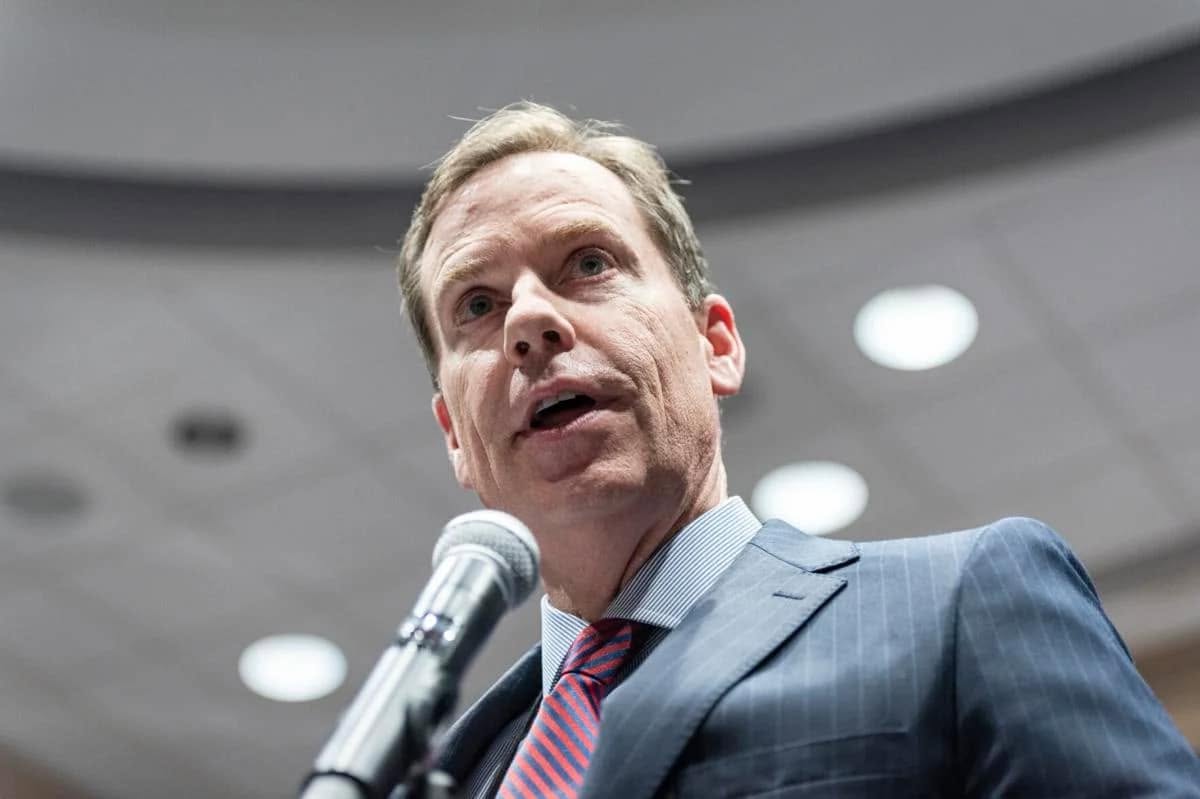
Jim O’Neill, a longtime Republican prosecutor who built a record of seeking harsh sentences and fighting against reviewing past convictions even when confronted with strong evidence of innocence or racial bias, lost his reelection bid last week in North Carolina.
He was vying for a fifth term as district attorney of Forsyth County, home to Winston-Salem. Democrat Amara Hunter, a former Detroit police officer who later worked as a prosecutor under O’Neill and then as a public defender, defeated him by more than 13,000 votes, or nearly nine percentage points.
O’Neill became DA in 2009 through an appointment by then-Governor Bev Perdue, a Democrat, and then ran unopposed as a Republican the first three times he faced voters. He narrowly defeated a challenger in 2022 but the blue tsunami that submerged North Carolina this fall proved too much for him in this Democratic-leaning county. North Carolina Democrats also flipped control of the state House and broke Republicans’ supermajority in the Senate last week, and they ousted other local GOP officials such as the pro-ICE sheriff of Alamance County, Terry Johnson.
Daryl Atkinson, a civil rights attorney and executive director of the Second Chance Federation, a nonprofit law firm focused on the restoration of civil and human rights of formerly incarcerated people, told Bolts that O’Neill had long been a barrier to progressive criminal justice reform and was “notoriously punitive.”
O’Neill is known in particular for fighting efforts in North Carolina to review past convictions and to identify wrongful convictions or miscarriages of justice.
For more on the 2026 midterms
Sign up to our newsletter
North Carolina in 2009 passed the Racial Justice Act, which gave incarcerated people on death row the opportunity to have their sentences reduced to life in prison without parole if they could prove race played a significant role in their conviction or sentencing.
O’Neill denounced the Racial Justice Act as a covert effort to end the death penalty in North Carolina, and in 2012 he hosted dozens of prosecutors from across the state to train them on how to fight back against motions filed by death row prisoners.
Later, when O’Neill unsuccessfully ran for attorney general, losing in the Republican primary in 2016 and four years later to then-Democratic Attorney General Josh Stein, he ran as a strong believer in the death penalty.
The issue matters a great deal in Forsyth County. The most recent execution in North Carolina, in 2006, was of a man from Forsyth County, and currently nine of the 122 people on death row are from here. Five of the nine are Black.
When then-Governor Roy Cooper in 2024 commuted the sentences of 15 people on death row to life without the possibility of parole, three were from Forsyth County, though their convictions were before O’Neill became DA. Cooper faced attacks from the GOP over his record on criminal justice this year as he ran for Senate, including by conservative commentator Sean Hannity, who talked about his friendship with O’Neill while targeting Cooper on his show in late October.
O’Neill has also ripped into the work of the state’s Innocence Inquiry Commission, which was set up in 2006 in response to several wrongful convictions, including that of a Forsyth County man, Darryl Hunt. Hunt was convicted in 1984 and spent over two decades in prison before his exoneration in 2004.
O’Neill has called the commission, now called the Post-Conviction Review Commission, a waste of taxpayer money.
Most recently, O’Neill fought against the exonerations of two Black men who were convicted in the death of NBA player Chris Paul’s grandfather when they were teenagers; The Assembly, a statewide news outlet, has reported extensively on the questions surrounding their conviction, including the lack of physical evidence, claims that police coerced the teens into false confessions, and a key witness who recanted her testimony.
“The way I see it, this administration of O’Neill has done nothing but defend the atrocities of the past, many of which involve race and racism,” said Mark Rabil, a law professor and director of the Innocence and Justice Clinic at Wake Forest University, in Winston-Salem.
Other state prosecutors have matched O’Neill’s complaints about post-conviction review, and the N.C. Conference of District Attorneys successfully lobbied lawmakers last year to impose a seven-year limit on when defendants can file an appeal on their conviction. “Justice requires finality,” a general counsel for the organization said at the time.
O’Neill did not respond to a request for comment. In a statement posted on social media, O’Neill said it had “been the honor of my life to serve as your District Attorney and to stand up for victims and families in this community.” He also said he was “committed to a smooth transition.”
O’Neill has also drawn scrutiny for a practice of threatening defendants with more severe sentences to secure plea deals.
One teen, Terence Smith, turned down a 10-year offer to plead guilty to charges that he was involved in a 2000 shooting, which Smith maintained he did not a part in, despite threats by O’Neill, an assistant DA at the time, to add many more charges if the teen declined, Carolina Public Press reported in 2023. Smith was then convicted and sentenced to more than 60 years in prison, and he remained incarcerated until 2024, when then-Governor Roy Cooper commuted his sentence under the short-lived Juvenile Sentence Review Board.
Rabil, who defended Smith at trial, says Forsyth County prosecutors have continued overcharging as a way to coerce defendants under O’Neill’s leadership, which he described as a pattern and central to the DA’s office’s reputation for securing harsh sentences.
“It just causes people to end up pleading just to get it over with after four or five years, or just to avoid the risk of being executed,” said Rabil, who continues to work on cases in the county and is hopeful this could change with new leadership.
Hunter, the incoming DA, did not respond to an interview request for this story. Her campaign had previously declined interview requests unless supplied with advance questions, which Bolts declined.
She said elsewhere that she would want to bring some changes to the office, telling the Winston-Salem Journal that she opposed charging so many teens with crimes and said there were many alternatives to “throwing them into jail with violent criminals.”
She aimed her toughest criticisms at O’Neill’s leadership style. She called him a “career politician,” noting his unsuccessful runs for statewide office; besides his two bids for attorney general, O’Neill also ran for lieutenant governor in 2024, again losing in the Republican primary.
Rabil hopes that, going forward, the DA’s office can make sure that “the justice system not only runs smoothly but runs fairly and in a non-discriminatory fashion.” Atkinson echoed Rabil’s wish, telling Bolts that prosecutors in Forsyth County should “pursue justice, not just punishment.”
Change is needed, Atkinson added, “so we don’t completely debilitate people’s ability to progress with their lives.”
Sign up and stay up-to-date
Get timely updates about pressing stories and elections.
Support us
Bolts is a non-profit newsroom that relies on donations, and it takes resources to produce this work. If you appreciate our value, become a monthly donor or make a contribution.