
Virginia Topples Its Jim Crow-Era Lifetime Ban on Voting
Voters passed Amendment 3 on Tuesday, restoring voting rights for people with felony convictions upon release, and codifying the end of Jim Crow-era disenfranchisement rules.
| November 3, 2026
Virginia voters have toppled one of the nation’s harshest felony disenfranchisement schemes, ending a Jim Crow-era policy of exclusion that has blocked millions of people from voting since 1902.
Voters approved Amendment 3 on Tuesday, which changed the state constitution to provide that any citizen can vote so long as they’re not actively incarcerated over a felony conviction. The state constitution previously held that anyone convicted of any felony would be disenfranchised for life, unless a governor personally restored those rights on an individual basis.
Virginia had been one of just three states, along with Iowa and Kentucky, where the state constitution called for lifetime disenfranchisement for any felony conviction. Voters erased this rule on Tuesday, approving Amendment 3. The amendment led 55 to 45 percent with the majority of votes counted just before 10 p.m. on election night, when the Associated Press called its victory.
The exclusion reversed by Amendment 3 had been codified in Virginia 124 years ago by explicitly white supremacist state leaders who, after the Civil War, specifically sought to limit Black political power by harshly policing Black residents and then tying criminal convictions to voting rights. Their plan worked as intended: Black voters have been disproportionately blocked from voting in Virginia for more than a century; in the 2016 election, for instance, 22 percent of Black adults in Virginia were disenfranchised, compared to just 4 percent of the rest of the population.
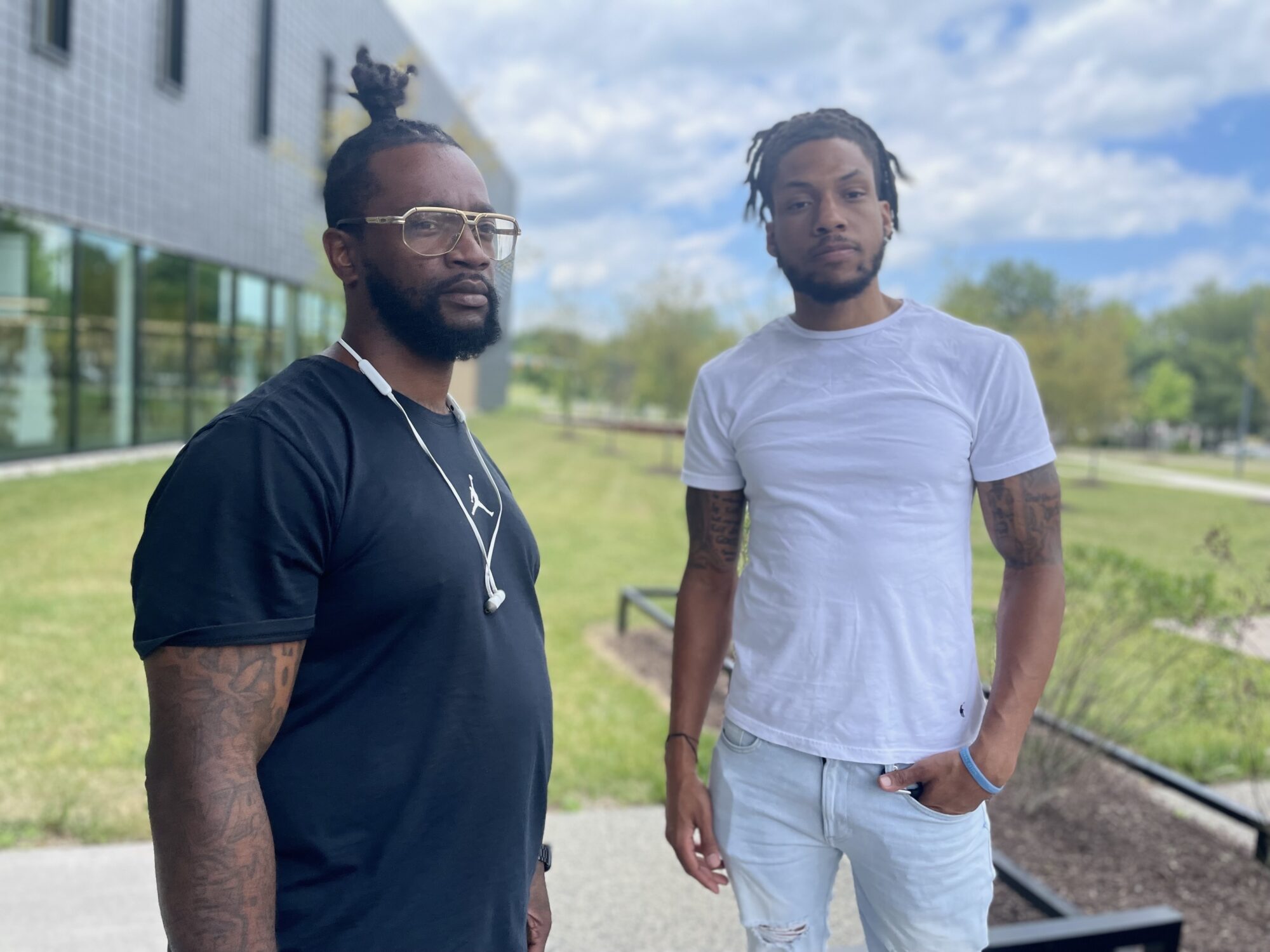
“It’s a turning point in the state of Virginia,” George Hawkins, a formerly disenfranchised man, said of Amendment 3. “It’s a turning point for criminal justice reform. It’s powerful, and that’s why certain people fought to keep it this way for so long.”
For more 2026 election results
Subscribe to the Bolts newsletter
Hawkins, who is 34, voted for the first time this election. He’d been convicted as a teenager, and, for years after his 2023 release from prison, was one of the many thousands of Virginians blocked from voting because he had not been personally restored by the governor.
He regained eligibility recently, thanks to a landmark court ruling earlier this year. In January, a federal judge ruled that Virginia’s disenfranchisement scheme was unconstitutional because it exceeded guardrails that Congress had established for former Confederate states during Reconstruction.
Like lots of other formerly incarcerated Virginians interviewed by Bolts in recent years, Hawkins characterized his previous disenfranchisement as a loss not only of voting rights, but of a sense that he and his voice mattered.
“There’s a certain pride and a certain belonging that’s associated with voting,” he said, “and when you take that away from a person, it’s very hard for them to get into the mindset of, ‘I belong.’”
The passage of Amendment 3 ensures in the state constitution that anyone exiting incarceration will be automatically eligible to register to vote, even if they’re still finishing out a term of parole or probation.
“When you come home from prison,” Hawkins said, “all you want to do is just get back to normal. You want to be a part of things, and you are a part of things: You went to that elementary school, you grew up down the street from that bakery, you went to that skating rink. But when society tells you your voice doesn’t matter to the things that govern you in your neighborhood, that type of psychology leads to a person not feeling a part of their community.”
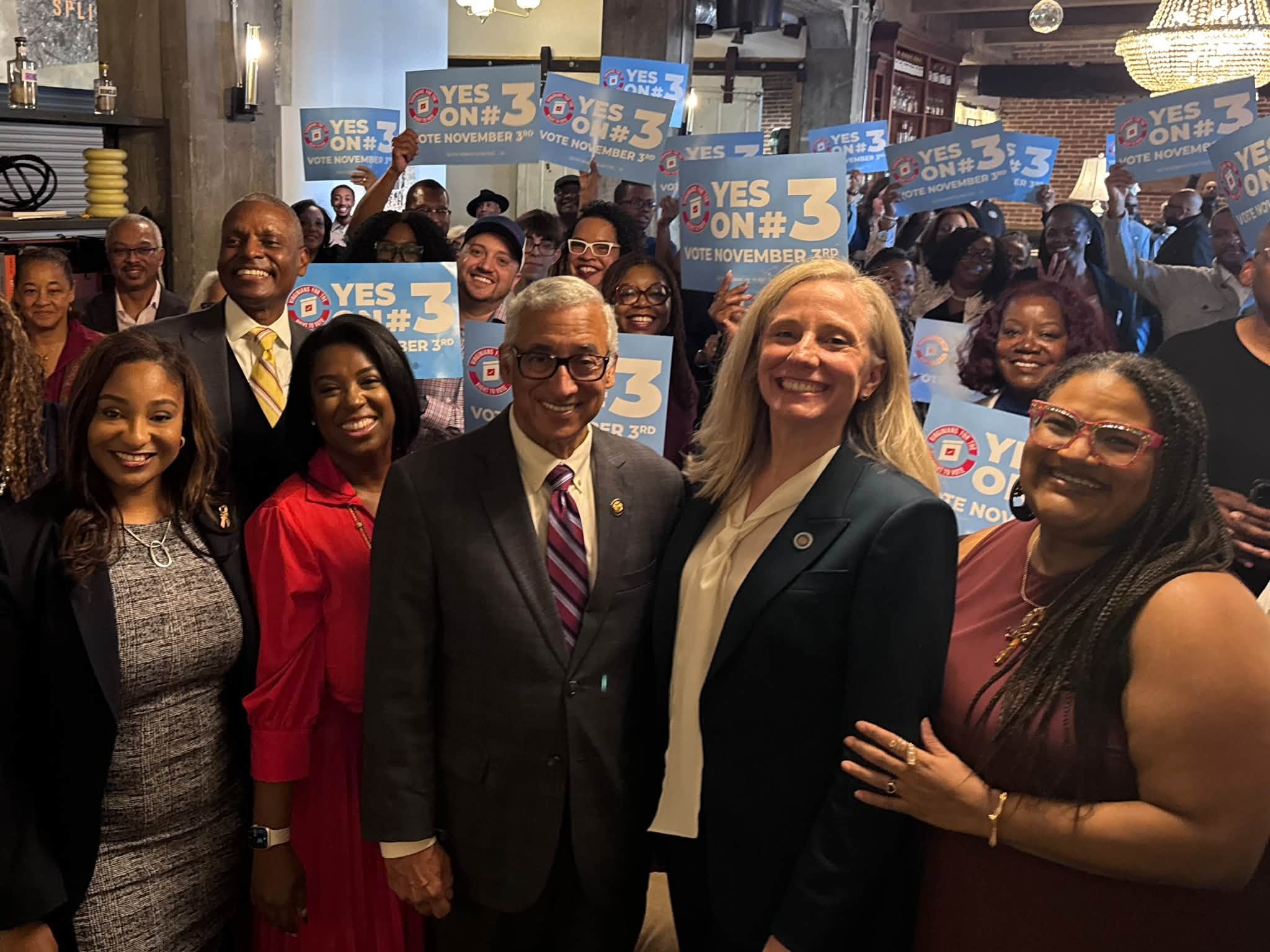
Voting rights advocates have long been frustrated with the fact that their state has conferred so much power on the governor to determine whether people like Hawkins should ever get to vote again. Amendment 3 removes that massive gubernatorial authority, ensuring that the bounds of felony disenfranchisement in this state will not change based on the outcome of future gubernatorial elections.
The last few years have reminded these advocates of why the previous status quo was so untenable. Though Virginia governors had, since 2013, taken steps to restore voting rights to hundreds of thousands of people with past convictions, Republican Glenn Youngkin brought that program to a screeching halt after he was elected in 2021. Youngkin dramatically limited voting rights restorations, leaving thousands of Virginians, including Hawkins, to wonder if they’d ever be able to vote again.
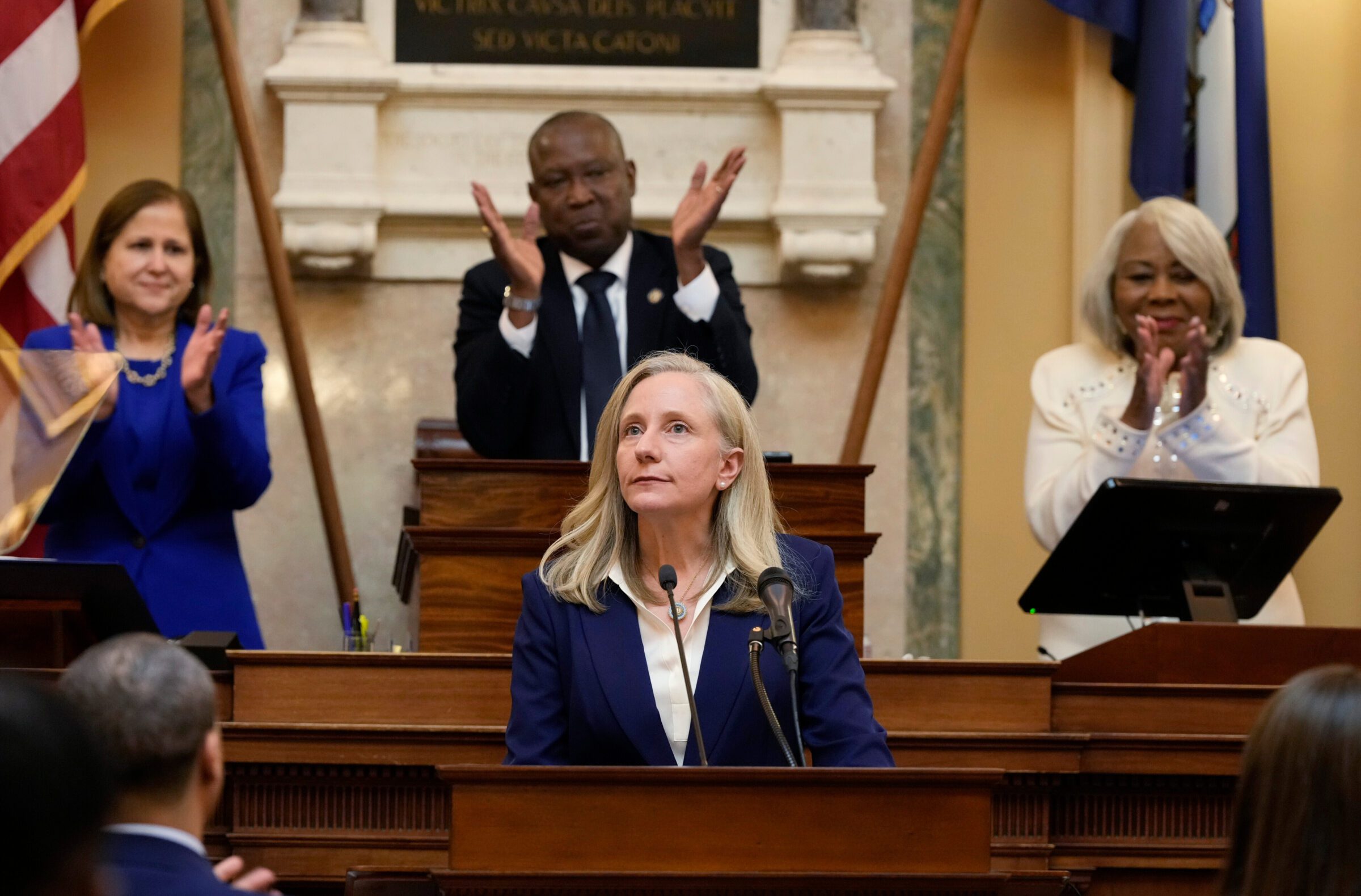
Current Governor Abigail Spanberger, a Democrat, reversed Youngkin’s program after taking office earlier this year, and restored voting rights to some 66,000 people in July. Voting rights advocates celebrated that move, but said at the time that they remained focused on eliminating gubernatorial discretion over this issue once and for all.
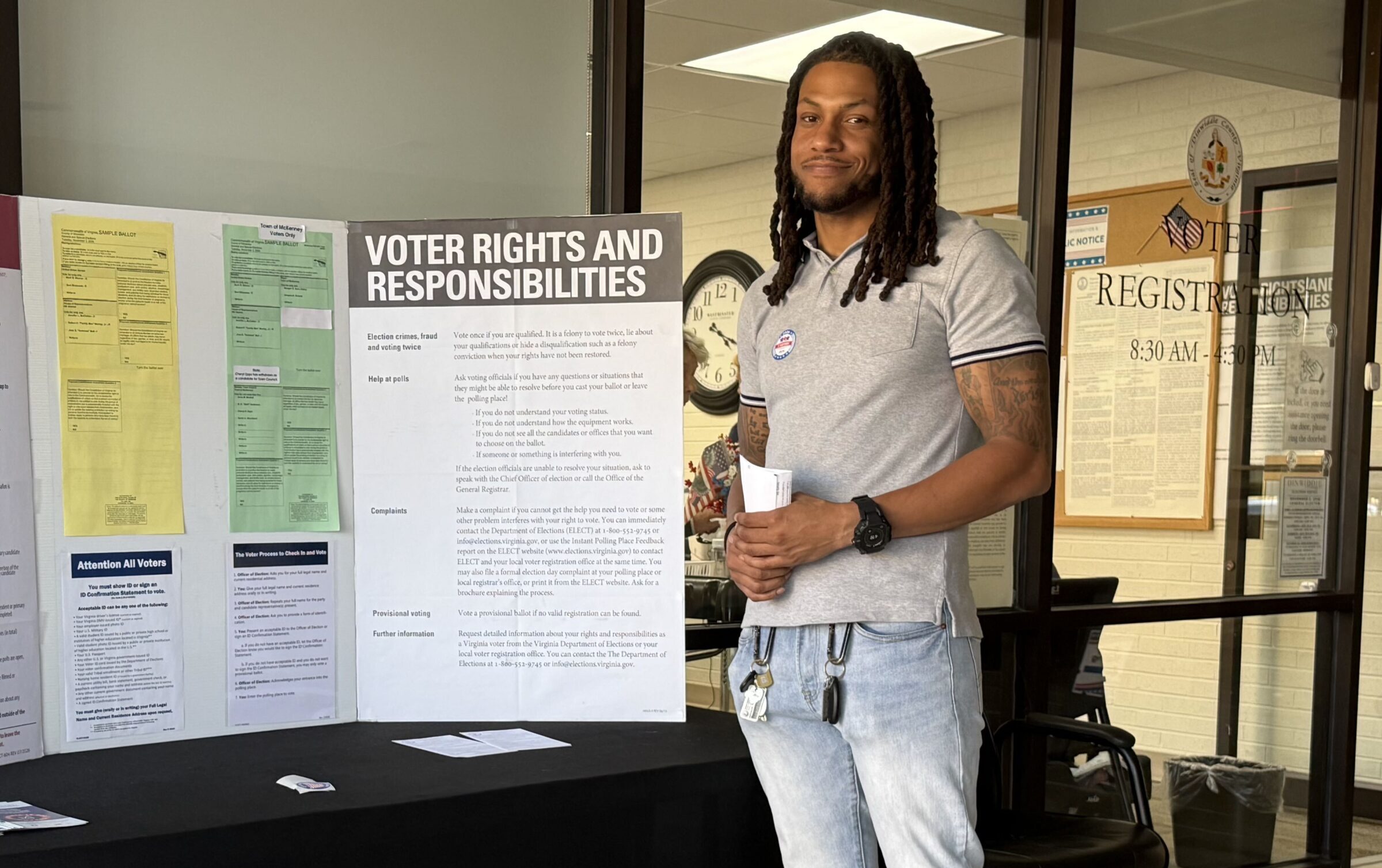
“For one person to be able to have so much control over people like myself is not right,” said Anthony Martinez, who was released from prison in March and restored as a voter by Spanberger in July. At 47, he voted this fall for the first time in his life.
Martinez added, of Amendment 3’s passage, “We can immediately play a part in what’s going on in our community, and not have to hope and pray that you’ll be able to get to the ballot.”
Amendment 3 was the product of many years of advocacy by opponents of Virginia’s 1902 arrangement. They needed the legislature to vote in two consecutive years to place this type of measure on the ballot, and the Democrat-controlled legislature finally obliged in 2024 and 2025, motivated in large part by frustrations with Youngkin’s rollback of voting rights.
“It only took 124 years,” Scott Surovell, Democratic majority leader in the Virginia Senate, told Bolts, “but we’ve finally eliminated Jim Crow from the constitution of Virginia.”
The amendment was endorsed by a broad coalition of groups, including the ACLU, DSA, and NAACP, plus dozens of Democratic elected officials. It faced little organized opposition, though the Republican Party of Virginia did encourage voters to reject it, calling the reform “deceptive, dangerous, and radical.”
Sheba Williams, a formerly disenfranchised nonprofit leader who helped lead the campaign for the amendment, and who had pushed for years to advance it to the ballot, added, “Many people say they want to work themselves out of a job, and I’m honored to say I saw it come to fruition. Redemption is for everyone.”
By placing Amendment 3 on the ballot, Virginia lawmakers initiated the first statewide vote on felony disenfranchisement in the U.S. since California voted in 2020 to restore voting rights to people with felony convictions upon exit from incarceration. Today, 24 states, now including Virginia, have that policy. Another two states, Maine and Vermont, plus Puerto Rico and Washington, D.C., never disenfranchise anyone over a felony conviction, even while they’re incarcerated.
Prior to Tuesday, Virginia had been a significant national—and international—outlier for disenfranchising so many people, for so long, over any of such a wide range of criminal convictions.
“Virginia went from probably the worst in the nation as far as felony disenfranchisement goes to being in line with a lot of its peers, with disenfranchisement only being in place for the period of incarceration,” said Tyler Richardett, the chief technology officer at Free Our Vote, a nonprofit tech group that studies the scope of felony disenfranchisement and works to help eligible voters access their rights.
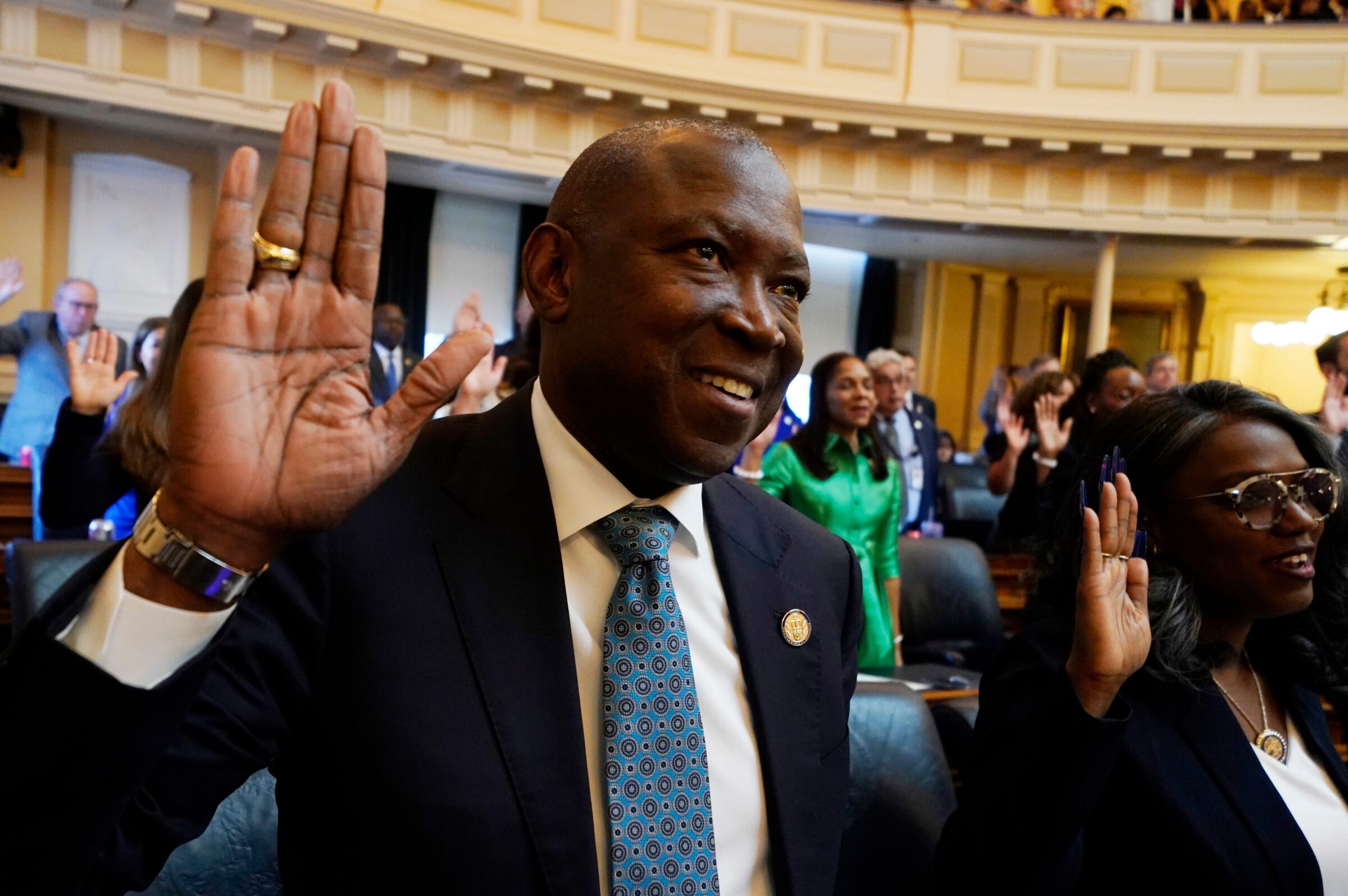
Tuesday’s landmark vote in Virginia builds on the federal ruling earlier this year in partially fulfilling the intentions of Congress from the Reconstruction era more than 150 years ago.
That Reconstruction Congress had, as a condition of readmitting southern states into the Union, passed clear limits on felony disenfranchisement by those states, because it correctly anticipated that they would do exactly what Virginia went on to do—that is, suppress the voting power of formerly enslaved people through harsh, targeted systems of disenfranchisement.
The judge’s ruling on this matter had already restored eligibility to many thousands of Virginians earlier this year. Tuesday’s election codifies new and more lenient rules in the state constitution, which could only be reversed via another statewide vote.
Richardett and others say they expect that Amendment 3 will make it much easier for affected people to understand their voting status. In Virginia and beyond, Bolts has found in reporting across the country on this issue, people with past convictions often do not vote, even if they can, because they either assume they aren’t eligible or fear that they could be accused of voting illegally—or both.
“This ought to take a lot of guesswork out of the equation,” Richardett said. “And for organizations doing the outreach, it ought to make the messaging much easier.”
Martinez, who himself had exited prison with no clear sense of whether or how he’d ever regain his voting rights, agreed.
“This is one less thing that’s stressful on our plate when we get home,” he said.
“When I came home,” Martinez added, “I wanted to be somebody who could actually do something, who could have a voice. It finally feels like I do.”
Sign up and stay up-to-date
Get timely updates about pressing stories and elections.
Support us
Bolts is a non-profit newsroom that relies on donations, and it takes resources to produce this work. If you appreciate our value, become a monthly donor or make a contribution.