
New York Banned ICE Contracts. Pro-ICE Sheriffs Could Stand in the Way.
Orange County was forced to end its lucrative contract to detain immigrants in the local jail. Sheriff Paul Arteta, who’s up for reelection, is among those suing to keep it.
| October 23, 2026

This story is part of Bolts’ series on sheriffs in the run-up to the midterms; read more on Maryland, North Carolina, Washington, and Wisconsin.
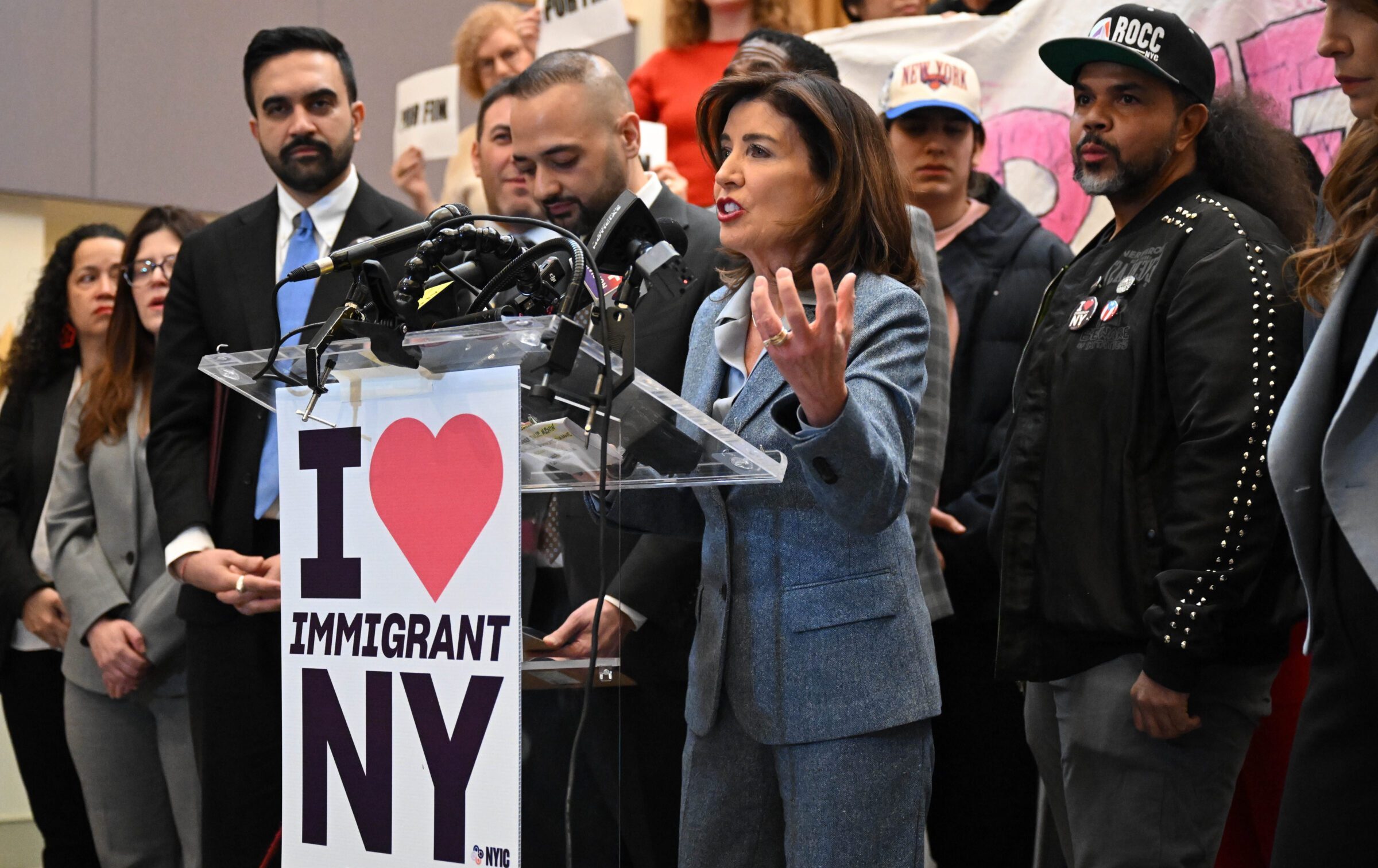
When New York legislators approved the state budget earlier this year, they folded in legislation to protect immigrant communities from President Donald Trump’s aggressive crackdown. The legislation, which bars localities from contracting with federal immigration agencies, was a victory for immigrants’ rights advocates but they knew it was only part of the battle; ensuring compliance would be crucial to actually reducing ICE’s presence in the state.
The most visible sort of cooperation that New York barred was participation in the 287(g) program, which effectively deputizes local law enforcement to carry out some of the functions of immigration agents. But lawmakers also restricted county detention contracts, which allow ICE to hold detainees in local jails in exchange for federal money—a practice that exploded last year as ICE arrests surged.
Orange County, a populous community some 30 miles northwest of New York City whose jail had become a sort of waystation in ICE’s national detention network, has quickly become a test of the law’s aftermath.
The jail is run by Sheriff Paul Arteta, a Republican who is holding ICE detainees there in accordance with a contract that the county first entered into in 2008, and that has long drawn scrutiny due to the dismal conditions immigrants have endured. The new state law is forcing Orange County to terminate this relationship, though so far the transfer of immigrant detainees out of the jail has been opaque.
Arteta has resisted the law, joining a group of law enforcement officials to sue over its implementation in late August. The lawsuit also includes sheriffs in counties like Broome that were in the 287(g) program. Now, Arteta and other Republicans are railing against the law as the midterm elections approach. Nassau County Executive Bruce Blakeman, the GOP nominee for governor who had joined 287(g) last year, is attacking Governor Kathy Hochul for “making New York less safe.”
Subscribe to our newsletter
Get more reporting on sheriffs
ICE cooperation is also an issue in the sheriff’s race between Arteta and Democratic challenger Bernie Rivers, who has criticized the county’s ties with the agency. Arteta says no longer renting space to ICE in the local jail will hurt the county budget.
Immigrants’ rights groups, meanwhile, say they’re focused on the health and safety of detainees in Orange County. This summer, Dignity Not Detention, a statewide coalition that has long advocated for the termination of ICE contracts, began preparing people held in Orange County for transfers and teaching them their rights, said Kate Johnson-Powers, post-release manager at Envision Freedom Fund, an organization that supports immigrants. “But of course, none of us knew what to expect, besides the legal definitions.”
An earlier generation of debates over county detention contracts with ICE—including in neighboring New Jersey during the first Trump administration—pitted advocates who wanted local jails to stop holding people for ICE against people who were typically their allies, immigration public defenders and families of those detained. The latter pointed out that cancelling the contracts would not necessarily mean anyone would be released from detention, but instead merely moved elsewhere, probably much further away in southern states like Louisiana.
But during the second Trump administration, constant transfers have been the norm for ICE.
Observers of the Orange County jail, or OCJ, told Bolts that, starting in early 2025, it became increasingly routine for federal authorities to bring people to Orange County after arresting them in New York City or upstate, but then quickly transfer them out of state while bringing in people from far away.
“We have seen our clients at OCJ get transferred sometimes in batches, sometimes just individually across the country multiple times,” said Rosa Cohen-Cruz, immigration policy director at the Bronx Defenders. “Often during those processes they lose medication, they’ll get to their new facility and won’t have commissary, so won’t be able to make a phone call, they lose property in the transfer.”
The agency is under no legal obligation to hold people near where they were detained or where their attorneys are.
Ben McCoubrey, data and advocacy manager at Envision, has tracked detainees at OCJ using data obtained by the Deportation Data Project as well as Envision’s own information on detainees it’s in touch with. He told Bolts that before the start of the second Trump administration, the jail consistently had 40 to 50 ICE detainees.
He, too, stressed that federal authorities have been cycling people in and out of OCJ quickly. “They started booking tons of people in, transferring a ton of people out to make space, and just continued,” he said. In recent months, the immigrant population has hit a high of around 120 at once, many either recent arrests, recently transferred in, or on their way out.
“I’ve seen guys come in one night, and the next day they’re shipped out,” said Samuel, a former ICE detainee who spent roughly seven months at OCJ, through the end of August (his name was changed to protect his identity, as he has an active immigration case).

While Samuel was able to win release through a habeas petition, most of his fellow detainees have not. “This guy I know got sent to Texas, he got sent with another guy then came back from Texas, then went to Louisiana, came back from Louisiana,” he said. “They don’t explain nothing to you. Besides what your lawyer explained to you and the [immigration judge] explained to you, whether you get denied or post bond, that’s the only information you get to know.”
From his time in the OCJ, he described how corrections personnel kept shortening the time that they would notify detainees that they would be transferred after some started refusing and trying to barricade themselves inside their cells.
Other detainees backed up this account of cyclical transfers. “They’ll take people over to go suffer over there and then bring them back to Orange County, from Pennsylvania and Louisiana,” said Mateo (also a pseudonym), a detainee who was picked up by ICE while going to work in November 2025 and held until this July.
New York City funds public defender organizations to provide legal defense to immigrants arrested in the city—a service that people ICE arrests elsewhere are not entitled to since immigration removal proceedings are civil procedures.
But on occasion, detainees arrested in NYC and brought to OCJ have been moved so quickly that public defense providers do not even become aware they were there until after they’re already out of state, according to local advocates, hampering their ability to actually provide representation.
Most advocates believe this bedlam to be strategic, helping the Trump administration to make what is supposed to be civil, non-punitive detention more punishing and exhausting in a bid to get people to just give up on their cases and accept removal.
Orange County’s jail has been hampered by allegations of poor conditions affecting detainees, particularly those arrested by ICE.
New York Lawyers for the Public Interest published a report late last year based on reviewing medical records of over a dozen of ICE detainees. They alleged a pattern of delayed, inconsistent, and ineffectual medical care at the facility by both corrections staff and outside medical contractors. The sheriff’s office denied the validity of the report without offering specifics, and stressed that many detainees had been accused of “severe crimes.”
Genesis Ramos, the Democratic leader of the county legislature, told Bolts that her office had followed up on these concerns but had not been able to specifically substantiate them. “What we’ve been assured over and over again is that the jail is subject to a lot of scrutiny and different audits, different levels of certification that the jail has to go through,” she said. “As a legislator, we only have but so much authority in terms of the data and operations in the jail.”
Ramos added that she had visited the jail twice during her time as a local legislator, and “never saw anything that was nefarious in nature or that was alarming or concerning per se.” According to Samuel, though, staff would repaint, clean, and provide better food whenever auditors or legislators would visit. Samuel also complains of medical deficiencies. After he was diagnosed with diabetes in jail, he said the food he was served remained the same and his medical appointments kept being delayed; he is now concerned he may have permanent vision problems.
The actual status of the ICE detainee population at the jail remains unclear. Since the law barring local collaboration with ICE went into effect, detainees were transferred out in large numbers, though some were only transferred after the Aug. 25 date at which the county was required to exercise the termination clause of its ICE contract.

A large group of detainees was transferred to the Brooklyn Metropolitan Detention Center, a federal prison, as part of the process to wind down the ICE contract. According to McCoubrey’s tracking, detainees were also sent to the GEO Group-run ICE facility in Jena, Louisiana, which is also where Mahmoud Khalil was held for months; to the deadly Delaney Hall in New Jersey; to the troubled Miami Correctional Facility in Indiana; and to other institutions in Oklahoma, Pennsylvania, and Texas.
But advocates at Envision and some public defenders say they caught wind of additional book-ins after Aug. 25. Under state law, localities have until Nov. 25 to certify that they are in compliance, though receiving new detainees in that interim period could arguably run afoul of it.
Johnson-Powers, of Envision, said the fund had received a call to its hotline from an ICE detainee at OCJ as late as Sept. 15. The next day, James Potter, the captain of the corrections division at the sheriff’s office, told a meeting of the county legislature’s public safety committee that “the ICE detainee count was 171 for August and as of this morning it was zero,” per meeting minutes. Potter also noted year-to-date “boarder revenue,” i.e., income from renting jail beds to ICE, was $8.13 million.
In response to Bolts’ questions about the current ICE detainee population, transfers, conditions at the jail, and compliance with state law, the sheriff referred all questions to ICE, which did not respond.
The office of Orange County Executive Steve Neuhaus also did not respond to multiple requests for comment. A spokesperson for New York Attorney General Letitia James, who has the power to go after jurisdictions in noncompliance, did not address specific questions about Orange County, but clarified that the office views Nov. 25 as the compliance deadline.
If and when the jail stops housing ICE detainees, that doesn’t end the conversation over immigration detention in the county. In late June, Project Salt Box reported that the federal government leased a massive warehouse in Newburgh, a city in Orange County, with some indication that it could be used for ICE detention, including the requirement that it have a sally port large enough for detainee buses and vans.
The prospect has led to significant community pushback this fall.
ICE detention is also a point of contention in November’s sheriff race between Arteta and Rivers, a rematch of the 2022 election in which Arteta easily prevailed.
Rivers, the Democratic challenger, has criticized Arteta for signing on to the lawsuit against the immigration legislation, arguing that the sheriff should keep their focus local: “Orange County residents deserve a Sheriff who is focused on their needs, not one chasing national headlines at the expense of public trust,” he said in a Facebook post in August. He has also warned that the debates are set to continue given the Newburgh warehouse, telling Bolts that immigration detention was a “hot-topic button… with the federal government for the second time looking to purchase or lease facilities here in Orange County to house ICE detainees.”
“I’m not saying the federal government doesn’t have a right to enforce immigration law; they have every right to enforce immigration law, but the way they’re doing it is just wrong,” he added.
Still, he doesn’t see himself as a “standard-bearer” for the anti-ICE movement in the county. “It does come into the political conversation. People want to talk about ICE,” he told Bolts. “I really didn’t want and don’t want to focus the sheriff race totally on what’s going on in ICE.”
Rivers said he would still consider notifying ICE about detainees when appropriate. But he could not immediately say when it would be, telling Bolts he’d look into the laws and regulations when in office. If elected, Rivers also committed to looking into concerns over food and medical care at OCJ, including for people held there on criminal charges.
But Rivers also lamented that the main reaction he was getting from would-be voters was surprise that there was even an election for sheriff, a reality he partly chalked up to the collapse of local media.
Several of the community organizations that participated in the Dignity Not Detention coalition and pushed for the cancellation of the Orange County ICE contract told Bolts that they’re staying out of the race and had no comment on it. Attention now is focused on support for those who are being moved out, including the group sent to Brooklyn MDC, a federal facility housing roughly 1,400 people that was denounced by a judge in 2024 for its “dangerous, barbaric conditions.”
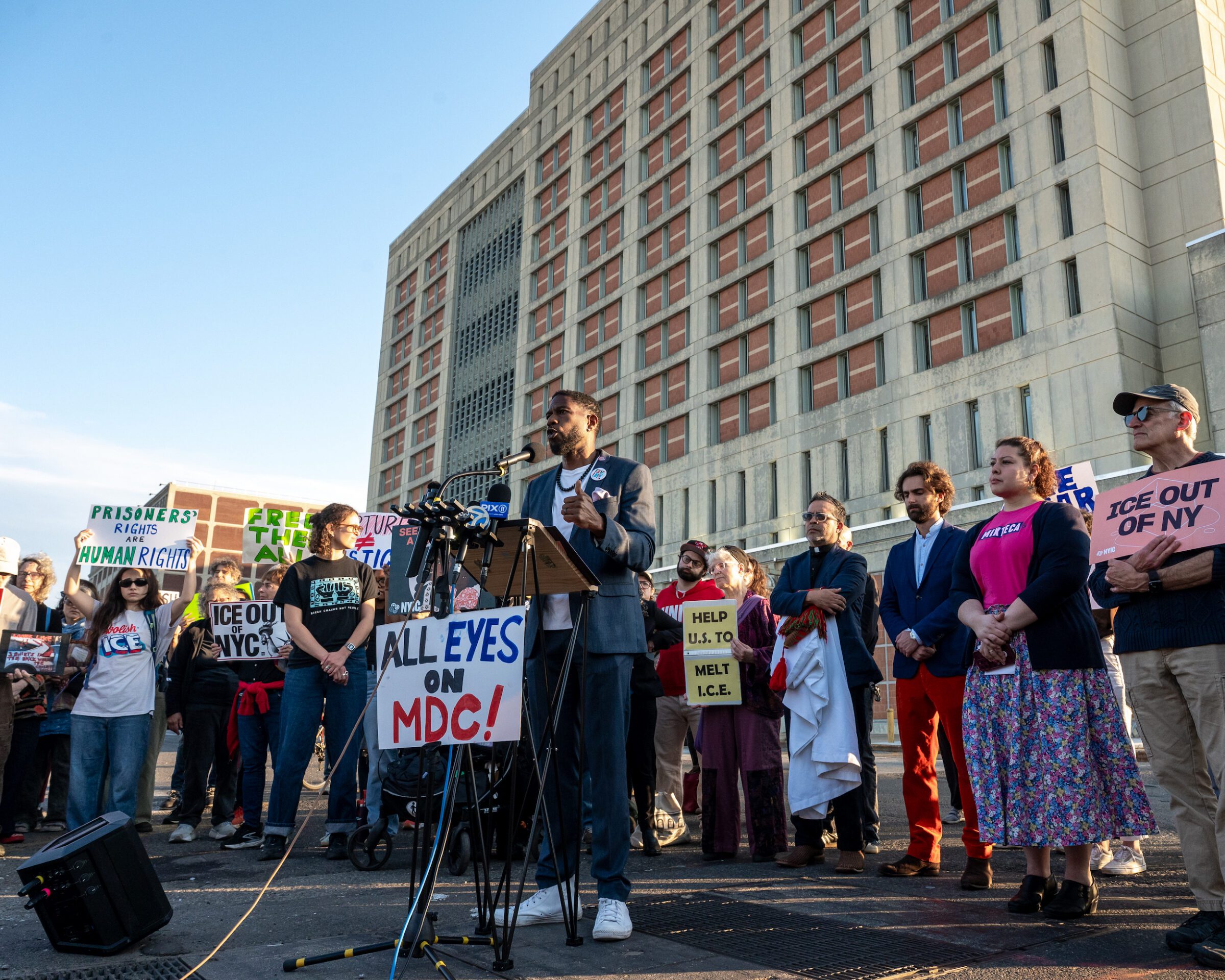
“The levels of security and just degradation and lack of humanity through this intense security, it’s just very different from being in a small county jail,” said Johnson-Powers.
Still, even if the closure of OCJ to ICE detainees won’t address the broader issues of an administration committed to mass deportation and armed with enormous funding, advocates say the law restricting local cooperation with ICE and the contract’s cancellation have value.
McCoubrey, the advocate at Envision, stresses “the multiplier effect that every ICE bed has,” telling Bolts, “70,000 [total detention] beds is already a scary number. But the fact that that facilitates hundreds and hundreds of thousands of deportations every year really brings home the value of any amount of any dent that you can make in local detention capacity.”
Sign up and stay up-to-date
Get timely updates about pressing stories and elections.
Support us
Bolts is a non-profit newsroom that relies on donations, and it takes resources to produce this work. If you appreciate our value, become a monthly donor or make a contribution.
Related Posts