
Many Iowans Must Navigate a Maze to Vote
An executive order restored voting rights to people with past convictions. It was followed by little-to-no public education by state officials and widespread confusion by would-be voters.
| October 28, 2026

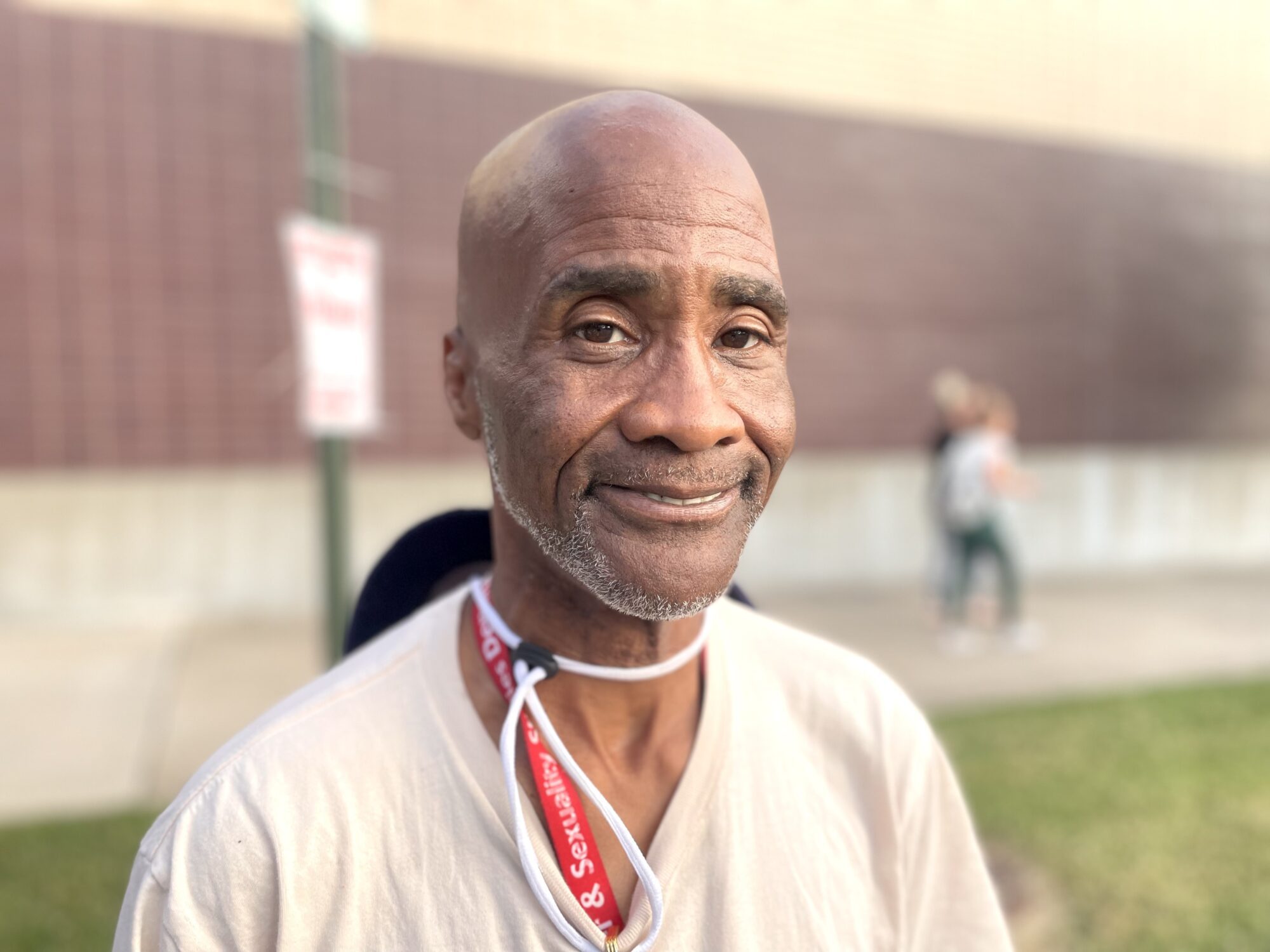
Raul Lara, a construction worker from the small town of Stanwood, is eager to weigh in as Iowa elects its new governor next week. “I just want somebody to run the damn state correctly,” he says.
He should be eligible to do so. Current state policy allows most any citizen to vote so long as they aren’t serving a felony sentence, and Lara, who was criminally convicted a couple of years ago over a dispute with neighbors, finished his probation months ago.
However, Lara says that when he tried to register earlier this year, he was turned away by his county elections office, which told him he needed to submit a letter explaining why he was now eligible to vote. He enlisted the help of an attorney, who submitted the letter but then was told that a state database listed Lara, incorrectly, as still serving a felony sentence.
It took the attorney contacting different state and local offices multiple times before Lara could finally register and obtain a mail ballot—a convoluted, burdensome process that Lara says he couldn’t have navigated without help.
As he readied to submit his ballot in late October, Lara told Bolts that he remained nervous; given the earlier mix-up, he doesn’t want to be accused of voting illegally.
“I don’t know yet if my ballot is going to be good or not. We still don’t know. They’ve never told us if it’s good or not,” he said. “I’m pretty mad. I’m an American citizen and I’ve got rights to vote.”
Lara is far from the only Iowan unsure of their voting status this fall. Bolts spoke with others in the state who are caught up in a bureaucratic maze or confused about their right to vote as they sought to cast ballots after finishing their sentences. Lawyers who help them say that a lack of clear guidance from state and local officials makes it a common problem, which threatens to suppress civic engagement from would-be voters.
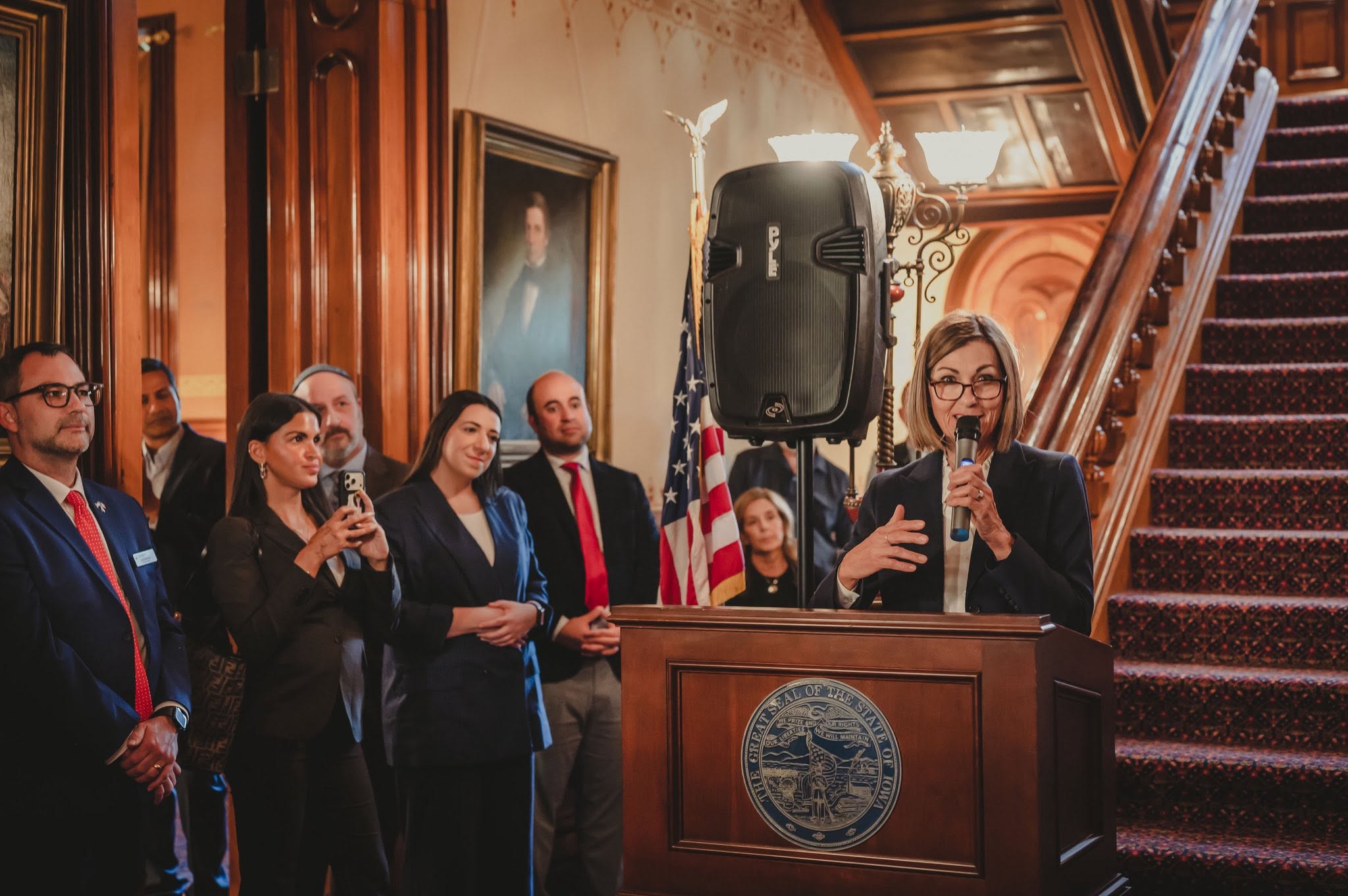
This is because Iowa has harsh, oft-changing rules for when people with criminal convictions can regain the right to vote. It is one of just three states, along with Kentucky and Virginia, where the state constitution establishes that anyone convicted of any felony loses the right to vote for life. Governor Kim Reynolds, a Republican who herself has a past criminal conviction, signed an executive order in 2020 that made it so people regain their voting rights when they complete their sentence, including terms of prison, probation, and parole.
The Sentencing Project estimated at the time that some 45,000 people regained voting rights at once as a result of that order.
But the order was followed by little public outreach and voter education. State elections officials also say they’ve collected no data since 2020 on the order’s effects.
Voting rights advocates and people who work in the criminal legal system say many Iowans who have regained eligibility thanks to Reynolds’ actions still have no idea where they stand—and often incorrectly believe that they cannot vote because officials never told them they’re eligible, or gave them inaccurate information when they asked.
Sign up to our newsletter
Get more reporting on voting rights
“Even a lot of the ones who are interested in voting, they don’t know truly what their status is,” said Bo James, director of the Iowa nonprofit Hip Hope, and who has many clients and family members with past felony convictions.
The affected population skews disproportionately Black, as racial disparities in Iowa’s criminal legal system are among the highest in the nation. According to the ACLU of Iowa, 25 percent of incarcerated Iowans are Black, even though Black people make up just 4 percent of the state’s population.
James thinks that the present murkiness around voting rights reinforces people’s sense that their participation is unwanted; research shows even minor contact with the criminal legal system makes people less likely to vote. “As long as they have any type of relationship with the judicial system,” he told Bolts, “they feel like they’re still paying their penance and haven’t been fully restored to citizenship, and that therefore they’re not deserving of that voting right.”
Some of the confusion, James and other experts say, stems from the particulars of Reynolds’ executive order, which demand some navigation to determine whether one’s rights have been restored.
For one thing, the order doesn’t cover everyone, maintaining lifetime disenfranchisement for people convicted of a class of charges that includes homicide and related offenses, such as manslaughter and voluntary manslaughter.
But more notably, while the order restores voting rights when someone has “discharged his or her sentence,” many mistake this to include financial obligations.
In fact, Iowa doesn’t require people to pay off court debt before regaining their voting rights, in contrast to states like Florida that require people seeking to regain voting rights to pay fines, fees, or restitution—a sort of poll tax that functionally excludes poorer residents.
Many people who work with Iowans with past convictions told Bolts that those covered by the Reynolds order—and some officials tasked with administering it—often do not know this, leading some to believe they’re ineligible because of outstanding costs.
“There is confusion at the individual level and at the state level about when someone has discharged a court sentence,” said Alison Guernsey, who directs the Federal Criminal Defense Clinic at the University of Iowa.
Some people in Iowa owe court costs that they will pay for the rest of their lives. Sentences for certain convictions come with mandatory restitution of more than $100,000—an amount so high as to be forever unattainable for many, even if they’re on aggressive payment plans.
Guernsey said she’s observed that people with outstanding court costs “try to avoid interacting with the state at all if they think it can possibly get them in trouble.”
“So the default is that if you’re not sure, you don’t vote,” Guernsey said. “The assumption is you aren’t eligible and if someone hasn’t told you that you are, then you don’t.”
Advocates and canvassers nationwide say it’s easiest for them to inform people of their rights, and do so without fearing a costly error, when there is a clear and unambiguous line in the sand—for instance, when they can tell people that anyone can vote as long as they’re not incarcerated for a felony conviction. That simple rule is currently in place in 23 states. Messaging is even more straightforward in Maine, Vermont, and Washington, D.C., which don’t strip anyone of the right to vote, even if they’re in prison.
But as the rules get more complicated, advocates find that even people who are eligible often stay away from the polls for fear of breaking the law.
Confusion over Reynolds’ order can also extend beyond just those who were covered by it. While the order also gave people with past convictions the right to serve on a jury, Aaron Hawbaker, a public defender and Cedar Falls city council member, told Bolts that lawyers have had to remind judges and prosecutors that someone shouldn’t be tossed from a jury pool simply because they have a past conviction.
“We’ve had to educate judges time and again about the order,” Hawbaker said.
The true impact of Reynolds’ executive order is difficult to discern. Both her office and the secretary of state’s office told Bolts they don’t collect any data on the number of people who regained the right to vote, or on registration rates of those affected, making it hard to assess exactly where the Reynolds reform is working and where it’s falling short.
The state also did very little to inform people with previous convictions about the order or take steps to absolve any confusion over who could regain their voting rights. The secretary of state’s office says it does not do any targeted outreach to people with past convictions.
This is a common national problem. Even states with relatively permissive disenfranchisement rules rarely do much in the way of data collection, or in outreach to people unsure of their rights.
In Kentucky, when Governor Andy Beshear in 2019 ordered a mass restoration of voting rights for people with past felonies, the state did not actually notify the many thousands of people affected; seven years later, advocates there are still trying to spread the word.
Iowans face the same issue. “People still have the belief that they can’t vote, so they don’t try,” Hawbaker said.
Even those inclined to try to vote must frequently go it alone. Cardell James, a formerly incarcerated man from Des Moines, told Bolts he had to investigate his own voting status after completing his sentence in 2021. “I was happy when I could vote, but I never got told about it” by the state, he said. “It’s all just word of mouth.”
Other Iowans with past criminal convictions told Bolts they’ve struggled to actually register and cast a ballot even after determining that Reynolds’ order granted them voting rights.
Lara, the Stanwood construction worker, said he would not have even attempted to register if he hadn’t happened upon a story in local media about voting rights. “Nobody told me anything before that,” he said. “My wife looked it up. That made me feel pretty bad. It really pissed me off.”
Eric Tindal, the attorney who assisted Lara in correcting his erroneous exclusion, says one underlying issue is that the state has not created any easily accessible database that an election official could query to tell someone who is inquiring whether they are eligible to vote.
Katarina Sostaric, spokesperson for the Iowa Judicial Branch, told Bolts that the office “works very hard to ensure that criminal convictions are reported accurately to the Iowa secretary of state” to prevent situations like Lara’s. Sostaric said she could not comment on Lara’s case in particular, but added, “Errors in processing a conviction are rare, and the Judicial Branch takes steps to promptly correct them.”
Still, Tindal and other attorneys in Iowa say they’ve observed that local and state systems sometimes do not communicate well, or accurately, as to the status of someone who is or was finishing out a sentence.
“There’s a whole lot of networks and apps going on that necessarily count on people checking the right boxes at the right times,” Tindal said. “It’s not just voting rights,” he added. “There are other things falling through the cracks because we’re making public decisions that underfund all services.” This public funding concern, which affects local budgets as well, was accelerated by large tax cuts approved by Reynolds in 2024.
The governor is retiring this year, meaning that whoever wins the election to replace her in November will have the power to extend or modify her executive order on voting rights—or rescind it.
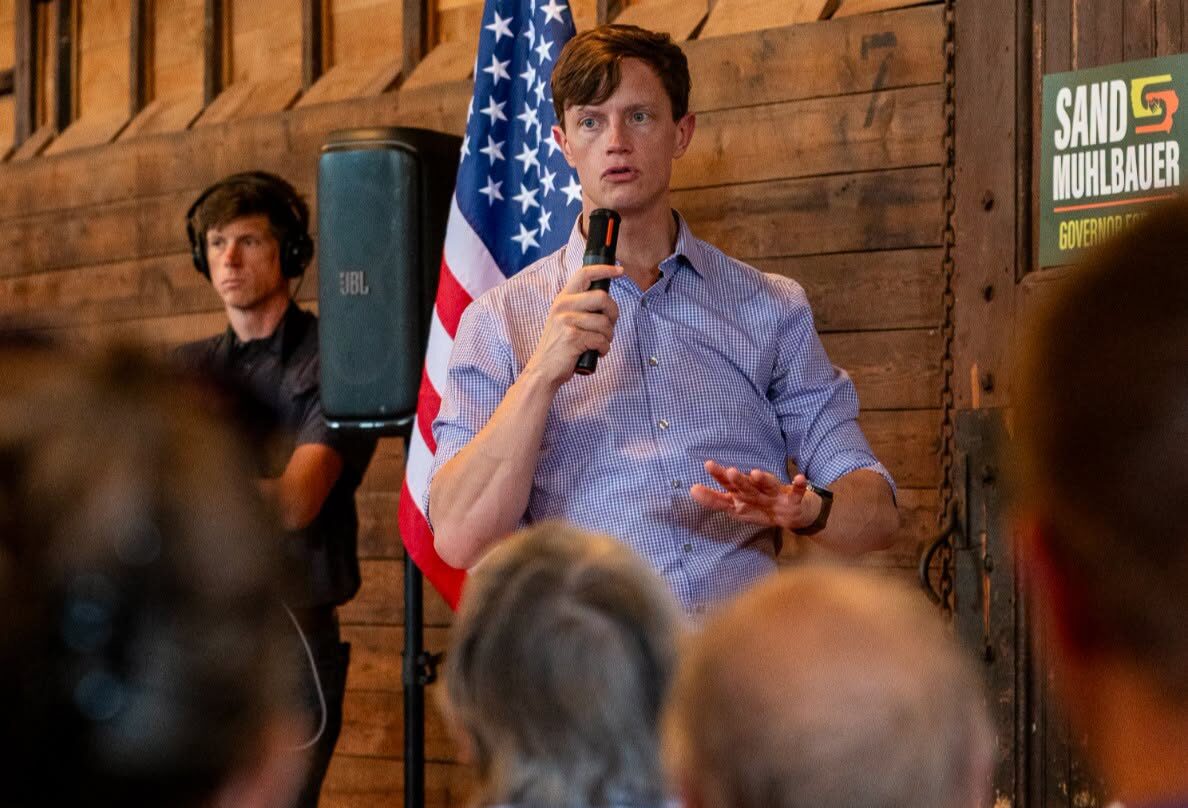
Bolts tried to interview the gubernatorial nominees, Republican Zach Lahn and Democrat Rob Sand, on this topic, or to at least obtain position statements. In an unsigned email, Lahn’s campaign vowed to respond weeks ago but never did. Sand’s campaign manager, C.J. Petersen, referred Bolts to a campaign spokesperson, Emma O’Brien, who did not respond to repeated messages asking for Sand’s views on the issue.
After an interview with Bolts, Betty Andrews, who directs the Iowa-Nebraska branch of the NAACP, and who helped lead advocacy for the Reynolds order six years ago, sent letters to both candidates asking whether they would maintain the rights restoration policy.
Sand’s campaign responded to Andrews to say that he would keep Reynolds’ order in place, while Lahn’s campaign did not respond. (O’Brien, Sand’s spokesperson, confirmed to Bolts that they sent the responses.) Sand’s campaign also said he’d use the governor’s platform to encourage eligible Iowans with felony backgrounds to participate in elections, but did not elaborate on how.
That Sand went much of the campaign without addressing Reynolds’ order, while Lahn still hasn’t addressed it at all, is typical in a country where politicians tend to shy from the topic of voting rights for people with past convictions.
It’s also consistent with Bolts’ past reporting in Kentucky and Virginia, the other states that hand governors sole authority over the voting rights of anyone convicted of a felony.
When Beshear ran for re-election as Kentucky governor in 2023, Kentuckians with past criminal convictions were anxious about their voting status, much like Iowans affected by Reynolds’ rights restoration order are now. But neither Beshear nor his then-opponent discussed the topic during their respective campaigns, and both declined to speak with Bolts about it while running.
The same story played out last year in Virginia’s gubernatorial election, with neither candidate taking a public position on how they’d tackle voting rights restoration, despite heated legal and political battles around the issue in the state.
Abigail Spanberger, the Democrat who prevailed in that election, ended up restoring the rights of tens of thousands of Virginians this summer, countering her Republican predecessor’s restrictive policies. Even as she did so, some affected Virginians told Bolts they still weren’t sure where they stood, and were nervous to try registering.

Voting rights advocates in these states that empower governors to pick and choose the bounds of felony disenfranchisement are frustrated that they have to wonder, cycle after cycle, whether and how the rules might change.
“We are keenly concerned,” Andrews said, of Iowa’s current moment. “We fought for years to get here. This could be overturned or changed with one administration.”
Advocates like her would like to see permanent changes to enshrine voting rights into the state constitution, rather than leave them at a governor’s mercy.
Virginia is on the verge of such a reform now: Voters there will decide next week on a proposed constitutional amendment that would automatically restore voting rights as soon as someone leaves prison. (Spanberger says she supports the change.) Kentucky has for years debated a related, though less sweeping step, but that effort has stalled out several times, including this spring.
In Iowa, advocates have also spent many years pushing the GOP-controlled legislature for a constitutional amendment, to no avail. In fact, Reynolds only issued her 2020 order because the legislature had failed to put the matter to voters.
“A constitutional amendment continues to be the only permanent solution to this issue,” she wrote in her order.
In her letters to Lahn and Sand, Andrews specifically asked whether they’d support such a reform. Sand’s campaign answered in a word: “Yes.”
But that sort of change may still be years away, at the earliest, leaving people with past convictions to contend this voting season with a system that is falling well short of the promise of the Reynolds order.
“This was supposed to be so much easier,” said Doren Walker, a formerly incarcerated Iowan. “People are falling through the cracks.”
One night in Stanwood last week, Raul Lara was readying to submit his ballot the following morning, hopeful that it would actually count.
“I’m worried about that,” he said. “And I am wondering if this is happening to other people—people who have that same problem as me, blocking them from voting.”
Sign up and stay up-to-date
Get timely updates about pressing stories and elections.
Support us
Bolts is a non-profit newsroom that relies on donations, and it takes resources to produce this work. If you appreciate our value, become a monthly donor or make a contribution.
Related Posts
Maine Prisoners Organize to Protect Their Rare Right to Vote